-
-
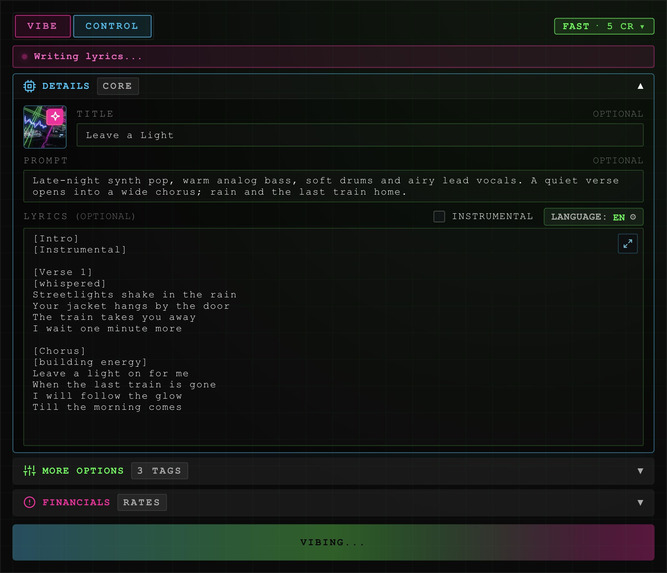
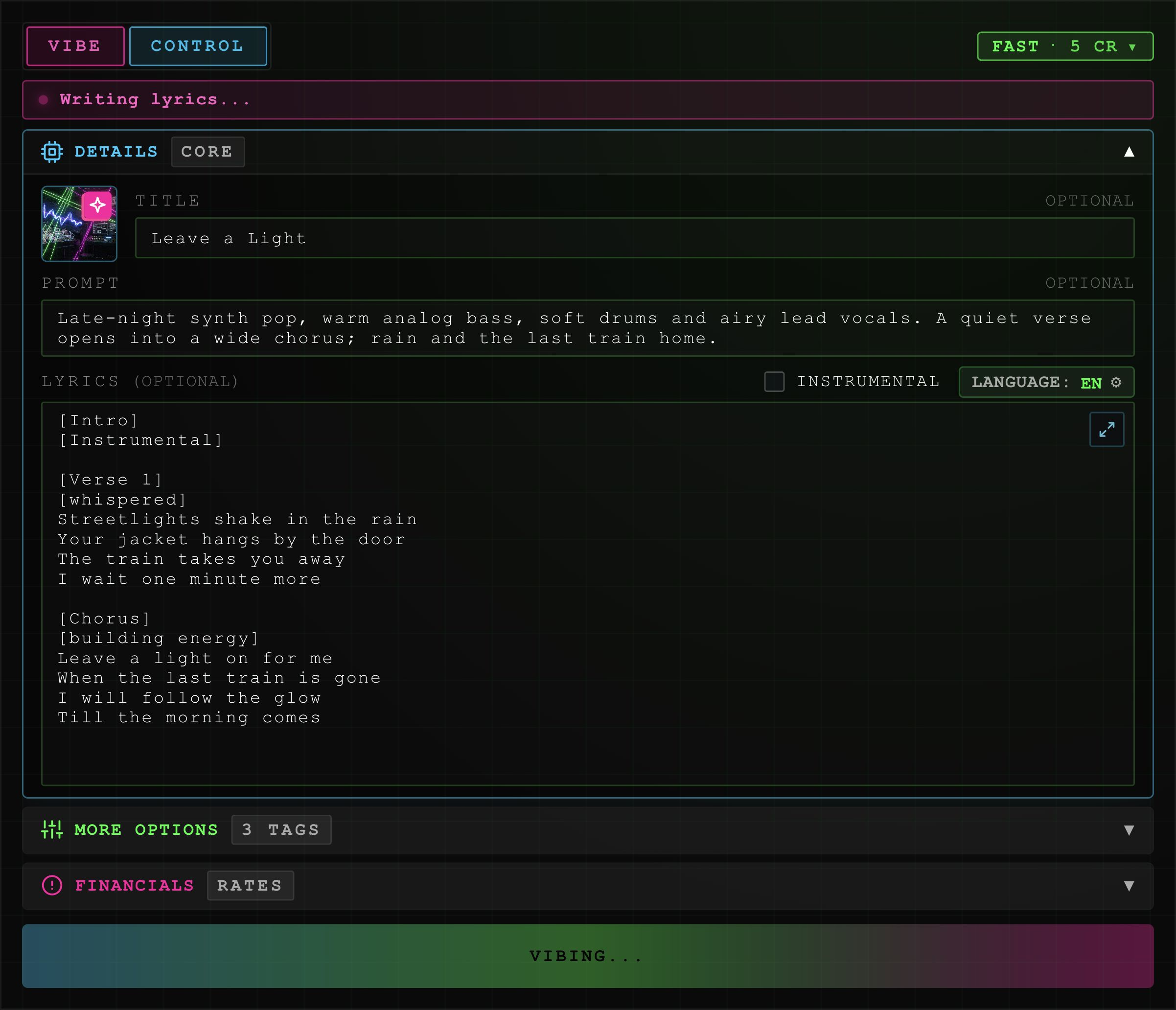
Songwriter turns a text, image or recording into an editable Studio draft.
-
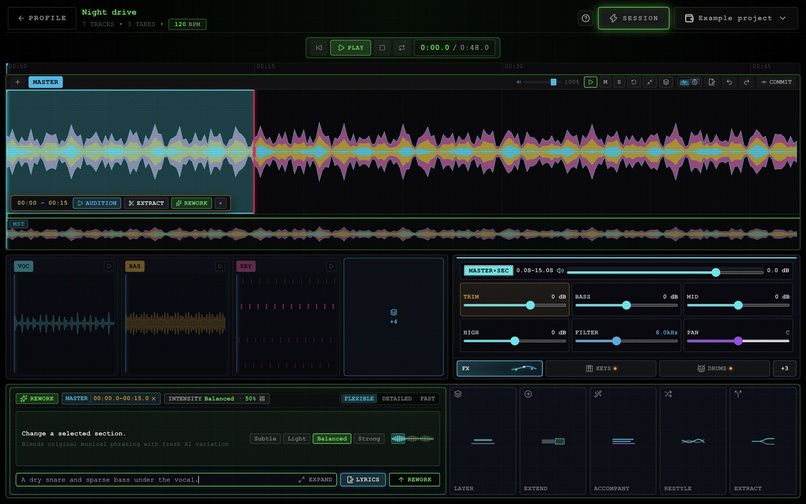
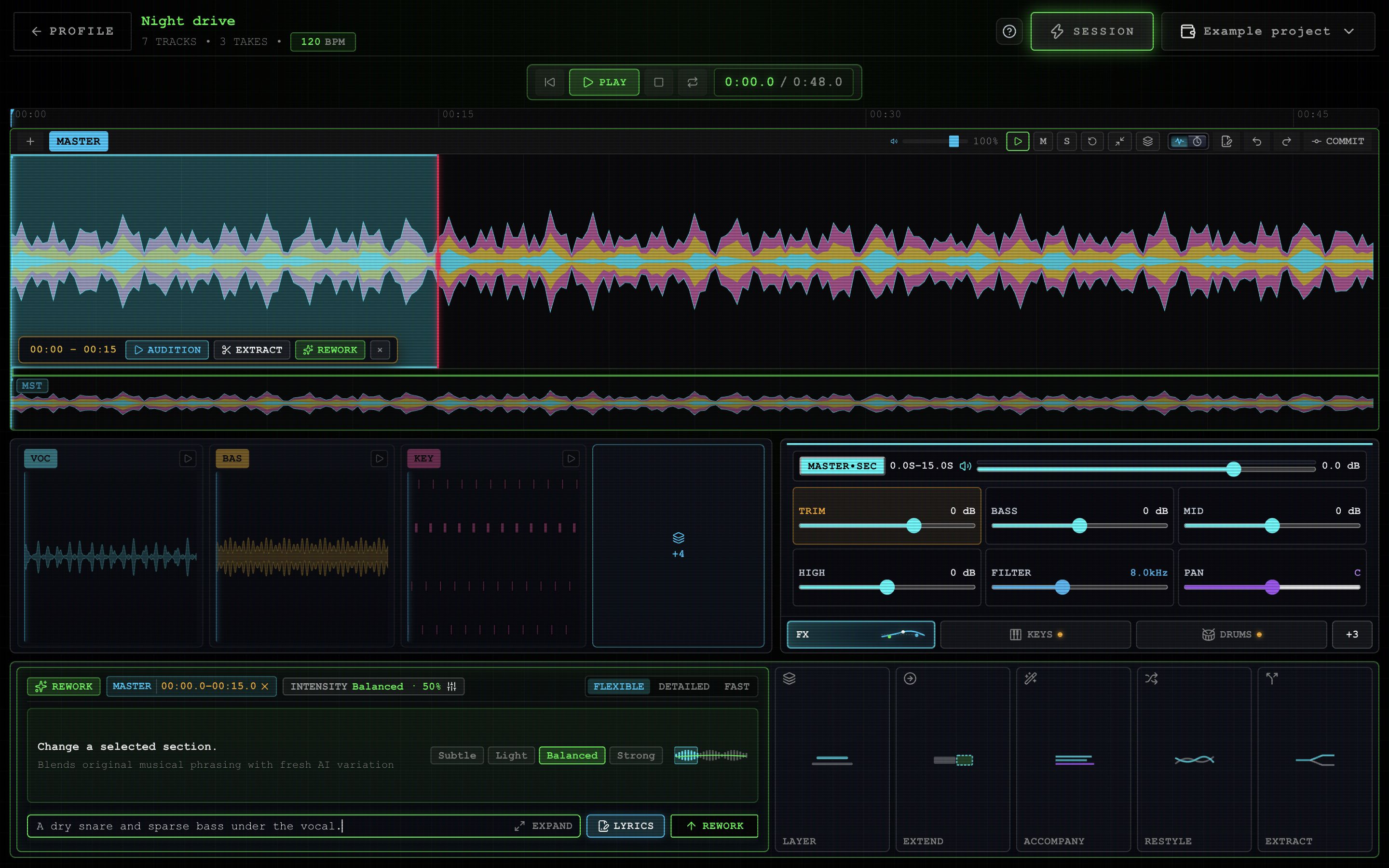
Edit sections, compare takes, layer parts on Master and mix the release.
-
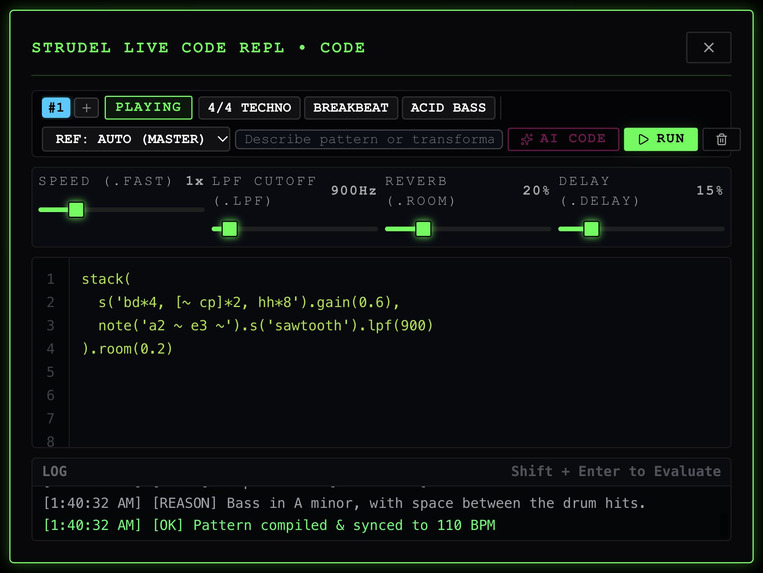
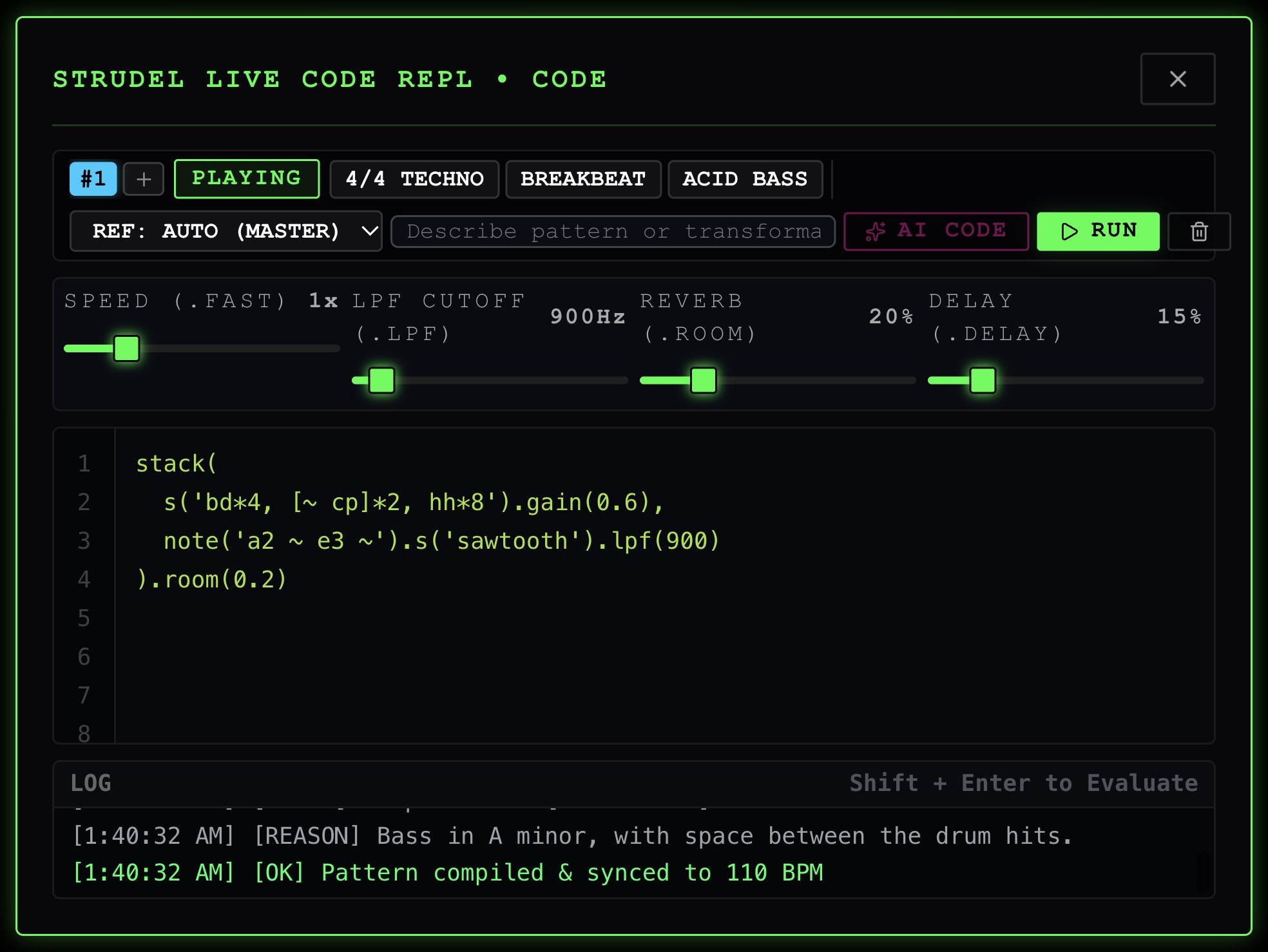
Algorithmic Composer writes playable Strudel parts using the project tempo, key and selected section.
-
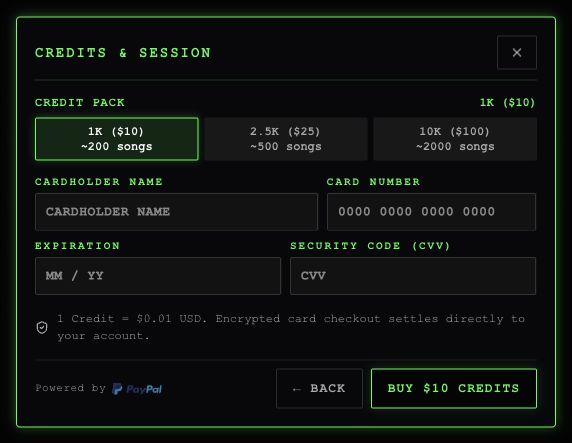
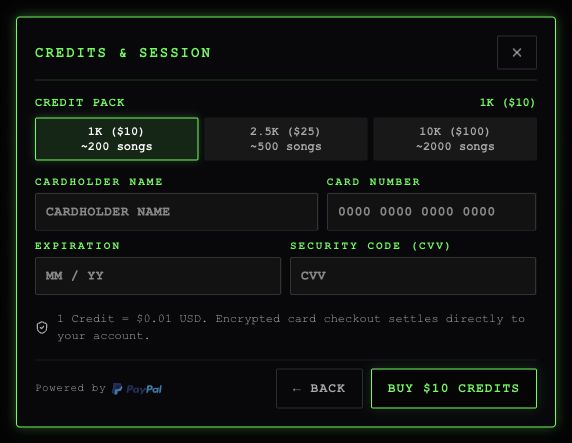
PayPal hosted card fields fund Credits for AI tools and listening.
-
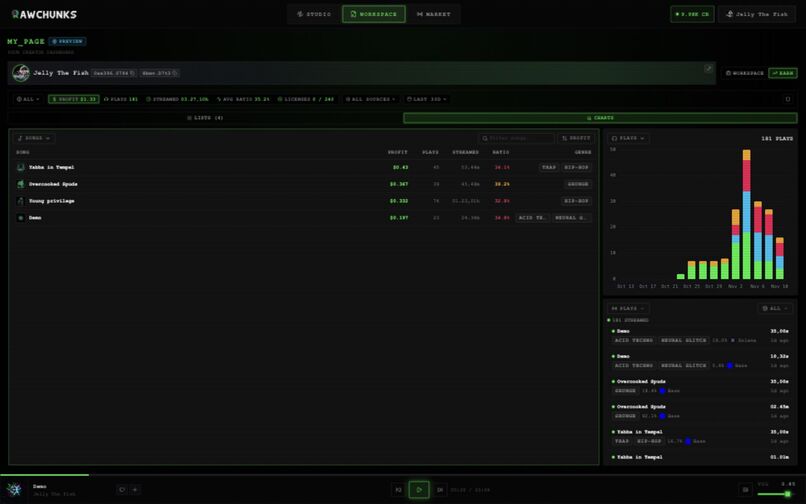
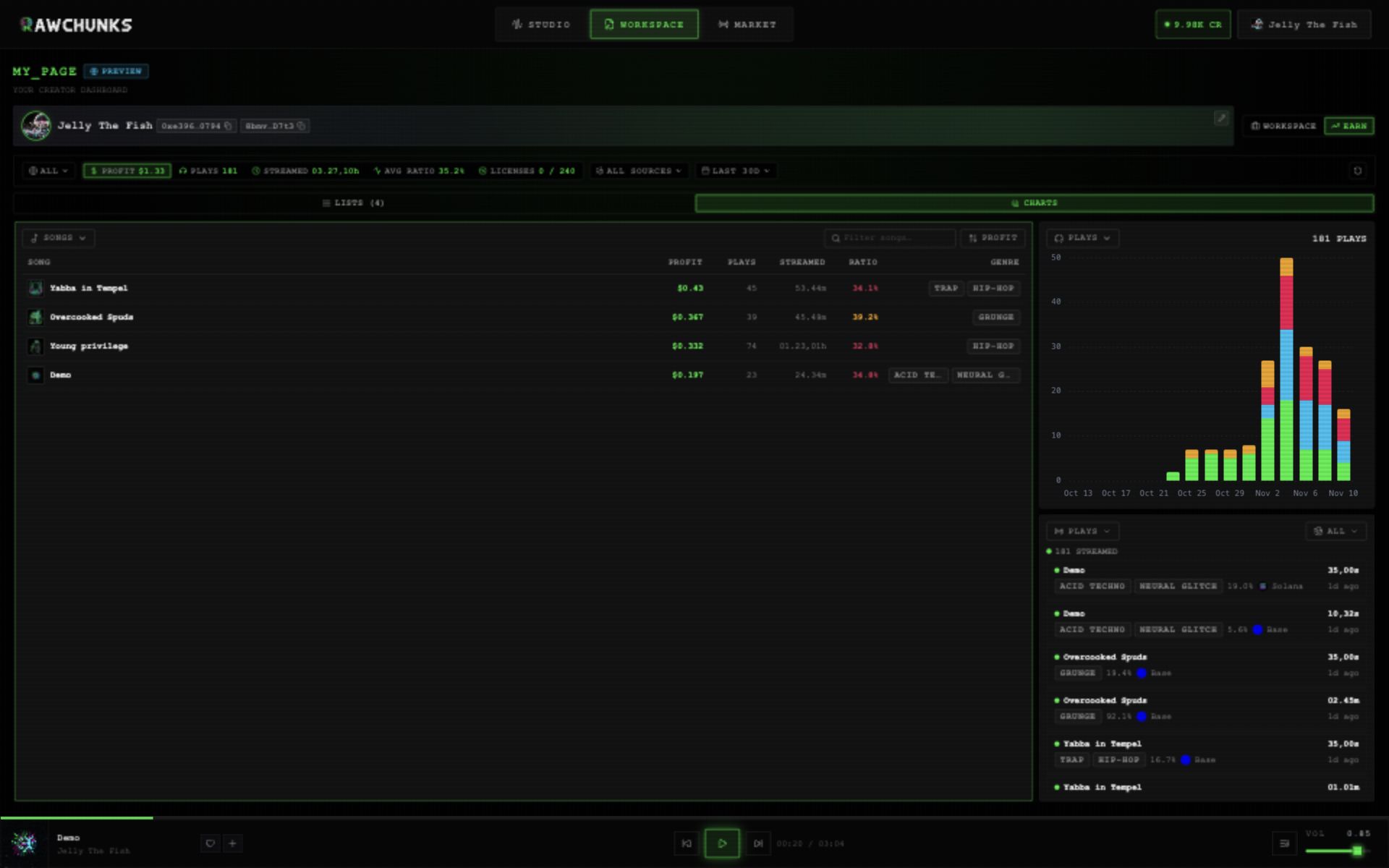
AG Grid song metrics and AG Charts help creators track listening, licenses and earnings.
-
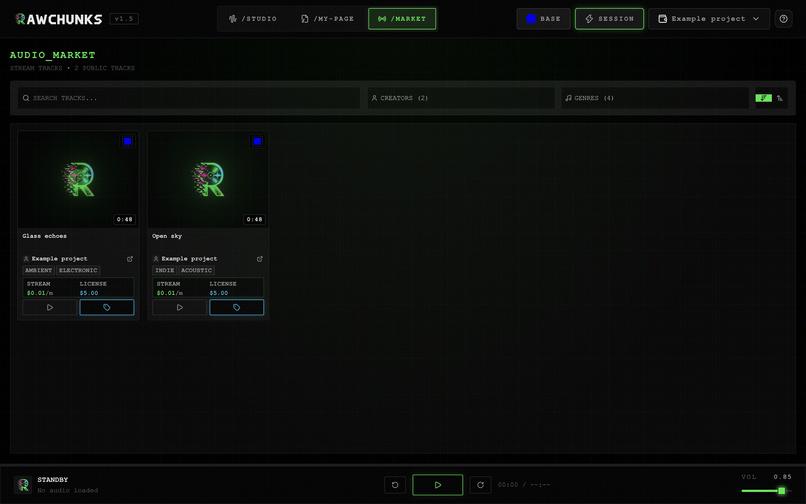
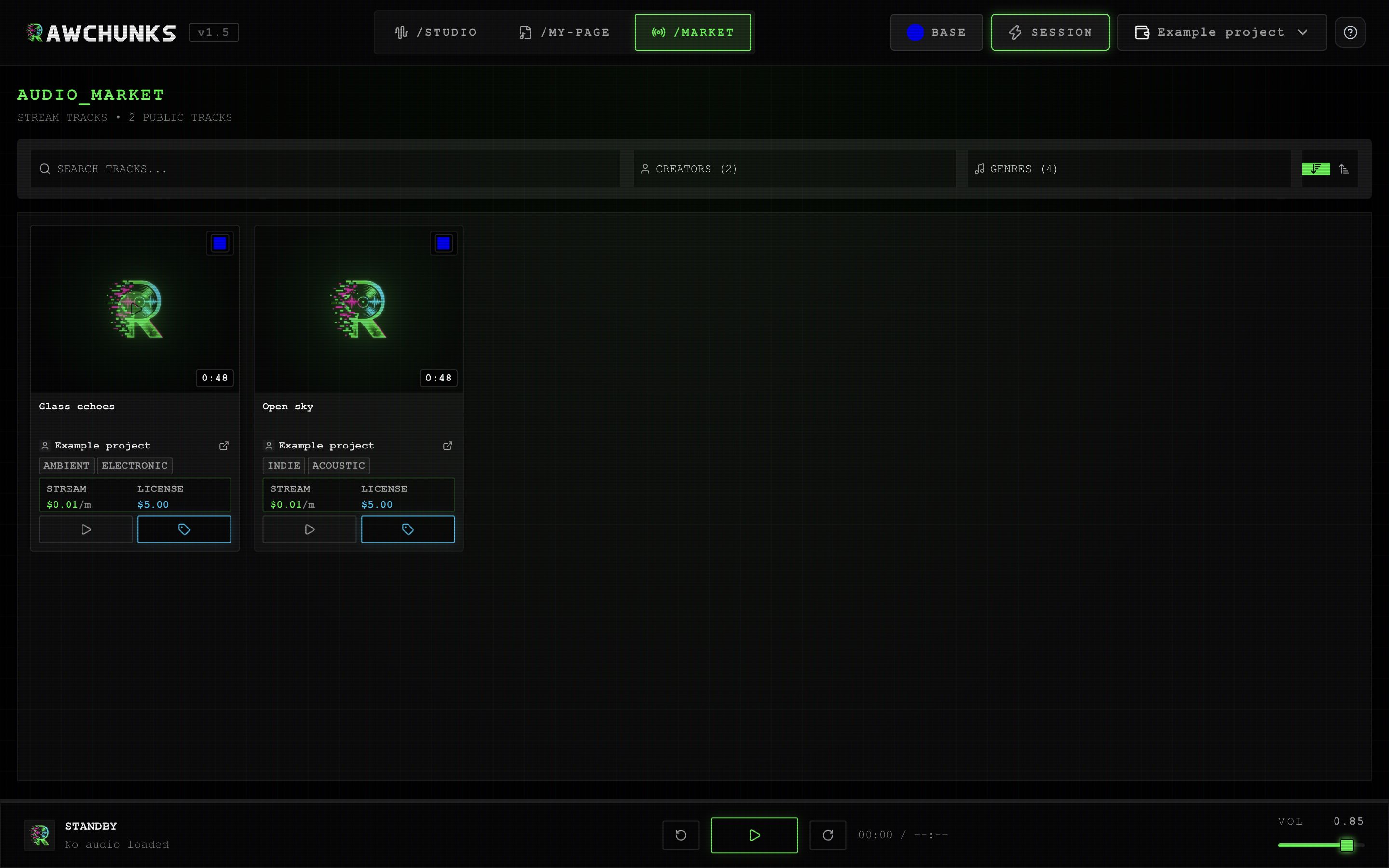
Publish tracks with creator-set listening and commercial remix-license prices.
Rawchunks is a full-stack AI studio and DAG workstation with generation, editing, publishing, paid streaming and a remix-license market in the same platform. Create a song with a sentence, image or hum; shape the result into a release, choose its selling terms and track its earnings. PayPal funds creation and listening by card. AG Grid makes the creator's activity and income readable.
Inspiration
A generated song still needs work before it becomes a release. Musicians need to change specific passages, keep good takes, control how people use their music and see what it earns. Creators making videos or games need usable audio without assembling several separate tools.
We built Rawchunks around that complete process, with the same music tools and payment system available to developers through open APIs.
What it does
- Create: Songwriter turns text, images or a hum into a complete Studio draft: musical brief, title, tagged lyrics, language, tempo, key, duration and cover. Review it, change any field and generate the audio.
- Produce: Rework a section, extend a track, separate stems or add accompaniment. Play keys and drums, use samples, compose with live code, compare takes, layer them on Master and mix the result. Saved vocal references and LoRA preparation support reusable voices.
- Publish and earn: Set listening and license prices, publish a track and offer commercial remix licenses. Listeners pay for the audio they consume; creators can inspect royalties and release activity in EARN.
- Build on it: Use the documented APIs for music, editing, payments and creator analytics in another product.
How we built it
ACE-Step 1.5 XL Turbo, SFT and Base handle Fast and Master generation and the supported editing operations. Two Nemotron-powered agents connect those tools to musical intent. Songwriter combines language, vision and audio analysis; Algorithmic Composer uses project tempo, key, stems and the selected section to write playable Strudel parts. Its directed graph selects relevant musical libraries before a ReAct loop validates or repairs the pattern.
Cartesia and ElevenLabs transcribe recordings; Nano Banana creates cover art. Nebius Token Factory streams agent results into the interface, while the user keeps control of generation and edits.
React and Web Audio handle the workstation and local instruments. Fastify coordinates queued audio jobs; PyTorch and Triton run warmed L4 model workers. Separate model pools scale with demand, and cached source audio avoids repeating downloads and encodes.
Why PayPal matters
PayPal gives users a familiar card checkout for $10, $25 or $100 in Credits; one Credit is $0.01. The balance pays for AI tools and listening throughout Rawchunks.
A fixed card-processing fee can cost more than the few seconds of audio someone hears. We capture a larger Credit purchase once, then use x402 to authorize music services and settle metered playback. Sub-cent usage doesn't need a separate card transaction, checkout or wallet-signing prompt for every listen.
PayPal Card Fields hosts card entry; Orders v2 handles order creation and capture. The backend verifies the account, merchant and exact amount, checks webhook signatures and recovers interrupted purchases.
Creators choose their listening and license prices, with 80% of stream and license revenue going to the creator and 20% to the platform. Rawchunks' unique contribution is its own financial infrastructure connecting AI creation, paid streaming, remix licensing and creator earnings. Users pay by card; x402 handles the small service and royalty payments behind the scenes.
Why AG Grid matters
EARN helps creators answer practical questions: which releases earn, which tracks people finish, and whether income comes from streams or licenses.
AG Grid React powers the song, genre-detail and activity tables. Stable row IDs preserve updates, virtualized rows keep feeds scrollable, and custom cells show covers, genres, listening ratios and royalty receipts. Expanded blocks add detail without sending the creator to another page. Search, sort and network/source/date controls make the catalog easier to compare.
AG Charts adds profit, plays, listening-time and ratio views. The dashboard uses Rawchunks' colors, type and responsive layout throughout. Its earnings API gives developers the same song metrics and events for their own creator tools.
Challenges we worked through
Payments, GPU jobs and browser playback finish at different times. We had to preserve order identity during checkout, recover interrupted work, isolate model and voice state, and keep the workstation usable while results arrive. Musical agents also need valid, playable output; the Composer's library routing and notation checks make that requirement part of its generation loop.
Accomplishments and lessons
The result connects a working studio to a creator marketplace and its financial records. Payment recovery, editable agent drafts and expandable earnings views all serve the same purpose: let people keep working while understanding what happened to their music and money.
Building this taught us to treat musical control and payment control together. Small charges need reusable balances and cumulative listening checkpoints; useful AI output needs editable settings, project context and validation.
What's next
Test more complete creator journeys, polish arrangement and voice controls, and help developers build on the documented APIs.
Try Rawchunks · App and API documentation · App source · Backend source
Built With
- ace-step-1.5-xl
- ag-grid
- cartesia
- cloudflare-r2
- demucs
- elevenlabs
- fastify
- keda
- kubernetes
- l4
- nano-banana
- nemotron-3-ultra
- nemotron-3.5-super-vl
- neon
- node.js
- paypal
- pytorch
- rust
- solidity
- strudel
- triton
- typescript
- valkey
- vllm
- x402
