-
-
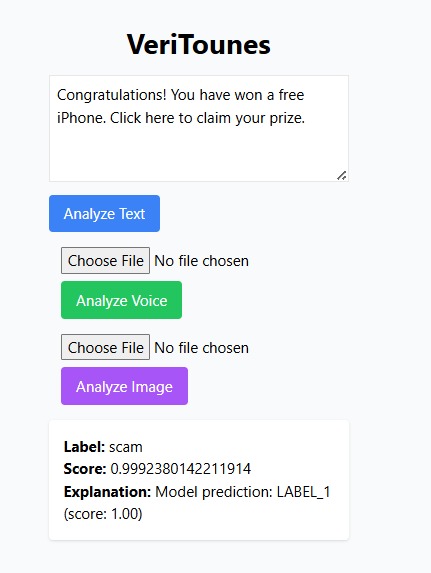
User Interface
-
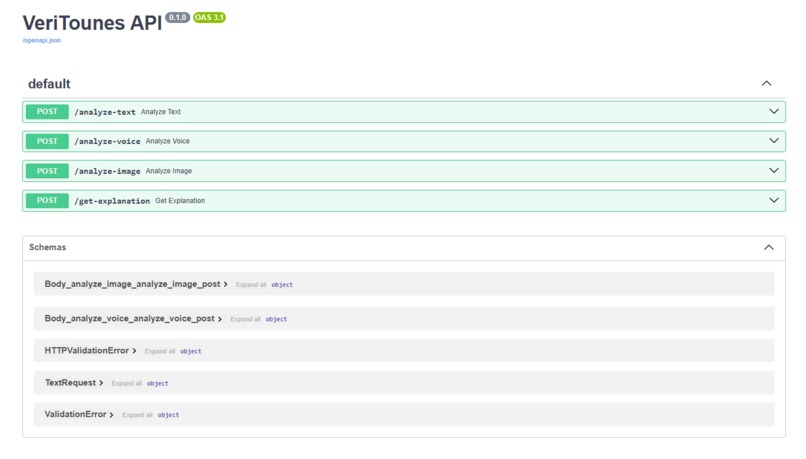
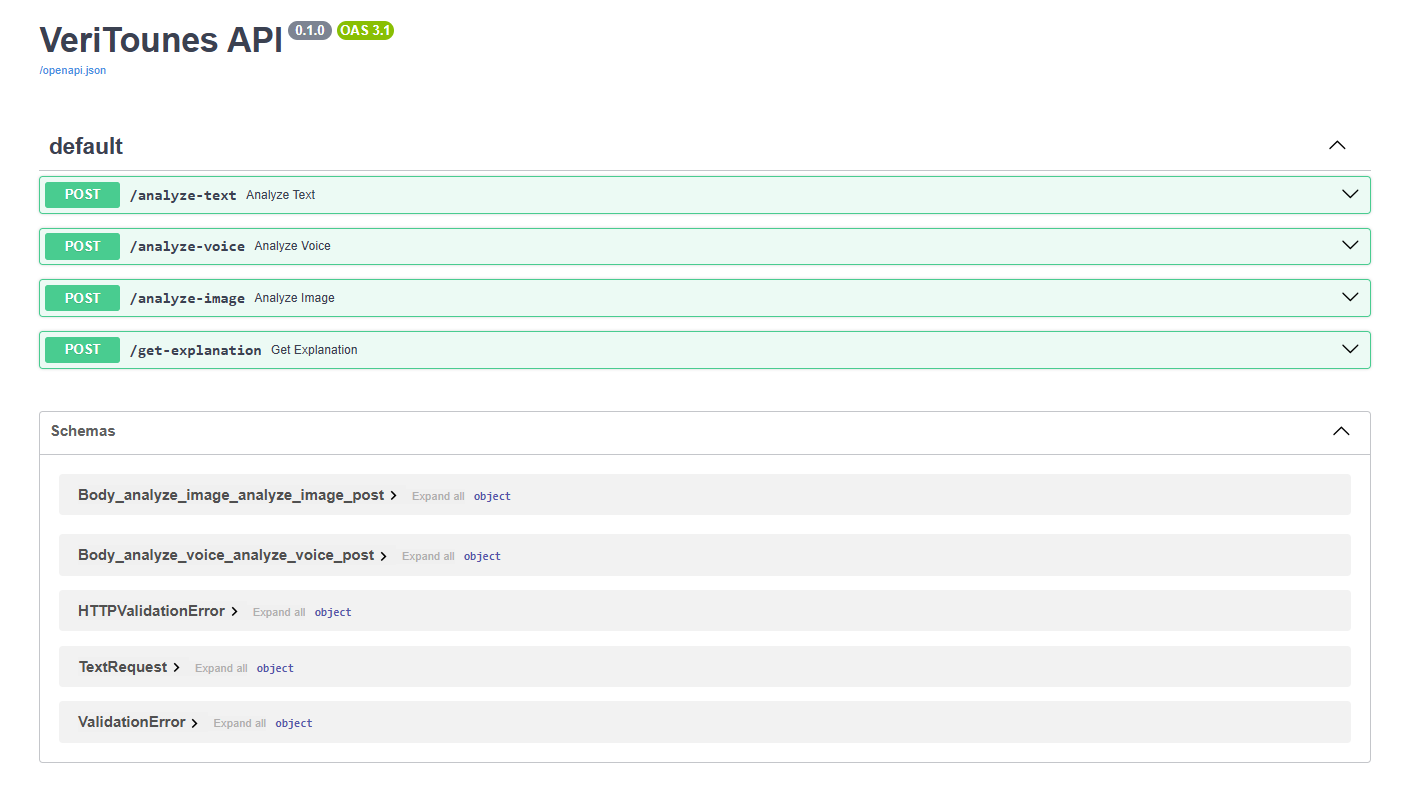
Backend

Inspiration
In Tunisia, the rise of digital communication has brought with it an explosion of scams, fake news, and misleading messages — often spreading through WhatsApp voice notes, Facebook posts, and image-based messages. Many citizens, especially elders and those in rural areas, are vulnerable due to the lack of accessible verification tools in Tunisian dialect. We were inspired to build VeriTounes — an AI-powered solution that understands how Tunisians communicate and helps verify information in a way that’s local, simple, and trustworthy.
What it does
VeriTounes is a multi-input AI assistant that helps users:
- Detect scam messages or fake news from text, images, or voice notes.
- Analyze content for red flags using transformer models and fact-checking APIs.
- Explain its findings in Tunisian dialect or Modern Standard Arabic for better accessibility.
- Score content with a trustworthiness index (0–100) with traffic light indicators: 🔴 red (likely scam), 🟡 yellow (needs attention), 🟢 green (safe).
How we built it
Dataset Curation: Collected real scam texts, voice notes, and images circulating in Tunisia. Annotated them manually for supervised training.
Modeling: Fine-tuned XLM-RoBERTa for text classification (scam vs legitimate). Used Whisper for voice-to-text conversion. Integrated Tesseract OCR to extract text from screenshots.
Frontend & UX: Built a responsive web app using React and Tailwind CSS. Developed a Telegram bot for quick access via mobile.
Explainability & Language Adaptation: Integrated NLLB (No Language Left Behind) for dialect translation. Used rule-based templates to explain AI decisions in friendly language.
Challenges we ran into
- Dialect Complexity: Tunisian Arabic lacks standardized spelling and grammar, making text processing difficult.
- Voice Data Limitations: Voice messages often contain background noise, slang, or code-switching (Arabic-French).
- Real-Time Accuracy: Balancing speed and accuracy when processing multi-modal inputs.
- User Trust: Ensuring users understand and trust the AI output without it feeling too “robotic” or technical.
Accomplishments that we're proud of
- Successfully built a trilingual AI assistant (Arabic, French, Tunisian dialect).
- Enabled multi-input detection (voice, text, image) in a single seamless interface.
- Created a public Telegram bot that can be used even by non-tech-savvy users.
- Built a trust score system with visual feedback that helps users make better decisions.
What we learned
- AI needs to adapt to local culture and language to be truly impactful.
- Data quality matters more than quantity — small, well-annotated local datasets performed better than general ones.
- Explainability = Adoption — People will use AI tools only if they feel the outputs are clear and relevant.
- The power of team collaboration and user feedback in rapid prototyping.
What's next for VeriTounes
- Deploy as a public web app & mobile-friendly site with real-time inference.
- Partner with Tunisian media literacy organizations to train users.
- Expand detection capabilities to video content (e.g., TikTok clips).
- Localize further using community-contributed scam reports to improve accuracy.
- Apply for government and NGO support to deploy in rural areas and schools.
Built With
- fastapi
- firebase
- google-cloud-functions
- google-colab
- hugging-face-hub
- hugging-face-spaces
- javascript
- meta-nllb
- openai
- python
- react.js
- streamlit
- telegram-bot-api
- tesseract

Log in or sign up for Devpost to join the conversation.