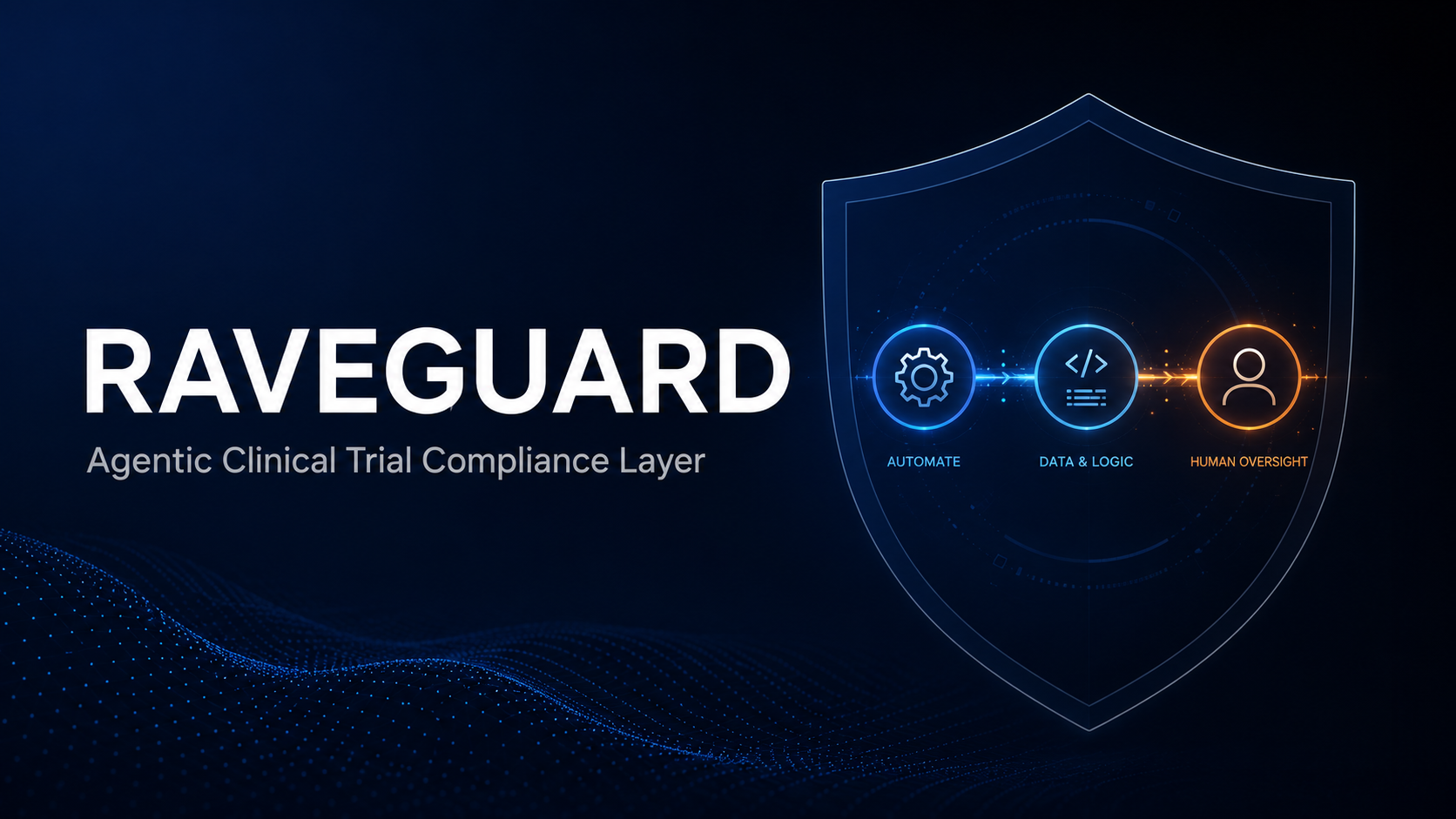
In clinical trials managed via platforms like Medidata Rave, safety data discrepancies; such as a sudden drop in hemoglobin without a corresponding Adverse Event log; can severely delay life-saving treatments. I was inspired to build RaveGuard to solve this bottleneck. The goal was to treat UiPath not just as an automation tool, but as an enterprise orchestration layer that seamlessly bridges autonomous AI reasoning, robust API pipelines, and strict human-in-the-loop governance. RaveGuard operates as an exception-heavy pipeline across three layers: UiPath Studio and Action Center for core orchestration, a local Llama 3 model for autonomous clinical data auditing, and Gemini 3.1 Pro (via Google Antigravity) acting as our coding co-pilot. Building this was a challenging but rewarding process. Parsing heavily nested CDISC ODM XML data and forcing an LLM to consistently return strict JSON arrays required complex traversal logic—which is where our Gemini coding agent proved invaluable. Ultimately, I saw firsthand the future of agentic co-engineering. RaveGuard showcases how fluidly UiPath Action Center can pause a local AI script, spin up a dynamic human-readable form for medical approval, and instantly resume a parallel thread to dispatch validated data back to the clinical database.
Built With
- api
- ollama
- python
- uipath

Log in or sign up for Devpost to join the conversation.