Inspiration
We want to help med students hear a patient’s story, pick out what matters, and figure out what to ask next.
What it does
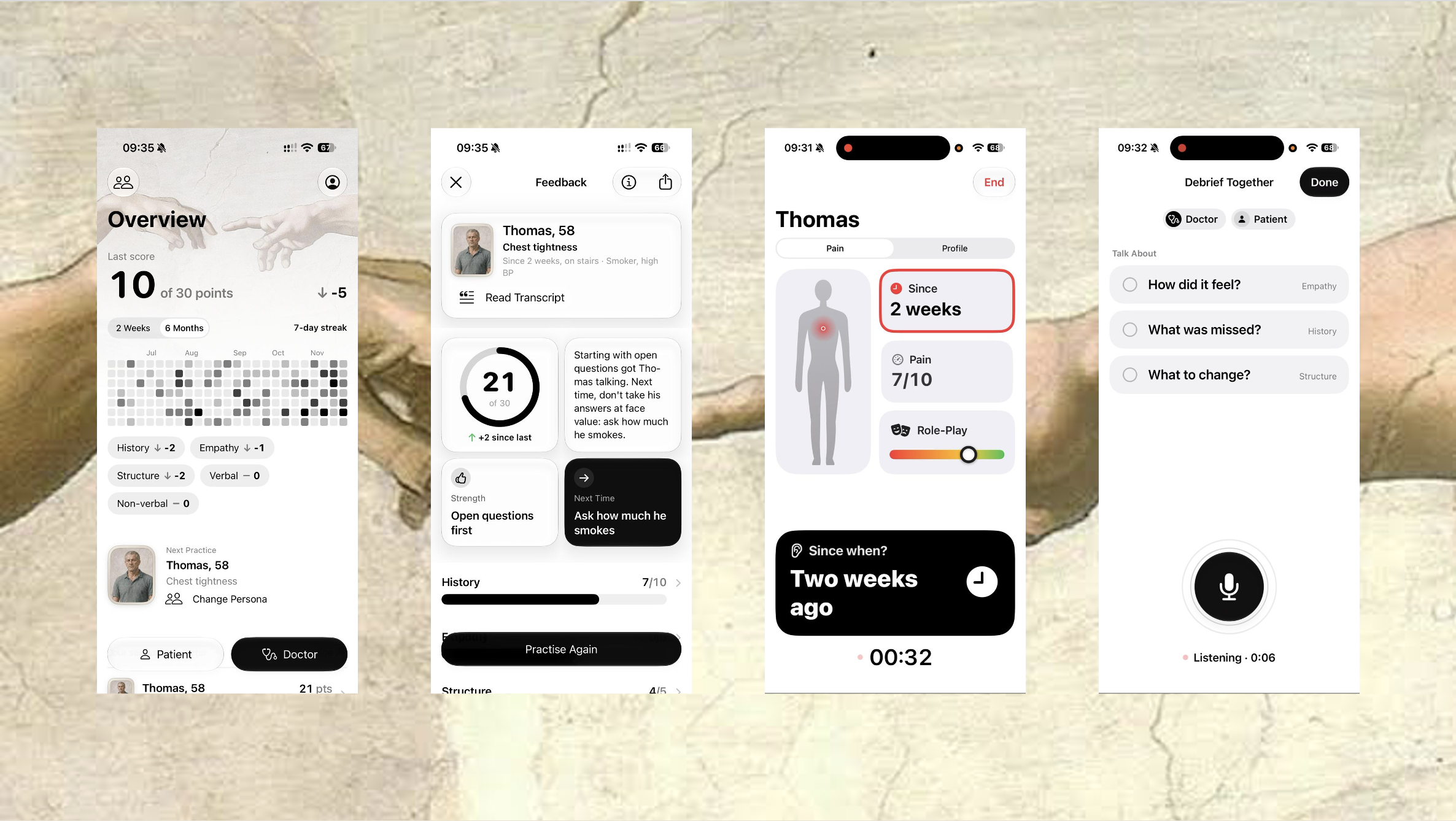
You and a classmates take turns playing doctor and patient. When you’re the patient, Co-STAR gives you a backstory and tips on how to play the role. During the conversation, the AI gives you details through your earbud or as text. You choose how to answer.
How we built it
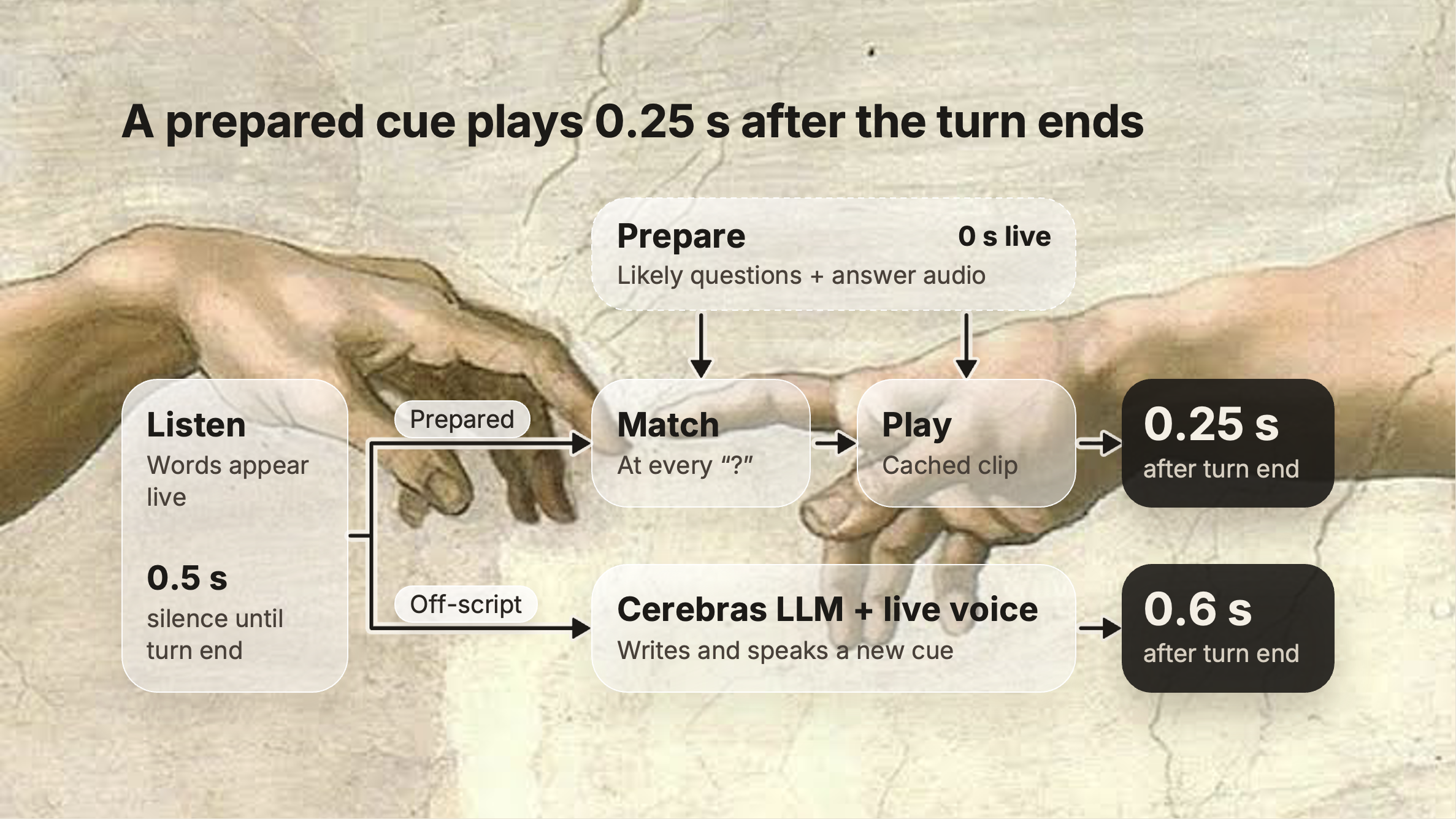
Co-STAR listens for questions, matches them to the case, and keeps track of what’s already been said. We use Python as backend, hosted in Germany using both open and closed source models. Our frontend is an iOS app in Swift.
Challenges we ran into
A late hint leaves both students waiting. To keep the conversation flowing, we start matching questions while the doctor is still speaking and preload audio for common questions.
Accomplishments that we're proud of
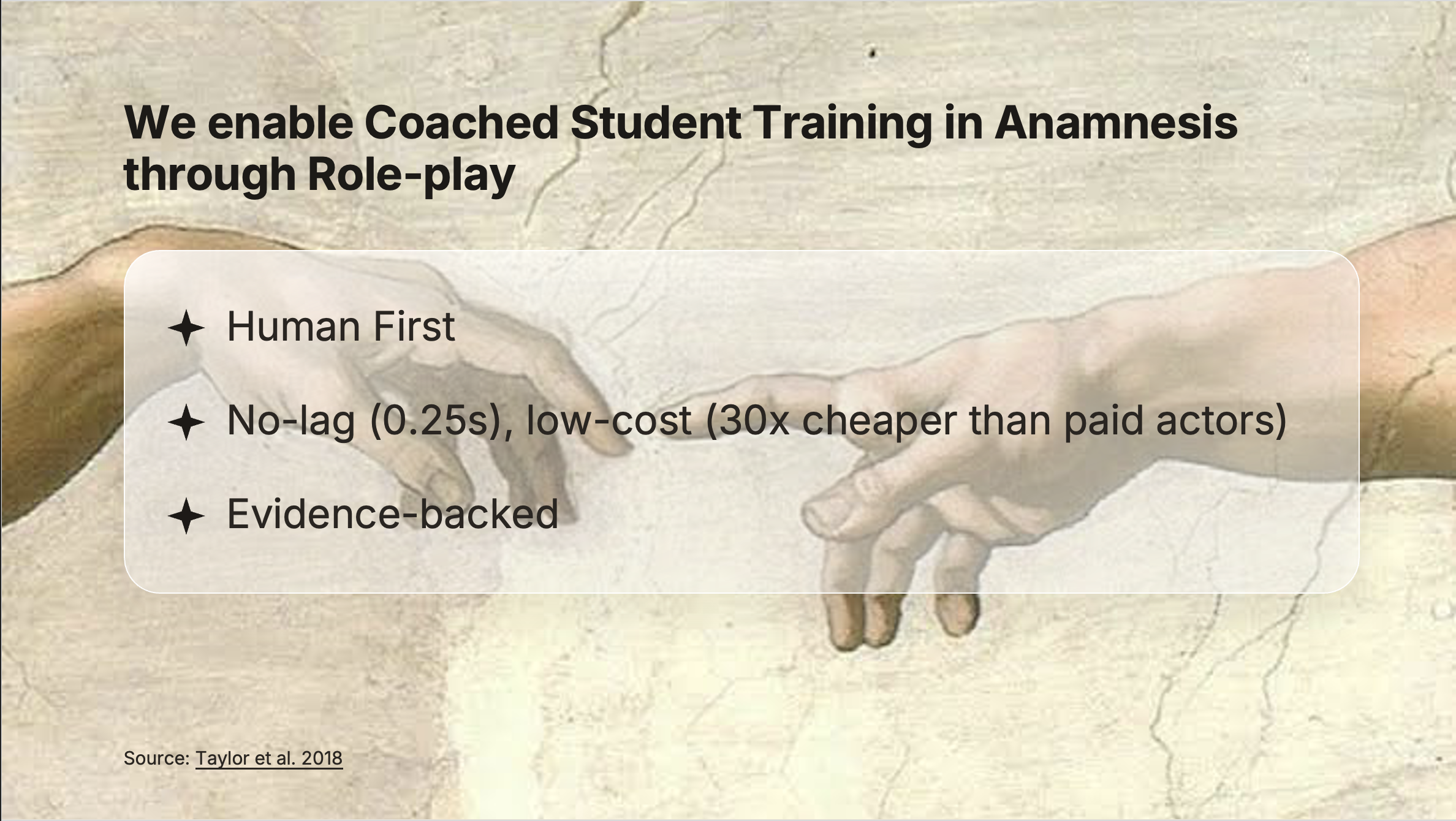
Co-STAR gives students up to 30 hours of practice for the cost of one hour with a paid patient actor. It detects the end of a question about 0.5 seconds after the doctor stops speaking. From there, the median wait for a hint to start is 0.25 seconds for a prepared cue and 0.6 seconds for an off-script question.
What we learned
A classmate can be a good practice partner. In one study, med students got similar communication scores whether they interviewed a classmate or a trained volunteer. Taylor et al., 2018
That helped us decide where AI fits. When the doctor asks, “When did the pain start?”, Co-STAR can whisper “two weeks ago.” The student playing the patient gets the detail they need and can answer in their own words.
What's next for Co-STAR
We want to put Co-STAR in the hands of med students and see how the apps feel in preparing for simulations with actors.


