-
-
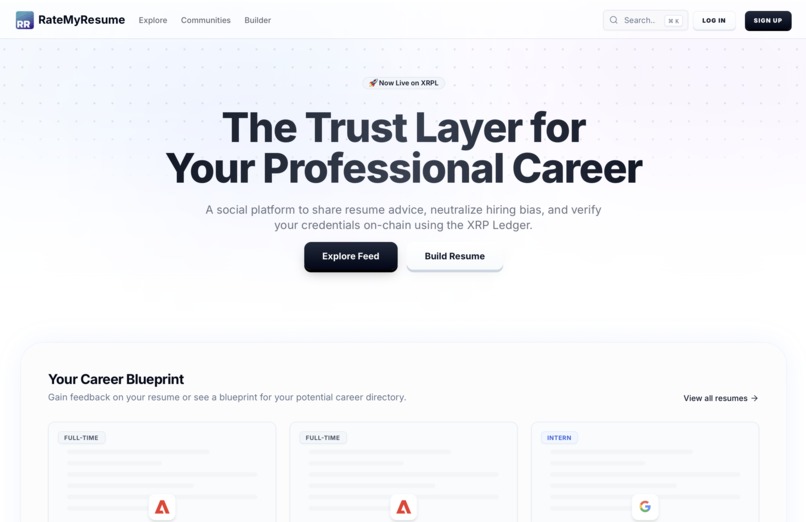
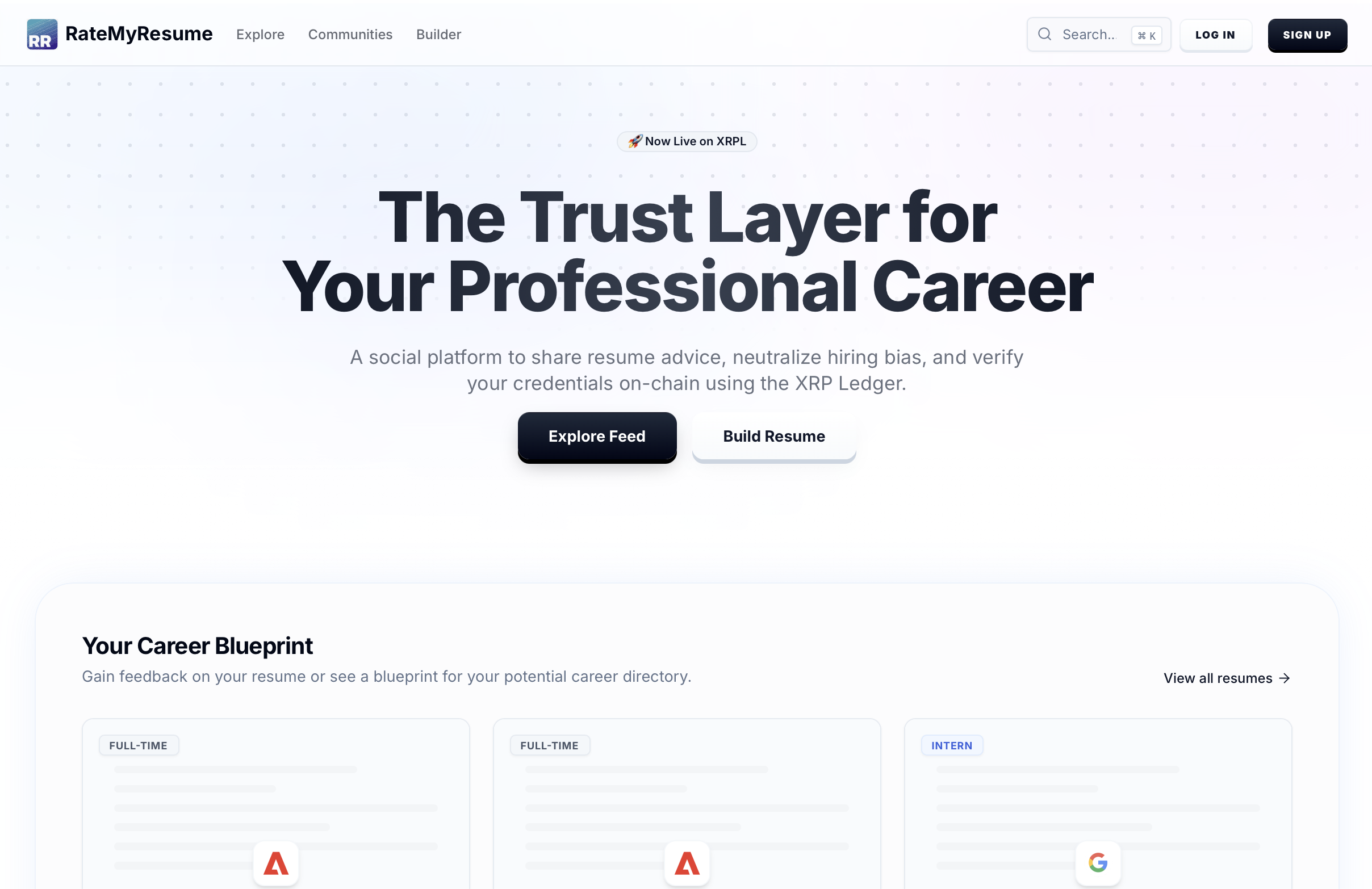
Landing Page
-
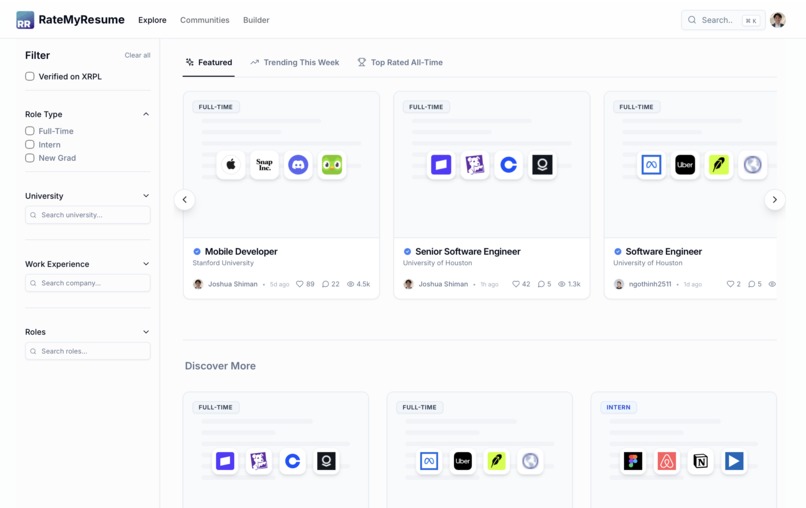
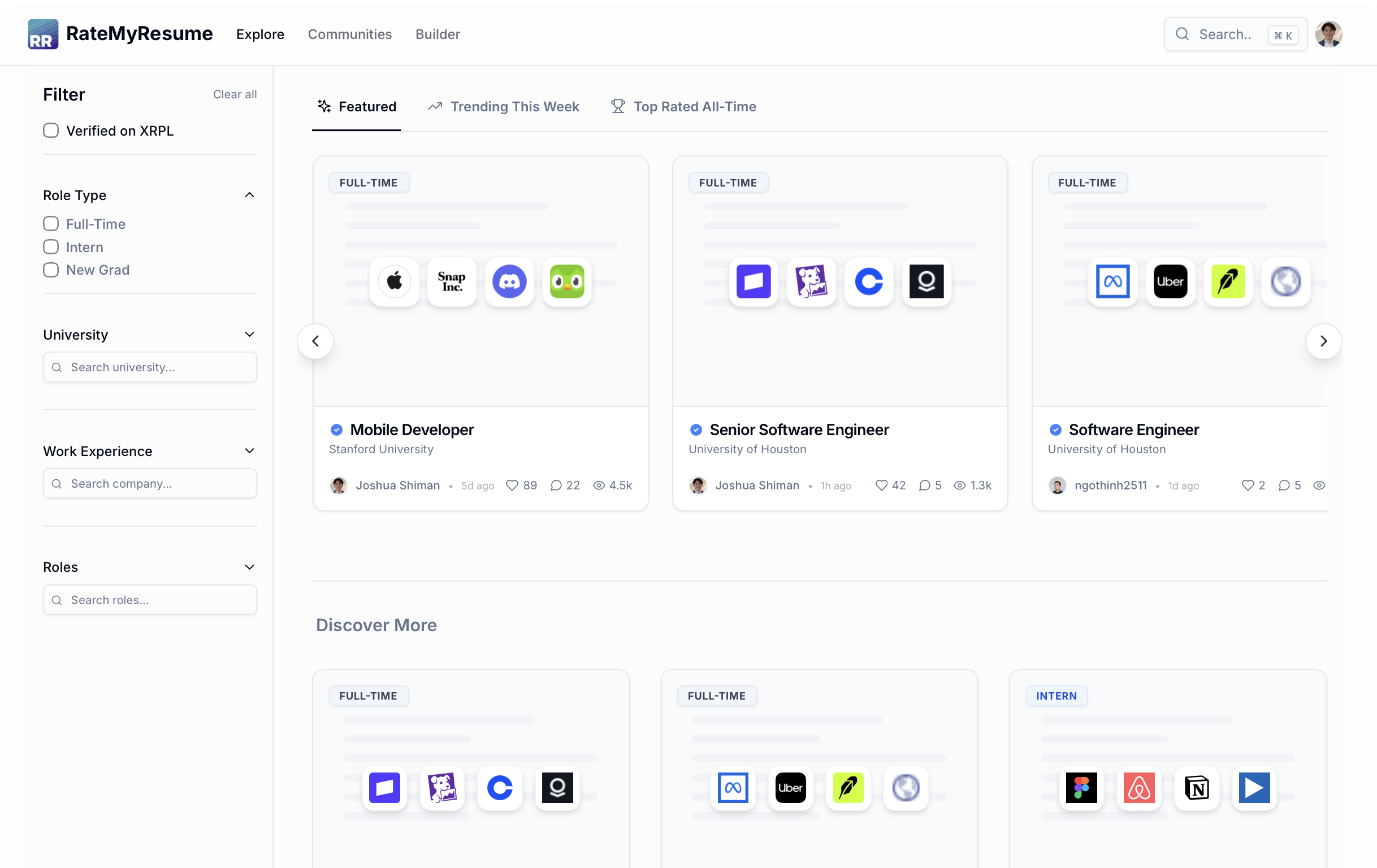
Explore Page - Discover Winning Resumés at your Dream Companies
-
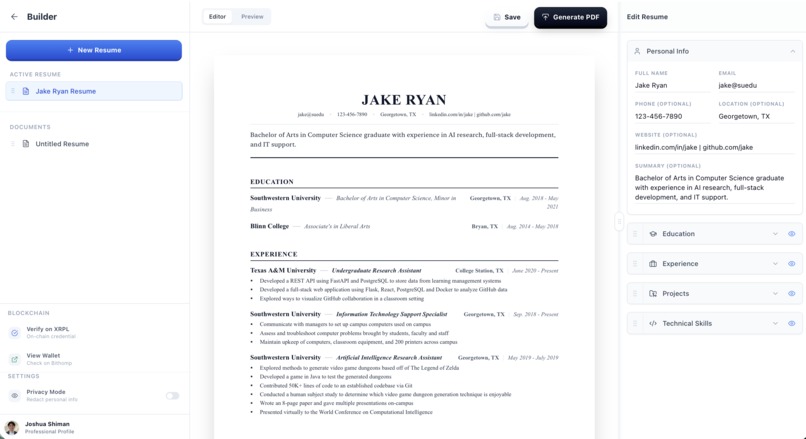
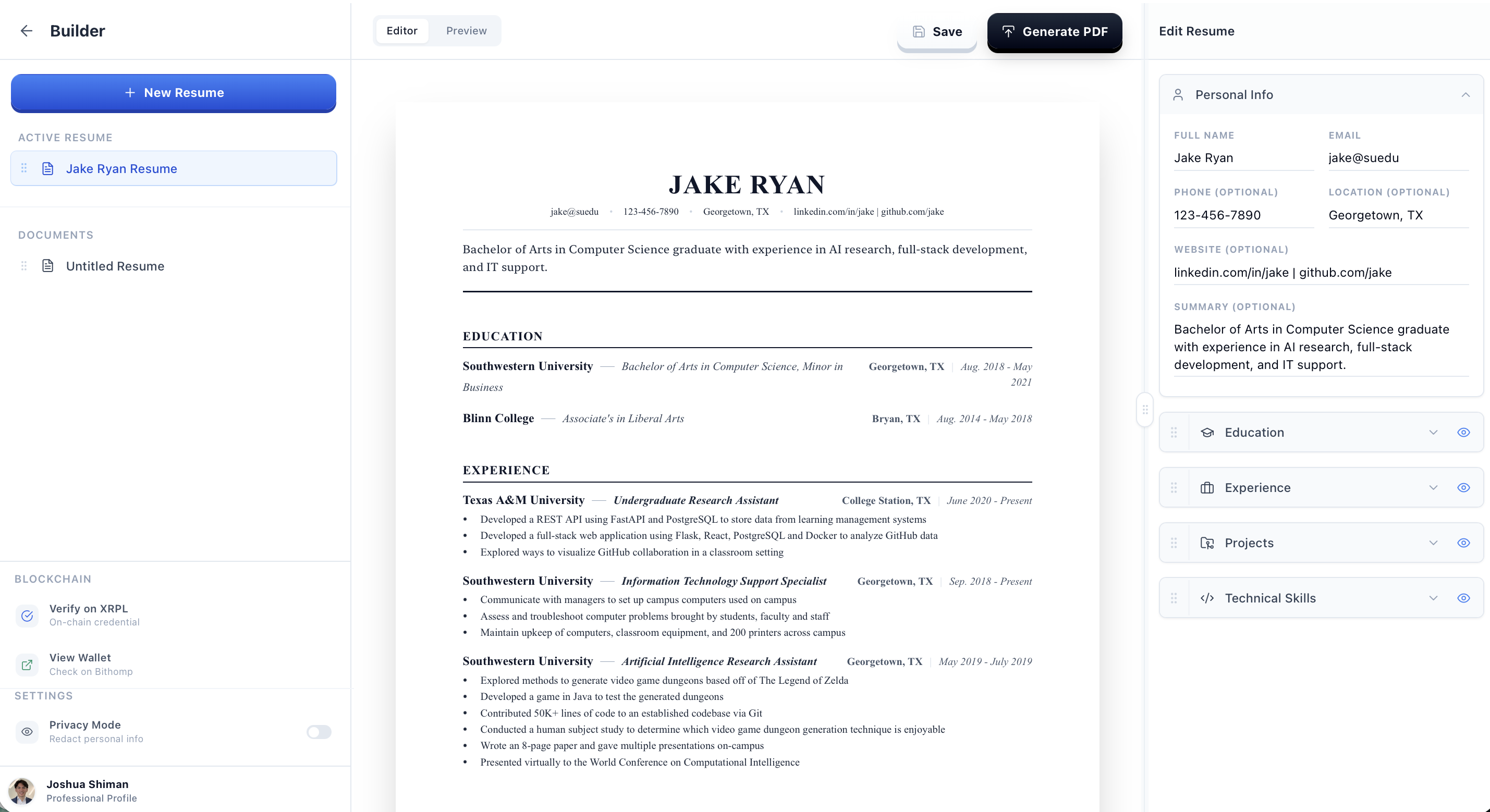
Builder Page - Drag-and-Drop Builder with XRP On-Chain Experience Verification
-
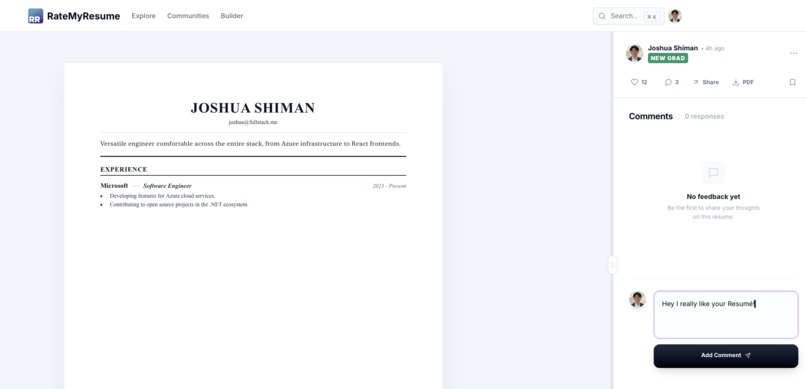
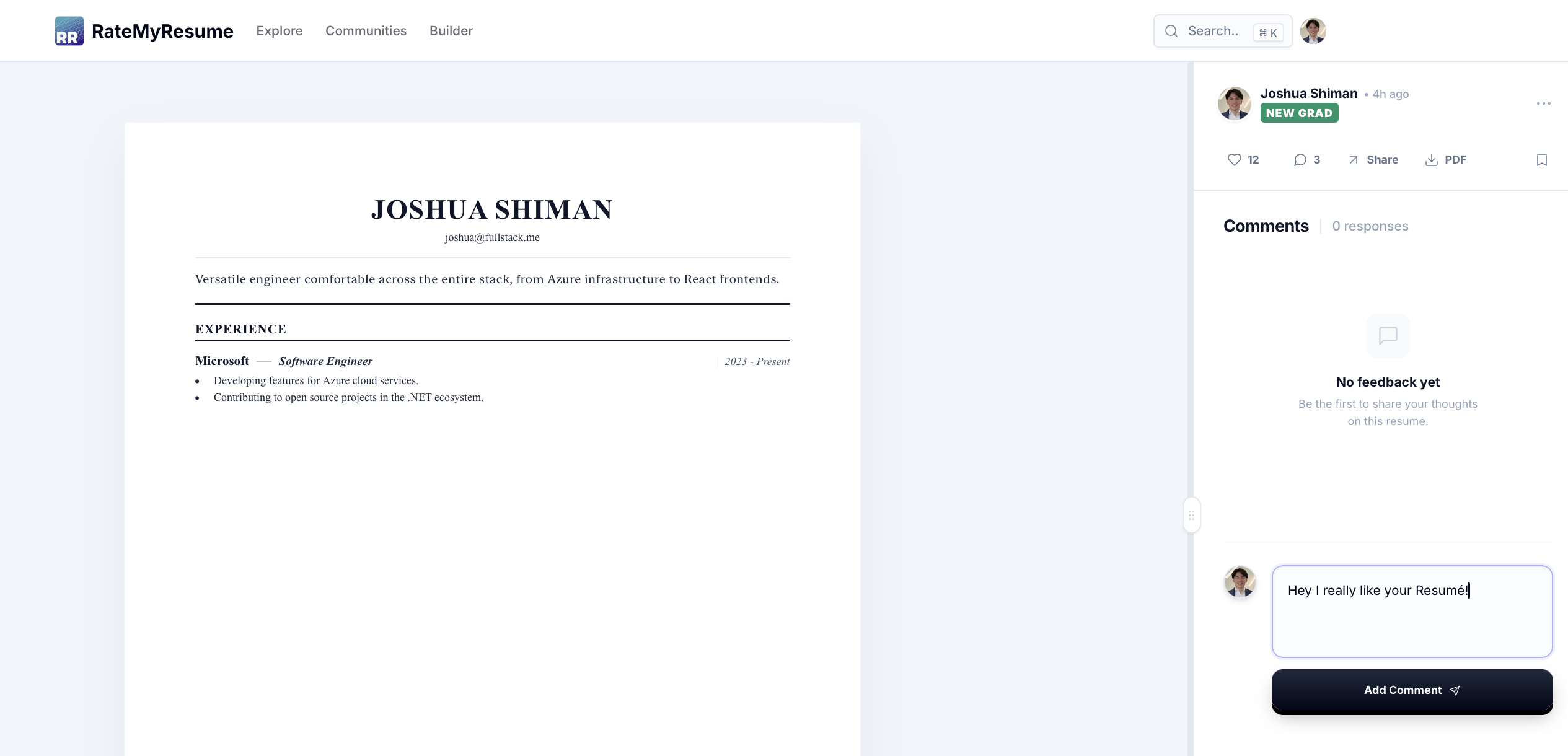
Review Page - Receive Feedback on Your Resumé or Share Advice!
-
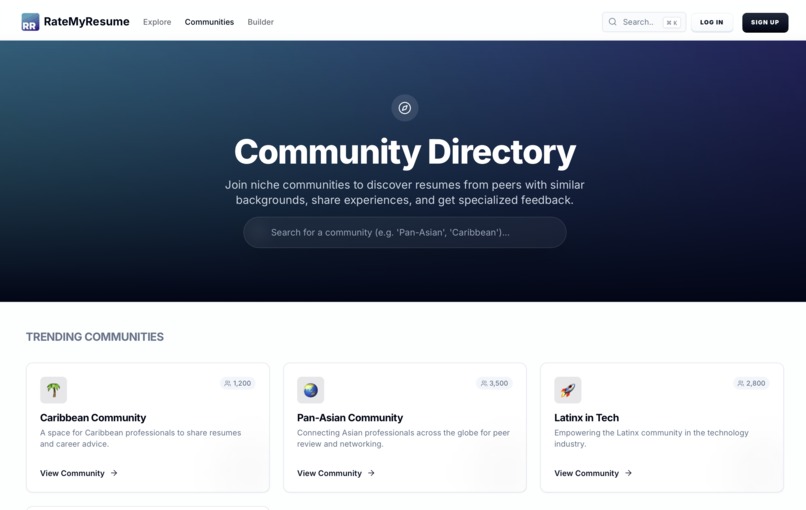
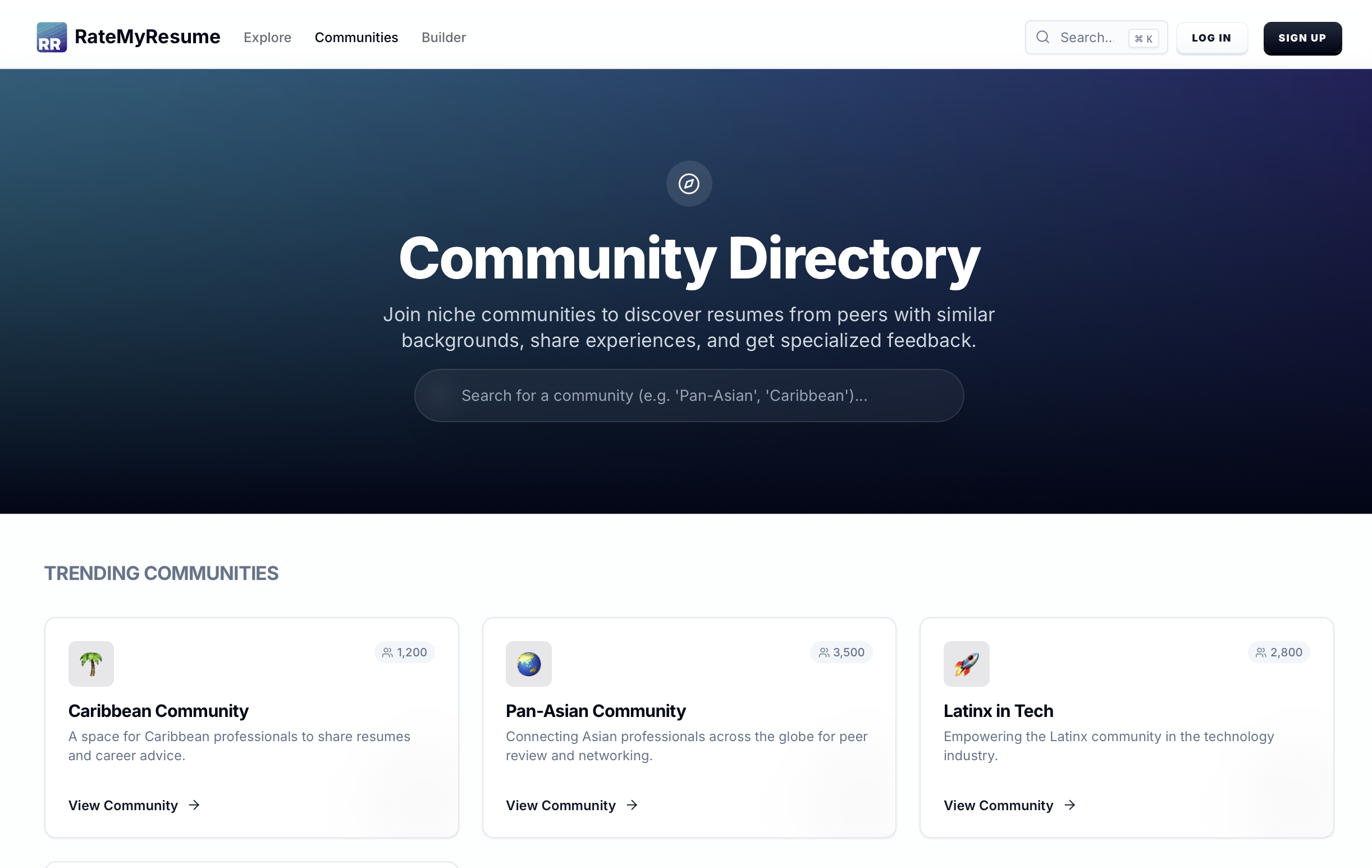
Communities Page - Explore Resumé's from BIPOC and Underrepresented Communities
The Racial Gap
❗️White names receive 50% more callbacks for job interviews according to a research study. (AER 2004)❗️
For BIPOC and underrepresented job seekers, this is the shocking reality as the "hidden job market" isn't just about who you know, it’s about bias. Systemic bias often leads to "prestige discounting," where marginalized talent faces higher scrutiny of their credentials. Our team was inspired by the concept of Sankofa (an Adinkra symbol meaning "reach back and get it" and also a Toronto landmark we're proud of) which is the belief that we must look to our past and our community to move forward. We built RateMyResume to bring BIPOC and underrepresented communities together to build a space where we can support each other, leveraging community feedback and the XRP blockchain to provide a trust layer.
What is RateMyResume?
RateMyResume is a social platform for BIPOC and underrepresented jobseekers to share resume advice, validate their credentials, get discovered by recruiters and strengthen community:
- 📰 Feed: Users can post their own resume or browse resumes by role or company. Allowing them to gain feedback on their resume or see a blueprint for their potential career directory, and not start from scratch.
- 📝 Resume Builder: An integrated editor that automatically strips away PII (Personally Identifiable Information). By redacting names and locations, we force recruiters to focus on skills first, neutralizing the "Name Bias" that results in 50% fewer callbacks for BIPOC talent.
- 🌍 Communities: Dedicated spaces where users can find mentorship and support within specific identity groups. These communities turn the "Hidden Job Market" into an open resource, allowing members to share niche-specific advice and cultural navigation advice.
- 🔒Trust Layer: Work experiences can be verified using the XRP Ledger to provide candidates with immutable and verified proof. Employers "sign" an attestation, giving the candidate an immutable "Verified" badge.
- 🔍 Discoverability: Recruiters can gain access to query a verified and diverse talent pool, while also filtering for specific work experiences tailored to the roles they're actually hiring for, enabling signficant cost-savings for talent acquisition.
How we built it
This is the most ambitious project our team has ever built, and we wanted to go all out because this might be our last NSBE Hacks together (4 years in a row 🤞). We built it primarily with scalable architecture in mind:
- Authentication: Clerk
- Frontend: Next.js, TailwindCSS, JavaScript
- Backend: Golang
- Database: Azure Cosmos DB (GitHub Student Developer $100 Free Credits)
- Frontend Hosting: Vercel
- Backend Hosting: Azure Compute Cluster, Azure Storage Blob,
- Blockchain Verification: XRP Ledger
- DevOps: GitHub Actions
- Containerization: Docker
We did all of our backend hosting from SCRATCH. Yes, that means we built from the ground up: a GitHub Actions DevOps pipeline to automatically build our project within a Docker container triggered by a GitHub deployment directly to our (painstakingly) configured auto-scaling Azure Compute Cluster that will deprovision when there are no active requests, our Azure Cosmos DB ** and our **Azure Storage Blob. For backend services, we chose to build it in Go because we wanted our services to be blazingly fast and scalable. For frontend, we chose to build it in the Next.js stack for versatility of existing libraries and components, allowing us to create new features and rapidly prototype, additionally it integrates seamlessly with Vercel for frontend hosting. Clerk for Auth, because it was so simple to setup.
Reflection
We have a lot of love for NSBE Hacks. ❤️ This project is our Sankofa moment; as we prepare to move forward into our careers, we are reaching back to our roots to build a tool that lifts our community with us. RateMyResume is more than just our 'magnum opus' or a technical feat in Go and XRP; it is a reflection of four years of growth, a tribute to the mentors who guided us, and our way of ensuring that the door stays open for every BIPOC and underrepresented developer coming up behind us.
References
Bertrand, M., & Mullainathan, S. (2004). Are Emily and Greg More Employable Than Lakisha and Jamal? A Field Experiment on Labor Market Discrimination. American Economic Review, 94(4), 991–1013. doi:10.1257/0002828042002561


Log in or sign up for Devpost to join the conversation.