


Inspiration
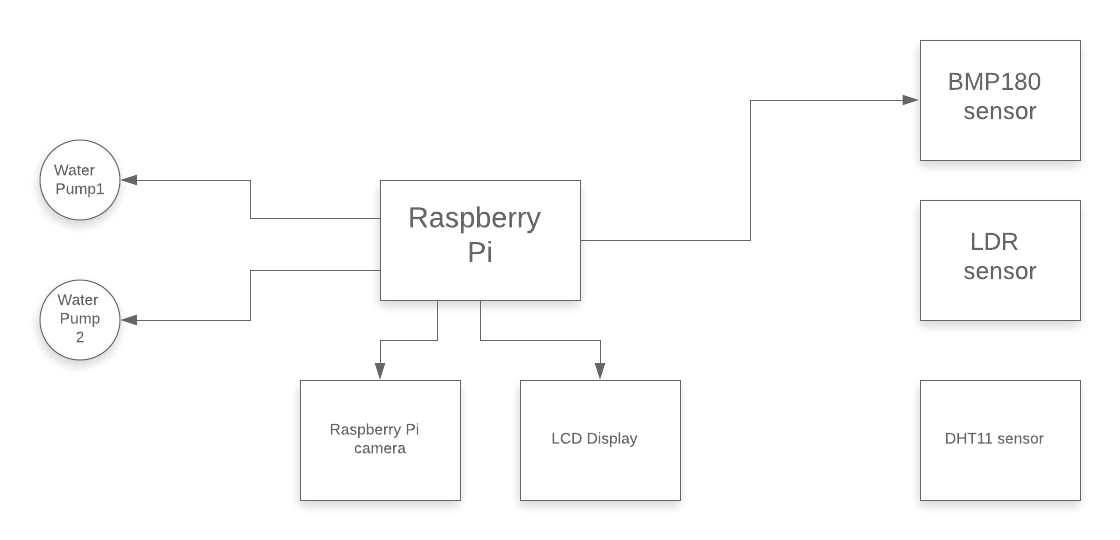
This is a smart hydroponics farming system which can be used in places where the space is very less and the possibility of soil based farming is very less. The system would be having two layers of plant farming. It would be connected to two water pumps for supplying water. It would also have a camera connected so that it can be monitored from anywhere by users. Also, every water pump and sensors can be controlled monitored from an web server from any pc or smart phone over a LAN network. There would be an LCD display connected to the raspberry pi for accessing the pi. The web server would be made using html and python flask. I will also create a online dashboard using Thingspeak API to display the sensors data and be accessible from anywhere. If there are any anomalies in the system, the operator would be alerted through buzzers and also display warning systems in the LCD display.
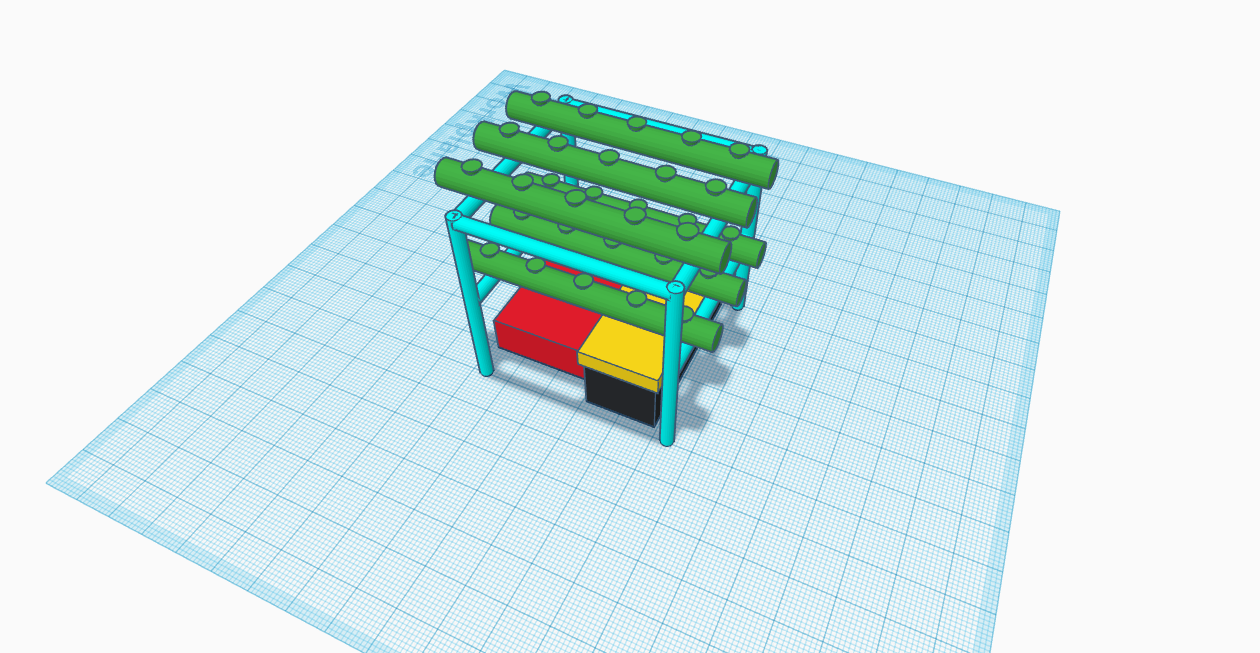
The water tank would be made of black UV protected material so that the radiations do not effect the chemical compositions of the nutrients. The water must be mixed with nutrients at certain intervals of time so that the plants constantly get the nutrients. Different plants need different types and amounts of nutrients. Depending on the types of plant grown, the nutrients can be mixed. The plants would be allowed to grow in cylindrical pipes. There would be small holes in the pipes where the plants in some soft cases made of coconut husks can be put. In the image below, the cones represent the plants. The coconut husk cases can be of radius 6 cm. The length of the pipe would be around 85-90 cm. A single pipe can accommodate up to 8 plants.
The plants seeds need to be germinated in special conditions. For hydroponic farming system, the seeds need to be germinated first and then transferred into the hydroponic pipes. The seeds are put into soft coconut husk cases where they germinate. After germination, the the seedlings need to be taken care for about a week and then can be transferred to the hydroponic system.
The hydroponic pipes would be of radius 7 cm. In total, there would be 2 layers of hydroponic pipes (less layers initially) with around 20 cm gap in the vertical direction so as to ensure the best growth of plants. The horizontal layers of pipes would contain different number of pipes so as to keep a distance of around 6-8 cm in between the pipes in the horizontal direction. Every pipe in each layer would be connected to a pipe which would carry nutrient-rich water from the water tank. The other side of the hydroponic pipe would be connected to another pipe which would carry the used water back to the water tank after filtering it. The same water can be reused over and over again and prevent the loss of water.
Benefits
Hydroponic farming system take up 90% less water then traditional farming system. As the plants are in direct contact with water, the roots do not need to go deep in search of water. This can help to grow plants in lesser amount of area. Problems like weeds, pests and plant diseases can be prevented as they are related to soil. In the case of Hydroponic farming systems, there is no soil involved. This reduces the use of pesticides and other harmful chemicals in the growth of plants. The harvest time of crops is very less as compared to soil-based farming. Crops grown from Hydroponic farming system are very organic as no harmful chemicals are involved.
What it does
How we built it - Components to use
Raspberry Pi 4
Arduino UNO
LDR Light Sensor
DHT11 Temperature and humidity sensor
BMP180 Pressure sensor
Electric Water pump - 2
Buzzer for alarming
HDMI LCD Display for Raspberry pi
Raspberry Pi Camera V2
The main PVC pipe frame and Hydroponics pipes will be procured by me from a local store.
Built With
- raspberrypi
- sensor
- tinkercad

Log in or sign up for Devpost to join the conversation.