RasoiOS — A Kitchen That Thinks With You
Inspiration
In many Indian households, deciding what to cook is a daily challenge. Different family members have different food preferences, dietary restrictions, allergies, and fasting requirements. Meanwhile, the person cooking may not know what ingredients are available or whether the planned meal still makes sense.
We noticed that most recipe applications answer "How do I cook this?" but rarely answer "What should we cook today, given everything happening in our household?"
That inspired us to build RasoiOS, a voice-first household kitchen assistant that connects family meal planning with the actual cooking process.
Our goal was to make kitchen management more accessible, especially for Indian families, domestic cooks, and elderly users who may find complicated applications inconvenient.
What It Does
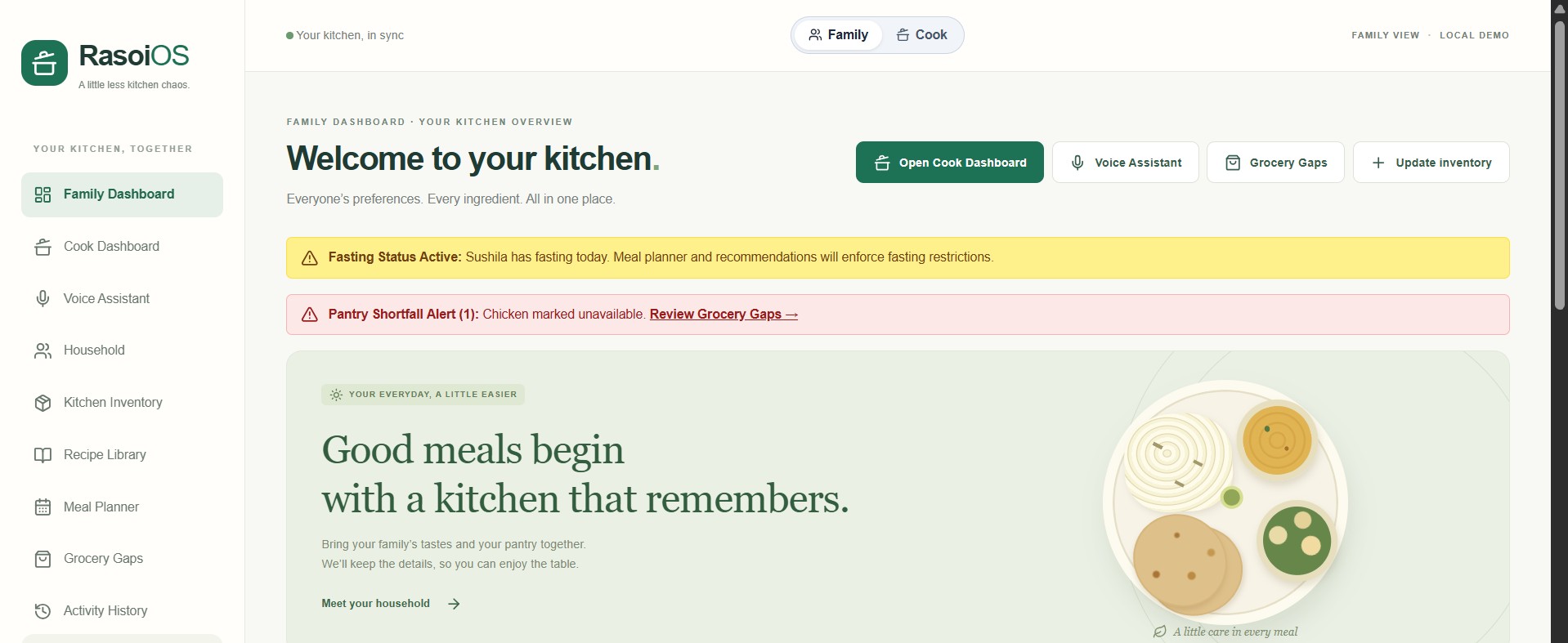
RasoiOS brings household meal planning, inventory management, and cooking assistance into one system.
It provides two connected dashboards:
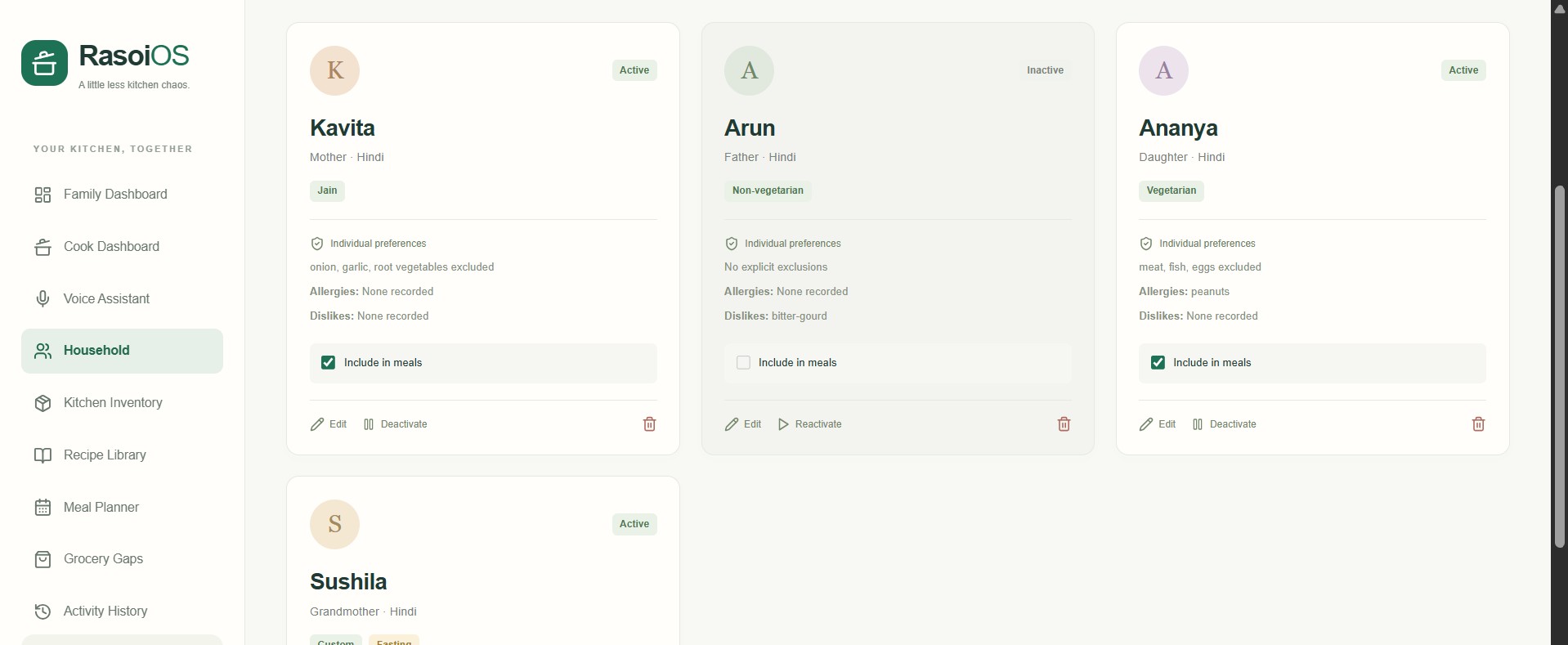
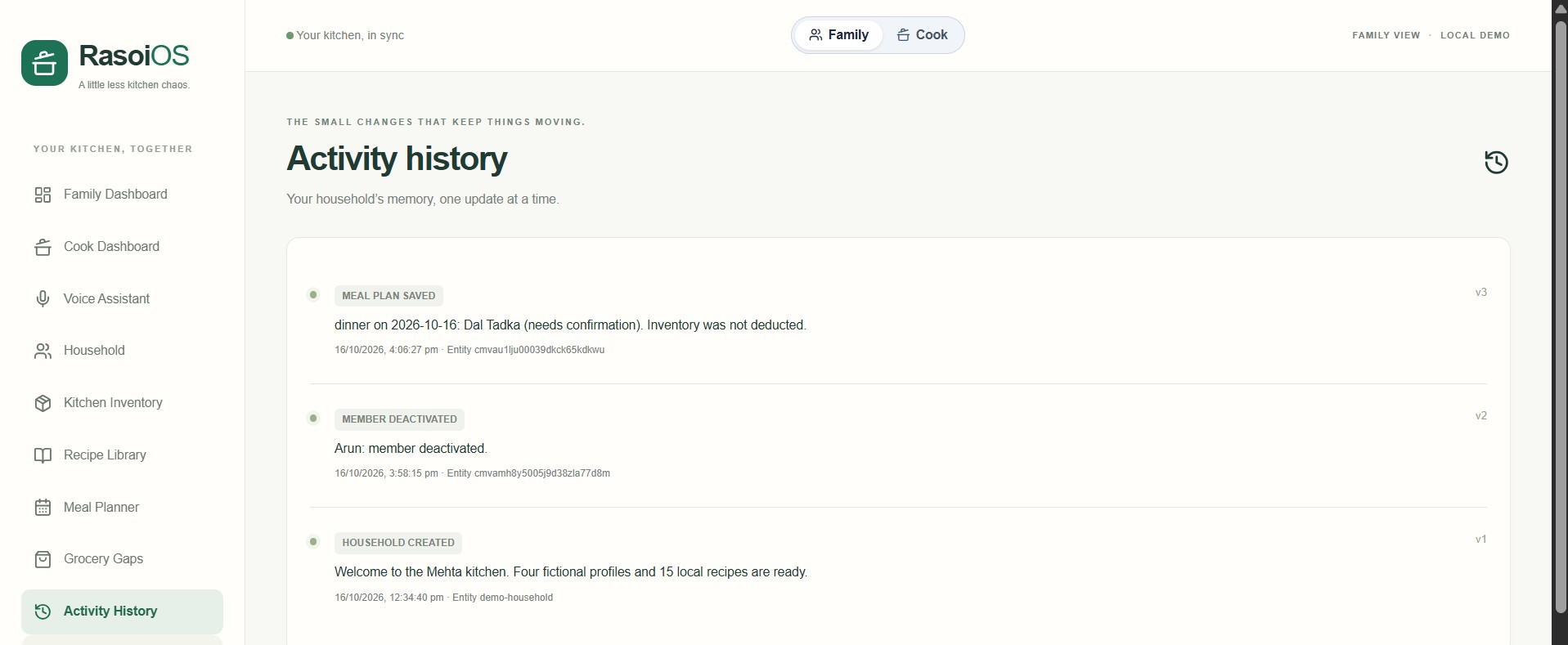
- Family Dashboard: Manage household members, dietary preferences, fasting requirements, ingredient inventory, and meal plans.
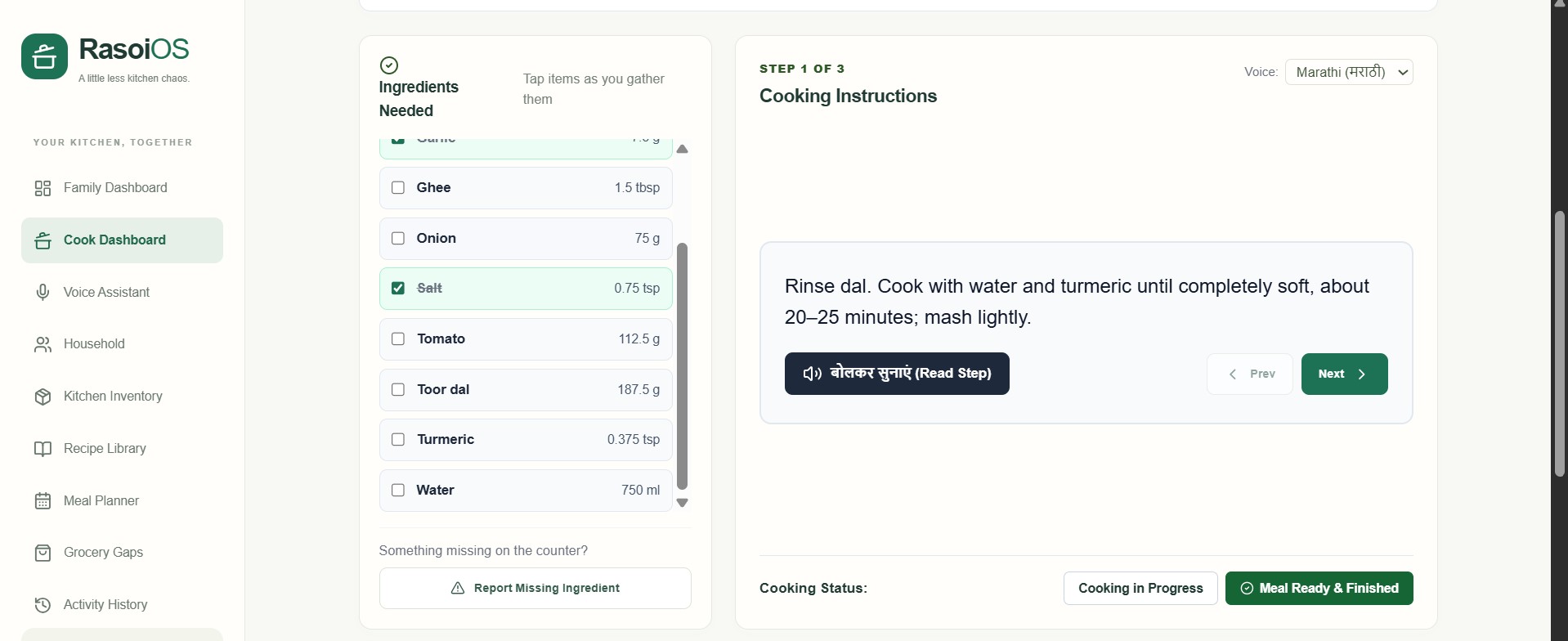
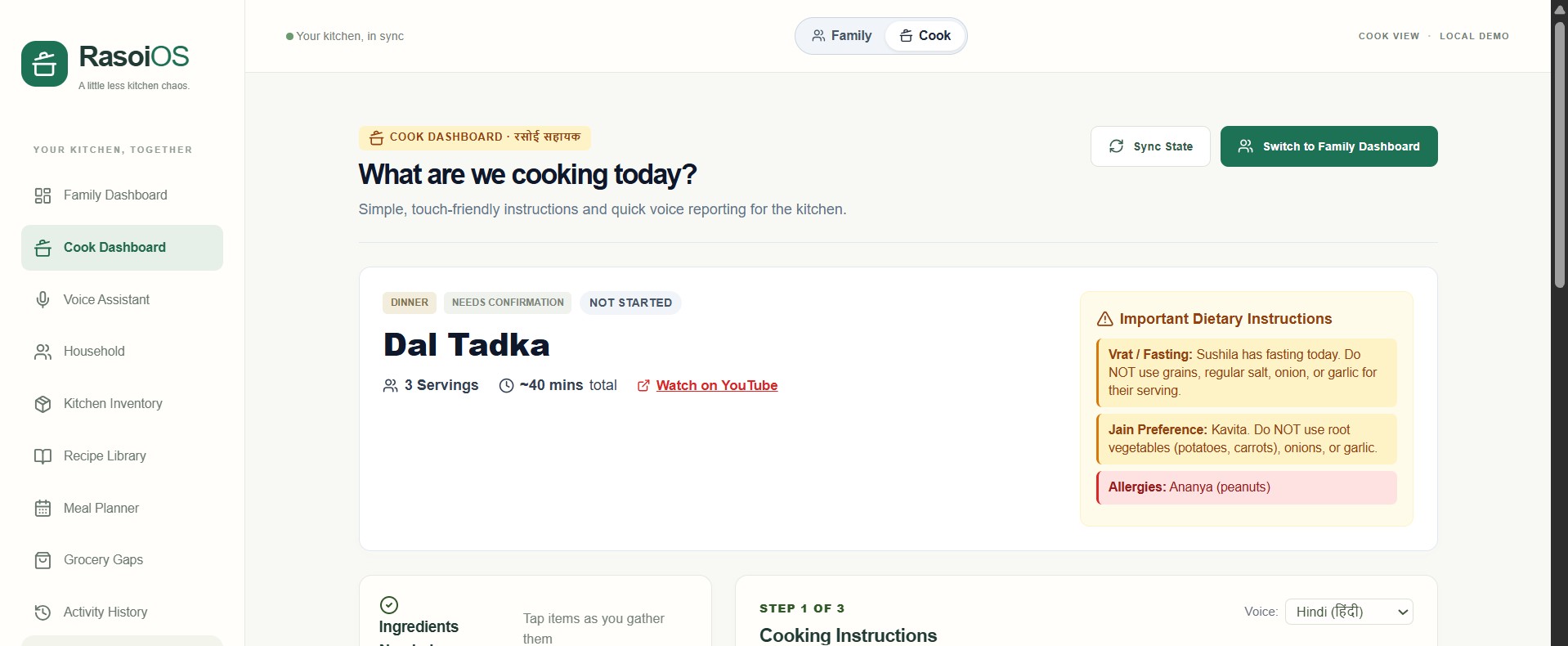
- Cook Dashboard: View assigned meals, check ingredients, follow step-by-step instructions, and report kitchen changes through voice commands.
The defining feature is automatic adaptation.
For example, if a cook says, "Paneer khatam ho gaya" (We're out of paneer), RasoiOS is designed to understand the command, request confirmation, update the inventory, and re-evaluate the meal plan. If the original dish is no longer feasible, the system can recommend an alternative based on available ingredients and household restrictions.
Instead of treating recipes as static instructions, RasoiOS treats meal planning as a continuously changing household decision.
How We Built It
We built RasoiOS using Next.js, TypeScript, and Tailwind CSS, combining a persistent household data system with deterministic meal-planning logic and AI-powered voice interaction.
Our architecture consists of four major components:
1. Household and Inventory Management
The application maintains information about household members, their dietary preferences, fasting requirements, allergies, and available ingredients.
2. Constraint-Aware Meal Planning
A rule-based recommendation engine evaluates recipes against ingredient availability, serving requirements, dietary restrictions, and cooking time. Rather than relying entirely on AI-generated recommendations, deterministic checks help ensure that suggested meals are actually feasible.
We also incorporated an Indian recipe dataset from Mendeley to support a broader range of familiar dishes.
3. Voice-Based Kitchen Interaction
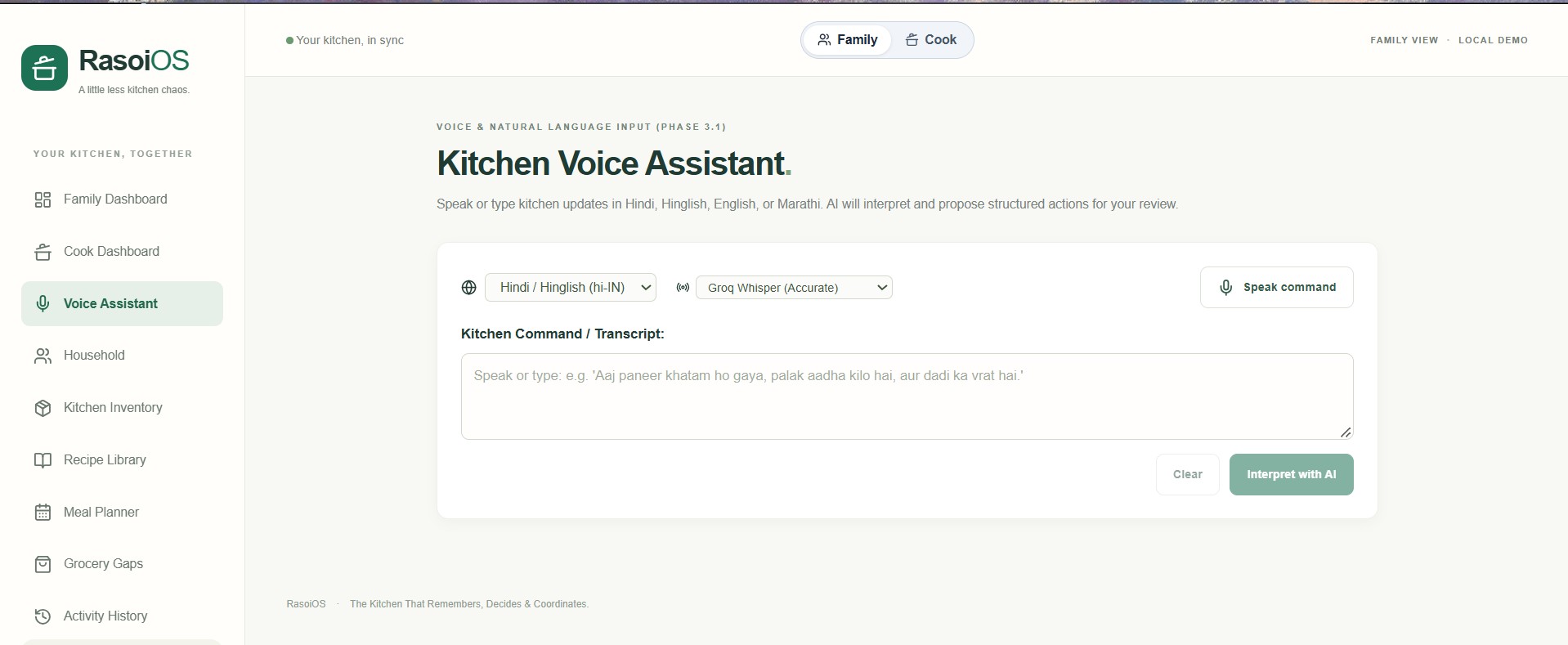
We integrated Groq Whisper for speech transcription and Gemini with Groq fallback for interpreting natural-language commands.
This enables interactions such as:
- "Palak aadha kilo bacha hai."
- "Aaj dadi ka vrat hai."
- "Kal lunch mein chole banana hai."
The system translates these requests into structured actions, which can be reviewed before being applied.
4. Connected Family and Cook Dashboards
Both dashboards use shared household information, allowing decisions made by the family and updates reported by the cook to remain synchronized.
We also designed the cooking experience around simple instructions, ingredient checklists, and spoken guidance.
Challenges We Faced
One of our biggest challenges was bridging the gap between natural-language understanding and reliable application behavior.
A language model might understand that someone wants to cook paneer, but that does not necessarily mean paneer is available. We needed to distinguish between requests, inventory updates, preferences, and restrictions.
Another challenge was supporting Indian-language interactions, particularly Hindi and Hinglish, where users naturally mix languages and informal ingredient names.
We also encountered API reliability issues, including temporary Gemini service unavailability. To make the application more resilient, we introduced Groq as a fallback provider.
Integrating recipe data presented additional challenges because real-world datasets do not always contain standardized ingredient names, quantities, or dietary metadata.
Finally, we had to balance the needs of two very different users: family members making meal decisions and cooks who need straightforward, actionable instructions.
What We Learned
Building RasoiOS taught us that AI works best when combined with reliable software logic rather than replacing it.
We learned how to structure natural-language commands into validated actions, build fallback mechanisms for external AI services, and connect persistent application state with decision-making systems.
We also gained experience designing for accessibility and real-world workflows, where simplicity and reliability matter more than adding unnecessary features.
Most importantly, we learned to approach the kitchen not merely as a collection of recipes, but as a dynamic system involving people, preferences, resources, and changing decisions.
What's Next
We envision expanding RasoiOS with more regional Indian recipes, improved multilingual speech support, smarter grocery planning, and personalized meal recommendations based on household cooking history.
Our long-term vision is simple:
A kitchen where families spend less time deciding, cooks spend less time coordinating, and everyone gets meals that work for them.
Built With
- gemini-api
- generative-ai
- groq
- javascript
- natural-language-processing
- next.js
- node.js
- react
- rest
- speech-recognition
- tailwind-css
- text-to-speech
- typescript
- whisper
- zod

Log in or sign up for Devpost to join the conversation.