-
-
result.png
-
home.png
-
FastAPI.png
Inspiration
Many people experience symptoms like fever, headache, or fatigue but are unsure whether it is something serious or not. Searching online often leads to confusion and anxiety due to unreliable or overwhelming information. We wanted to build a simple, intelligent system that can provide quick, data-driven insights and guide users toward better healthcare decisions.
What it does
RareGuard AI is an AI-powered healthcare assistant that predicts possible diseases based on user-input symptoms.
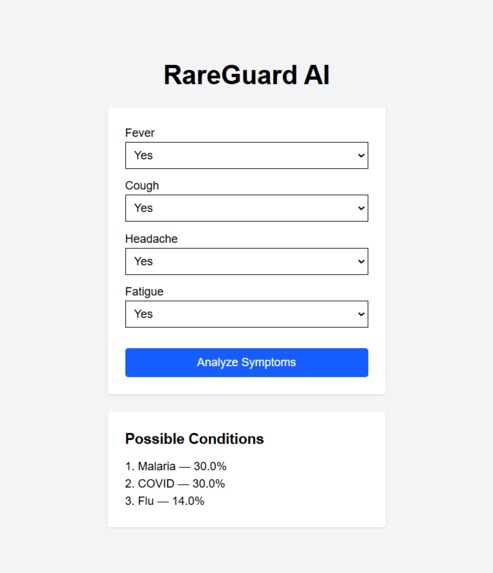
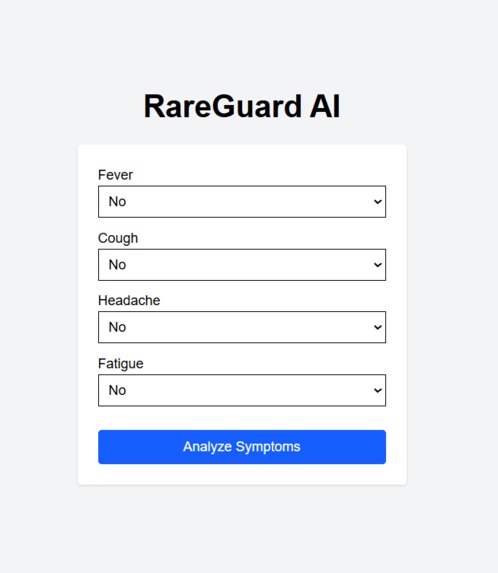
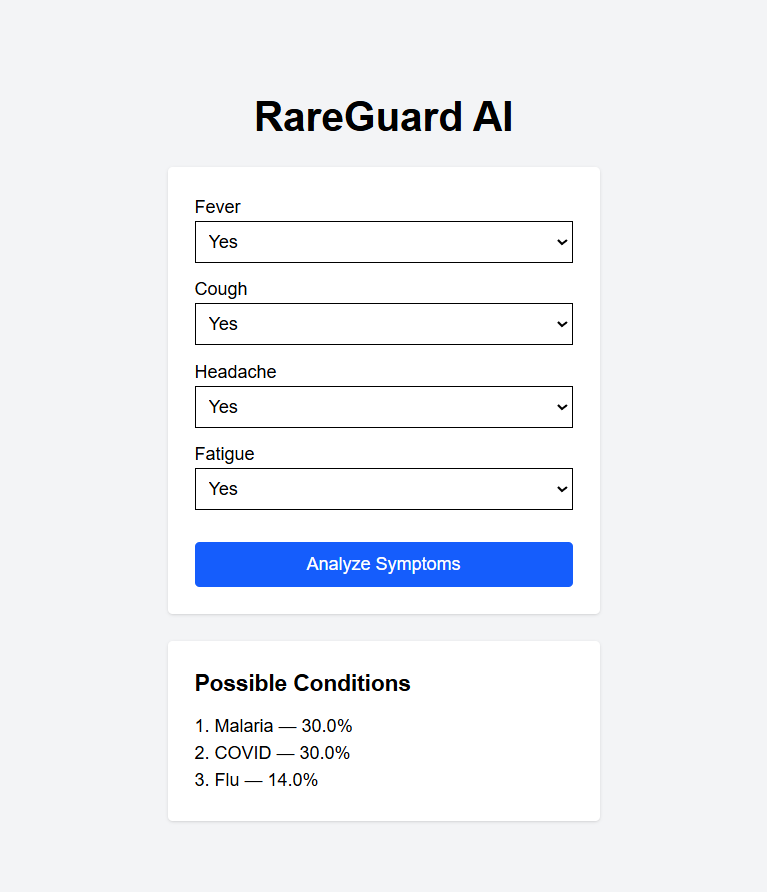
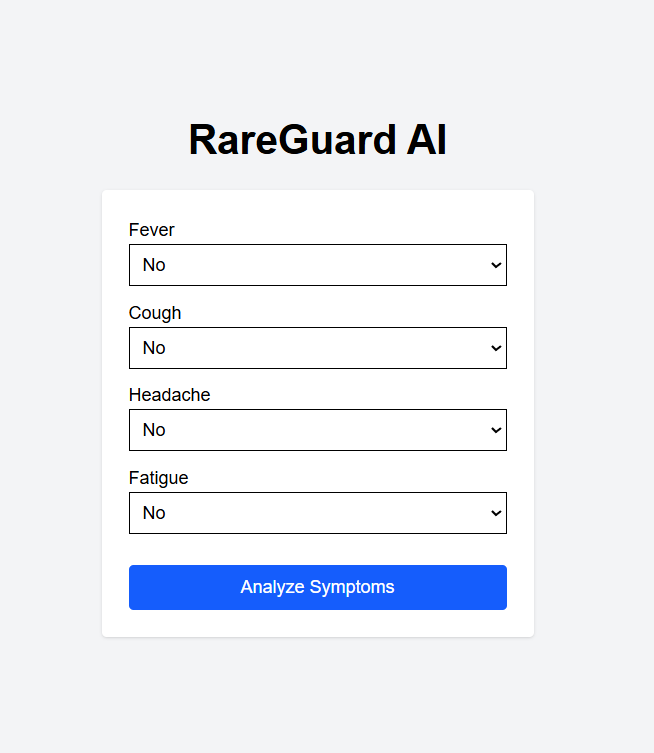
Users select symptoms such as fever, cough, headache, and fatigue through a web interface. The system then analyzes the input using a trained machine learning model and returns the top 3 most probable conditions with confidence scores.
This helps users gain early awareness and decide whether to seek medical attention.
How we built it
The system is built using a full-stack architecture:
- Frontend: Next.js for a clean and responsive user interface
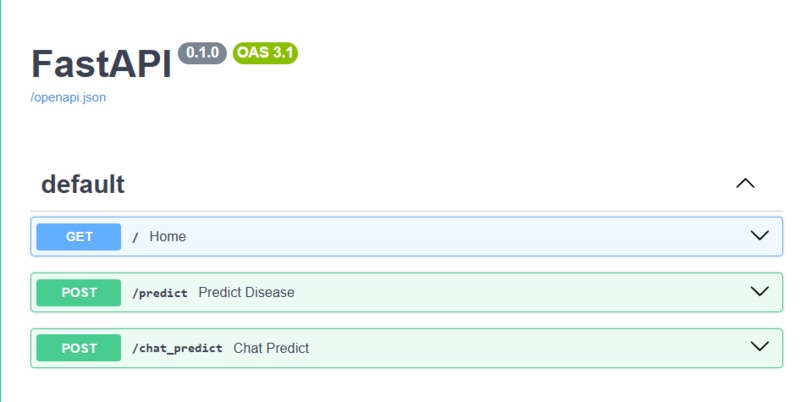
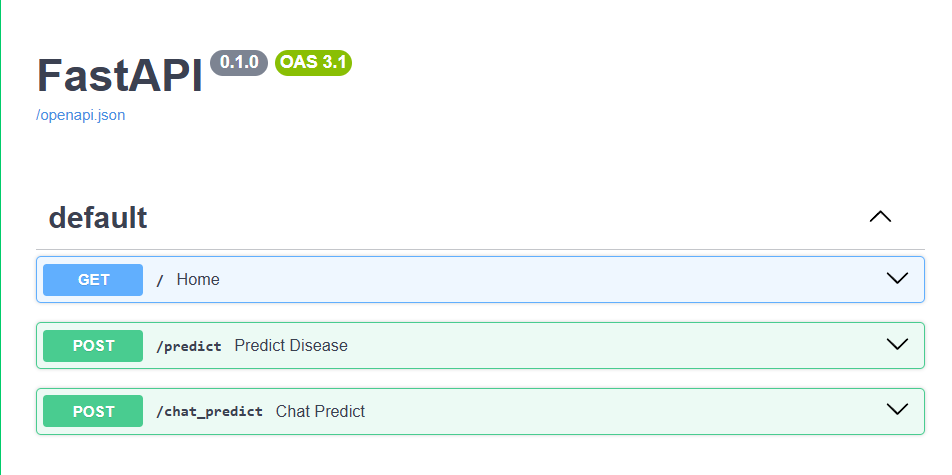
- Backend: FastAPI for fast API communication
- Machine Learning: Random Forest classifier using Scikit-learn
- Dataset: Custom dataset of common diseases and symptoms
Workflow:
User Input → API Request → ML Model → Predictions → Display Results
Challenges we ran into
- Handling inconsistent and noisy datasets
- Ensuring proper mapping between symptoms and model inputs
- Fixing frontend-backend integration issues (API errors, CORS)
- Making predictions realistic and meaningful instead of random
What we learned
- Building end-to-end AI systems (frontend + backend + ML)
- Data preprocessing and improving dataset quality
- API integration between FastAPI and Next.js
- Importance of user experience in AI applications
Future improvements
- Natural language symptom input (chat-based AI)
- Doctor/specialist recommendation system
- Integration with real medical datasets
- Personalized health insights
- Mobile app version
Disclaimer
This system is designed as a decision-support tool and does not replace professional medical diagnosis.
Built With
- css
- fastapi
- javascript
- machine-learning
- next.js
- python
- react
- scikit-learn
- tailwind
