
RapidRescue AI
Inspiration
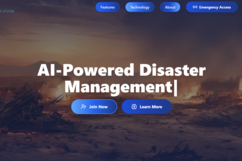
In recent years, the frequency and severity of natural disasters have increased due to climate change, posing serious threats to human lives and infrastructure. We realized the urgent need for a smarter, faster, and more coordinated approach to disaster management. Inspired by stories of delayed responses, resource misallocations, and lack of early warnings, we created RapidRescue AI — a comprehensive AI-powered platform that aims to revolutionize how we predict, respond to, and recover from disasters.
What it does
RapidRescue AI is an advanced disaster management and early warning system powered by artificial intelligence. It enables:
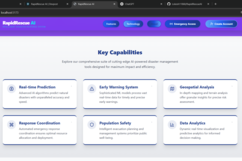
- Real-time Prediction: Uses machine learning to analyze satellite data, weather patterns, and sensor inputs to predict natural disasters with high accuracy.
- Emergency Response Coordination: Assists responders with smart resource allocation and real-time communication.
- Population Safety: Provides smart evacuation planning, live alerts, and safety guidelines tailored to specific regions and threat levels.
- Geospatial Analysis: Offers advanced terrain analysis and risk heatmaps using satellite imagery and ML.
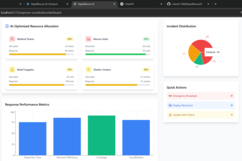
- Interactive Dashboards: Displays dynamic, actionable insights through data visualizations for administrators and first responders.
How we built it
We developed RapidRescue AI using the following tools and technologies:
- Frontend: React with TypeScript for a fast, responsive, and user-friendly interface.
- Backend & Auth: Supabase for authentication, data management, and real-time database functionality.
- AI/ML: TensorFlow.js for browser-based disaster prediction models and geospatial analysis.
- Data Sources: Integrated APIs for weather, satellite imagery, and historical disaster datasets.
- Design: Mobile-responsive UI tailored for both emergency responders and administrative staff.
Challenges we ran into
- Integrating real-time satellite and weather data into a lightweight browser application.
- Training and deploying ML models using TensorFlow.js with performance constraints.
- Building a collaborative dashboard that works seamlessly across different user roles and devices.
- Ensuring accuracy and speed in predictions while minimizing false alarms.
Accomplishments that we're proud of
- Successfully built an end-to-end AI pipeline that can run entirely in the browser using TensorFlow.js.
- Designed a real-time, mobile-friendly platform accessible to both field agents and command centers.
- Developed intelligent evacuation path algorithms that adapt to terrain and live disaster data.
- Enabled multi-user collaboration features for emergency coordination teams.
What we learned
- The immense value of real-time data processing and geospatial analytics in critical scenarios.
- Practical challenges in deploying machine learning models on the web with TensorFlow.js.
- Importance of user-centered design in high-stress use cases like disaster response.
- How to manage and sync live data updates securely using Supabase.
What's next for RapidRescue AI
- Integrate drone and IoT sensor data for even more granular risk assessment.
- Expand model capabilities to cover man-made disasters such as fires or industrial accidents.
- Implement offline capabilities for low-connectivity zones.
- Partner with local authorities and NGOs for real-world pilot testing and feedback.
- Add multilingual support to improve accessibility in diverse regions.
Built With
- css
- html5
- openweather
- react
- satelliteapis
- supabase
- tensorflow.js
- typescript
- vite

Log in or sign up for Devpost to join the conversation.