-
-
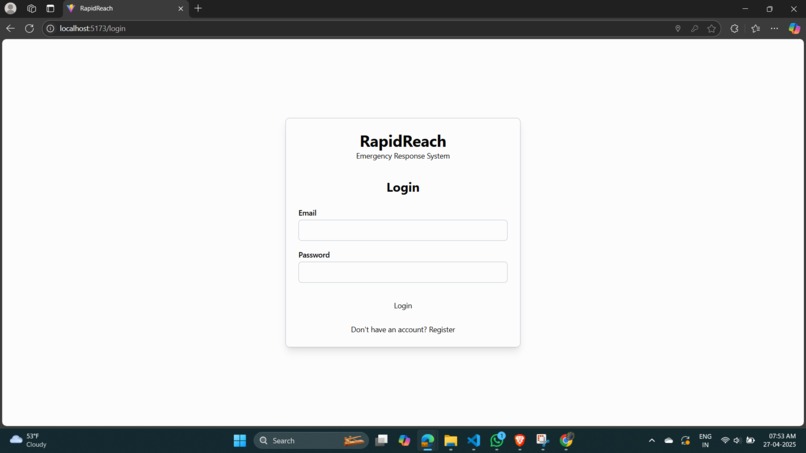
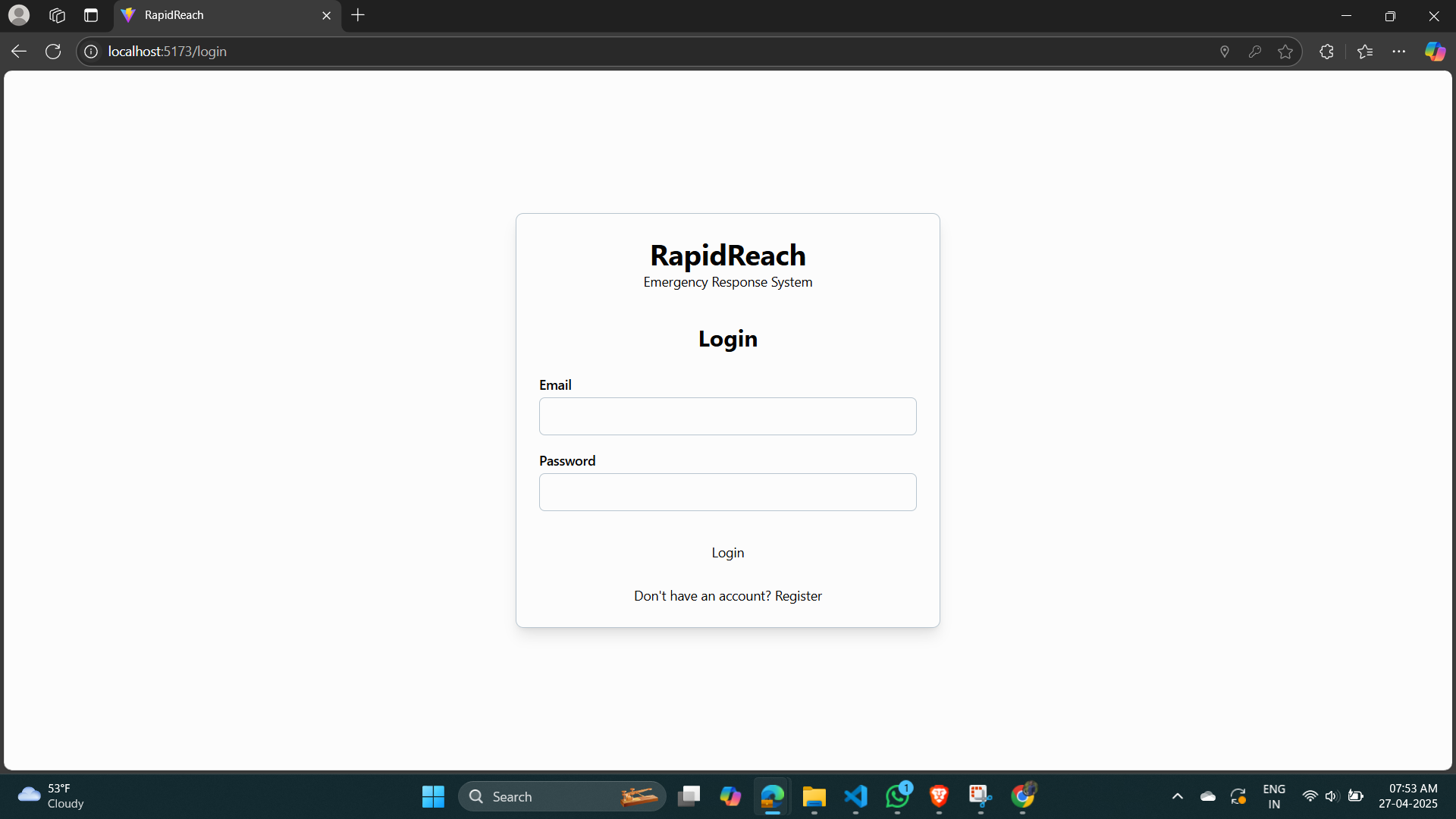
Login
-
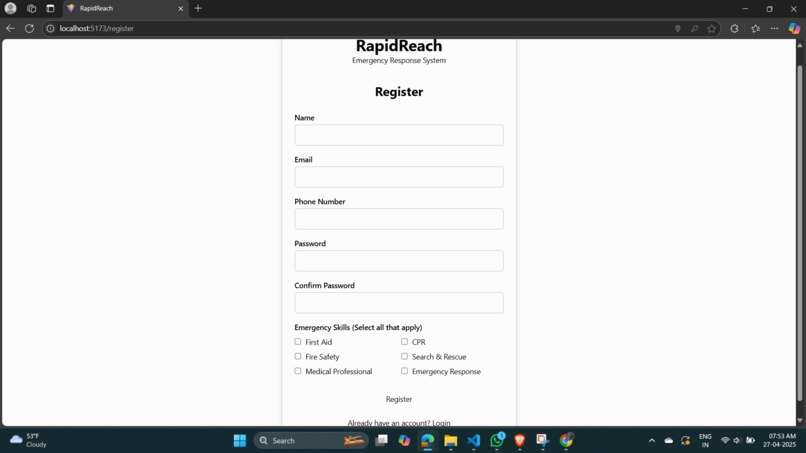
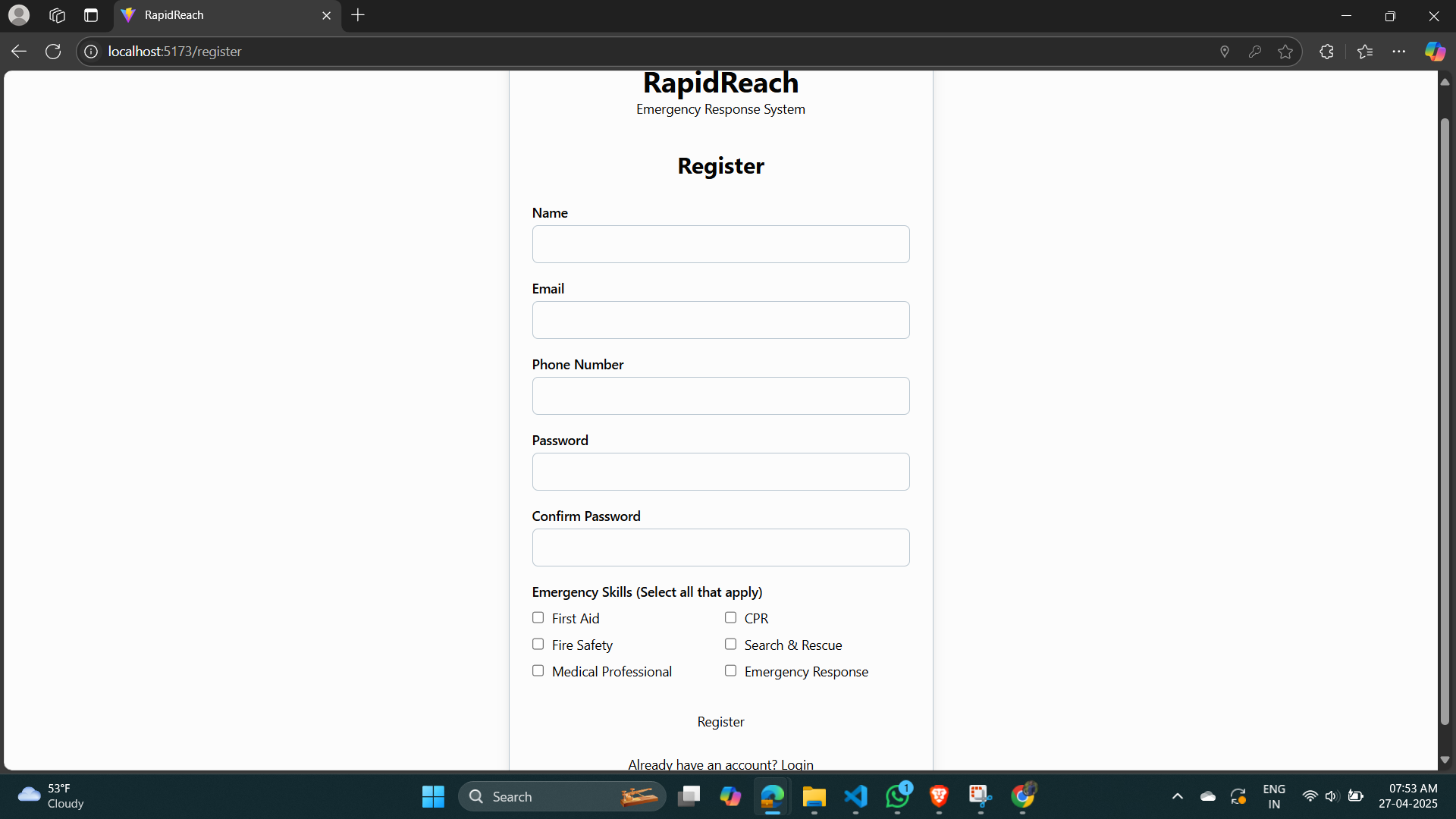
Register
-
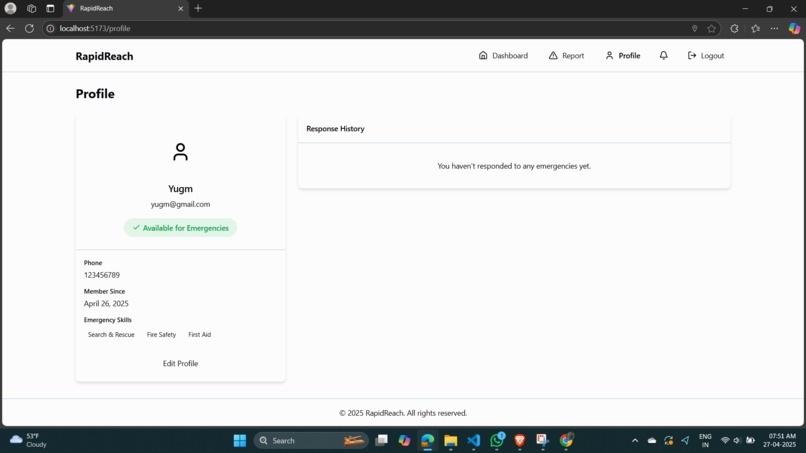
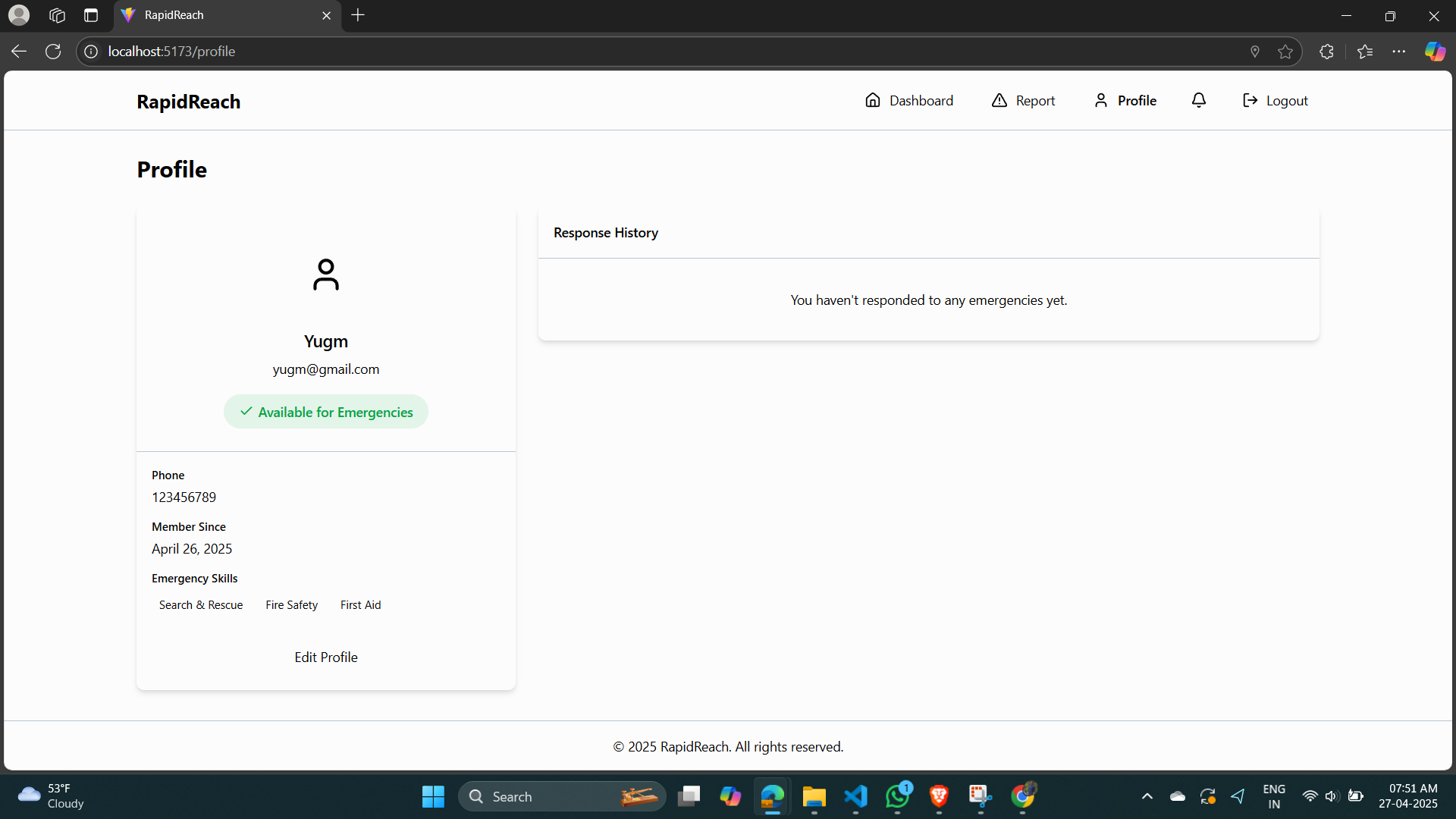
Profile
-
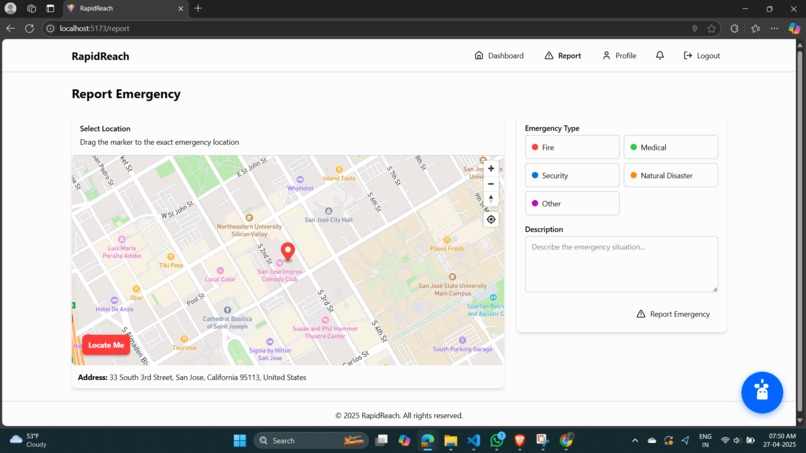
Report Emergency
-
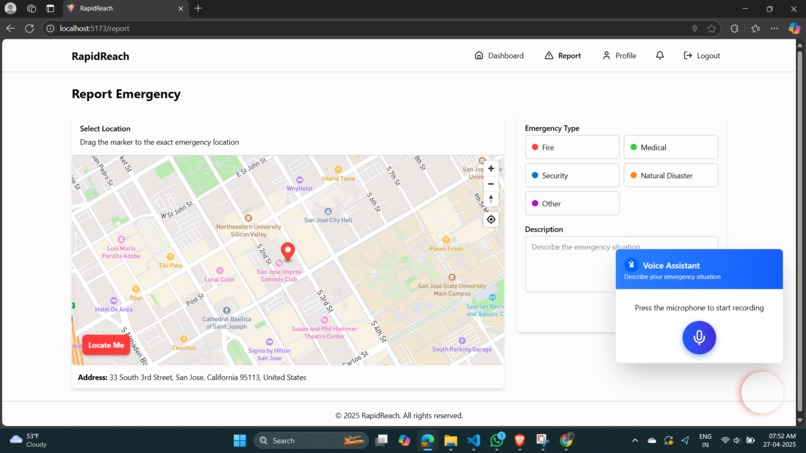
Voice Assistant
-
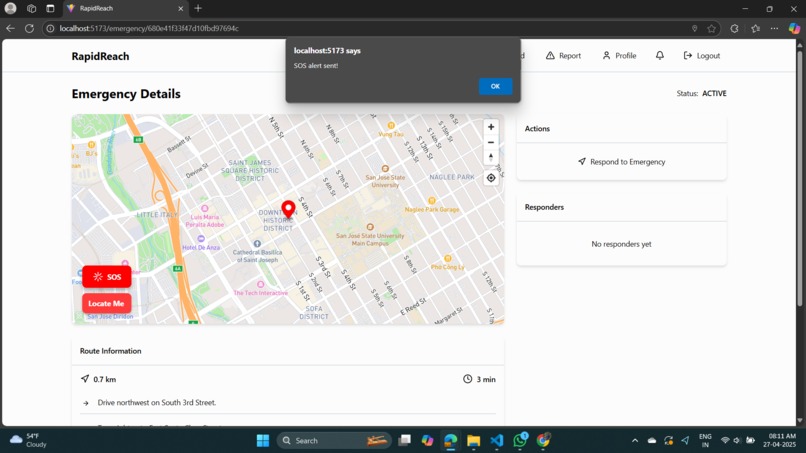
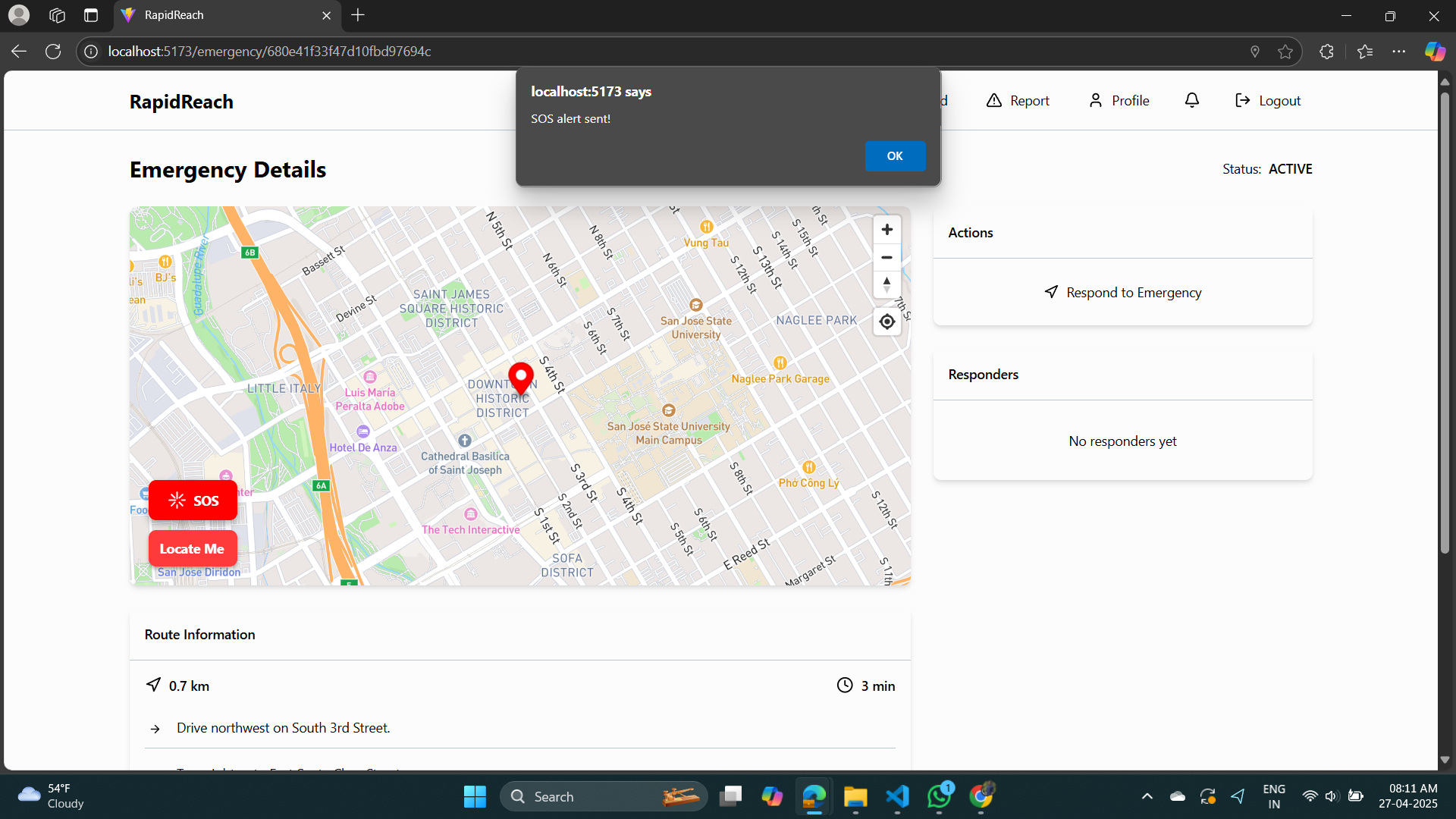
SOS Alert
-
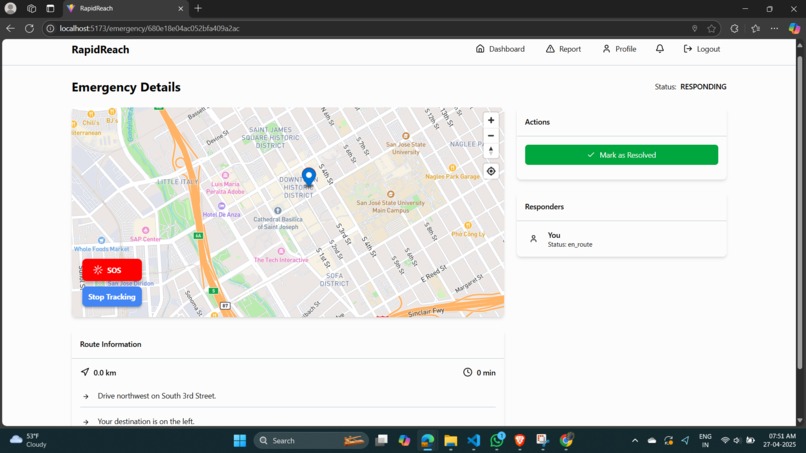
Emergency Details
-
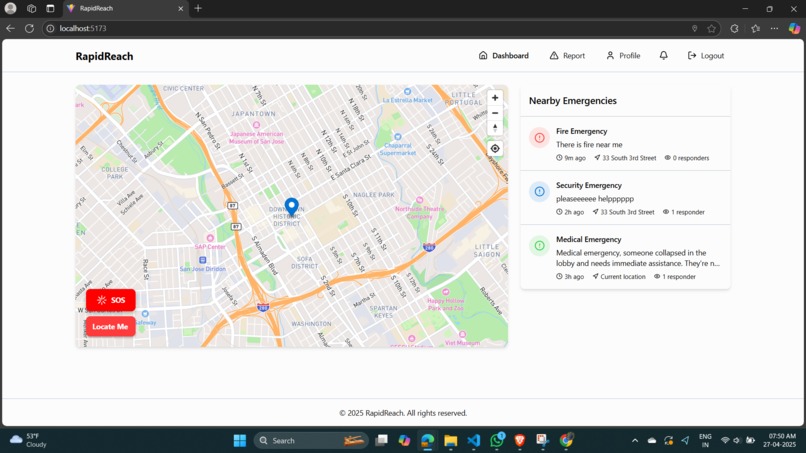
Dashboard


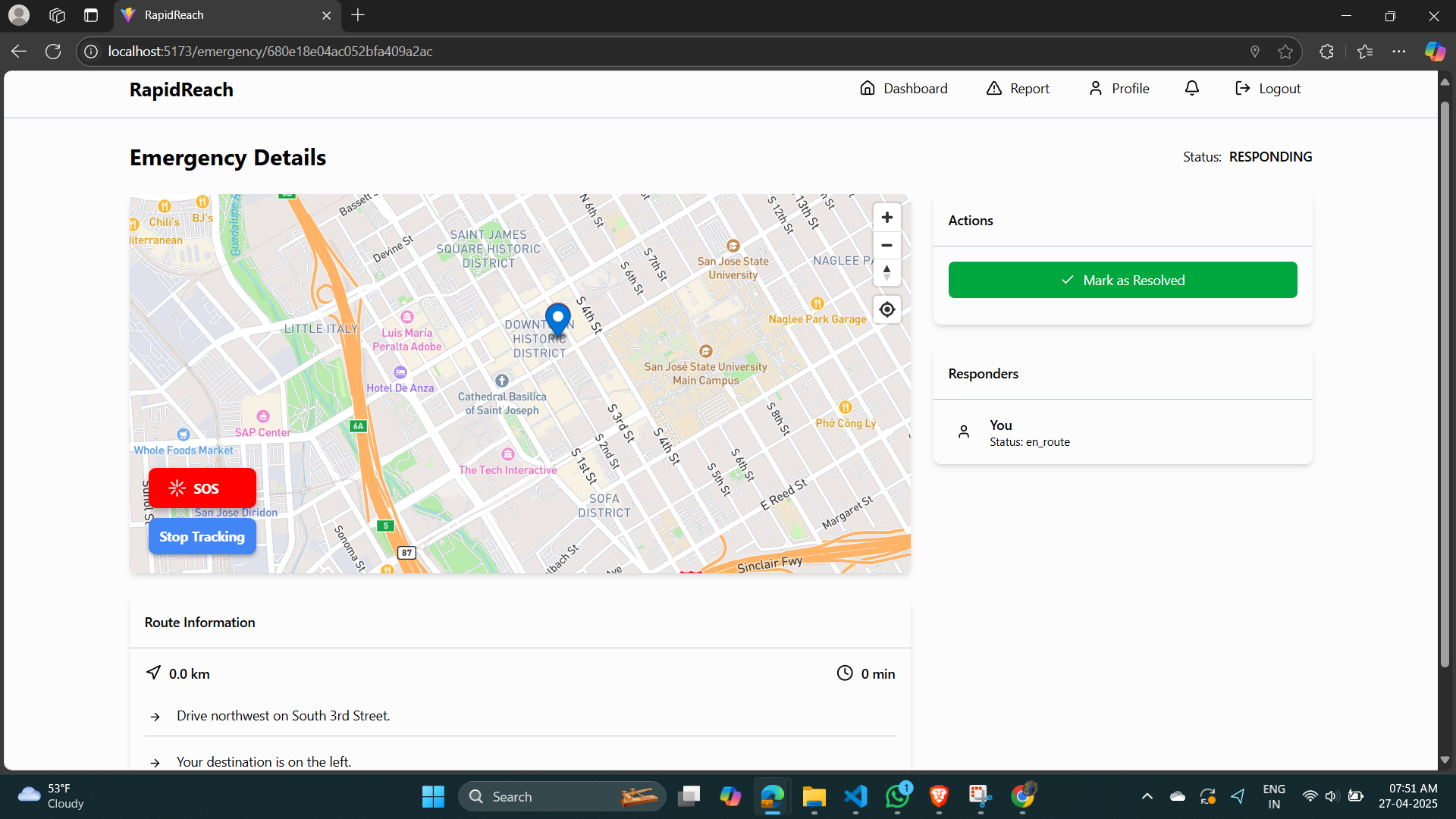
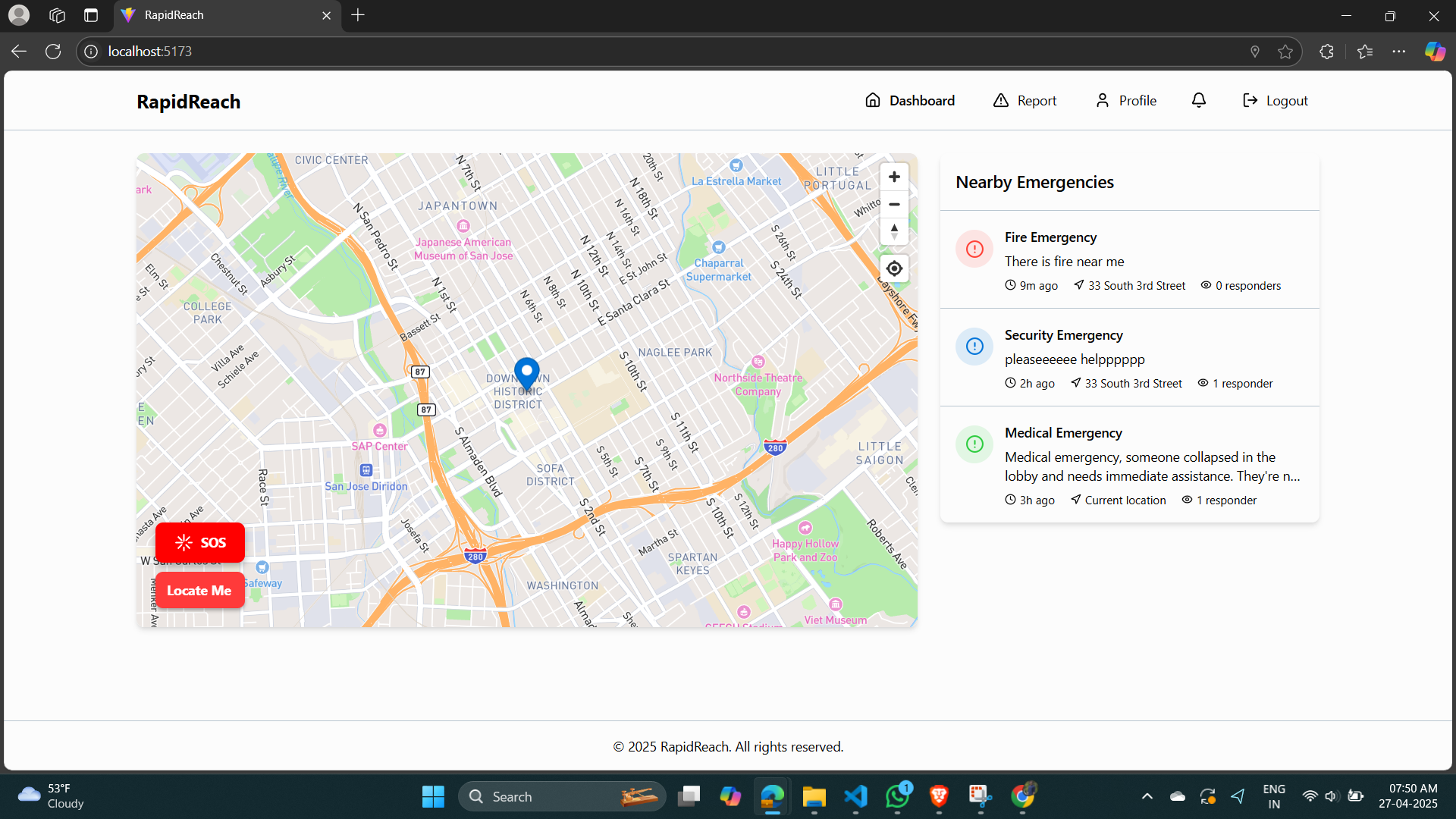
Inspiration
Emergencies can happen anytime, but not everyone has a quick and easy way to call for help or assist others nearby.
We were inspired by the idea of creating a community-driven emergency network — a system where people can report incidents instantly, responders can locate them easily, and help can be mobilized faster than ever before.
Especially in densely populated areas, immediate response can make a life-saving difference.
What it does
RapidReach enables users to:
- Report emergencies by pinpointing the exact location.
- Choose the type of emergency (Fire, Medical, Security, Natural Disaster, Other).
- Get real-time directions to nearby emergencies.
- Send SOS alerts for immediate attention.
- Track their location during emergencies for better coordination.
- Responders can mark themselves available and respond to incidents.
- Voice Assistant to report emergencies hands-free.
It creates a live map of emergencies around you, making your community smarter, safer, and faster in responding.
How we built it
We built RapidReach using a full-stack modern architecture:
- Frontend: React.js with Vite, TailwindCSS for UI styling, Mapbox for interactive maps, and Redux for global state management.
- Backend: Node.js with Express.js, MongoDB for data storage, and WebSocket (Socket.IO) for real-time communication.
- Other Integrations: Mapbox Directions API for route information, Voice Assistant integration using Web Speech API.
Challenges we ran into
- Real-Time Location Updates: Ensuring accurate and smooth real-time tracking across devices.
- Mapbox Integration: Customizing marker interactions, route fitting, and emergency clustering.
- Socket Communication: Building a reliable and low-latency real-time alert system.
- Voice Assistant Integration: Handling speech-to-text input in varying user environments.
Accomplishments that we're proud of
- Seamlessly integrated real-time maps, emergency reports, live tracking, and voice command features.
- Built a fully functional SOS system that could genuinely help in real-world emergencies.
- Created a clean, intuitive UI that simplifies emergency reporting for users under stress.
- Enabled community responders to act faster with location-based assistance.
What we learned
- Deepened our understanding of WebSockets for real-time updates.
- Gained hands-on experience with Mapbox GL JS for custom mapping solutions.
- Improved skills in state management using Redux.
- Learned how to handle real-world challenges like GPS accuracy, scaling maps, and socket optimization.
What's next for RapidReach
- Production Deployment: Host the backend and frontend live for real-world usage.
- Push Notifications: Integrate SMS and app notifications for faster alerts.
- Volunteer/Responder Network: Build a verified responder system with rating and tracking features.
- AI Emergency Classification: Use AI to auto-categorize emergency severity based on description or voice report.
- Mobile App: Expand RapidReach to Android and iOS for broader accessibility.


Log in or sign up for Devpost to join the conversation.