-
-
"RapidHelp" - logotype
-
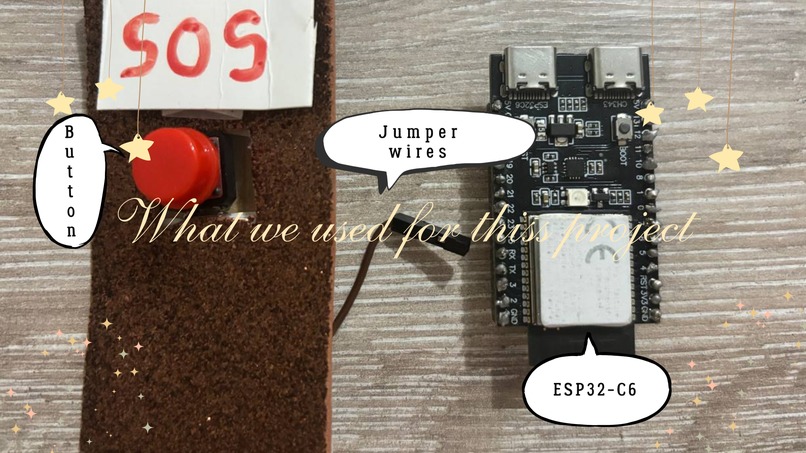
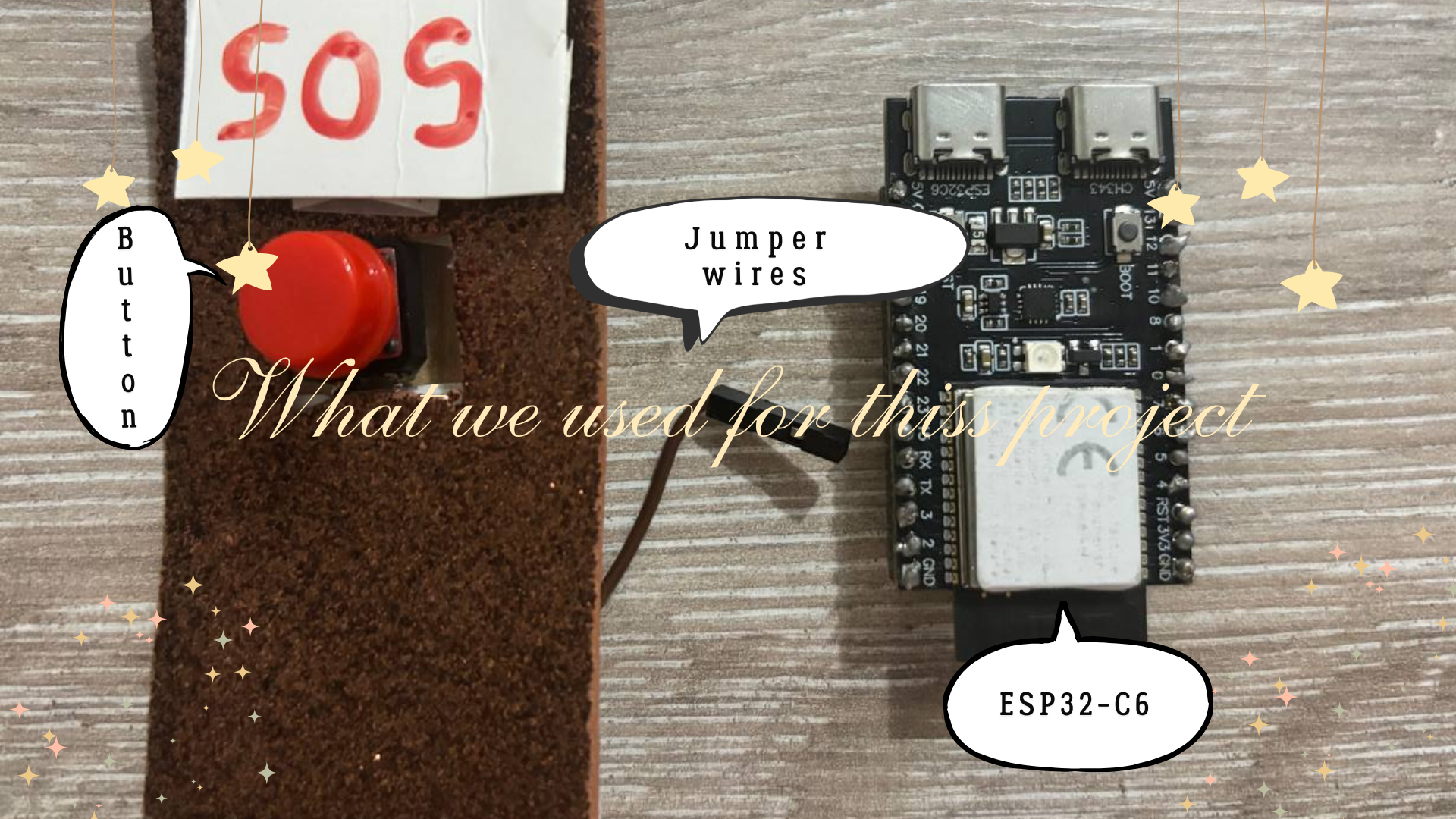
Materials used for "SOS" button
Inspiration
I live with my grandmother, and she is the most important person in my life. Recently, we’ve been through three terrifying moments—her heart and stomach acting up, leaving her unable to even reach for a phone. Each time, I happened to be right there to catch her. But the thought haunted me: what if I’m in class? What if I’m just in the other room? I explored standard SOS smartphone apps, but they were a nightmare for a senior: accidental triggers are constant, and the "5-click power button" rule is physically impossible for her. Plus, emergency SMS alerts in our country are often ignored or mistaken for spam. I realized I needed to create a solution that was simple, tactile, and absolutely fail-safe. I teamed up with Ainaz to make this project real.
What it does
Together, we created "The Red Button"—a dedicated, physical, and autonomous emergency device. It’s not an app; it’s a piece of hardware that sits on her nightstand. When she presses the button three times—a simple rhythm that prevents accidental bumps but is easy enough to execute even in a panic—it bypasses the "spam filter" of life and sends a loud, clear, and urgent alert directly to our family’s private Telegram group.
How we built it
The brain of the system is an ESP32, chosen for its reliability and Wi-Fi connectivity. We divided our roles to ensure both technical stability and usability: I focused on the backend, circuit engineering, and the Telegram bot logic, while Ainaz took charge of the design.
Challenges we ran into
Our path was a series of hard-learned lessons:
- The "Eternal" Signal: Initially, I had the button on a breadboard. It worked sporadically, then started sending an infinite stream of SOS signals. We learned the hard way that tactical buttons don't just "plug in" anywhere—you have to use the pins diagonally. Wiring them in a straight line created a constant loop, making the button "scream" for help nonstop until we soldered it correctly.
- The Wi-Fi Trap: We spent hours trying to get the ESP32 online, failing every single time. It turned out we were trying to connect to a 5GHz network, and the ESP32 only understands 2.4GHz. It was a massive "Aha!" moment that taught us to check network specs before writing a single line of code.
- The Human Factor: The biggest struggle wasn't the code; it was the physics of the user. We realized that if a person is unwell, they cannot perform complex gestures or navigate menus. We stripped the design down to its bare essentials—nothing but a single, big, red, reliable button.
Accomplishments that we're proud of
We are proud that we didn't give up when our first prototype literally "burned" out on the breadboard. We moved from a girl with a fear and a broken board to a functional, soldered device that actually keeps my grandmother safe. This isn't just a coding project; it's a bridge between our technical skills and real-world safety.
What we learned
We learned that being a developer isn't just about writing perfect code; it's about empathy. You have to build for the person who will actually use your tool, not for the person who designed the OS. We also learned that hardware is unforgiving—if your wiring is off by a millimeter, the whole thing fails. Now, we double-check our circuits and our frequencies every time.
What's next for Untitled
Our next goal is a "Heartbeat" feature. We plan to program the device to send a silent "I'm alive" signal to us once a day. If we don't get that ping, we’ll know the battery is dead or the Wi-Fi is down, allowing us to check on her before an emergency happens. We also want to add a tiny LED indicator so she can see at a glance that the "Guardian" is watching over her.
Built With
- c++
- esp32
- iot
- soldering
- telegram-api
- universaltelegrambot

Log in or sign up for Devpost to join the conversation.