-
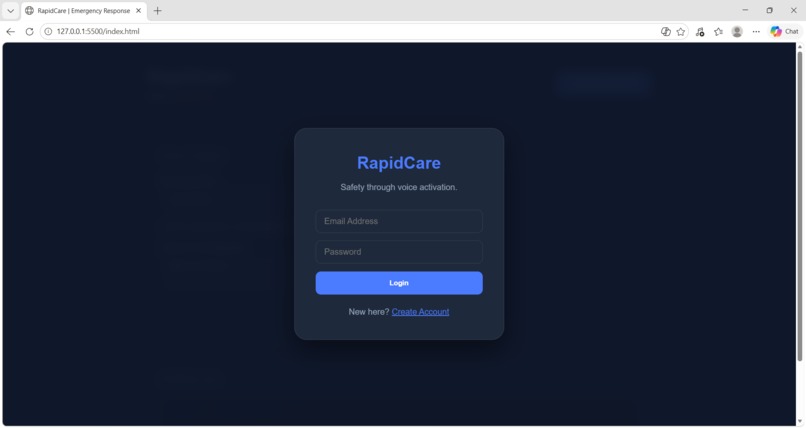
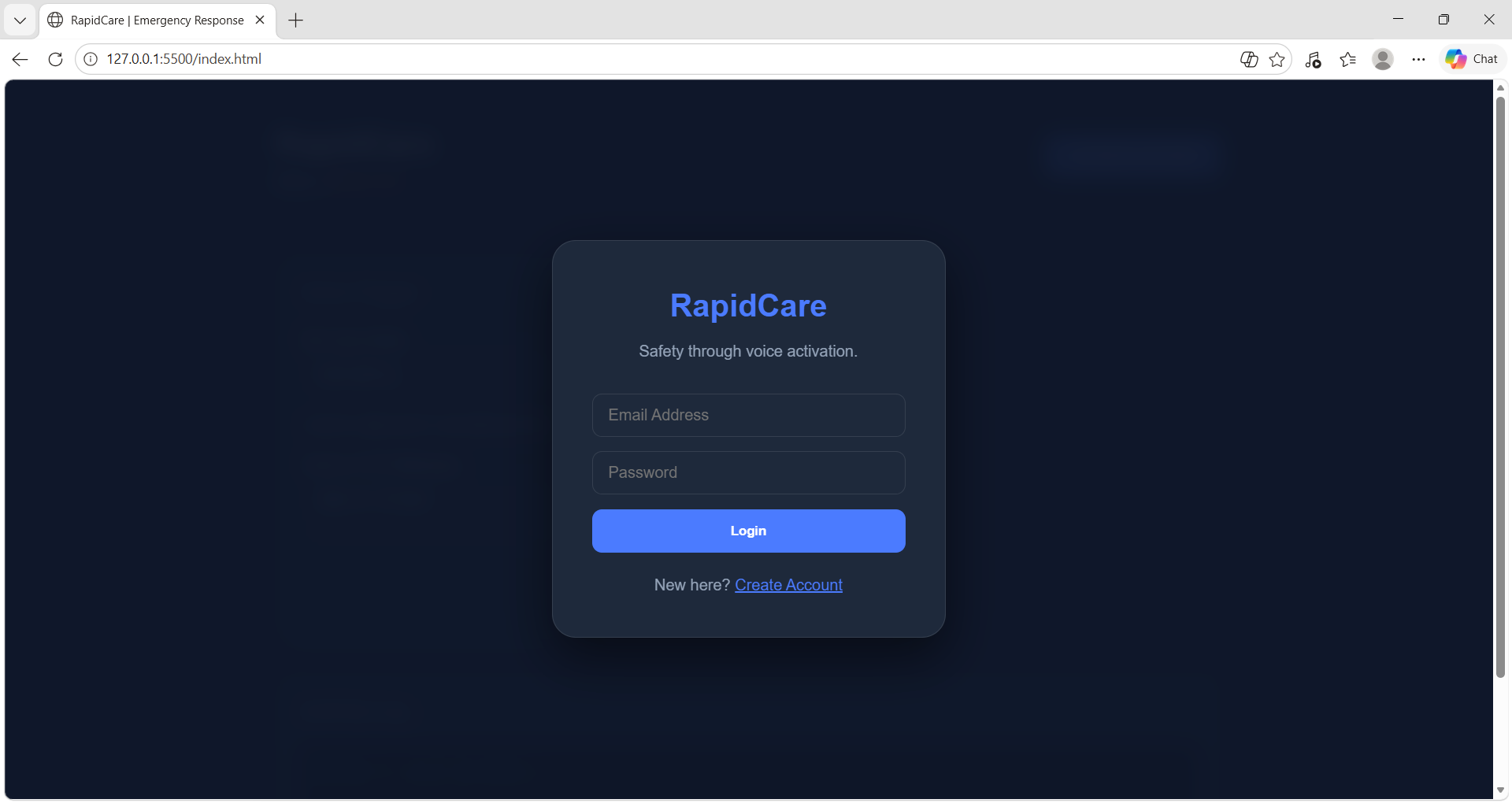
This is Login Page.
-
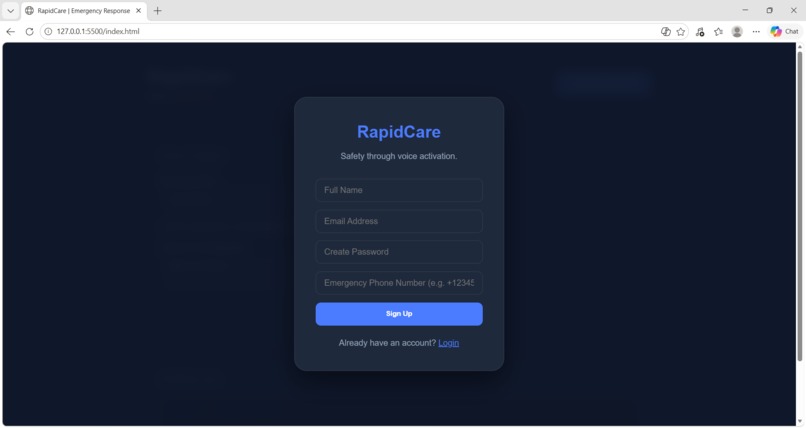
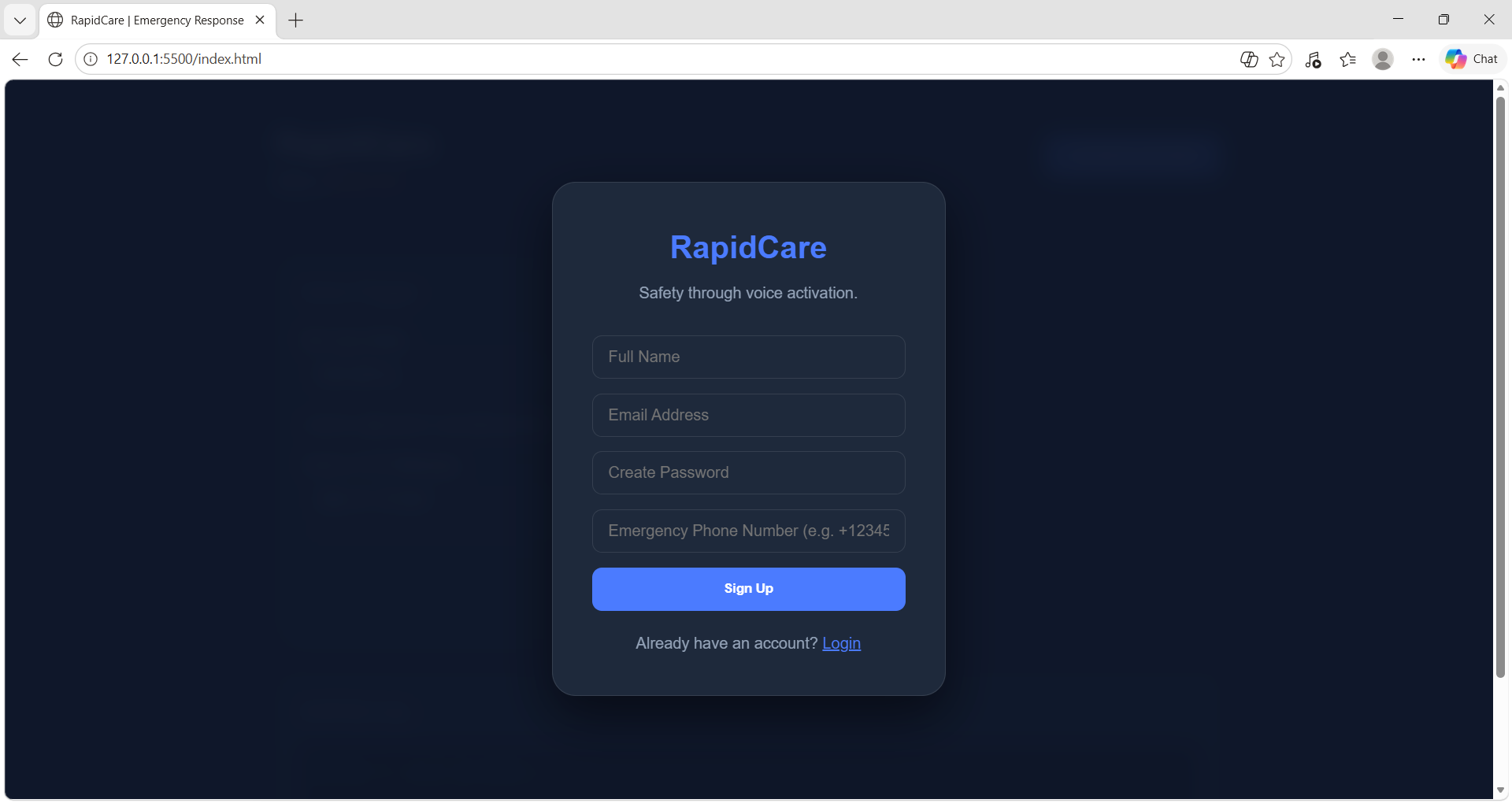
This is Signup Page
-
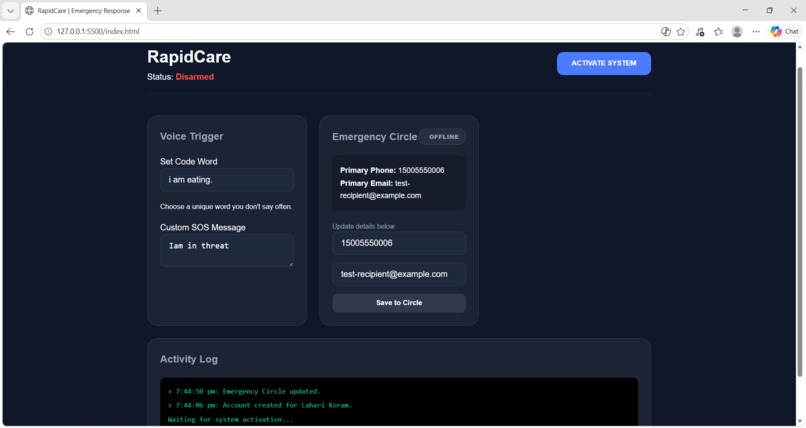
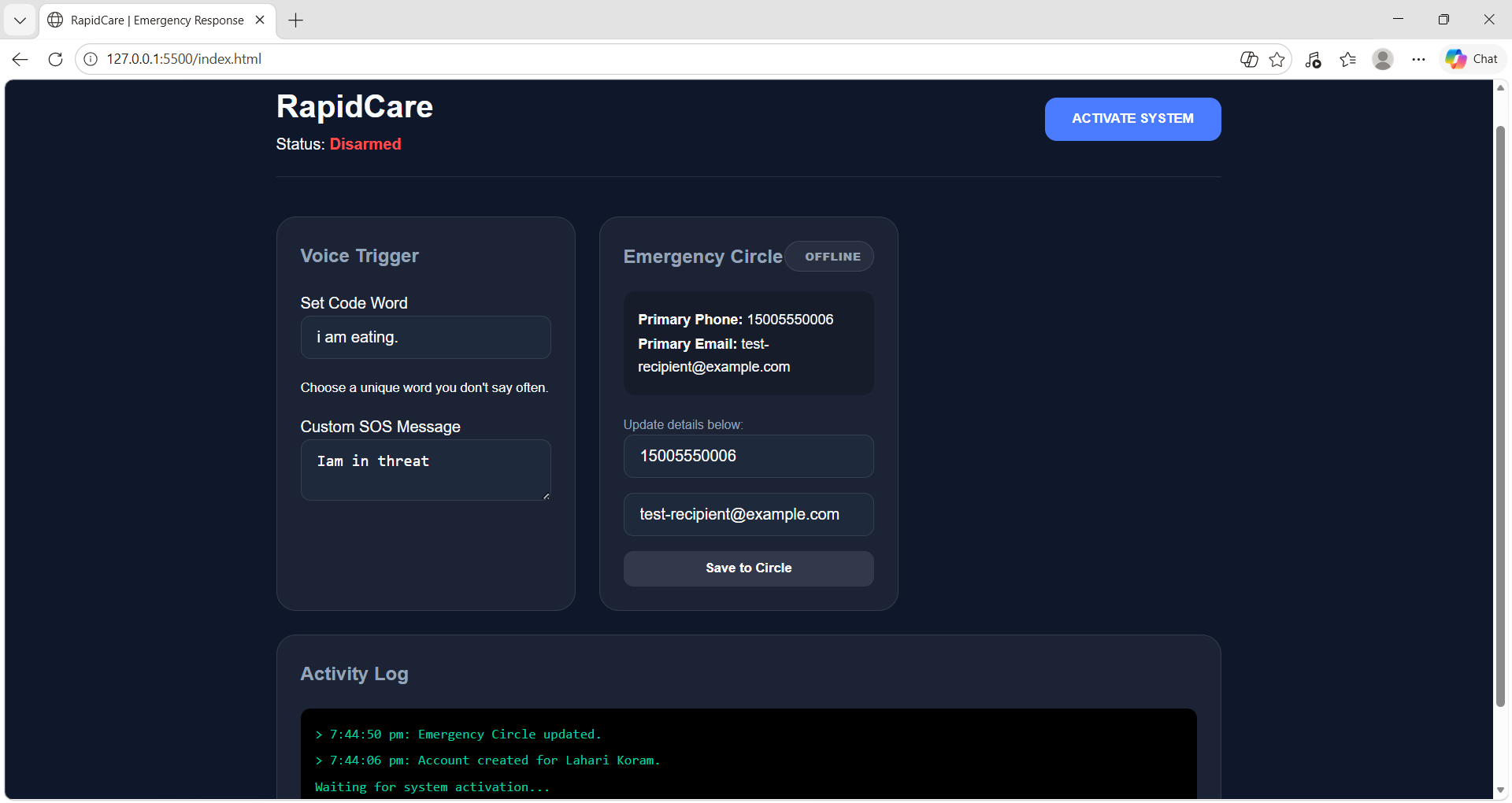
Here we can set Emergency contact and code word by the user. The Activate System Button Works on Click.
-
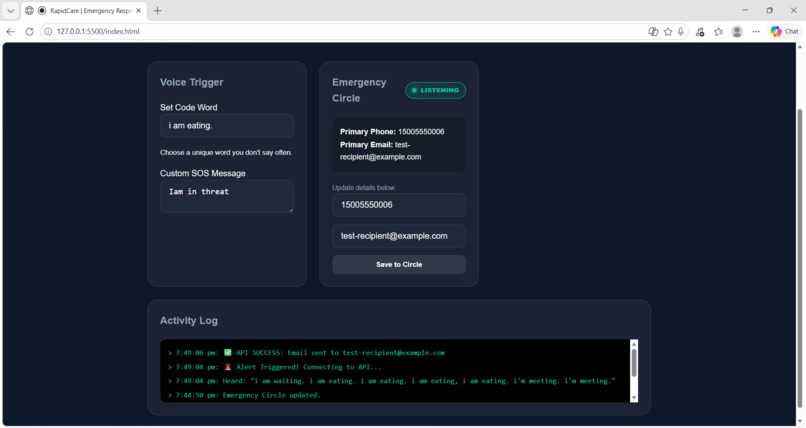
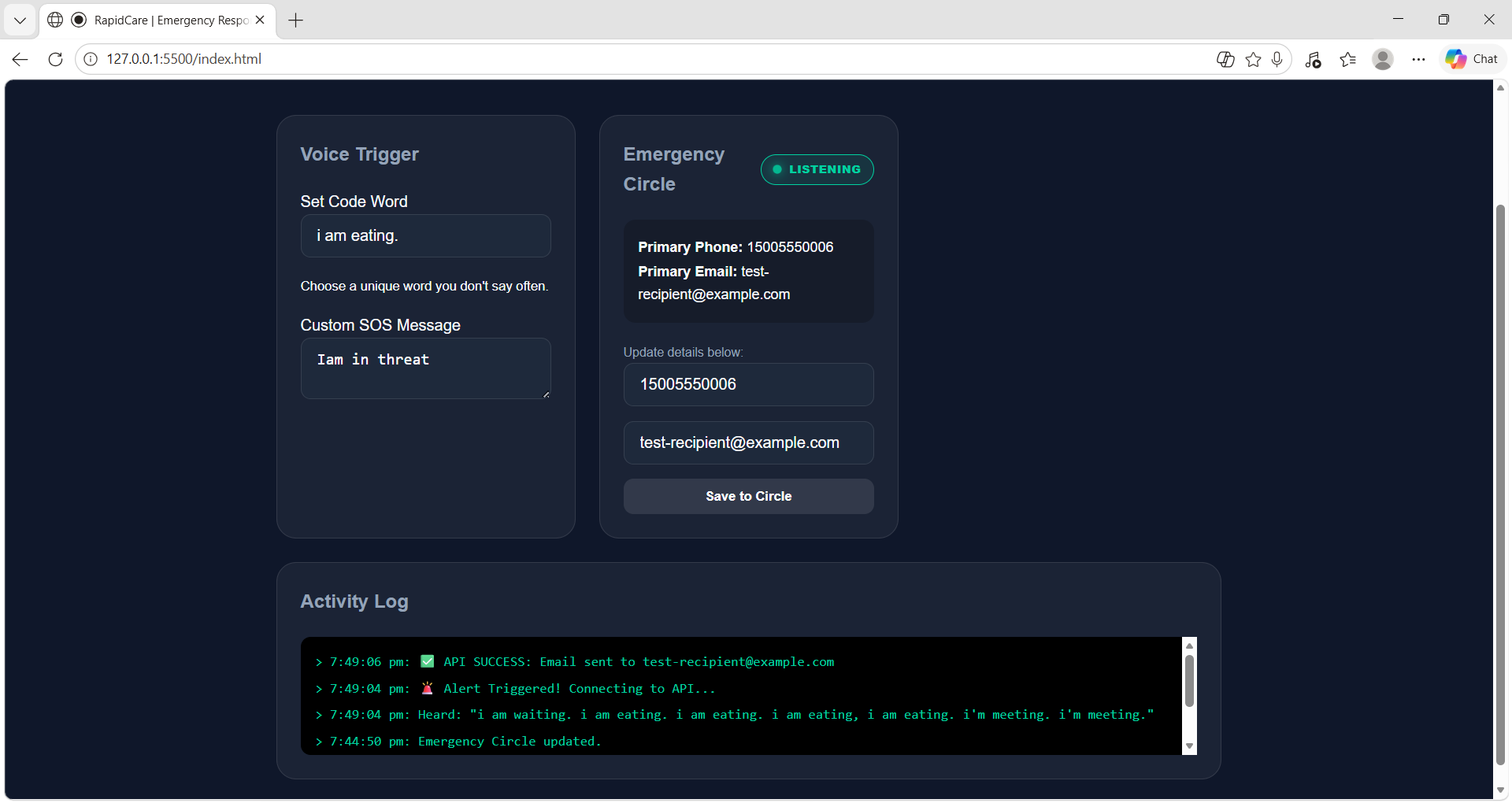
On Click on Activate System the site Activates and tries to listen the words we speak out. when the code word is detected, it sends email.
RapidCare: Project Overview
Inspiration
RapidCare was inspired by the realization that in many emergencies—like a sudden fall or medical episode—individuals are physically unable to reach or unlock their phones[cite: 1]. We wanted to bridge this gap by turning a standard laptop into an always-on "guardian" that listens for those who only have their voice to call for help[cite: 1].
What it does
The application acts as a privacy-first, hands-free emergency response system[cite: 1]:
- Voice Monitoring: It listens for a user-defined "Code Word" (e.g., "i am eating") in real-time[cite: 1].
- Automated Alerts: Upon detection, it instantly connects to the EmailJS API[cite: 1].
- Emergency Circle: It notifies the user's pre-configured contacts via email with a custom message[cite: 1].
- Fail-Safe: It includes a backup protocol to open the device's native mail app if the API fails[cite: 1].
How we built it
We utilized a modern web stack designed for local processing and speed[cite: 1]:
- AI Voice Recognition: Built using the Web Speech API to process audio locally, ensuring user privacy[cite: 1].
- Cloud Communication: Integrated EmailJS to handle backend messaging without a complex server setup[cite: 1].
- Persistence: Used
localStorageto save settings and contact details directly in the browser[cite: 1]. - Security: Implemented a
.gitignoreprotocol to keep sensitive API keys protected[cite: 1].
Challenges & Accomplishments
- Challenges: We overcame background noise using "fuzzy" matching logic and built a self-healing loop to prevent microphone timeouts[cite: 1].
- Accomplishments: We are proud of achieving a completely hands-free trigger-to-email pipeline while maintaining a privacy-first, local-only audio processing model[cite: 1].
What's next
Our next steps include adding GPS Integration to send real-time location links and expanding the system to include SMS/Phone alerts alongside email notifications[cite: 1].
Built With
- css3
- emailjs
- html5
- javascript
- localstorageapi
- nativebrowserapi
- webspeechapi

