Inspiration
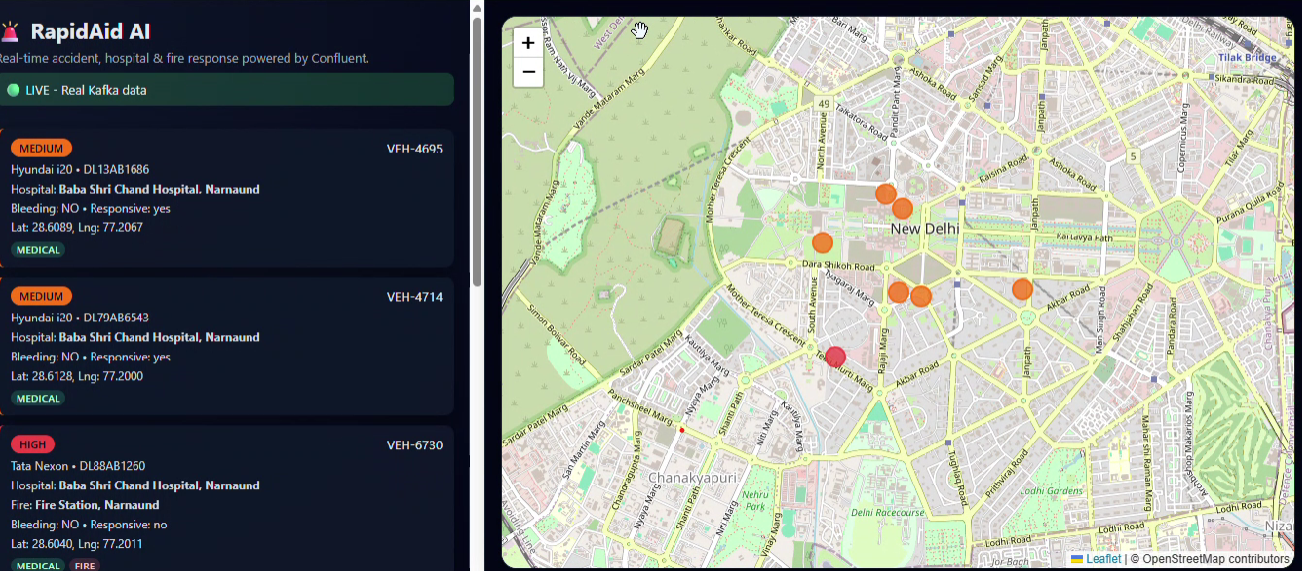
We were inspired by the urgent need for fast, intelligent assistance during medical emergencies, especially in areas with limited access to healthcare professionals. The idea was to create an AI-powered system that could guide users through first aid procedures, assess symptoms, and connect them to nearby help — all in real time.
What it does
- Suggests whether the user should seek professional help based on severity.
- Optionally connects to local emergency services or nearby hospitals (if integrated).
- Can be extended to support voice commands and multilingual responses.
How we built it
- Python + Flask for backend logic and API handling
- OpenAI API for natural language understanding and emergency guidance
- Apache Kafka (via Confluent) to stream real‑time emergency queries and responses reliably
- MongoDB for storing structured medical scenarios and user interaction logs
- Bootstrap/HTML/CSS for a responsive, user‑friendly interface
Challenges we ran into
- Ensuring safe and reliable medical advice
- Handling vague or incomplete user queries
- Integrating location-based emergency services
- Balancing speed with accuracy in responses
Accomplishments that we're proud of
- Built a functional prototype in limited time
- Designed modular architecture for scalability
- Learned prompt engineering for sensitive domains 4.Positive feedback from peers/mentors
What we learned
- Responsible AI design in healthcare contexts
- Importance of user-centric emergency tools
- Practical skills in API integration and databases
- Iterating quickly under hackathon pressure
What's next for Rapid AI
- Add voice-based, multilingual interaction
- Train on verified medical datasets
- Collaborate with healthcare providers 4.Enable offline support for remote areas


Log in or sign up for Devpost to join the conversation.