-
-
#FutureofAI #CrisisManagement #Innovation #TechForChange
Inspiration
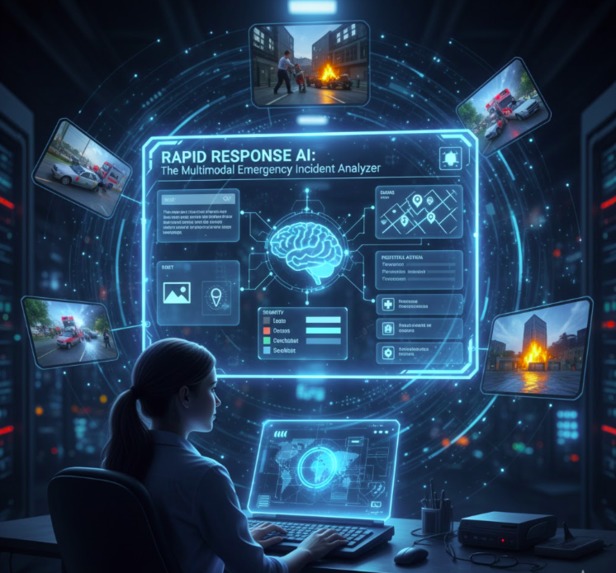
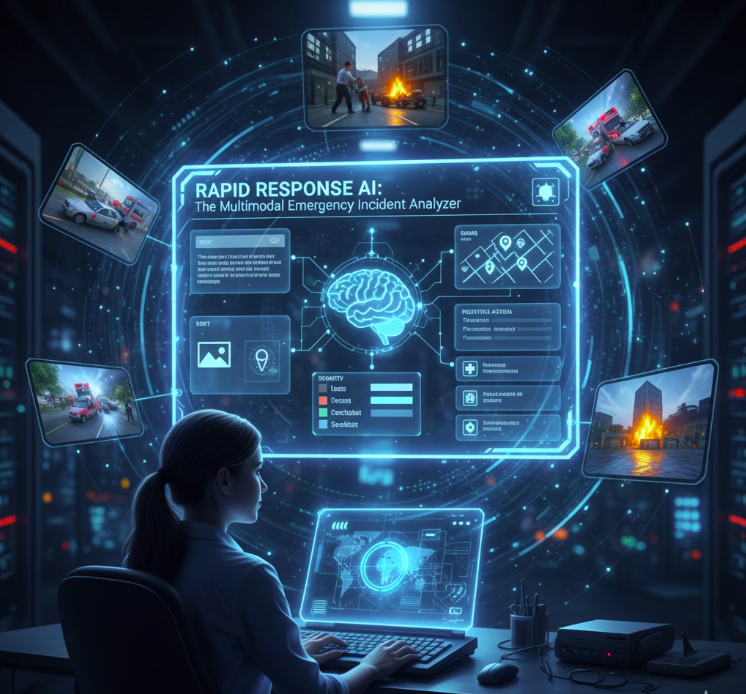
The inspiration for Rapid Response AI: Multimodal Emergency Incident Analyzer came from recognizing a critical gap in high-stress, real-world scenarios: the need for instant, structured, and reliable information. In an emergency, first responders and bystanders often struggle to quickly assess severity, prioritize actions, and relay accurate information. Existing solutions are often text-only or rely on human interpretation, which introduces delays and potential errors.
I wanted to build a tool that could instantly consume multiple data points—a textual description, a photo, and a precise location—and immediately output an actionable, structured plan. The goal was to move beyond simple "chat bots" and create a dependable, production-ready system that functions as a crucial step of automated triage in the initial moments of a crisis.
What it does
The application provides immediate incident analysis, severity assessment, and a step-by-step action plan. It features Speech-to-Text input, uses geolocation to find nearby hospitals with One-Click Map Links, and maintains a seamless chat session for follow-up questions.
How I built it
I built a robust React/TypeScript frontend deployed on a single Google Cloud Run Service. The core uses the Gemini API (gemini-2.5-flash) for multimodal analysis. I enforced a crucial responseSchema to compel Gemini to return a clean, predictable JSON object, ensuring reliable data parsing. Secret Manager was used for secure API key injection.
Challenges I ran into
The main challenge was resolving conflicts between the frontend build tool (Vite) and Cloud Run hosting, specifically fixing 404 errors for assets by enforcing relative pathing in the Dockerfile and build config. I also had to refactor key initialization to prevent crashes from build-time environment variable substitution.
Accomplishments that I am proud of
I'm most proud of achieving a production-ready, secure, and reliable serverless architecture that enforces structured AI output. This moves the project from a demo to a dependable, high-impact tool for critical moments.
What I learned
I deeply learned the importance of structured output schemas in AI development for reliable data integration, and how to master multi-stage Dockerfiles for optimal Cloud Run performance.
What's next for Rapid Response AI
Next steps include integrating with Cloud Firestore for incident logging, and exploring a Cloud Run Job resource type for asynchronous reporting to authorities after the initial analysis.
Built With
- docker
- gemini
- google-artifactory-registry
- google-cloud
- google-cloud-build
- google-cloud-run
- google-secret-manager
- pnpm
- react
- typescript
- vite

Log in or sign up for Devpost to join the conversation.