-
-
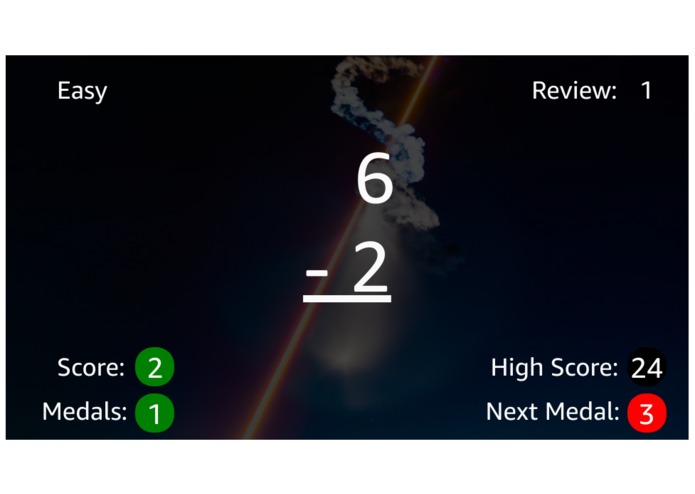
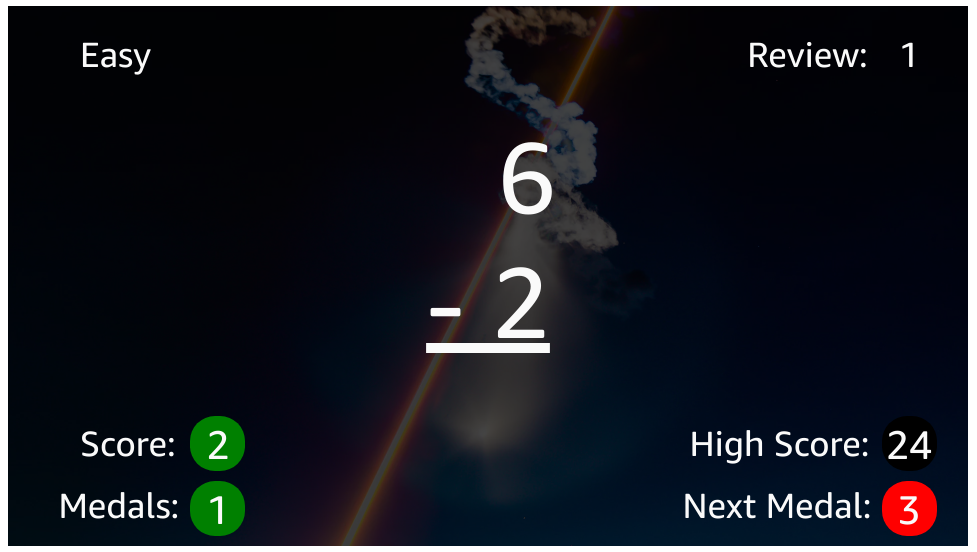
Game play screen on an extra large TV display.
-
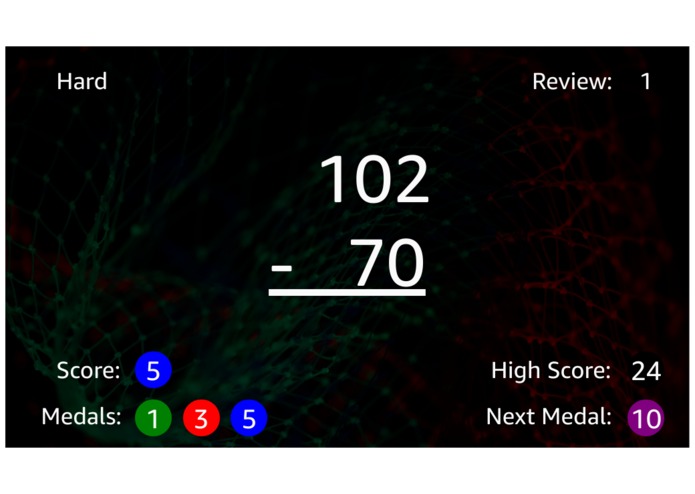
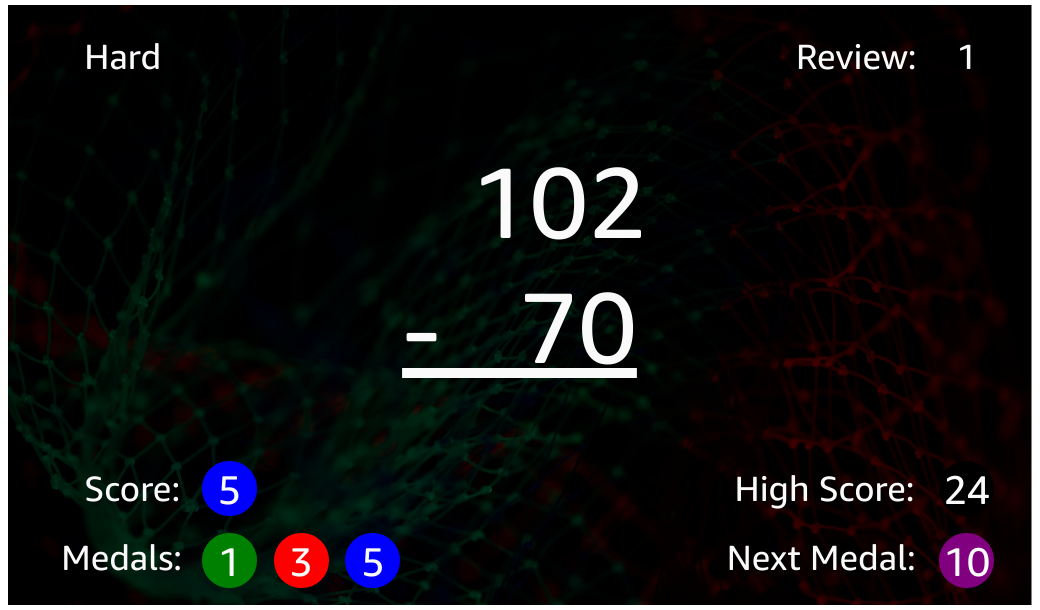
Game play screen on a medium display.
-
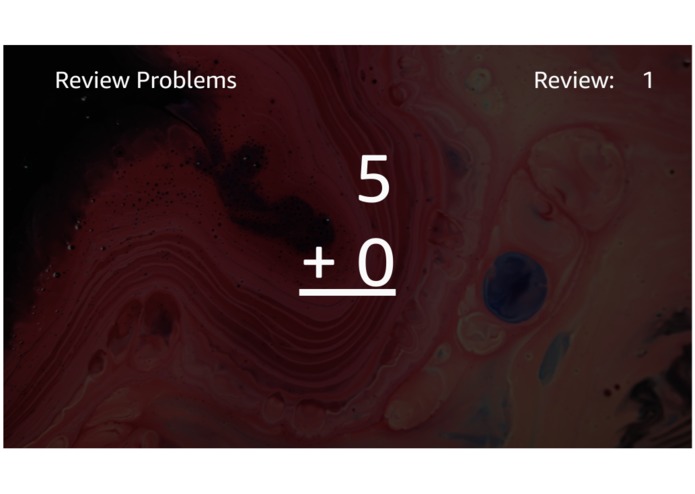
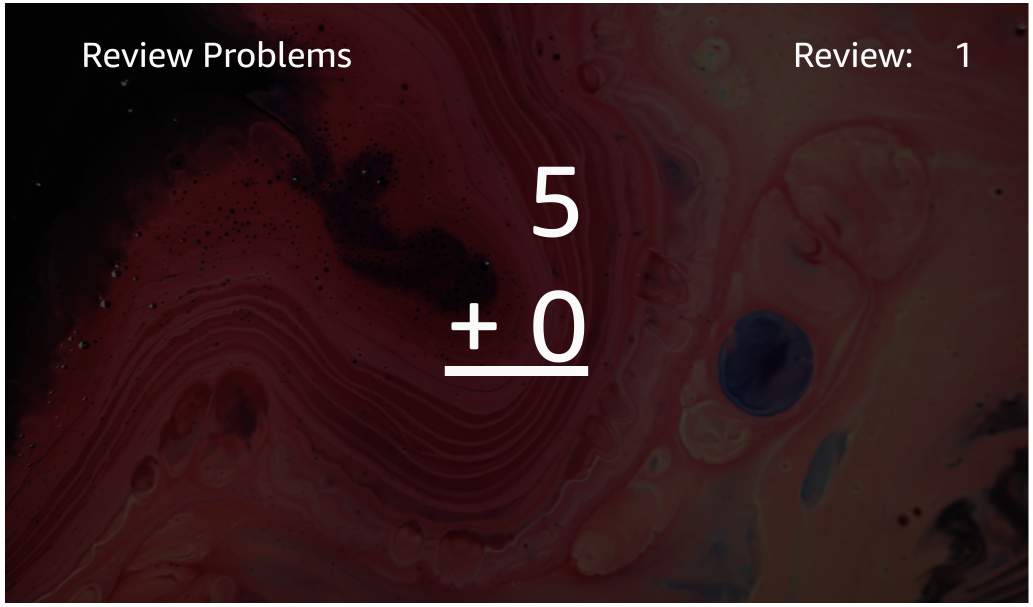
Problem review screen on a medium display.
-
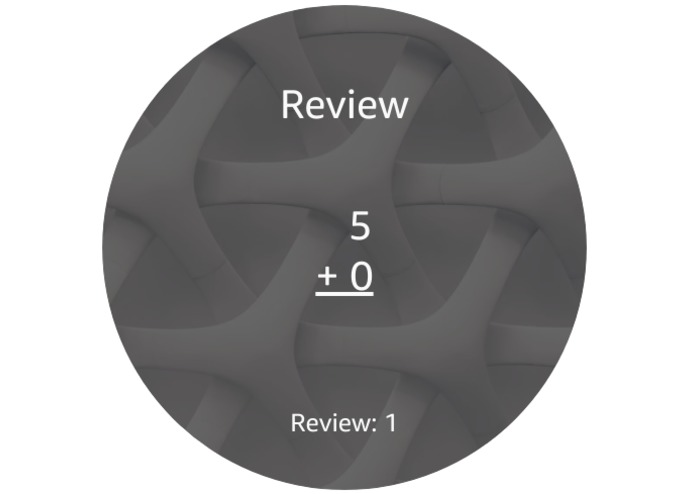
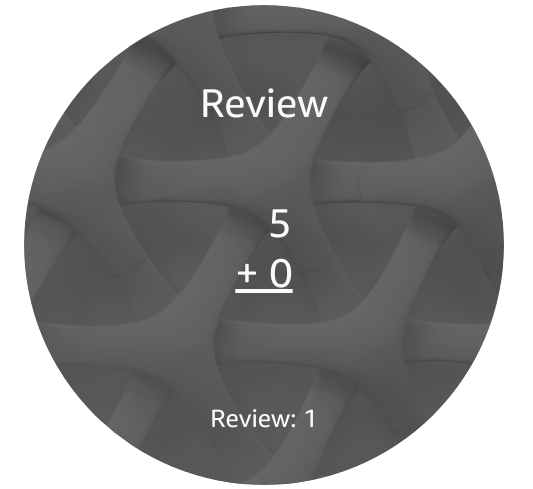
Problem review screen on a small hub display.
-
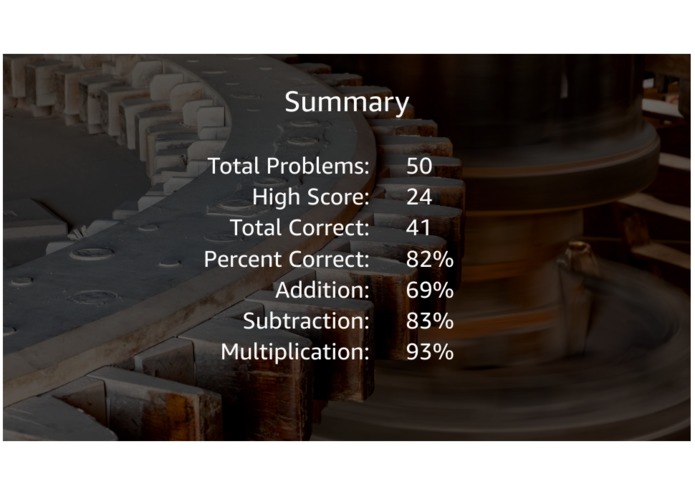
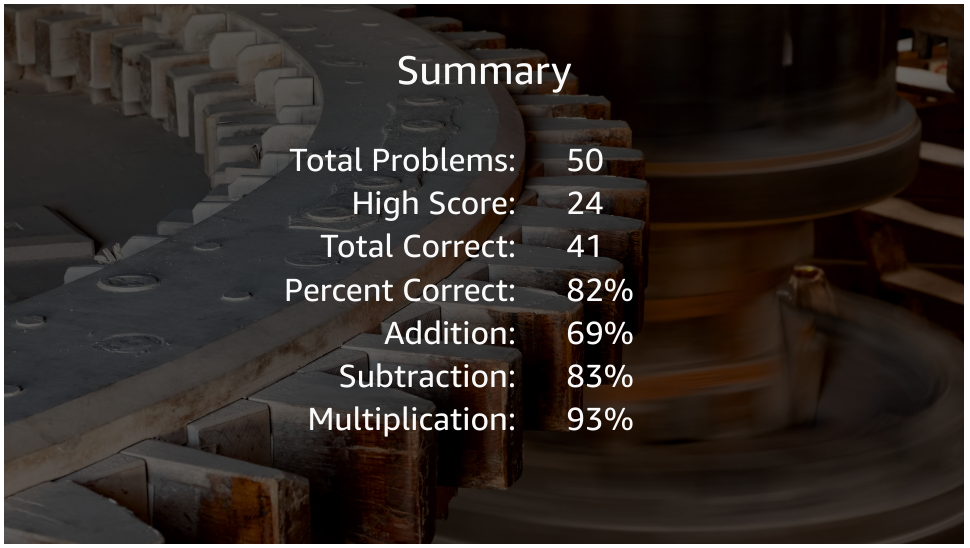
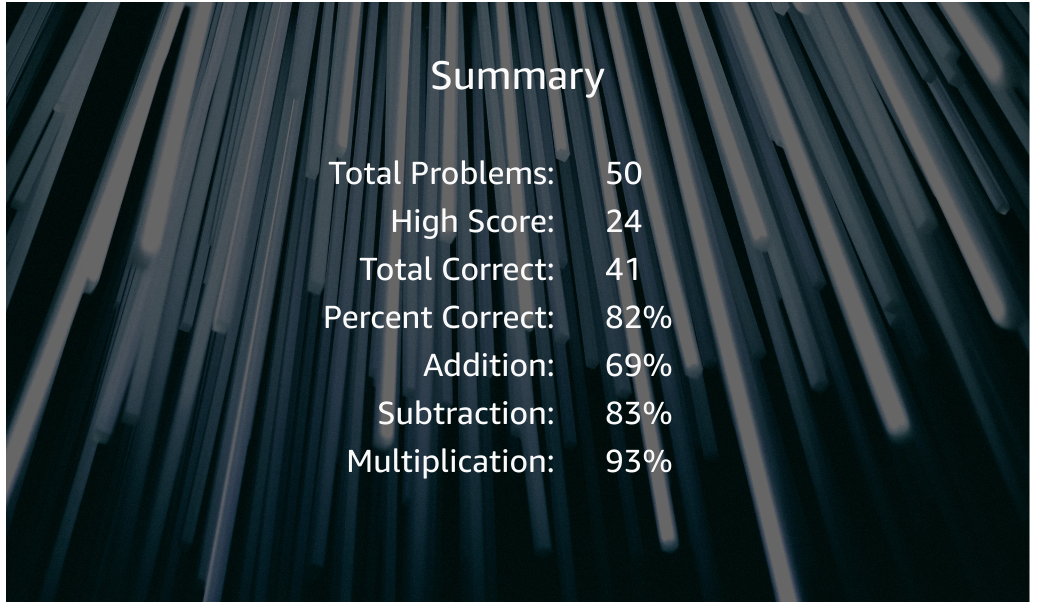
Game summary screen on an extra large TV display.
-
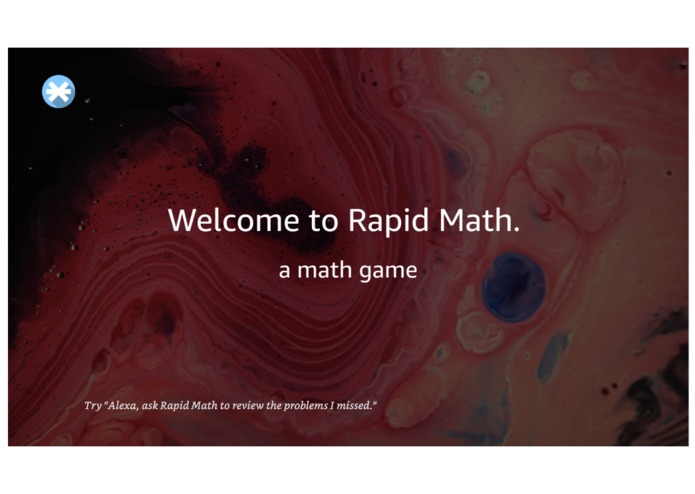
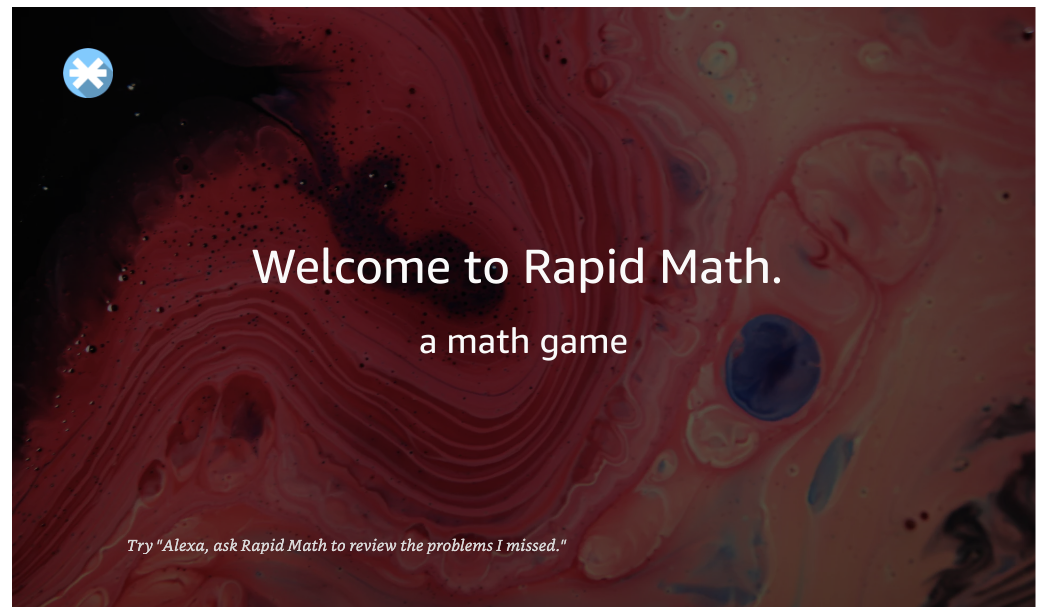
Launch screen on a medium display.
-
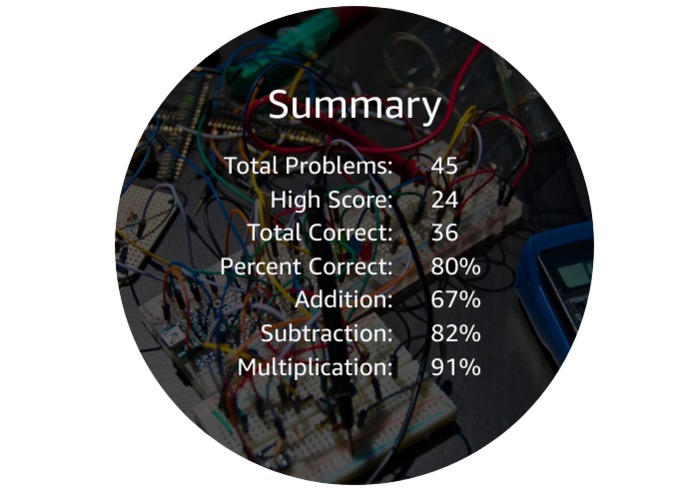
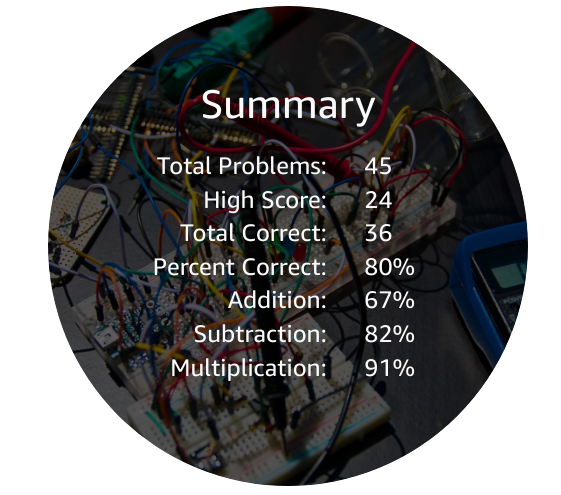
Game summary screen on a small hub display.
-
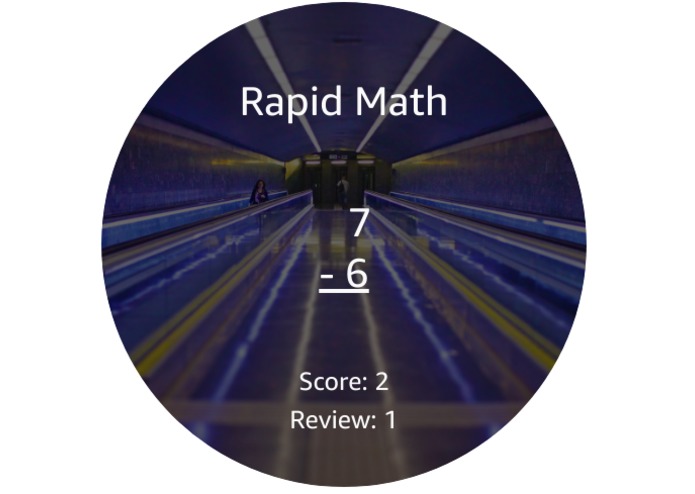
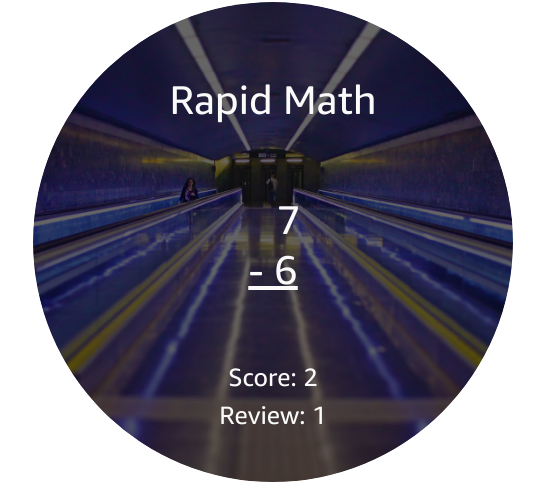
Gameplay screen on a small hub display.
-
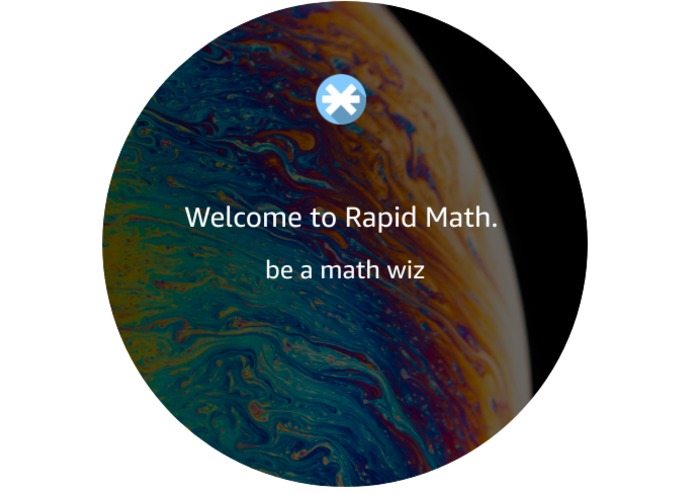
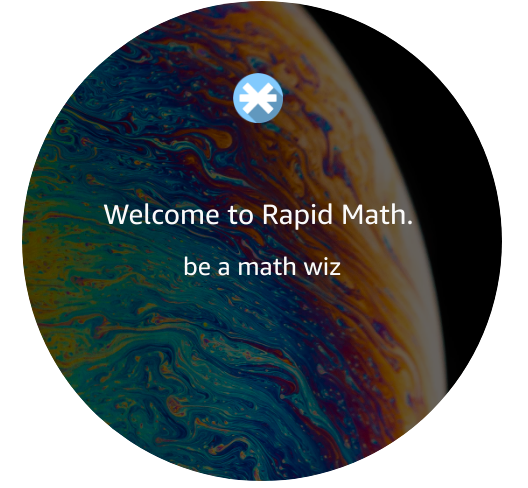
Launch screen on a small hub display.
-
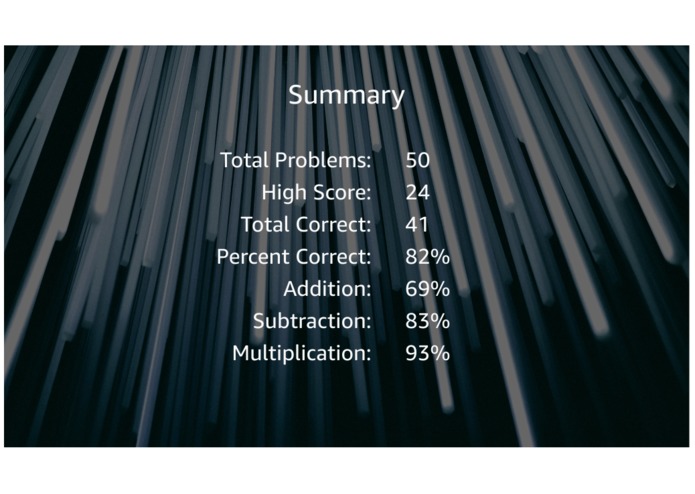
Game summary screen on a medium display.
Hi, reviewers. My name is Todd Keech and I’ve submitted a skill called ‘Rapid Math’ for the multi-modal Alexa Skill Challenge. First off, I want to thank you for your time in reviewing my skill and my submission packet. This must be a challenging contest to review so I appreciate the long hours you’ll spend reviewing submissions and testing all sorts of skills.
I work in IT for a company in the Energy industry that’s located in King of Prussia, Pennsylvania which is just outside Philadelphia. I enjoy learning about programming languages and I love experimenting new technologies. Prior to building Rapid Math, I experimented with Alexa and DisplayTemplates on a few test projects but this is my first skill submission. When I heard about this contest in late December, I thought this would be a great opportunity to gain a good understanding of APL and many of the new multi-modal features. I certainly learned a lot while creating this skill so I hope you like Rapid Math.
I’m married and I have two children, ages 8 and 4. Education has always been extremely important to me and my family. My wife and I spend a lot of time reading, doing homework and practicing math problems with our children. I believe that by practicing basic skills at a young age, children can develop the confidence and problem solving ability they’ll need to tackle tough challenges later in academics and in life. All children, once they develop confidence and good mental model for problem solving, can do amazing things. I want all children, and adults for that matter, to feel good about themselves and about their ability to solve problems, particularly in mathematics.
Rapid Math is a skill that helps people of all ages practice addition, subtraction and multiplication problems at varying levels of difficulty, from very basic to fairly difficult problems. When players begin a game, Alexa prompts the player to select a difficulty level. This prompt is driven by dialog management and also uses entity resolution to resolve the difficulty level. During play, players are presented a series of randomized math problems to solve.
Players earn points and medals for answering questions correctly on the first try. Rapid Math keeps track of the player’s current score as well as their career high score. Rapid Math also awards players with medals for completing milestones within each game. If the player misses a problem, Alexa “remembers” that problem and will review it with the player upon request. The review feature gives parents a great way to track their child’s progress and help their child master difficult concepts. Players can also hear a summary of their game performance that shows the number of problems attempted, the total number and percentage correct, and the number and percentage correct for the addition, subtraction and multiplication problem categories.
The visual interface was designed to work with cards, small hubs, or larger screen-based devices and the voice interface was designed to be playable without a screen. For players with a screen, Alexa displays a vertically oriented math problem on top of background images based on a Science Technology Engineering and Math theme. These images are retrieved via the Unsplash image API. The user interface also displays the player’s current score, all-time high score, any medals earned, and the number of problems queued for review.
My eight-year-old daughter acted as the primary user interface tester for Rapid Math. She tested early versions and came up with several notable improvements including the vertical orientation of math problems in the display as well as the ability to continue an in-progress game. Working on this skill was a great way for my daughter to see what it’s like to be a software developer and designer. This was also the first time I’ve used Javascript/Typescript, for the majority of the application logic. In the past, I’ve used Python. It was great to get experience using Typescript in AWS Lambda.
I see a lot of opportunity to expand and extend Rapid Math in the future. I’d like to include options that allow users to select the types of problems they’d like to practice, addition, subtraction or multiplication. For multiplication problems it would be nice to allow players to focus on specific multiplication tables. For example, players could focus on practicing all the multiples of seven. I’d also like to add descriptions and visualizations based on the Singapore Method teaching methods.
Rapid Math was fun, challenging and rewarding to develop. I learned a lot about APL as well as designing voice interfaces for multiple screen devices as well as voice-only. I found that it takes quite a bit of thought and creativity to create voice experiences that implement best practices for voice design such as prompts, pagination, response variability and conversational speech. Voice certainly feels like a promising platform for delivering new applications and content so I’m looking forward to developing more skills as the Alexa platform evolves. Once again, thanks very much for your time and consideration in this contest.

Log in or sign up for Devpost to join the conversation.