-
-
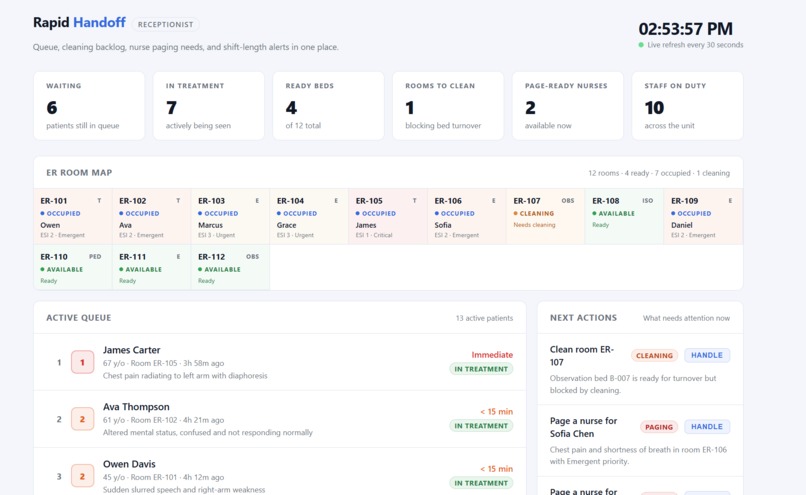
Operations View 1
-
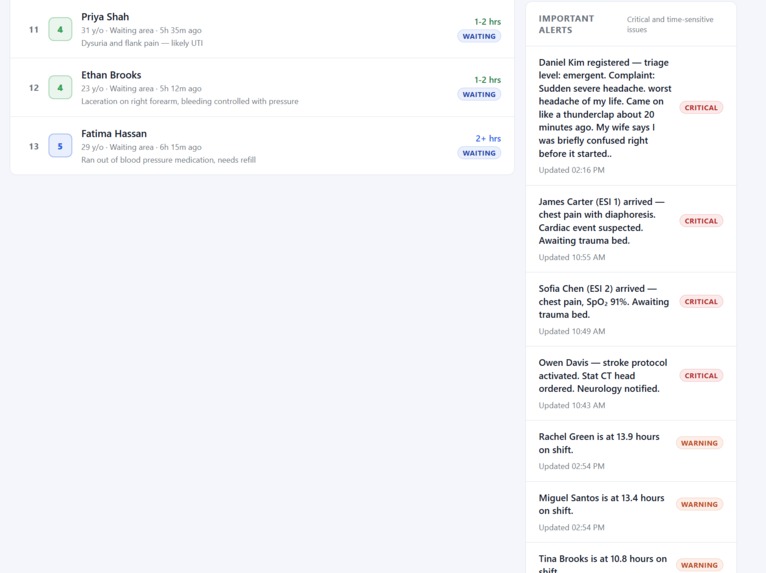
Operations View 2
-
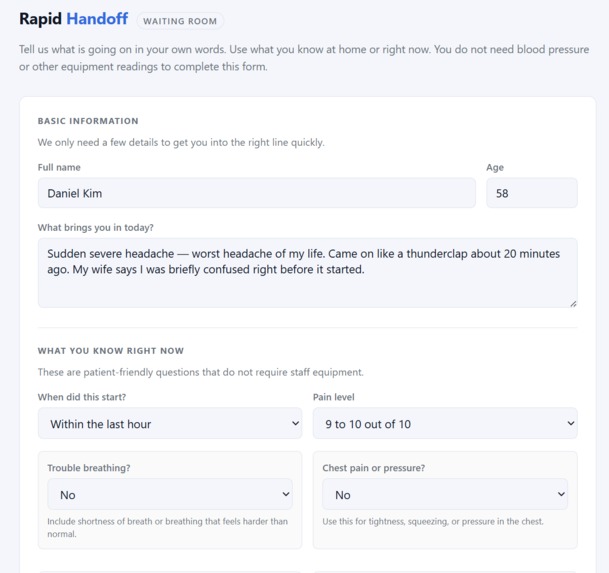
Check-in form 1
-
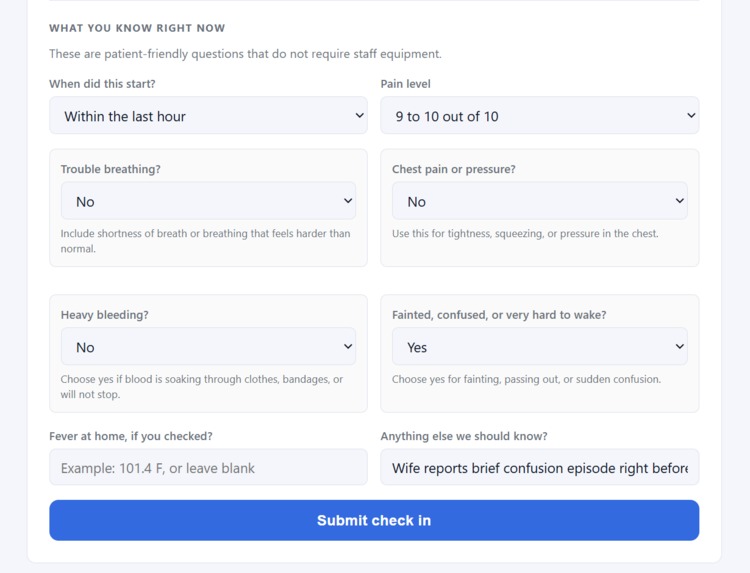
Check-in form 2
Inspiration
Emergency rooms are high-pressure environments where there are often delays due to lack of coordination and resources. A patient may be waiting to be seen, a room may be blocked by cleaning, a nurse may already be overloaded, and staff still need to make fast decisions with incomplete information. We wanted to build something that helps connect all of these parts in real time. We were especially interested in the gap between a simple patient check-in experience and the much more complex operational picture staff have to manage behind the scenes. This is what inspired us to build Rapid Handoff.
What it does
Rapid Handoff: ER Flow is a multi-agent emergency room operations system that connects patient intake with operational decision-making.
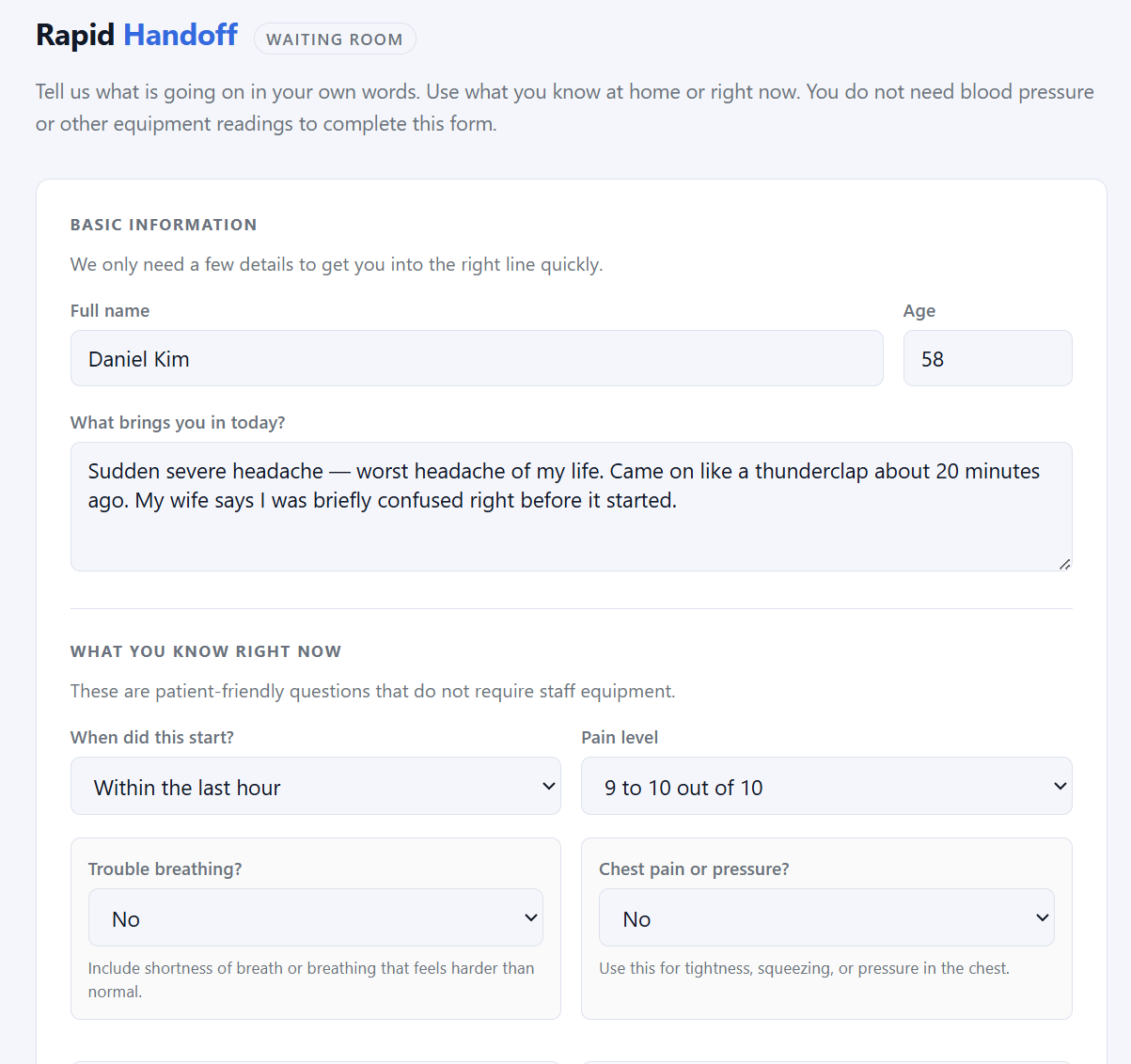
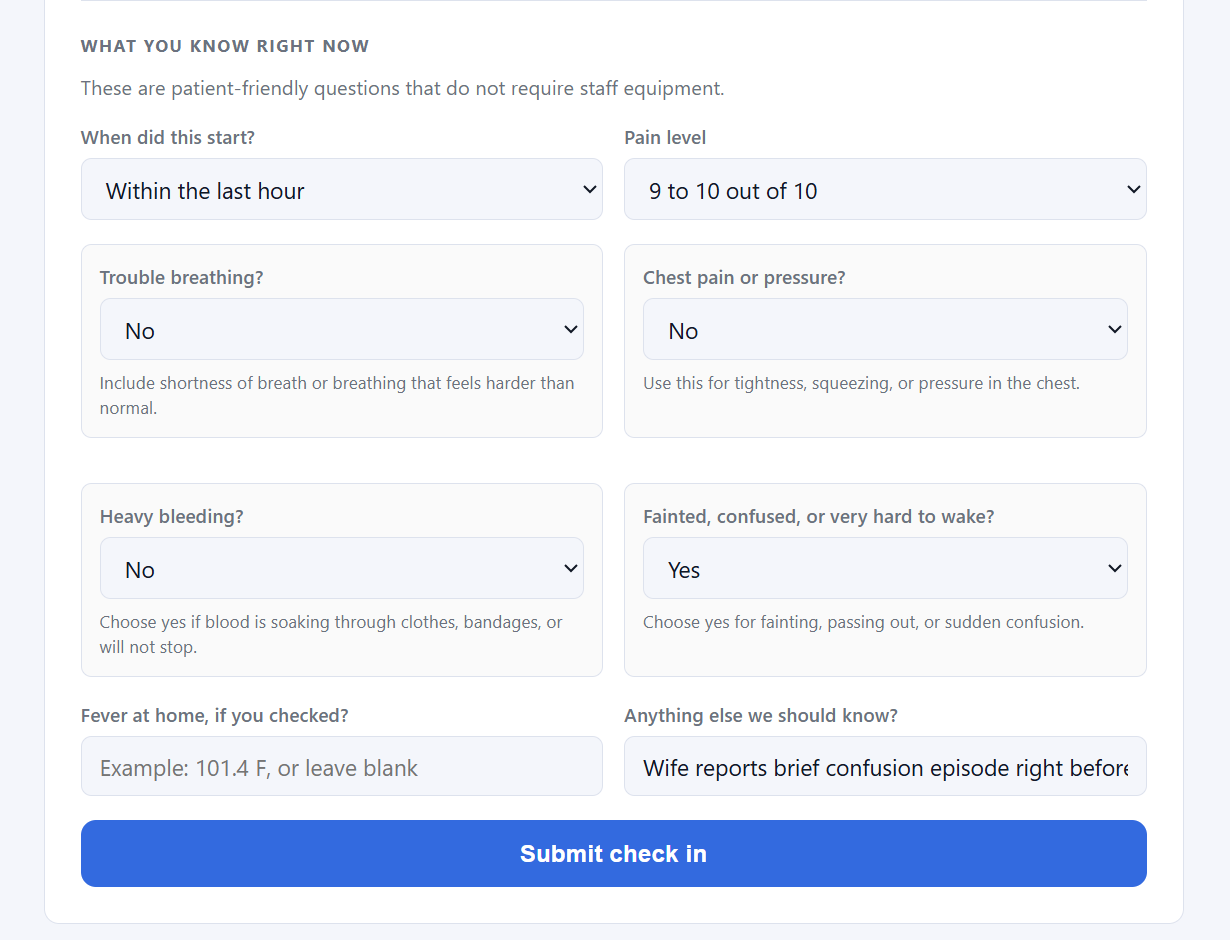
On the patient side, it provides a simple check-in form that asks for information patients can realistically provide, such as:
- age
- symptoms
- pain level
- when symptoms started
On the backend, an orchestrator agent uses that intake to:
- assess urgency
- register the patient in the queue
- search for an appropriate bed
- recommend and assign staff
- update operational state in MongoDB
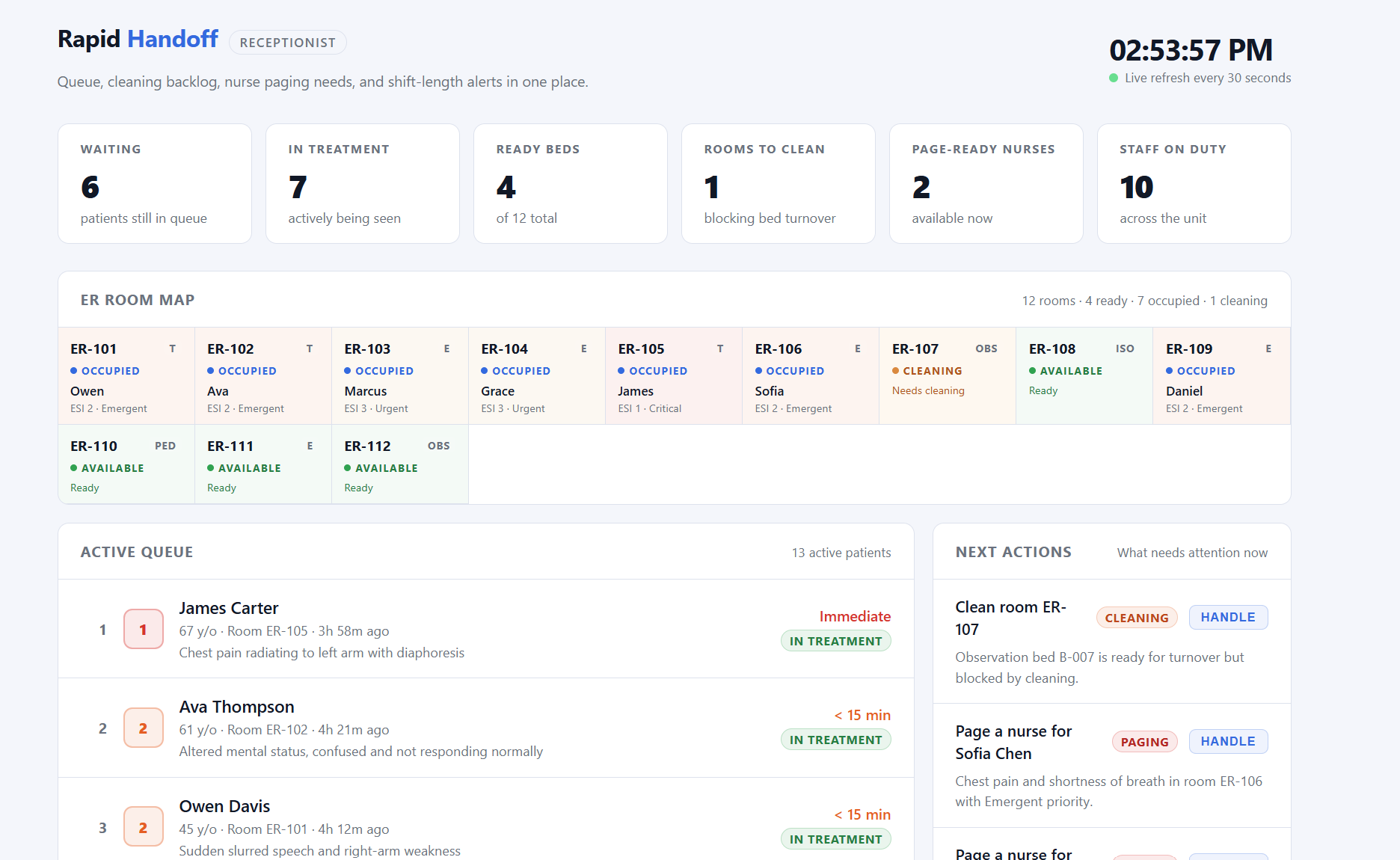
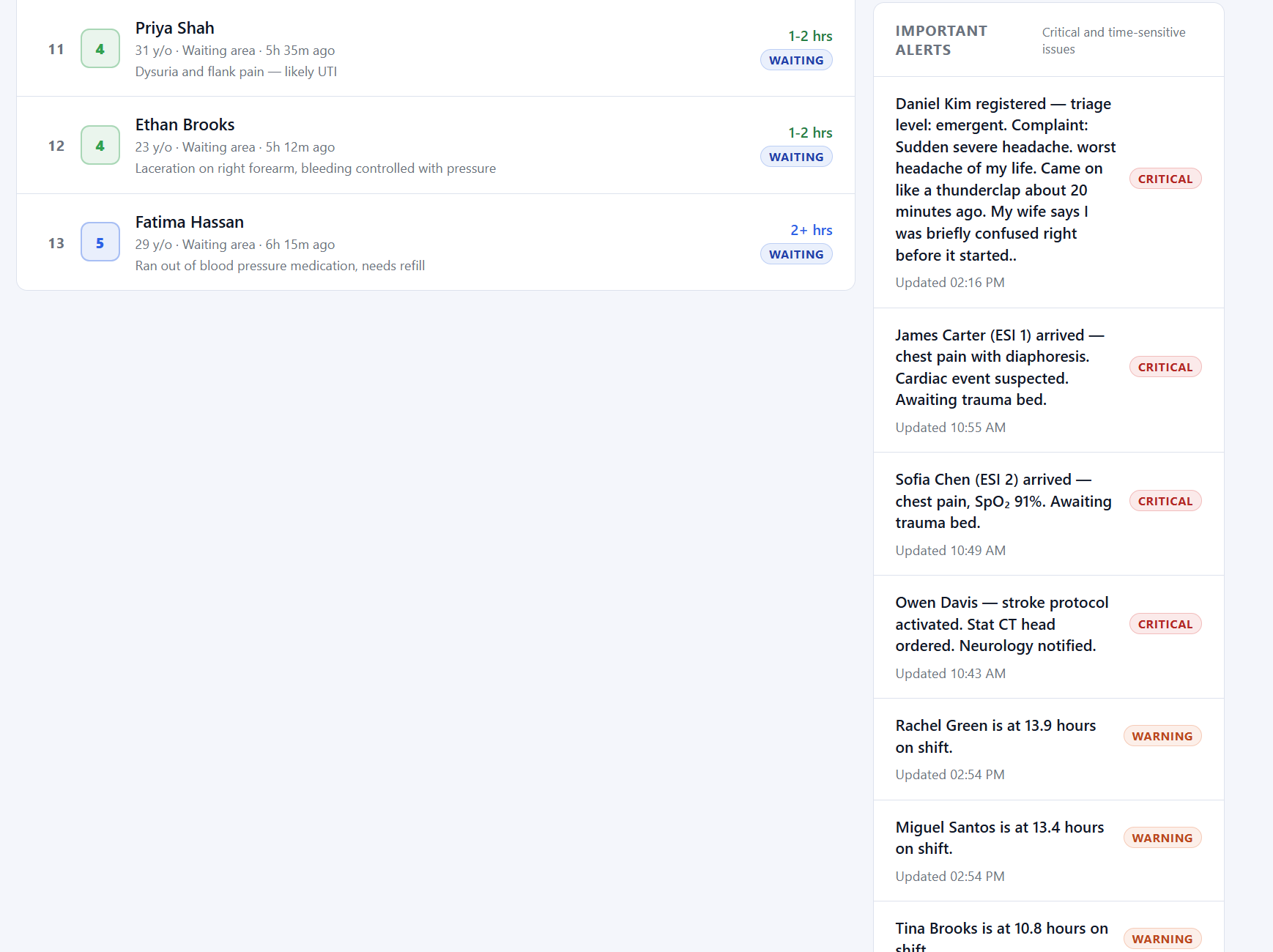
On the staff side, a live operations dashboard displays:
- queue pressure
- patients waiting and in treatment
- bed availability
- rooms awaiting cleaning
- page-ready nurses
- next actions and recommendations
- important alerts such as staffing or turnover issues
The two different view can be accessed using: https://er-dashboard-813180115279.us-central1.run.app/receptionist.html and https://er-dashboard-813180115279.us-central1.run.app/waiting-room.html.
How we built it
We built the project as a TypeScript multi-agent system using Google's Agent Development Kit.
The system includes:
- an Express backend for APIs and frontend delivery
- a central ER operations orchestrator agent
- a triage agent for urgency and routing decisions
- a staff coordination agent for assignment recommendations
- MongoDB for operational state and live status data
- Arize Phoenix integration for observability-oriented workflows
- a patient-facing check-in UI
- a staff-facing operations dashboard
The main flow is:
patient check-in -> /agent/orchestrate -> orchestrator -> sub-agents -> MongoDB writes -> /api/er-status -> live dashboard refresh
Challenges we ran into
One of the first challenges was making the intake realistic. Early on, we had fields like blood pressure in the patient check-in flow, but patients usually don't know that information off the top of their heads. We had to rethink the intake around self-reported symptoms and easy-to-answer questions instead of staff-measured vitals.
Another challenge was balancing two very different user experiences. Patients need a calm, straightforward check-in form, while staff need a dense operational dashboard with more context, alerts, and coordination signals.
We also spent a lot of time designing how the agents would interact with each other and what they each would report. Even before building, we were thinking about the agent architecture diagram which we changed a few times based on the demo results.
Accomplishments
We are proud that Rapid Handoff feels like a connected system rather than a bunch of isolated features.
Some highlights:
- creating a patient-friendly check-in page
- building a multi-agent backend that turns intake into actionable operational updates
- connecting patient state, bed state, and staffing state into one live dashboard
- adding operational signals like cleaning backlog, next actions, and nurse shift alerts
We designed the project to support care teams operationally so they can spend more time focusing on the patients.
What we learned
We learned that designing for healthcare operations requires a lot of attention to language, workflow, and trust.
On the technical side, we learned more about:
- orchestrating multiple focused agents instead of relying on one general agent
- using structured state to drive live operational dashboards
- building safer and more realistic intake flows
- making deployments more reliable through validation, diagnostics, and repeatable seed data
- thinking about observability as part of the product, not just infrastructure
We also learned that the hardest part is often not generating an answer but fitting the system into the actual sequence of decisions people need to make.
What's next for Rapid Handoff
Next, we want to expand Rapid Handoff from a strong demo into a more complete operational assistant for emergency departments.
Some directions we are going to explore are:
- better bed-turnover and environmental services coordination
- better shift-level forecasting for staffing pressure
- stronger observability and trace review through Arize Phoenix
- deeper MongoDB-backed operational history and analytics
- more realistic hospital workflows using escalation rules, handoff summaries, and supply coordination
We see Rapid Handoff as a system that helps emergency room staff reduce coordination friction and keep operational context visible when the ER is under pressure.
Built With
- arize
- css
- docker
- express.js
- github
- google-adk
- google-cloud-agent
- html
- mongodb
- node.js
- pnpm
- typescript
- zod

Log in or sign up for Devpost to join the conversation.