-
-
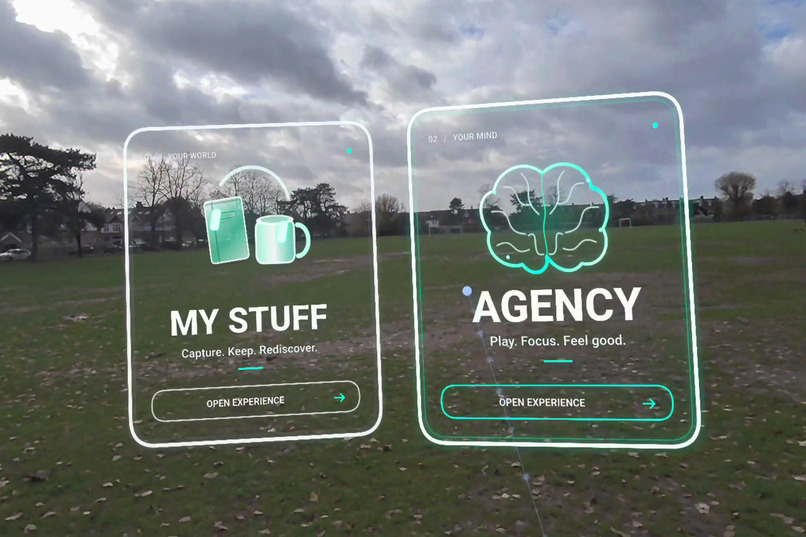
free-lab.cam - main menu
-
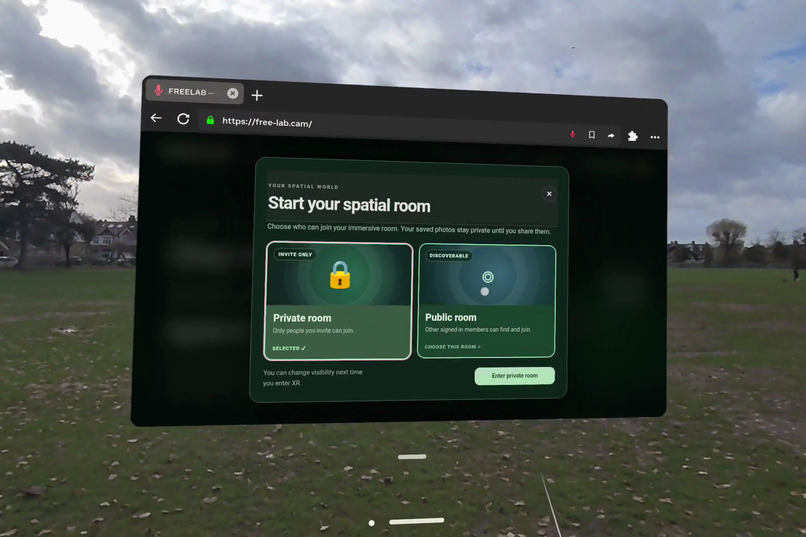
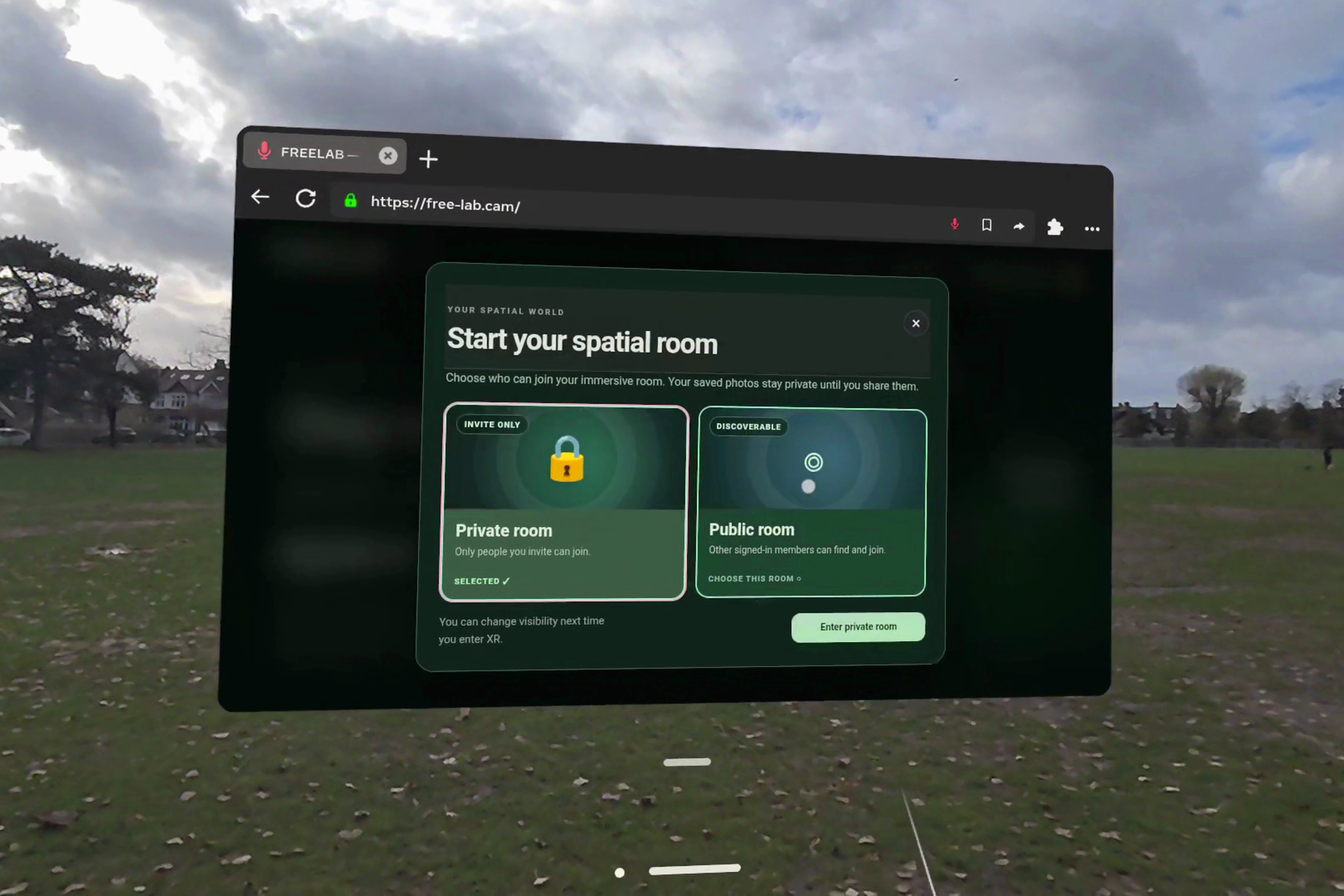
free-lab.cam - WebXR - room selection
-
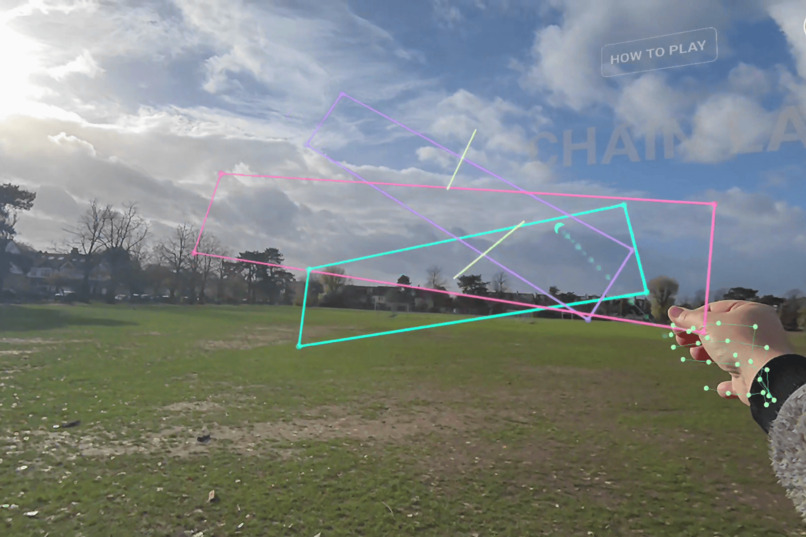
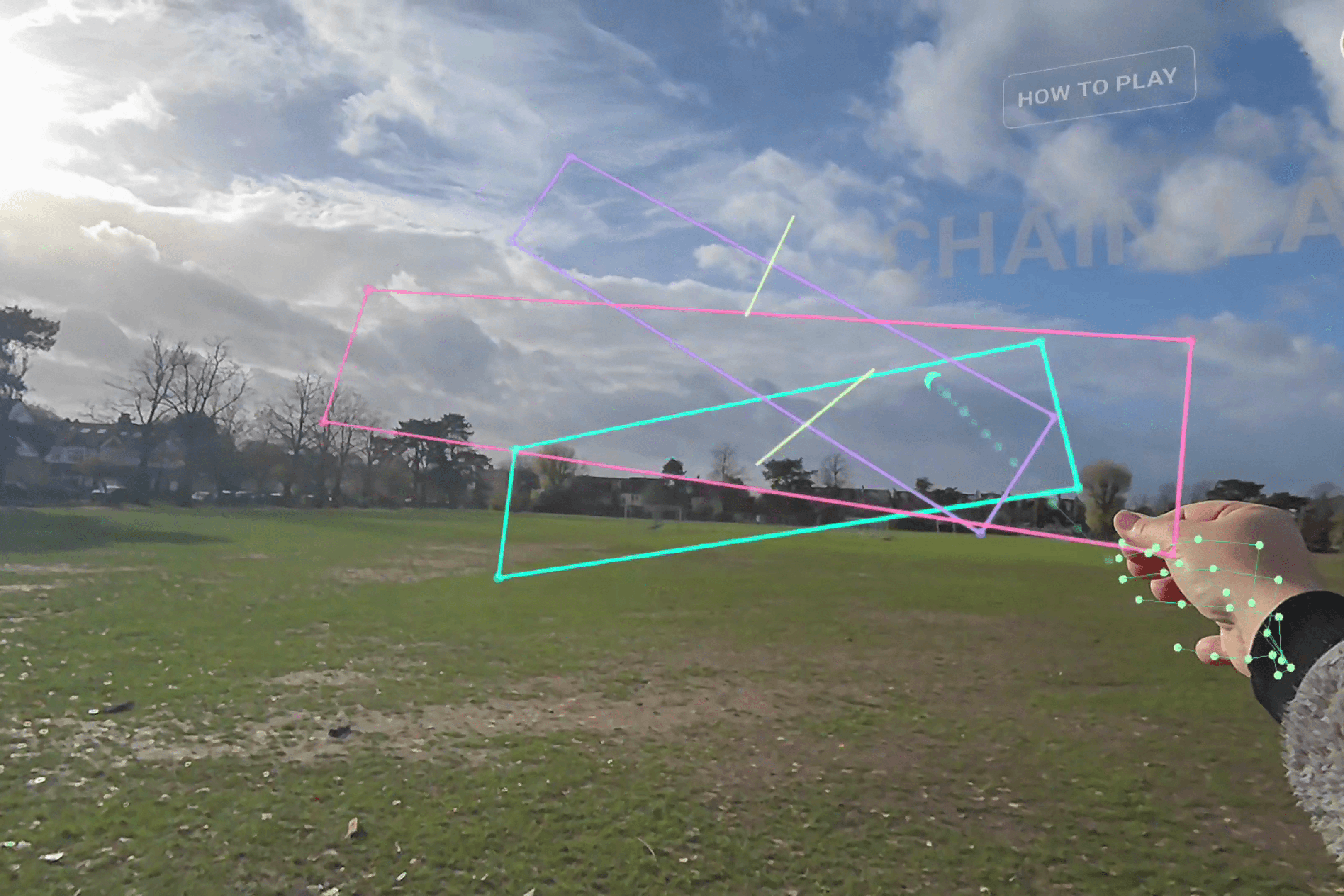
free-lab.cam - chain lab - agency
-
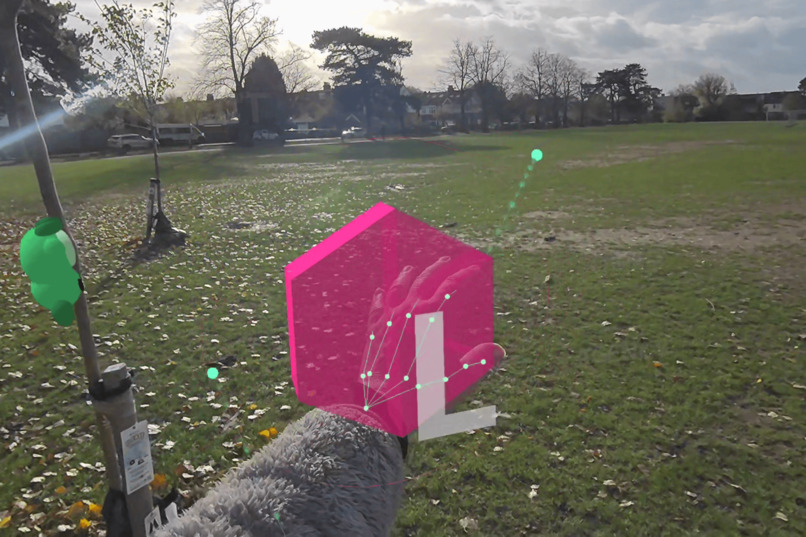
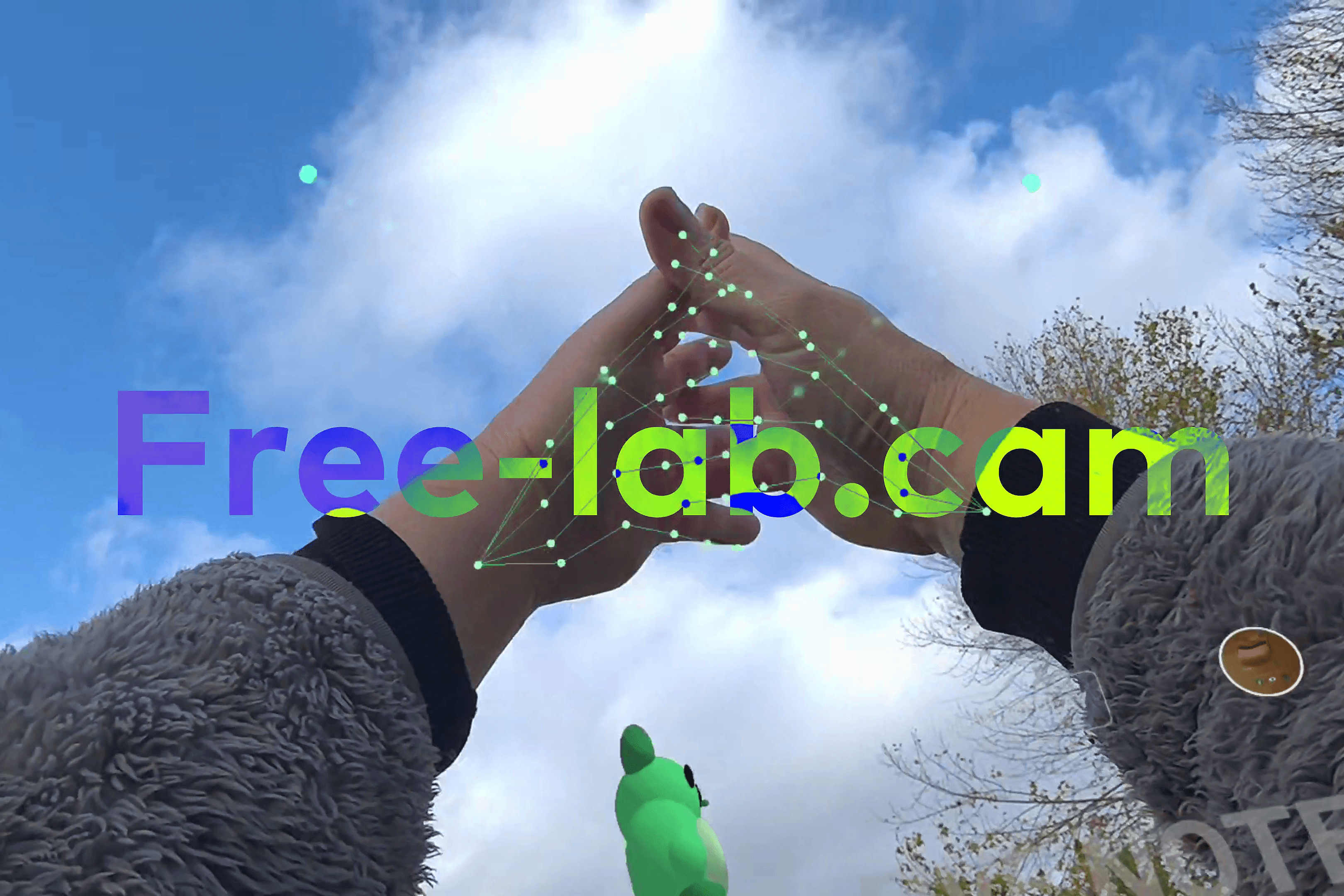
free-lab.cam - hand harmony - agency
-
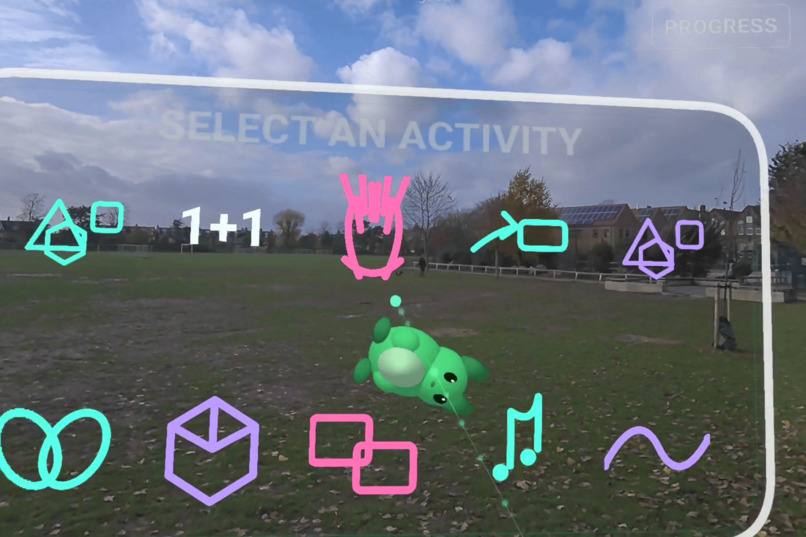
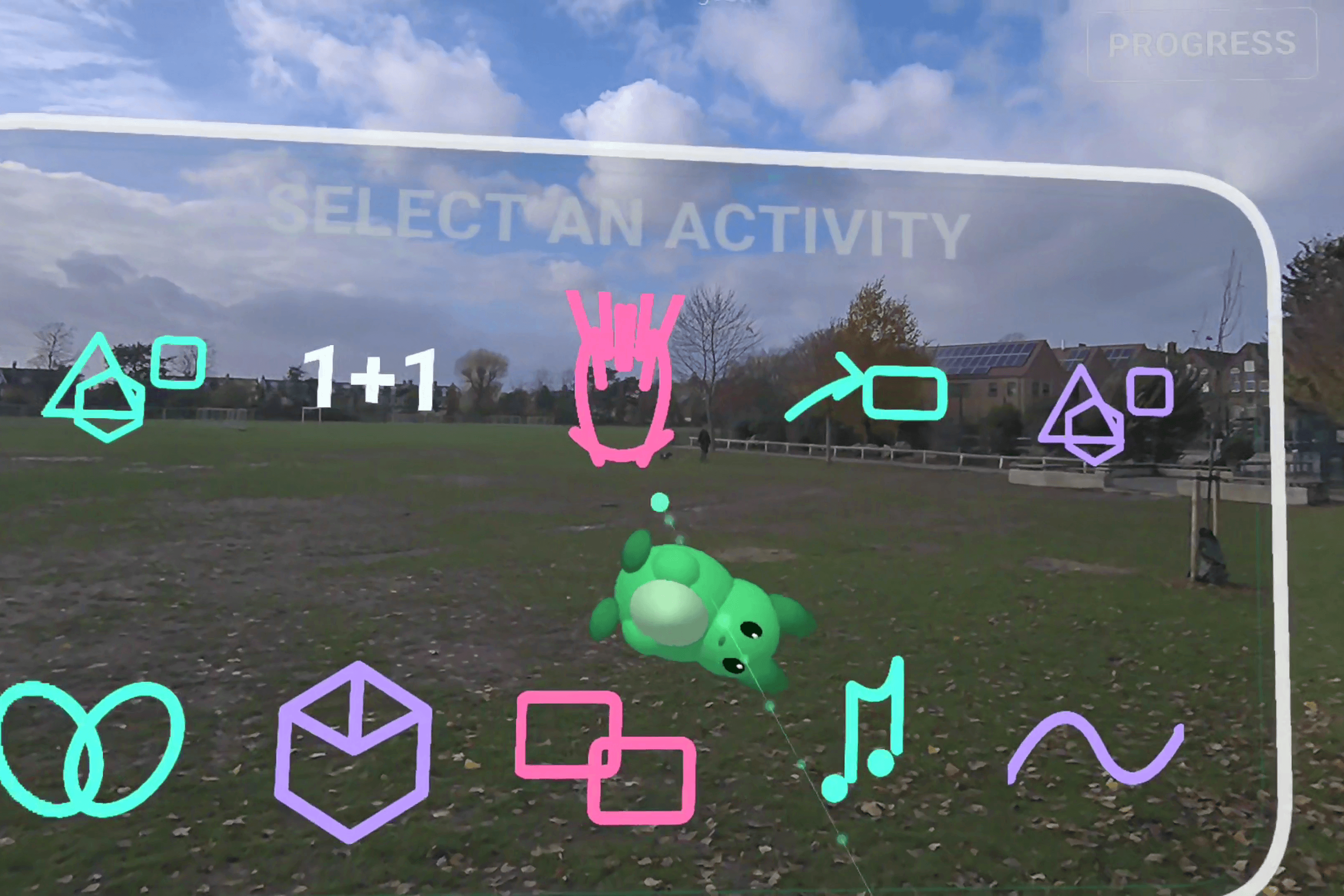
free-lab.cam - agency menu
-
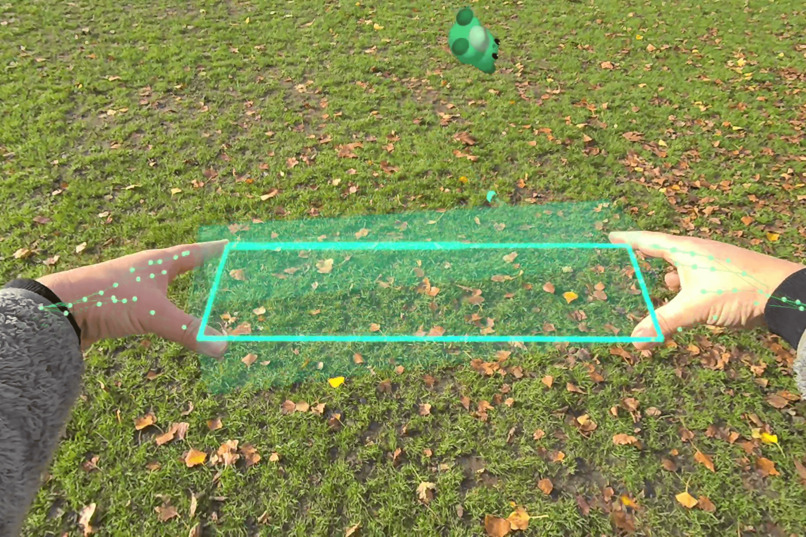
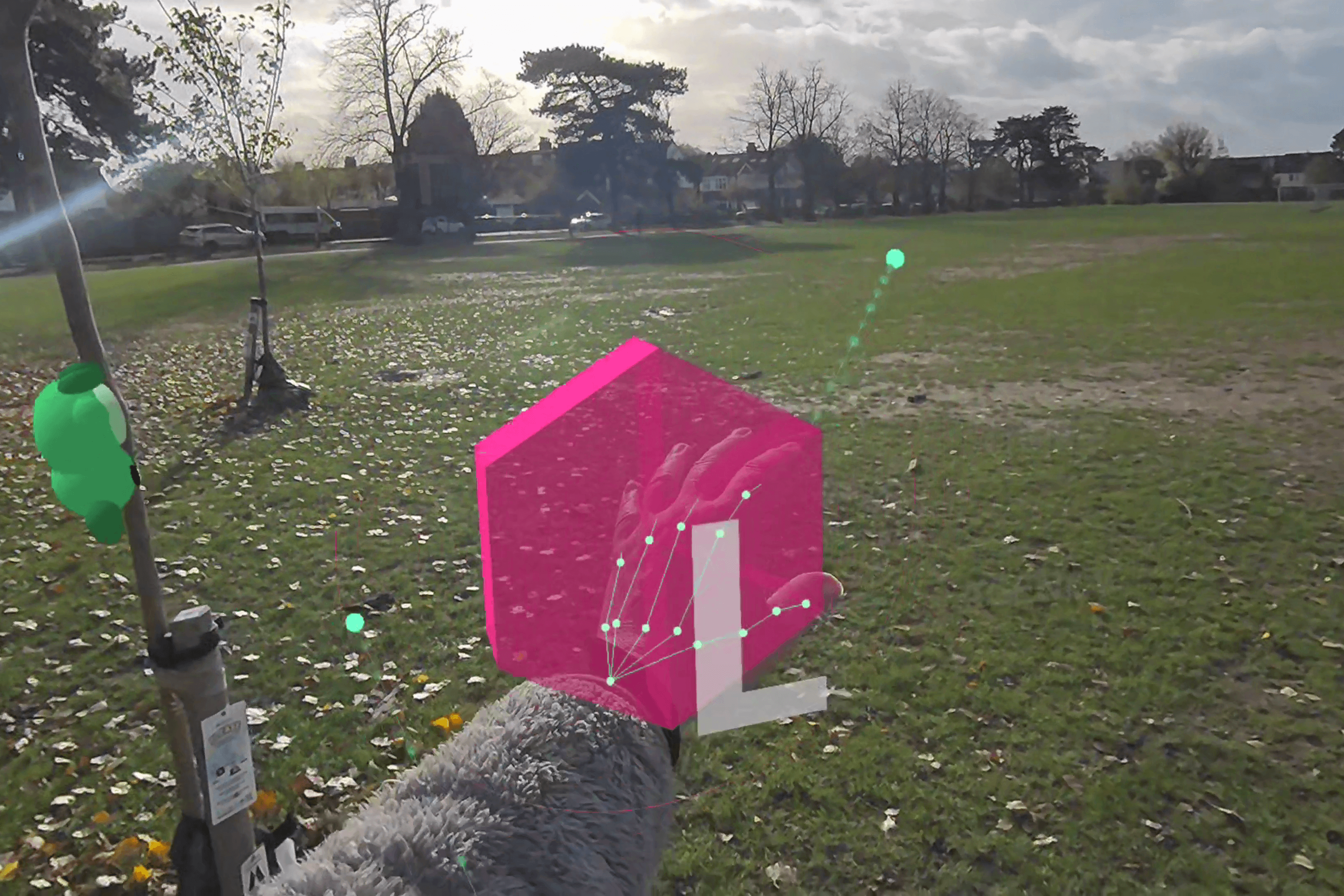
free-lab.cam - cube lab - agency
-
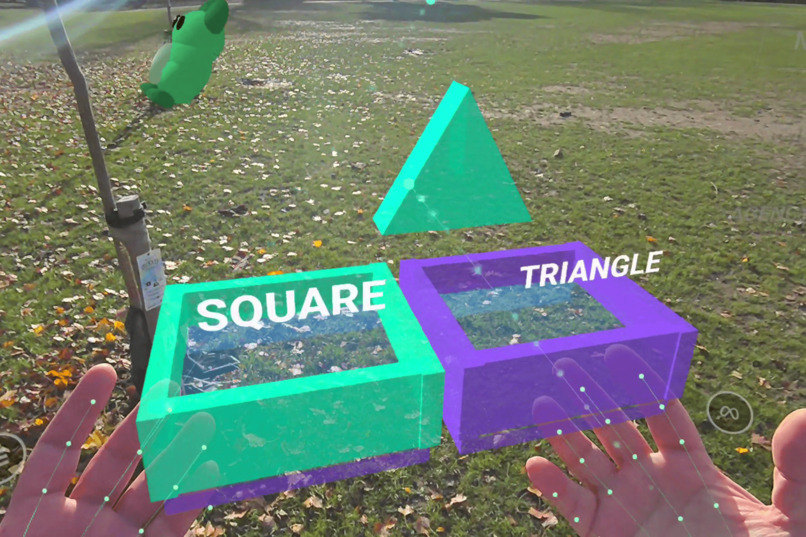
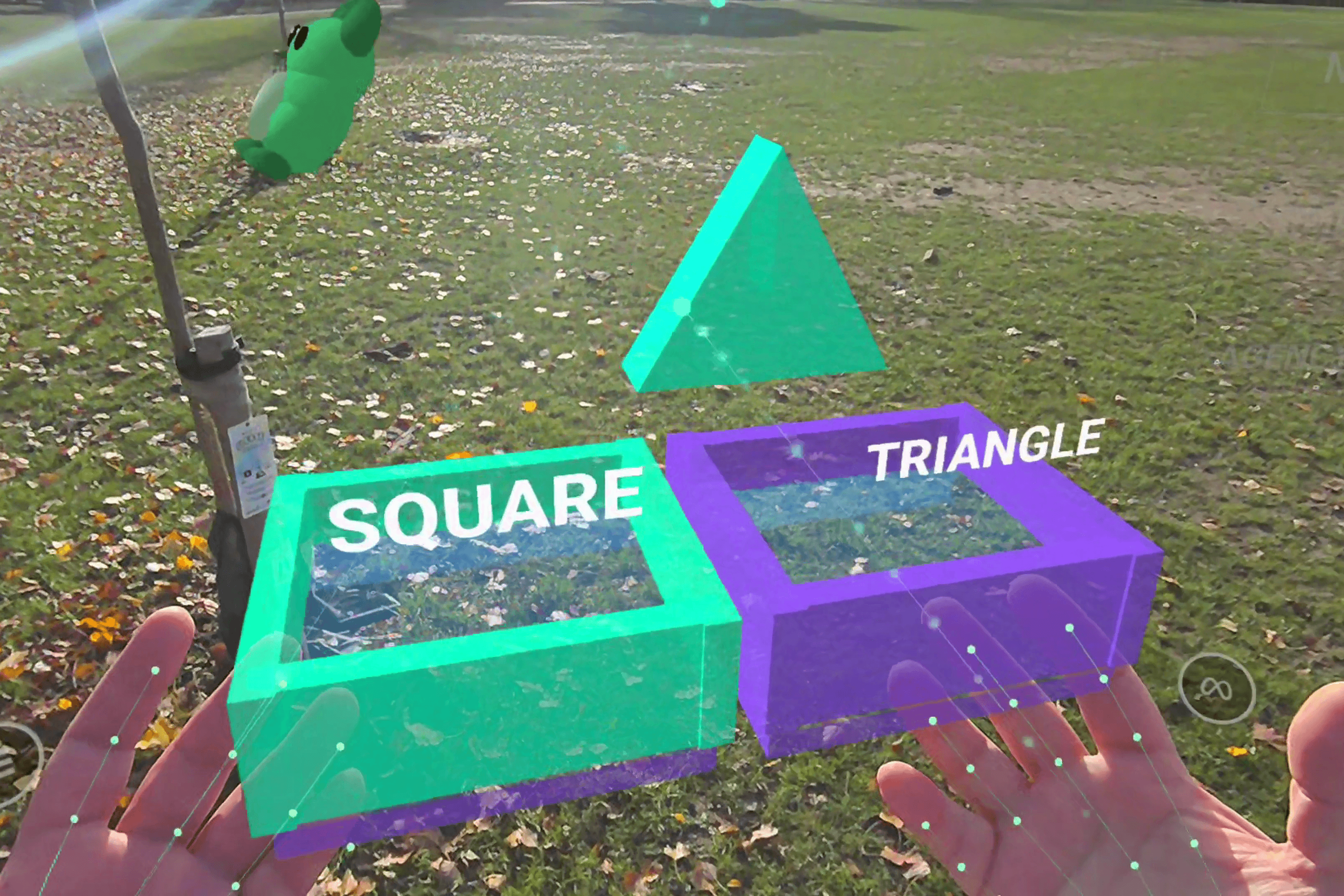
free-lab.cam - shapes garden - agency
-
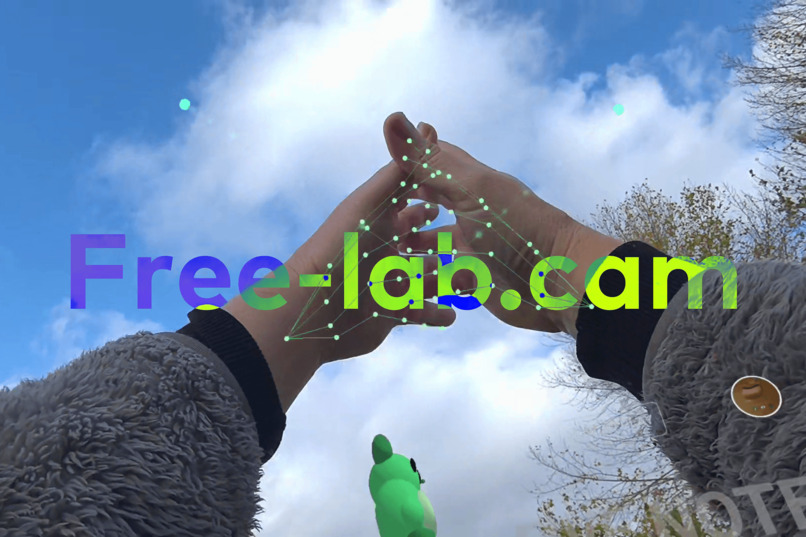
free-lab.cam - 5 notes agency - agency
-
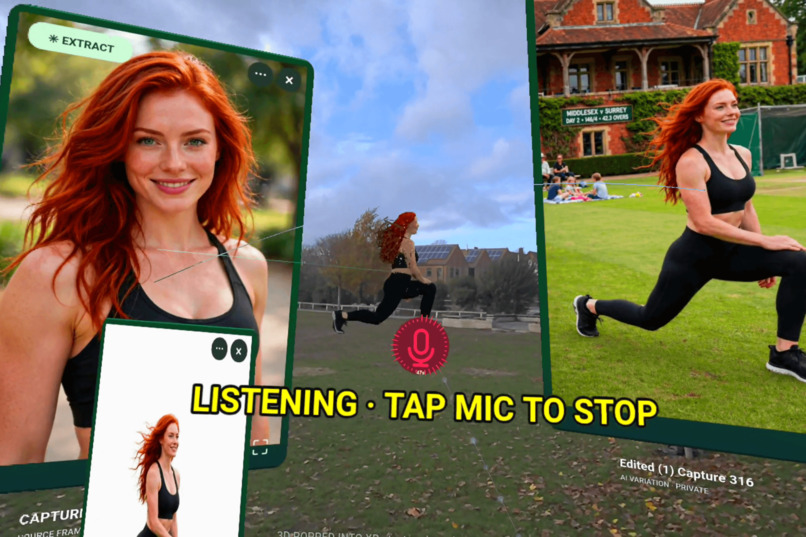
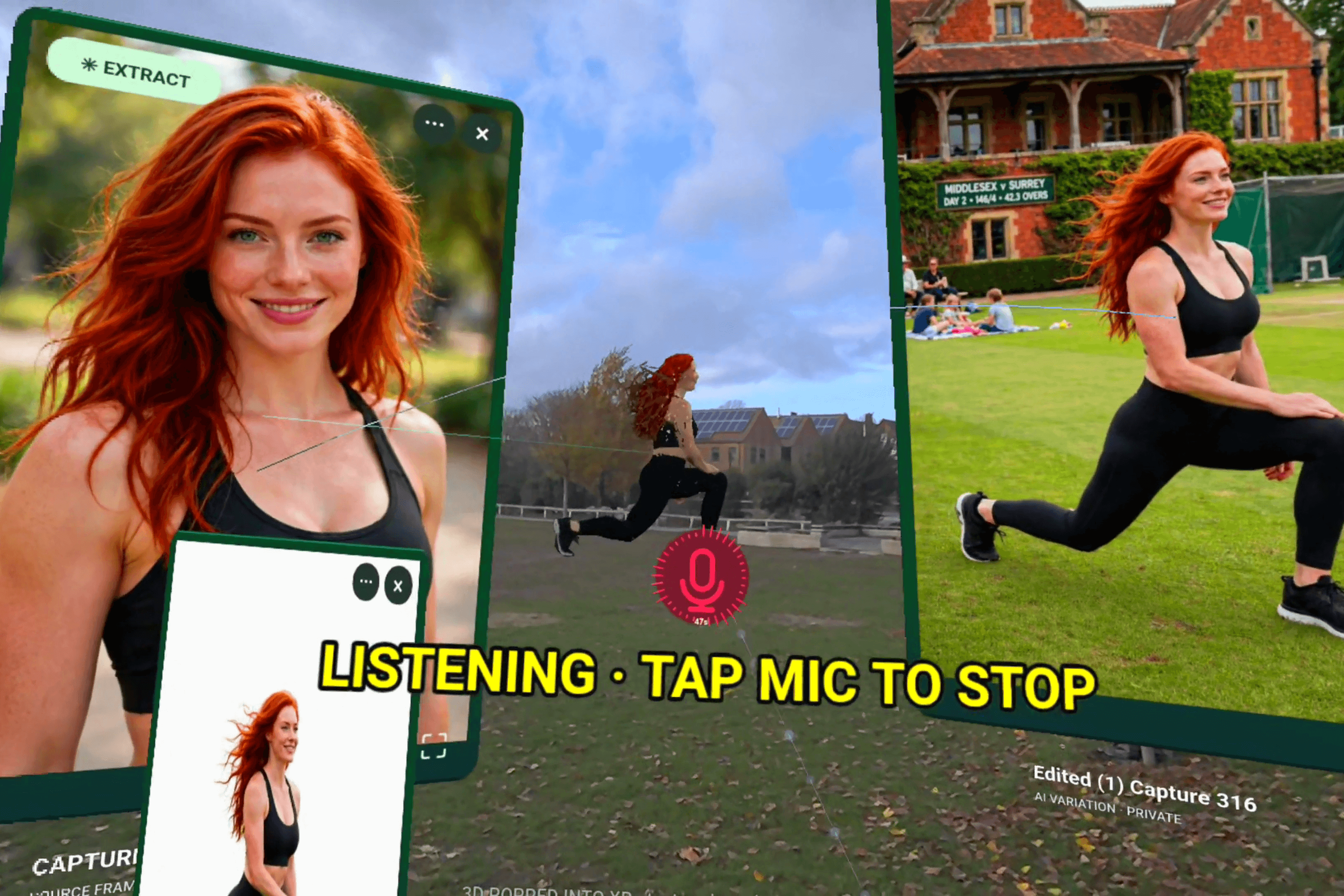
free-lab.cam - My Stuff - Gennie - imaginary workout friend
-
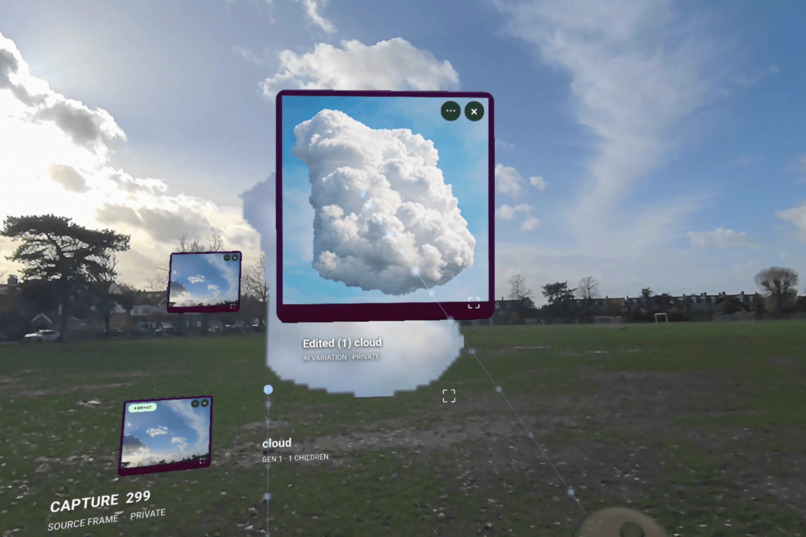
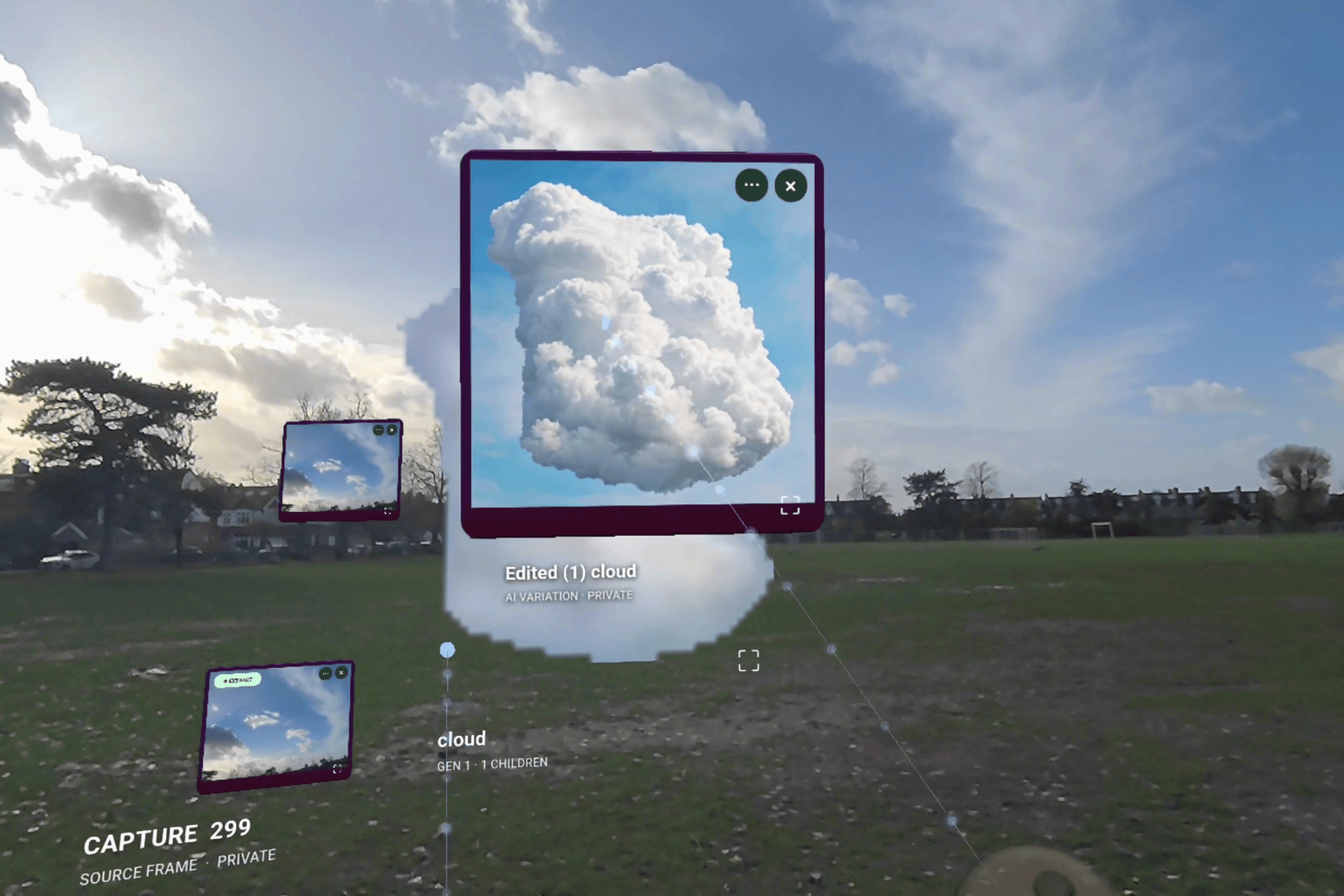
free-lab.cam - My Stuff - Collecting Clouds
-
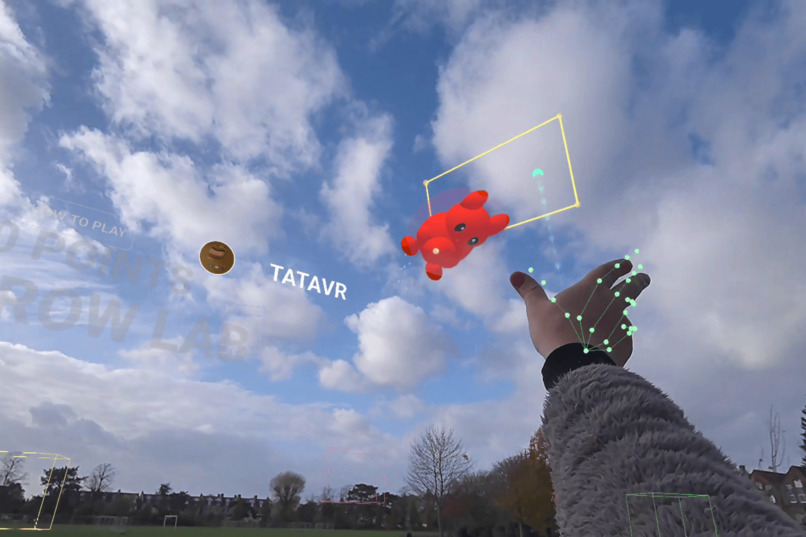
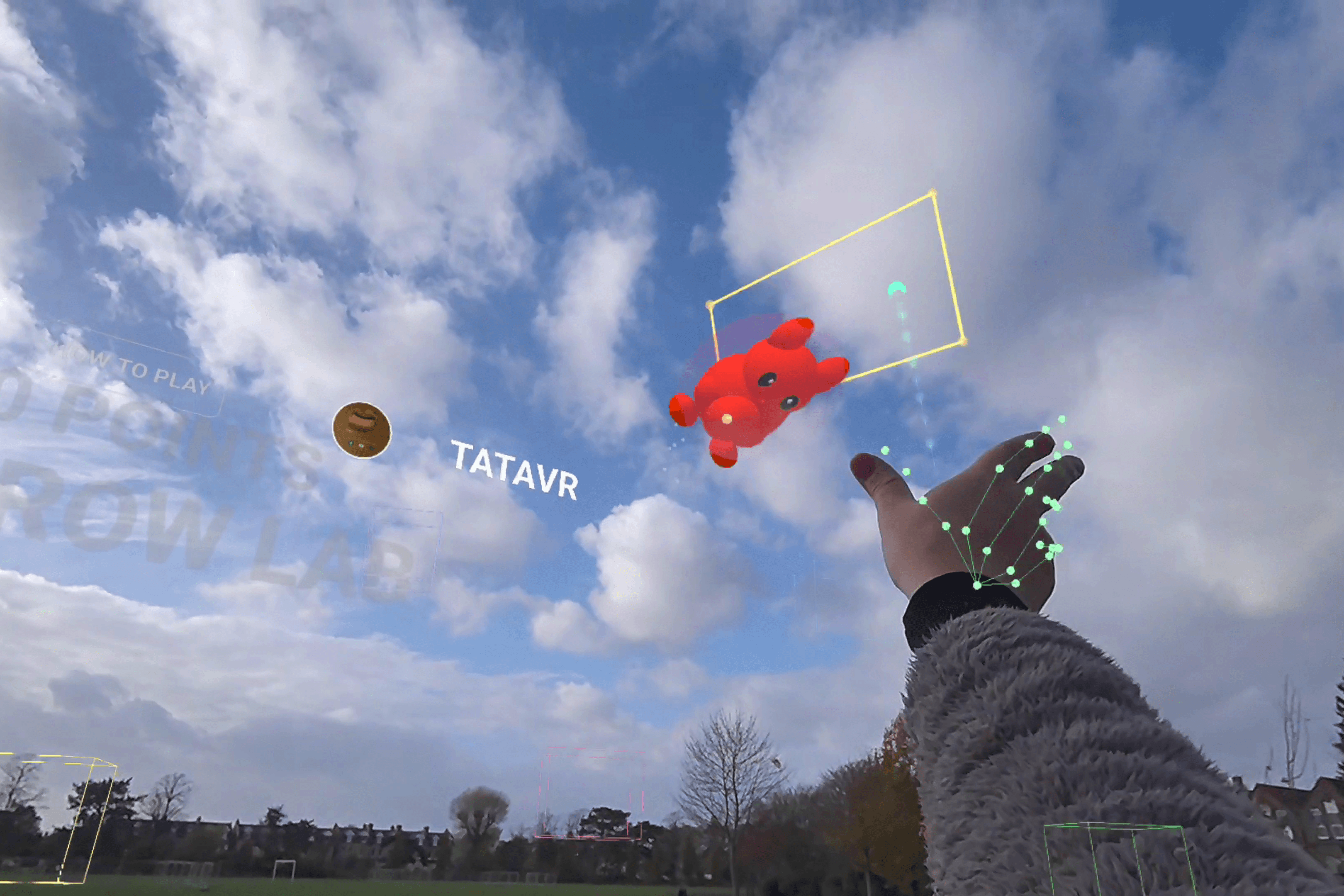
free-lab.cam - Agency - Throwing Lab
-
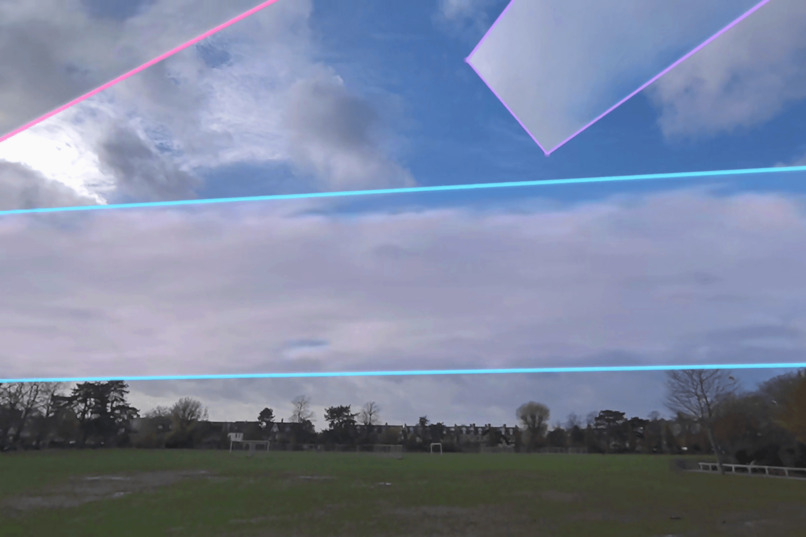
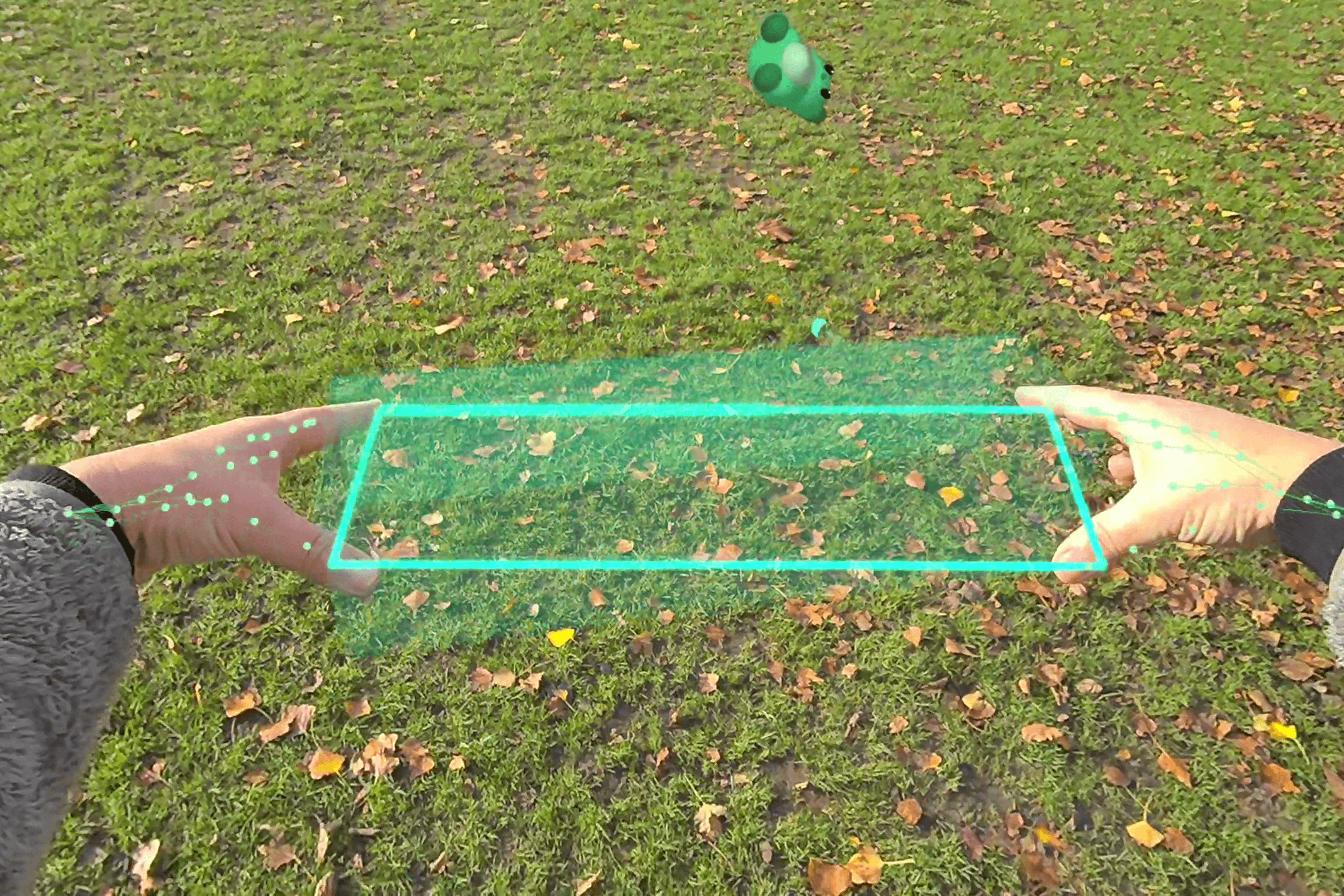
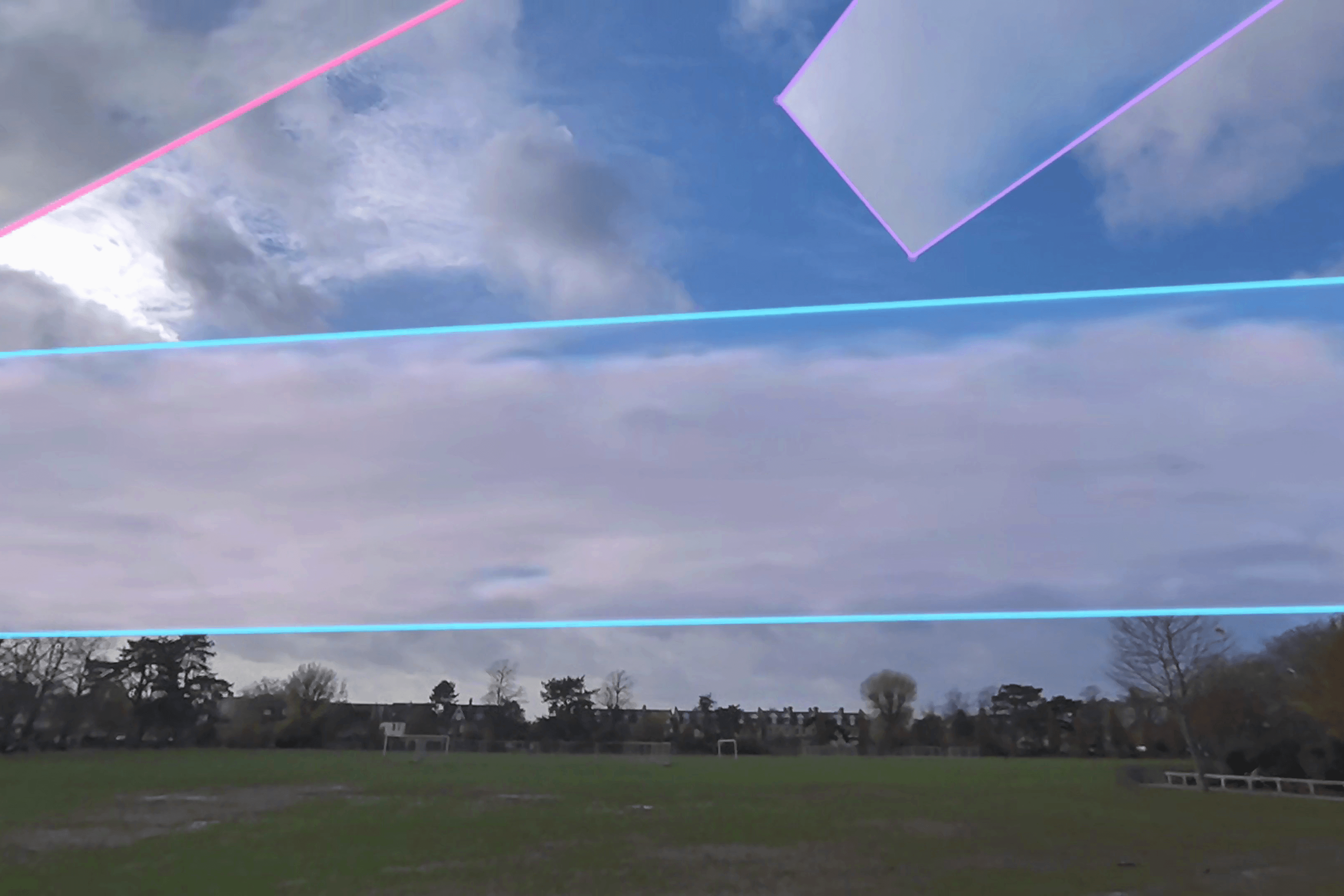
free-lab.cam - Agency - Spacial Frames
-
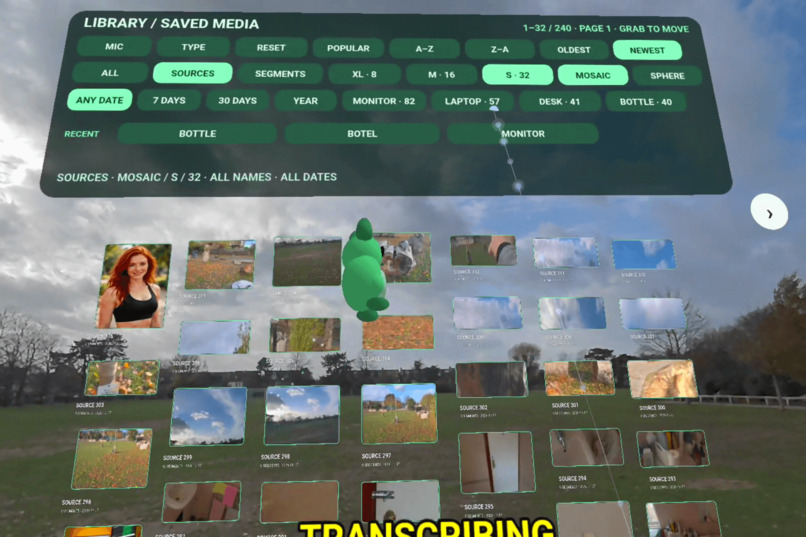
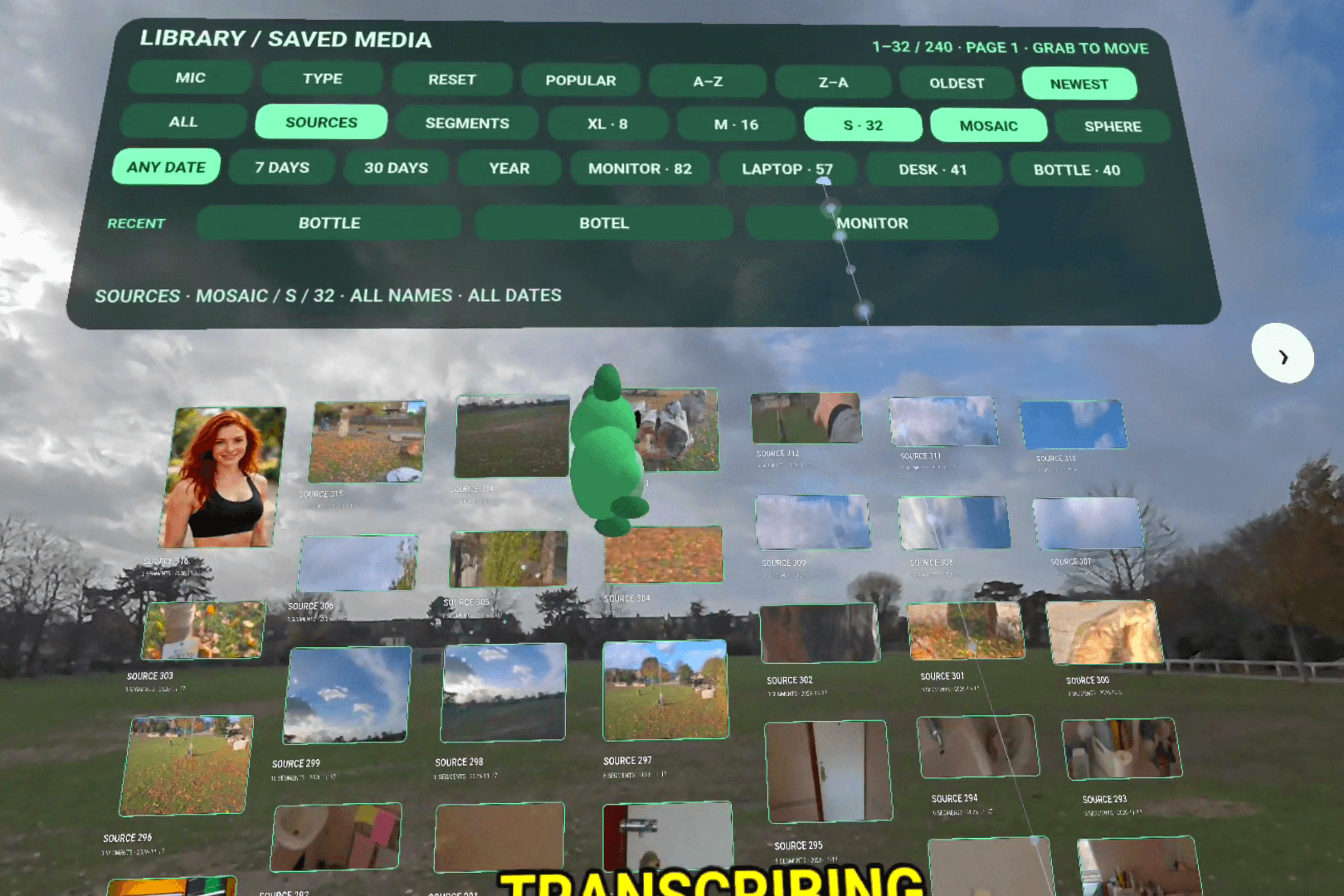
free-lab.cam - My Stuff - Library
-
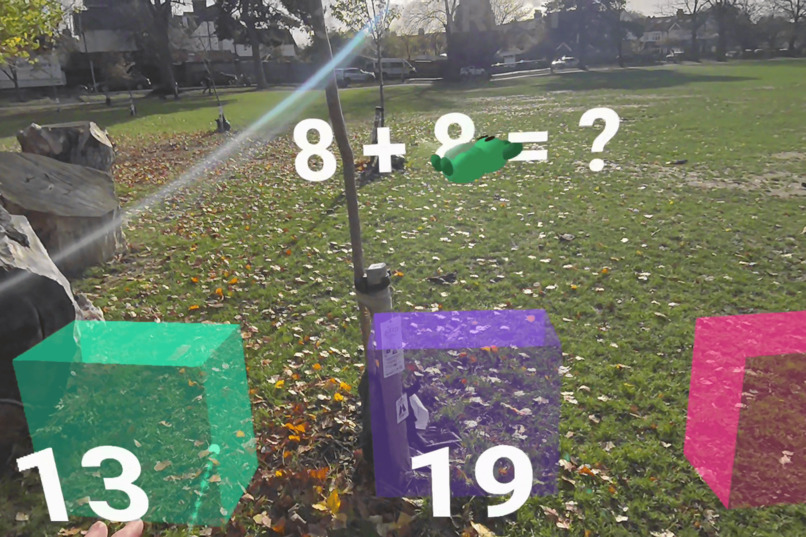
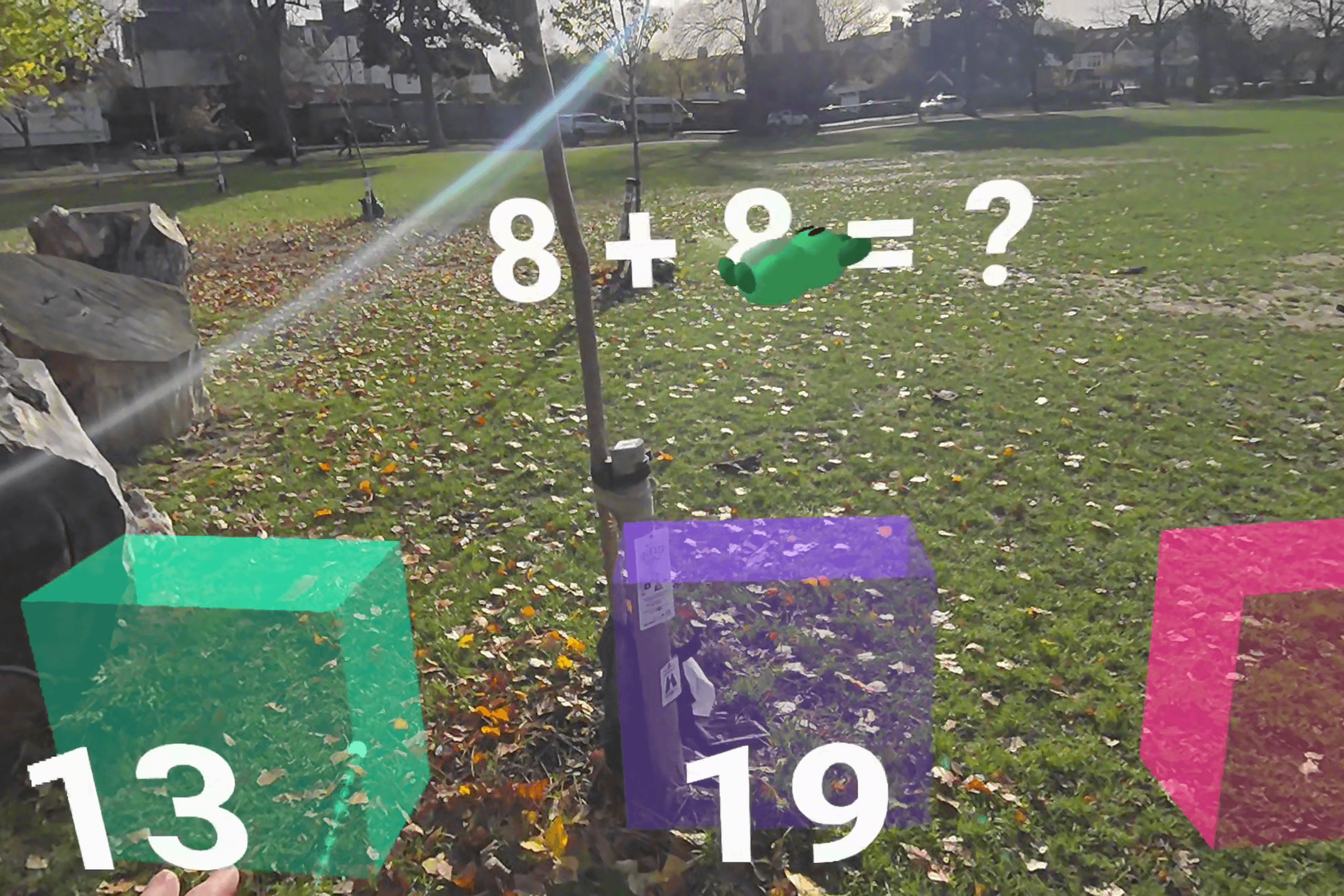
free-lab.cam - Agency - Numbers
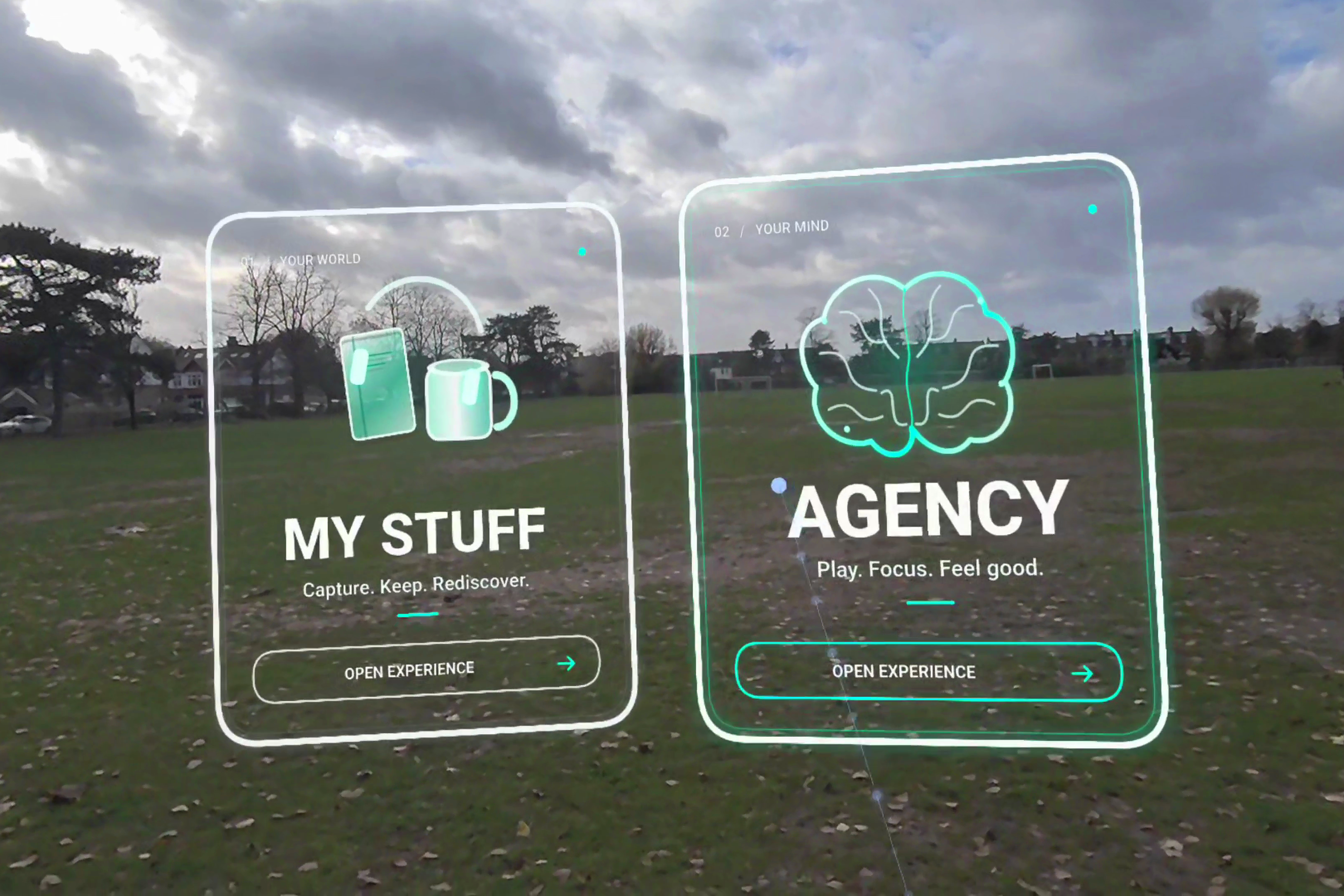
FREE-LAB.cam — My Stuff. My Agency. My World.
Inspiration
It started with a simple thought: What if mixed reality could help us explore the world around us, rather than escape from it?
Imagine walking through a park on a cold, windy but sunny autumn afternoon. There are trees, dogs, people running, fallen leaves, clouds, and hundreds of ordinary things competing for our attention.
What if we could capture these fragments of reality, rediscover them later, and transform them into something interactive?
And what if, after exploring the world outside, we could turn that same curiosity inward?
Some days we want a physical workout. Other days, we'd rather exercise our attention, coordination, creativity, and problem-solving abilities.
That idea became FREE COGNITIVE LABORATORY aka Free Lab: a mixed-reality playground connecting two complementary experiences.
My Stuff is about discovering the world around us.
Agency is about discovering what we can do within it.
Two sides of one experience: curiosity about our surroundings and curiosity about ourselves.
And somewhere along the way, we met Jenny, our imaginary ginger-haired companion who loves a good workout.
What It Does
FREE-LAB.cam transforms everyday surroundings into an interactive spatial environment using Meta Quest and WebXR.
My Stuff — Your Personal Universe
My Stuff lets users capture, organize, and revisit pieces of their physical world.
Instead of keeping everything in a conventional photo gallery, FREE-LAB.cam makes captured content explorable in three-dimensional space.
Users can:
- Capture real-world images and organize them into personal collections.
- Explore source images, individual objects, and segmented content.
- Generate and interact with 3D representations of objects.
- Search their library using voice or keyboard.
- Filter collections by object type, date, and content.
- Arrange and explore images in spatial galleries, cinematic previews, and an experimental Sphere Mosaic.
The idea is to turn passive digital storage into an active experience of discovery.
Cognitive Agency — A Playground for the Mind
Agency introduces 10 interactive mixed-reality activities, designed around attention, spatial thinking, coordination, reaction, consistency, and creativity.
Some activities present structured challenges with measurable results. Others encourage unrestricted experimentation.
Users can solve number problems, recognize shapes, throw geometric objects, sort colours, construct cubes, create shapes, and connect their fingers with colourful virtual strings.
Imagine Tetris without the tyranny of gravity, or a puzzle that exists in the space between your hands.
Activities support natural interaction through tracked hands and VR controllers, with free-play and timed experiences.
The goal isn't to turn every moment into a competition. Sometimes the simple pleasure of making a colourful square in mid-air is enough.
Progress — Making Interaction Measurable
FREE-LAB.cam records gameplay activity so users can explore patterns over time.
The progress dashboard includes measurements such as:
- Time spent playing and completed activities.
- Scores, accuracy, and response patterns.
- Left- and right-hand or controller interactions.
- Performance across different times of day.
- Historical trends and comparisons between activities.
An experimental AI analyser offers optional summaries in different personalities: Scientist, Coach, Buddy, and Satire.
The aim is to make performance data understandable and interesting, while keeping a clear distinction between observed game behaviour and scientifically validated cognitive assessment.
FREE-LAB.cam does not diagnose cognitive conditions or claim to improve brain health. It creates an experimental foundation for exploring how people interact, learn, and play in spatial environments.
Beyond the Headset
FREE-LAB.cam isn't limited to VR.
It combines immersive Meta Quest experiences with desktop and mobile access to personal content, settings, and progress.
The platform also introduces public and private spatial rooms, offering a foundation for shared experiences.
How We Built It
FREE-LAB.cam is a browser-based application built around WebXR, JavaScript, Three.js, WebGL, Python, and Flask.
The immersive experience runs in Meta Quest Browser, combining real-world passthrough with interactive 3D objects and spatial interfaces.
We developed a custom XR rendering and interaction system to support hand tracking, controllers, 3D manipulation, spatial UI, animation, and responsive gameplay.
For personal content, the backend manages uploaded assets, object collections, 3D models, thumbnails, and account-specific data.
We integrated Blender-based processing for 3D assets, with browser-based rendering alternatives where server-side rendering encounters compatibility problems.
Gameplay events are collected by a dedicated progress system and transformed into dashboards and exportable datasets.
Experimental AI functionality supports image-related workflows and optional analysis of aggregated gameplay measurements. Voice features include speech recognition and ElevenLabs-based speech options.
We also created a video explainer system that streams HLS content directly onto spatial surfaces, allowing tutorials to appear naturally inside an XR experience.
The application runs on a Linux server with an automated, versioned deployment workflow, integrity checks, and regression tests.
Challenges We Faced
Making Spatial Interfaces Feel Natural
A button that works perfectly on a desktop screen can become difficult to read or select in mixed reality.
We had to rethink scale, distance, transparency, depth, positioning, and interaction feedback.
Panels needed to be readable without dominating the surrounding environment. Some elements should follow the user; others, such as cinematic previews, must remain anchored in the world.
Supporting Hands and Controllers
Hands and controllers behave differently.
Designing activities that remain engaging and understandable across both input methods required careful attention to gestures, targeting, movement, and feedback.
Rendering Performance on Standalone Headsets
Meta Quest has different rendering constraints from a desktop computer.
We worked through issues involving GPU resources, 3D model loading, video textures, frame rates, and XR interface performance.
One important improvement involved replacing a slow Canvas-based video path with direct video-texture rendering.
Working with Real-World Assets
Real images and generated 3D objects are unpredictable.
Different file formats, model sizes, compressed geometry, and server rendering dependencies introduced challenges with processing and previews.
We built fallbacks, caching, validation, and diagnostic tools to make these workflows more resilient.
Measuring Something Meaningful
Collecting scores is easy. Interpreting them responsibly is much harder.
We learned to distinguish between task performance, exploratory behavioural patterns, and claims that would require formal scientific validation.
That distinction shaped the progress dashboard and experimental AI analyser.
What We Learned
The biggest lesson was that mixed reality becomes interesting when it gives people more freedom to interact with their environment, not simply more things to look at.
We also learned that cognitive activities don't always need complicated instructions or spectacular graphics.
Sometimes moving a cube, recognizing a pattern, or connecting two fingers with a virtual string can create an engaging experience.
And we discovered how much care is required to make spatial interaction feel simple.
Making something intuitive in XR is often more difficult than making it visually impressive.
What We're Proud Of
FREE-LAB.cam brings together several experiences that are usually developed separately:
Personal spatial memories, interactive 3D content, mixed-reality games, natural interaction, and longitudinal progress tracking.
We're particularly proud that My Stuff and Agency feel like complementary parts of one idea rather than unrelated features.
One encourages exploration of the external world.
The other provides opportunities for intentional activity and playful self-observation.
Both are built around the idea that technology should support curiosity and agency.
What's Next
We want to develop FREE-LAB.cam into a richer platform for personal exploration, playful learning, and research.
Our next directions include:
- More activities and adaptive challenge levels.
- Better support for shared spatial experiences.
- More sophisticated personal progress visualizations.
- Collaboration with cognitive scientists to evaluate the reliability and usefulness of collected measurements.
- Privacy-conscious AI assistance for interpreting activity patterns.
- Richer interactions between real-world captures, generated 3D objects, and games.
Longer term, we're interested in whether spatial interaction data could contribute to research on attention, coordination, learning, and human-computer interaction.
But that research needs proper methodology, validation, and care.
For now, FREE-LAB.cam begins with something simpler.
A walk in the park. A few curious discoveries. Some colourful shapes. A little mental exercise.
The world hasn't changed. The wind is still cold. The dogs are still busy.
But for a few minutes, the world has become something we can collect, rearrange, think with, and play inside.
Do we feel more free?
Who knows.
But we had fun finding out.
FREE-LAB.cam — My Stuff. My Agency. My World.

