-
-
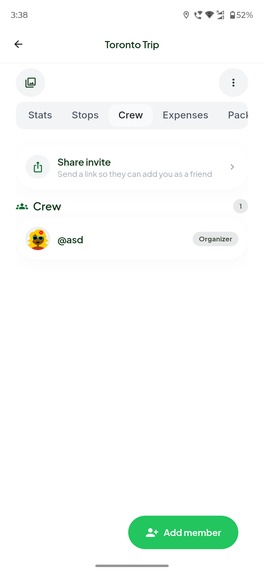
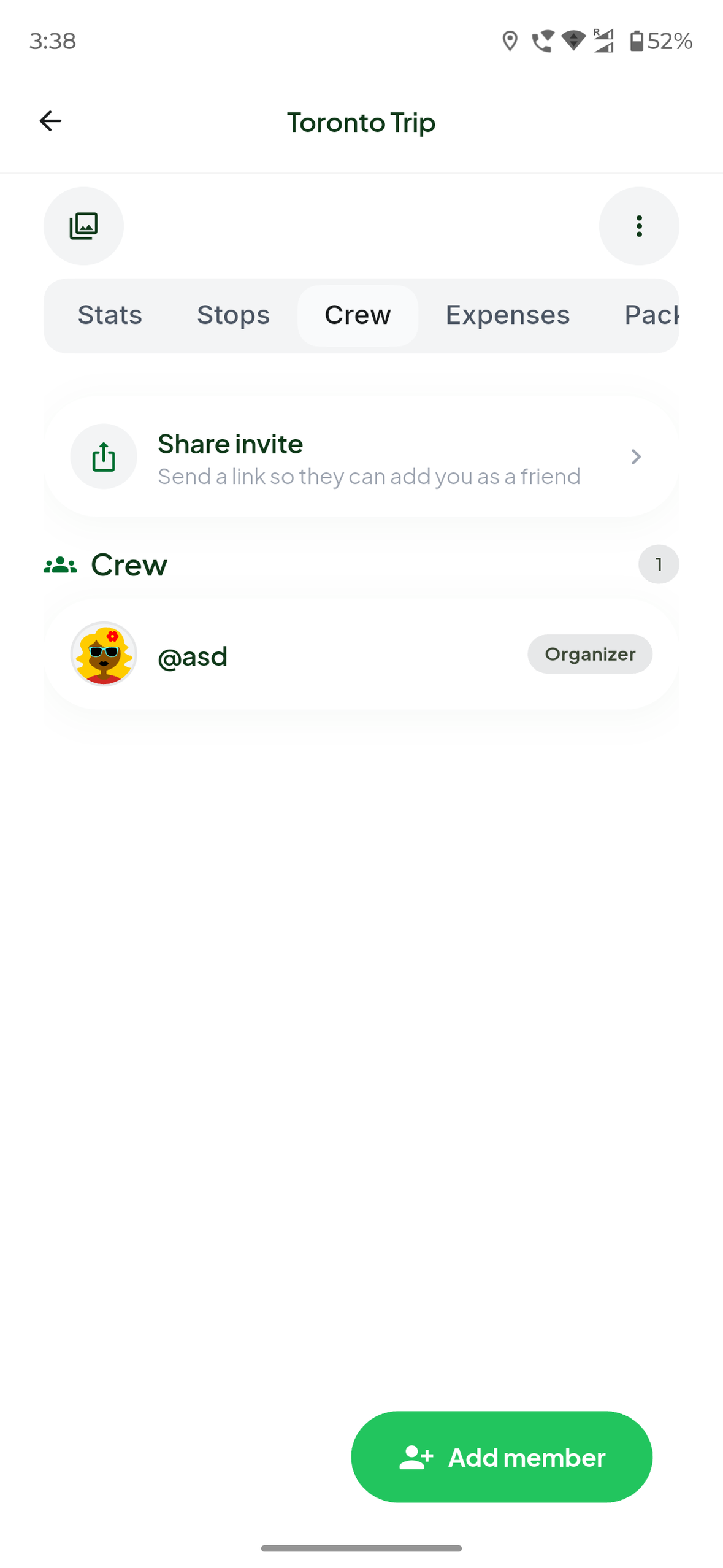
crew / invites
-
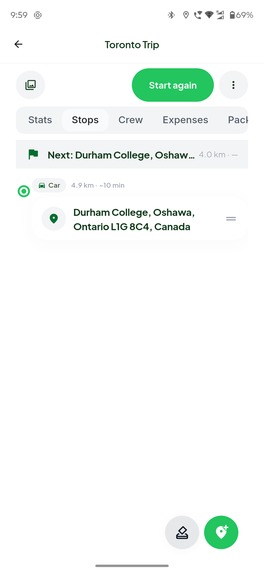
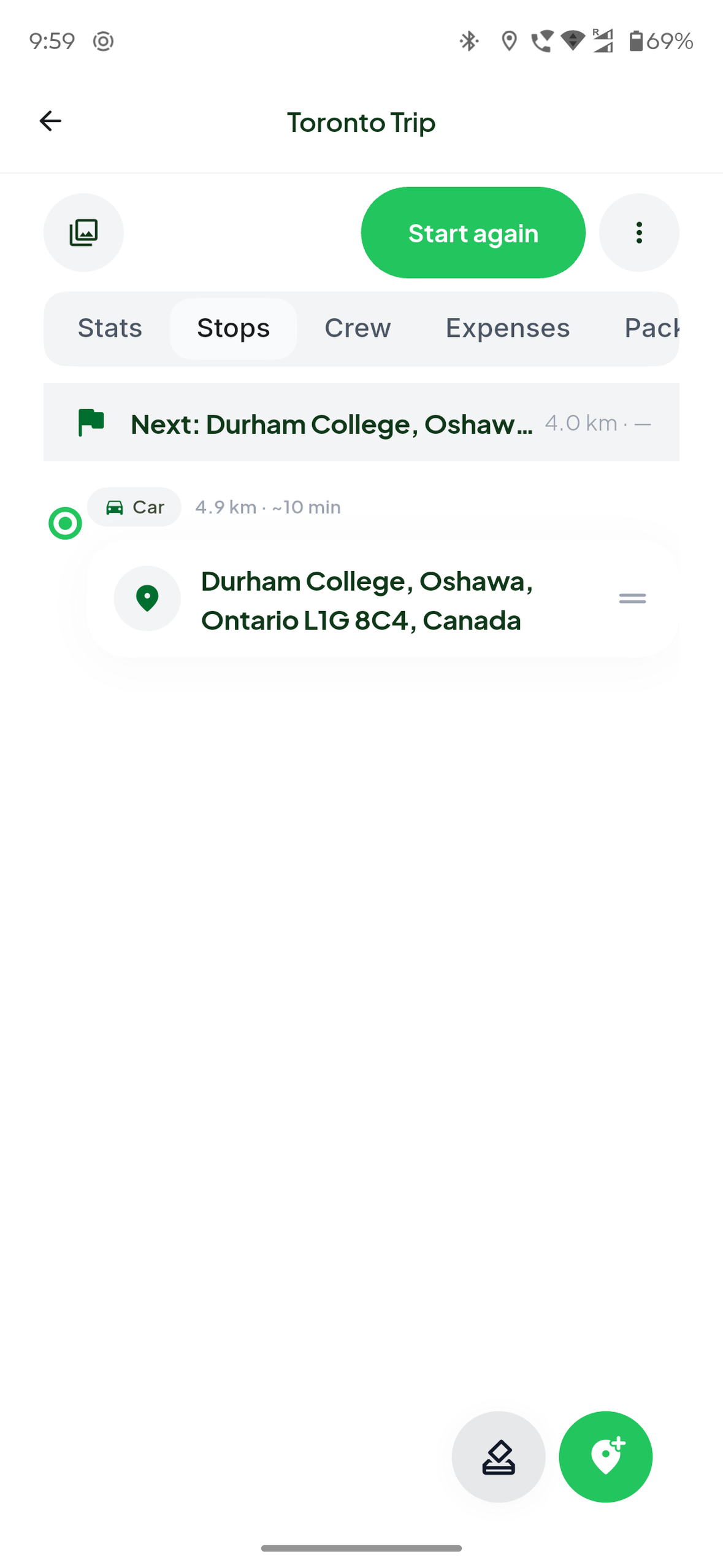
Stops
-
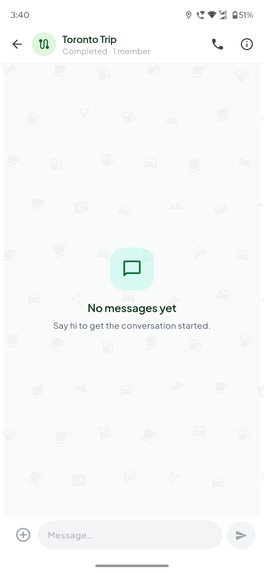
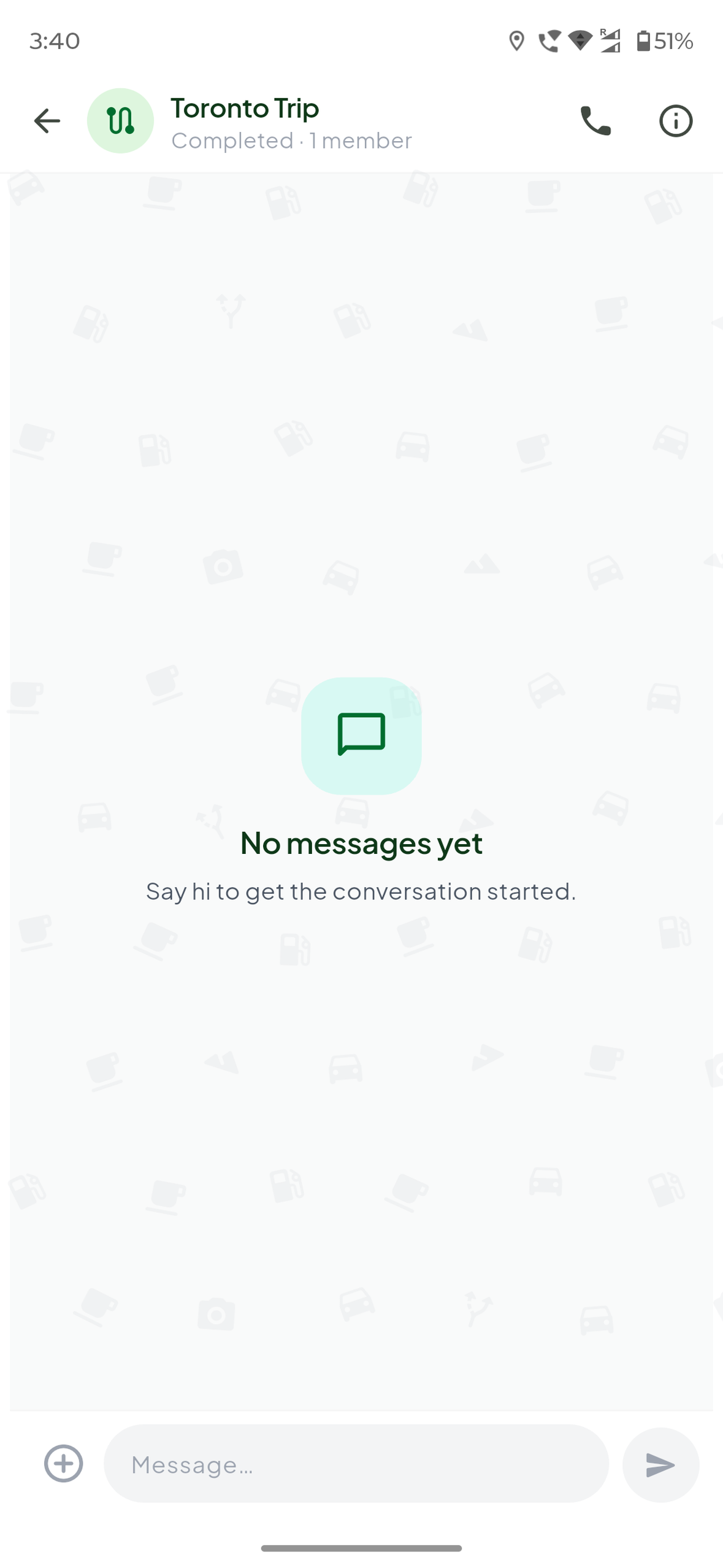
Trip Chat
-
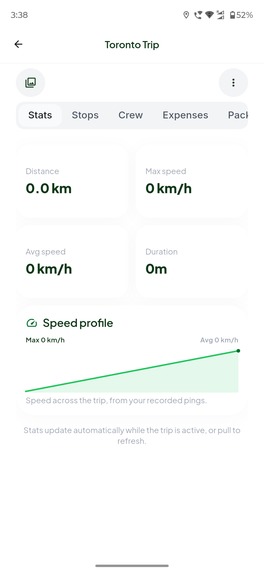
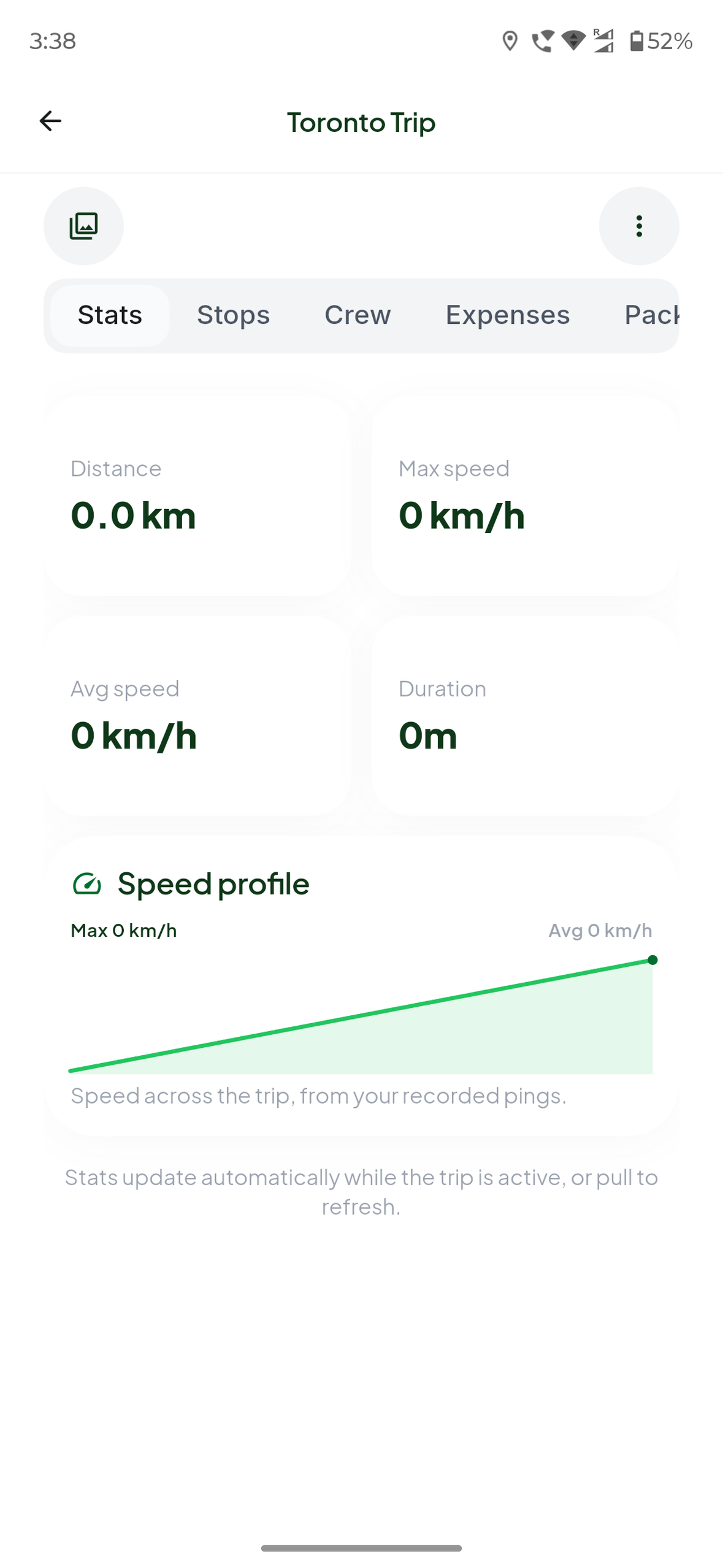
Stats Dashboard
-
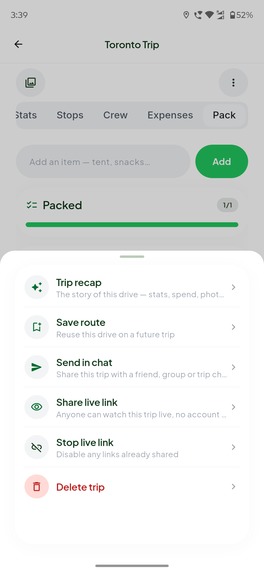
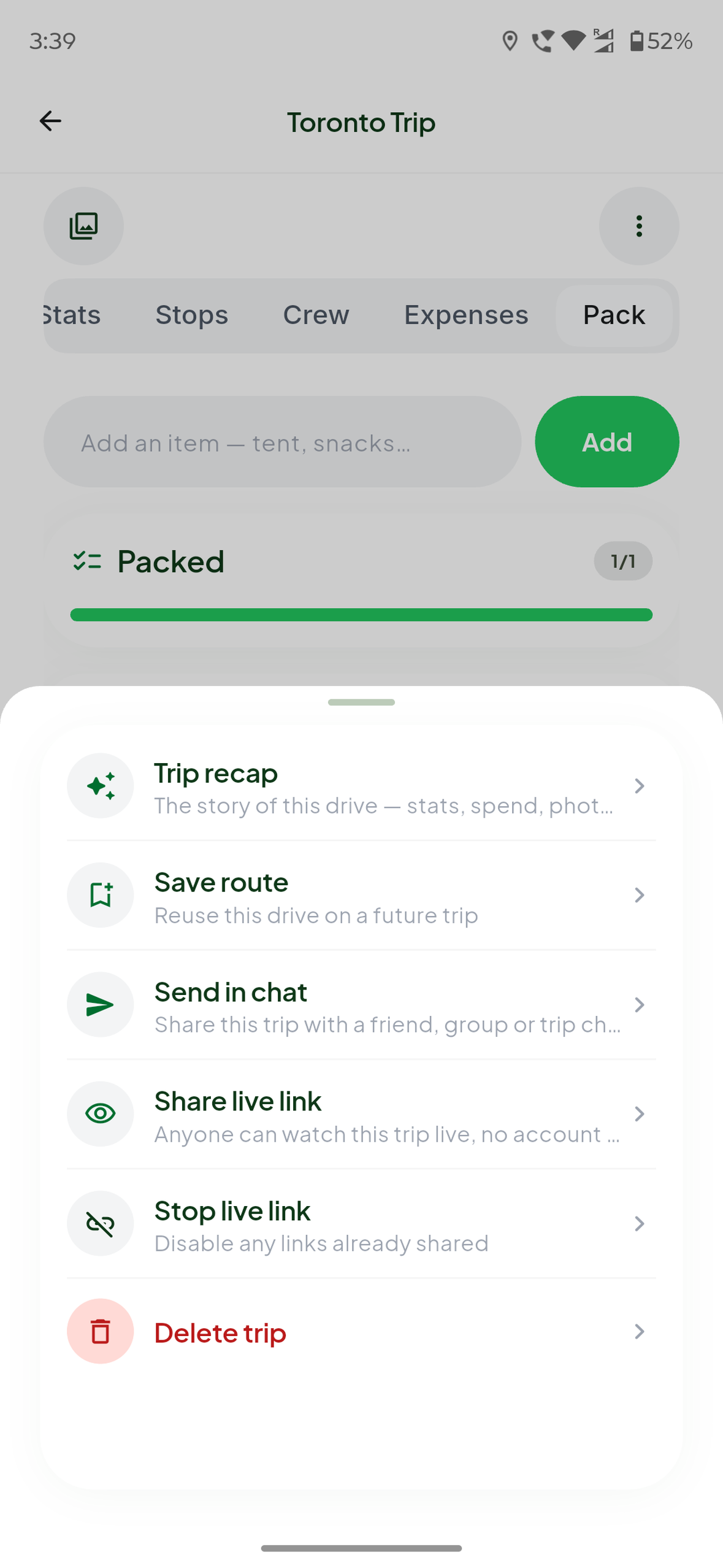
Trip Menu
-
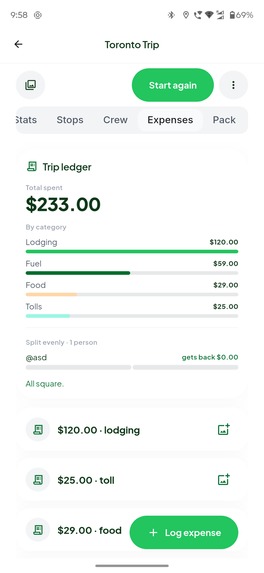
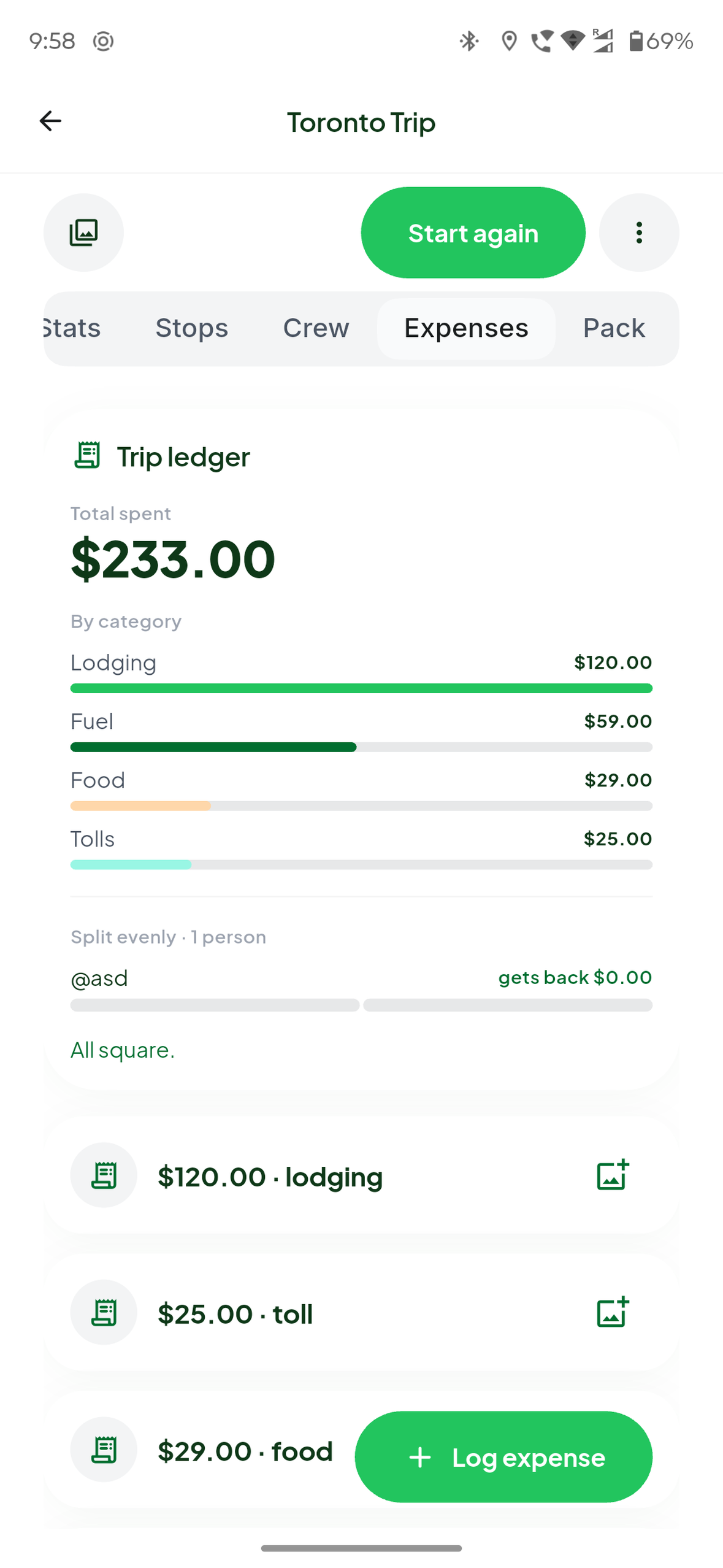
Ledger
-
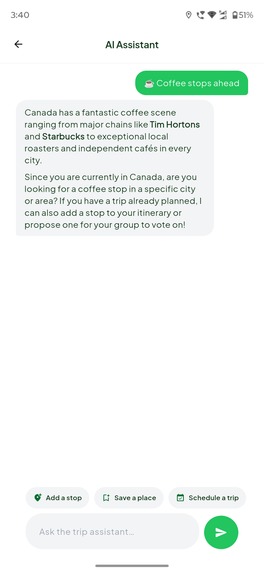
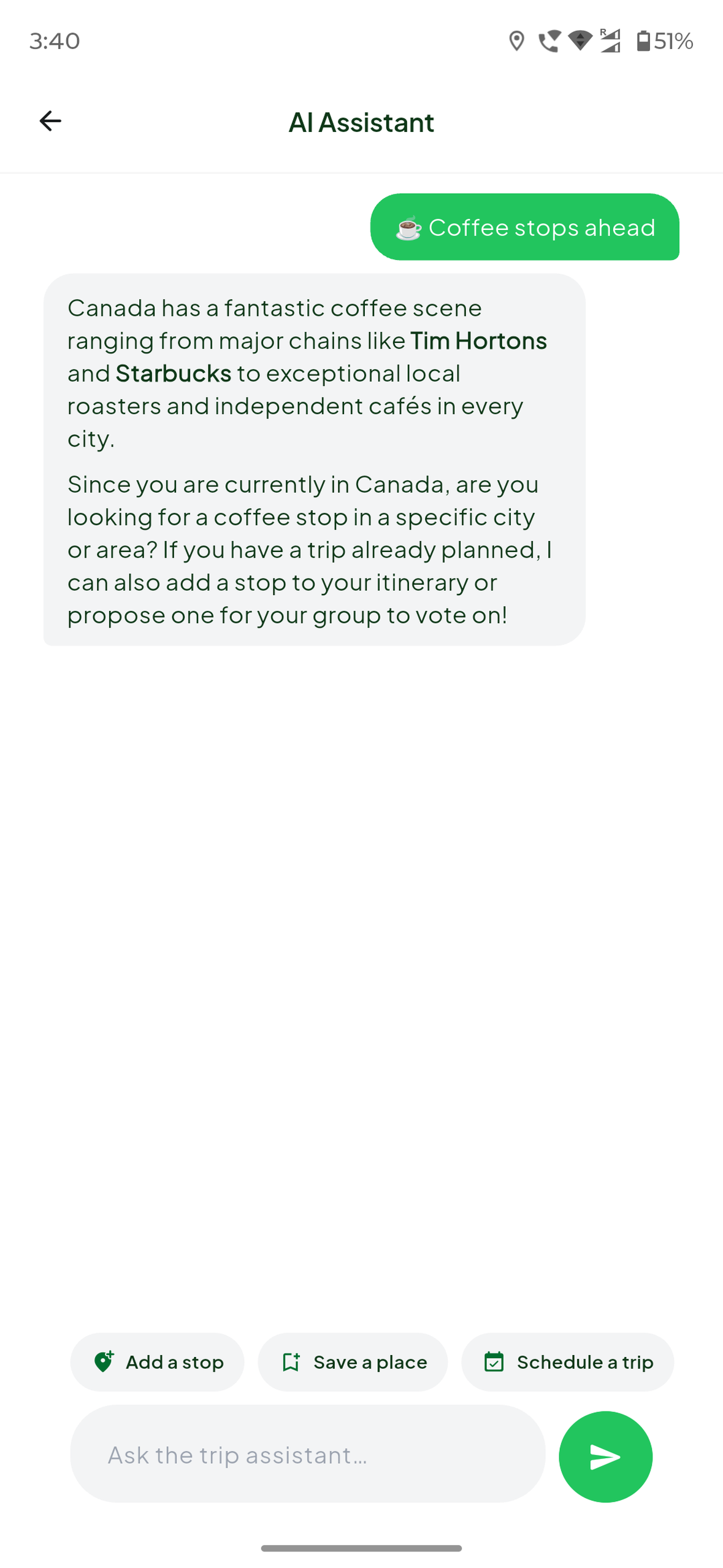
AI Assistant
-
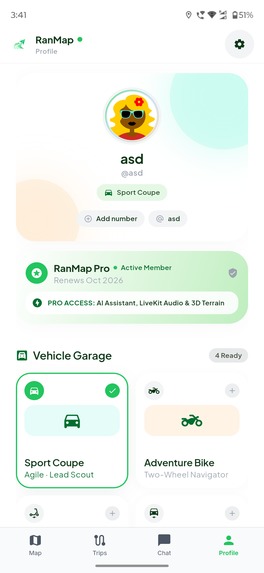
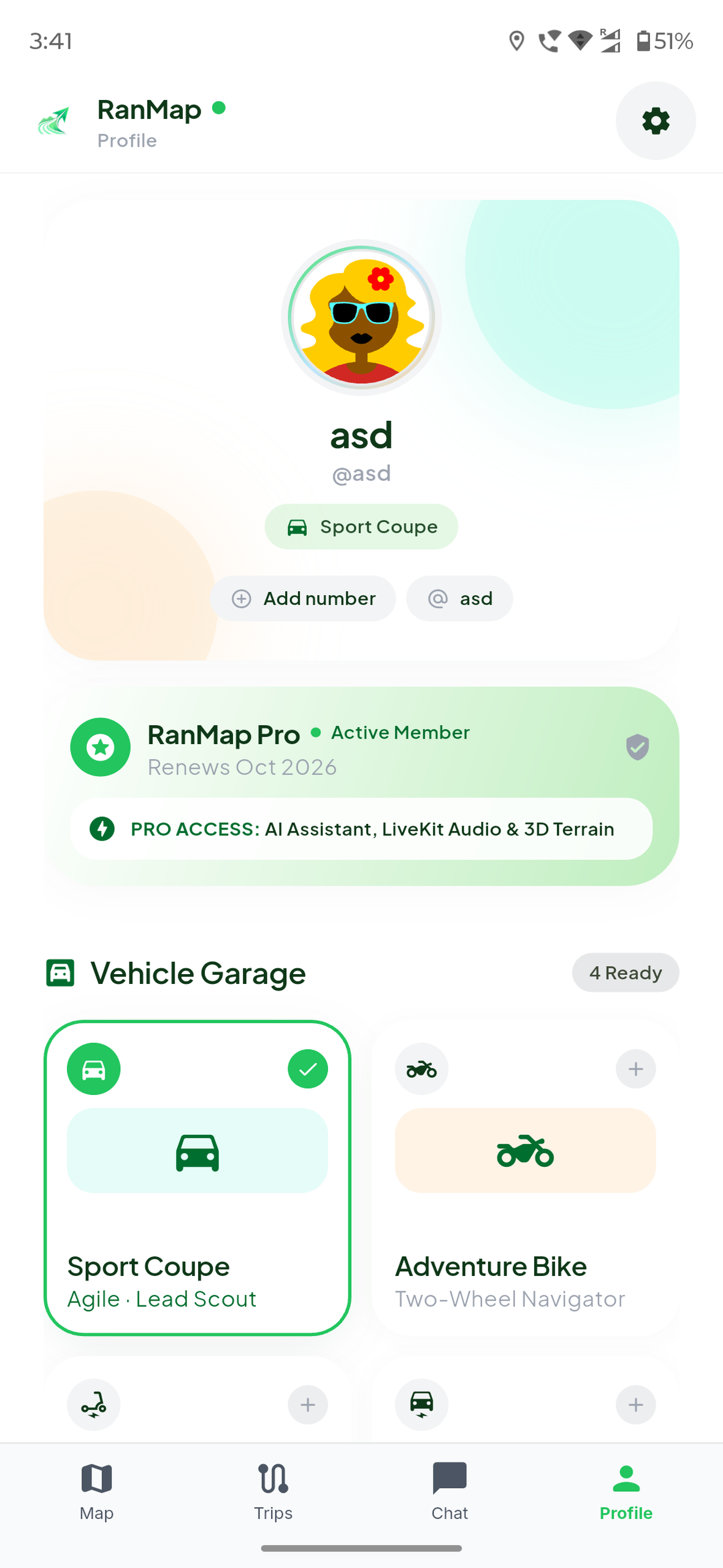
profile - ranmap pro active
-
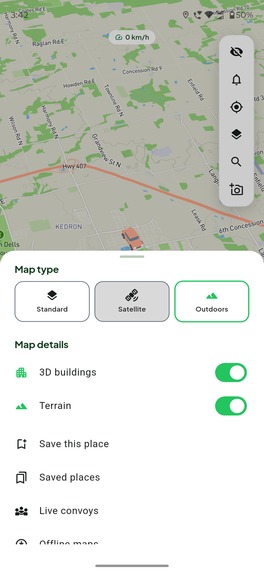
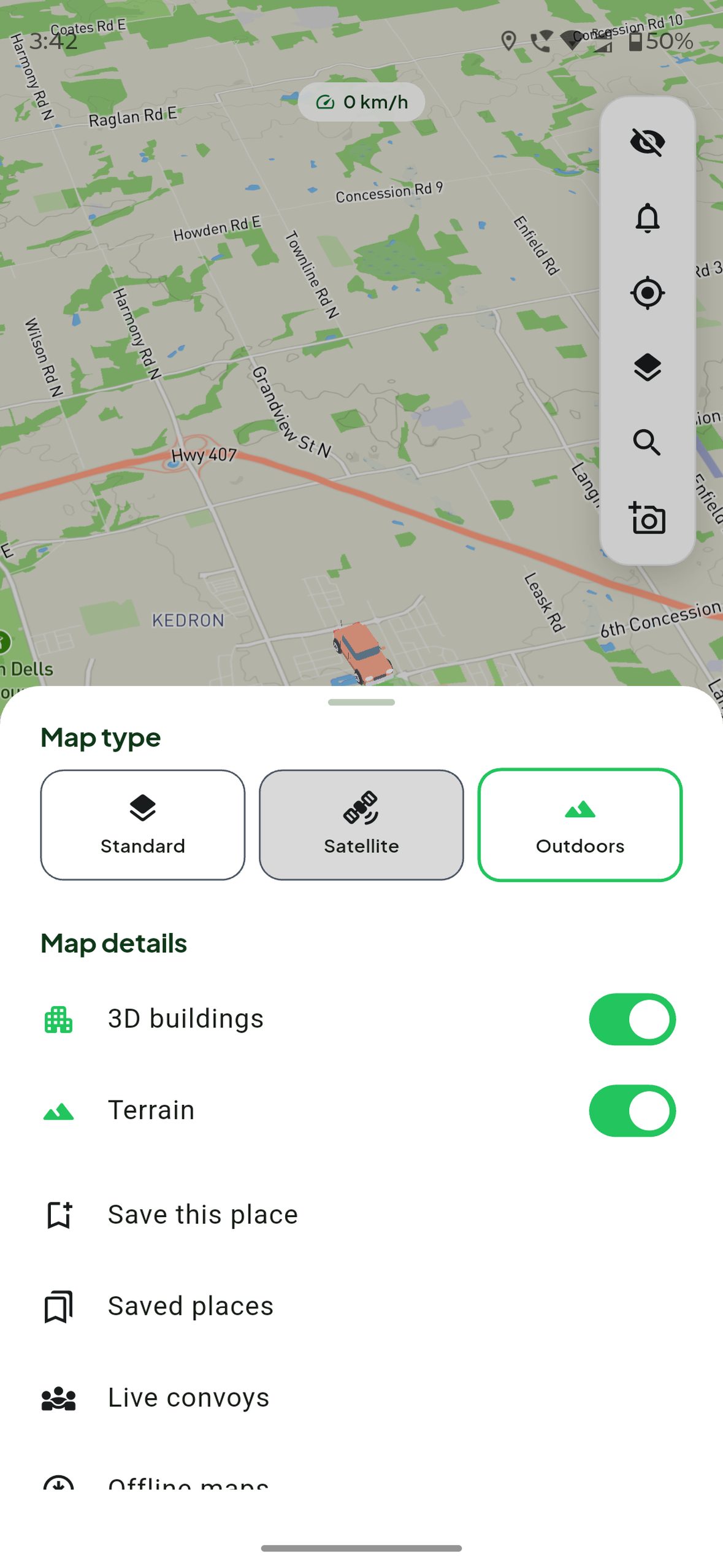
Map layers - 3d buildings / terrain
-
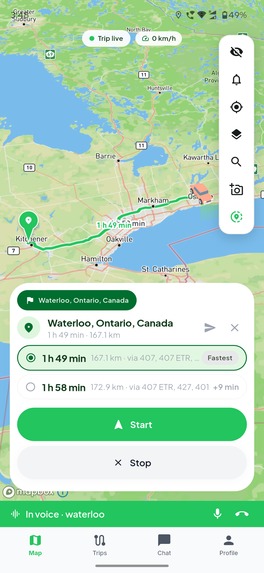
route planning with alternatives
-
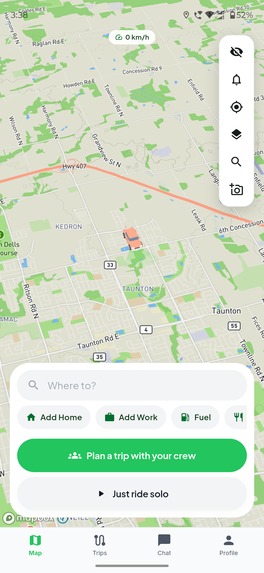
Map Home
-
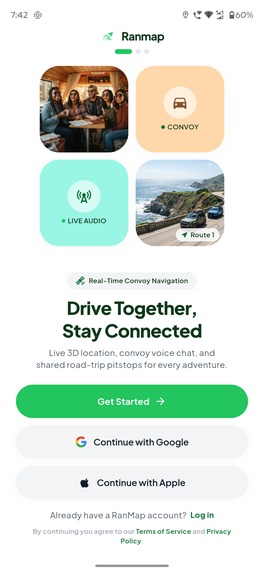
Welcome
-
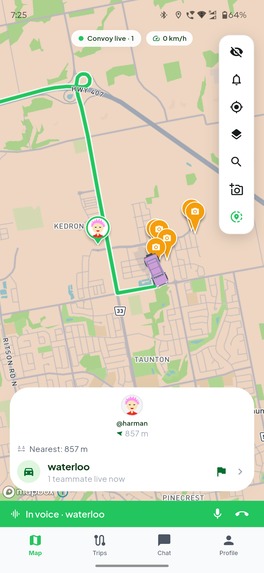
Live convoy + photo pins
-
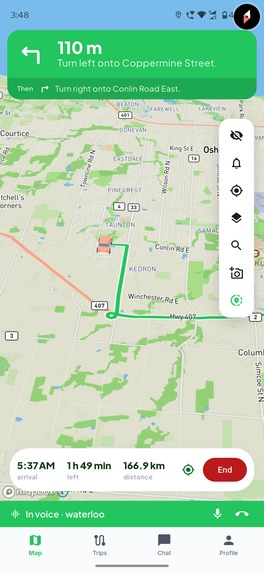
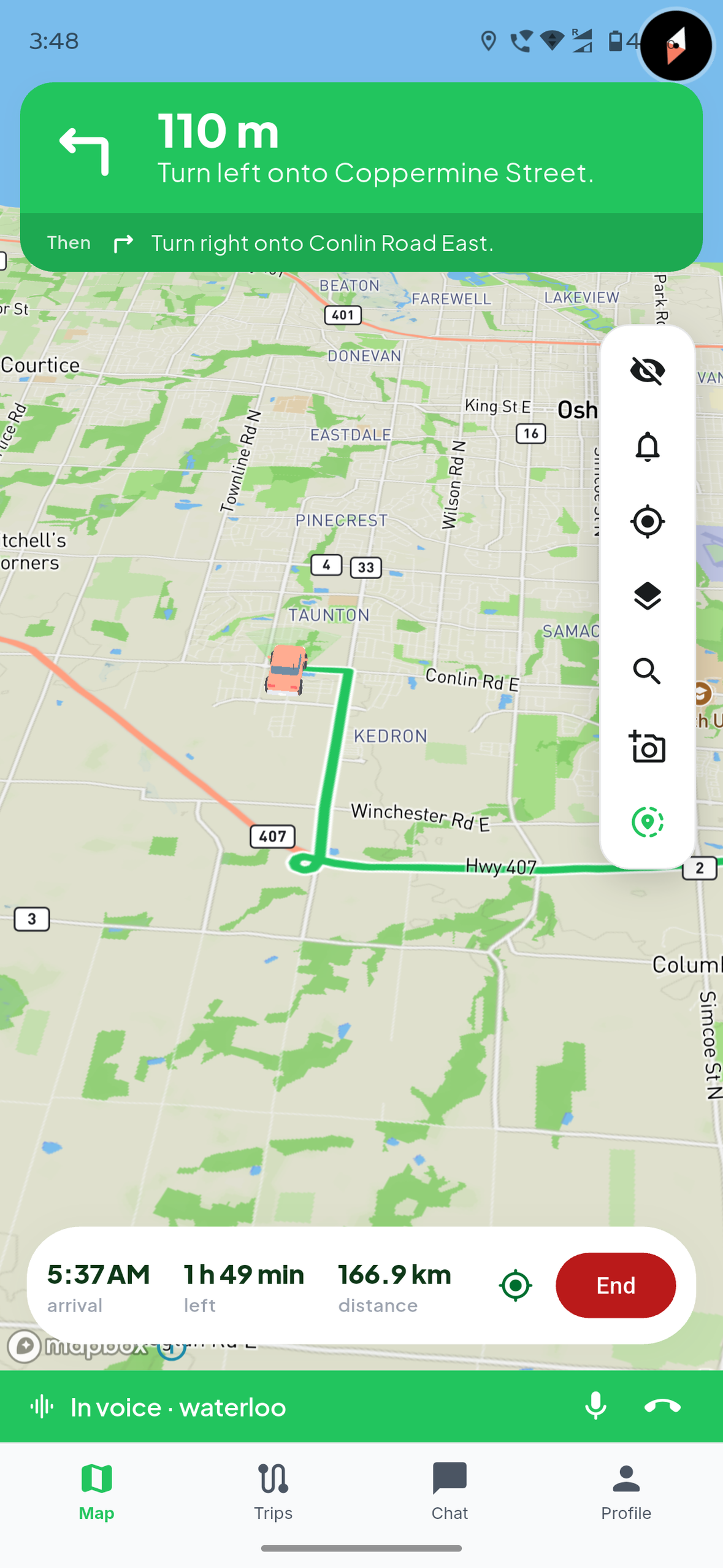
turn by turn navigation
-
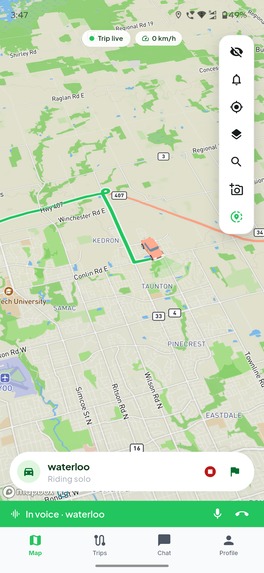
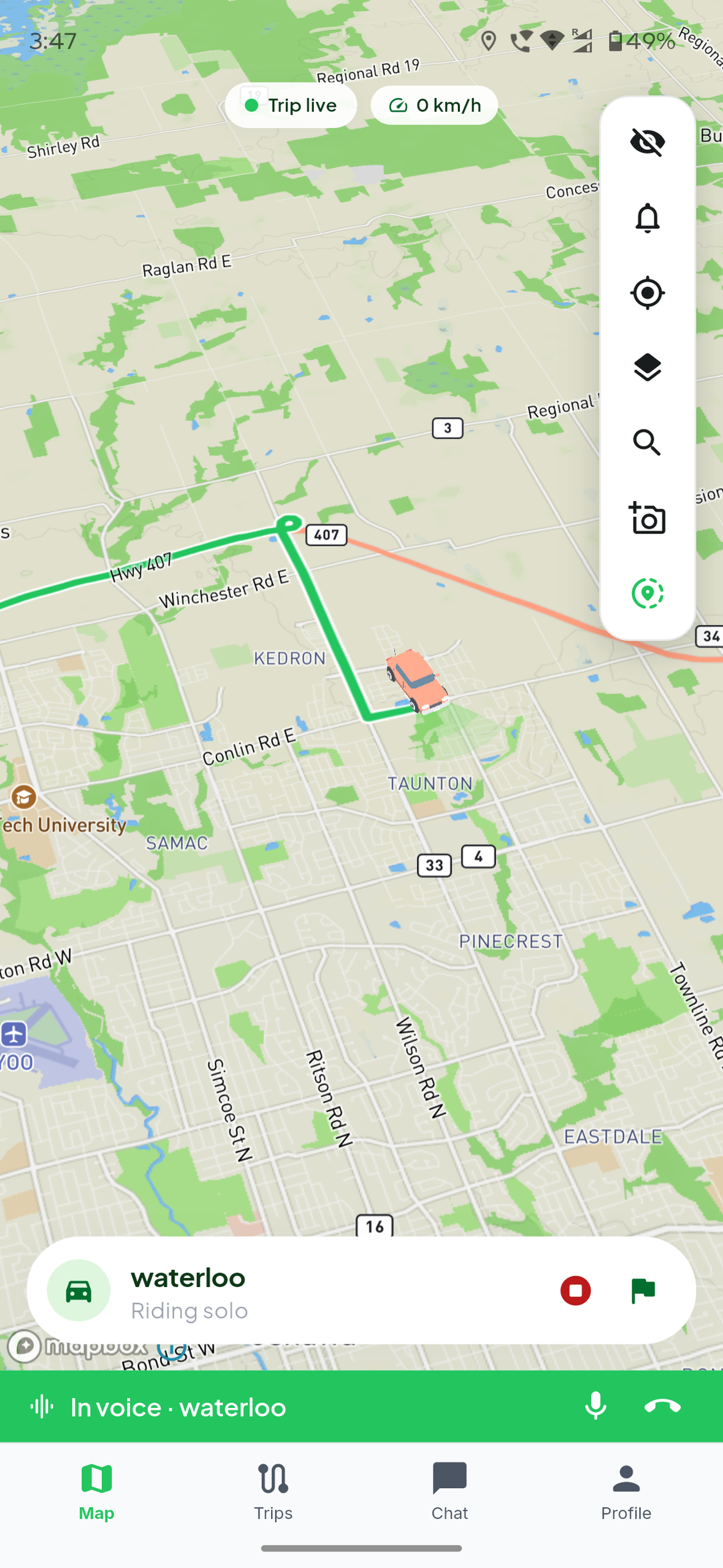
live trip map
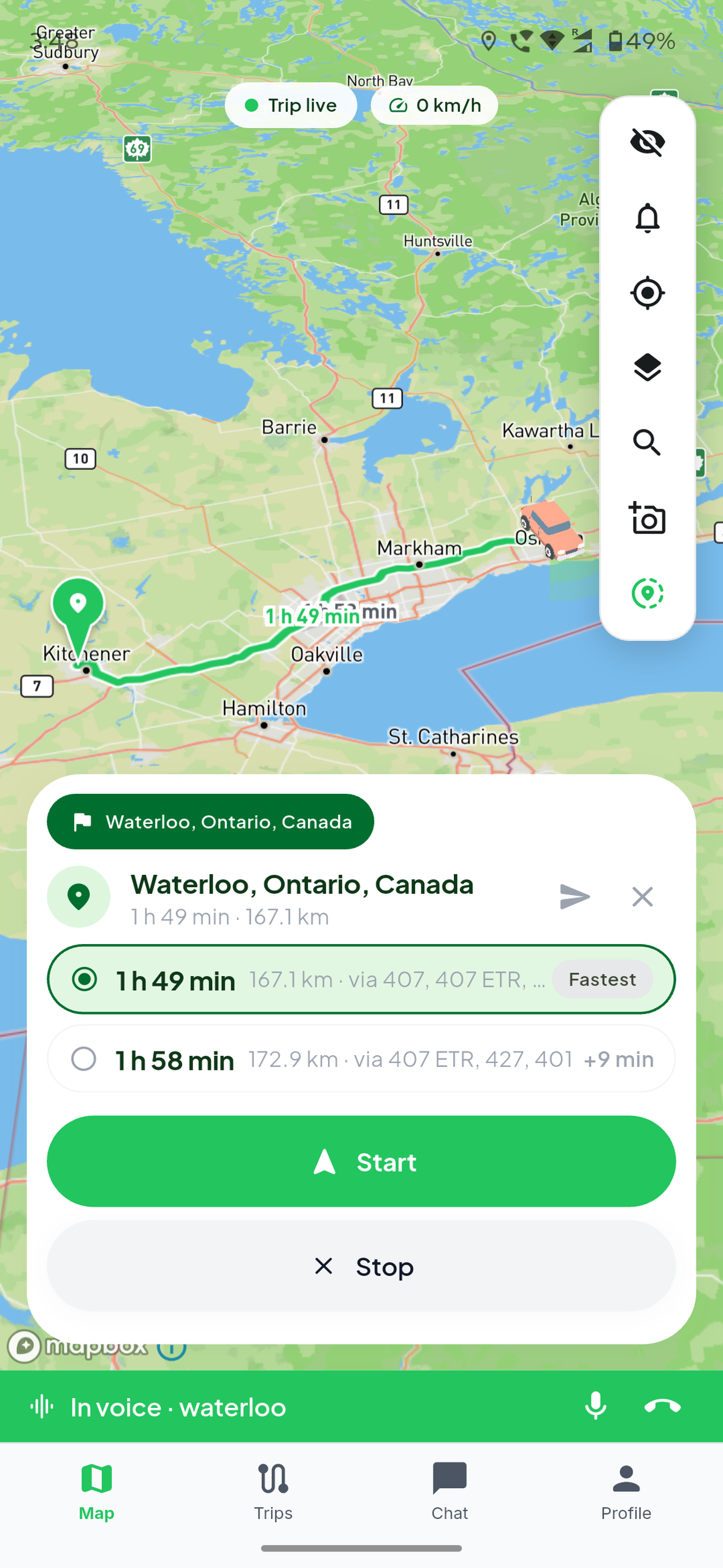
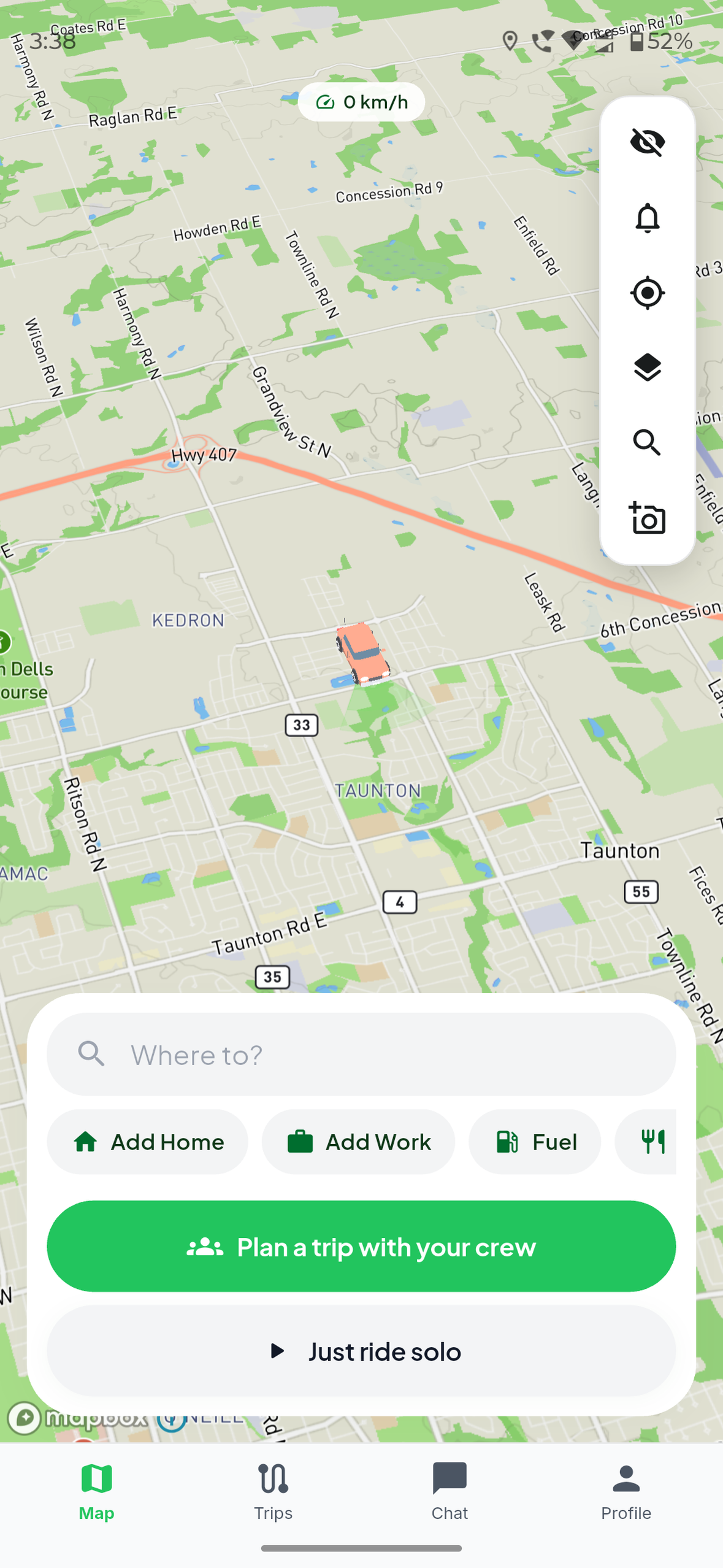
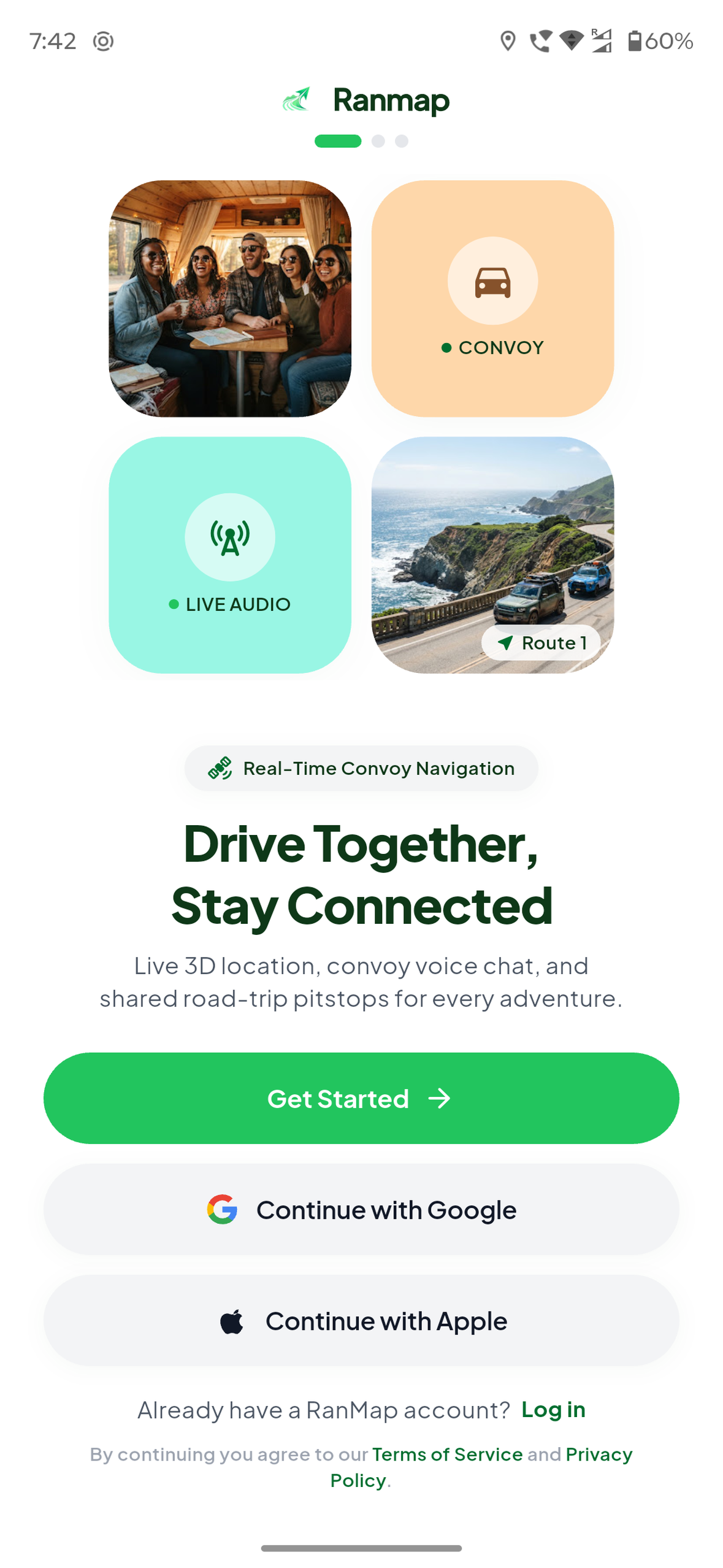
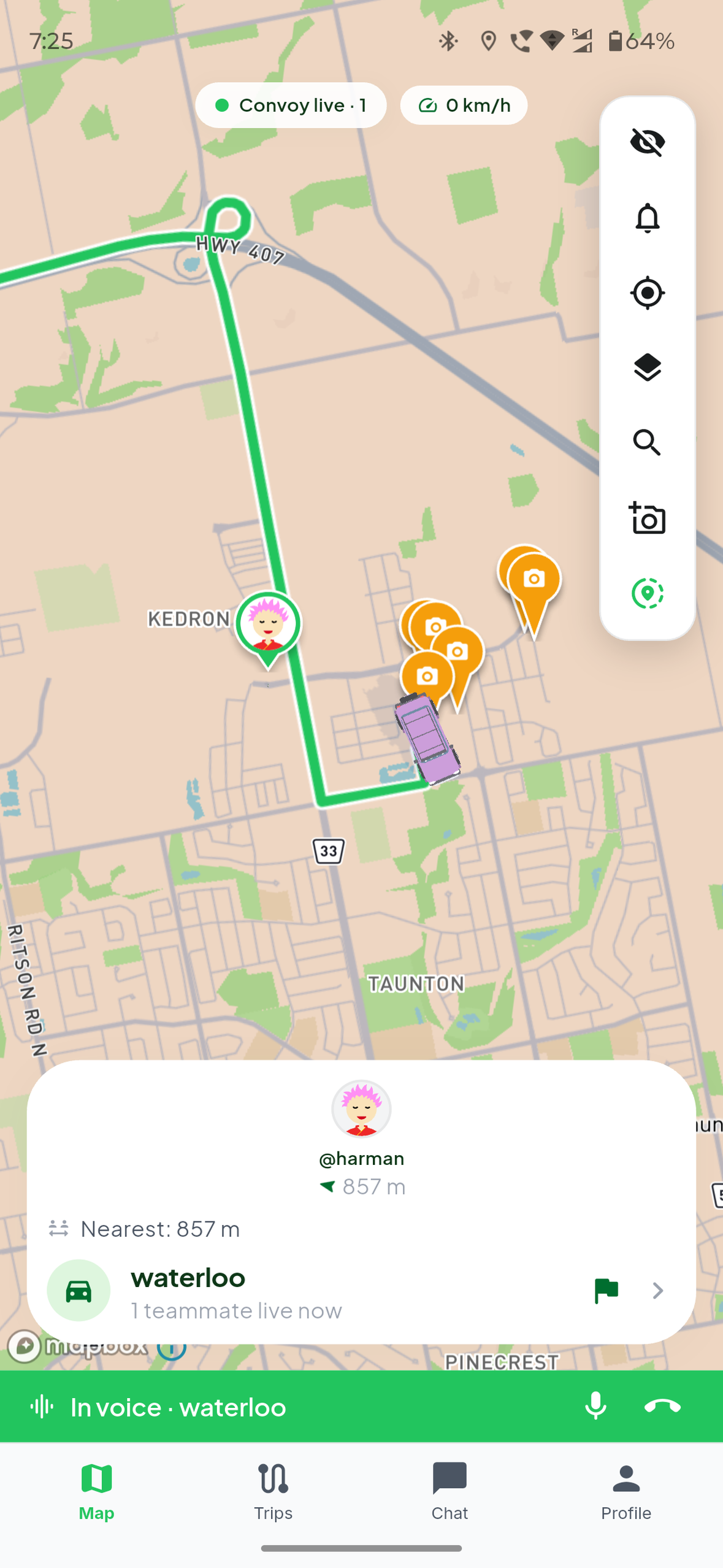
Shipaton 2026 — Next Gen Award entry. Judged on this video and the open-source repo (AGPL-3.0): https://github.com/HarmanPreet-Singh-XYT/ranmap — Flutter app in
lib/, Node backend inserver/, Next.js site inweb-app/, migrations insupabase/migrations/. Setup steps are in the README. No store release is required for this category, so the demo video shows the app running on a real Android device. made for mobile devices (IOS,Android), web companion as to plan stuff around before initiating the trip.
Inspiration
Navigation and fitness apps are built for one person. You type a destination, you drive, and the people you're travelling with effectively disappear — they become a text thread, a phone call, and a "where are you?" at the next fuel stop. Group travel is one of the most social things we do, yet the software treats it as a solo activity.
Ranmap started from a simple, familiar frustration: on a group road trip, nobody actually knows where anyone is. Someone drops behind, someone misses the turn, someone's low on fuel, and the real plan lives in five separate heads. We wanted the map itself to be shared — one screen where the whole crew is visible, moving, and reachable at once. Not a location tracker bolted onto a maps app, but a map that assumes you're riding together.
That one idea — ride together, stay in sync — became the lens for every decision after it. Solo features (search, navigation, saved places) exist only as the on-ramp to a shared trip, never as the headline.
What it does
Ranmap puts your entire road-trip crew on one live 3D map, and gives the group everything it needs to move as a unit.
- Live 3D convoy — every teammate appears on the map as their own vehicle (car, bike, scooter or SUV), rendered as a real 3D model on Mapbox Standard's extruded buildings, terrain and time-of-day lighting. Positions update live, and keep updating while the app is backgrounded.
- Push-to-talk voice and realtime chat — a LiveKit audio room per trip and per group, with a walkie-talkie push-to-talk mode, speaking indicators and auto-reconnect, alongside live group text.
- Shared trip toolkit — reorderable stops with a next-stop ETA banner, weather at each planned arrival, an expense ledger with a fuel-cost estimate projected over the whole route, and a shared packing checklist.
- AI trip assistant — a chat assistant (Gemini with Google Search grounding) that doesn't just answer questions: it acts. It can create a trip, schedule it, invite a friend, save a place, or add and propose stops through real function tools.
- Group convoy — a persistent crew screen that works independently of any trip, with SOS to the whole group, "regroup here" with automatic check-in at a meeting point, and quick statuses like "Wait up" and "Need fuel".
- Receipts on every expense — attach photos of bills to a shared expense (1 per expense on Free, 10 on Pro, 25 on Extreme), visible to everyone on the trip.
- Consent-based crews — friends are invited to groups and trips and must accept, so nobody is added silently; per-user DM privacy controls who can message you.
- Web companion — a Next.js site (
web-app/) where the crew can chat, plan trips, split expenses and view profiles from a laptop. - A link anyone can follow — the trip creator can mint a public, read-only page that family at home can watch with no account and no app.
- Offline-first — writes made without signal queue in a persisted outbox and replay idempotently; map tiles for a route can be downloaded for use with no connection at all.
Monetization
Ranmap is subscription-first, built end to end on RevenueCat, with three tiers and a generous free on-ramp so the app is useful before anyone pays.
- Free — full solo navigation plus the core crew features, with metered AI and search, capped at 3 active trips, 25 pinned photos and 6 group members.
- Pro — $4.99/mo or $39.99/yr — raises the caps (~100 trips, 5,000 photos, 100 members), unlocks the full trip stats and history, and a much larger AI and search allowance.
- Extreme — $9.99/mo or $79.99/yr — the same features with the highest ceilings (~250 trips, 20,000 photos, 250 members).
- Both paid tiers include a 7-day free trial on the annual plans, and the paywall reads live store prices from the RevenueCat offering rather than hard-coding them.
Two things make the monetization fit the product instead of fighting it. First, one subscription covers the whole crew: because Pro is evaluated per trip and per group, a single subscriber unlocks voice and lifts the caps for everyone they travel with — so paying benefits your friends, who then want it too. Second, the gates are real: entitlement truth is written only by our server from the RevenueCat v2 API, and the hard caps are enforced by database triggers, so a patched client can't unlock anything. A free user hitting a limit gets a contextual paywall; a paid user hitting a fair-use ceiling gets a plain error, never an upsell.
How I built it
- Client — Flutter (Dart 3.13) with Riverpod for state,
go_routerfor auth-aware navigation, and ForUI over a custom navigation-grade design system. - Map — the Mapbox Maps SDK for Flutter (v11). The app ships no long-lived Mapbox token; it asks our backend for a short-lived rendering token at runtime.
- Backend data — Supabase (Postgres + PostGIS, Auth, Realtime, Storage). All rows are scoped with Row Level Security.
ranmap-server— a small Node + TypeScript + Express backend that holds every secret the client must never have: it mints Mapbox and LiveKit tokens, runs the Gemini assistant, verifies phone numbers with Twilio, and validates RevenueCat webhooks. The client forwards its Supabase session token; the server verifies it before doing any privileged work.- Live sync — positions travel over a private, per-trip Supabase Realtime broadcast channel, written through a database RPC that stamps the sender's id.
- Billing — the RevenueCat SDK on the client (public key only), with entitlement truth written server-side from the RevenueCat v2 REST API.
- Voice — LiveKit rooms, joined with a short-lived token minted by the server only after it confirms the caller is actually in that trip or group.
Challenges I ran into
- Trust in a live location feed. A member must never be able to spoof another member's position. We publish through a database RPC that stamps the sender id server-side and revoke direct client inserts on the channel, so a modified app can't forge a teammate.
- Making live positions cheap. Writing a row per GPS fix doesn't scale. Live movement rides an ephemeral broadcast, and only a coarse trail is persisted — cutting database rows by roughly 50–100×.
- Healing a fire-and-forget feed. Broadcasts can be missed (offline, reconnect). Every (re)subscribe also fetches an authoritative snapshot, so a dropped message self-corrects instead of leaving a stale dot on the map.
- Enforcing monetization honestly. Client-side flags can be patched, so paid
gates live in the backend and the hard caps (trips, photos, documents, group
size) are enforced by database triggers.
profiles.planhas exactly one writer — the webhook. - Bounding provider cost. AI is metered in tokens, which are only known after the model responds. We hold an upper-bound reservation while a turn runs, then settle the real spend and release the hold, so a running request never shows up as usage in the user's meter.
- Shipping 3D with no art budget. The repo bundles no binary artwork, so the per-vehicle models are low-poly glTF boxes generated by a small Python tool at build time.
- Background location on both platforms — an Android foreground service and iOS background location, each with their own constraints and disclosures.
Testing the RevenueCat flow
Clone the repo, follow the README setup, and add your own RevenueCat public SDK
key and a pro entitlement with a default offering. The paywall reads that
offering, purchases go through the RevenueCat SDK, and the server webhook
(POST /billing/revenuecat) writes profiles.plan, which the database triggers
then enforce.
Accomplishments that I'm proud of
- A genuinely end-to-end working app: auth, onboarding, friends and groups, trips, live sync, chat and voice, photos, planning and an AI assistant all working together on real devices.
- Live sync architecture we'd defend in production: server-attested positions, an ephemeral broadcast for movement, and a snapshot that reconciles.
- Monetization done properly. RevenueCat is integrated the way it should be — real store prices on the paywall, entitlement truth owned by the server, and enforcement that a patched client can't bypass.
- An AI assistant that takes action, with every tool input validated server-side and scoped to the authenticated user.
- A crew-first product, where "one subscription covers the whole crew" isn't a marketing line but a property of the data model.
- Tests and CI across the client (
flutter test), the server (Node test runner) and the database (pgTAP RLS suite).
What I learned
- The database is the real enforcement layer. Row Level Security plus triggers are what make "you can't bypass this" true; client checks are UX.
- Ephemeral-first, snapshot-second is a strong pattern for live data: push fast and cheap, but always keep an authoritative reconcile path.
- Metering needs reservations. For anything priced after the fact, hold a bound up front and settle the truth afterwards.
- Design principles beat feature lists. Committing to "the crew comes first" made hundreds of small decisions obvious — what to build, what to cut, and what the empty states should say.
What's next for Ranmap — One Map for the Whole Crew
- Voice polish — video and deafen on top of the existing app-wide voice session, mini-bar and push-to-talk.
- Push notifications, fully wired — the server side and preferences exist; the remaining piece is a database webhook/trigger so chat and alerts deliver reliably to every device.
- Route planning polish — session-based place autocomplete instead of debounced geocoding.
- A proper job queue for the scheduled-trip poller in production, instead of an in-process loop.
Built With
Client
- Flutter, Dart
- Riverpod
- go_router
- ForUI
Backend & data
- Supabase — Postgres, PostGIS, Auth, Realtime, Storage, Row Level Security
- Node.js, TypeScript, Express
- Redis
- Docker
Maps, media & realtime
- Mapbox Maps SDK (Maps SDK v11)
- LiveKit
- Mapbox Directions, Geocoding & Search Box
- Google Places API
- Open-Meteo
AI
- Google Gemini
- Google Search grounding
Capabilities & monetization
- RevenueCat
- Twilio Verify
- Firebase Cloud Messaging
- Python (glTF vehicle-model generation)
Built With
- dart
- docker
- express.js
- firebase-cloud-messaging
- flutter
- forui
- go-router
- google-gemini
- google-places
- google-search-grounding
- livekit
- mapbox
- node.js
- open-meteo
- postgis
- postgresql
- redis
- revenuecat
- riverpod
- supabase
- twilio
- typescript


Log in or sign up for Devpost to join the conversation.