-
-
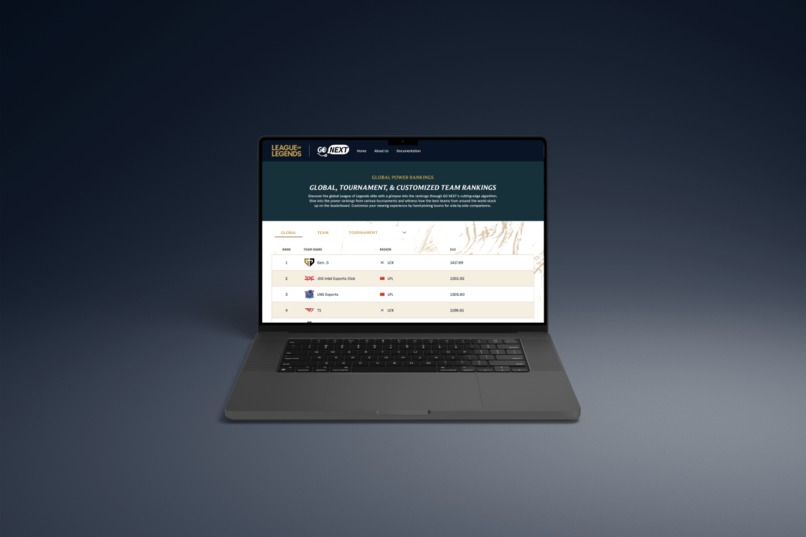
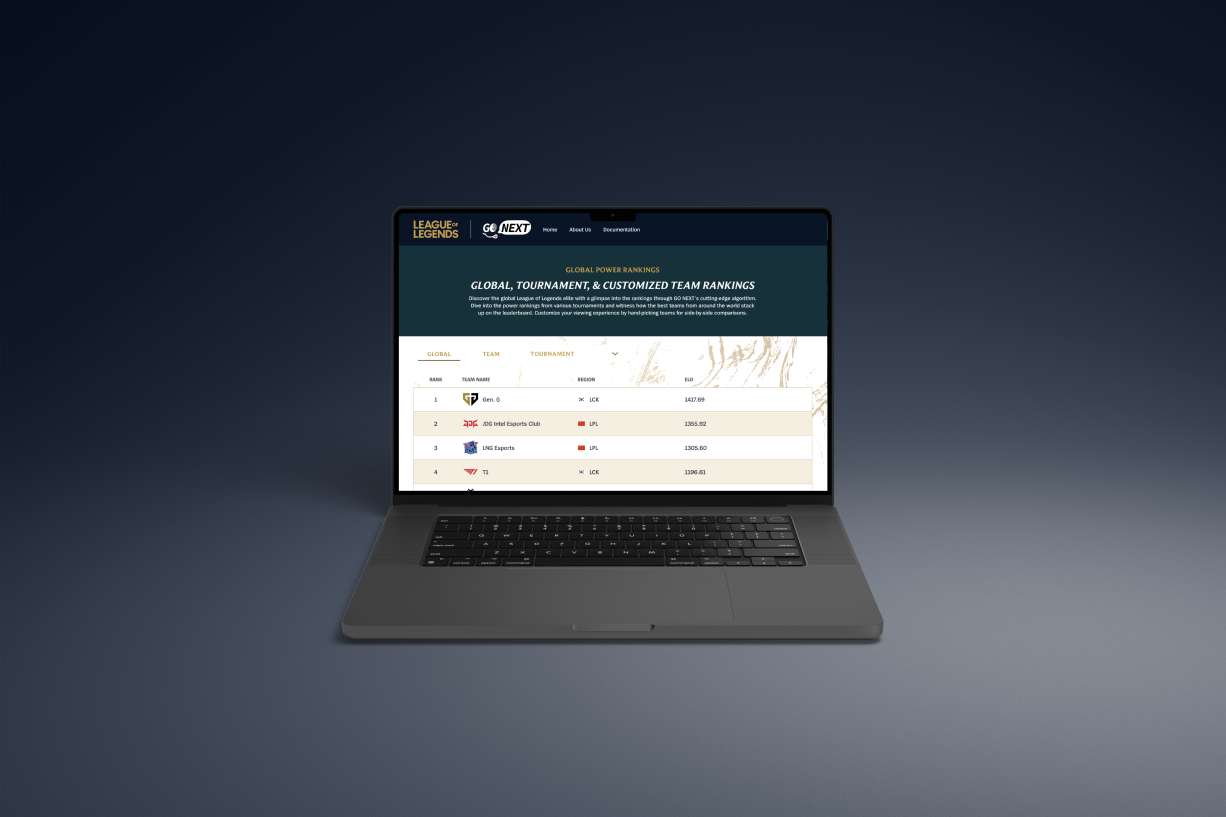
GO NEXT Mockup
Inspiration
As passionate League of Legends players, we viewed this project as a chance to refine our individual skills while enjoying the process.
What it does
GO NEXT employs cutting-edge cloud technologies to provide League of Legends esports fans with a streamlined ranking of the world’s top teams.
How we built it
GO NEXT uses AWS Cloud services to process and intake the data through a Glue pipeline from the S3 Source data. We used Athena to do initial analysis of the data and constructed a Python script to calculate an overall ELO system that can be applied to a specific tournament or even to all of the top teams of the world. The data is uploaded to S3. We then used API Gateway to expose the curated data for our Front End web application. Prior to starting the design process, we did extensive research on existing eSports websites that offered power rankings. Our findings revealed a spectrum of approaches: some took a concise, data-driven stance that could overwhelm casual fans, while others were user-friendly but offered limited depth in analysis. We even explored traditional sports websites to gain insights from their power ranking structures. After thorough research, the UI/UX team started the design process, beginning with sketches and wireframes, followed by the development of components adhering to the League of Legends’ brand guide. This progression enabled us to create high-fidelity designs, and ultimately, a working prototype for usability testing and further input from developers. Subsequently, the frontend developer took charge of building the functional web application.
Challenges we ran into
In generating the data, we ran into a significant challenge with the vast amount of raw, unfiltered data provided. We solved this by transforming the data to only the most relevant and significant data points, which vastly increased our agility and velocity.
Accomplishments that we're proud of
Every time our code generated results that we liked was an awesome accomplishment and felt great. We had to resolve several bugs due to some data issues, and it was incredibly satisfying to dig into the problem and fix it. Creating a web application from the ground up for League of Legends was a fun project. The process of discovering more efficient design methods in Figma felt like a notable achievement, and witnessing the transformation of the high-fidelity design into a fully functional web application was truly gratifying. We learned a lot about the different AWS offerings and how they communicate with each other and how we can benefit from it. We also learned about project management and working with a comprehensive team with different roles (UI/UX Design, Frontend, Backend). We each had totally different responsibilities on the project that met up and synced in different ways.
What's next for GO NEXT?
Given the time constraints, we had to limit our dataset to only the four major regions (LCK, LPL, LEC, and LCS). We would love to include minor regions into these power rankings! We are also looking to smooth out any potential cosmetic issues with the website in the near future. We would also love to implement any additional feedback from users.
Built With
- api-gateway
- athena
- figma
- glue
- photoshop
- python
- react
- s3
- tailwind-css
- typescript
- vite


Log in or sign up for Devpost to join the conversation.