
Inspiration
Rangkul was inspired by a concern we see across Indonesia: many families, especially those living in 3T regions—underdeveloped, frontier, and outermost areas—have limited access to reliable information about supporting children with disabilities and developmental support needs.
When a child requires additional support, their family is often the first and most important source of care. Unfortunately, many parents and relatives do not know where to begin. Professional services may be difficult to reach, educational resources are often fragmented, and much of the available information is not written in language that feels practical or approachable.
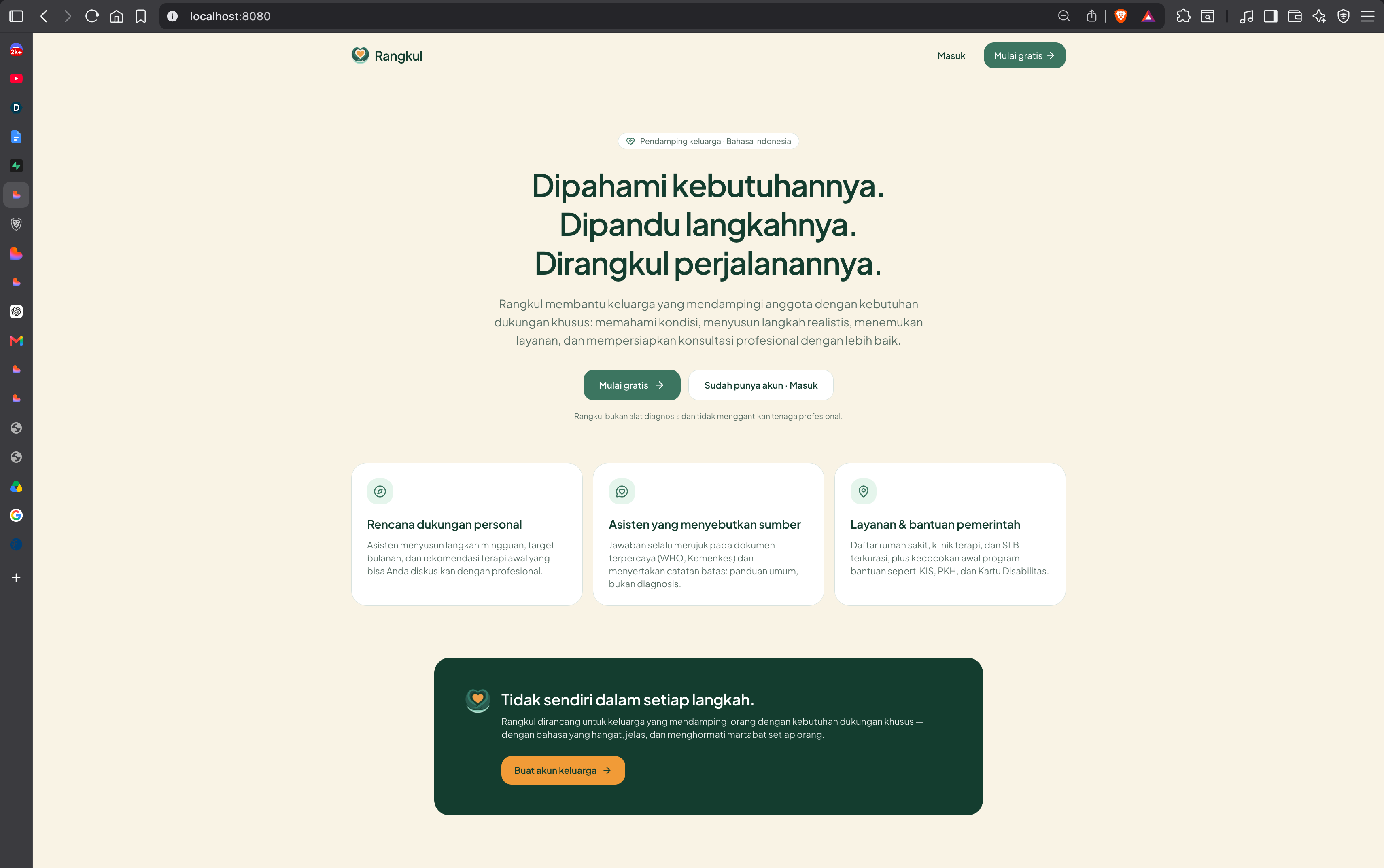
We created Rangkul to help close that information gap. The name Rangkul means “to embrace” in Indonesian, representing our belief that every child and every family deserves to feel understood, supported, and included.
Rangkul is not intended to replace doctors, psychologists, therapists, or educators. Instead, it serves as an accessible first step that helps families become better informed and better prepared to seek professional support.
What it does
Rangkul is an Indonesian-language digital companion for families supporting children and other family members with additional developmental needs.
Through Rangkul, users can:
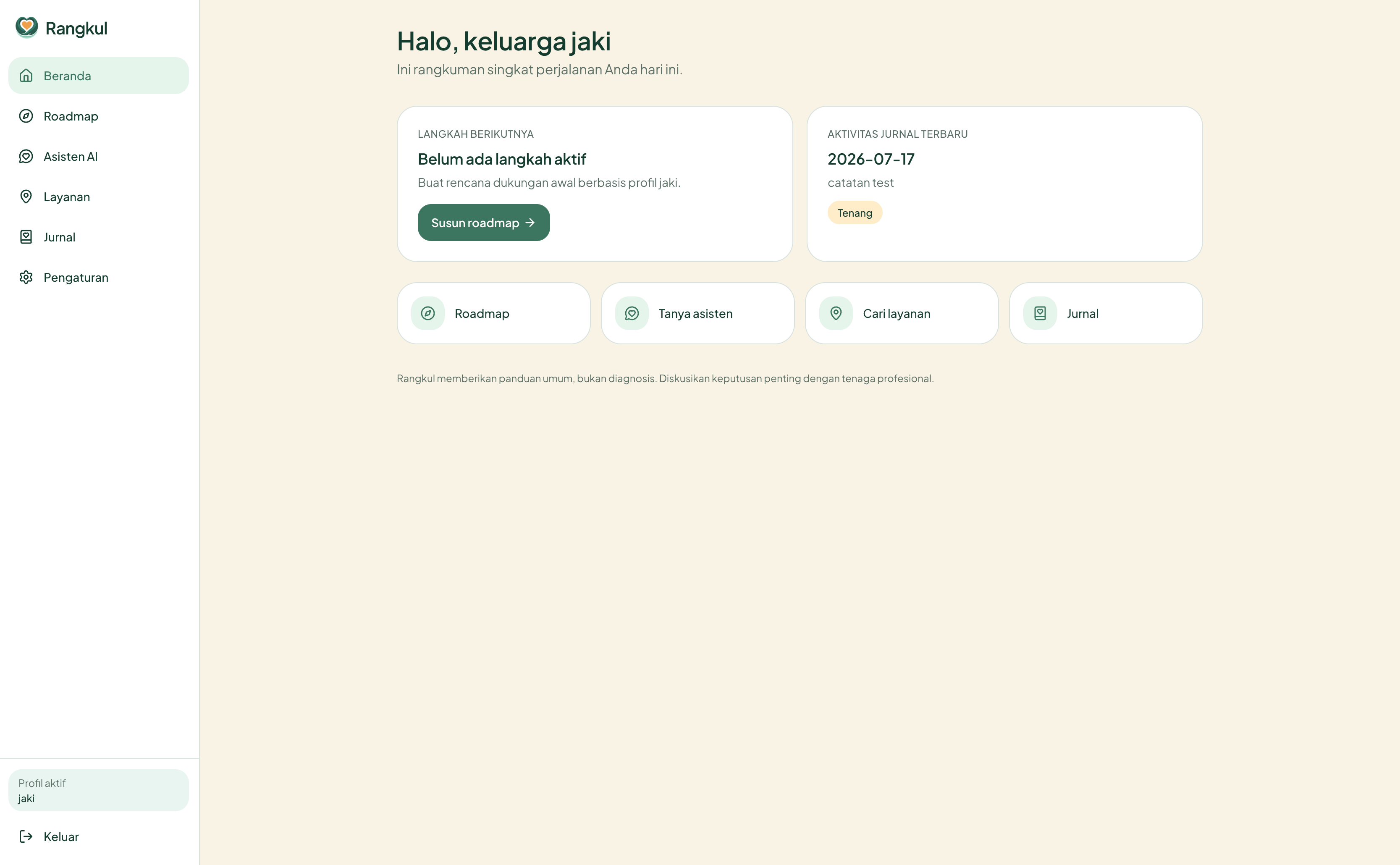
- Create and manage profiles for family members who need support.
- Describe their current needs, challenges, and family situation through a simple onboarding process.
- Generate a personalized support roadmap containing practical weekly and monthly steps.
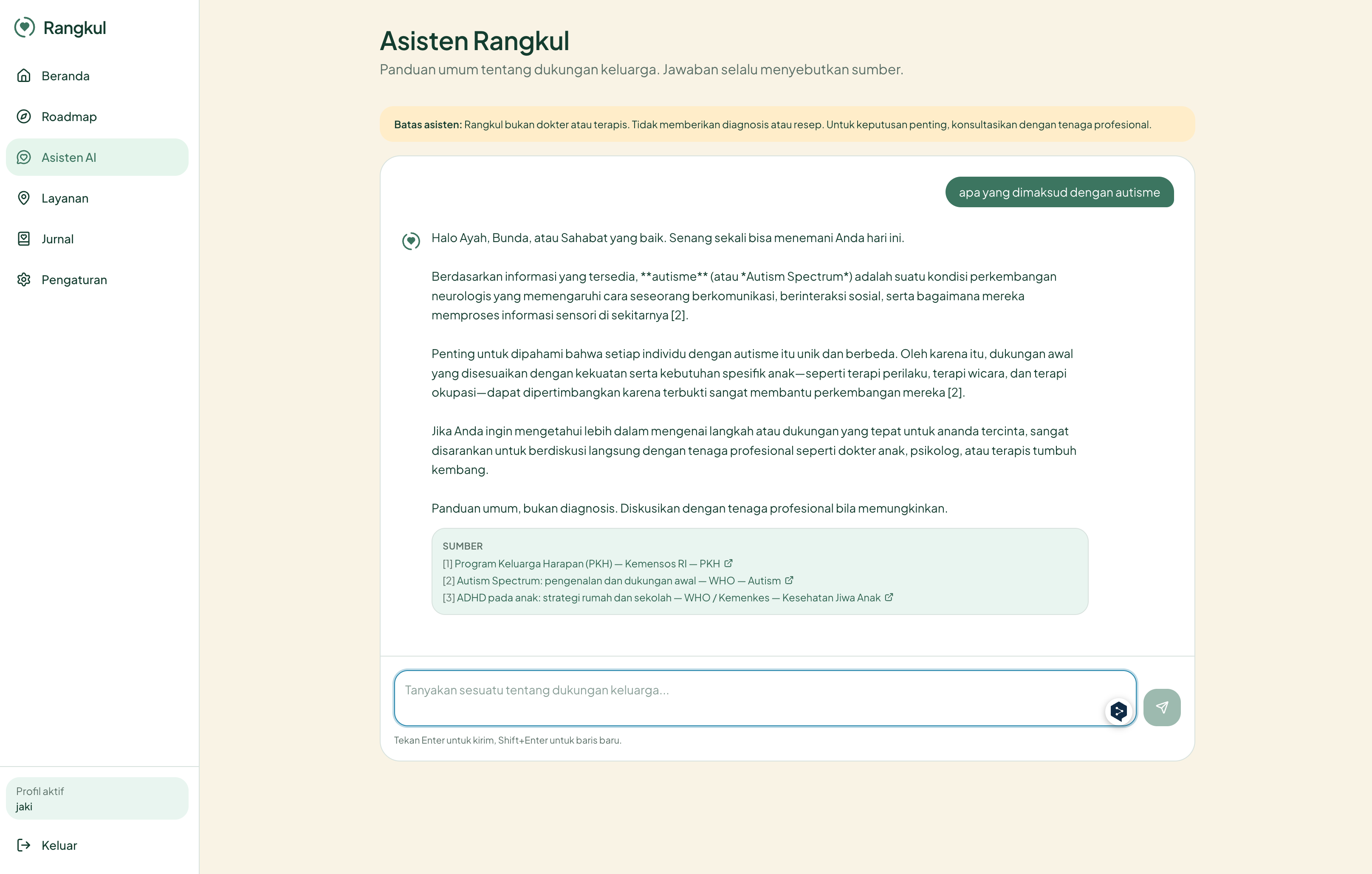
- Ask an AI assistant questions in clear and compassionate Indonesian.
- Receive answers grounded in a curated knowledge base, with references and safety disclaimers.
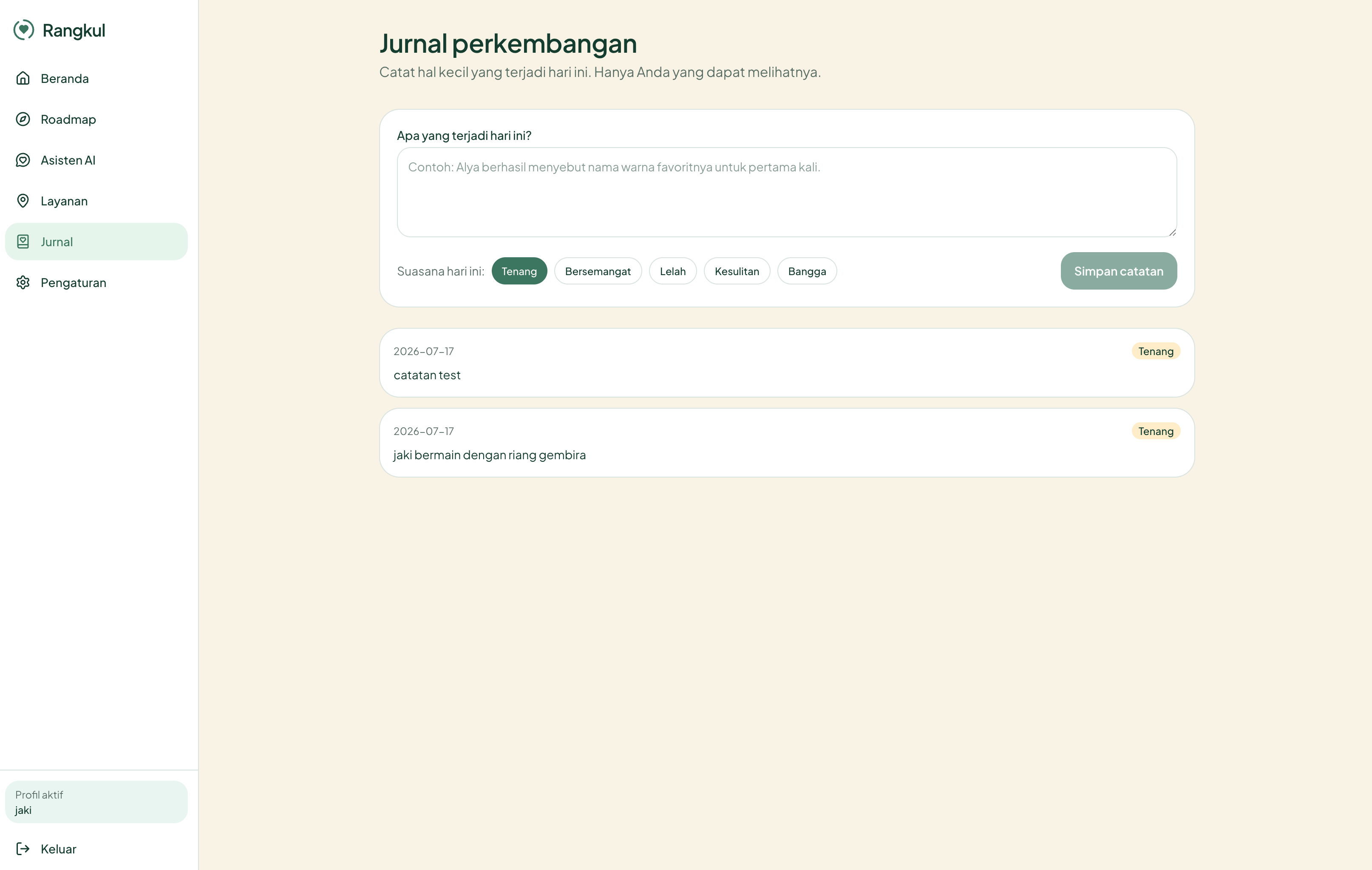
- Record observations, experiences, and progress through a private journal.
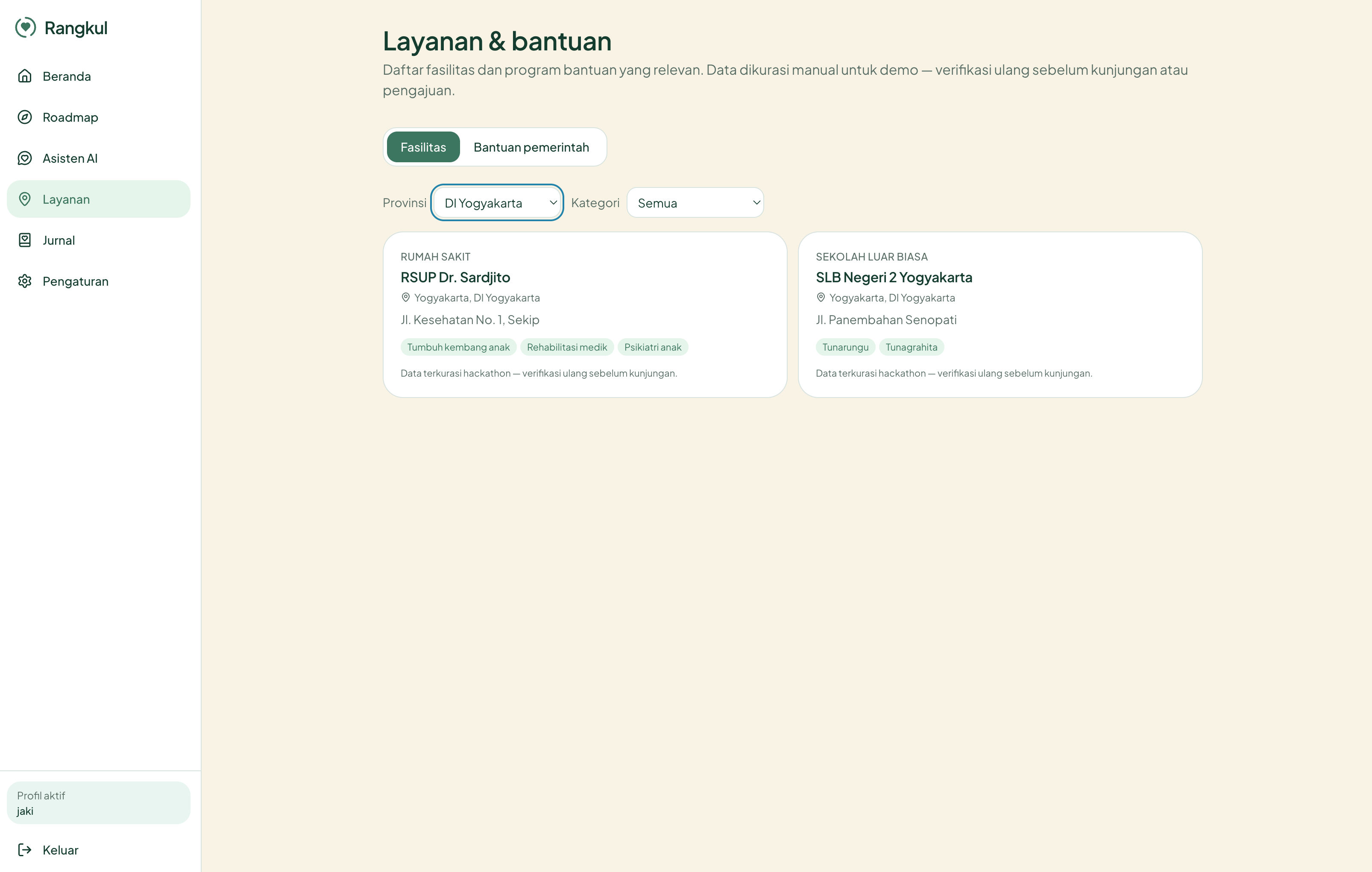
- Discover relevant healthcare facilities, therapy services, special education resources, and government assistance programs.
- Keep information organized before speaking with a healthcare or education professional.
The platform consistently reminds users that its guidance is general information, not a medical diagnosis or prescription.
How we built it
We built Rangkul as a full-stack TypeScript application using React and TanStack Start. The frontend and server functions live in the same project, allowing us to develop the user experience and backend logic together without maintaining two separate applications.
We used:
- React and TanStack Router for the interface and application routing.
- TanStack Start server functions for authenticated backend operations.
- TypeScript and Zod for type safety and input validation.
- Tailwind CSS for a responsive and accessible design system.
- Supabase-compatible services for authentication, PostgreSQL data storage, and Row Level Security.
- AI SDK and an AI gateway for the conversational assistant and roadmap generation.
- A curated Indonesian knowledge base to provide more relevant and grounded answers.
- SQL migrations to define database tables, relationships, triggers, and security policies.
The application was designed as an Indonesian-first experience rather than translating an English product afterward. We focused on warm, respectful language and avoided terminology that could stigmatize children or their families.
Challenges we ran into
One of our biggest challenges was balancing the usefulness of AI with safety. Parenting and developmental support can involve sensitive medical and psychological questions. We needed the assistant to provide helpful educational information without presenting itself as a doctor or producing unsupported diagnoses.
Another challenge was making complex information approachable. Families may already feel overwhelmed, so presenting too many technical terms or recommendations at once could make the product less useful. We worked to transform information into small, realistic steps while repeatedly encouraging consultation with qualified professionals.
We also faced technical challenges involving authentication, secure database access, environment configuration, and integrating generated server functions with Supabase Row Level Security. Ensuring that users could only access their own family profiles, journals, conversations, and roadmaps was essential.
Finally, designing for 3T regions reminded us that access cannot be taken for granted. Devices may be older, internet connections may be slow, and professional services may be far away. This influenced our decision to keep the interface simple, responsive, and focused on essential information.
Accomplishments that we're proud of
We are proud that Rangkul became more than a generic chatbot. It provides a connected support journey: onboarding, family profiles, personalized roadmaps, journaling, service discovery, and an AI assistant that uses references and clear safety boundaries.
We are especially proud of:
- Building an Indonesian-first and family-centered experience.
- Creating an interface that feels supportive rather than clinical or intimidating.
- Implementing secure, user-specific access through authentication and Row Level Security.
- Providing practical next steps instead of overwhelming users with information.
- Including citations, limitations, and professional-care reminders in AI-generated guidance.
- Delivering a working end-to-end prototype within a limited development period.
What we learned
We learned that building technology for families requires more than technical accuracy. The tone, context, and emotional impact of every interaction matter.
We also learned that AI becomes more useful when its role is clearly limited. A trustworthy assistant should be able to say what it knows, show where information comes from, and acknowledge when professional help is necessary.
What's next for Rangkul
Our next steps include:
- Partnering with schools, community health centers, NGOs, and local governments.
- Helping families securely share selected progress records with trusted professionals.
Our long-term vision is for Rangkul to become a safe and accessible starting point for Indonesian families so that no family feels alone.
Built With
- bun
- cloudflare-workers
- github
- lovable
- lovable-cloud
- nitro
- node.js
- openai-compatible-api
- postgresql
- radix-ui
- react
- rest-api
- row-level-security
- shadcn/ui
- sql
- supabase
- supabase-auth
- tailwind-css
- tanstack-query
- tanstack-router
- tanstack-start
- typescript
- vercel-ai-sdk
- vite
- zod

Log in or sign up for Devpost to join the conversation.