Inspiration
Wildlife rangers often have to make fast decisions from incomplete field evidence. A single trail-camera image can contain animals, people, vehicles, poor visibility, or no real threat at all. RANGA was inspired by the need to help rangers triage those incidents quickly without turning every unclear image into a false alarm.
What it does
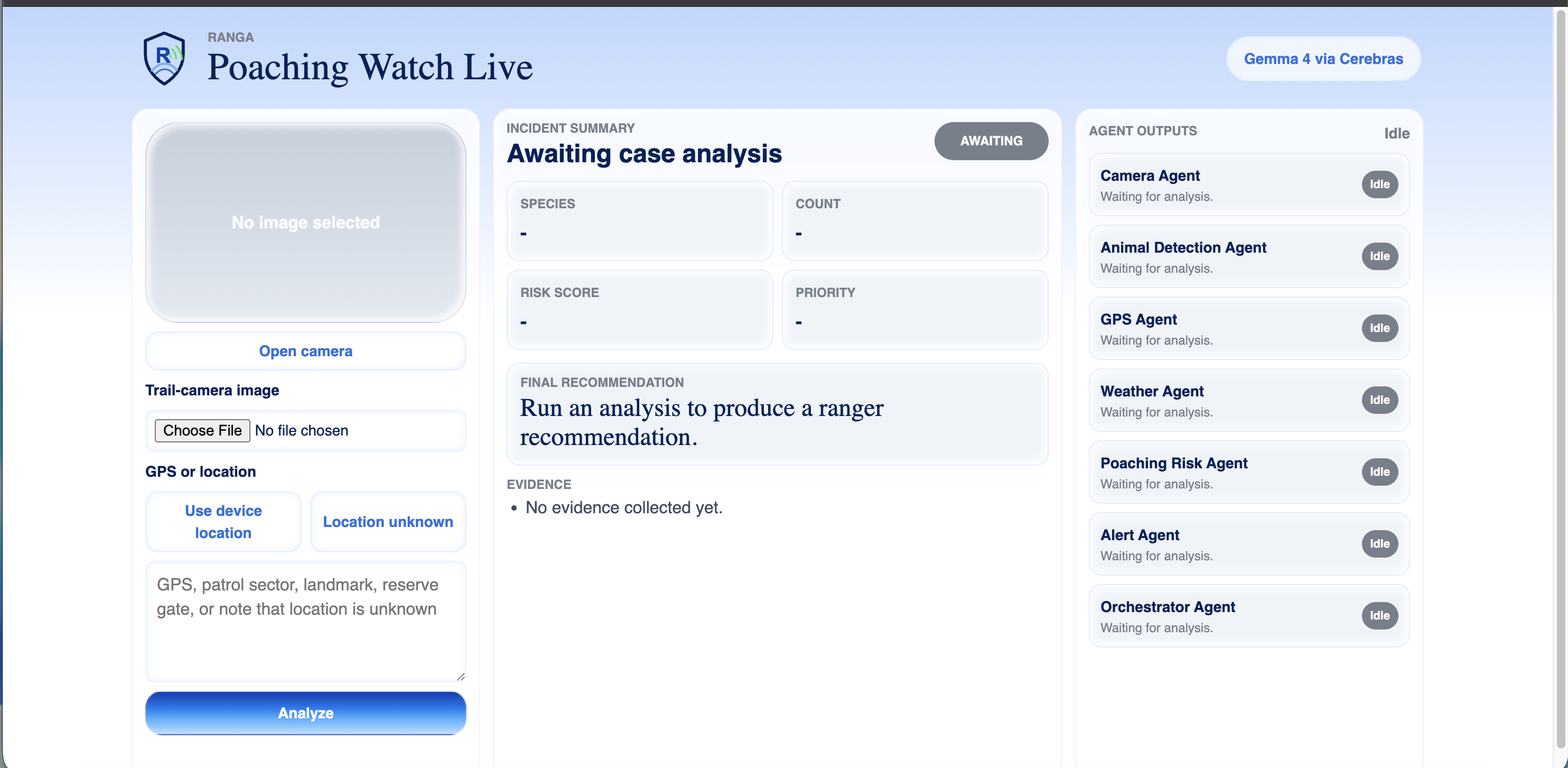
RANGA analyzes trail-camera evidence and turns it into a ranger-ready poaching-risk report. A user uploads an image or captures a live camera frame, adds GPS or location context, and runs a seven-agent workflow. The agents inspect image quality, animals, humans, vehicles, location risk, weather visibility, poaching risk, and recommended ranger action. The final report includes species, count, risk level, risk score, priority, evidence, recommendation, and processing time.
How we built it
We built RANGA as a Next.js TypeScript progressive web app with a single dashboard. The backend uses LangGraph to coordinate specialist agents. Every agent calls Gemma 4 through Cerebras using the official Cerebras SDK and structured JSON outputs. The app has one main analysis endpoint, no database, no auth, no storage, and no mocked incident reports.
Challenges we ran into
The biggest challenge was avoiding fake confidence. Early risk scoring could overreact to ordinary human presence, so we tightened the risk logic to require real poaching indicators before escalating severity. We also simplified the camera flow so captured frames visibly become the selected image before analysis. Another challenge was keeping the UI responsive while showing agent outputs, final reports, and processing time in one dashboard.
Accomplishments that we're proud of
We are proud that RANGA runs a real seven-agent workflow instead of a simulated demo. The app is deployed, installable as a PWA, and uses Gemma 4 via Cerebras for the actual agent calls. We also added structured outputs, live processing timing, clearer camera capture UX, and conservative risk calibration so harmless scenes are less likely to become false high-risk alerts.
What we learned
We learned that multi-agent systems need strong boundaries. Each agent should do one job, return structured evidence, and avoid inventing context. We also learned that speed matters most when several specialist agents must run for one decision. Cerebras is a strong fit because RANGA needs multiple fast Gemma 4 calls to move from raw field evidence to an actionable ranger report.
What's next for RANGA
Next, RANGA can be tested with more real trail-camera scenarios and ranger feedback. The risk logic can be improved with better protected-area context, stronger species recognition, and clearer handling of ranger, tourist, and staff activity. The goal is to make RANGA more reliable for field triage while keeping human rangers in control of final decisions.
Built With
- agent
- api
- cerebras
- langchainjs


Log in or sign up for Devpost to join the conversation.