Inspiration
As a lifelong ramen lover frustrated by vague at-home recipes, I wanted to create a tool that demystifies ramen-making for Western home cooks. I’d spent years testing broth recipes that fell flat—too little depth, wrong timing, mismatched noodles—and knew others faced the same struggle. The goal? Make restaurant-level ramen accessible, no professional kitchen required.
What it does
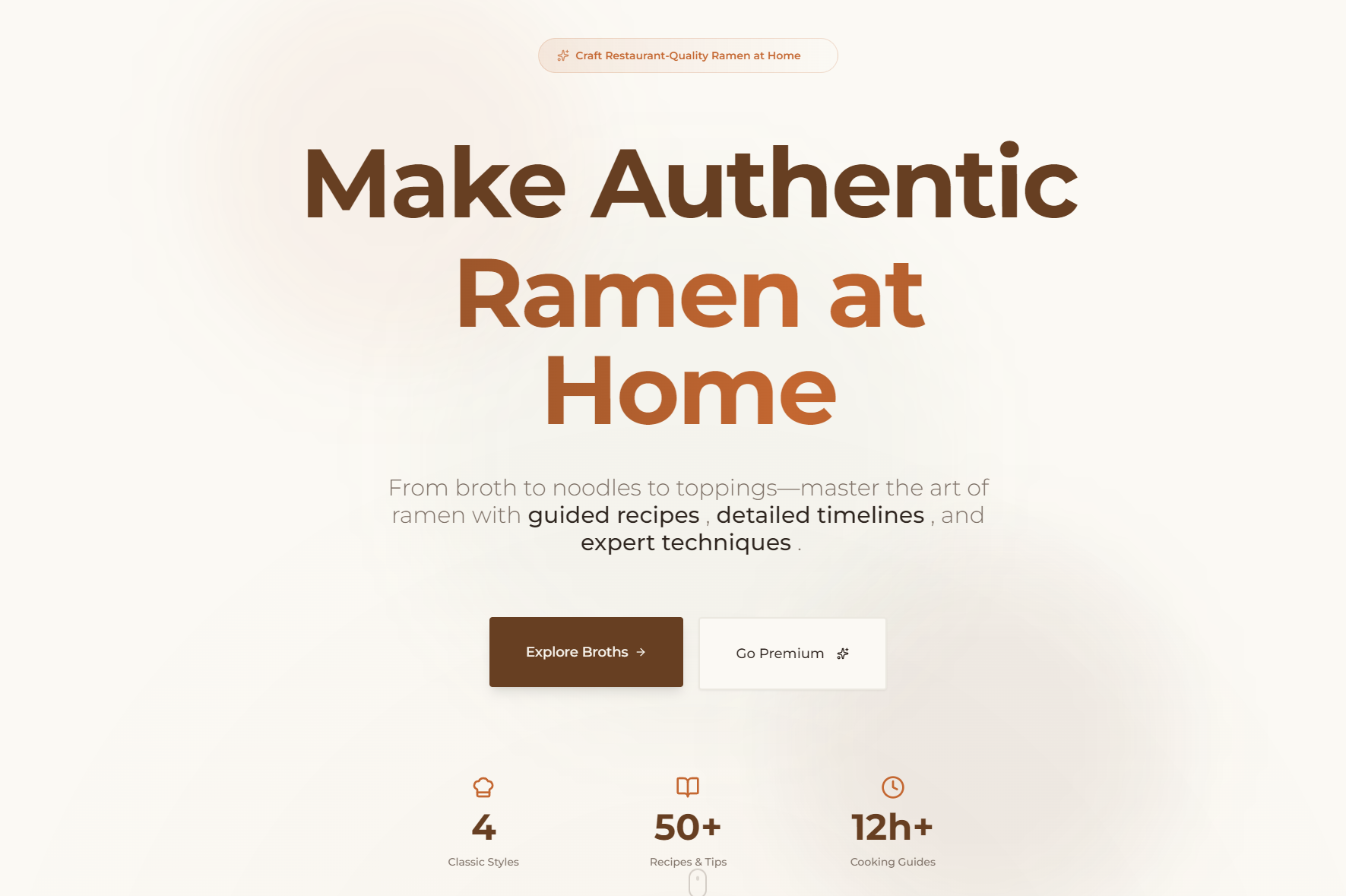
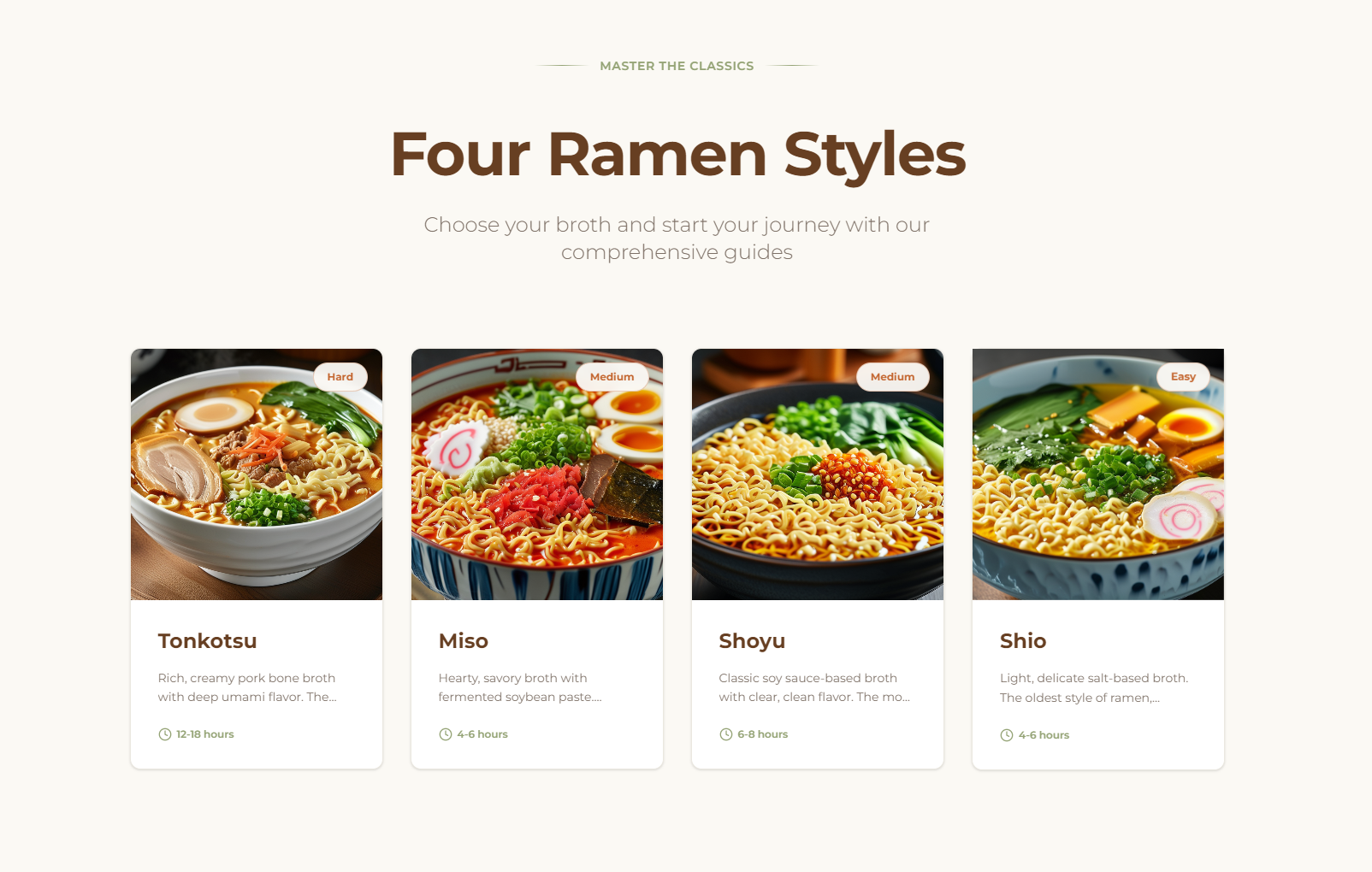
Ramen Builder guides users through every step of ramen creation: browse 4 core broth styles (Tonkotsu, Miso, Shoyu, Shio) with full recipes, match noodles/toppings to broths, plan multi-day cooking timelines, and access premium ad-free content via subscription. Free users get basic recipes; premium unlocks everything.
How we built it
I started by mapping user workflows (e.g., broth selection → timeline planning) and designing a clean UI with Figma. I built the frontend with React for dynamic navigation, used Node.js/Express for backend logic (pairing suggestions, timeline generation), integrated Stripe for payments, and stored user data/subscription status in MongoDB. AWS hosts assets like recipe images.
Challenges we ran into
The biggest hurdle was perfecting the timeline generator—calibrating prep/simmer/rest times for accuracy across broths (e.g., 12+ hour Tonkotsu vs. 2-hour Shio). Payment processing bugs also delayed launch: initial Stripe integrations failed to unlock premium content instantly, requiring iterative testing to fix.
Accomplishments that we're proud of
We created a seamless pairing logic system that suggests noodles/toppings tailored to each broth’s flavor profile. Premium users report successfully making Tonkotsu ramen (once intimidating!) with our timeline tool, and the ad-free experience has 90% subscription retention.
What we learned
I deepened my understanding of payment API integration and user-centric design—small UX missteps (e.g., unclear subscription prompts) led to drop-offs, so iterative user testing became critical. I also learned to balance authenticity (sticking to traditional ramen techniques) with accessibility (simplifying steps for home cooks).
What's next for this project
Short-term: Add more modern topping options and refine the timeline mobile responsiveness. Long-term: Integrate a saved recipes feature (beyond favorites) and expand broth styles to regional Japanese variations. We also plan to add printable recipe cards for offline use—something users have requested repeatedly.

Log in or sign up for Devpost to join the conversation.