-
-
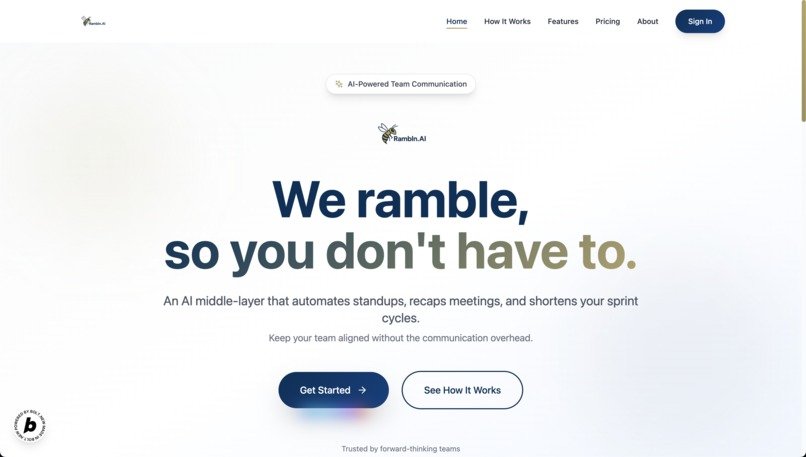
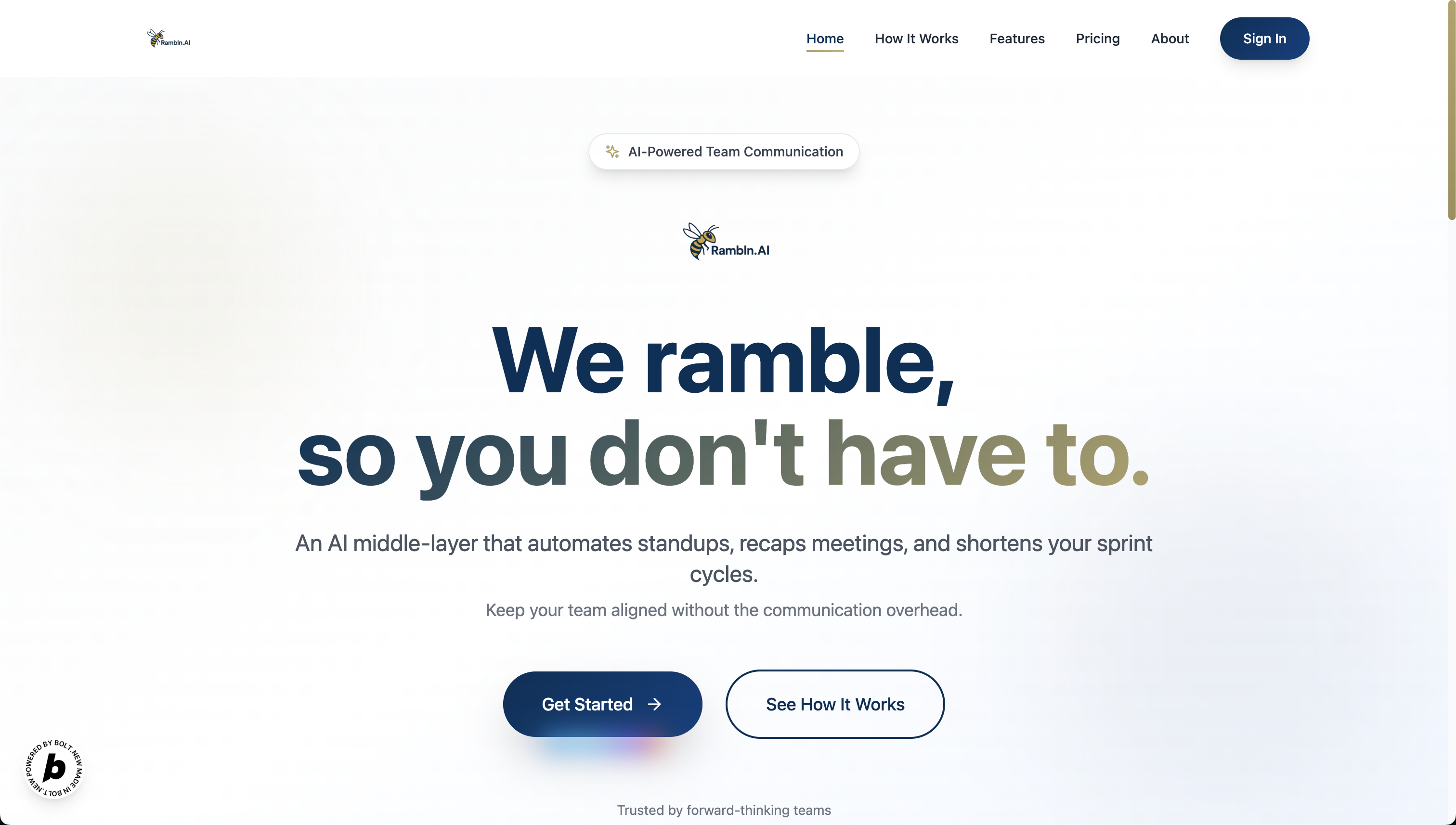
Landing Page
-
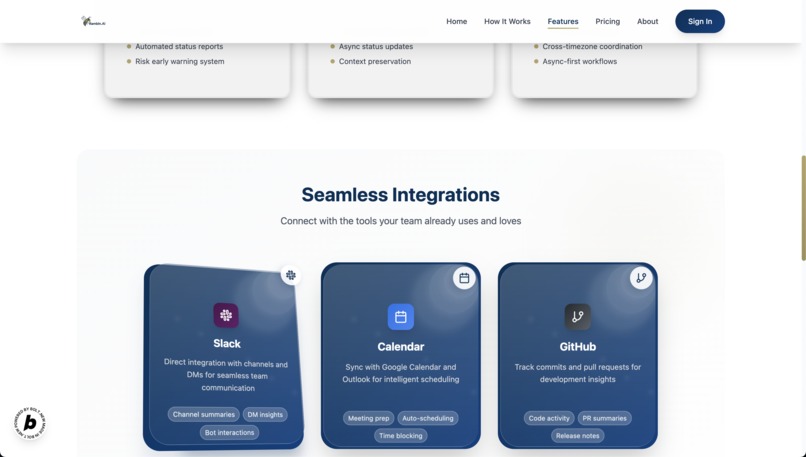
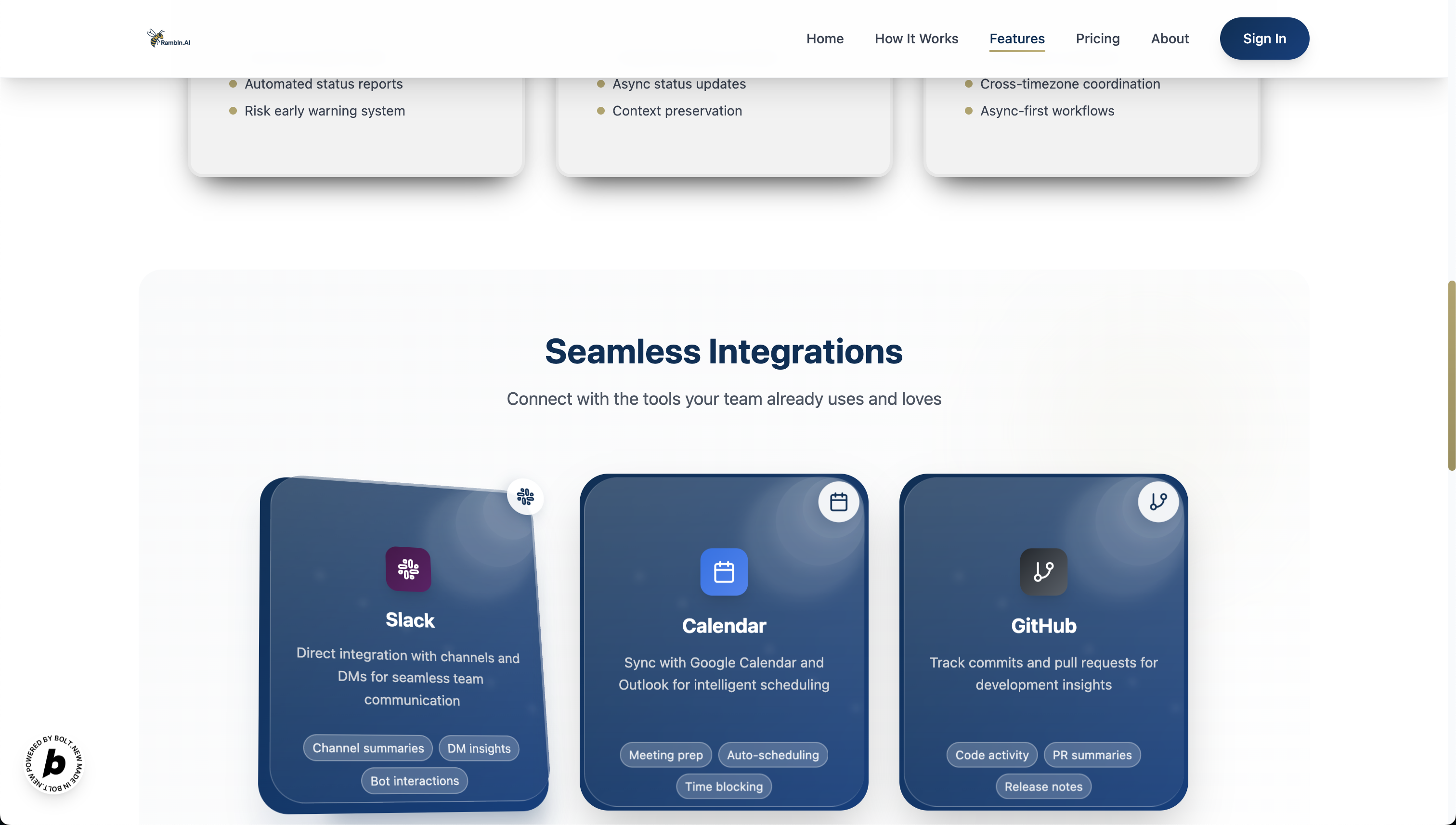
Features Page
-
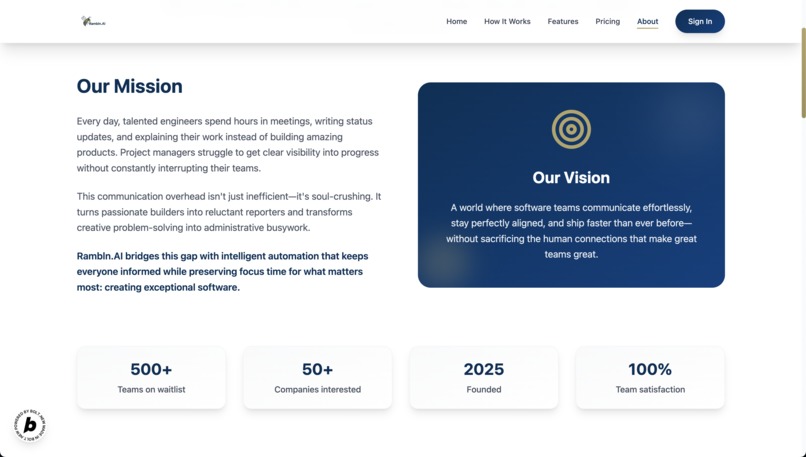
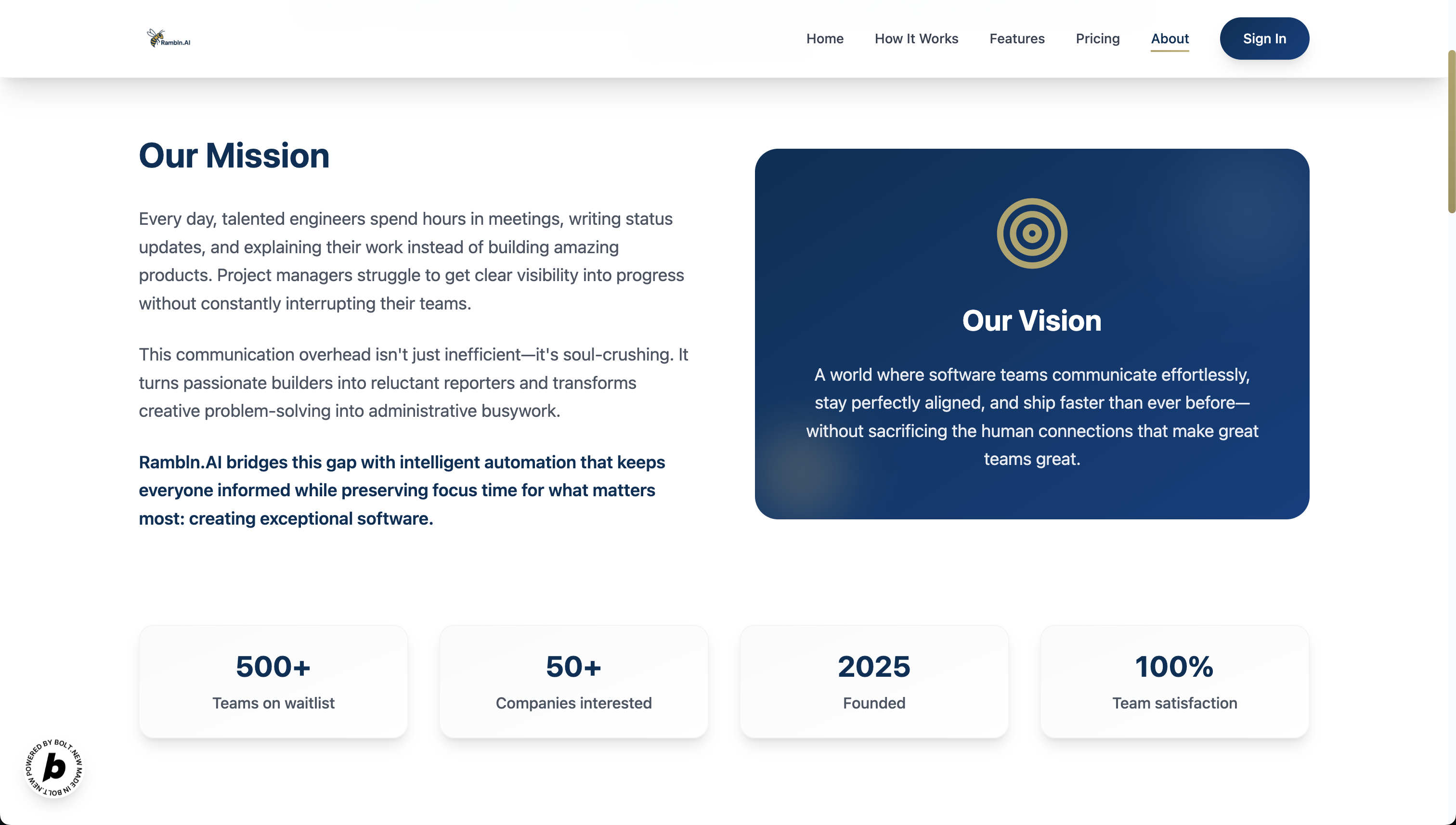
About Page
-

Pricing Page
-
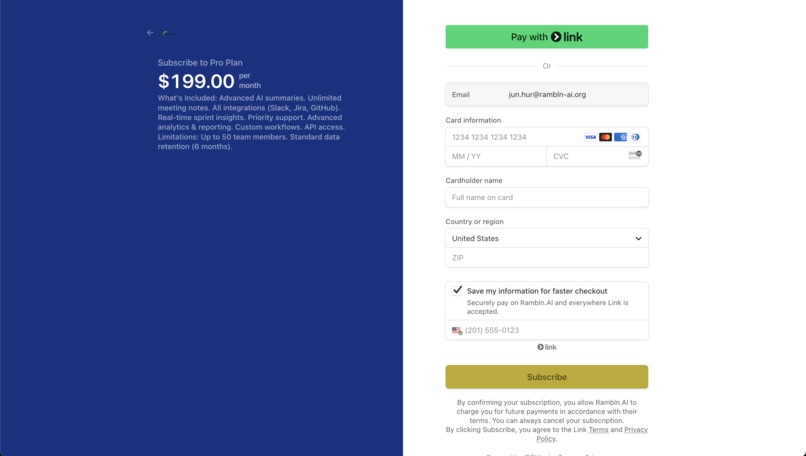
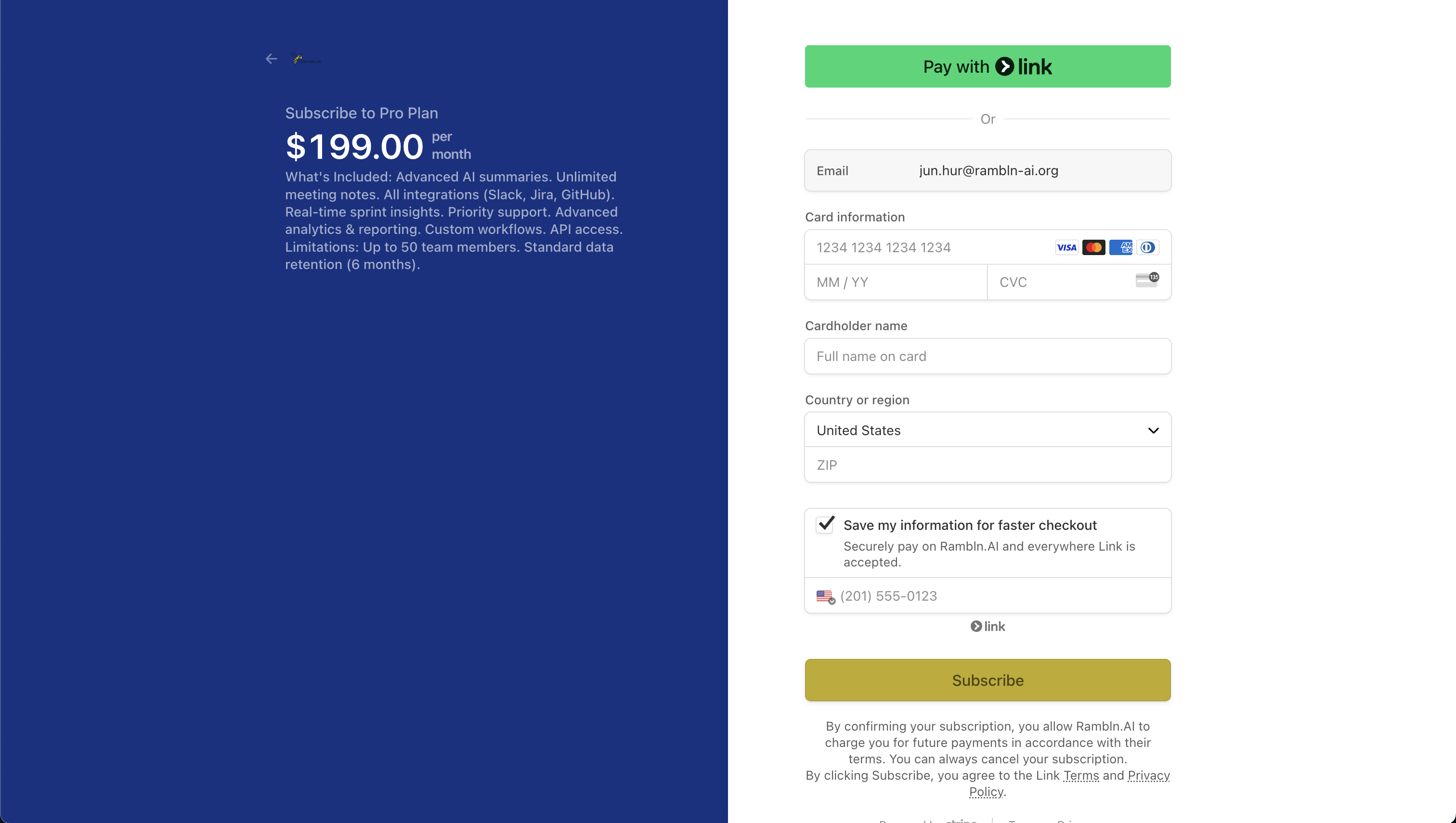
Plan Payment Page via Stripe
-
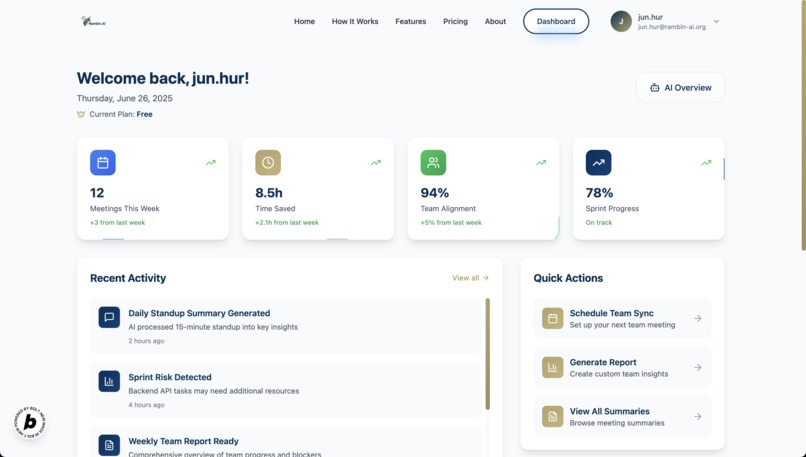
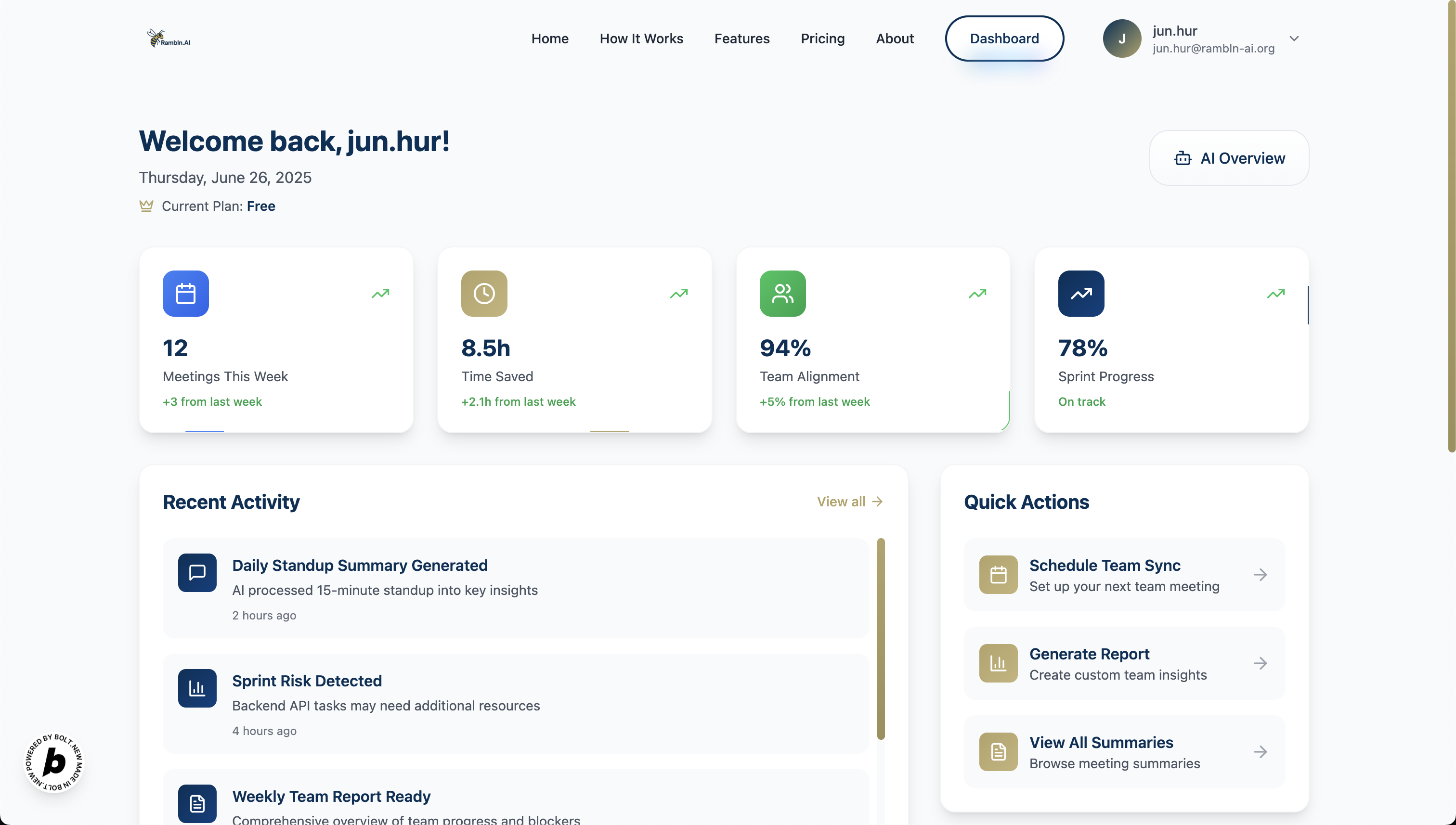
Main Dashboard
-
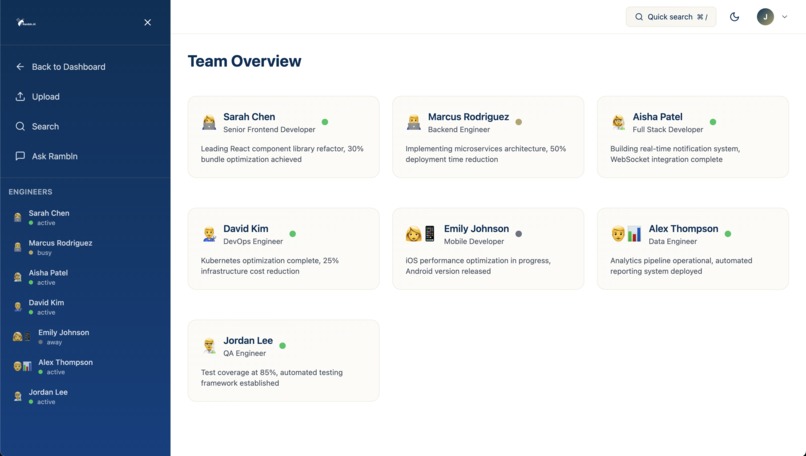
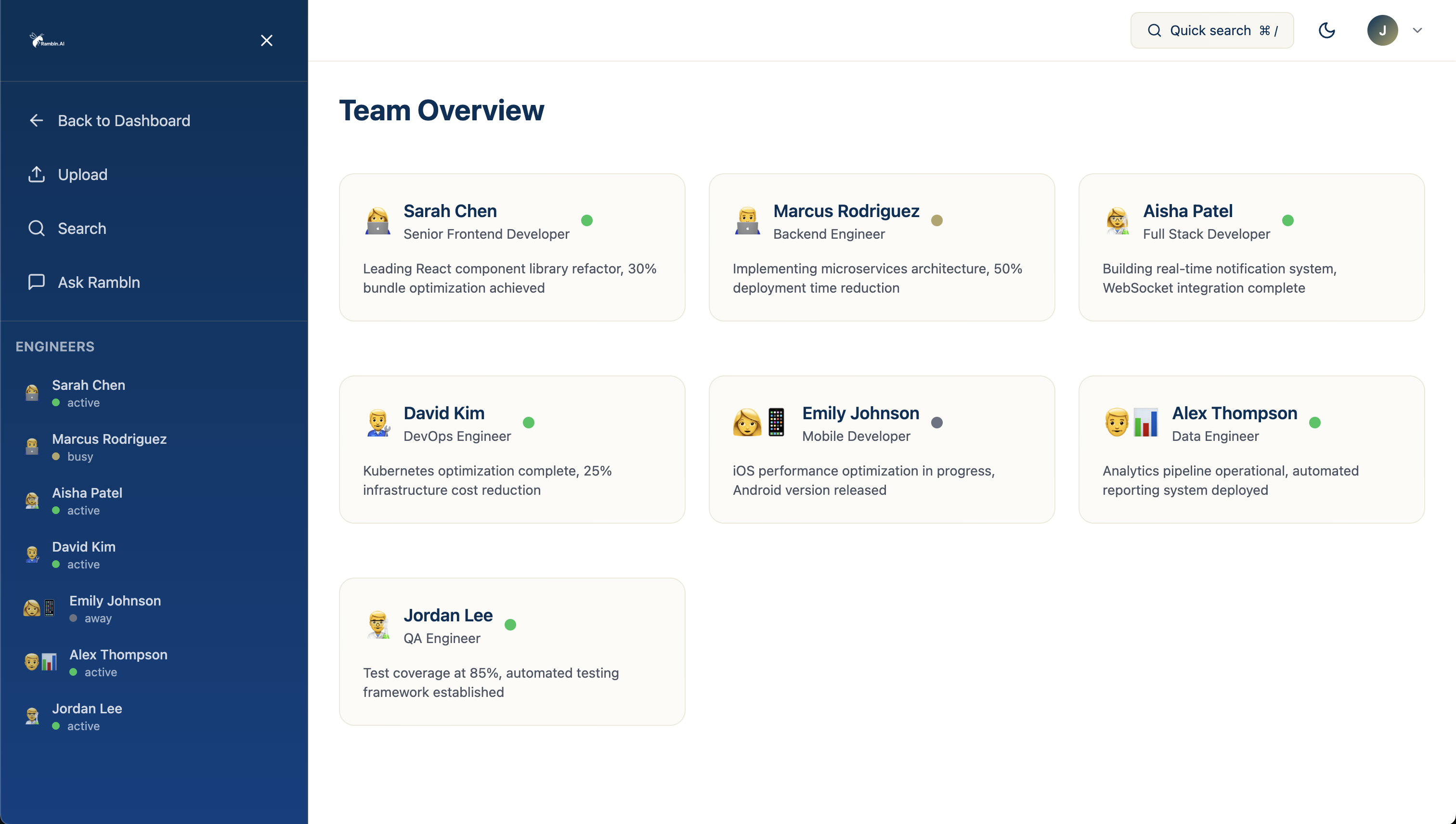
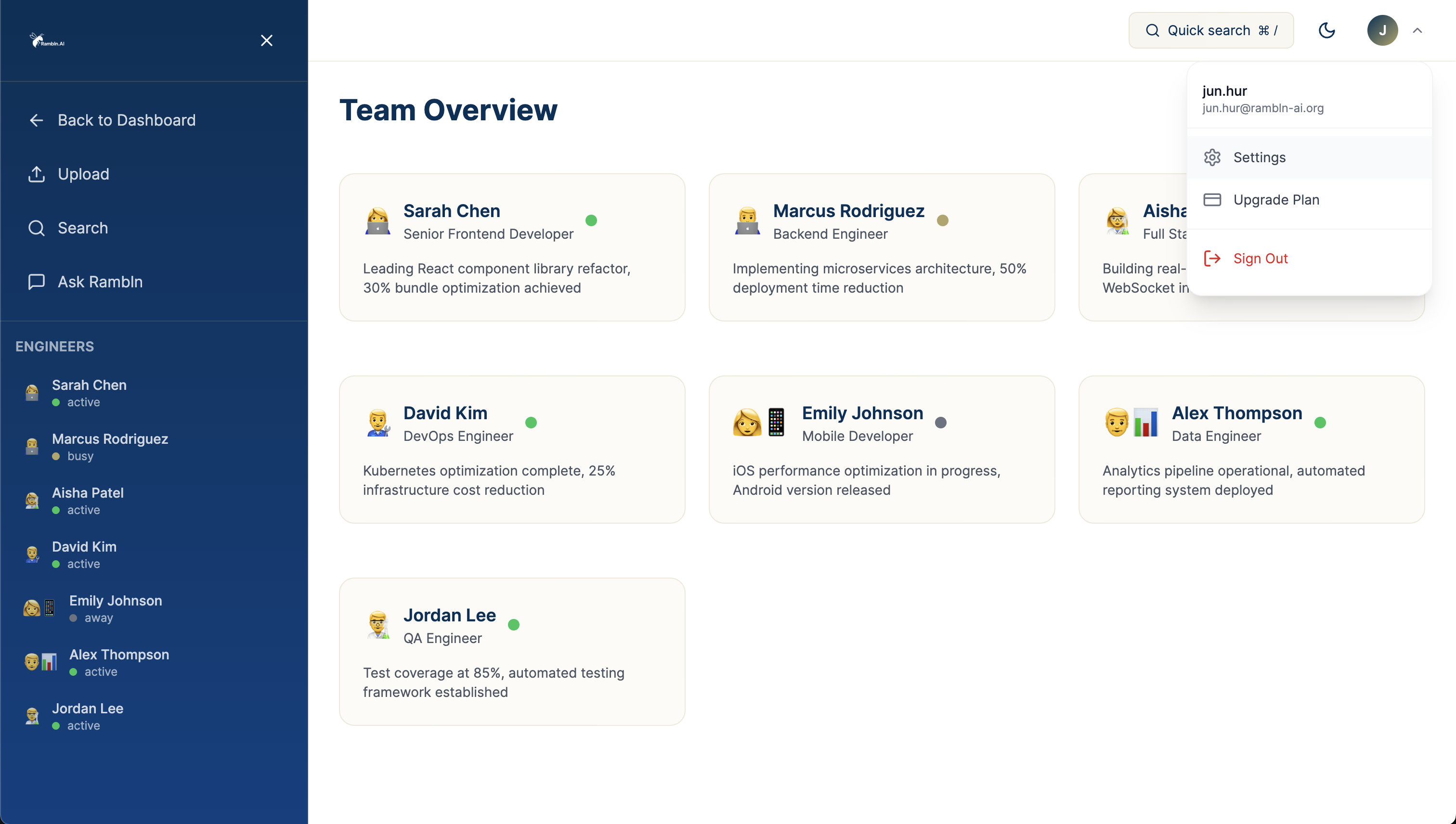
AI Dashboard's Team Overview
-
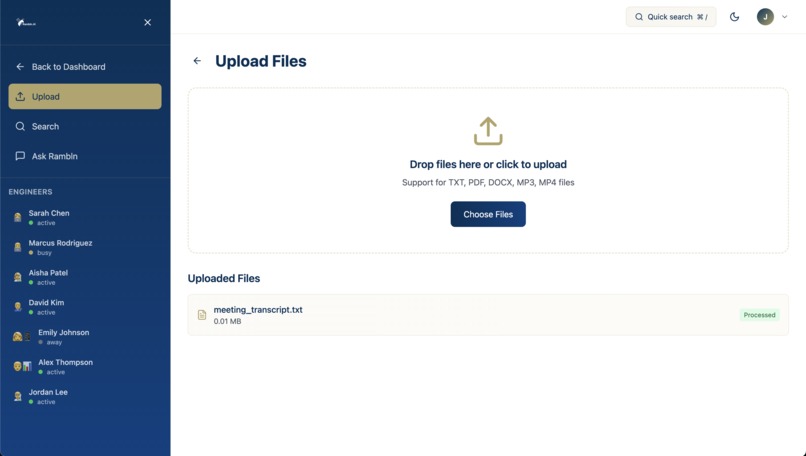
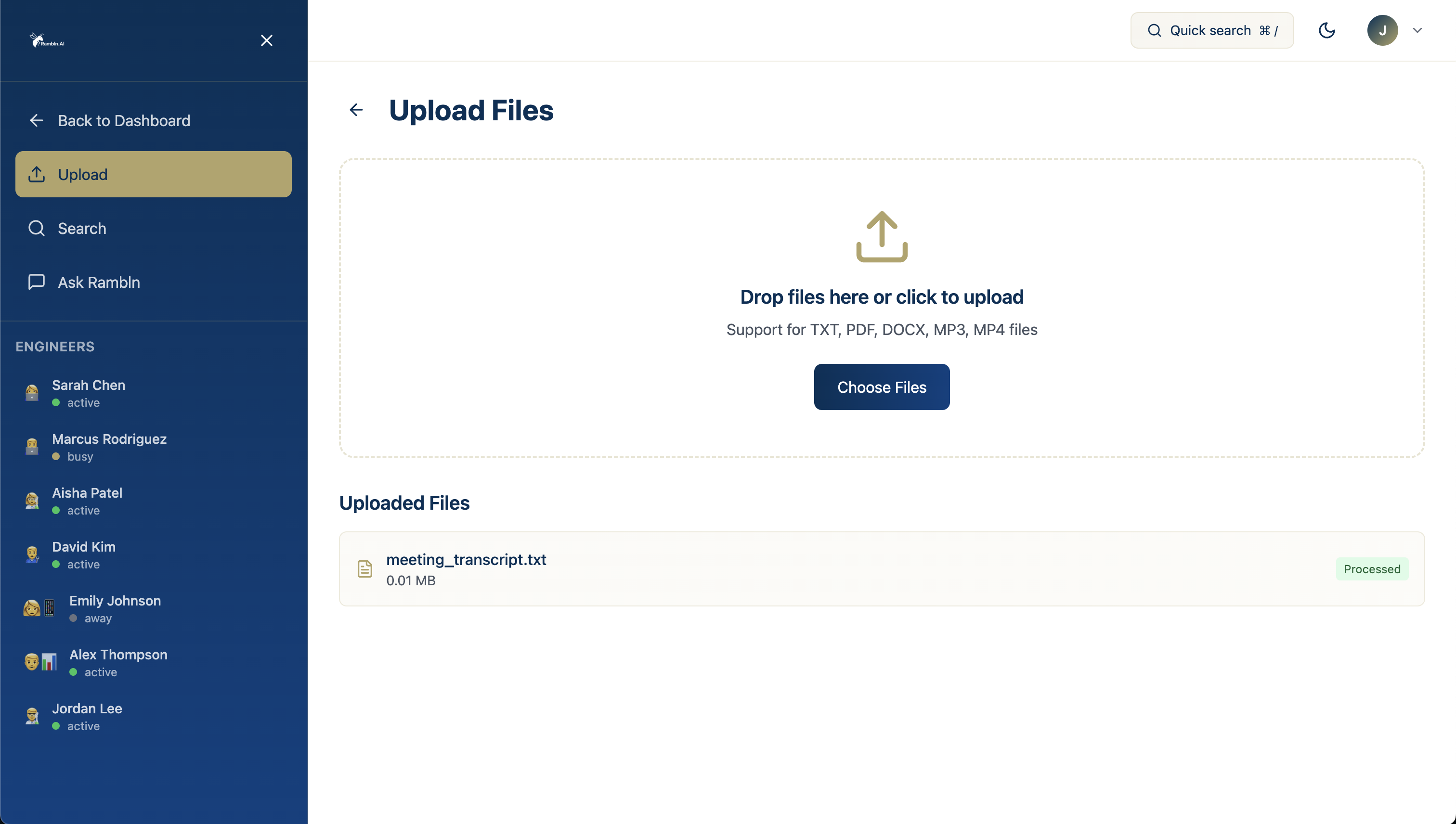
File Upload Function
-
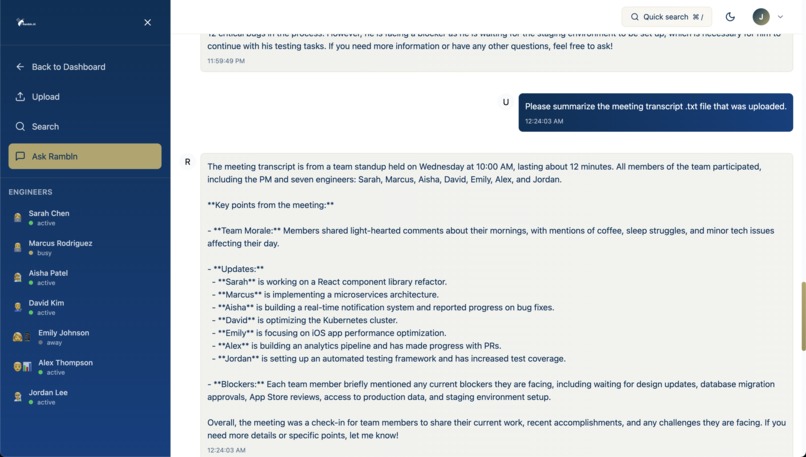
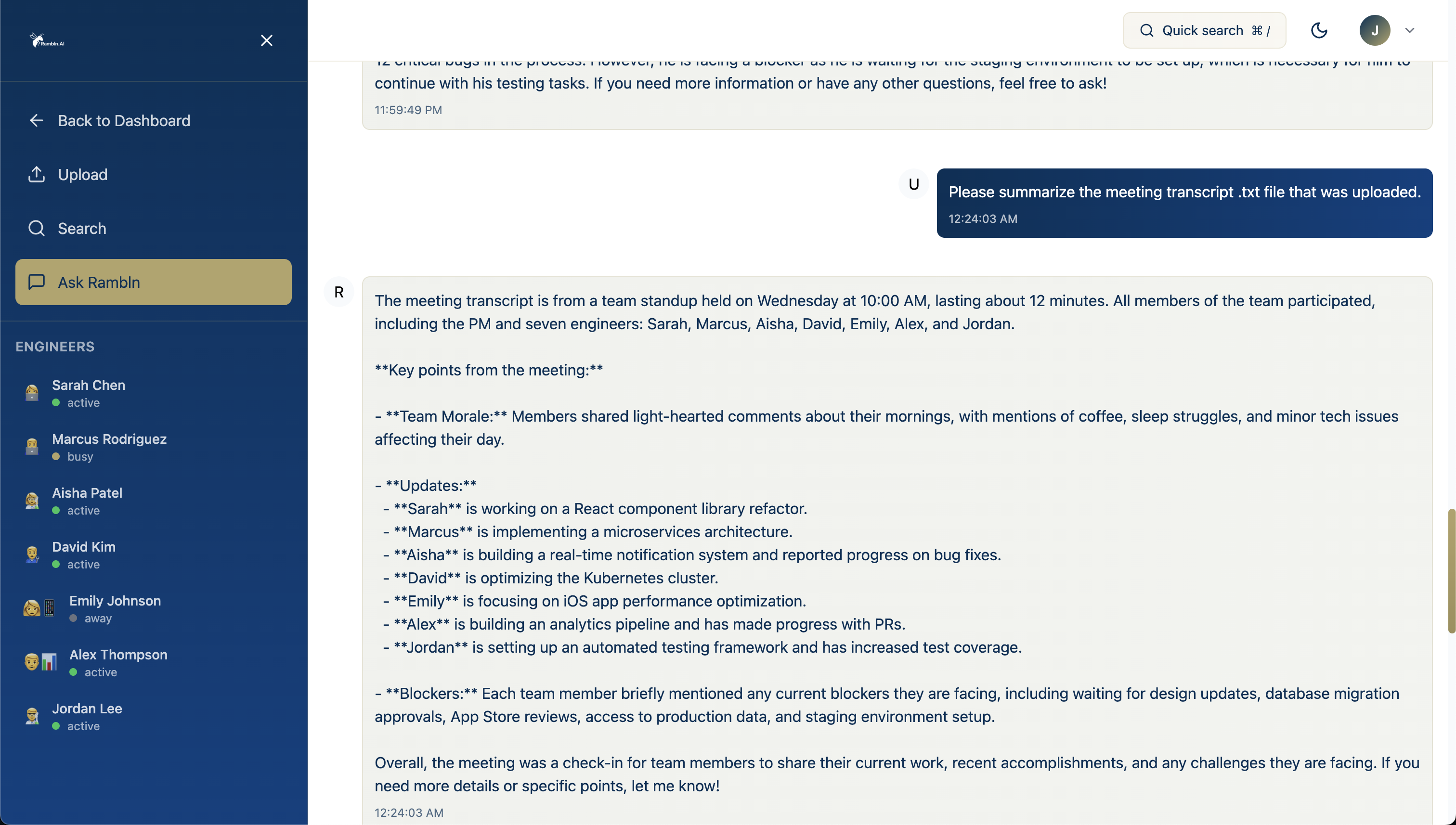
Ask Rambln (AI)
-
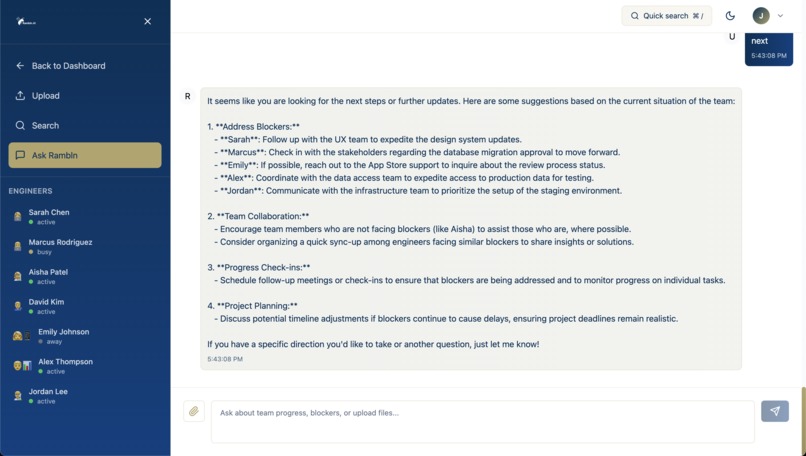
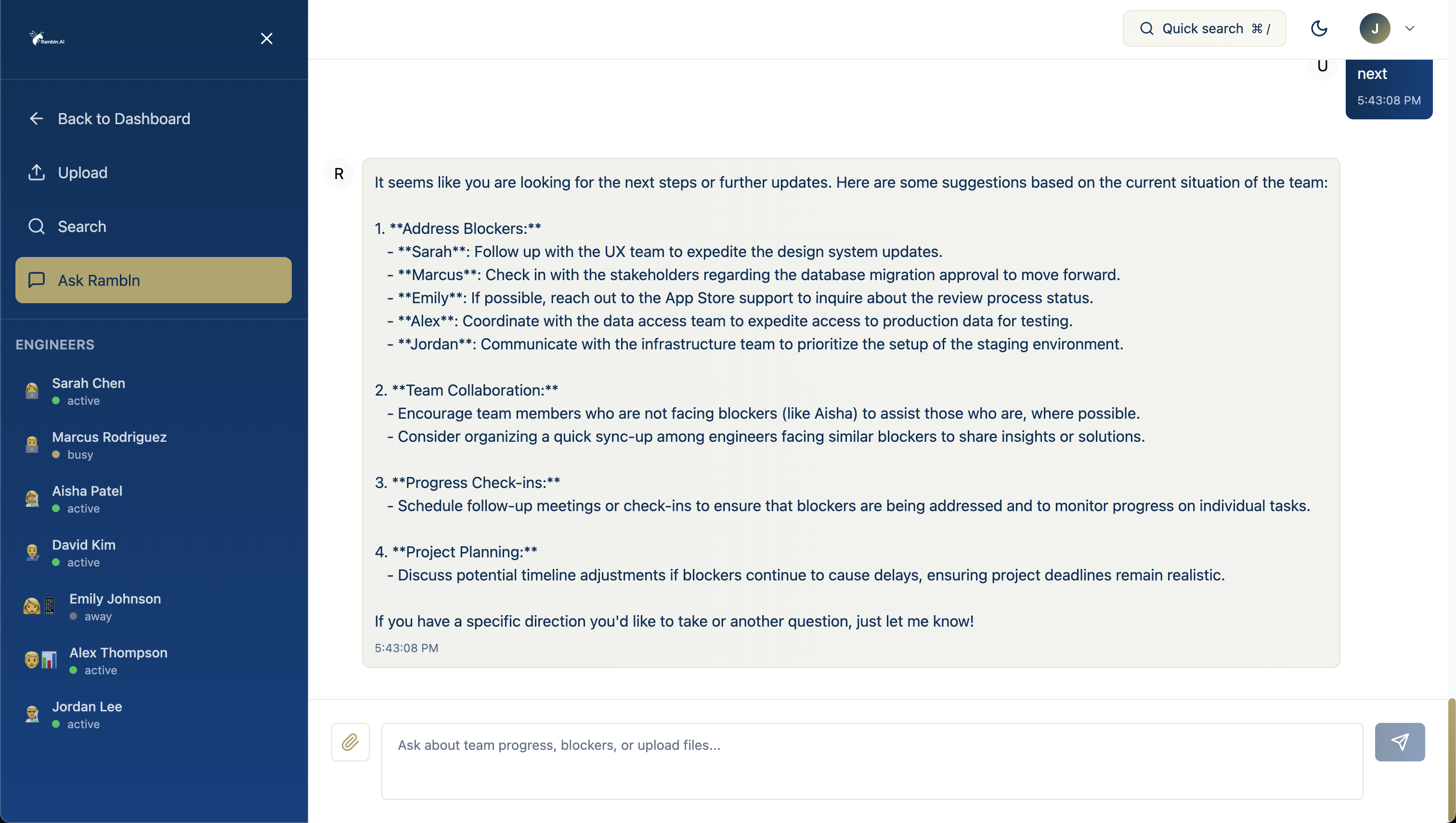
Ask Rambln (AI) pt. 2
-
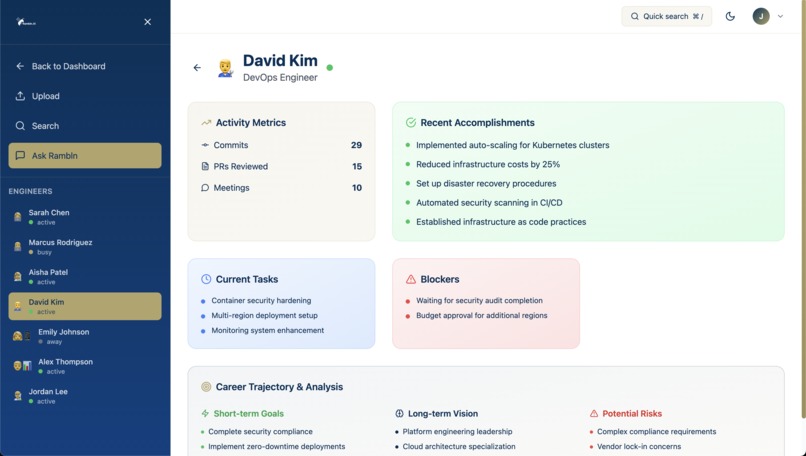
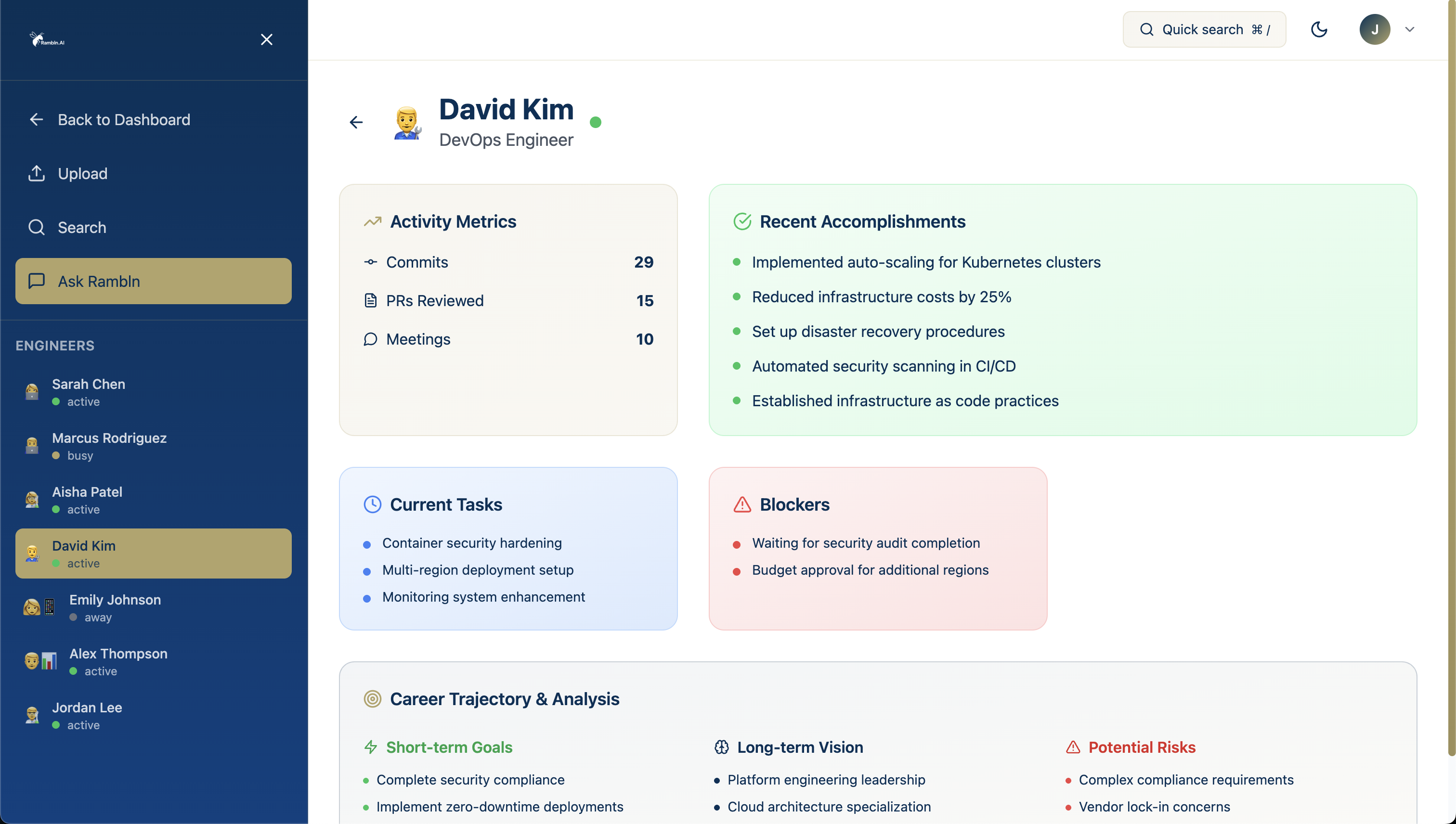
Engineer's Expanded AI Overview
-
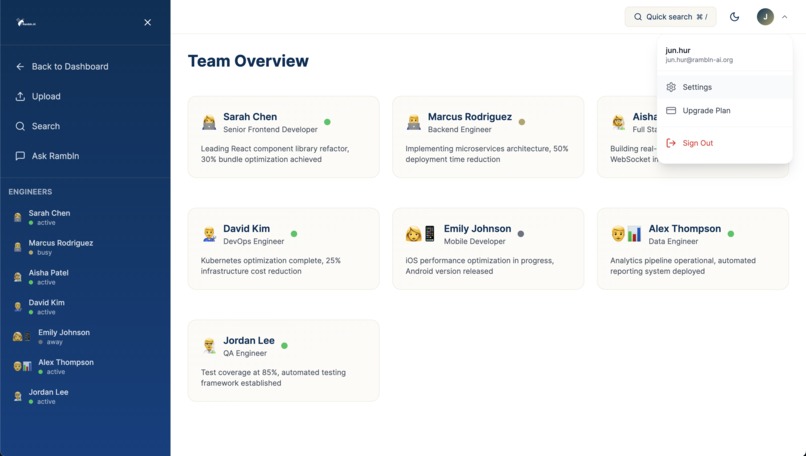
Profile Dropdown Menu
-
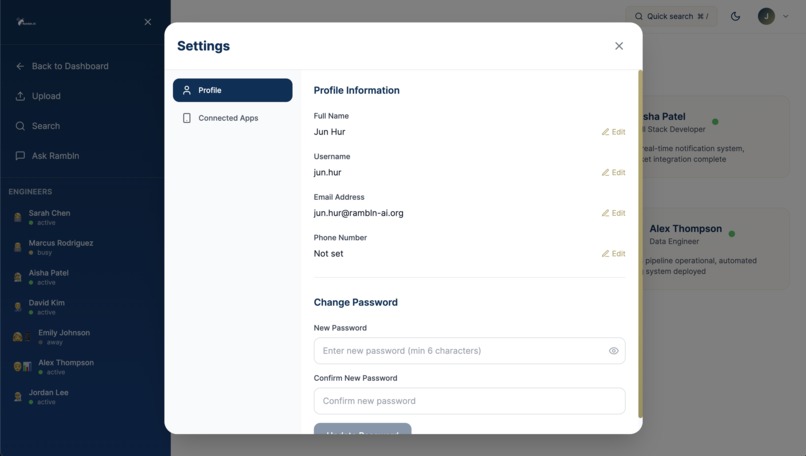
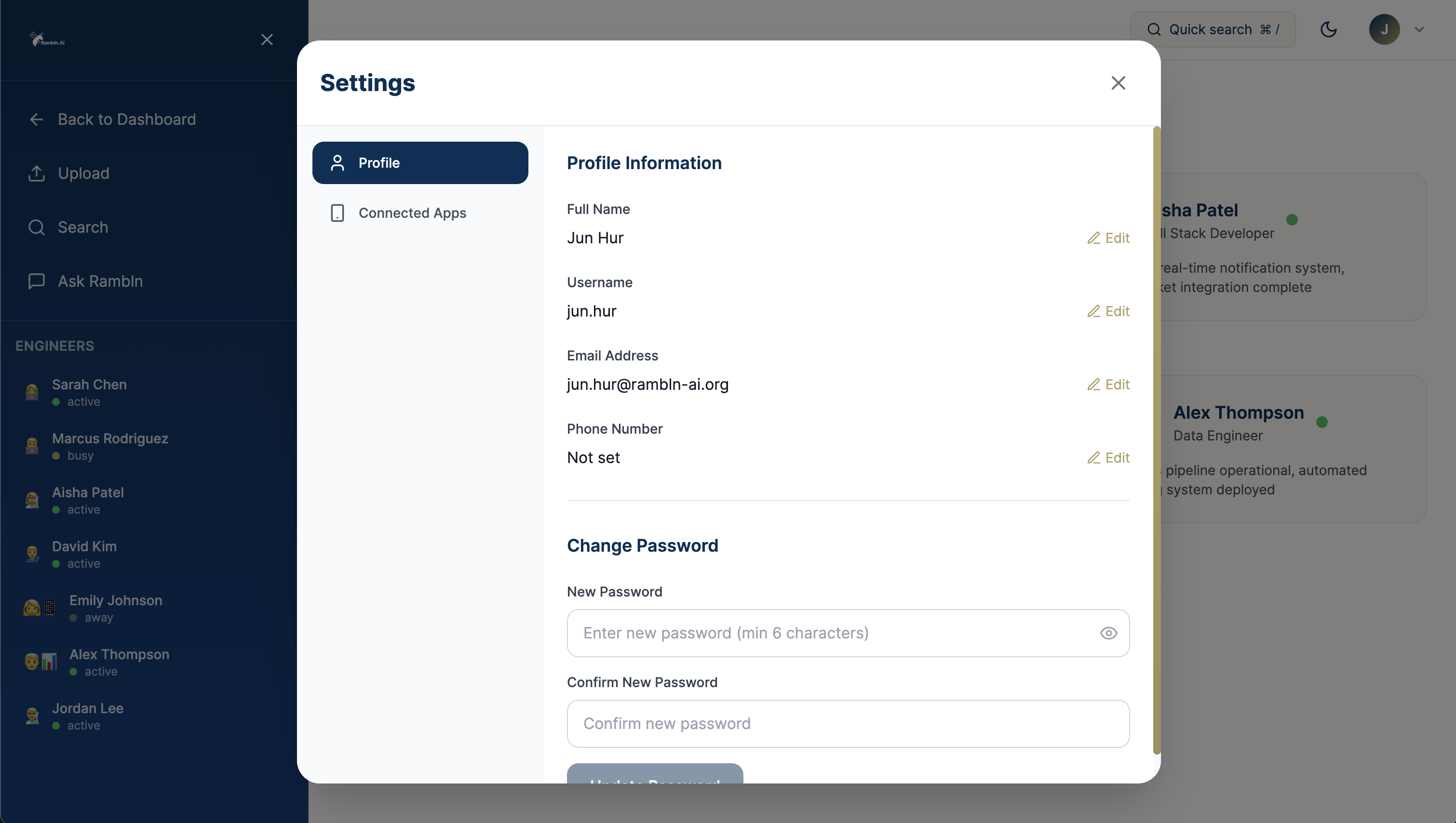
Profile Editing Tab
-
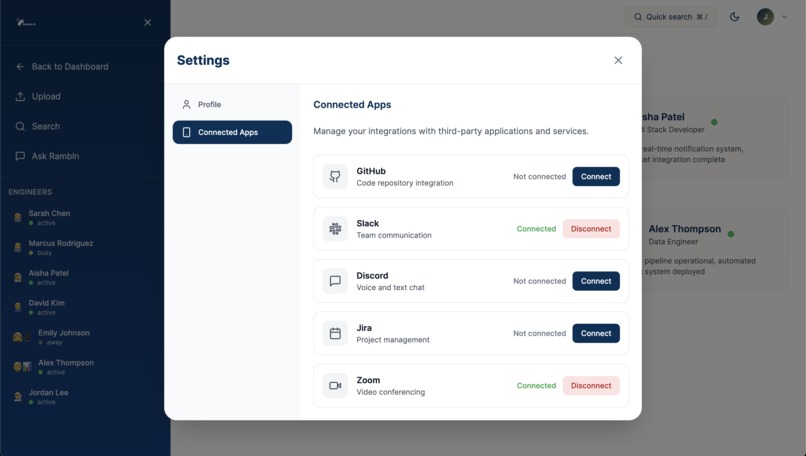
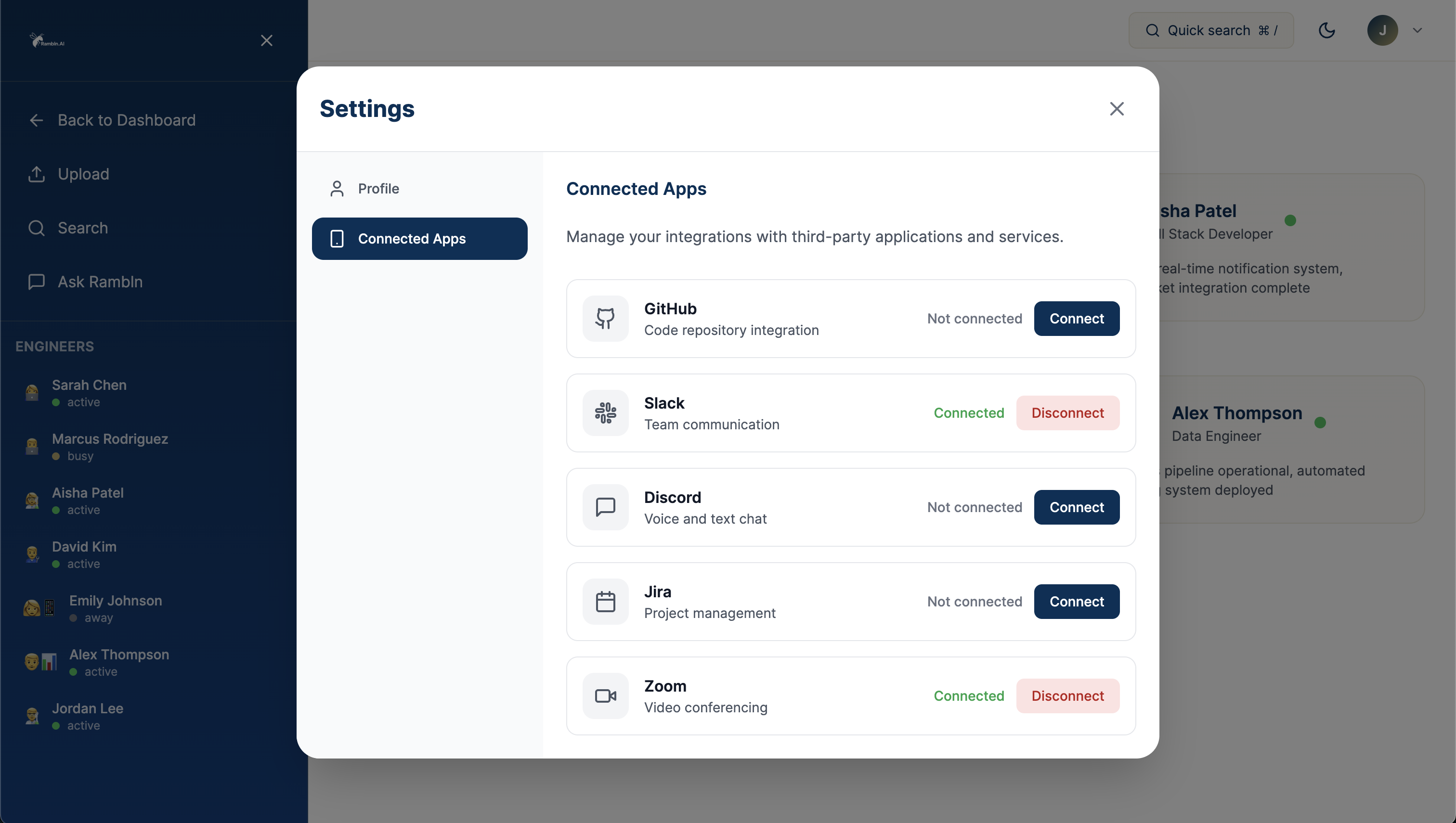
Connected Apps Tab

Inspiration
Rambln.AI was born out of a common frustration: team meetings are often filled with valuable ideas and decisions, but capturing and acting on them is chaotic and time-consuming. As someone who's experienced this firsthand—especially in fast-paced environments where engineers and PMs need to stay tightly aligned—I wanted to create a tool that could turn raw, unstructured conversations into clear, actionable plans without manual overhead.
What it does
Rambln.AI listens to team meetings and transforms the conversation into prioritized, sprint-ready task summaries. It identifies action items, organizes them by urgency and ownership, and delivers clean outputs that teams can immediately use to execute faster with less misalignment.
How we built it
I built Rambln.AI using bolt.new, which provides a modern TypeScript-based stack out of the box. The frontend uses React and TailwindCSS, while authentication and backend logic are handled through Supabase. I integrated OpenAI’s APIs for transcription and task extraction, and layered logic on top to sort and format action items by priority and relevance. The goal was to keep the interface lightweight and clean while making the AI outputs immediately usable for project workflows.
Challenges we ran into
Juggling speed with quality has been one of the biggest challenges. The biggest challenge has been clarity—translating vague, overlapping discussions into actionable tasks isn't just a technical problem; it’s a human one. Meeting conversations are messy, nonlinear, and filled with context. It’s taken iteration to get the AI to distill signal from noise without overwhelming users with too much (or too little) information. Being a solo builder meant wearing every hat—product designer, engineer, and tester—all while refining the AI outputs to feel natural and useful.
Accomplishments that we're proud of
Taking Rambln.AI from idea to working prototype as a solo developer has been one of the most rewarding parts of this journey. It’s validating to see the core functionality come to life and deliver real value. I’m proud that Rambln.AI is more than an idea—I’ve built functional prototypes that already transform meeting transcripts into structured outputs. It’s been validating to see how even a rough version can save teams time and mental energy. Taking the first version from scratch to usable MVP-level solo has been a major milestone.
What we learned
Meeting intelligence isn’t just about summarization—it’s about surfacing what actually matters to move a project forward. I’ve learned that simplicity in output is far more valuable than complexity in processing. I’ve also learned how important it is to balance what the AI can do with what users need in the moment.
What's next for Rambln.AI
Next up: refining the AI’s ability to identify ownership, dependencies, and blockers; improving integration with tools like Jira, Notion, and Slack; and launching a beta for real teams to test in the wild. I’m also exploring ways to personalize the assistant to each team’s meeting style and cadence. Long-term, Rambln.AI will be the meeting-to-action layer for high-performing teams.
Built With
- 21st.dev
- and-tailwindcss-for-the-frontend.-for-backend-and-infrastructure
- api
- bolt.new
- entri
- i-used:-supabase-for-authentication-and-data-storage-lemonfox-(whisper)-for-speech-to-text-transcription-openai-apis-for-summarization-and-task-extraction-netlify-for-hosting-and-deployment-a-custom-domain-from-ionos
- including-typescript
- ionos
- lemonfox
- netlify
- openai
- react
- registered-via-entri-for-simplified-domain-setup-the-tech-stack-was-chosen-to-enable-fast
- stripe
- supabase
- tailwindcss
- typescript
- ui/ux


Log in or sign up for Devpost to join the conversation.