Inspiration
As UNC students, we’ve all received scam emails, fake job offers, and suspicious GroupMe messages, and some of us have even fallen for them. Seeing how frequently scams target college students through university emails, internship offers, and campus group chats, we felt there wasn’t a student-focused solution to help protect our community. Inspired by the tracks at Pearl Hacks and our own experiences, we decided to build a platform designed specifically to help UNC students identify, understand, and avoid scams, making digital safety more accessible and empowering on our campus.
What it does
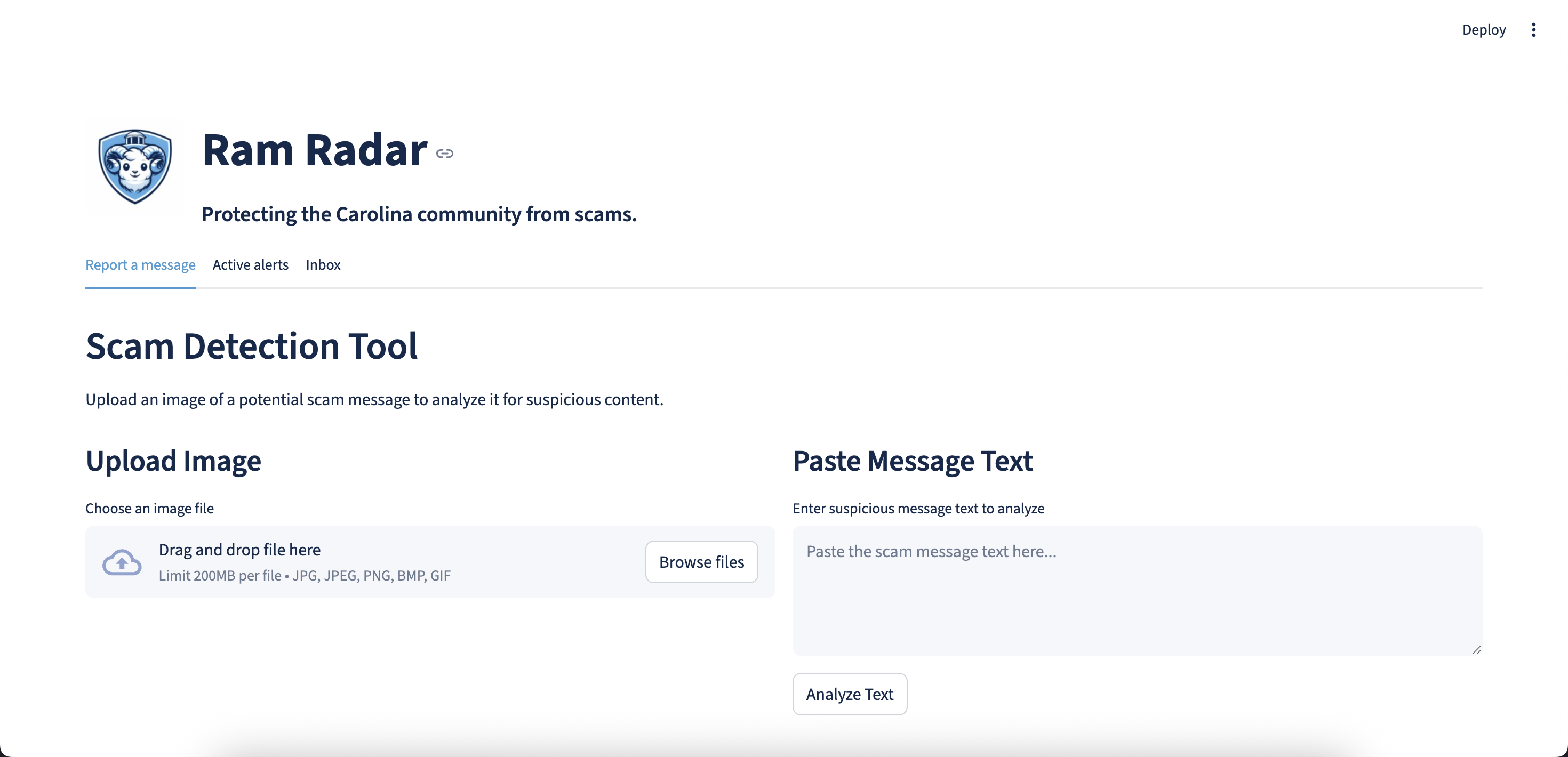
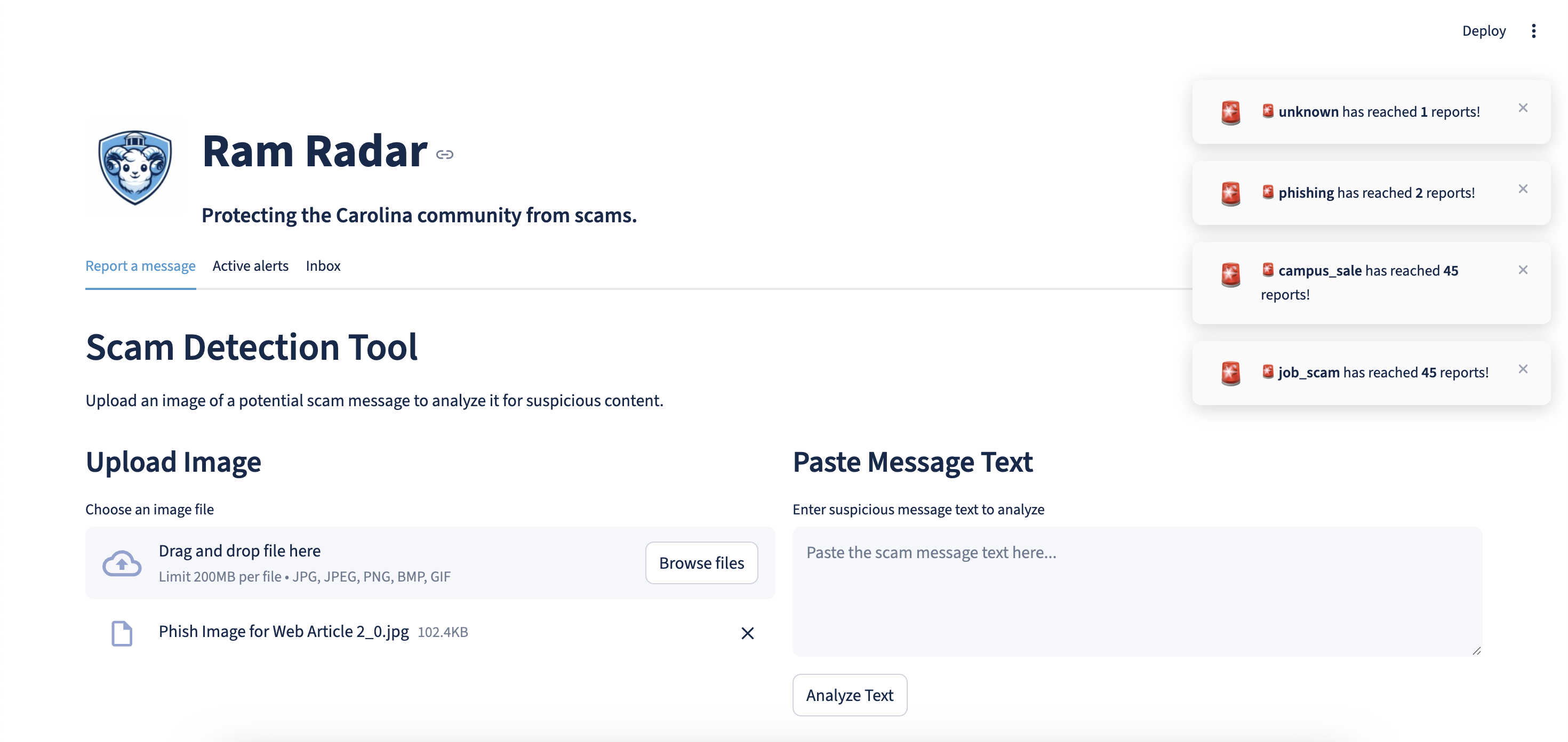
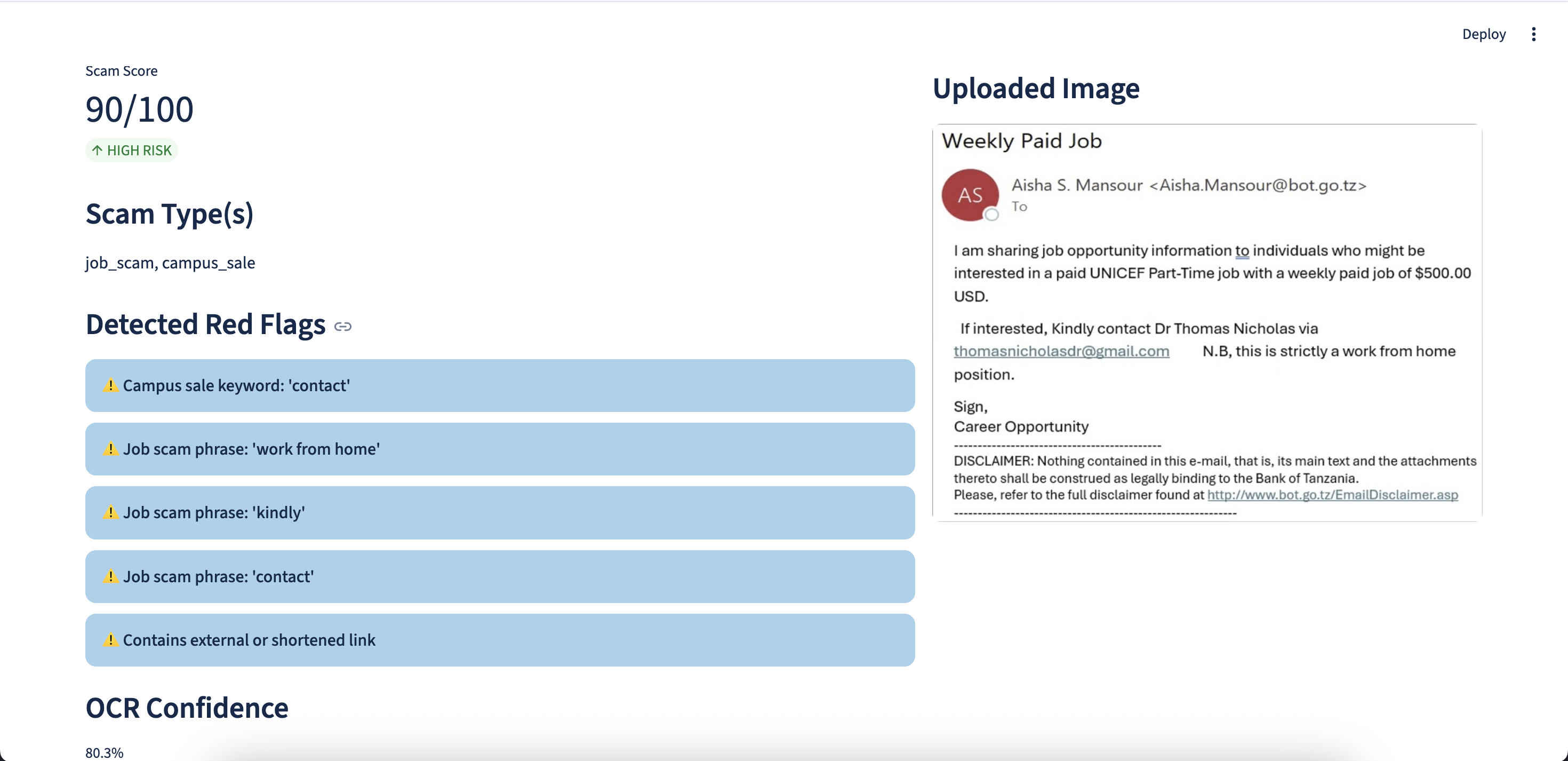
Ram Radar allows the user to upload an image or text of a potential scam they have received. It analyzes the wording and content of the scam and provides detected red flags and a scam score which categorizes the risk level of the scam. Users can view their active alerts which are past scams they have entered into Ram Radar. Lastly, there is an inbox tab which sends an alert to all users every time over 5 users encounter a scam of the same type
How we built it
We developed our platform using VS Code as our primary IDE, building the backend in Python to handle scam detection logic and data processing. For the frontend, we used Streamlit to create an interactive and user-friendly interface that allows students to easily input and analyze suspicious messages in real time. To connect the frontend and backend, we implemented a database layer that securely manages user information and stores analyzed messages, creating a smooth and structured flow between user interaction and backend processing. For image-to-text processing, we used EasyOCR to extract text from uploaded images. We then implemented a weighted scoring function that evaluates scam likelihood by identifying and assigning weights to high-risk keywords found in the extracted text.
Challenges we ran into
One of the main challenges we faced was implementing a dynamic pop-up warning or alert feature in Streamlit. While Streamlit is great for quickly building interactive applications, it has limitations when it comes to highly customizable UI components and real-time pop-up behavior. Creating an attention-grabbing alert system required workarounds that weren’t as seamless as we had hoped. In hindsight, using a frontend framework like React may have made it easier to implement more flexible and responsive pop-up notifications
Accomplishments that we're proud of
We’re especially proud of completing this project within such a tight time frame while still building a functional and thoughtful solution. Learning and implementing a new platform like Streamlit during the hackathon pushed us outside our comfort zones and allowed us to quickly bring our idea to life. We’re also proud of how well we communicated as a team, dividing tasks effectively, supporting each other through challenges, and staying aligned on our vision throughout the entire process.
What we learned
We learned how important it is to establish a clear plan and schedule from the very beginning of a project. Without defined roles, priorities, and time checkpoints, it’s easy to lose momentum or spend too much time on one feature. This experience showed us that strong upfront planning is just as important as technical execution, especially in a fast-paced environment like a hackathon
What's next for Ram Radar
In future iterations, we plan to develop a fully functional mobile application for Ram Radar that delivers real-time push notifications when scam reports exceed the alert threshold. Beyond mobile deployment, we envision integrating machine learning-based scam detection, expanding to a multi-campus network, and developing browser extensions to proactively flag suspicious messages before students engage with them. Ultimately, Ram Radar could evolve into a scalable, AI-driven early warning system protecting students from financial exploitation nationwide.
Built With
- easyocr
- python
- streamlit


Log in or sign up for Devpost to join the conversation.