-
-
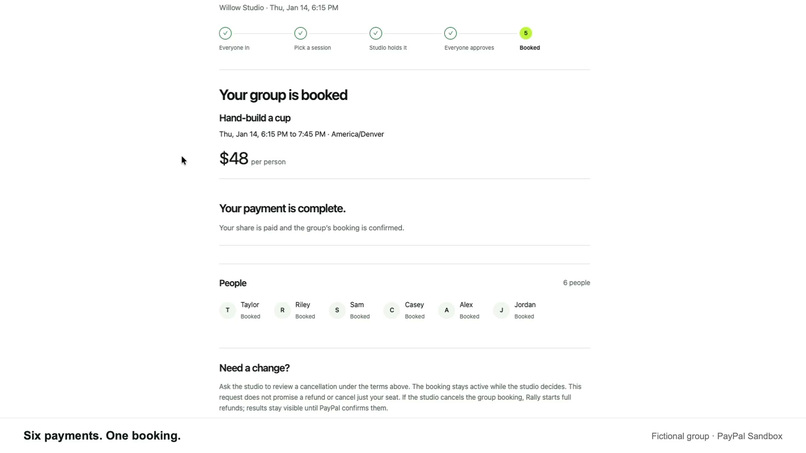
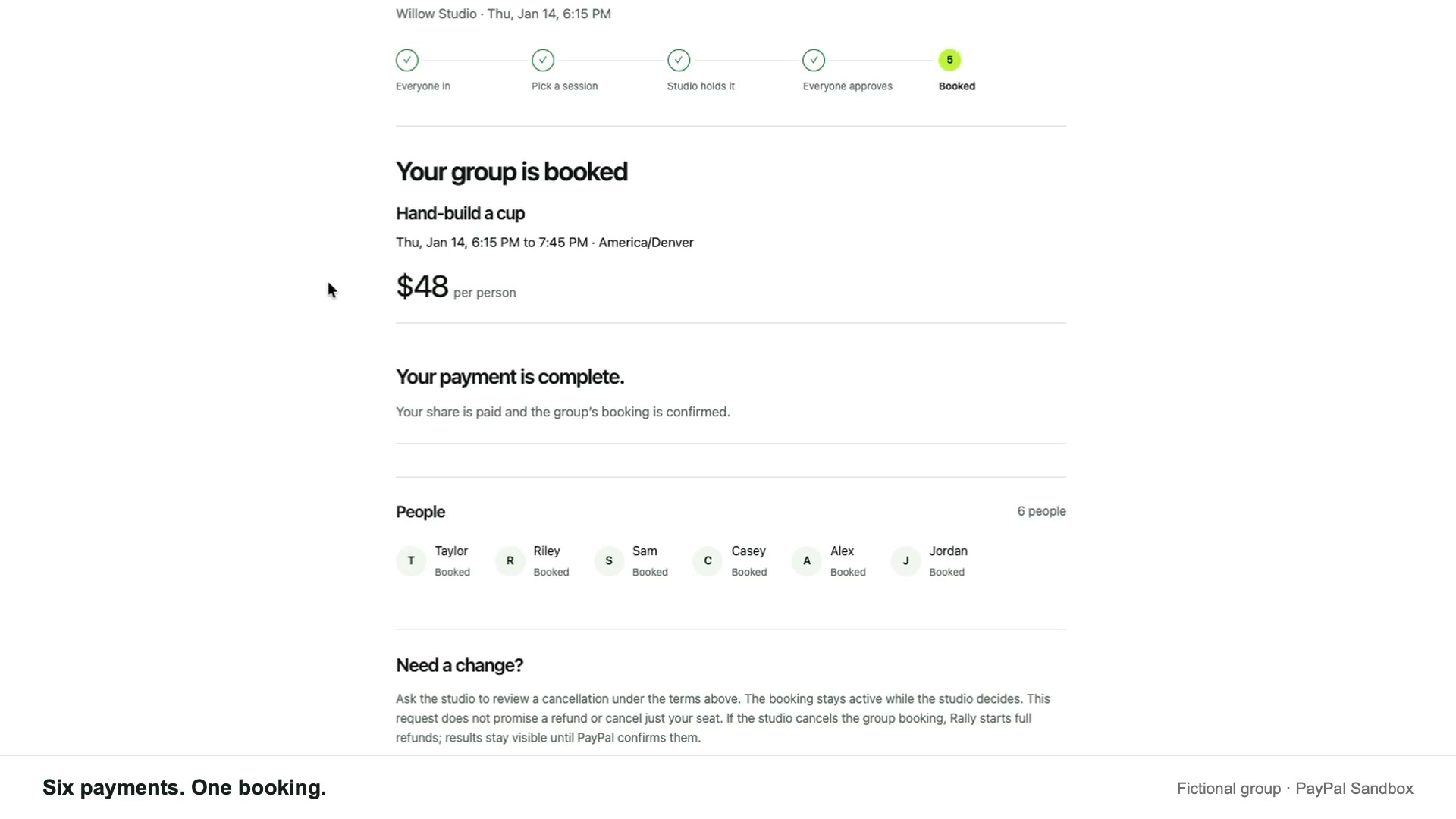
Six PayPal Sandbox buyers paid $48 each. Rally confirmed one group booking after verifying all six charges.
-
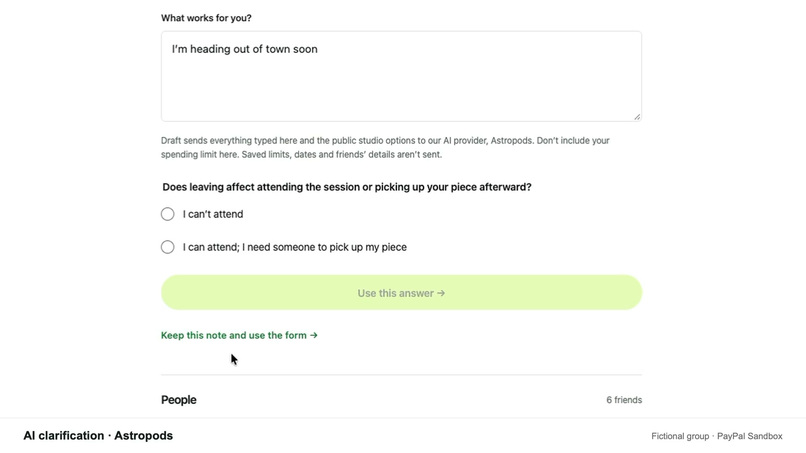
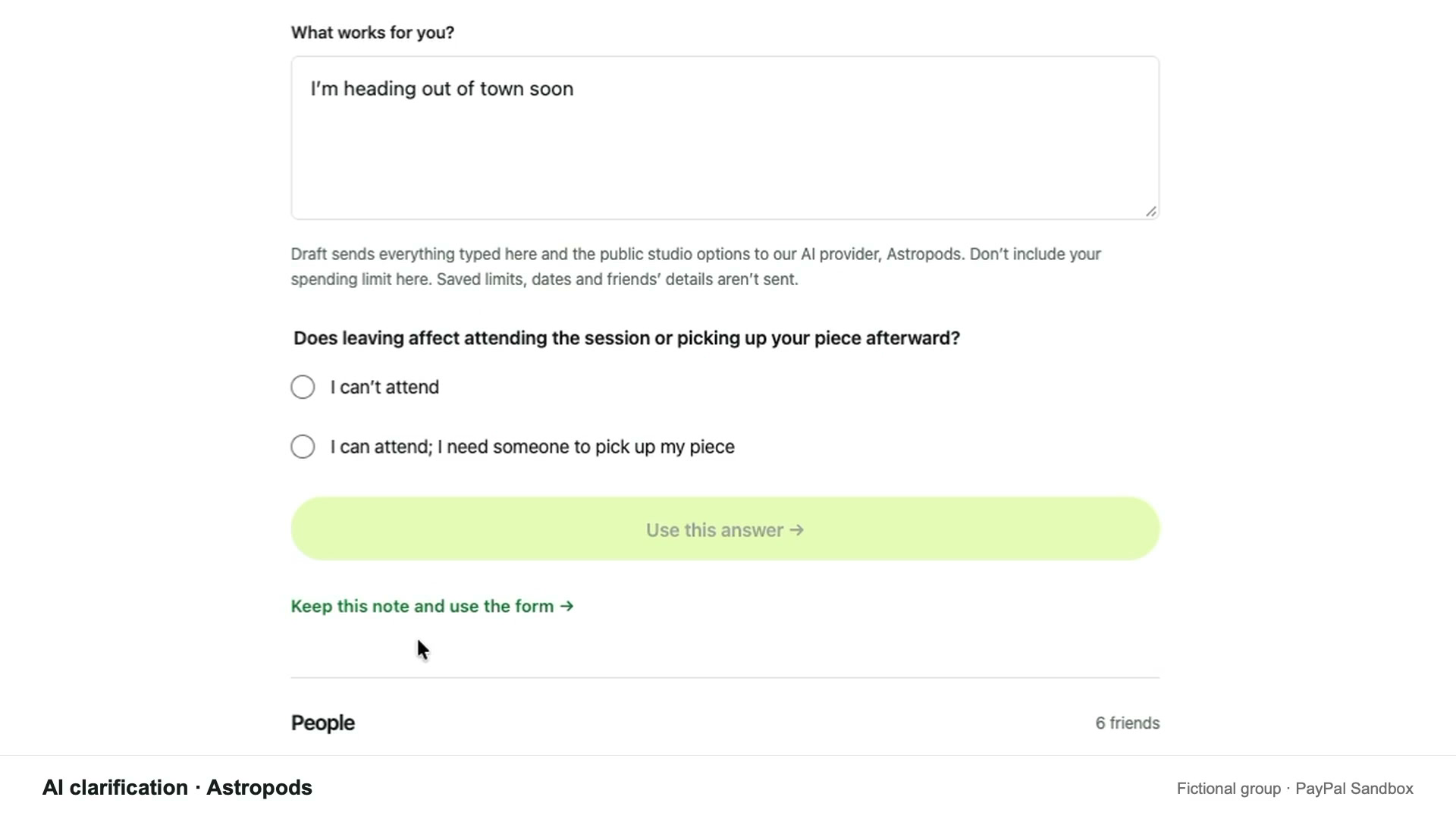
Astropods AI clarifies Sam's travel note before drafting a pickup choice for Sam to review and save.
-
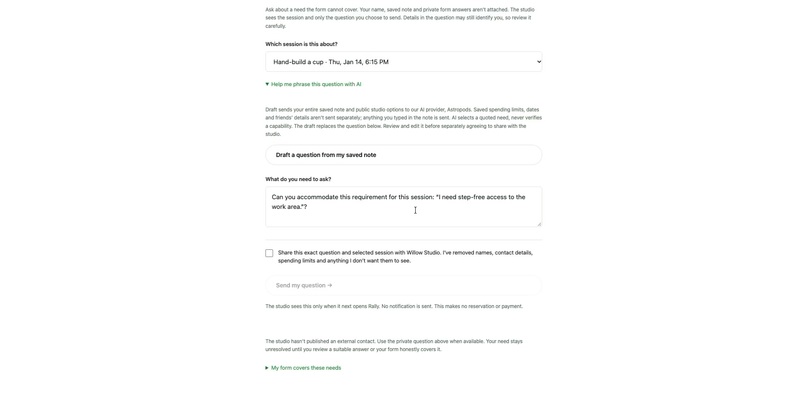
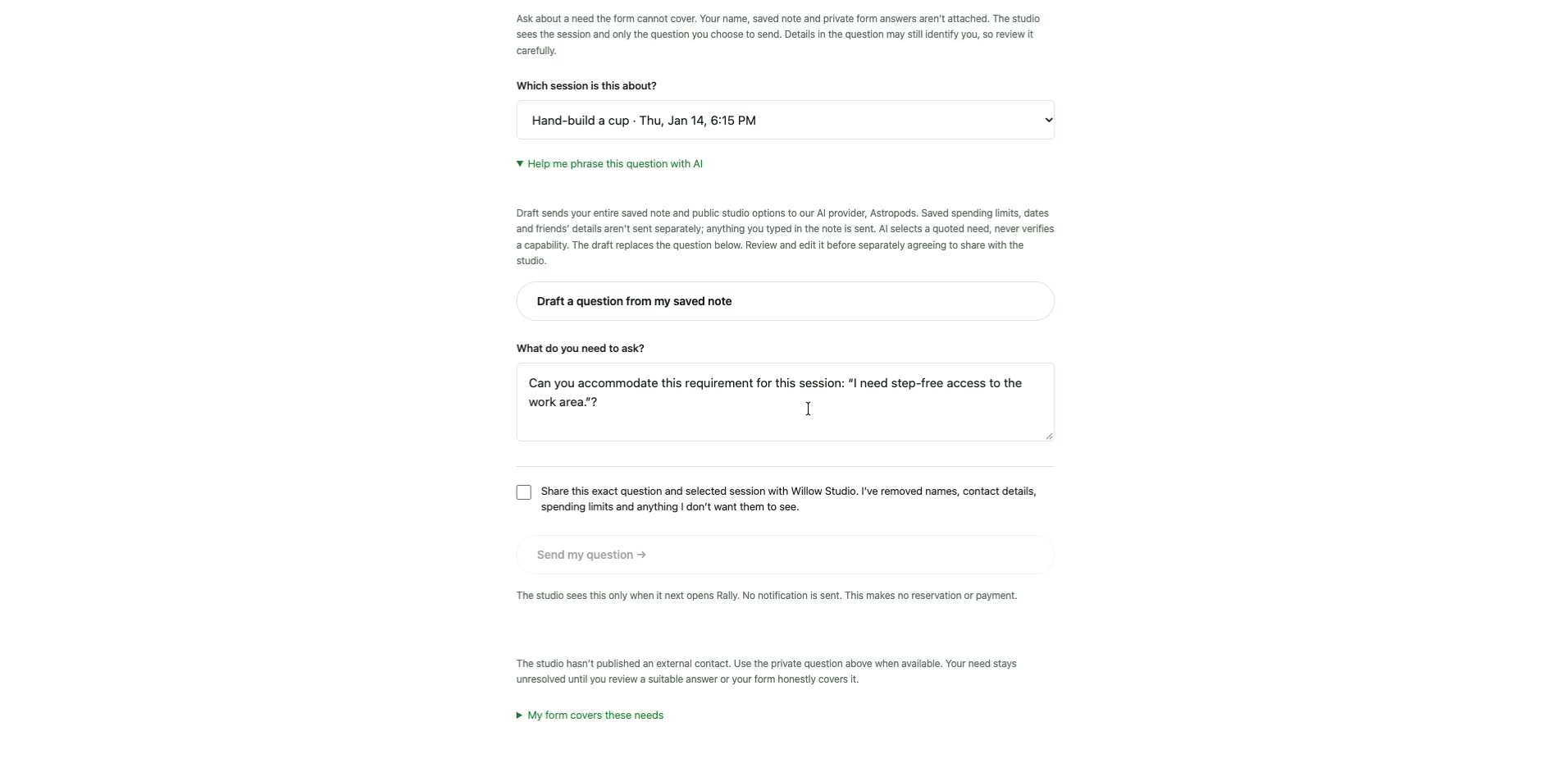
Astropods AI drafts Riley’s studio question from a quoted need. Sharing it with the studio requires separate consent
-
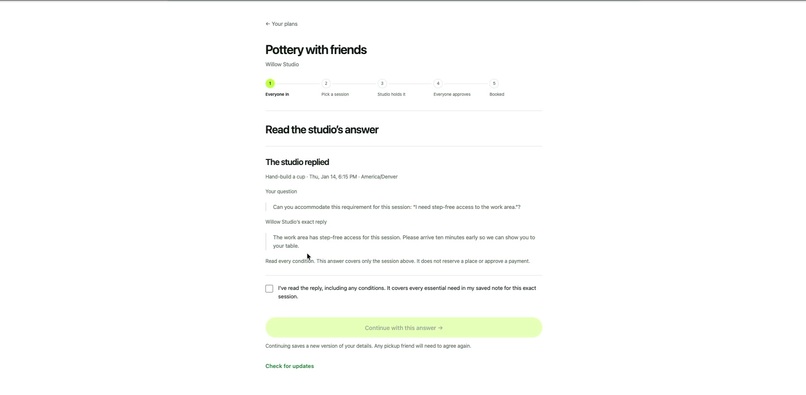
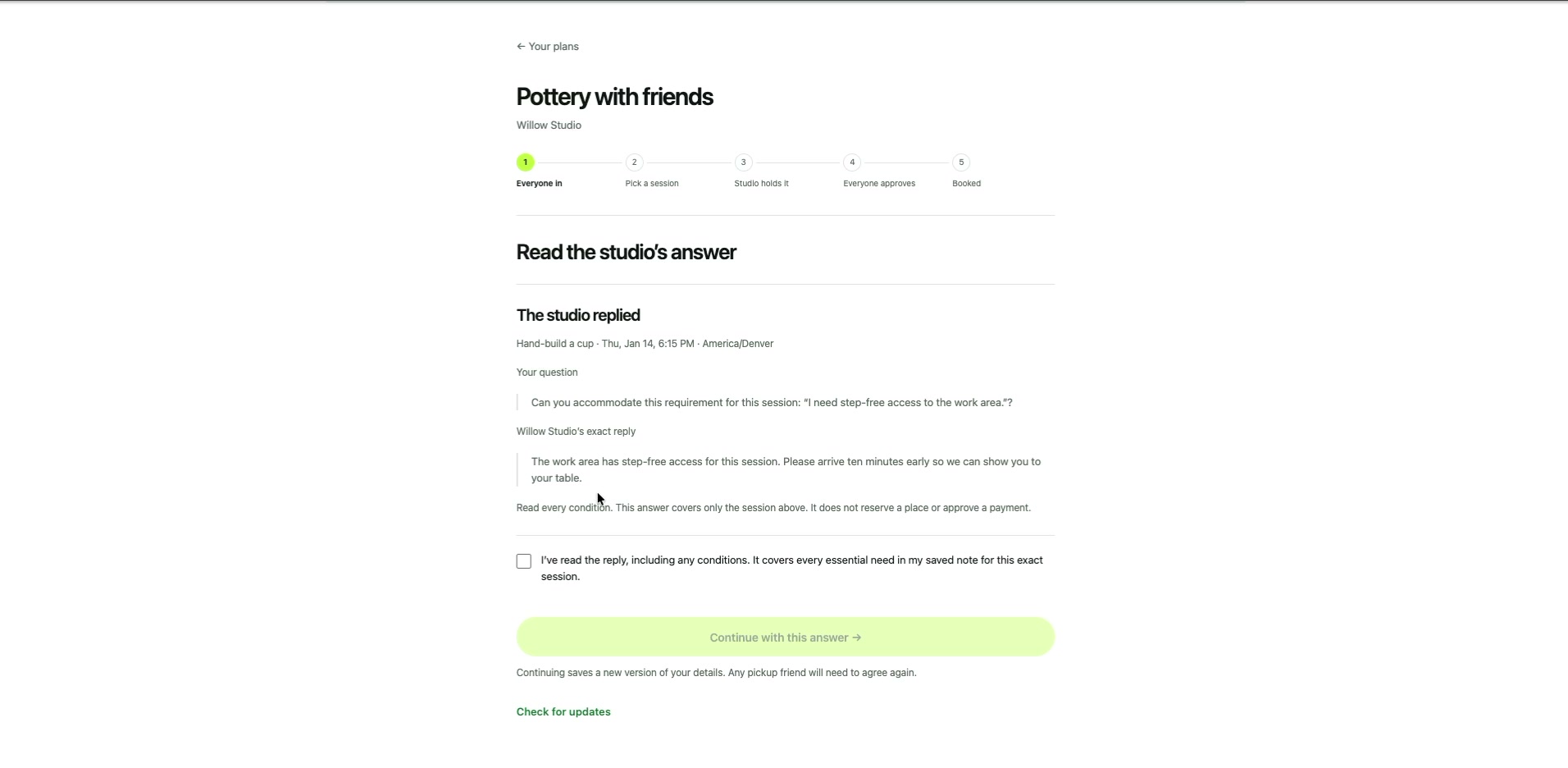
The fictional studio answers for one session. Riley reviews the exact reply and conditions before accepting.
-
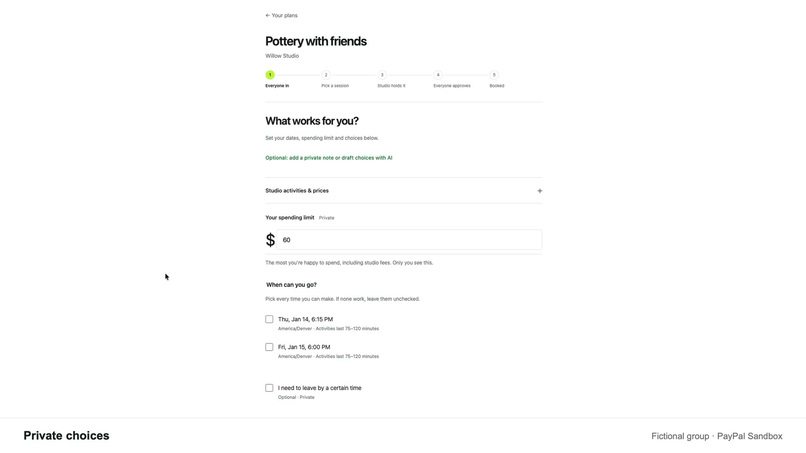
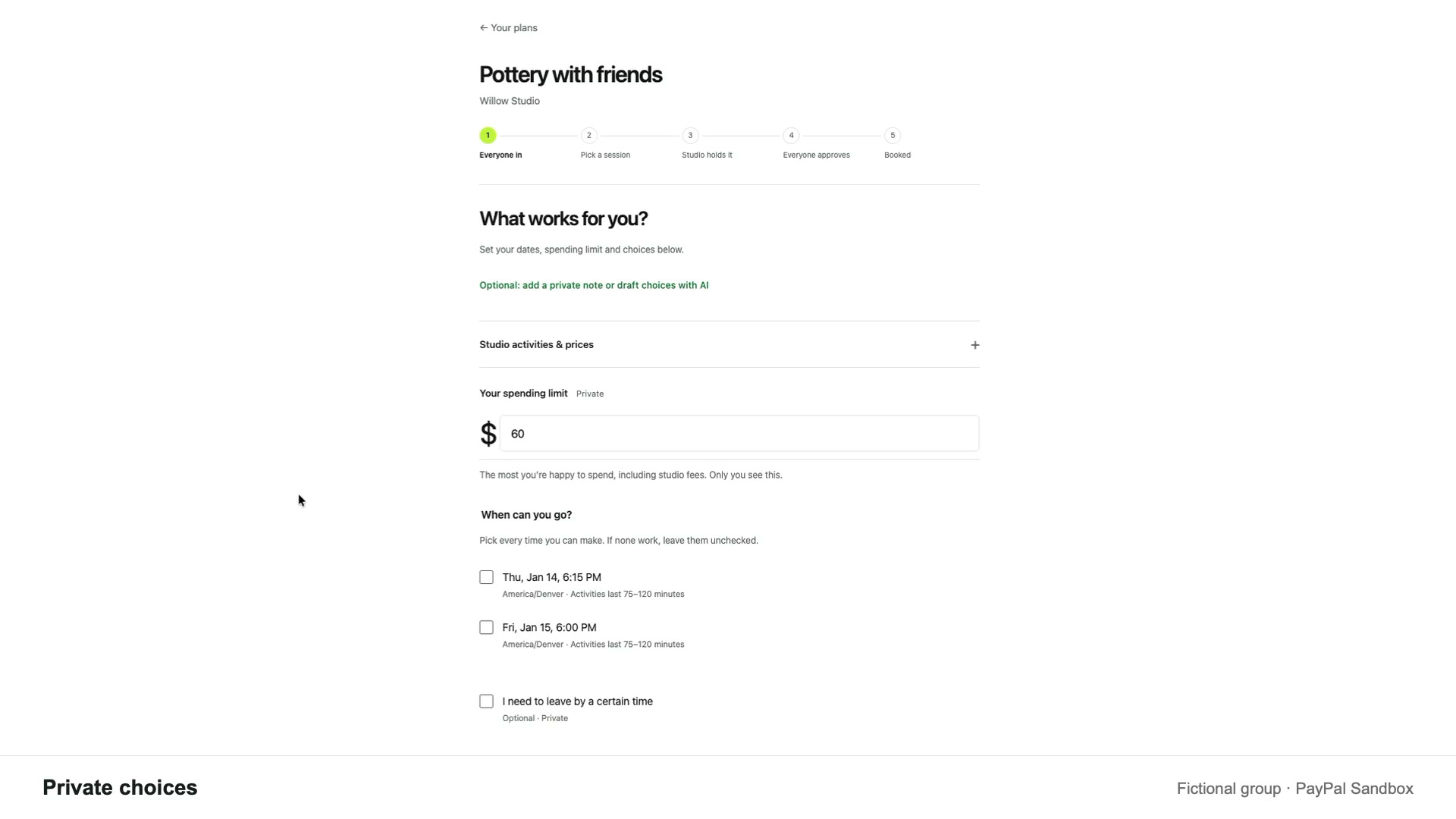
Friends set private spending limits and availability. The group sees readiness and shared session options.
-
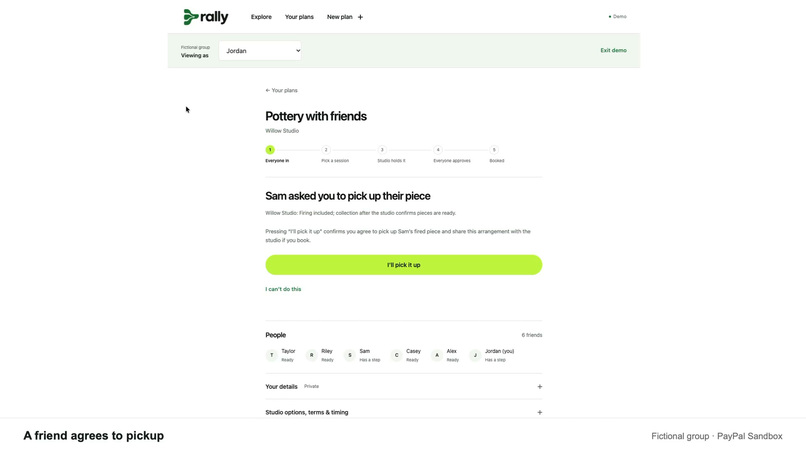
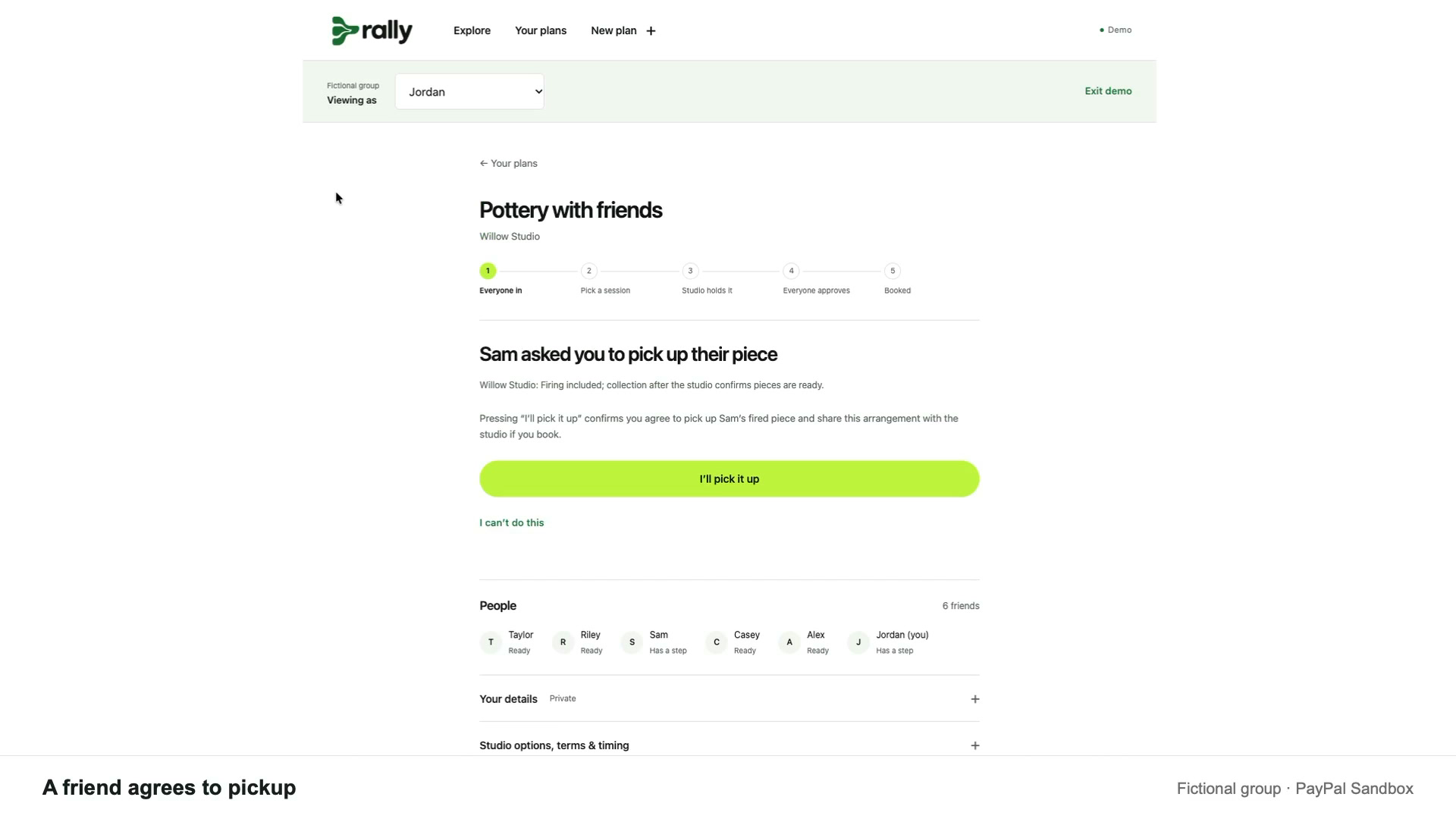
Jordan explicitly agrees to Sam's pickup request. Only Sam, Jordan and the studio see the arrangement.
-
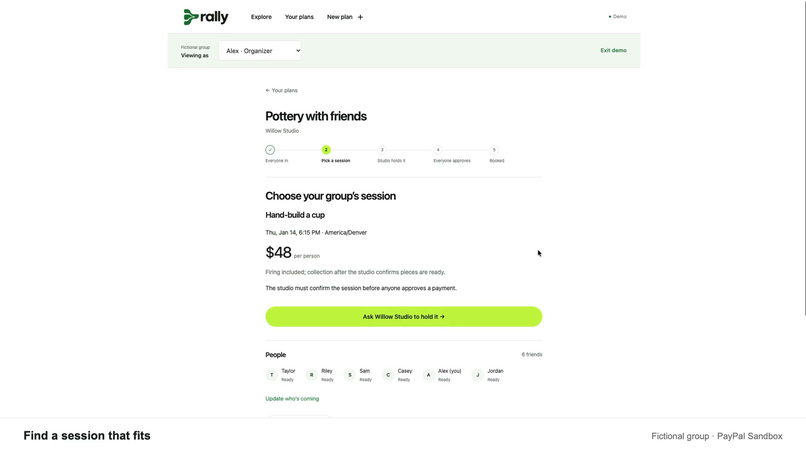
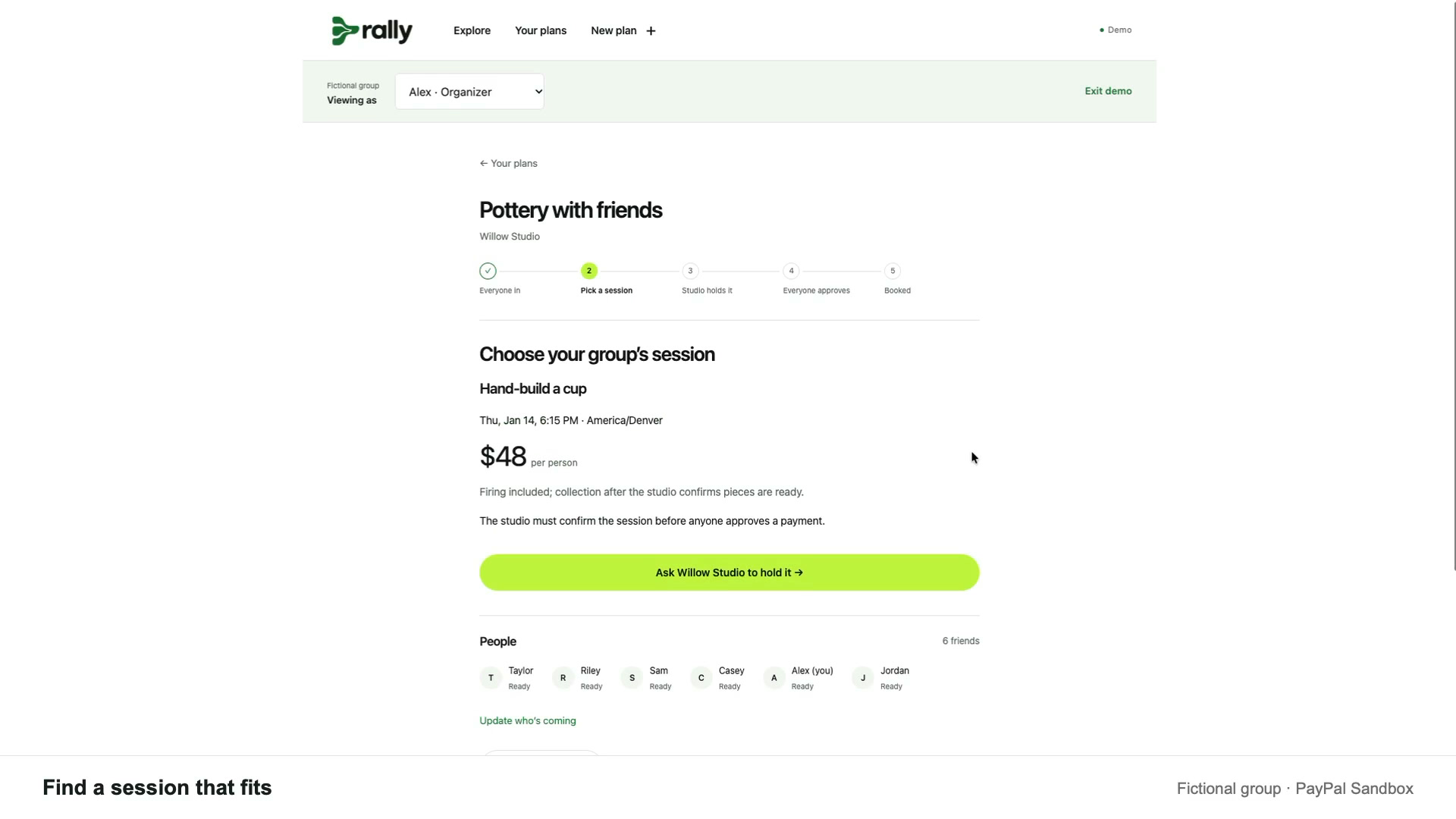
Rally checks confirmed choices against the studio catalog and finds a $48 session that fits the group.
-
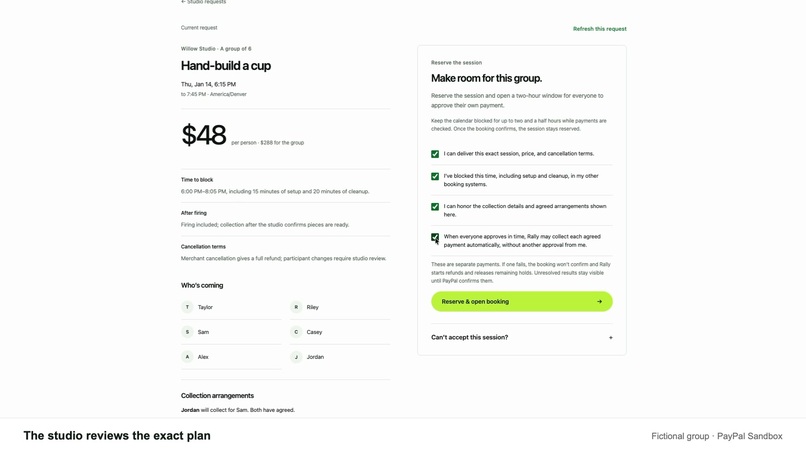
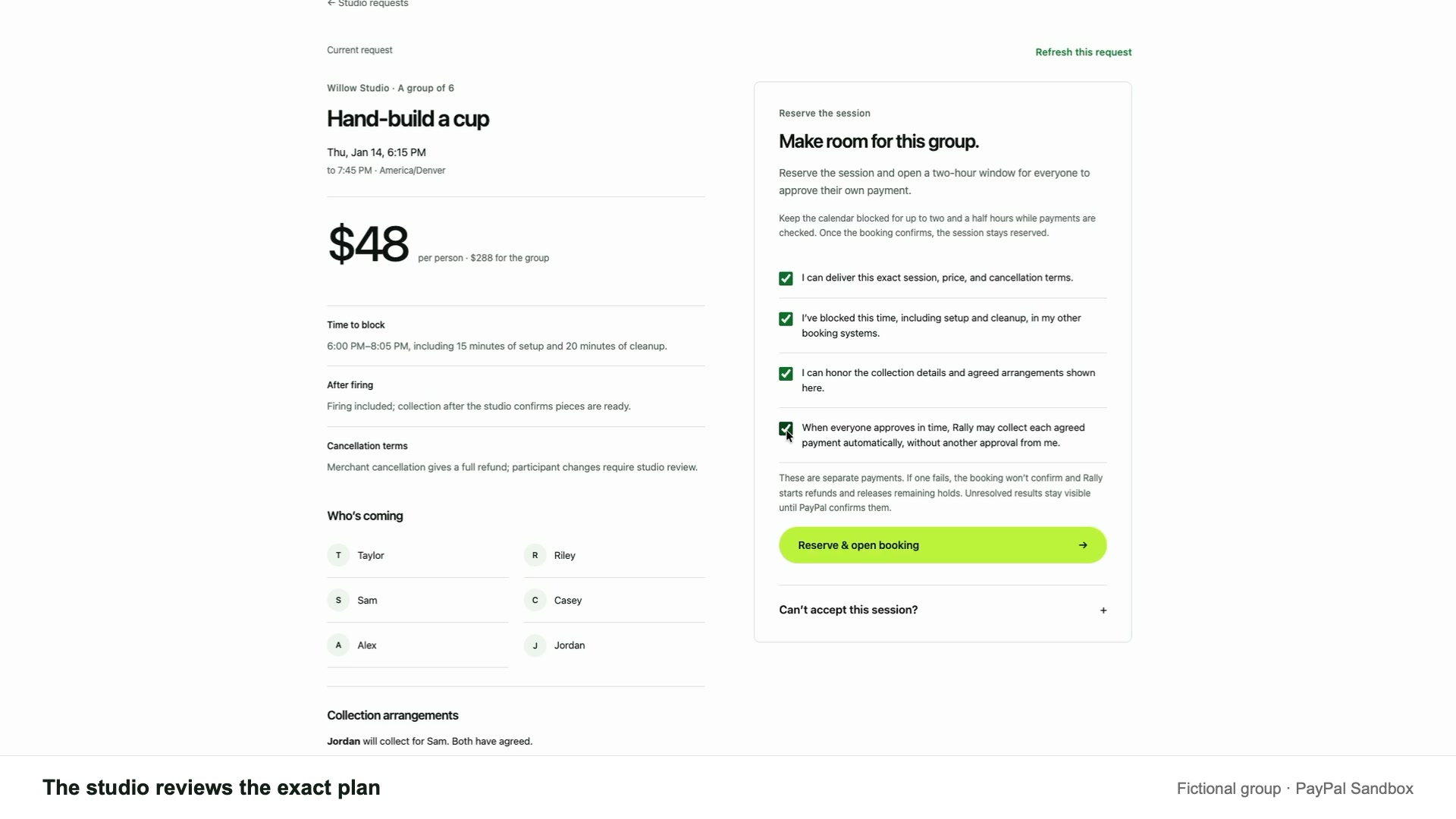
The studio confirms the price, pickup and cancellation terms before reserving time and opening a two-hour approval window.
-
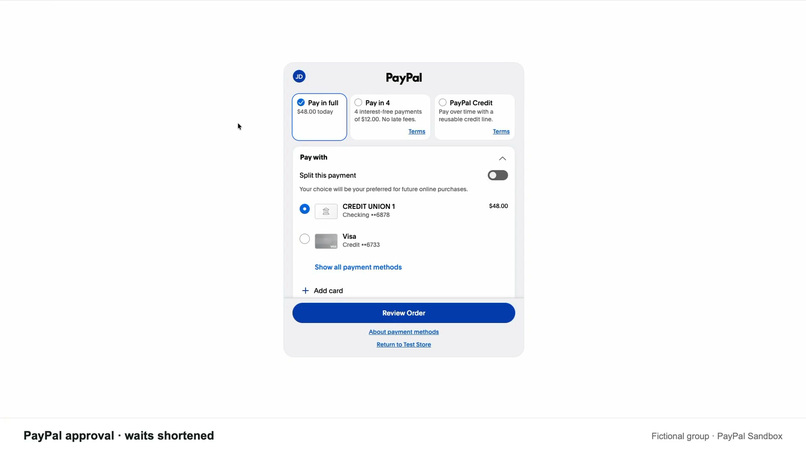
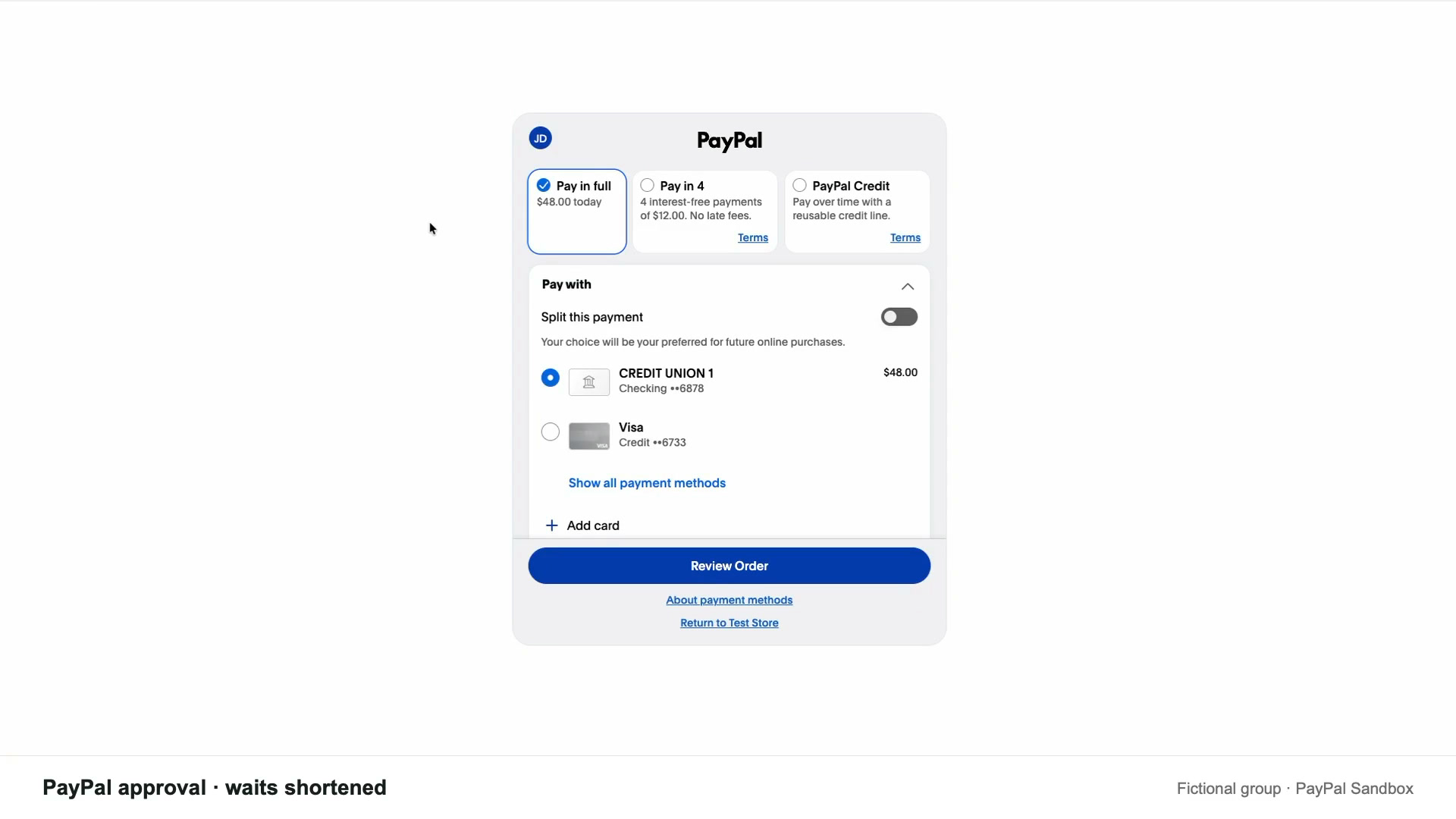
Each friend approves their own $48 hold through PayPal Sandbox. Rally verifies the result before counting approval.
Inspiration
Making plans with friends often leaves one person doing two jobs: organizing everyone and covering the bill.
Even a pottery night has hidden complications. Someone has a private spending limit. Someone is leaving town. Someone can attend but needs a friend to pick up their piece after firing. Someone needs to ask the studio about access. Those details affect whether the plan works, yet explaining them in a group chat can feel uncomfortable.
Rally started with a simple goal: help friends book together without making one person responsible for everyone’s money.
What it does
Rally turns private choices into a shared studio plan, then coordinates individual PayPal payments into one confirmed booking.
The working application supports the complete journey:
- Everyone adds their details privately. Each friend chooses availability, a spending limit and activity requirements. Rally explains conflicts in a person’s own choices privately. When the group has no shared fit, it gives a general explanation without exposing anyone else’s answers.
- AI clarifies ambiguous needs. The optional helper can draft activity and pickup choices or ask a consequential follow-up question. The person reviews the result before saving.
- Essential needs get a private path to the studio. A friend can write a question about a published session or ask AI to draft one from a literal quotation in their note. They review and explicitly share it. The studio replies with any conditions, and the friend decides whether the answer covers every essential need for that exact session.
- Friends explicitly agree to help. A pickup request needs the nominated friend’s agreement. The arrangement is visible only to the two people involved and the studio.
- The studio makes an exact offer. It reviews the session, group, price, pickup arrangements and cancellation terms, reserves the time, and opens a two-hour approval window.
- Everyone approves their own share through PayPal. Rally starts collecting only after every required authorization qualifies. The booking becomes confirmed only after every required charge is verified.
In the booking demonstration, Sam writes: “I’m heading out of town soon.” AI asks whether this prevents attendance or means Sam needs help with pickup. Sam confirms the meaning, reviews the draft and asks Jordan, who separately agrees.
The payment journey finishes with six distinct PayPal Sandbox buyers paying $48 each for one confirmed session.
The updated video also shows a separate fictional example: Riley needs step-free access. AI drafts a question, Riley explicitly shares it, the studio replies with an early-arrival condition, and Riley reviews and accepts that answer. AI never verifies the studio’s capabilities or accepts a reply on someone’s behalf.
The demo uses one configured studio sandbox merchant. Each friend pays separately; the organizer does not collect a pooled balance.
Try the prepared group · Product guides · Watch the 2:45 demo
How we built it
I built Rally with Next.js, React and TypeScript, using PostgreSQL and Supabase Auth for persistent state and authentication. The application runs on Render.
The PayPal integration uses Orders API v2 with AUTHORIZE intent and Payments API v2 for authorizations, captures, refunds, voids and resource checks. A durable payment engine records operations, protects retries with stable request identities, and reconciles uncertain outcomes. Signed webhooks are authenticated and deduplicated; a browser redirect alone never counts as payment success.
AI inference uses Claude Sonnet 4.6 through Astropods in a separate authenticated worker. It receives the consenting person’s submitted message and public studio facts. Saved budget and availability fields, other participants’ answers and payment credentials are not attached. Anything typed into the submitted message is included.
Model responses must pass structured validation and provide grounded source quotations. The worker has no database or PayPal credentials. A deterministic planner checks confirmed choices; people control disclosures, agreements and financial commitments.
I used Codex throughout implementation, test development and iteration on the product flow.
Challenges we ran into
Coordinating separate payments. Six payments can succeed or fail independently. Rally verifies each outcome before confirming the group. If collection fails partway through, it starts refunds for completed charges and requests release of remaining holds. Recovery stays visible until PayPal confirms the outcomes.
Interpreting language without inventing commitments. “I’d like to try the wheel if it isn’t expensive” must not become an unconditional requirement. Travel can affect attendance or pickup. We revised the interpretation rules, retained failed evaluation cases, and kept human review explicit.
Handling needs the form cannot represent. An access question cannot honestly be resolved by guessing or asking someone to waive it. We built a private exchange with the studio, followed by explicit owner review. Accepted answers remain bound to the exact session and expire rather than silently applying elsewhere.
Protecting privacy across roles. Friends, organizers and the studio need different information. We enforce those boundaries in server responses, including private planning conflicts, studio exchanges and pickup arrangements.
Making the next action obvious. Early screens accumulated explanations and controls. We rebuilt the plan around one next-step card per person, with completed and optional details collapsed below.
Accomplishments that we're proud of
- Completing a hosted booking with six distinct PayPal Sandbox buyers, six individual $48 payments and one verified group confirmation.
- Building recovery for partial failures and lost responses, exercised in separate local-service tests using actual PayPal Sandbox operations.
- Demonstrating both AI clarification and an AI-assisted private studio exchange working in the live application.
- Preserving explicit consent when a question is shared, a studio answer is accepted, a pickup friend agrees or a payment is approved.
- Passing 274 automated tests and 93 mutation guards at the November 4 implementation checkpoint.
- Delivering product guides, complete source code and a recorded end-to-end demonstration.
Implementation and verification evidence
What we learned
The difficult part of group commerce is keeping everyone’s understanding and commitments aligned as the plan changes.
A structured AI response still needs evidence and review. A studio answer still needs the person’s acceptance. A payment approval still needs provider verification.
Those distinctions shaped both the architecture and the interface. Reliability also means telling someone what happened, what remains unresolved and what they can do next.
What's next for Rally
The next milestone is observing independent friend groups and a real studio using Rally without coaching.
Those trials will test the transitions that matter most: opening an invitation from a chat app, completing email sign-in, asking about an essential need, understanding an offer, and returning to approve a share within the payment window.
The current release uses a fictional studio and PayPal Sandbox. It does not take live money or reserve real studio capacity. Production payments and broader activity support would follow merchant validation and the appropriate production setup.
The goal stays focused: book together, keep personal choices private, and let everyone pay their own share.
Built With
- artificial-intelligence
- astropods
- claude-sonnet-4-6
- next-js
- node.js
- paypal
- paypal-orders-api
- paypal-payments-api
- postgresql
- react
- render
- resend
- supabase
- typescript
- zod
