RakthSetu – Bridging Lives with AI
Inspiration
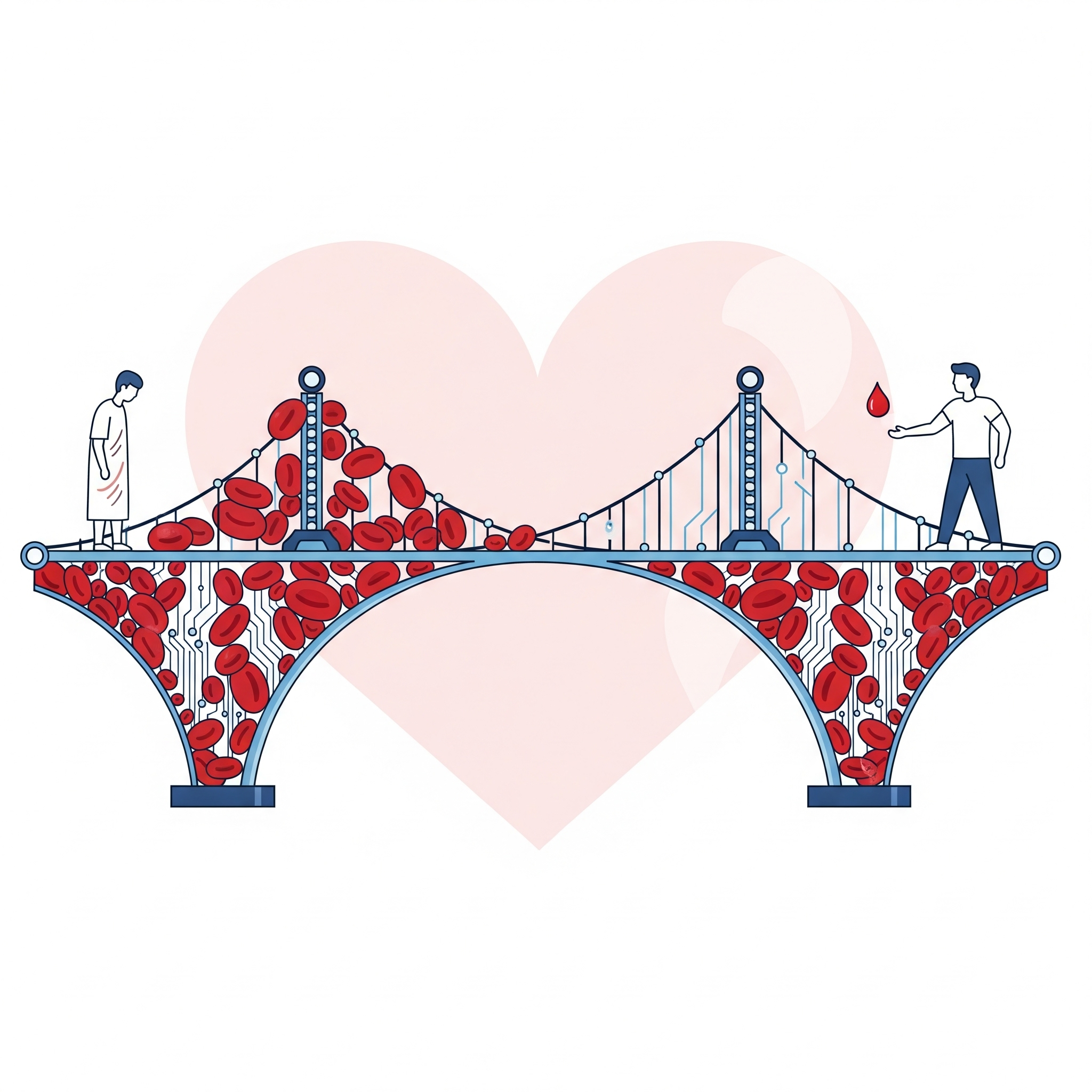
We created RakthSetu after seeing how hard it is for Thalassemia patients, especially in underserved areas, to get blood on time. Families often face stressful, last-minute searches for donors, risking missed treatments. We felt AI could help but it’s barely used in this space. So we imagined RakthSetu: a simple, supportive platform that predicts when patients need blood, finds reliable donors nearby, and brings people together by recognizing volunteers who step up to help.
What it does
RakthSetu is a conceptual AI-powered platform that aims to:
- Predict blood transfusion needs of Thalassemia patients using historical data.
- Find nearby compatible donors, ranked by availability and past reliability.
- Send automated, anonymous requests to donors via SMS/WhatsApp, with fallback options.
- Provide a multilingual chatbot that educates families and reminds them of transfusion schedules.
- Evaluate symptoms reported by patients and escalate urgent cases to doctors.
- Create a “Care Circle” of volunteers and social workers who support patients locally.
- Offer a dashboard for health workers to track donor trends, shortages, and patient needs.
- Integrate with existing systems like e-RaktKosh for real-time data sync and efficient donor management.
- Support volunteer engagement by awarding badges and visibility to those who assist in donation camps and patient care. Building a community of recognized, active contributors.
- It will be designed as a modular, API-driven system, which means it can easily scale to:
- Other regions, blood banks, and NGOs across India.
- Additional conditions like Hemophilia or emergency blood needs.
- Plug into new or existing platforms as a standalone service or integrated tool.
How we will built it
Currently, RakthSetu is in the ideation and planning phase. We’ve worked on:
- Defining the core user journeys: patient, donor, doctor, and volunteer.
- Designing the AI logic for transfusion prediction and donor ranking.
- Planning a modular architecture using microservices, with integration with e-RaktKosh and similar systems.
- Drafting chatbot conversation flows in many regional languages like Hindi and Marathi, for Thalassemia education and reminders.
- Mapping out the dashboard interface and donor alert system. 6.Outlined a scalable deployment strategy, starting with a standalone prototype and expanding through API integrations and partnerships with hospitals, NGOs, and government platforms.
What we will learn
We learned that AI isn’t just for predictions, it’s about taking timely action and empowering users, especially in healthcare. Solutions must be empathetic and accessible, built for vulnerable communities. To succeed, they need seamless integration with existing systems, which requires open APIs, trust, and collaboration. Finally, designing for scale from the start ensures the idea can grow and make a lasting impact.
Future Plans for RakthSetu
Next, we plan to build a working prototype of the chatbot and donor matching system, along with a basic AI model for donor ranking. In the future, we can aim to expand RakthSetu to support other use cases like Hemophilia care and emergency transfusions.
Built With
- agenticai
- apis
- clustering
- dbscan
- dialogflow
- docker
- fastapi
- firebase
- gcp
- gemini
- google-maps
- gpt-4
- k-means
- kubernetes
- llama
- llm
- mongodb
- node.js
- postgresql
- python
- react.js
- whatsapp-business-api
- xgboost


Log in or sign up for Devpost to join the conversation.