Our Inspiration
Our journey began with a deep respect for the quiet resilience of thousands of Thalassemia warriors across India. Each day, they face an exhausting routine marked by constant anxiety and a frantic search for blood required for their bi-weekly transfusions.
What struck us most was the heartbreaking gap between urgent need and the availability of willing donors. This reality sparked our mission—not to simply build another app, but to create a bridge of hope.
We envisioned using technology as a tool to transform fear into confidence. Our aim: to replace unpredictability with assurance, and to gift these courageous families something priceless—time, and peace of mind.
What it does
Rakt-Setu is an intelligent, real-time platform designed to connect Thalassemia patients in urgent need of blood with voluntary donors—eliminating delays, stress, and manual effort.
It replaces outdated phone-call-based coordination with a fast, automated, and dependable system through two integrated components:
1. AI-Powered WhatsApp Chatbot (For Patients & Donors)
This is the front-facing core of the system—designed for simplicity, speed, and accessibility.
For Patients: Families can initiate a chat, register a blood request by sharing vital details (blood group, units needed, hospital location), and instantly receive confirmation. The system begins the donor search right away.
For Donors: Volunteers can register in under a minute. When a verified need matches their profile, they get notified automatically. A quick "YES" or "NO" response lets them choose to help—no phone calls, no pressure.
2. Central Admin Dashboard (For the NGO - Blood Warriors)
This is the mission control center—giving the organization full visibility and control.
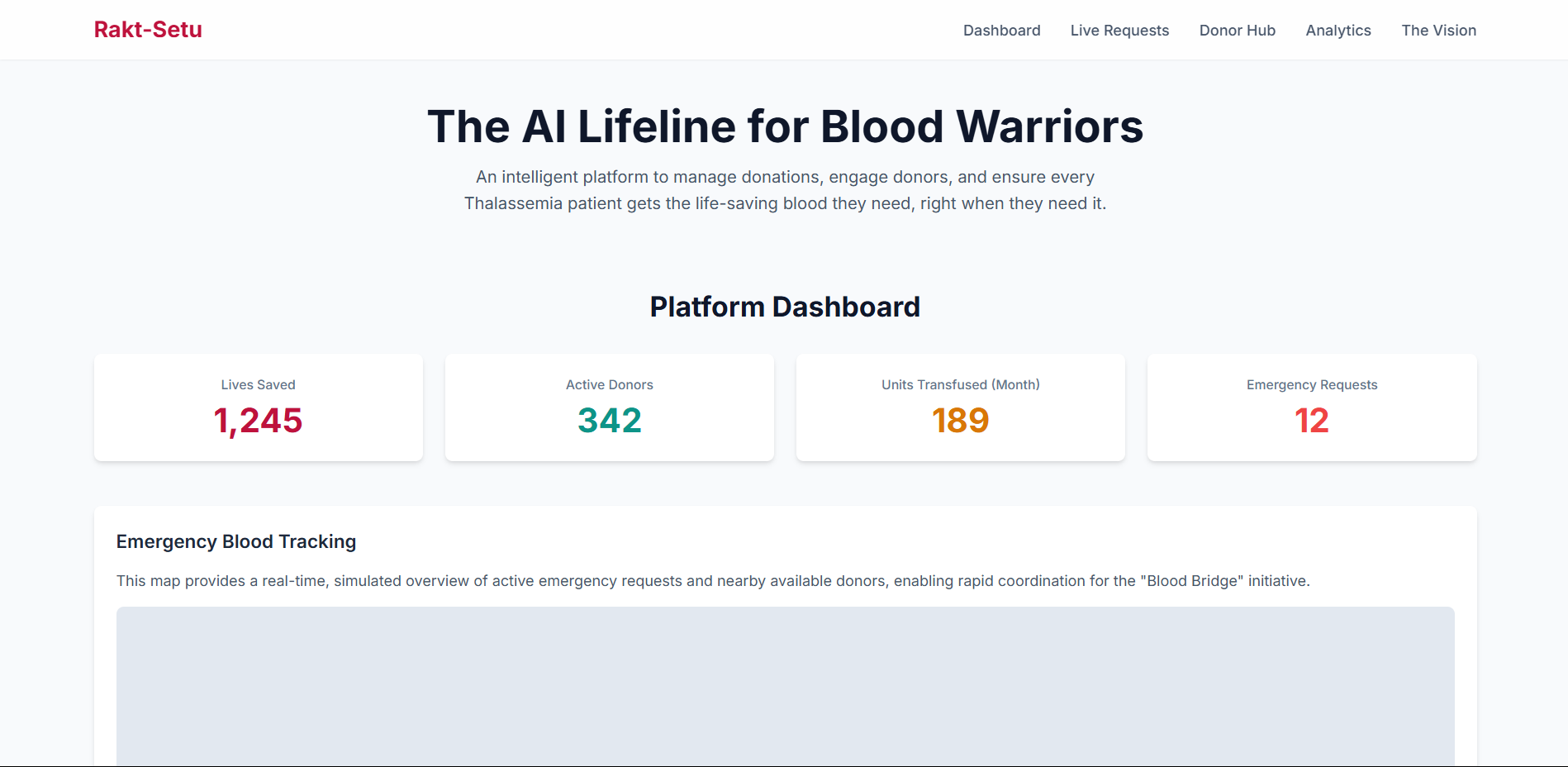
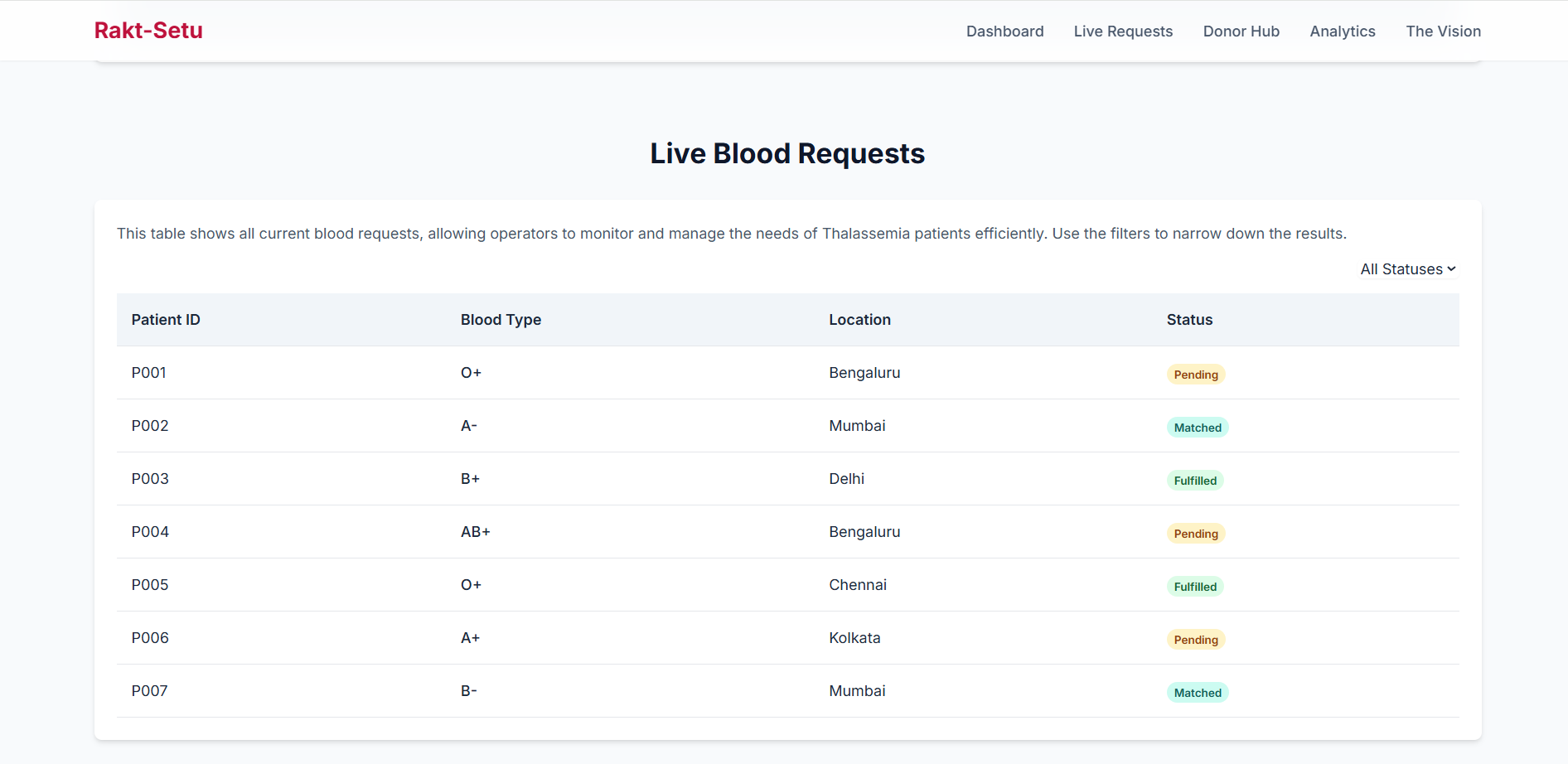
Real-Time Monitoring: View active blood requests, their current status (pending, matched, fulfilled), and a live donor map.
Smart Matching: The system auto-matches patients with donors, but admins can intervene for critical or complex cases.
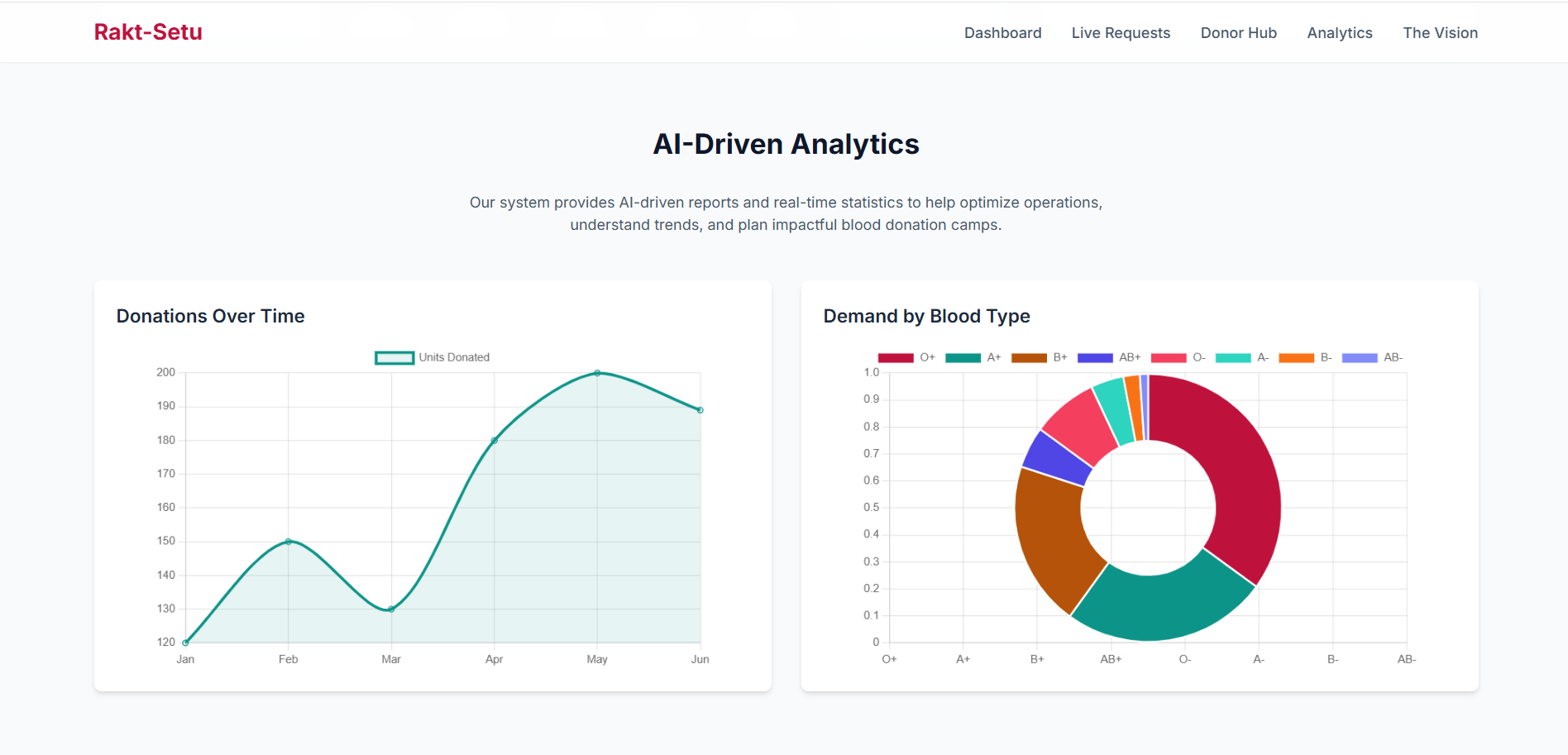
Data-Driven Insights: Analytics help track donation trends, high-demand zones, and optimize awareness campaigns and blood drives.
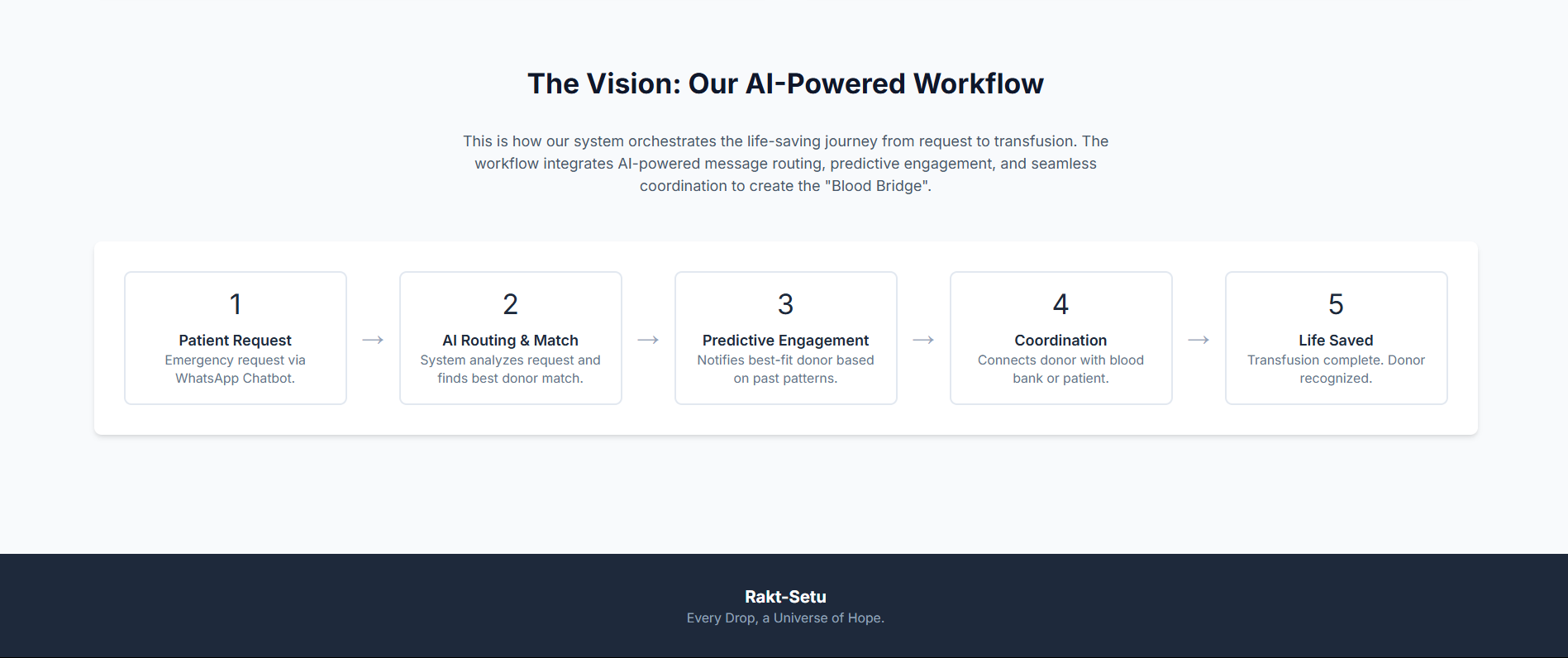
In short, Rakt-Setu automates the entire life-saving workflow—from request to donor match—ensuring help arrives faster, smoother, and more reliably than ever before.
How we built it
Rakt-Setu is built on a robust hybrid microservices architecture, combining the flexibility of the MERN stack with a dedicated Python-based AI service. This architecture enables us to deliver a responsive, scalable, and intelligent system capable of supporting a life-saving ecosystem.
1. AI-Powered WhatsApp Chatbot
Built with Node.js (Express.js) & Langchain
This is the user-facing component that delivers fast and intuitive interaction via WhatsApp, using Twilio APIs and a Node.js backend.
Key Features:
- Emergency Blood Request System Patients can initiate urgent blood requests instantly.
- Blood Bridge Coordination The backend quickly finds and alerts suitable donors based on match criteria.
- AI-Driven Message Routing Natural language understanding helps the chatbot identify user intent such as “request blood,” “register as donor,” or “check status.”
- Automated FAQ Assistant An NLP module handles common queries about Thalassemia and blood donation, reducing manual admin effort.
2. Predictive AI Service
Built with Python & Flask
This is a separate microservice built for AI computation, called directly from the main backend.
Key Features:
- Predictive Donor Engagement An LSTM-based neural network predicts when a patient will need their next transfusion, based on historical data. This allows the system to notify and engage potential donors before the need becomes critical.
3. Admin Dashboard: Blood Management System
Built with React & MongoDB
Designed for NGO admins (Blood Warriors), this platform acts as a central control panel for the entire system.
Key Features:
- Volunteer/Donor Dashboard Interactive UI showing live activity, donor availability, and patient data.
- User Management Full control over registered patients, donors, and pending cases.
- Real-Time Tracking & Analytics Monitor request status (pending, matched, fulfilled) and blood delivery pipelines.
- AI-Powered Reports Aggregated insights on donation trends, regional demand, and campaign outcomes.
4. Donor Gamification & Recognition Engine
Integrated with Node.js backend and React dashboard
To boost engagement and long-term donor retention, we implemented a reward-driven experience.
Key Features:
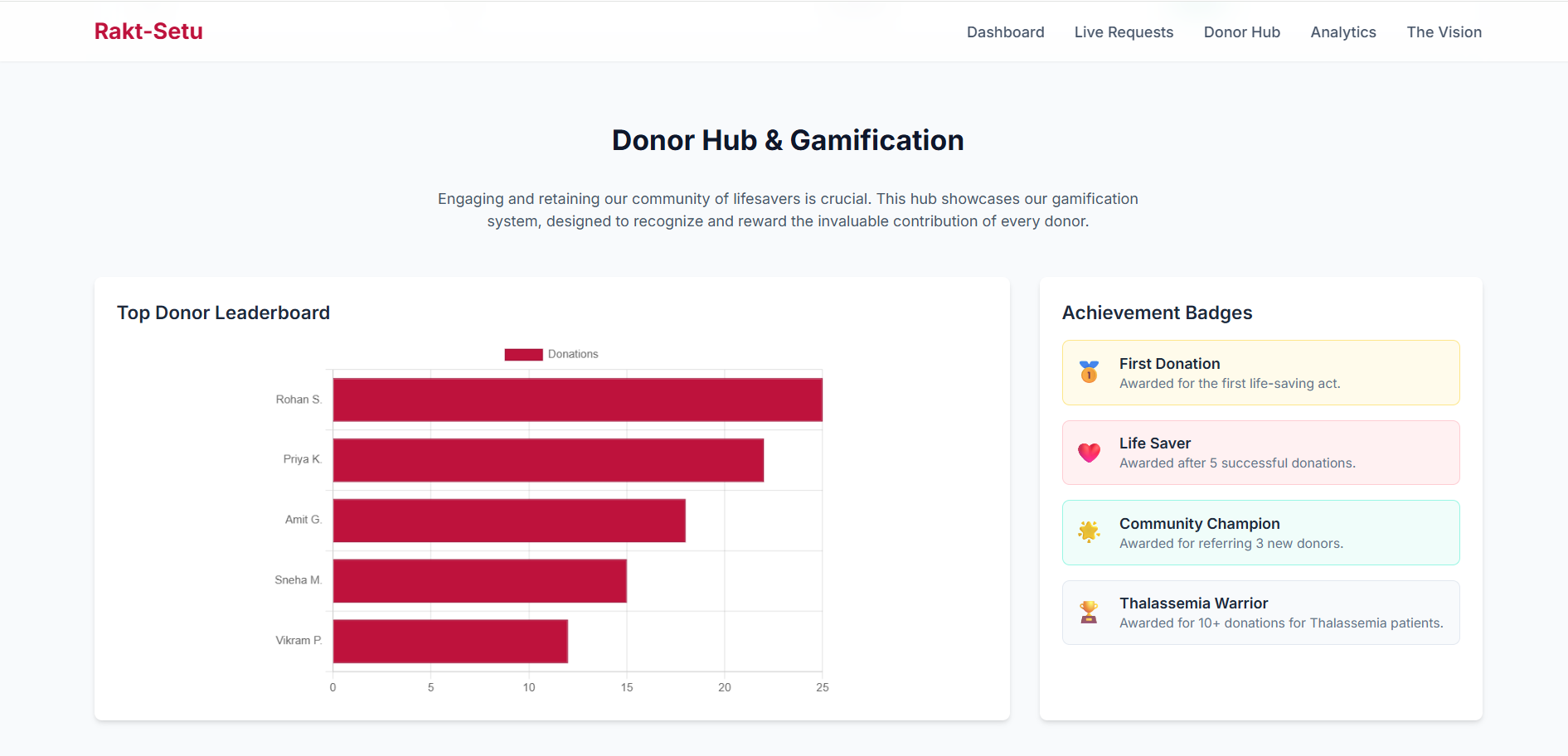
- Gamification Mechanics Points, badges, milestones, and leaderboards foster a sense of achievement.
- Verifiable Recognition Donors receive digital certificates after successful donations. Each certificate is issued as a blockchain-logged token, ensuring authenticity and giving donors permanent proof of their impact.
Together, these components form a fully integrated, AI-enabled, and user-friendly system that automates everything—from a patient’s first message to a successful blood transfusion—ensuring speed, reliability, and transparency every step of the way.
Challenges we ran into
Hybrid Architecture: Managing smooth, low-latency communication between our Node.js app and Python AI service was tricky. We had to design a robust internal API to prevent failures.
Real-Time Sync: Keeping the chatbot, backend, and dashboard perfectly updated without race conditions required careful state management.
Cold Start for AI: With limited real-world data, we trained the LSTM model on simulated datasets and made it adaptive for future learning.
Empathetic Chatbot Design: Creating a chatbot that feels calm and supportive—while collecting all required info—took several UX design iterations.
Meaningful Gamification: We focused on making badges, points, and blockchain-based certificates feel purposeful, not gimmicky, to foster genuine community spirit.
Accomplishments that we're proud of
Built a Fully Integrated System: We turned a complex vision into a working prototype—seamlessly connecting the chatbot, dual backend services, database, and dashboard. A patient’s request can now be matched with a donor in real-time.
Designed for Empathy & Accessibility: By leveraging WhatsApp, we ensured broad accessibility. The chatbot was carefully crafted to be simple, calming, and intuitive, making tech feel human during high-stress moments.
What we learned
Leveraging Hybrid Architectures: We gained deep experience in designing microservices that combine Node.js for handling high-concurrency user tasks and Python for advanced AI logic. It taught us the value of modular, scalable system design.
Mastering Real-Time Synchronization: Building a life-critical, real-time platform sharpened our skills in state management and data accuracy—ensuring every user sees the correct status instantly, across all components.
What's next for Rakt-Setu
Launch "BloodChain" for Trusted Recognition: We'll roll out a blockchain-based system to issue verifiable digital certificates for donors, offering immutable proof of impact and boosting trust and motivation.
AI-Powered Camp Planner: A smart dashboard feature will analyze live blood stock and demand (via e-RaktKosh integration) to suggest where and when to host donation camps for maximum impact.
"Last-Mile" Logistics Engine: We'll develop a module to manage volunteer riders, featuring smart dispatch, live GPS tracking, and real-time ETAs—bringing transparency and trust to the final delivery step.
Built With
- amazon-web-services
- css
- docker
- e-raktkosh
- express.js
- flask
- github-actions
- google-maps
- html
- javascript
- keras
- langchain
- mongodb
- mongoose
- natural-language-processing
- node.js
- openai
- python
- railway
- react.js
- redis
- redux
- render
- tensorflow
- twilio-whatsapp-api
- typescript
- vercel


Log in or sign up for Devpost to join the conversation.