-
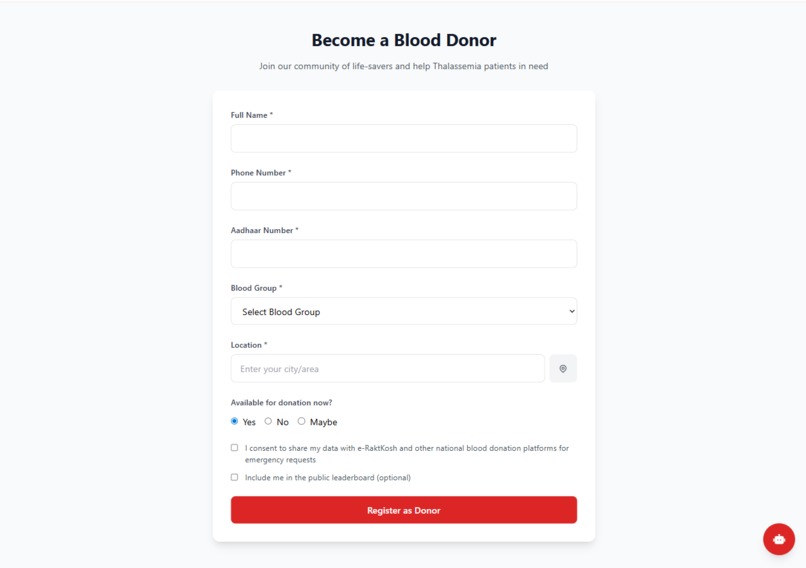
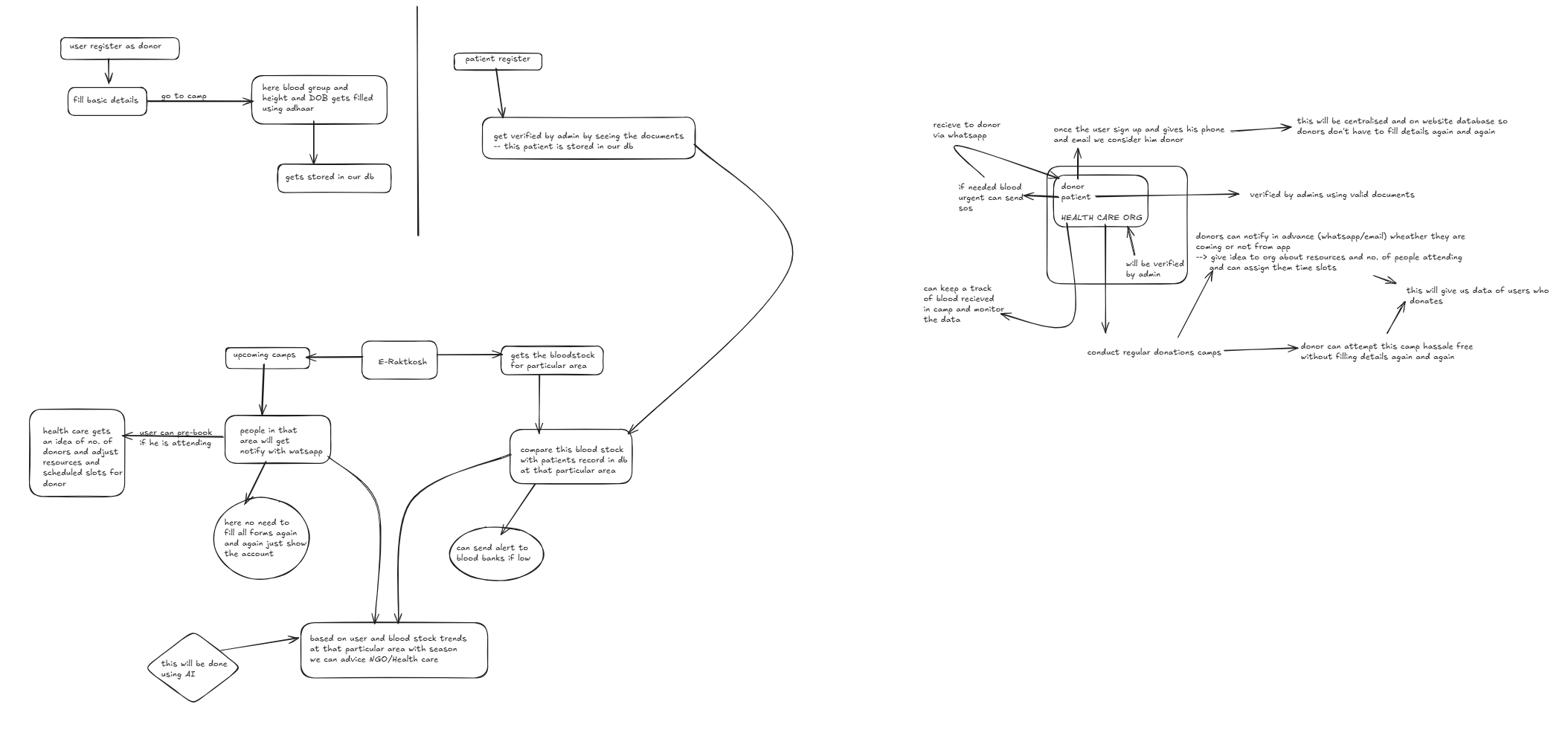
Donors can self-register via a simple form, creating a centralized profile to avoid repeatedly filling details at every donation camp.
-
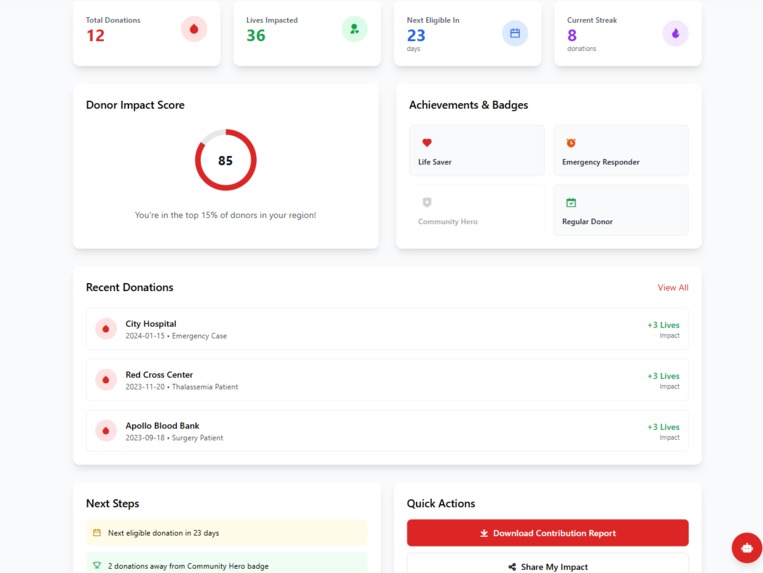
Track each donor’s history to fuel a time series model that predicts peak future donor availability for better planning and response.
-
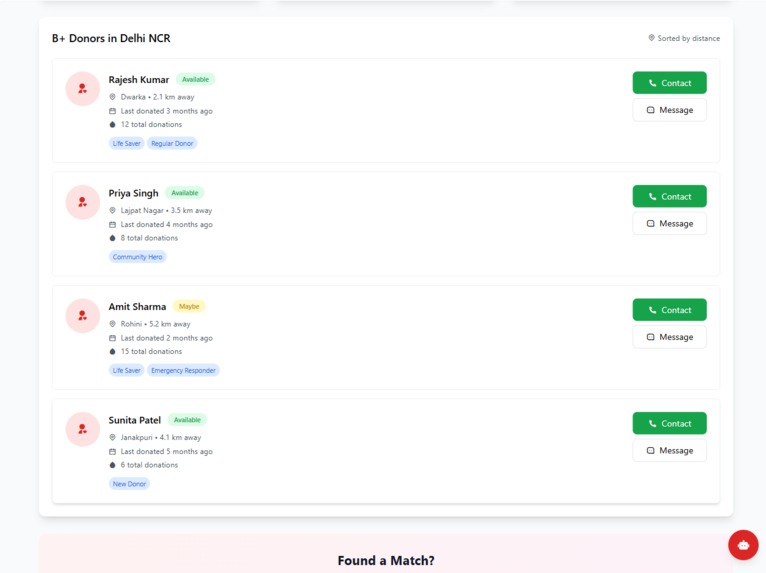
Regional clusters enable faster action—using Places API & Google Maps SDK to find active and eligible donors in same locality and contact
-
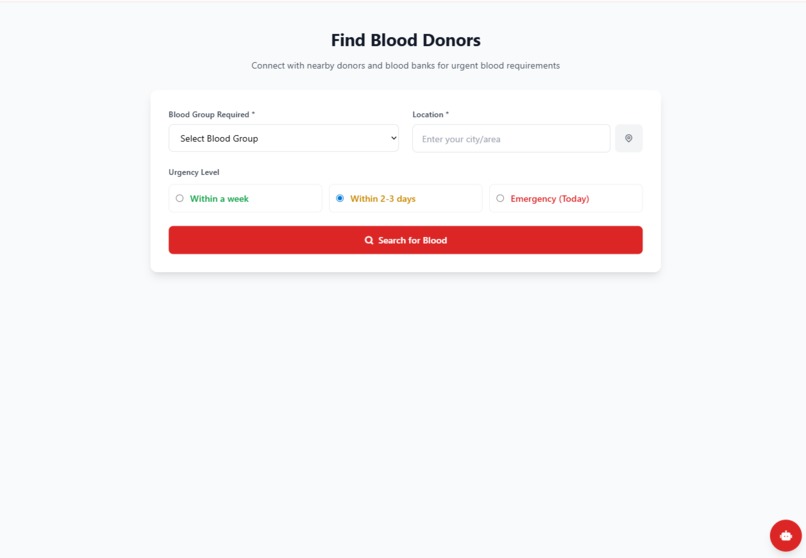
In case of blood need send request to all active eligible donors nearby using Google Maps SDK(in emergency notify everyone in the locality)
-
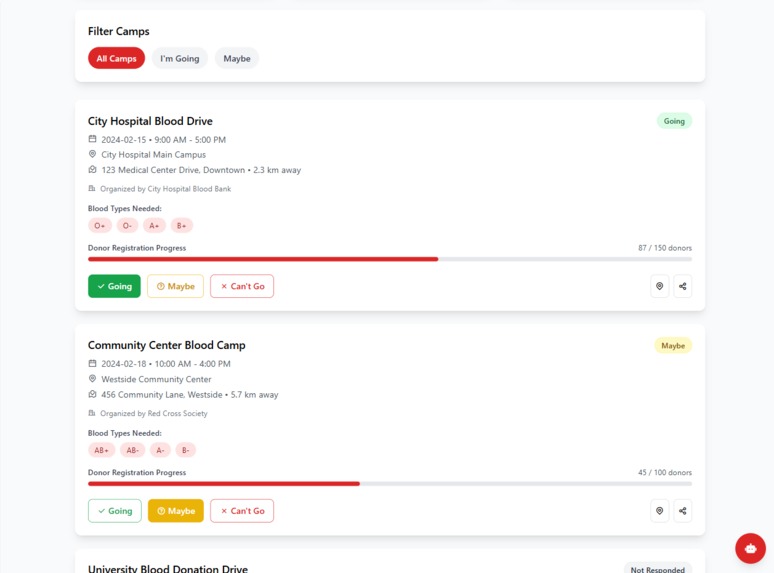
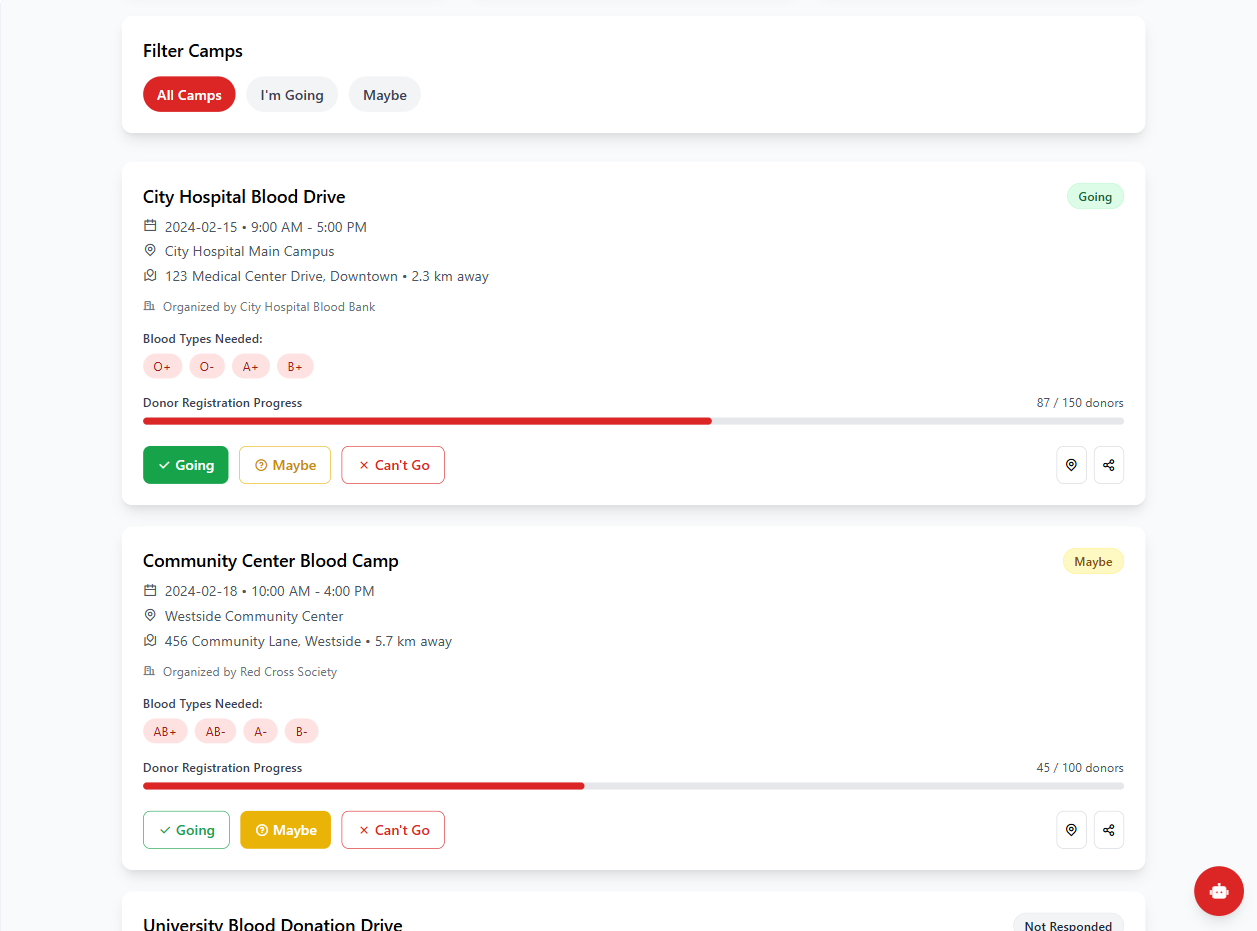
Send WhatsApp alert to eligible donors they can update attendance on the site helping healthcare teams manage resources and plan efficiently
-
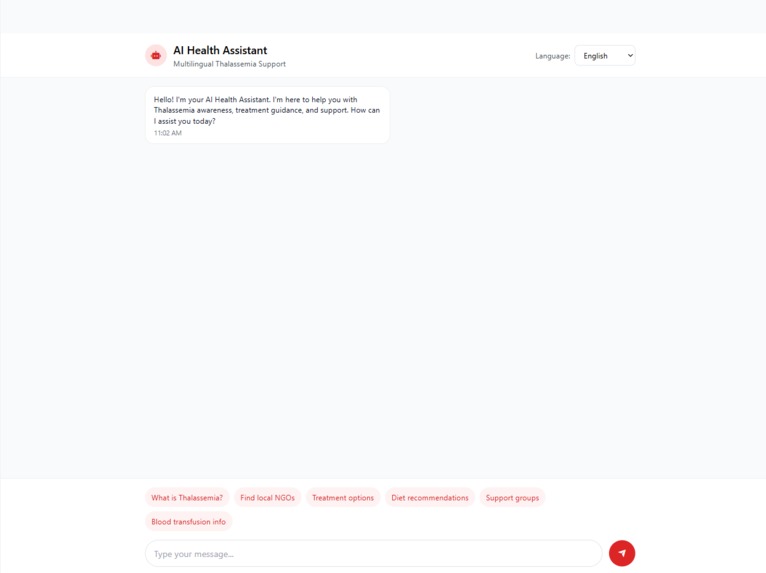
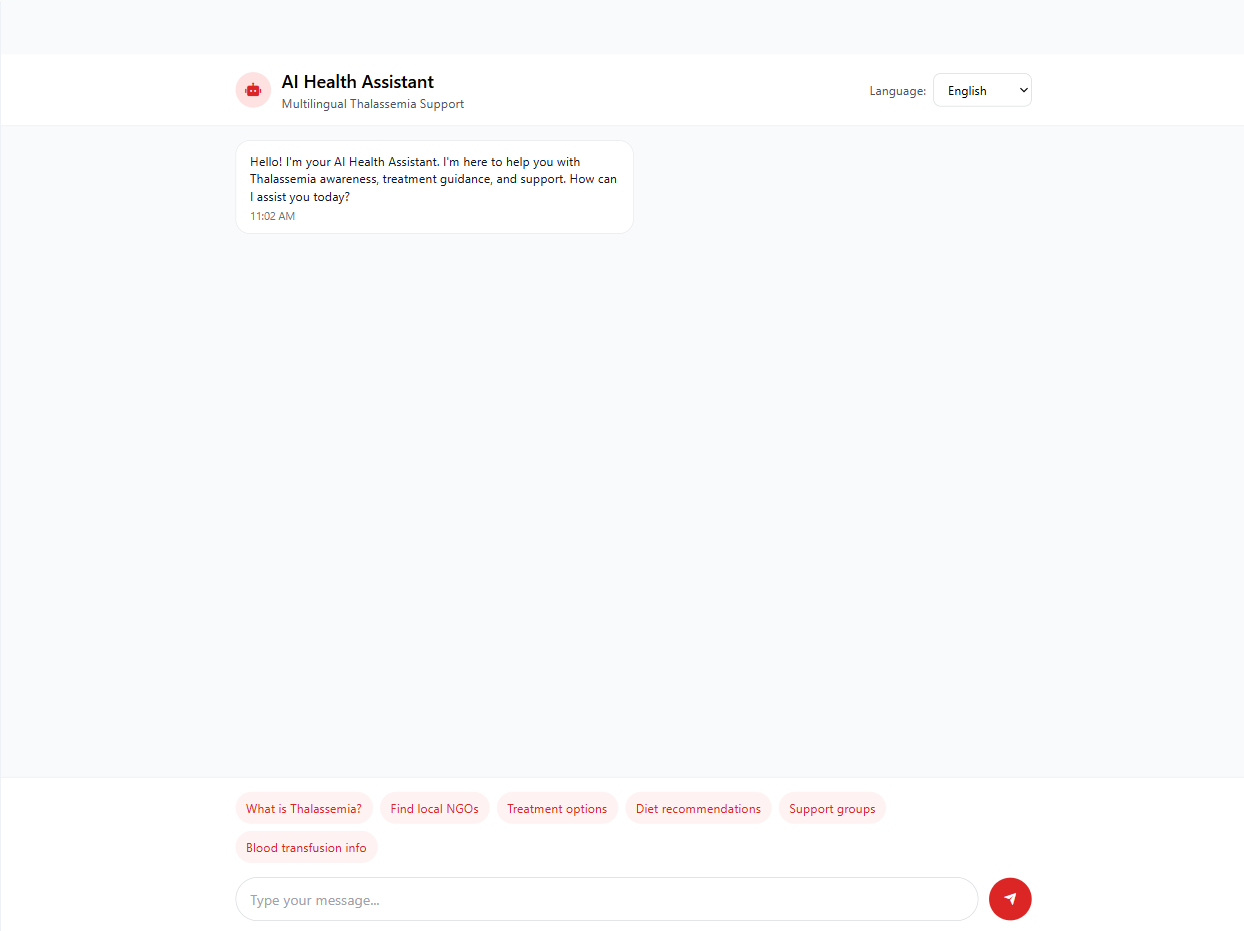
RAG Chatbot trained on verified and trusted information and documents of thalassemia
-
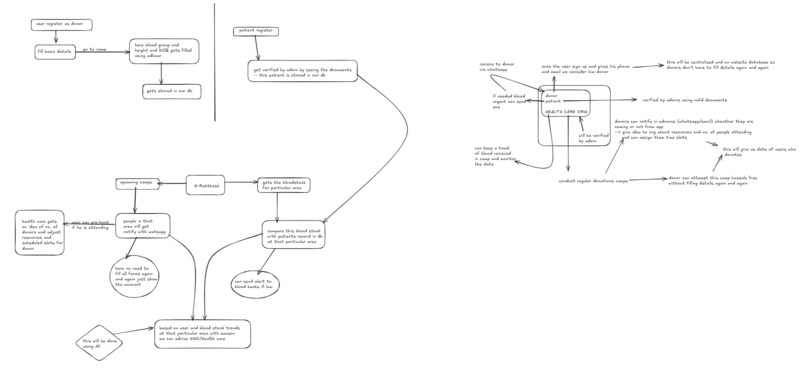
Workflow for model and website
-
Integrate e-RaktKosh API for upcoming camps blood availability patient verification history tracking and updating donor records in real time
-
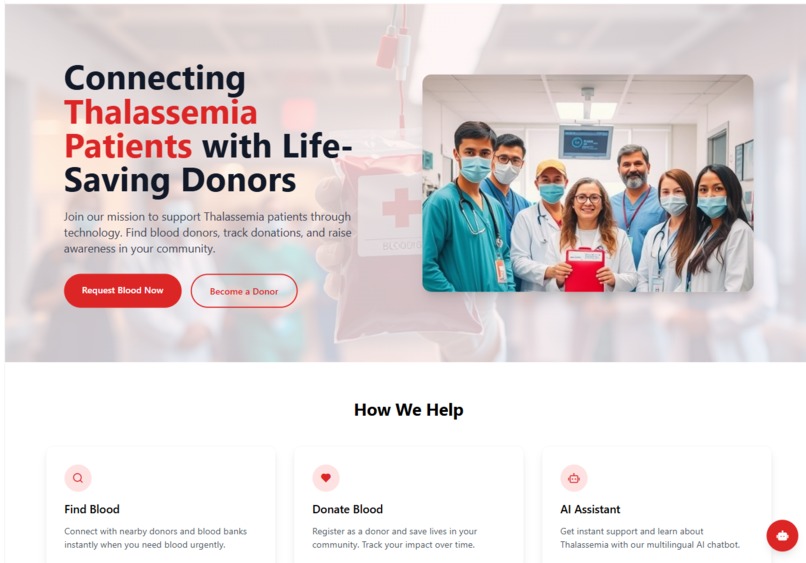
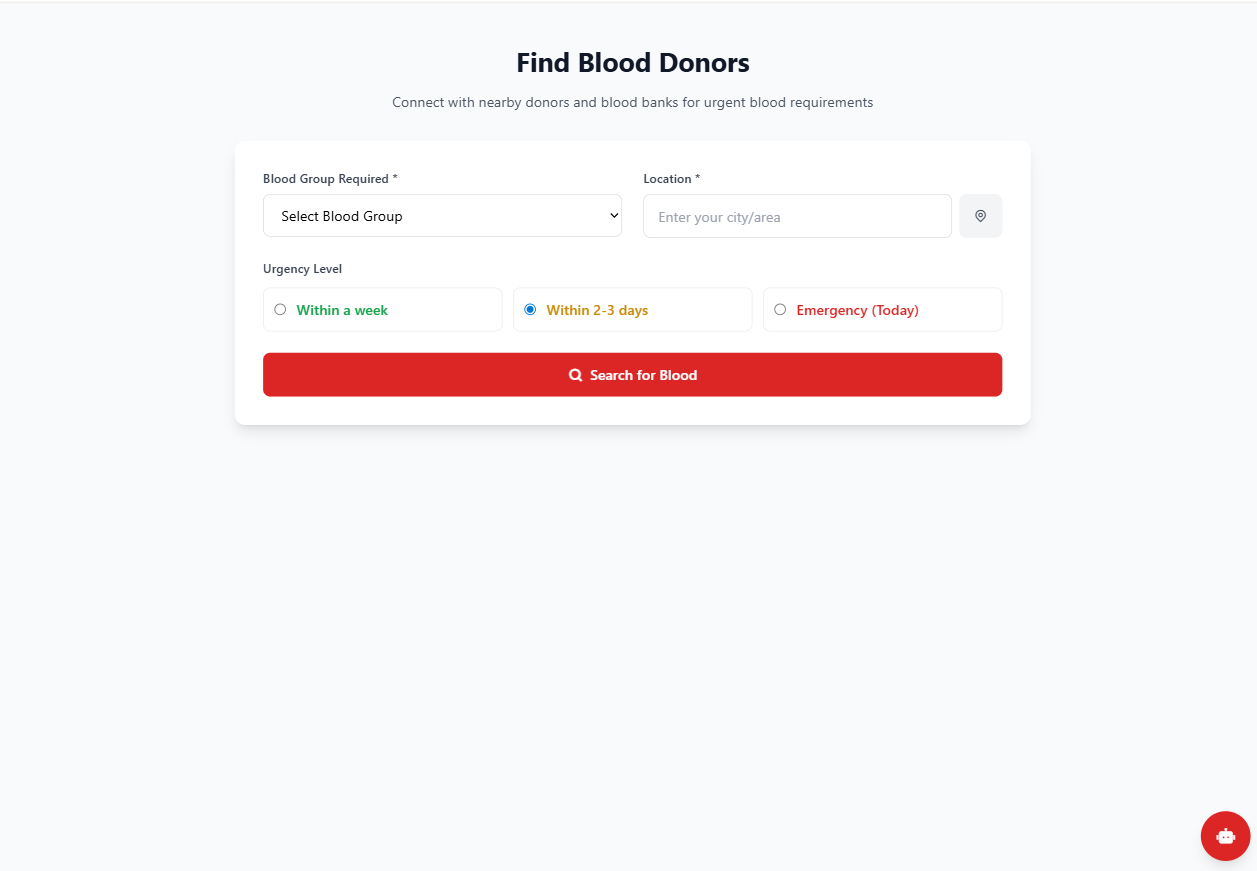
Home Page wire frame
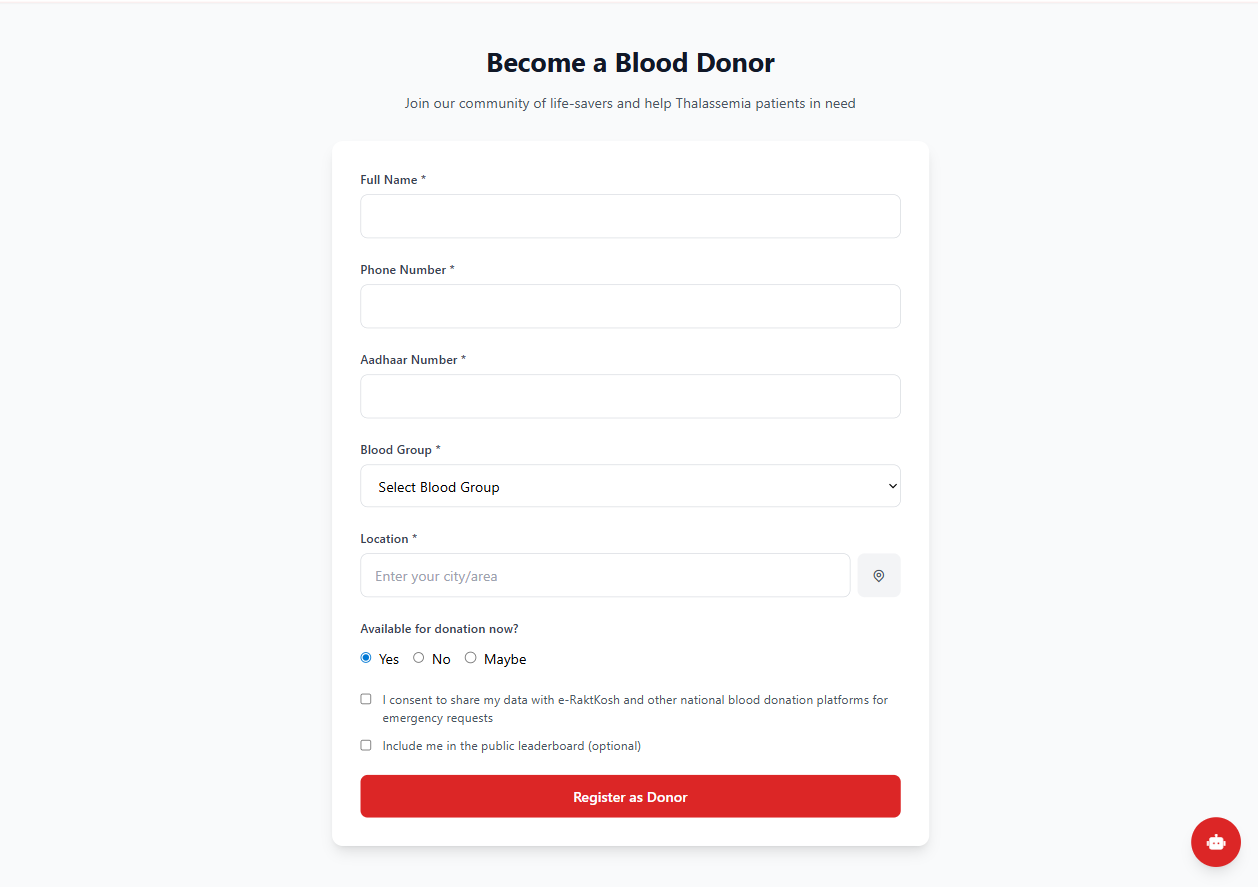
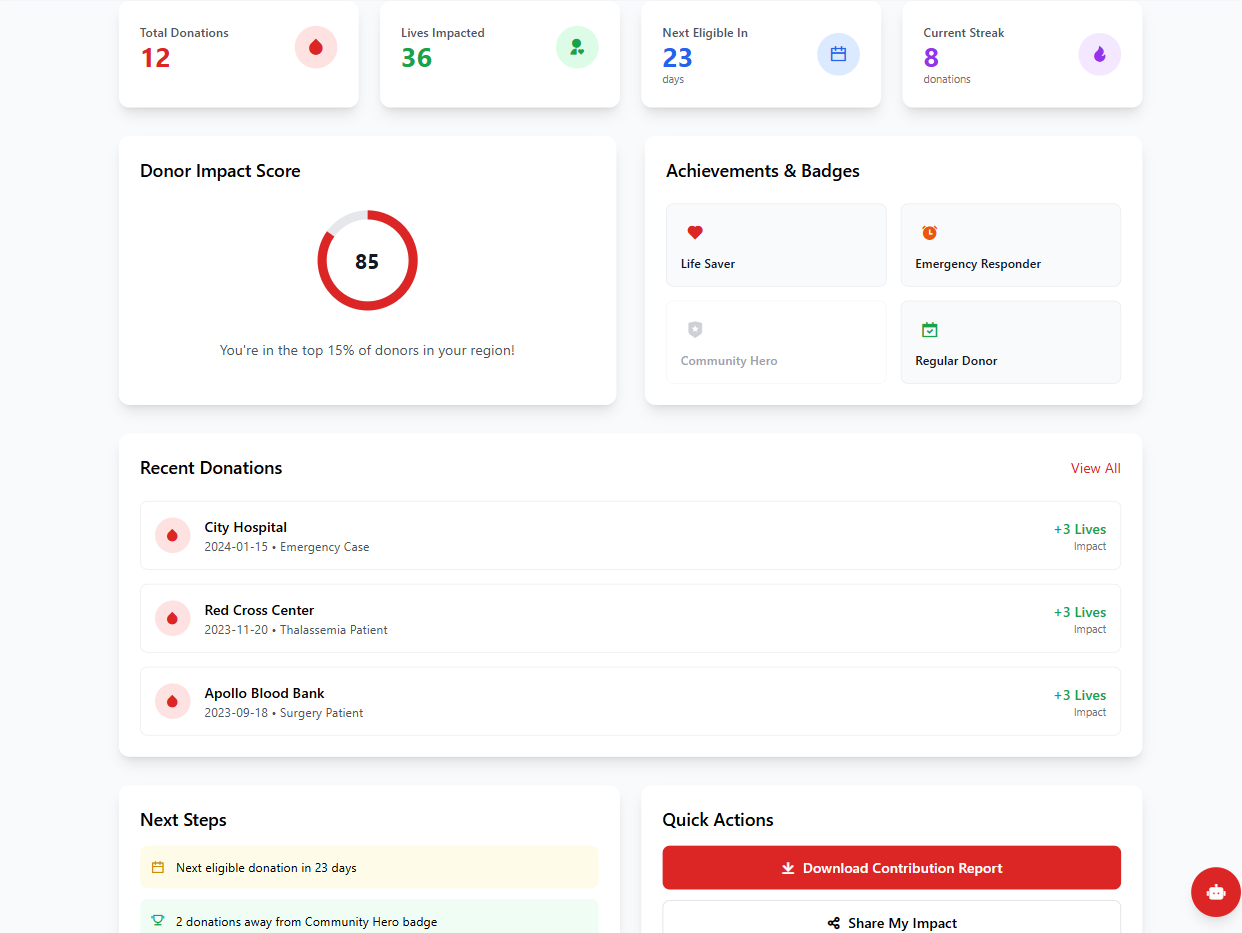
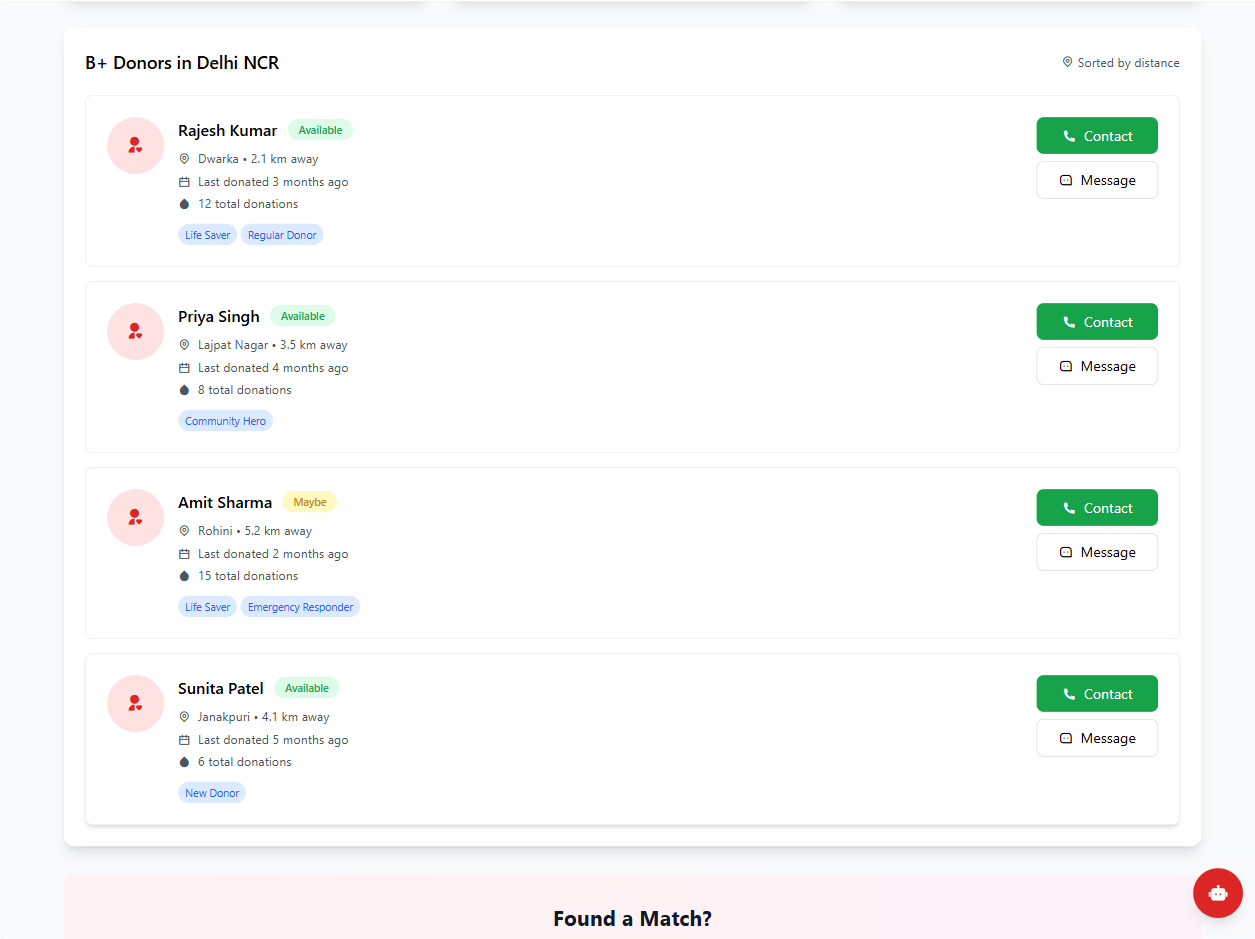
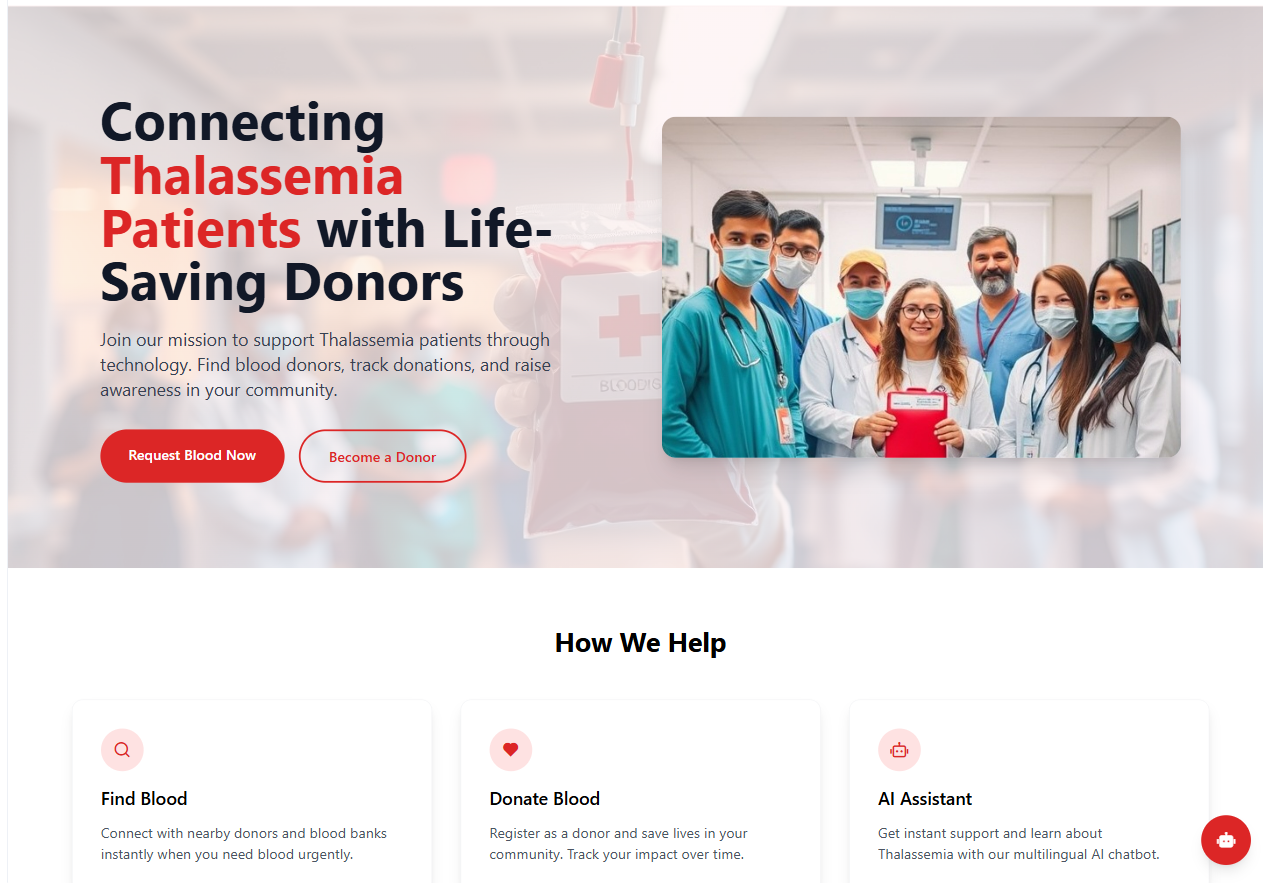
Rakta Hak
🩸 Core Problem Statement
How can we develop real-time systems to connect Thalassemia patients with blood donors and predict donor availability?
🎯 Primary Solution Components
1. Real-Time Donor-Patient Matching System
- GPS-based matching of nearby eligible donors (using google-maps-SDK & PlacesAPI)
Dataset: E-RaktKosh APIs and https://www.friends2support.org/ - Immediate notifications via app/SMS/WhatsApp
- Blood group compatibility and last donation validation
- Patient urgency flag to prioritize cases
- Website development for centralized access
- Urgent alerts based on geolocation and Places API
- Centralized donor profiles with comprehensive information
- Advance notifications - donors can notifywhether they are coming or not via app, which:
- Give organizations estimate of number of people attending to better arrange resources
- Enable time slot assignments for better coordination
2. AI Chatbot for Awareness & Support
Problem: Lack of awareness leads to unplanned pregnancies with Thalassemia major
Solution:
- AI-powered awareness chatbot (multilingual)
- Educates about prevention, testing, carrier screening
- Guides families on treatment, subsidies, NGOs, government schemes
3. Regional Cluster Network
- Enable small regional clusters (e.g., by district) where patients and donors are locally connected for faster action
- Rather than relying only on centralized systems
📊 Donor Recognition & Analytics
🔍 Contribution Tracking System
How can we ensure seamless tracking of donor contributions to encourage recurring participation?
Implementation Strategy:
- Every donor gets a unique ID upon registration (via phone number or Aadhaar)
- Each donation event is logged with:
- Date & time
- Location (blood bank/hospital)
- Recipient ID (if applicable)
- Verified by authorized personnel (staff/admin QR scan)
Technical Implementation:
- QR code generation per donor
- Blood donation centers can scan the donor's code to log real donations
- Alternatively, link with e-RaktKosh API to sync donation records automatically if donor data is public or accessible via consent
Centralized Contribution Record
Allow donors to:
- View and download all past donations
- Use their record for incentives (e.g., college CSR hours, government benefits if any)
- Opt in to make their contribution public (e.g., leaderboard)
Donor Impact Score
Build a "Donor Impact Score" — a cumulative value based on:
- Frequency of donation
- Urgency of cases responded to
- Willingness to donate rare groups
- Engagement level with the platform
Donor Dashboard with Analytics
Key sections:
- Total donations
- Total lives impacted (estimated)
- Locations donated at
- Badges/milestones earned
- Next eligible date
- Streak (e.g., 3 consecutive donations)
This makes their impact tangible and builds an emotional loop
🔮 Forecasting: Predictive AI Models for Donor Availability
We use Prophet time-series forecasting to predict blood collection patterns and enable proactive donor outreach.
📊 State-Level Blood Collection Forecasting
🎯 Goal:
Use historical state-wise blood collection data to predict future blood supply trends — enabling proactive donor activation before shortages occur.
🗂️ Data Source:
- Government Dataset: State/UT-wise blood units collected (2018-2022 H1)
- Key Variables: Blood units collected, number of reporting blood banks, temporal patterns
- Coverage: 35 States/UTs with varying data completeness
⚙️ Why Prophet?
- Handles missing data (common in government datasets)
- Automatic seasonality detection (festivals, emergencies affect donations)
- Changepoint detection (identifies COVID-19 disruptions automatically)
- Uncertainty quantification (provides confidence intervals for risk assessment)
🛠️ Implementation Approach:
1. Data Preprocessing
# Transform to Prophet format: ds (date), y (blood units), regressors
df_prophet = transform_to_timeseries(state_data)
# Handle missing values and outliers
# Add external regressors (blood bank count, population)
2. Model Training
# Train separate Prophet model per state
model = Prophet(yearly_seasonality=True, changepoint_prior_scale=0.05)
model.add_regressor('blood_banks_count')
forecast = model.predict(future_dataframe)
3. Validation & Accuracy
- Backtesting: Train on 2018-2021 → Test on 2022 data
- Target MAPE: <20% for reliable predictions
- Cross-validation: Time-series split validation
4. Forecast Output
{
  "state": "Delhi",
  "next_6_months": {
    "predicted_collection": 180500,
    "confidence_range": [165000, 196000],
    "trend": "decreasing",
    "risk_level": "high"
  },
  "donor_activation_needed": 72200
}
🎯 Smart Interventions:
Early Warning System
- 3-month advance alerts for predicted shortages
- State-wise risk scoring (Low/Medium/High)
- Seasonal pattern recognition (Ramadan, Diwali impact on donations)
Proactive Donor Outreach
- Targeted campaigns 4-6 weeks before predicted shortages
- Personalized messaging based on historical donation patterns
- Resource allocation for blood drives in high-need areas
📈 Expected Impact:
- 25-30% improvement in donor response rates through timely outreach
- Reduced emergency shortages with predictive intervention
- Optimized blood bank operations with demand forecasting
- Data-driven policy decisions for health departments
🚀 Technical Stack:
- Prophet for time-series forecasting
- Python/Pandas for data preprocessing
- FastAPI for prediction endpoints
- Real-time dashboard for stakeholder monitoring
🔔 Automated Engagement System
Automated Reminders & Nudges
Use simple cron jobs to:
- Send reminders at 90-day cooldown expiry
- Celebrate donation anniversaries
- Alert if patient nearby needs the same blood group
Delivery Channels:
- WhatsApp (via Firebase cloud messaging)
- Email (via email.js)
📅 Scheduling and Supply Management
Donor Scheduling
- Organize rotation schedules so that donors are invited to give blood as soon as they become eligible (every 8-12 weeks for whole blood)
- Use IT systems or donor management software to remind and re-invite donors as they reach eligibility
Blood Drives
- Arrange frequent blood donation camps in schools, colleges, companies, and communities
- Coordinate event dates so that blood supplies are steady throughout the year, not just during annual drives
Emergency Contact Lists
- Maintain a list of registered donors who can be contacted during urgent situations or shortages
- Sometimes called a "walking blood bank"
🎯 Personalization Features
Personalization and Patient Groups
- Patient-Donor Matching: In some cases, allocate regular donors specifically for patients with rare blood types or who have developed antibodies (to minimize delays and complications)
🔗 System Integration
Integration with existing systems like e-RaktKosh and Blood Warriors' Blood Bridge initiative
Real-Time Blood Group Availability
Example Workflow:
- Patient requests B+ in Surat
- Your system:
- Queries e-RaktKosh
- Gets a list of nearby blood banks where B+ is available
- Also checks your local donor DB
- Sends both options to the patient
Blood Bank Locator + Stock Info
- On your site: "Find Nearest Blood Bank with A+"
- Call e-RaktKosh and show stock + contact info
- Use e-RaktKosh as a fallback or cross-check layer, while your core system handles:
- Real-time donor tracking
- Donor reminders
- Patient urgency alerting
- Last-mile coordination
Fallback Message: "B+ blood is available at XYZ Blood Bank (5.3 km away). Contact: 1234567890"
🚀 Expected Impact
This system aims to create a seamless, efficient, and scalable solution for connecting Thalassemia patients with blood donors while building a sustainable donor engagement ecosystem. Using time series forecasting to help health organizations better plan their blood camps base on predictive donor availability.
Built With
- email.js
- firebase
- google-maps-sdk
- jwt
- mongodb
- next.js
- nextauth
- placesapi
- rag
- tailwindcss
- twilio
- typescript


Log in or sign up for Devpost to join the conversation.