Inspiration
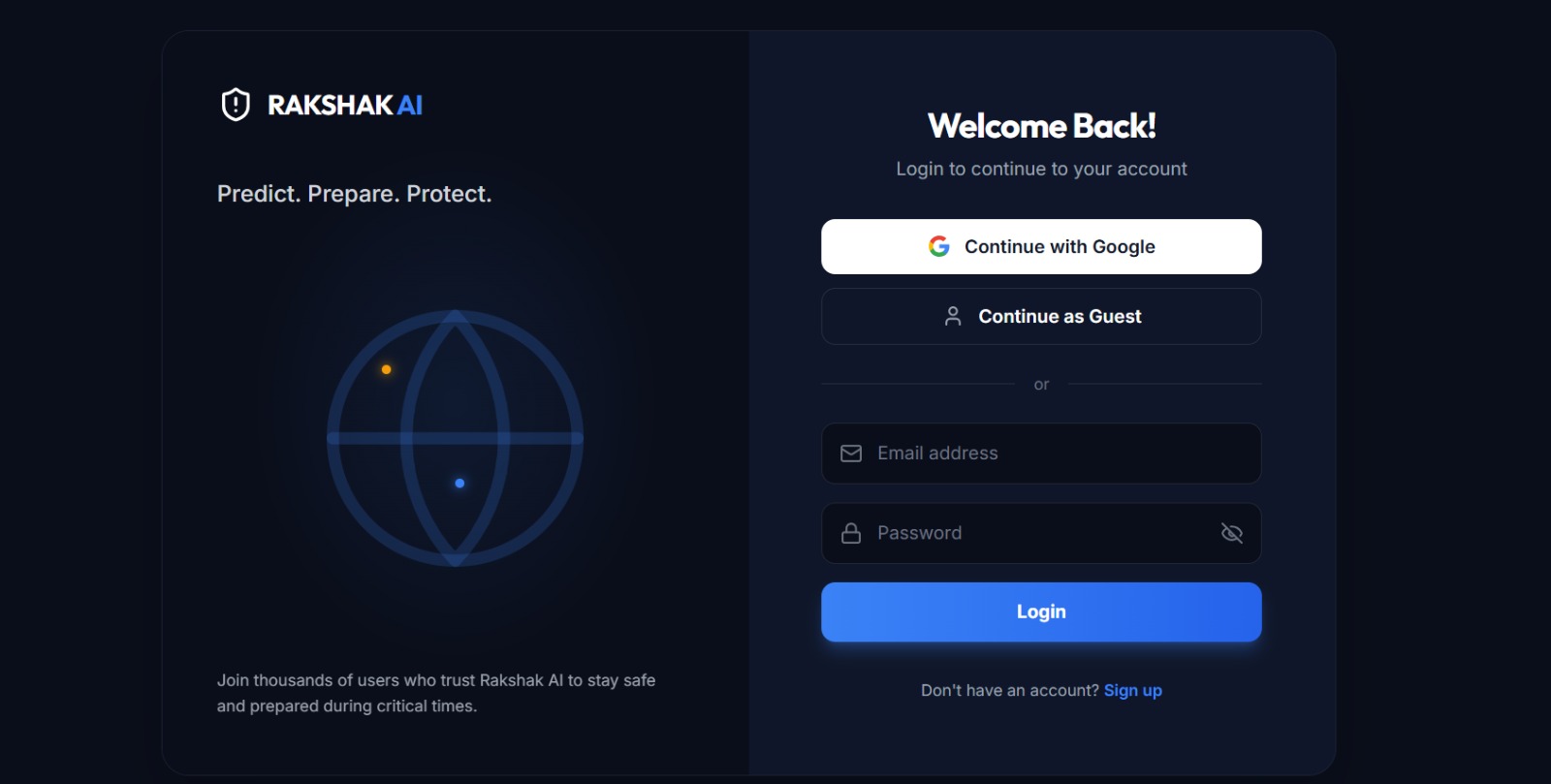
Natural disasters and extreme weather conditions are becoming more frequent, yet most people still rely on delayed information and basic weather apps that do not provide actionable safety insights. We wanted to build a smarter platform that combines AI, realtime weather intelligence, emergency response, and interactive visualization to help people stay safe during dangerous situations.
What it does
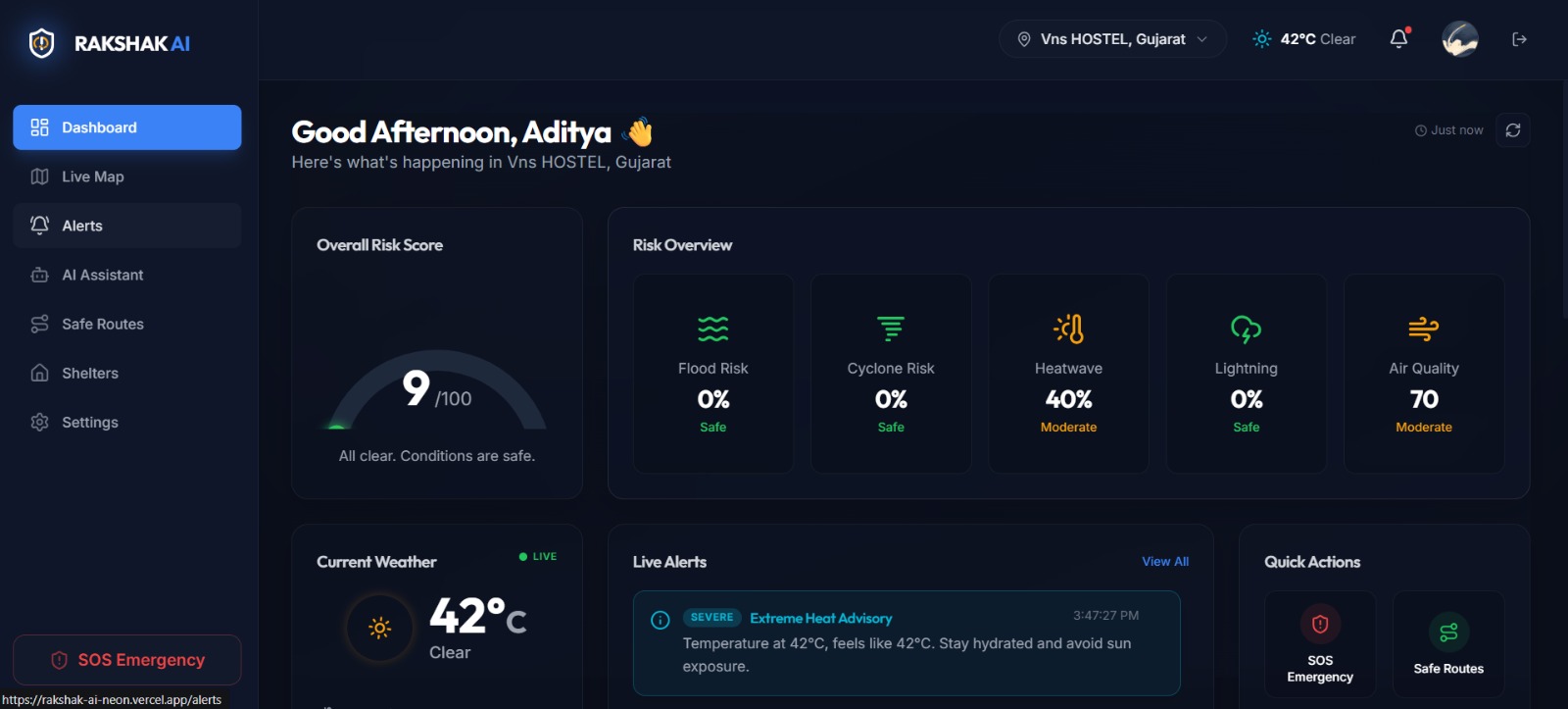
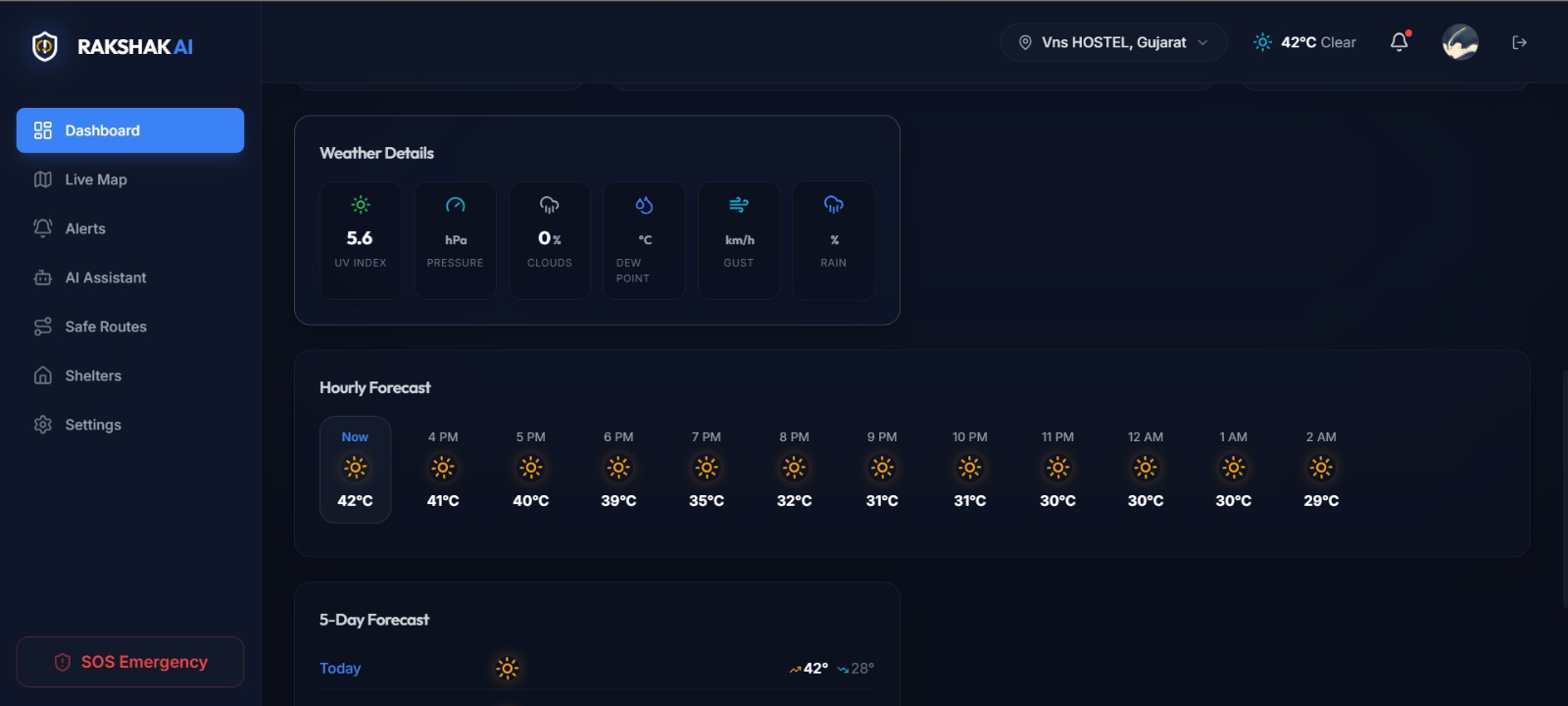
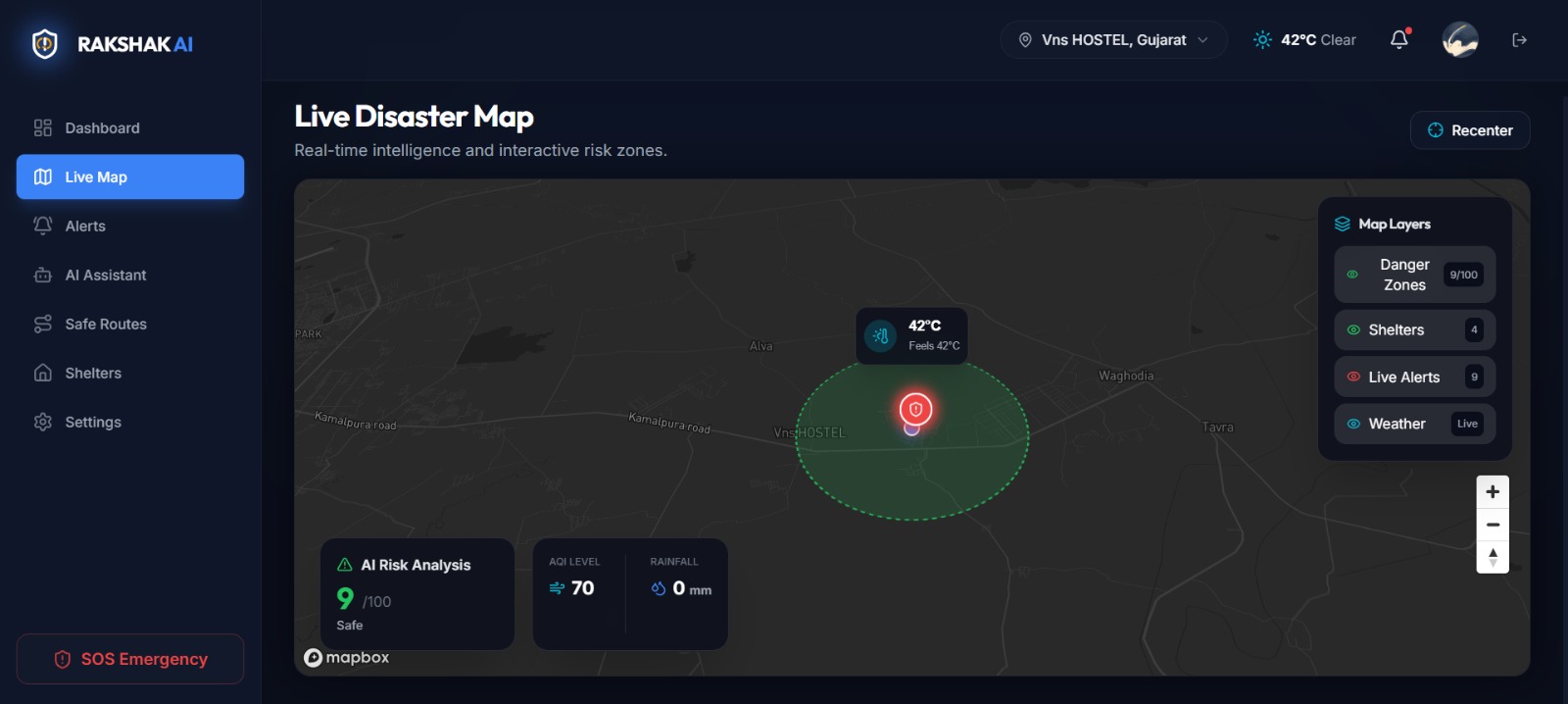
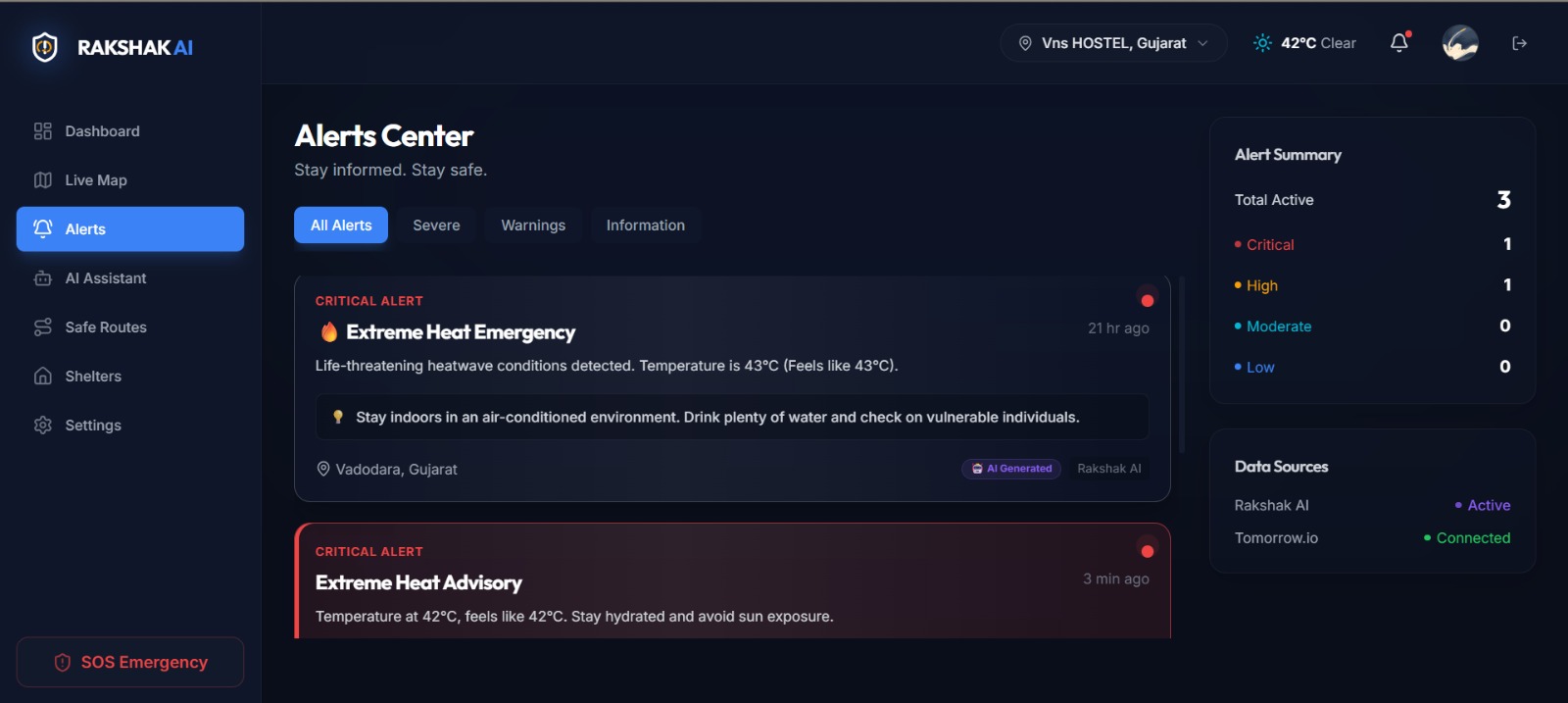
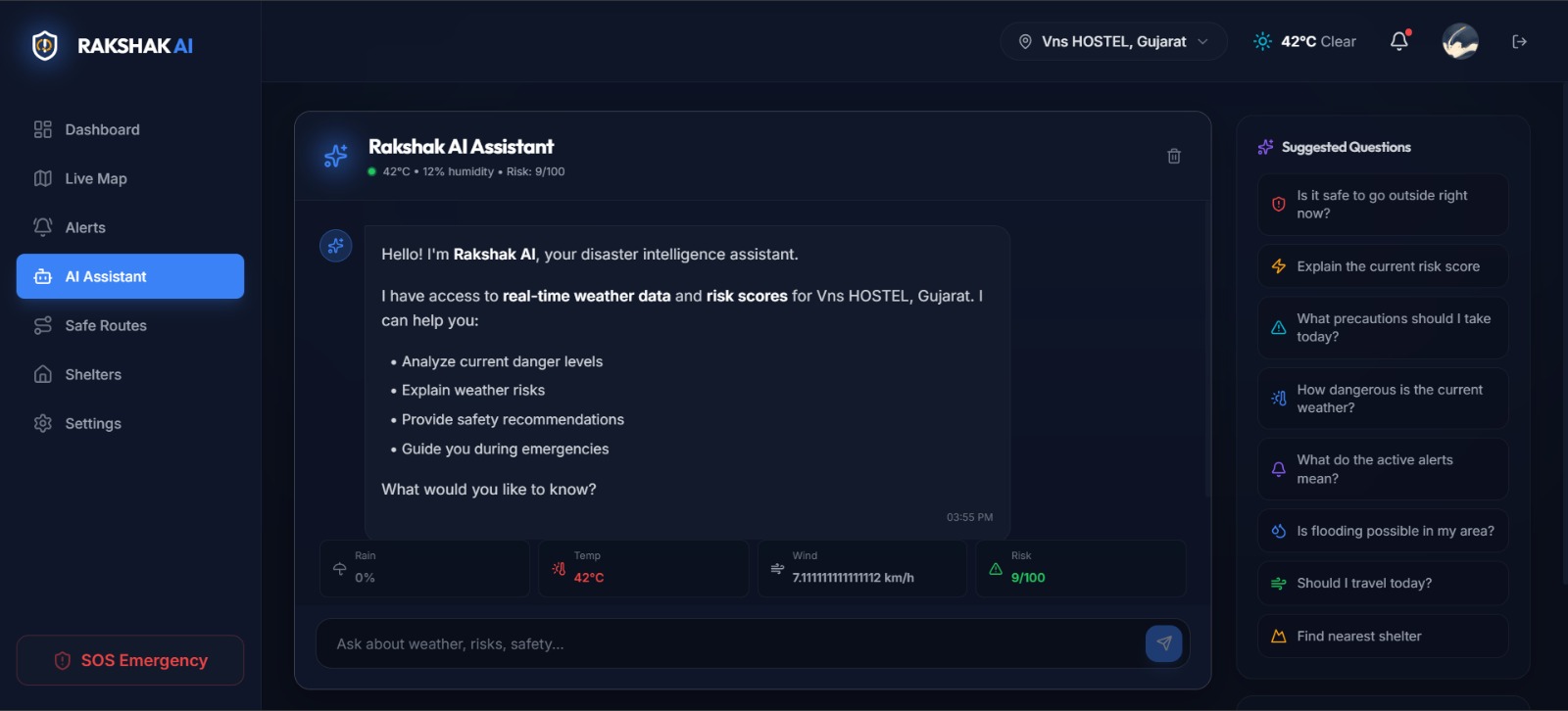
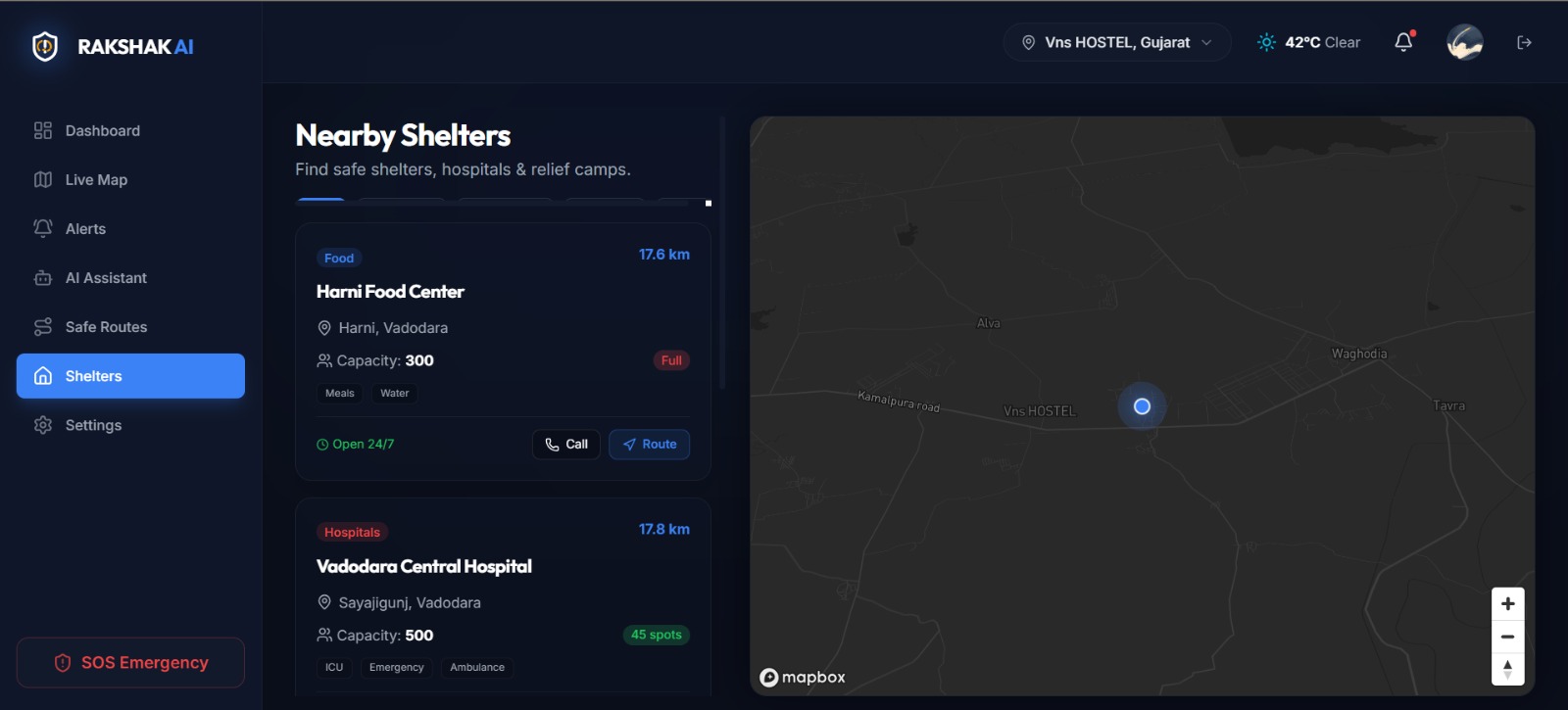
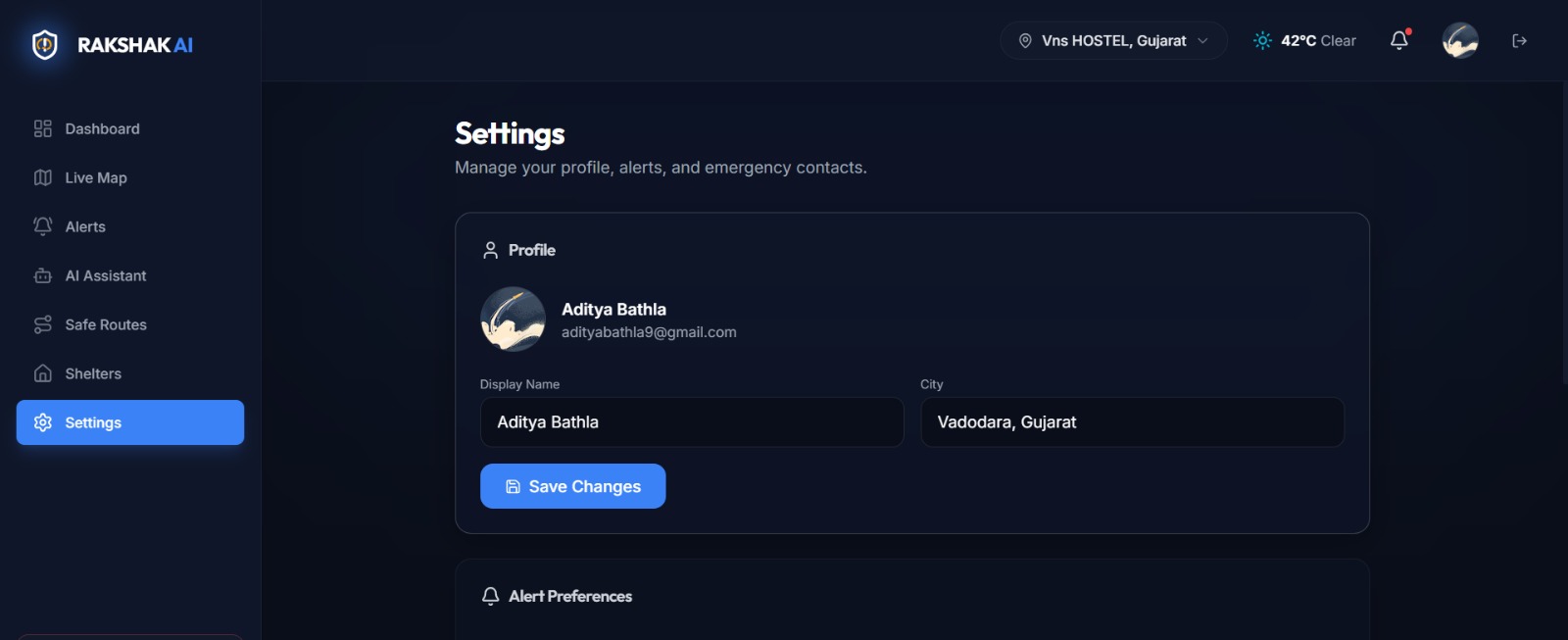
Rakshak AI is a disaster intelligence platform that monitors realtime weather conditions, predicts environmental risks, and generates smart AI-powered alerts. The platform also provides safe route guidance, emergency SOS support, live disaster maps, and contextual safety recommendations through a modern realtime dashboard.
How we built it
We built Rakshak AI using React, Vite, Tailwind CSS, Framer Motion, Firebase, Firestore, Mapbox, Tomorrow.io, WeatherAPI.com, and Gemini AI. We implemented realtime weather monitoring, intelligent API failover systems, AI-enhanced alert generation, interactive maps, and realtime Firestore synchronization to create a fast and immersive user experience.
Challenges we ran into
One of the biggest challenges was handling API rate limits and realtime data management. We faced issues with weather API exhaustion, Gemini quota limits, duplicate requests, and unstable fallback systems. Another major challenge was making the alerts realistic and preventing fake disaster warnings while maintaining a premium realtime experience.
Accomplishments that we are proud of
We are proud of building a fully functional AI-powered disaster intelligence platform with realtime weather monitoring, intelligent alerts, interactive maps, safe route systems, and emergency SOS support. We also successfully implemented multi-provider weather failover systems and a premium SaaS-style UI that feels modern and immersive.
What we learned
Through this project, we learned about realtime system architecture, API failover engineering, AI integration, Firestore synchronization, advanced frontend state management, and performance optimization. We also learned that building reliable AI-powered systems requires strong fallback logic and intelligent validation rather than relying only on AI responses.
What's next for Rakshak AI
We plan to improve the platform with more accurate predictive disaster analytics, offline emergency support, push notification systems, multilingual accessibility, and smarter AI-based environmental risk forecasting. We also want to make the platform more scalable and useful for real-world disaster response scenarios.
Built With
- firebaseauthentication
- firebasehosting
- firestoredatabase
- framermotion
- geminiaiapi
- html5
- javascript
- mapbox
- react
- tailwindcss
- tomorrowioweatherapi
- vite
- weatherapicom


Log in or sign up for Devpost to join the conversation.