-
-
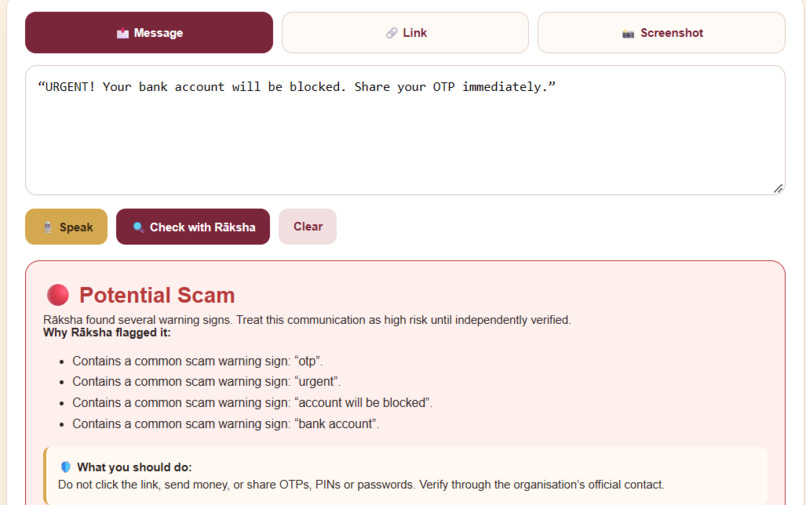
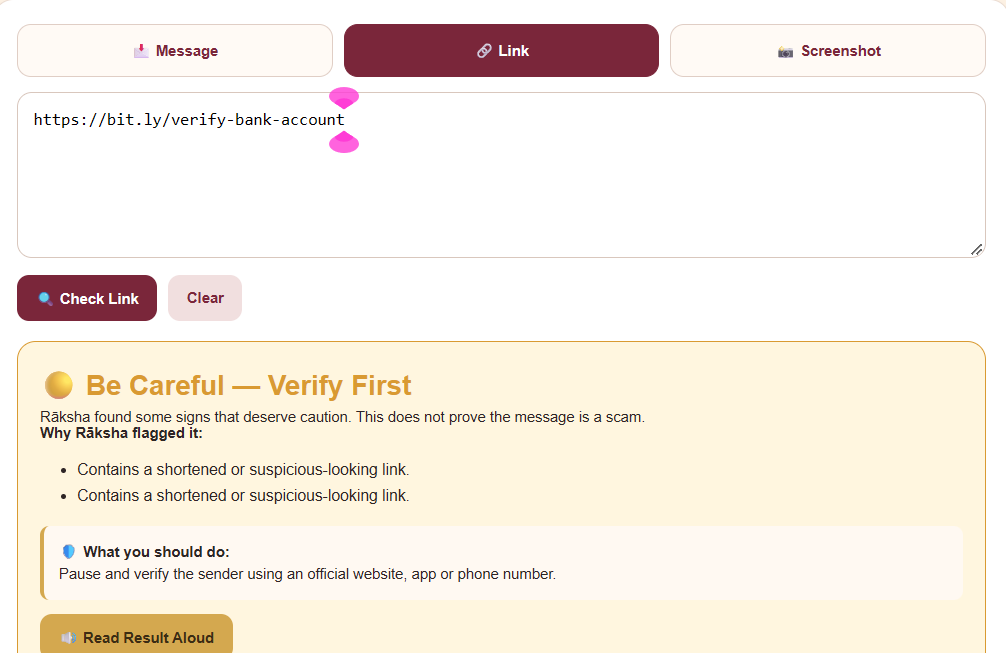
spam message
-
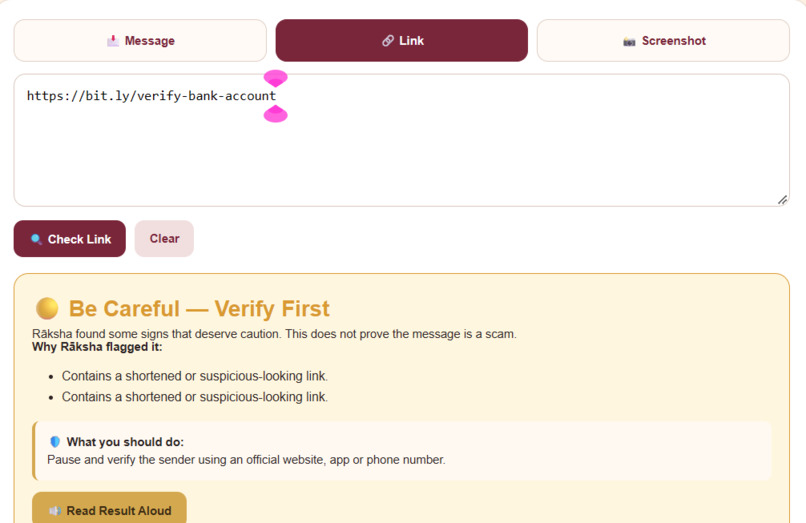
alert given!
-
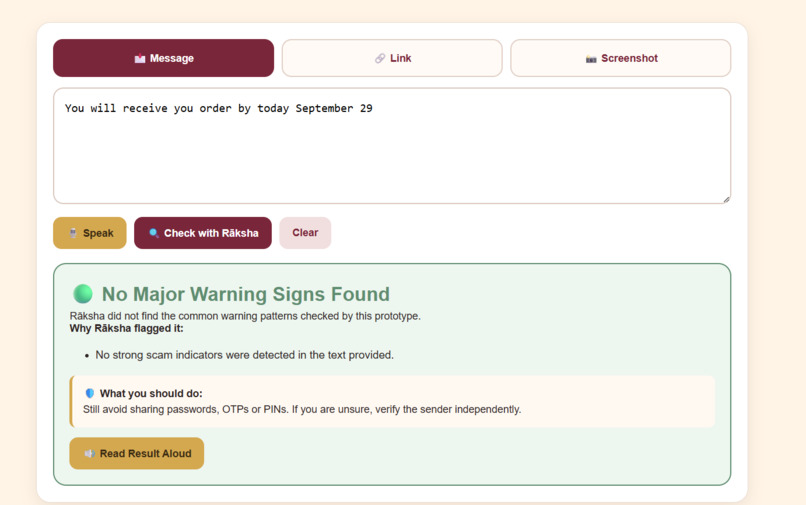
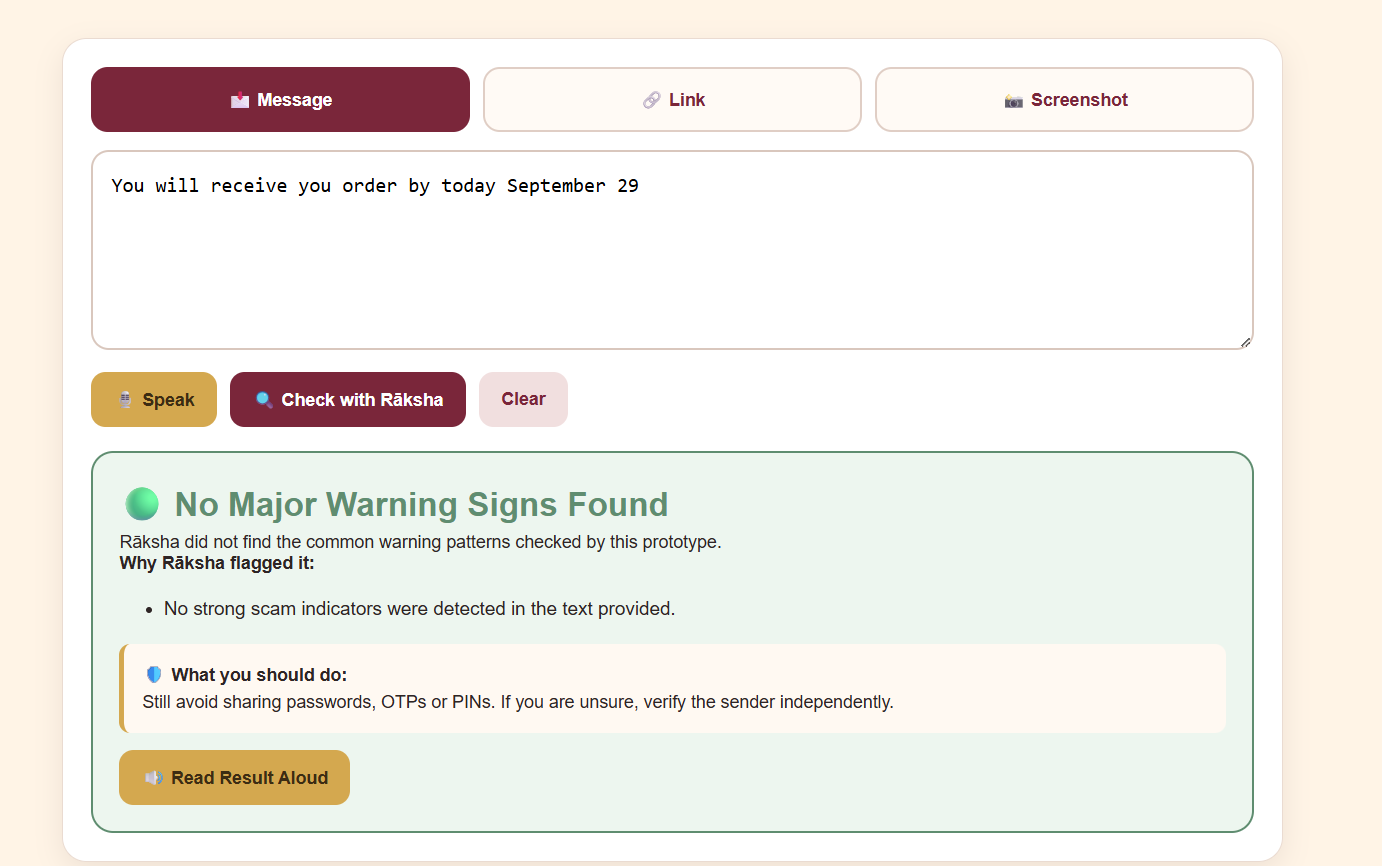
safe message
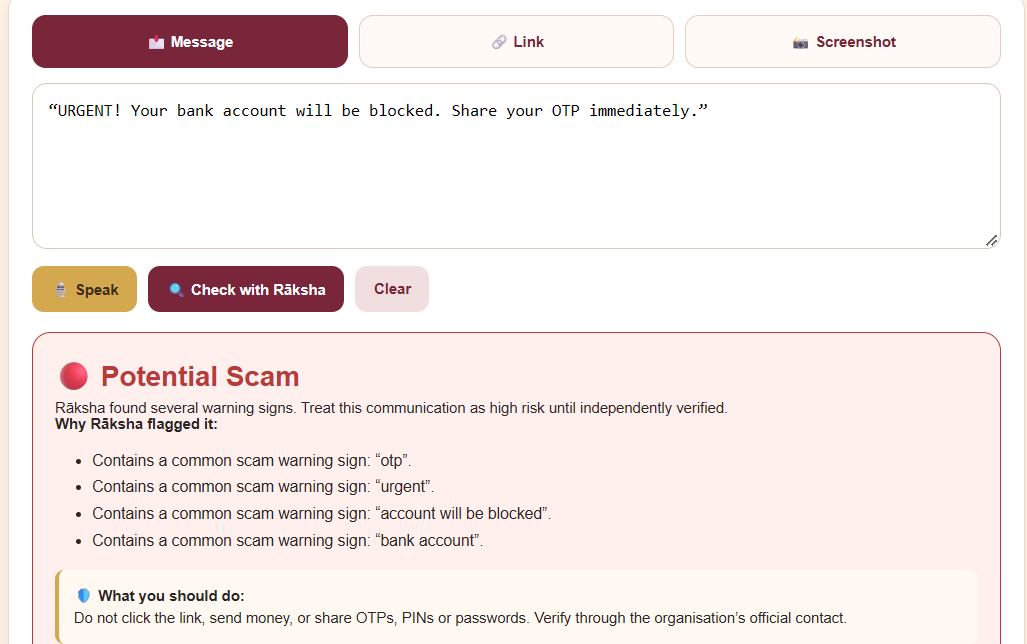
Inspiration
Rāksha was born from a personal experience. My grandmother was once scammed online, and seeing someone I love go through that experience made me realise how easily elderly people can become targets of digital fraud. Many senior citizens are still learning to navigate the digital world and may struggle to recognise suspicious messages, links, or calls. I wanted to turn this painful experience into something meaningful - a tool that could help protect other families from facing the same situation.
What it does
Rāksha is an AI-powered digital safety assistant designed especially for elderly people. Users can submit suspicious messages, links, screenshots, or call-related information for analysis. It classifies potential threats into three simple categories:
Likely Safe – No obvious warning signs detected.
Verify – More verification is recommended.
Scam – Potential signs of fraud detected. It also aims to explain suspicious activity in simple, understandable language so users can make safer decisions online.
How we built it
We approached Rāksha with one goal: making digital safety simple for everyone, especially senior citizens. We designed the system around analysing different forms of suspicious digital content, including messages, links, screenshots, and call-related information. AI is used to assess potential warning signs and communicate the results through a simple risk-classification interface. Our focus throughout the development process was accessibility, clarity, and ease of use.
Challenges we ran into
One of our biggest challenges was making complex scam detection understandable to people who may not be familiar with technical terms. We also had to consider that online scams constantly evolve and can appear in many different forms. Designing a solution that could handle different types of input while presenting clear and responsible results was an important challenge.
Accomplishments that we're proud of
We are proud to have transformed a personal experience into a project with a meaningful social purpose. Rāksha focuses on a real problem affecting families and aims to make digital safety more accessible to elderly people. We are especially proud of its simple three-level classification approach, which makes potential digital threats easier to understand.
What we learned
We learned that AI is most valuable when it solves real-world problems. We explored how artificial intelligence can support digital safety, how to approach accessibility-focused design, and why technology should communicate complex information in simple language. Most importantly, we learned that even a small idea inspired by a personal experience can have the potential to create a meaningful impact.
What's next for Rāksha
We envision expanding Rāksha with multilingual support, voice-based assistance, more advanced scam detection, and an even simpler interface designed for senior citizens. We also hope to test it with elderly users, gather genuine feedback, and improve its accessibility and reliability. Our long-term goal is to help every elderly person navigate the digital world with greater confidence and safety.

Log in or sign up for Devpost to join the conversation.