Raksha AI — When Every Second Matters
Inspiration
Emergencies rarely come with a warning. Whether it is a medical emergency, an accident, a fire, or a personal safety threat, people often have very little time to decide what to do next.
In these moments, confusion, panic, unreliable information, and limited internet connectivity can make an already difficult situation worse.
We wanted to explore a simple but important question:
What if essential emergency assistance could remain accessible even when the internet is unavailable?
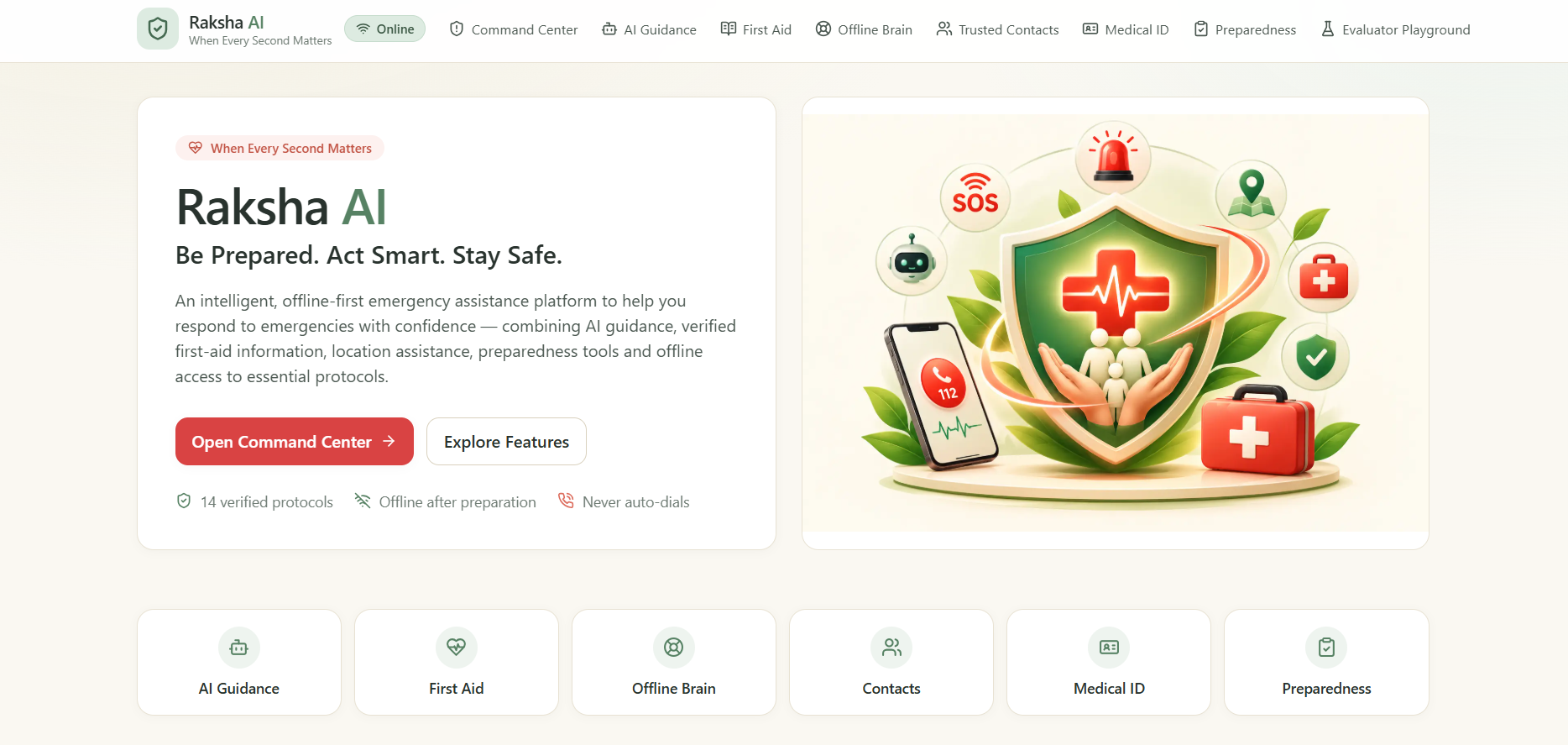
That question inspired Raksha AI — an emergency assistance and preparedness platform designed to help people stay informed, act responsibly, and access essential safety resources when every second matters.
What it does
Raksha AI brings several emergency-support capabilities together in one platform:
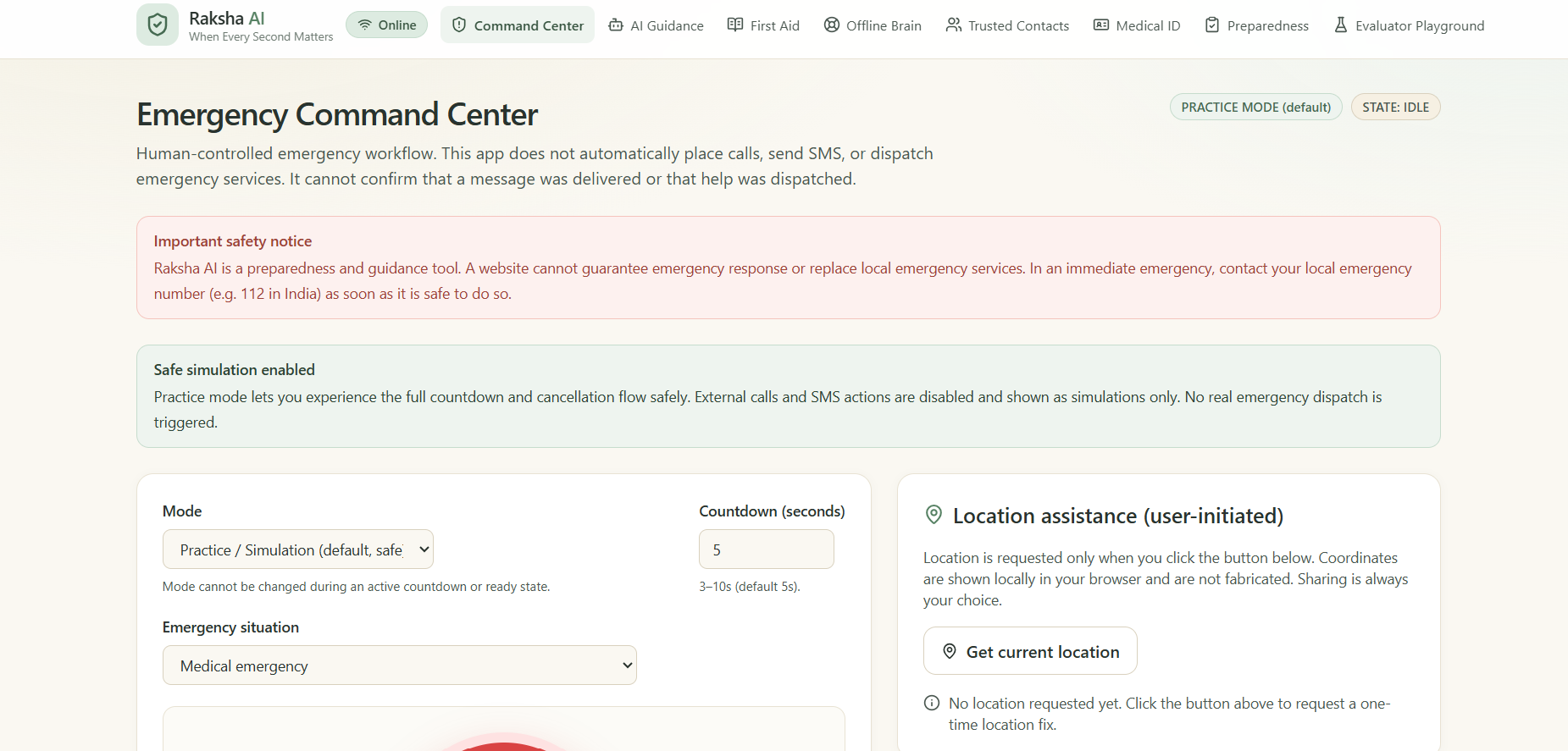
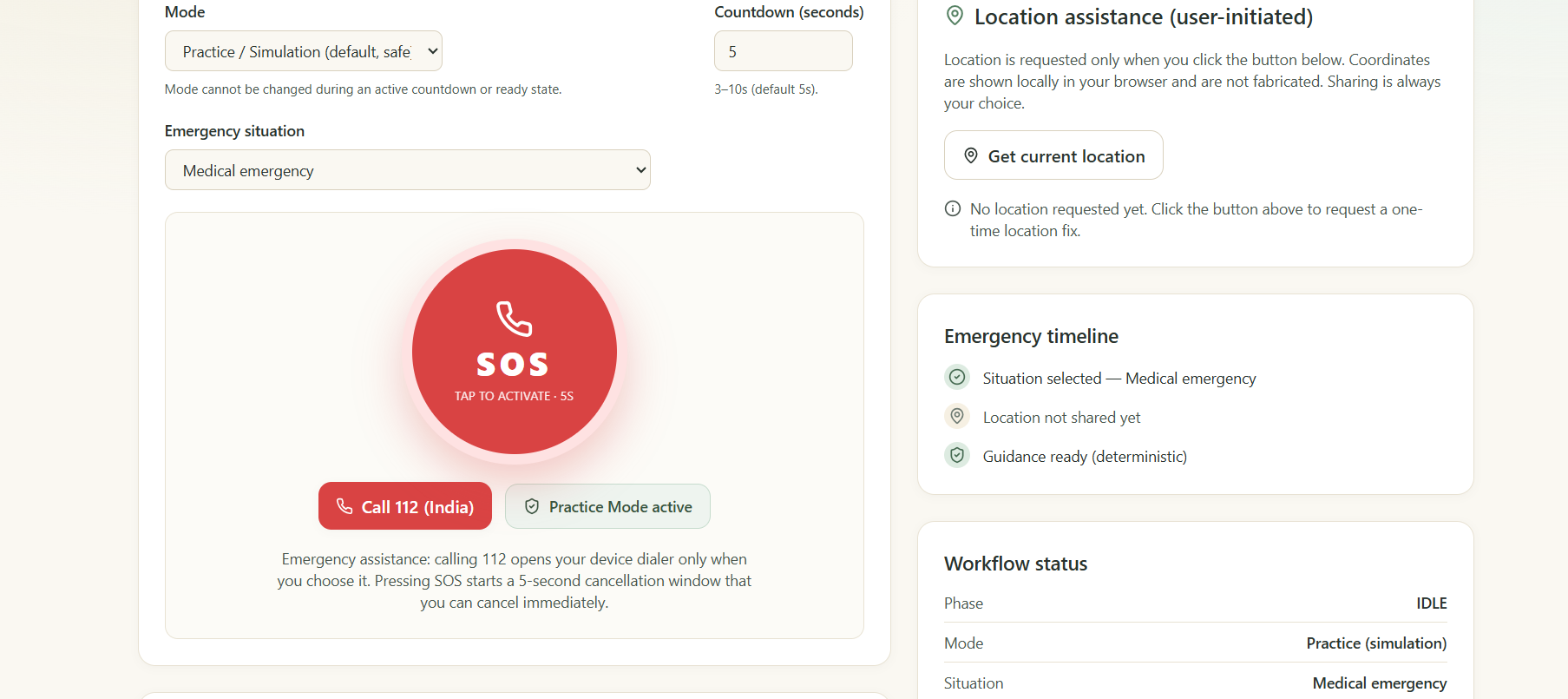
- Emergency Command Center: Provides an SOS workflow with a cancellable countdown, emergency situation selection, and clear next-step guidance.
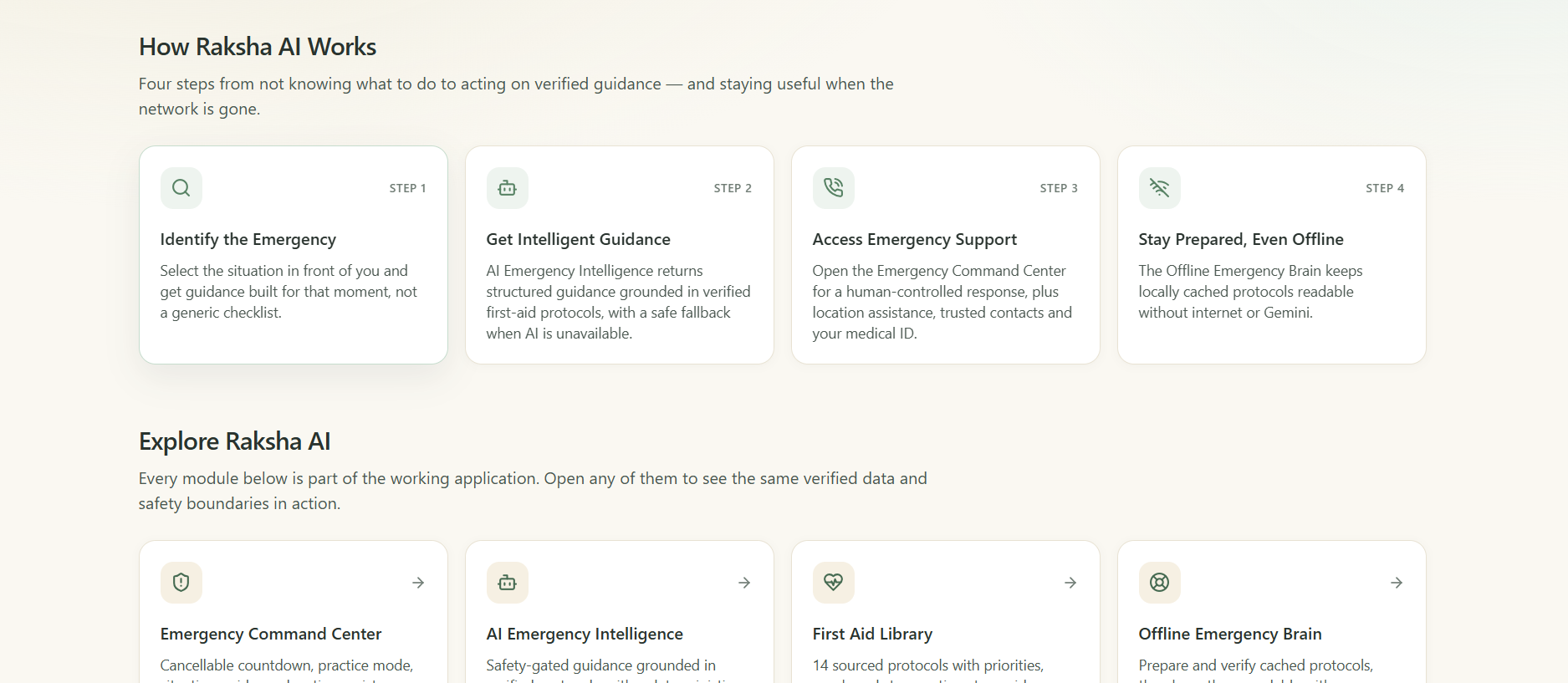
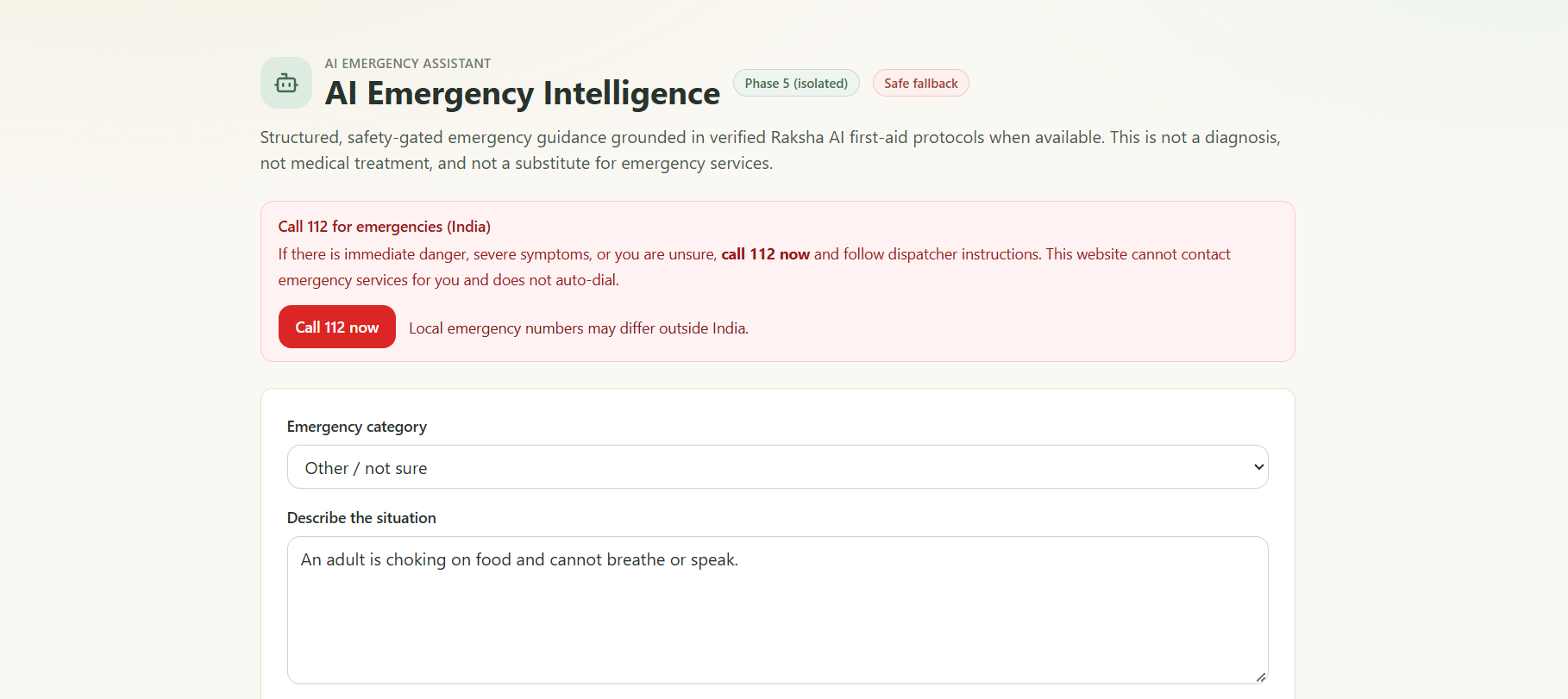
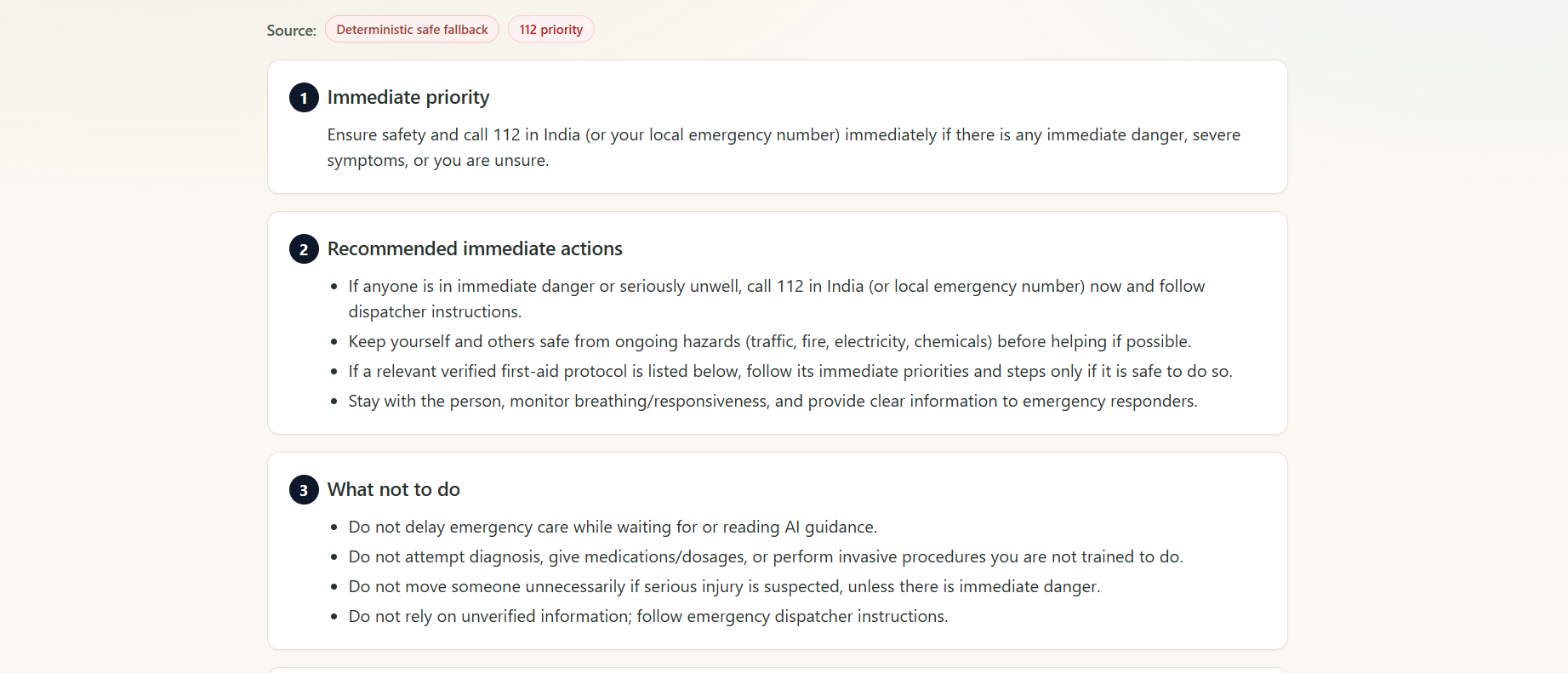
- AI Emergency Intelligence: Uses Gemini-powered assistance to generate structured, safety-focused emergency guidance, grounded in a curated first-aid knowledge base. A deterministic fallback remains available when the AI service is unavailable.
- First-Aid Intelligence: Provides accessible first-aid protocols covering situations such as severe bleeding, burns, choking, seizures, fractures, poisoning, and other emergencies.
- Offline Emergency Brain: Makes essential emergency protocols available through browser caching after the user prepares the offline resources.
- Trusted Contacts: Helps users maintain emergency contact information.
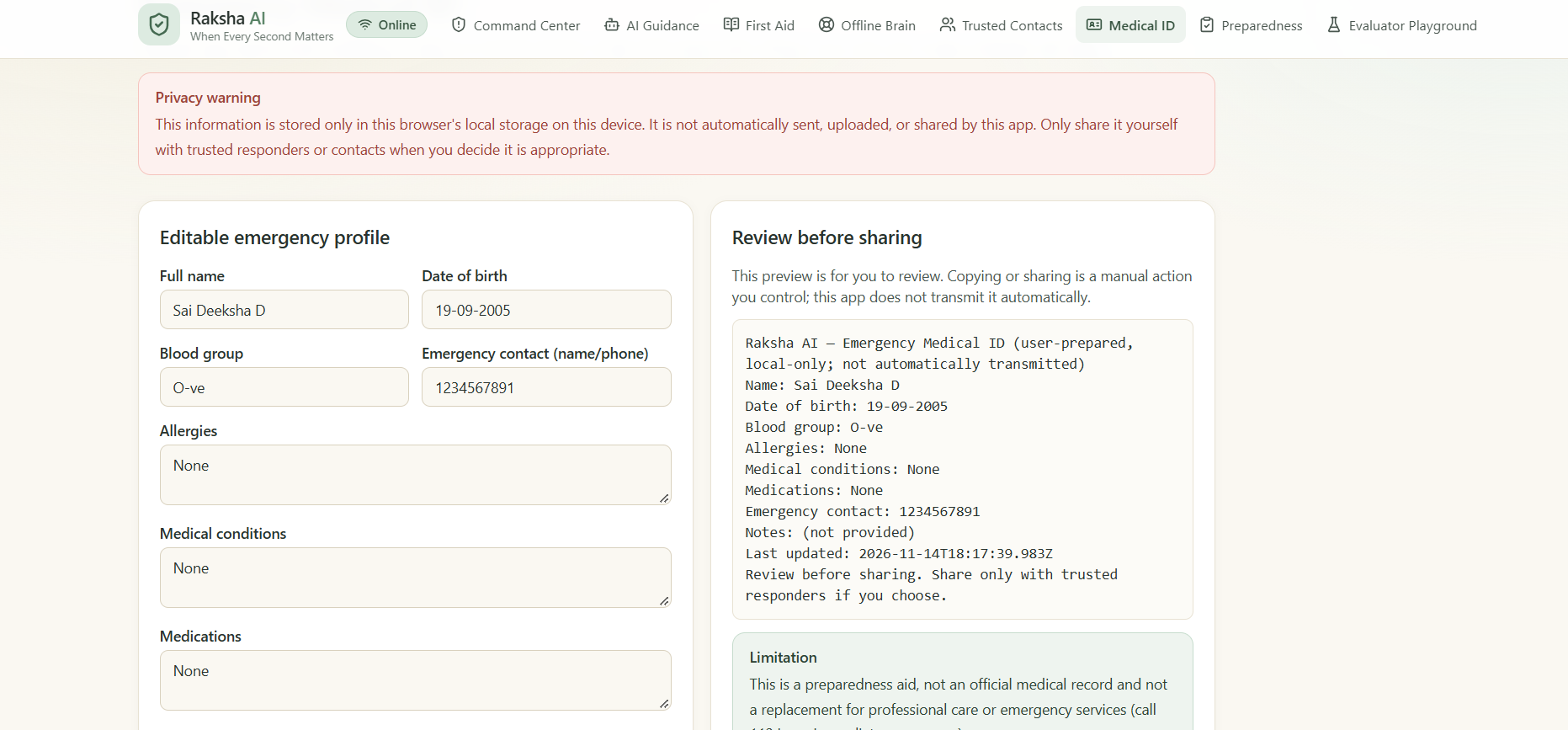
- Medical ID: Provides a place to maintain important medical and emergency information.
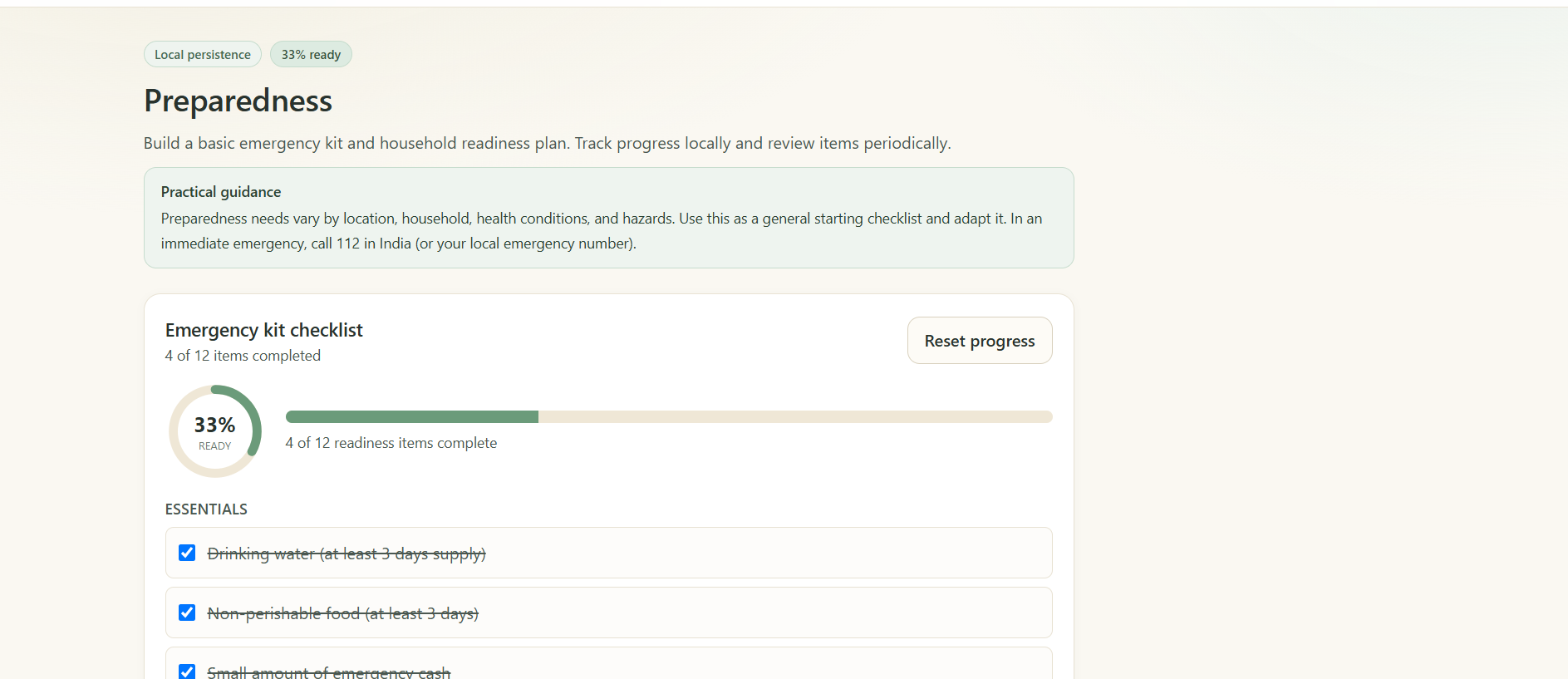
- Preparedness: Includes tools to help users prepare before an emergency occurs.
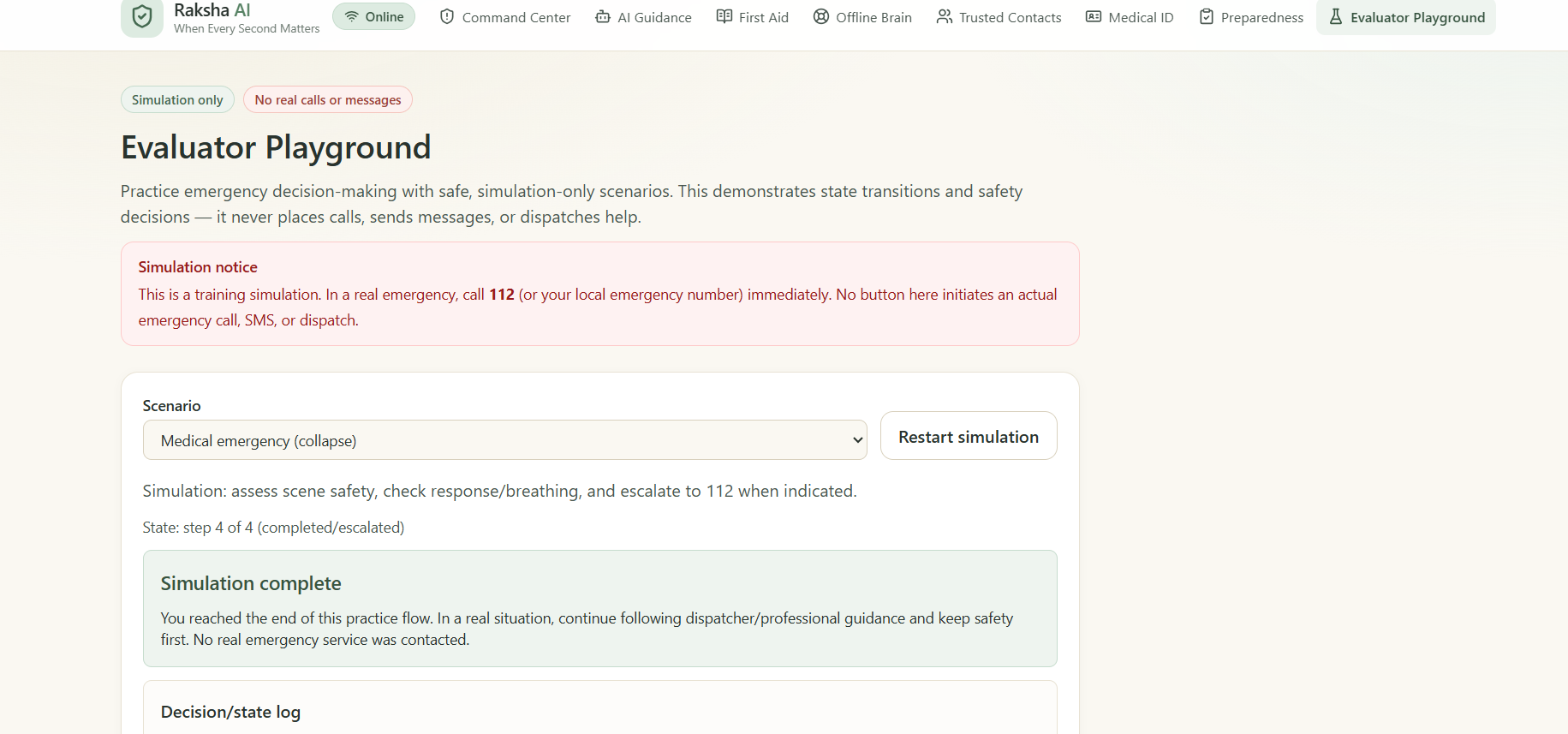
- Evaluator Playground: Offers a simulation environment to explore emergency scenarios without initiating real emergency actions.
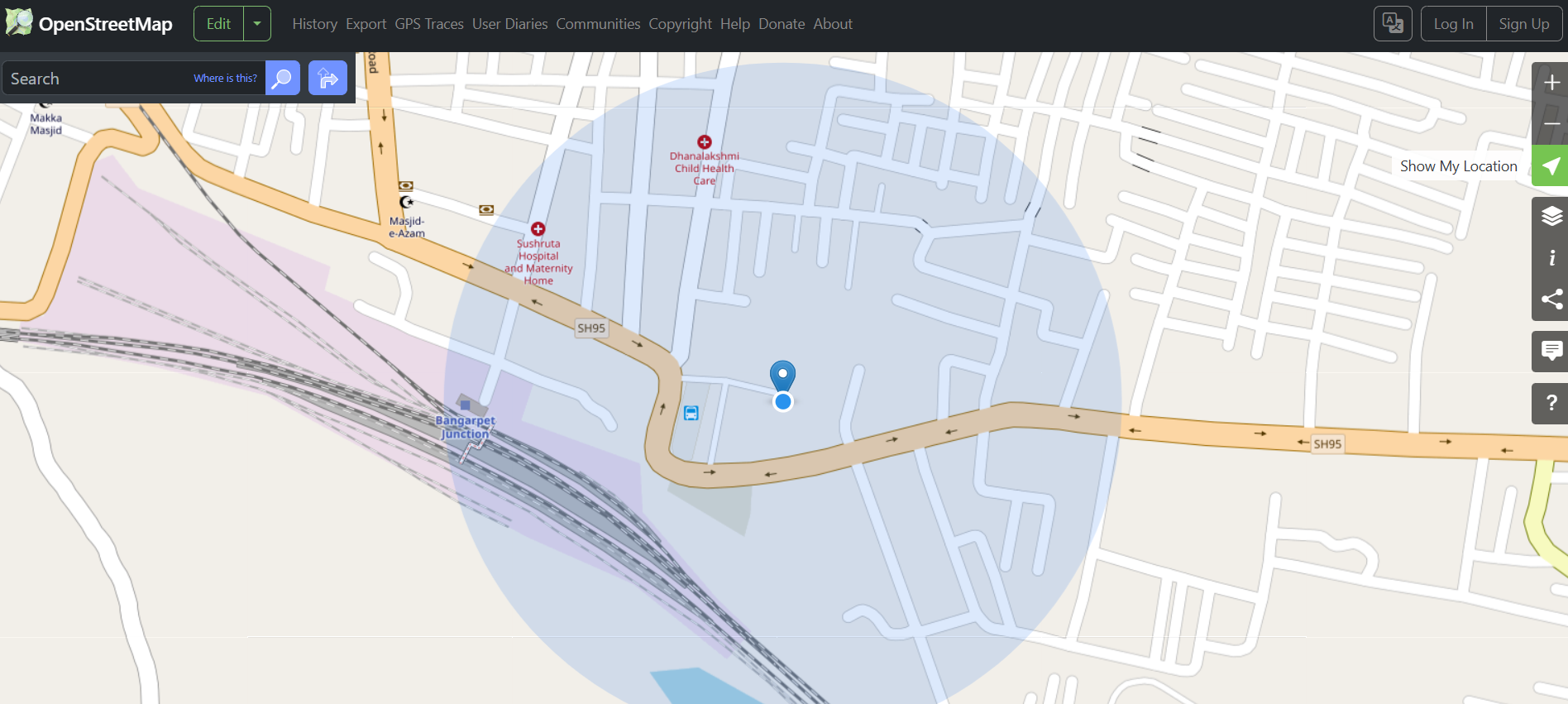
The platform also supports location assistance, emergency message preparation, and quick access to India's emergency number, 112.
Raksha AI does not automatically place emergency calls or send messages. Users remain in control of these actions.
How we built it
We developed the web implementation using a modern, modular architecture.
Frontend
- Next.js
- React
- TypeScript
- Tailwind CSS
AI and intelligence
- Google Gemini API
- Structured input validation
- Safety checks and deterministic fallback guidance
- Curated first-aid protocol knowledge base
Offline capabilities and storage
- Service Workers
- Browser Cache API
- Local browser storage for supported user preferences and information
Testing and quality
- Vitest
- TypeScript checks
- ESLint
- Production build verification
A major engineering focus was designing the emergency workflows to behave predictably. The SOS flow uses explicit states, countdown cancellation, and duplicate-action safeguards. AI responses are validated and constrained by safety rules, while essential first-aid resources remain separate from the AI service.
For offline access, the platform uses a service worker to cache its emergency resource library. This allows previously prepared protocols to remain accessible without depending on a live Gemini request.
Challenges we faced
One of the biggest challenges was balancing AI assistance with emergency safety.
An AI system should not confidently generate unsupported medical instructions. We addressed this by grounding guidance in curated first-aid resources, validating responses, applying safety checks, and providing deterministic fallback behavior.
Another challenge was making emergency resources useful under poor connectivity. We implemented browser-based caching so users can prepare essential protocols in advance.
We also focused on preventing accidental emergency actions. The SOS workflow includes a cancellation period and explicit user confirmation before opening external calling or messaging applications.
Finally, bringing multiple capabilities into a consistent and accessible interface required careful attention to navigation, responsive design, state management, and testing.
What we learned
Building Raksha AI taught us that developing an AI-powered emergency platform requires more than integrating an AI API.
Reliability, clear communication, user control, responsible AI behavior, accessibility, and offline availability are equally important.
We learned how to combine AI services with deterministic application logic, build offline-first web experiences, design state-driven emergency workflows, and test critical user interactions.
What's next
We envision expanding Raksha AI with:
- More regional languages and accessible voice-based guidance.
- Broader offline resource coverage.
- Improved emergency preparedness and scenario-based learning.
- More comprehensive validation of emergency workflows across devices and connectivity conditions.
- Further refinement of safety, usability, and accessibility.
Our goal is to make essential emergency information easier to access, understand, and act upon.
Project development disclosure
Raksha AI has an earlier Android project that predates IceHacks. The web implementation submitted here was developed as a separate web-focused implementation, building on the broader emergency-assistance concept. The pre-existing Android work is disclosed transparently and is not being represented as work created during this hackathon.
Raksha AI — Be Prepared. Act Smart. Stay Safe.
Built With
- artificial-intelligence
- emergency-response
- generative-ai
- google-gemini
- healthcare
- javascript
- next.js
- offline-first
- progressive-web-app
- react
- service-workers
- tailwind-css
- typescript
- vitest
- web-development
