-
-
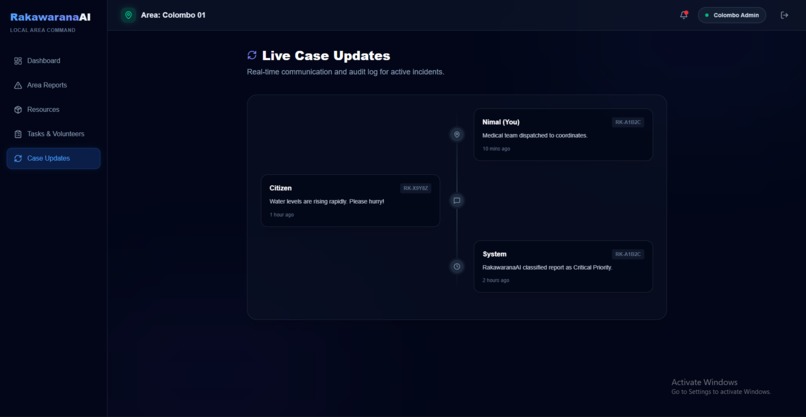
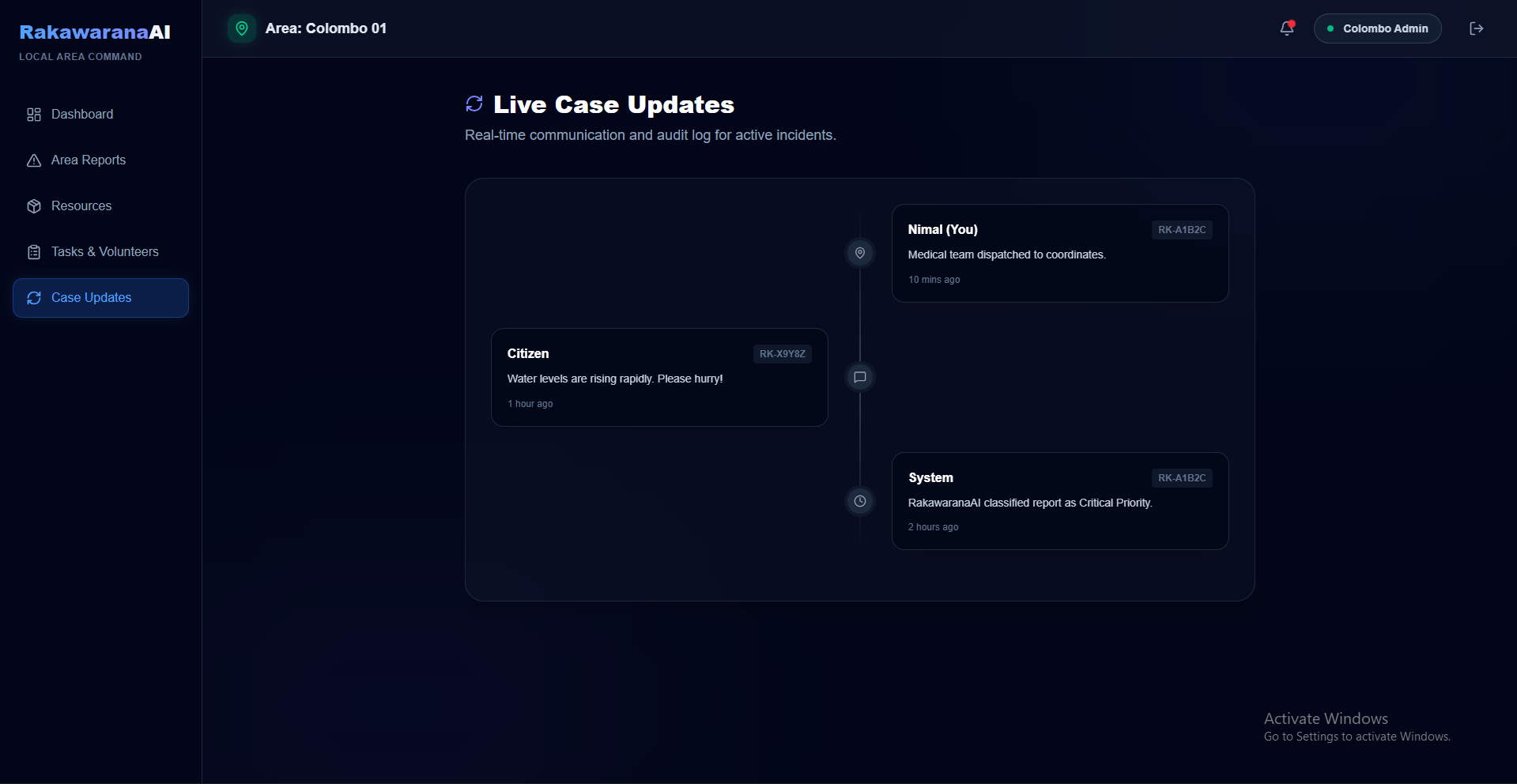
Case Updates Page
-
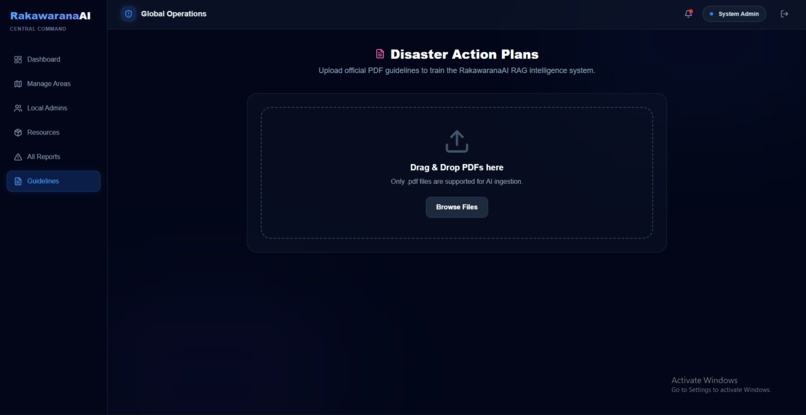
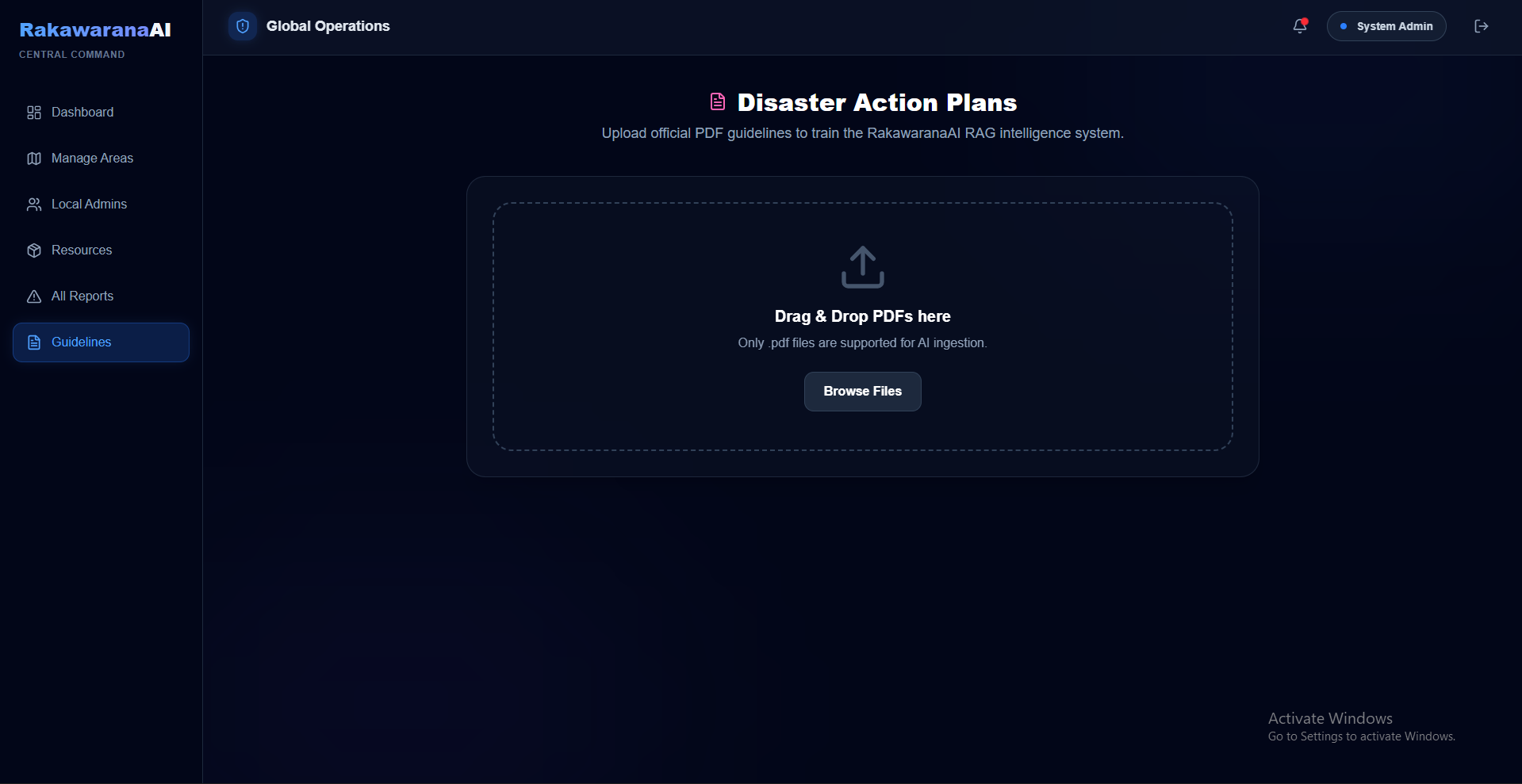
Guidline Import Page
-
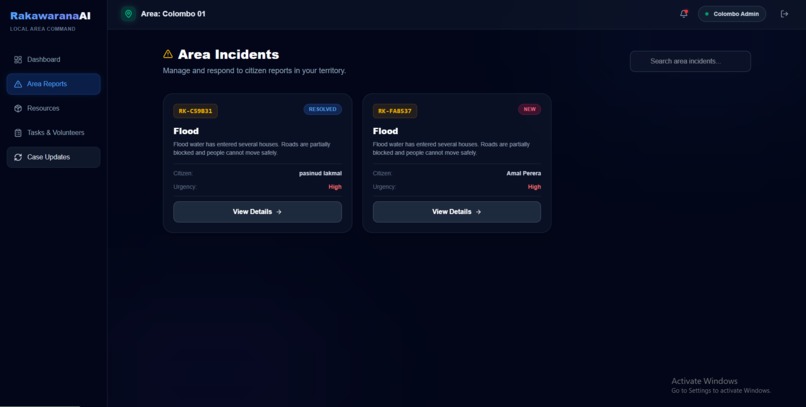
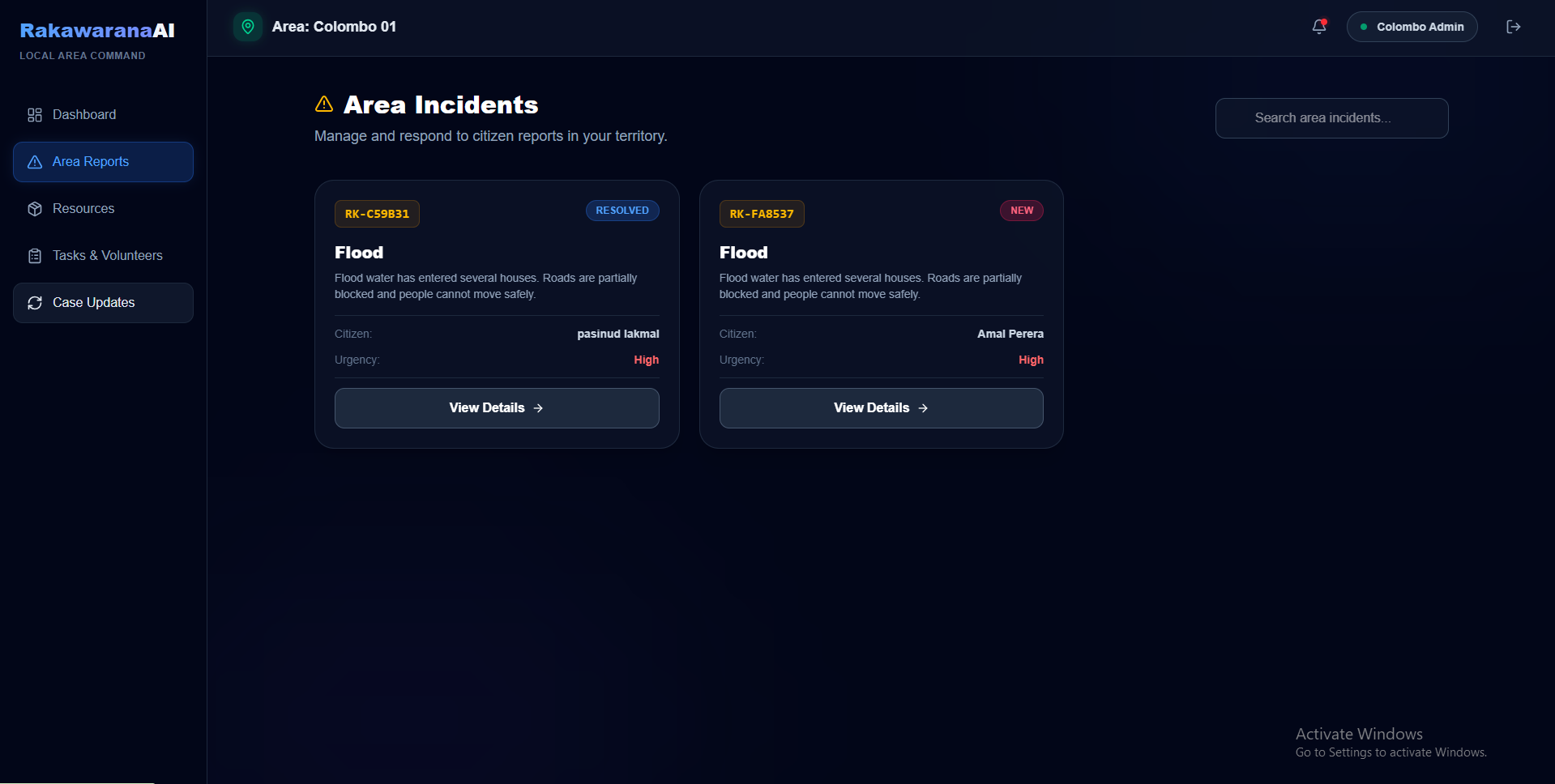
Area Report Page
-
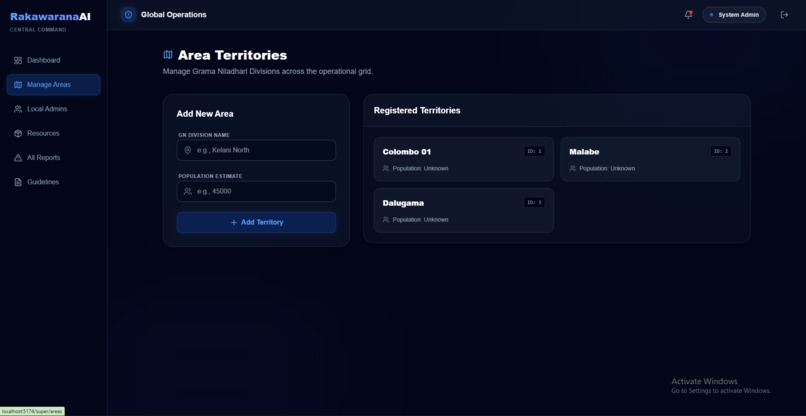
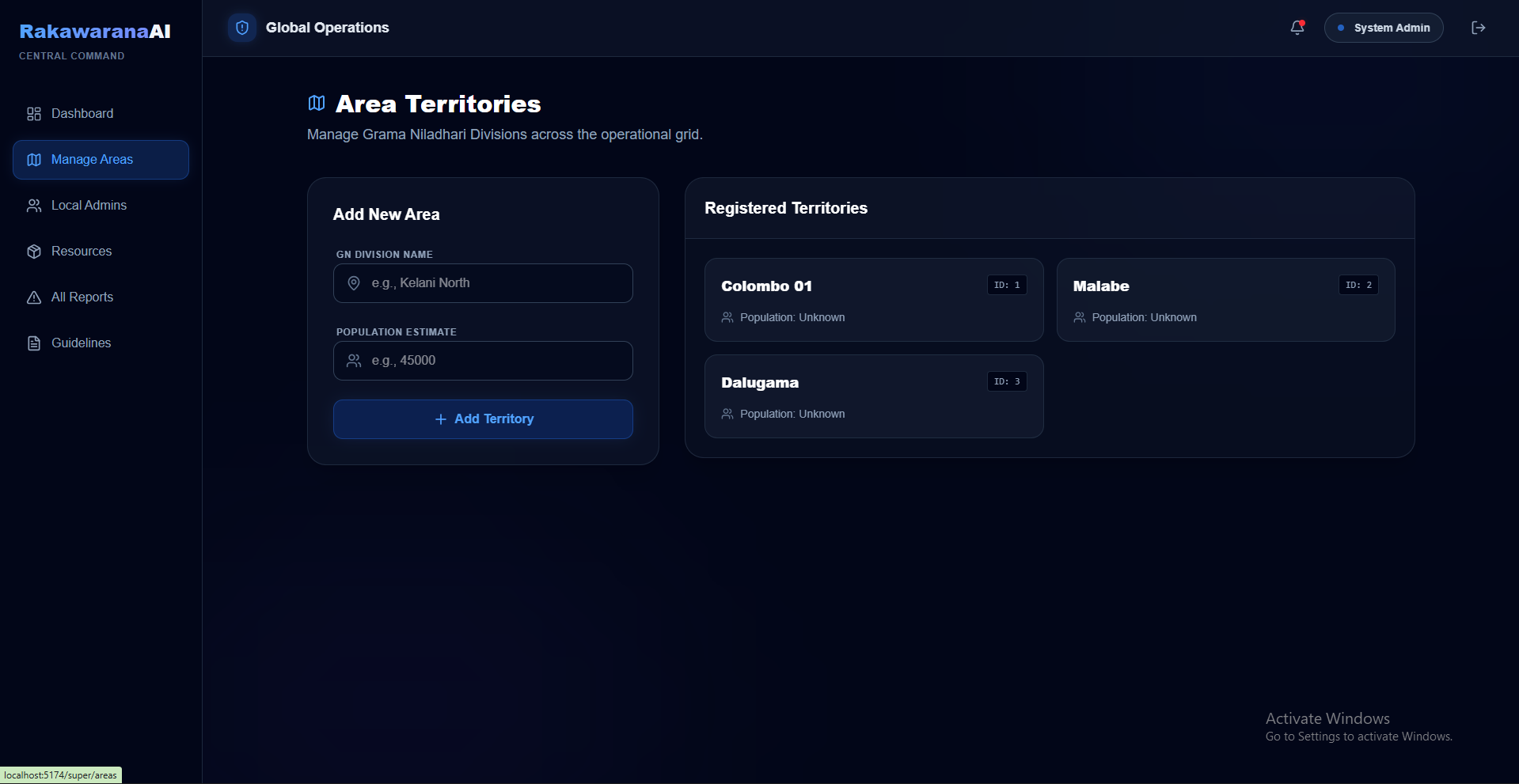
Area Manage Page
-
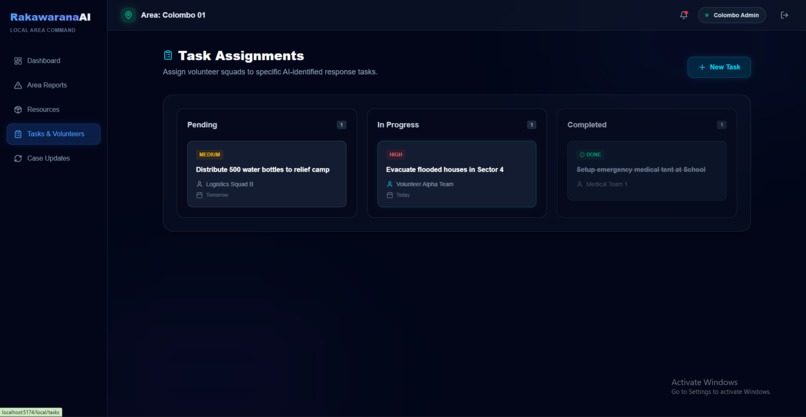
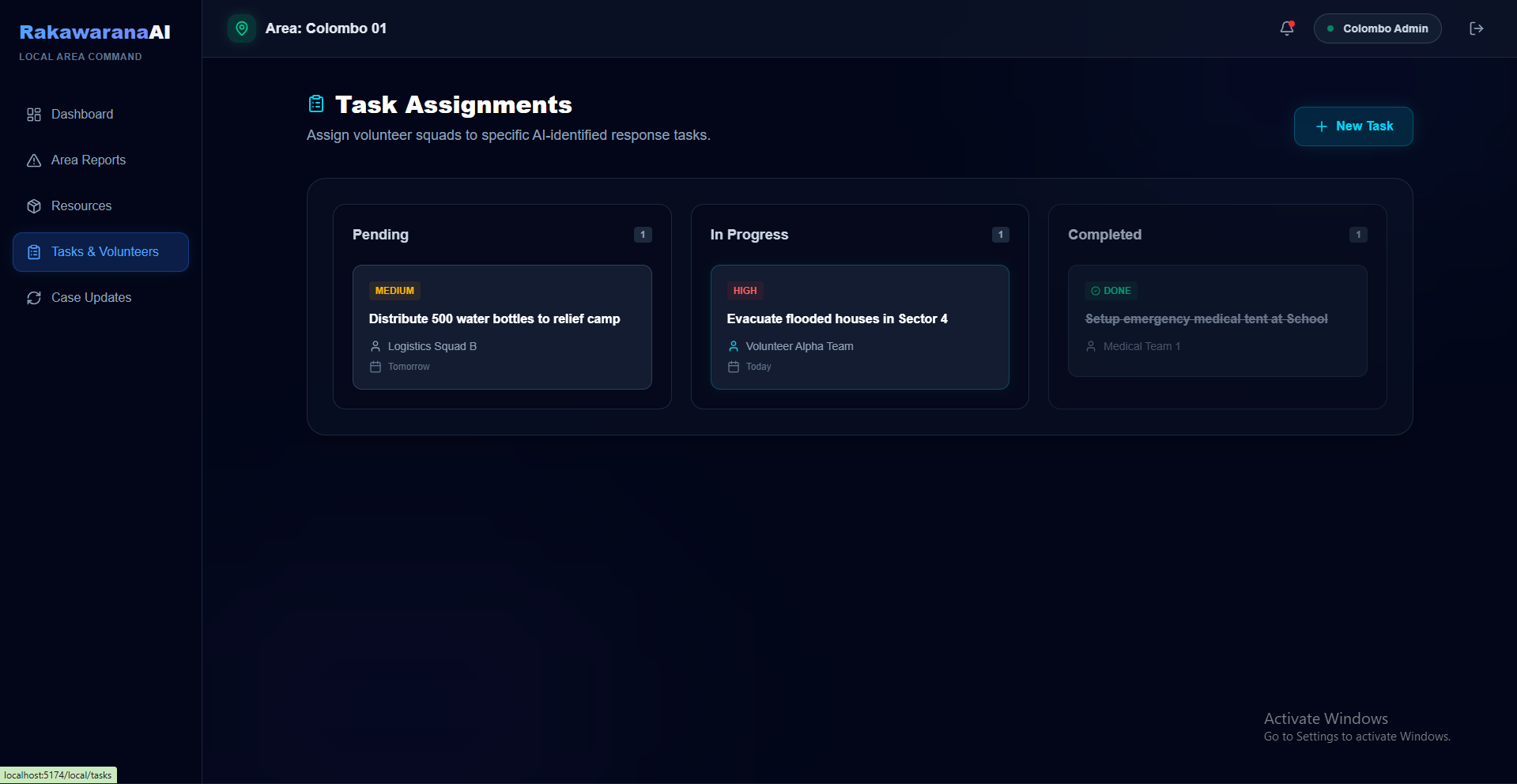
Tasks Volunteer Page
-
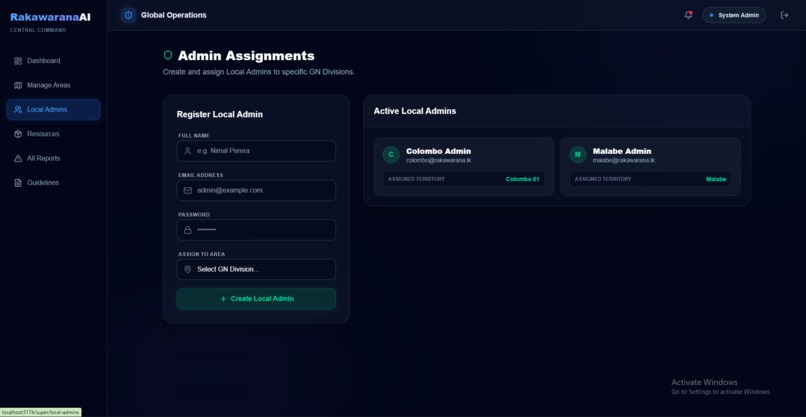
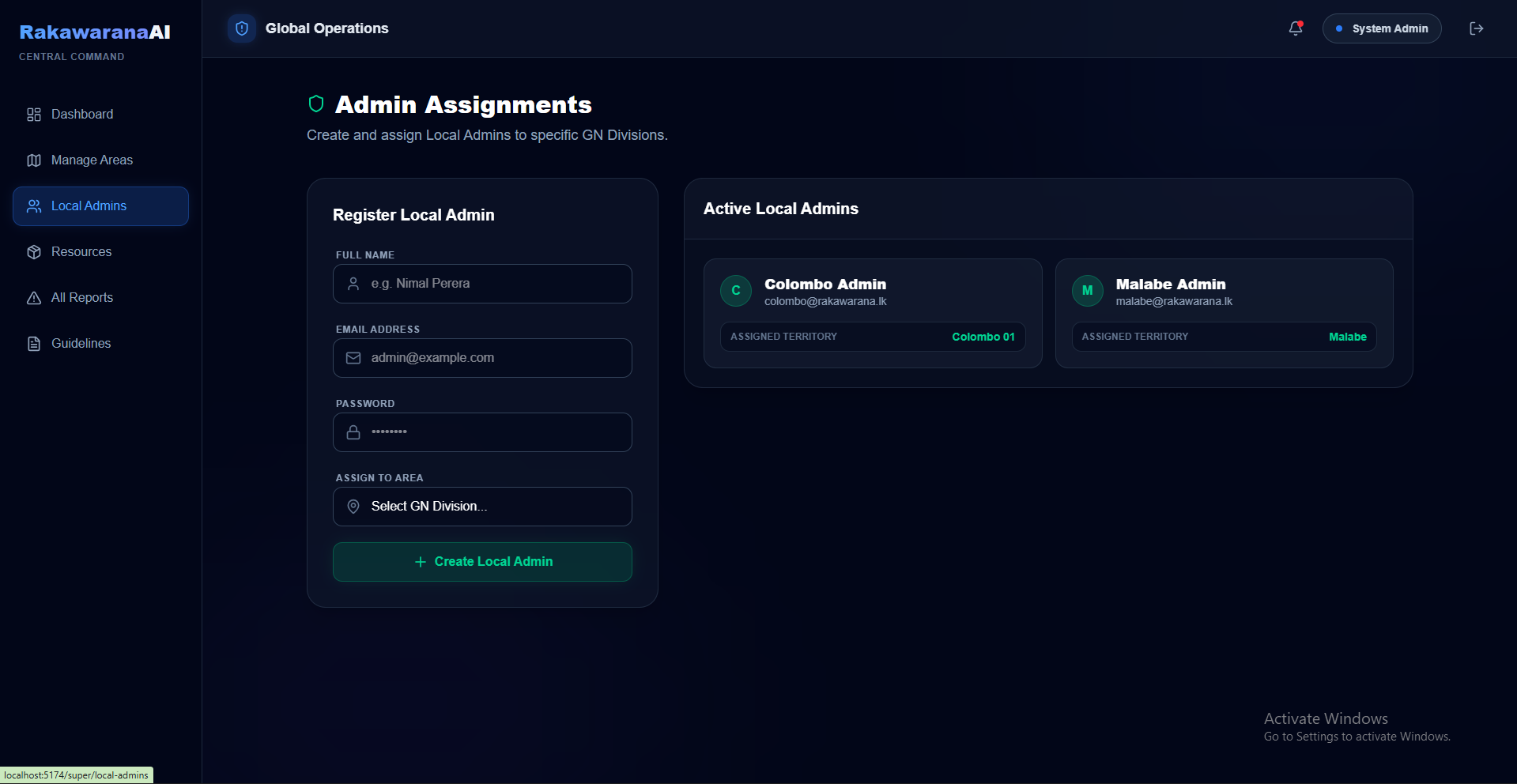
Admin Assignments Page
-
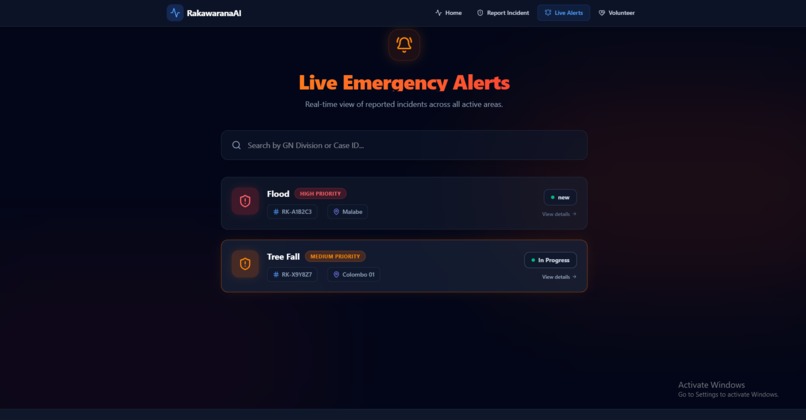
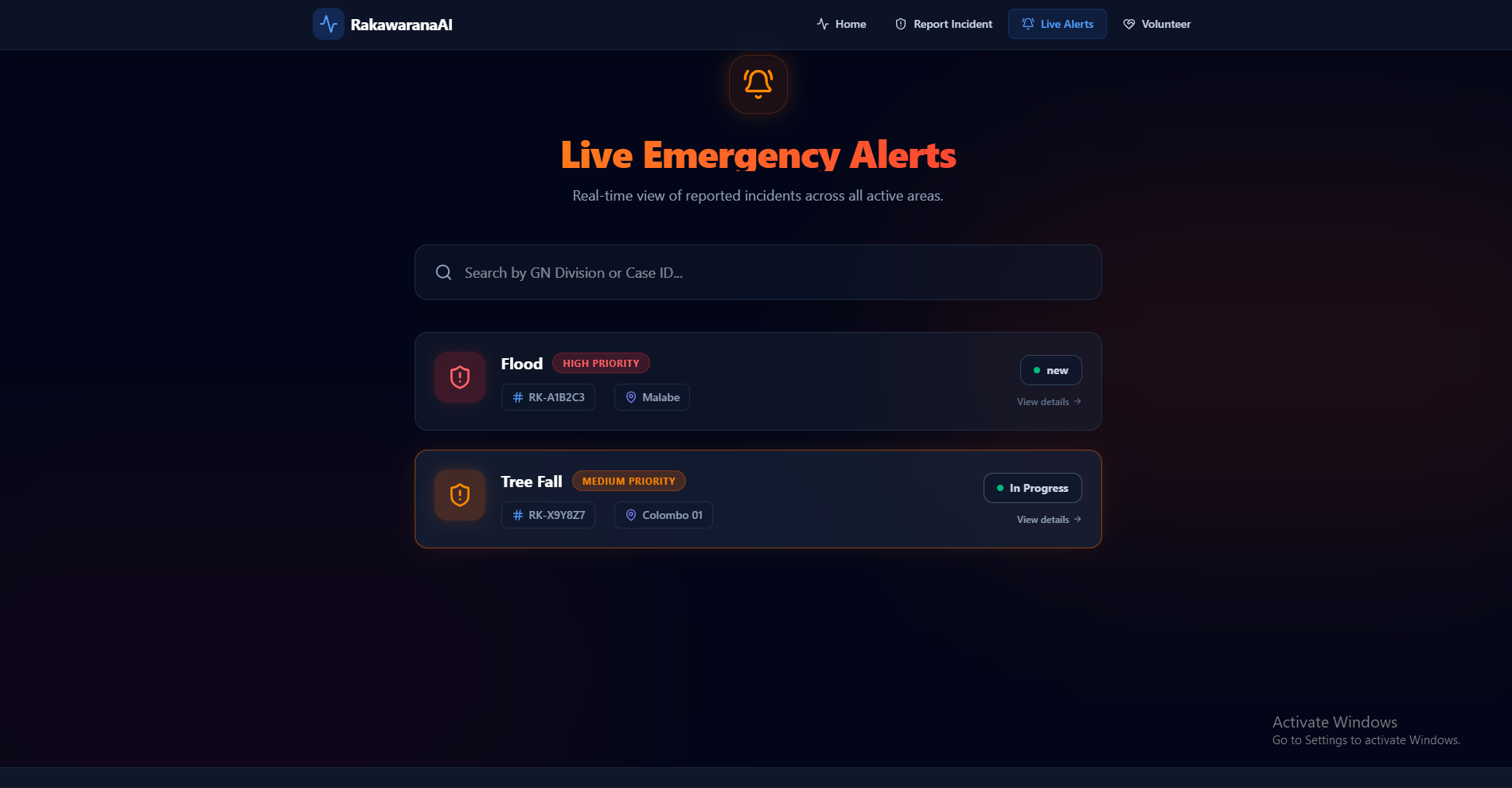
Live Alerts Page
-
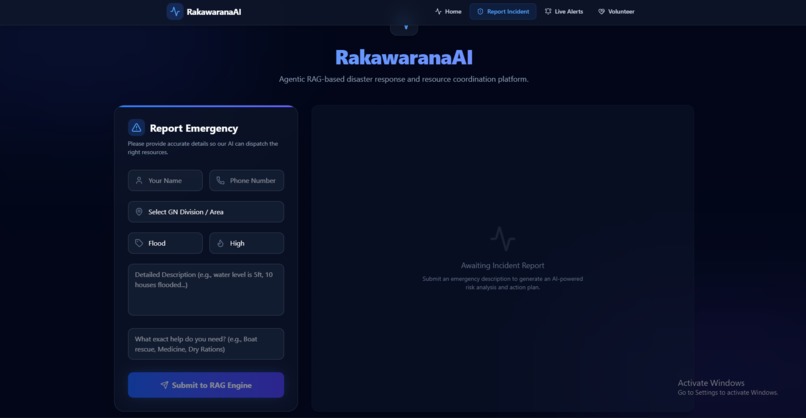
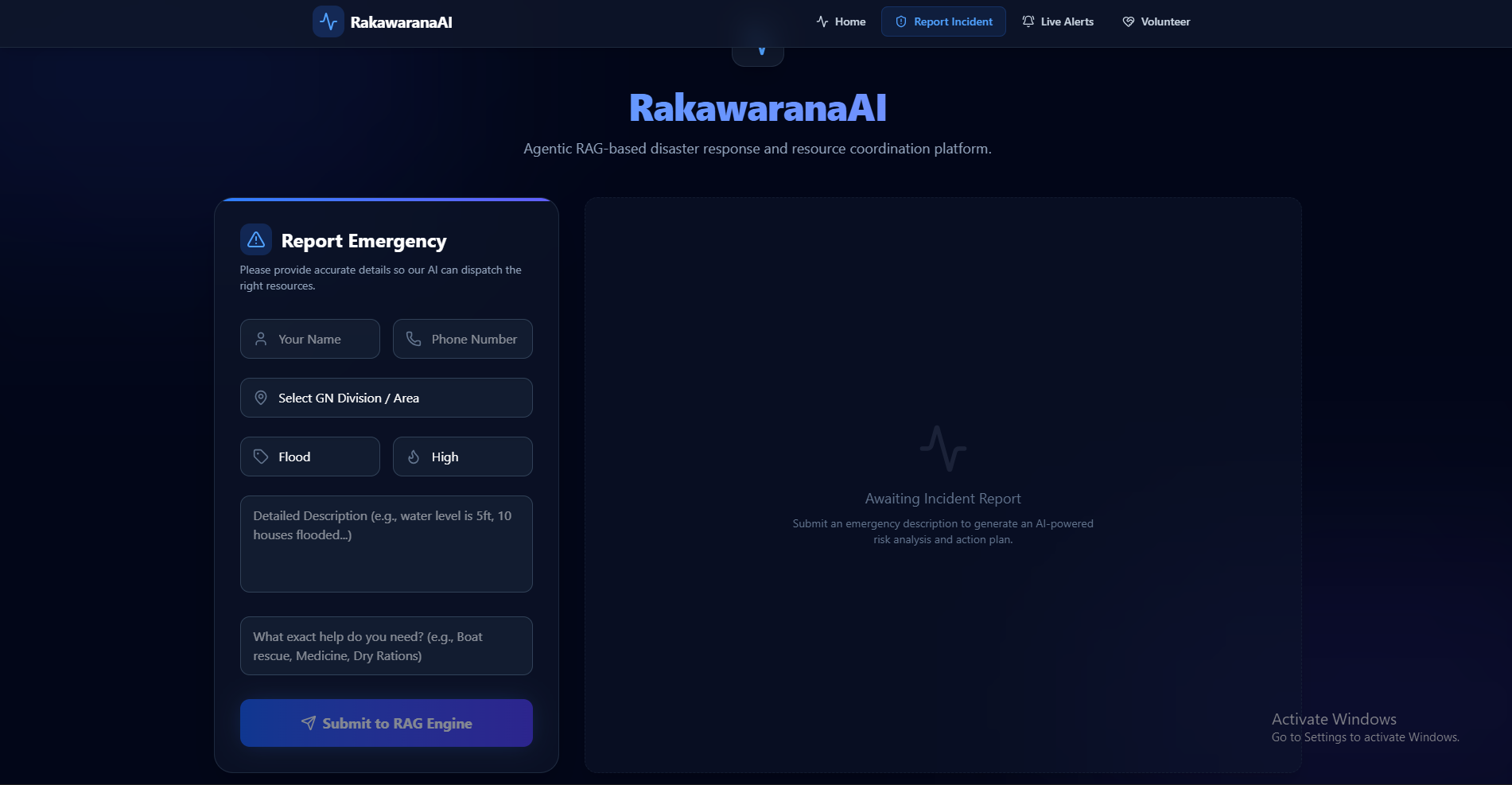
Report Incident
-
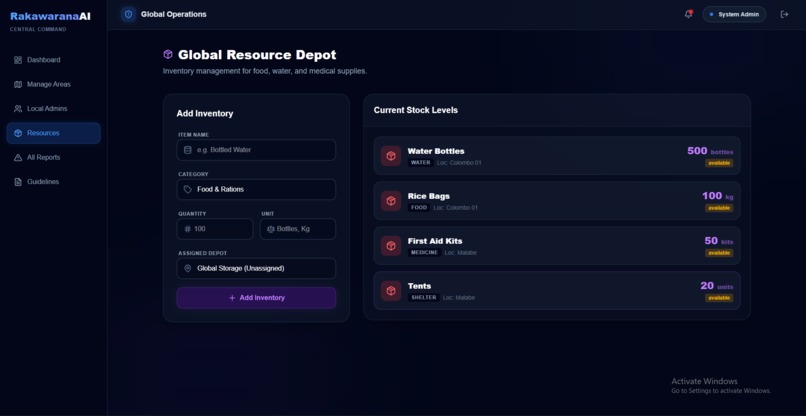
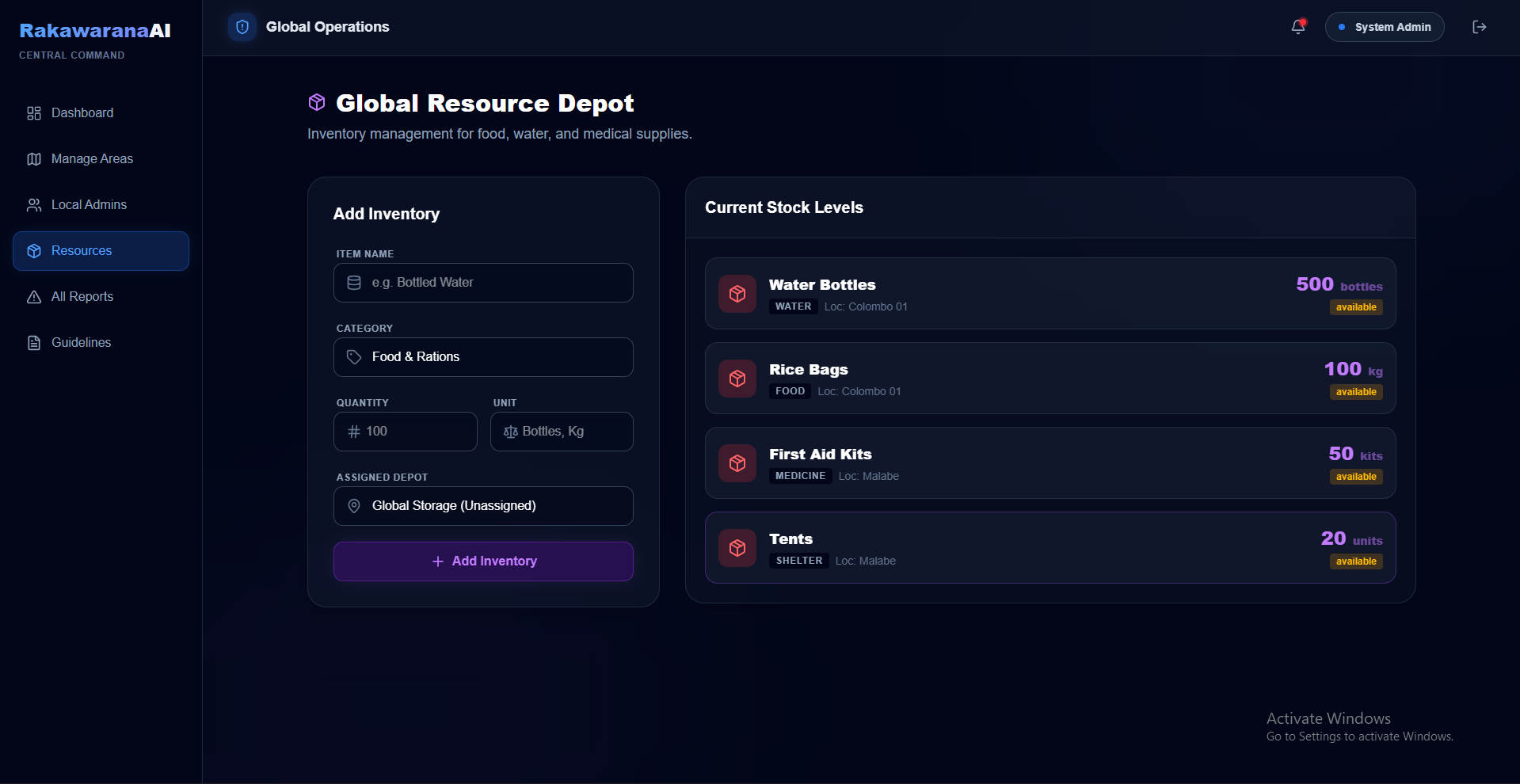
Global Resource Page
-
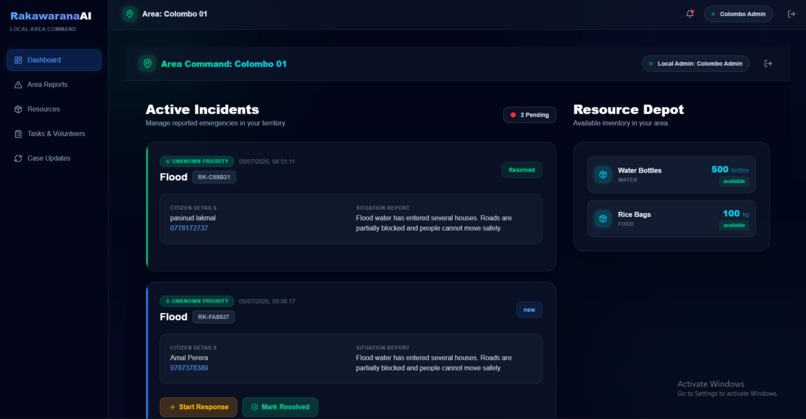
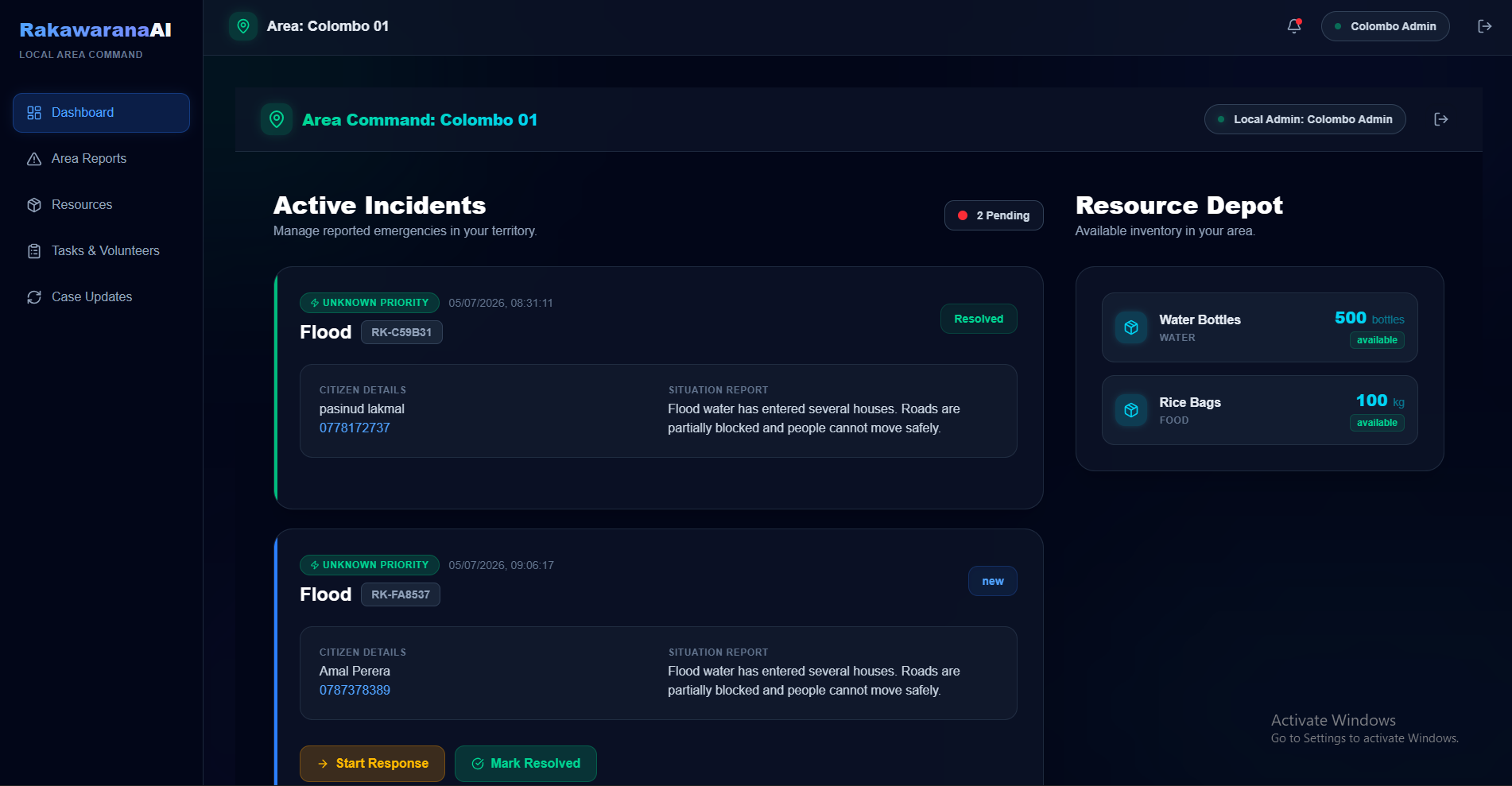
Local Admin Dashboard
-
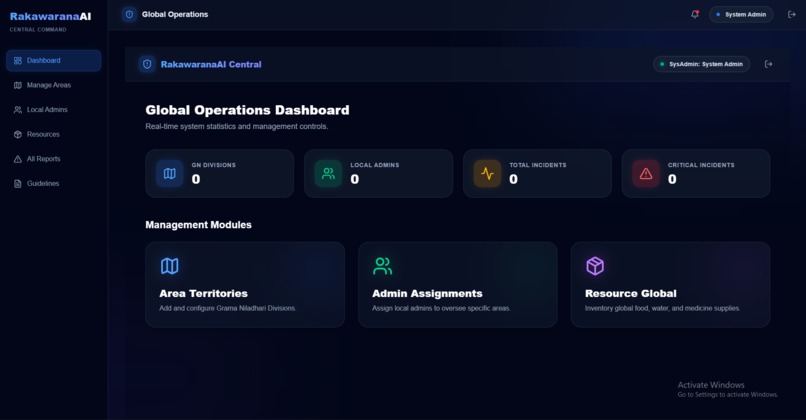
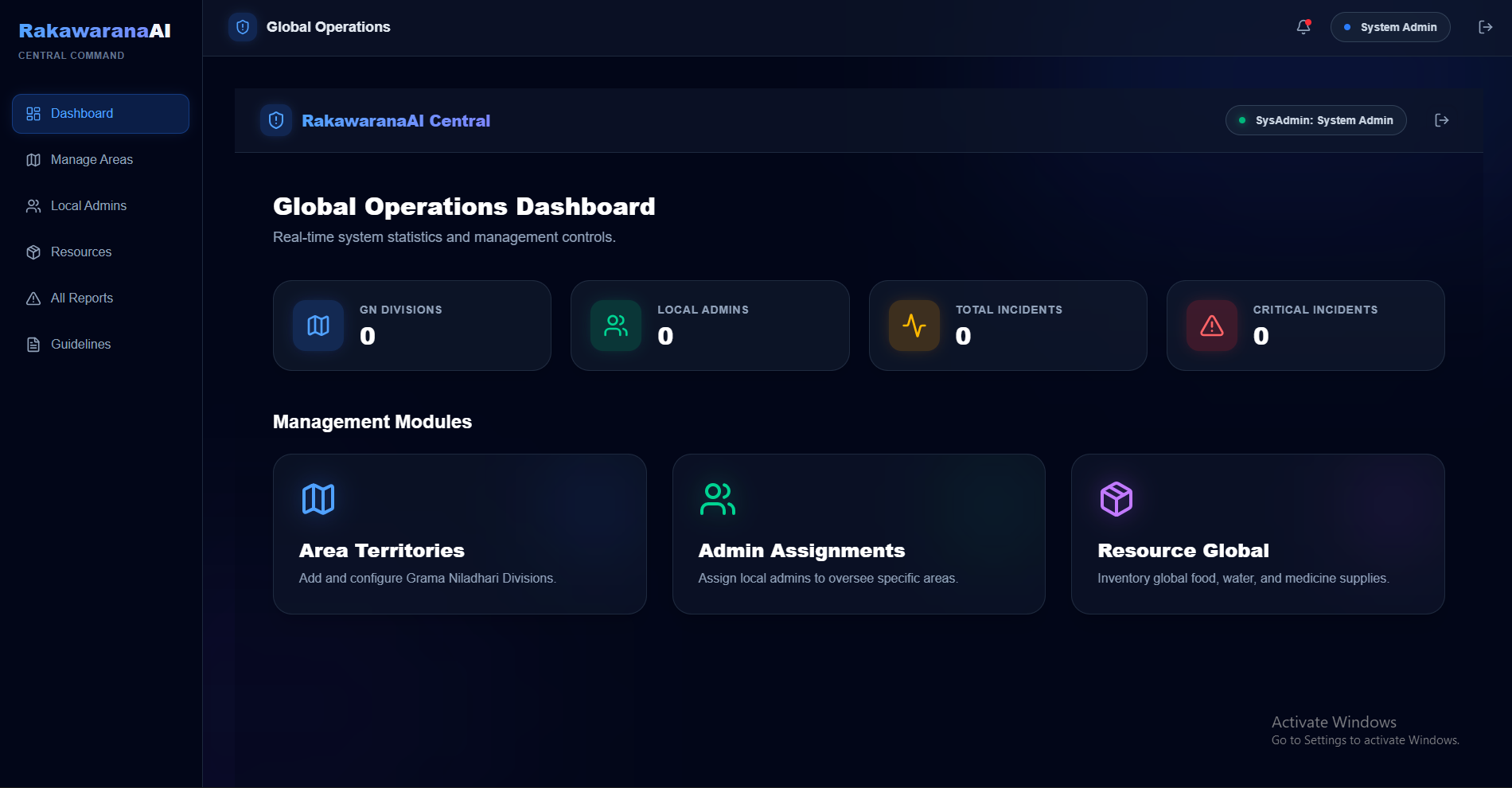
Super Admin Dashboard
-
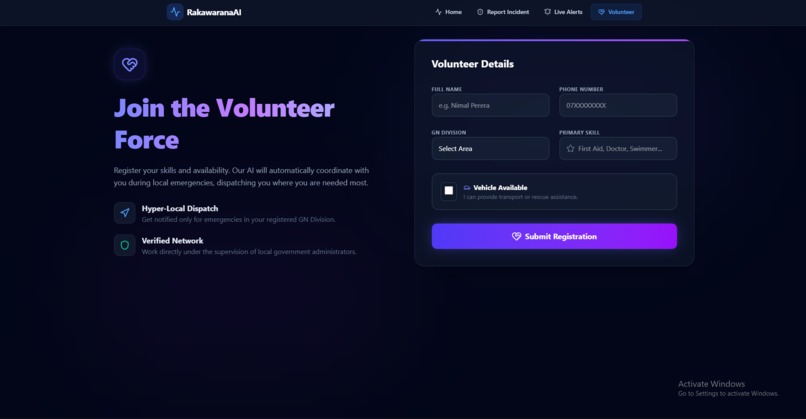
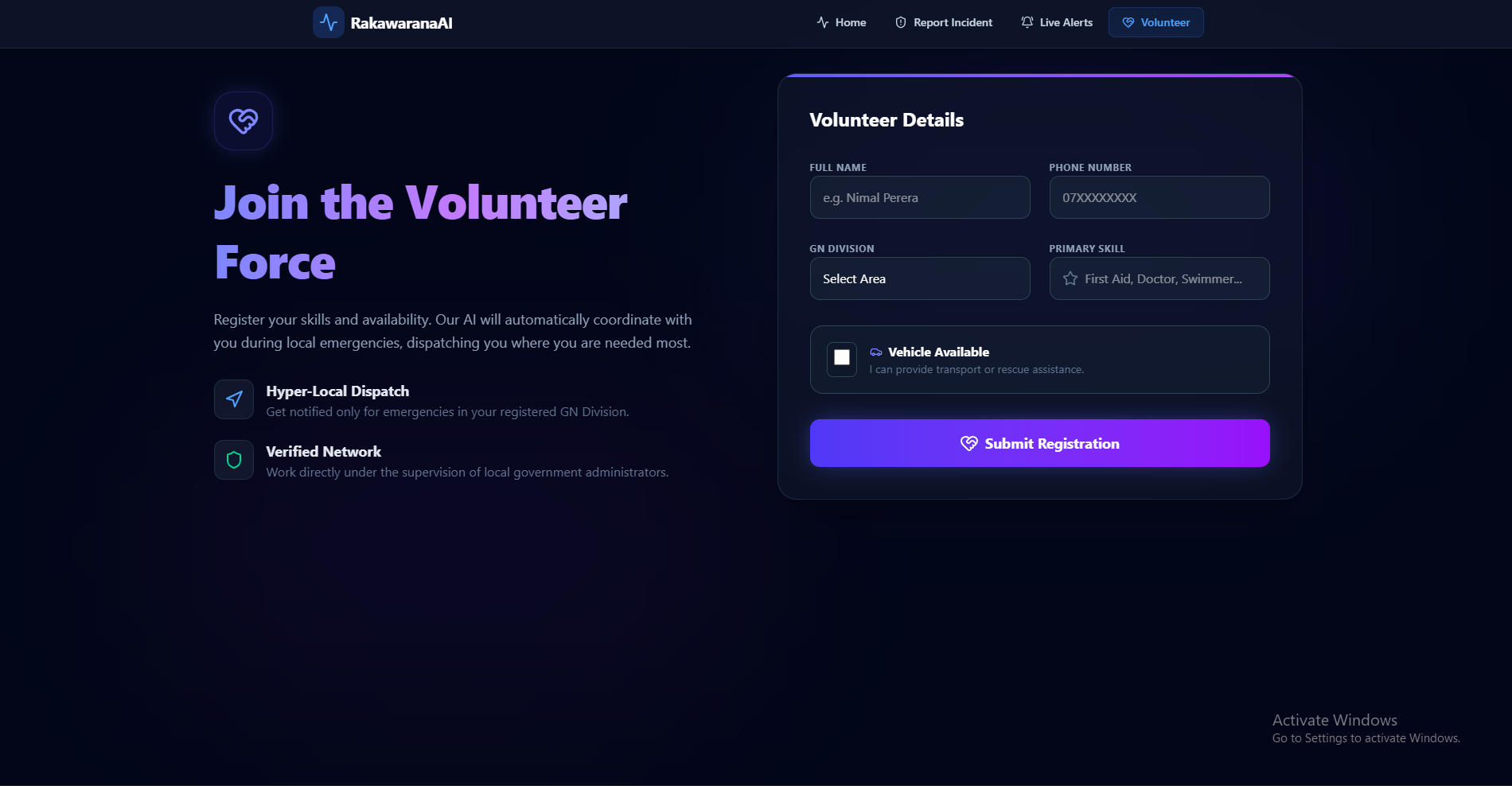
Volunteer Page
-
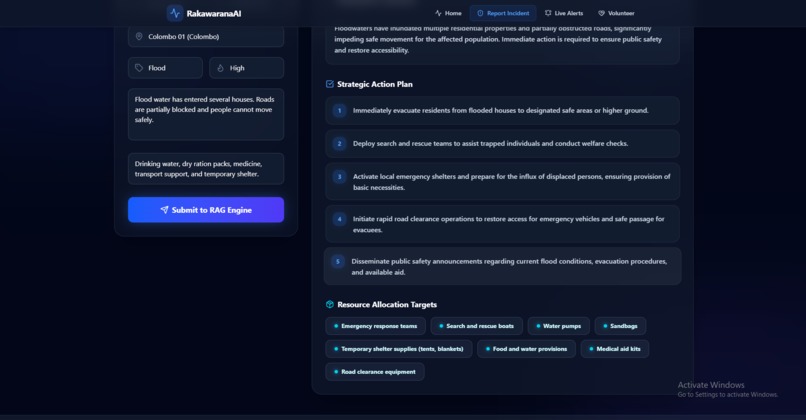
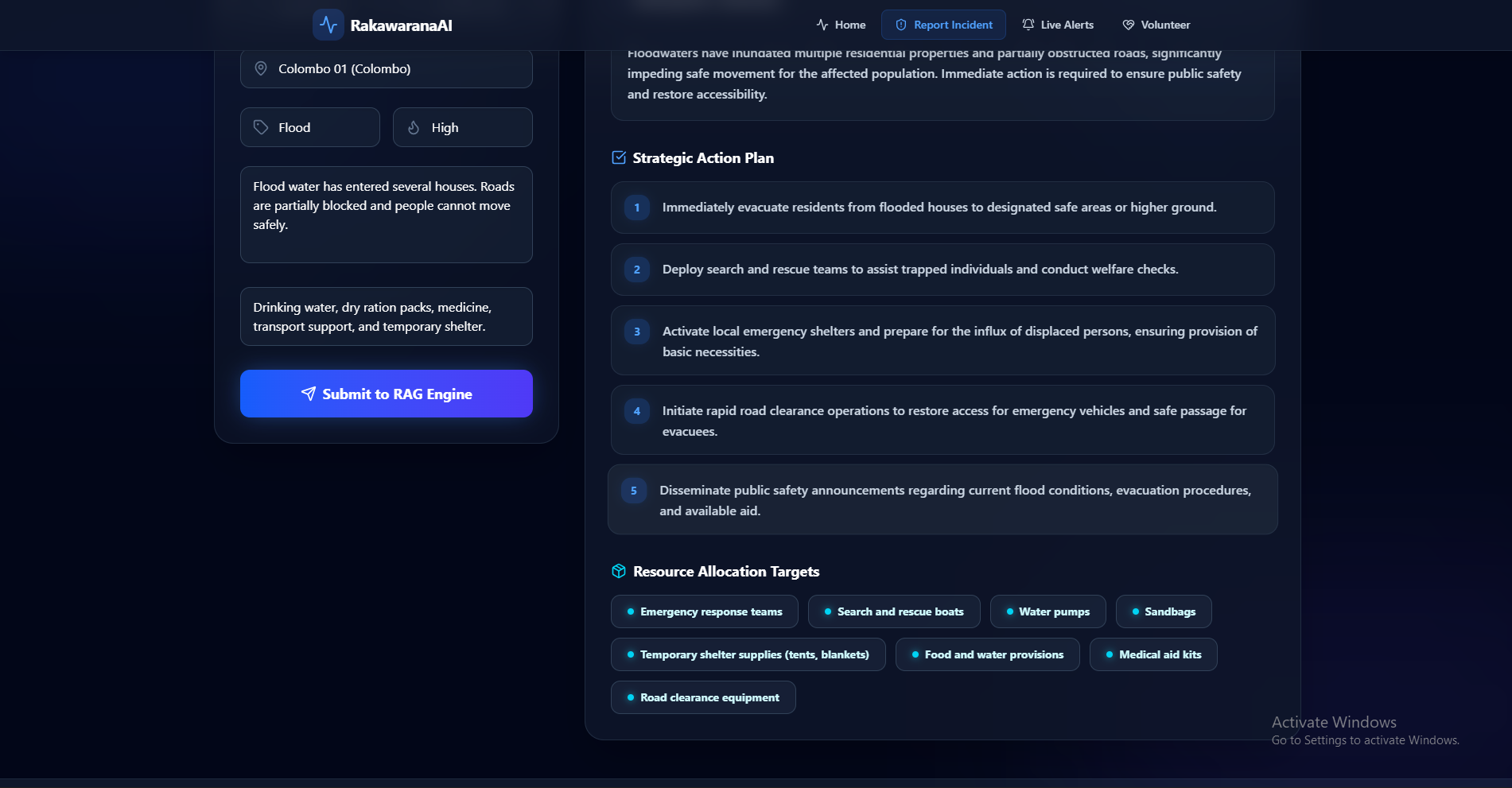
Report Incident Result
-
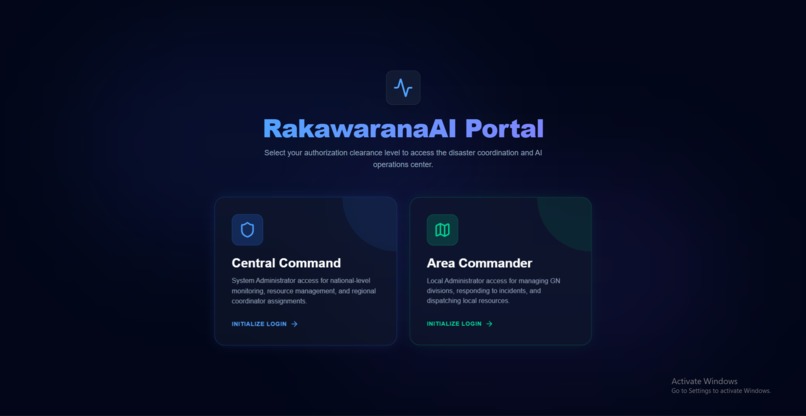
Admin Home page
-
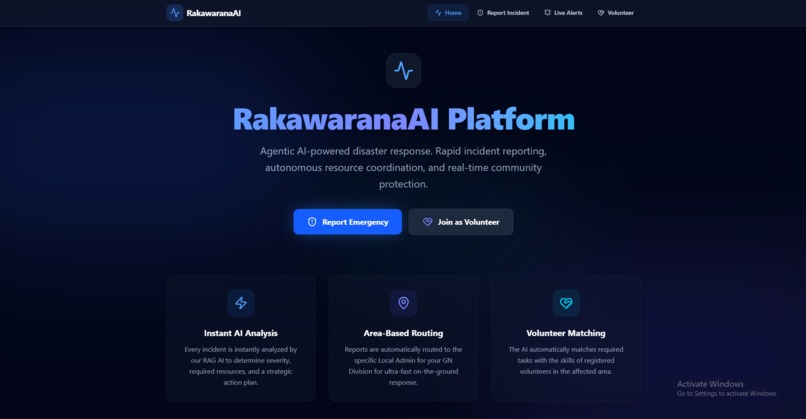
Home Page
Inspiration
During disasters such as floods, landslides, and urgent community emergencies, people often report problems through phone calls, WhatsApp groups, or informal messages. This decentralized approach can cause urgent cases to be missed, resources to be poorly coordinated, and local officers or volunteers to respond slowly.
RakawaranaAI was inspired by the critical need for a centralized and localized disaster response system where citizens can quickly report an emergency, and the correct local area administrator can instantly receive, analyze, and act on the case with the help of Artificial Intelligence.
What it does
RakawaranaAI is an AI-powered, role-based community disaster response platform.
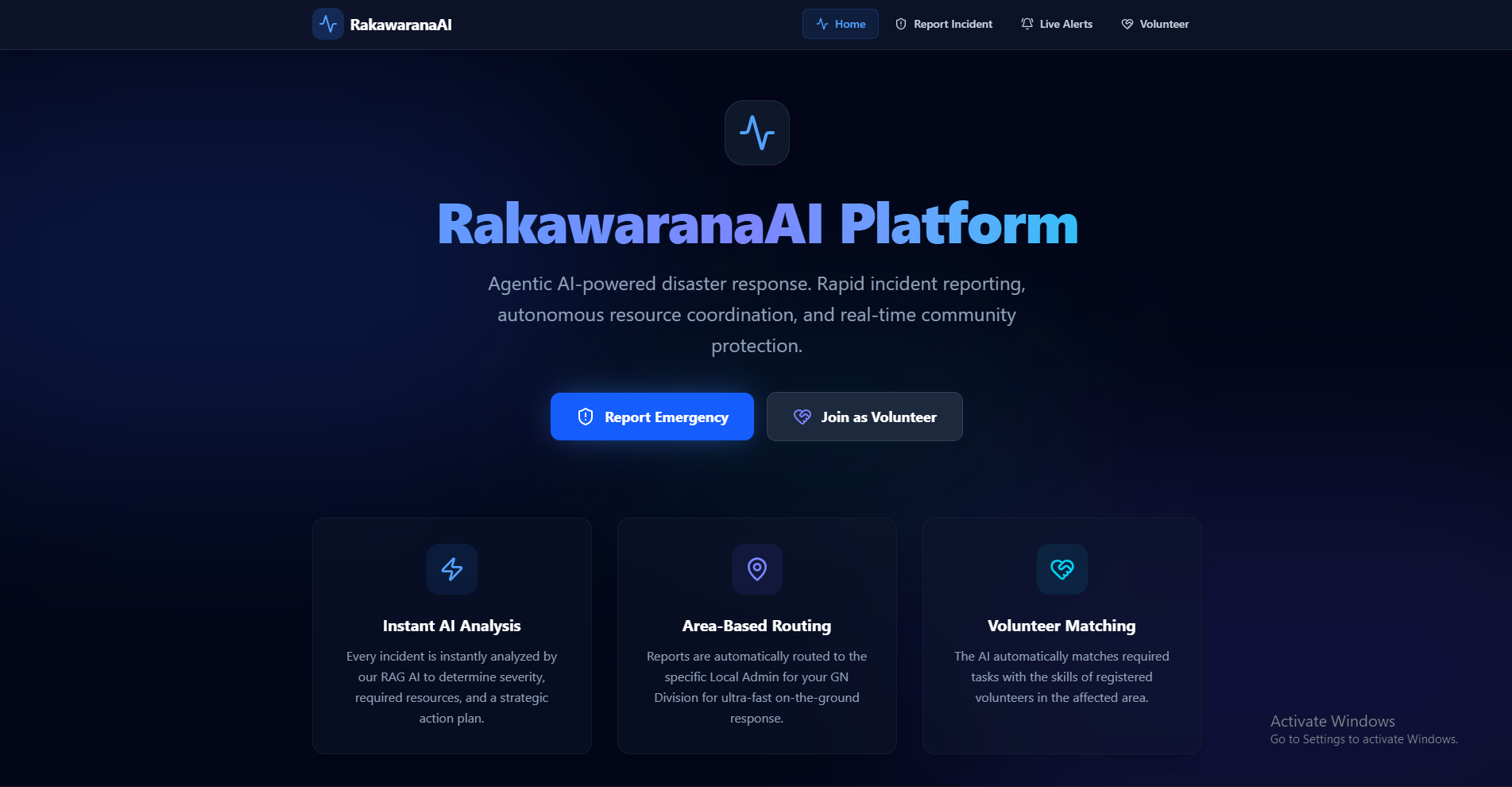
Citizen Portal
Citizens can report emergency issues through a simple interface by entering:
- Name
- Phone number
- Grama Niladhari division / area
- Issue type
- Urgency level
- Detailed description
- Exact help needed
AI Operations Center
Once a report is submitted, the system routes it to the correct local area admin. The AI module analyzes the incident and generates a structured emergency response plan, including:
- Severity level and priority
- Incident intelligence summary
- Required resources and logistics
- Step-by-step recommended response actions
- Shareable incident report
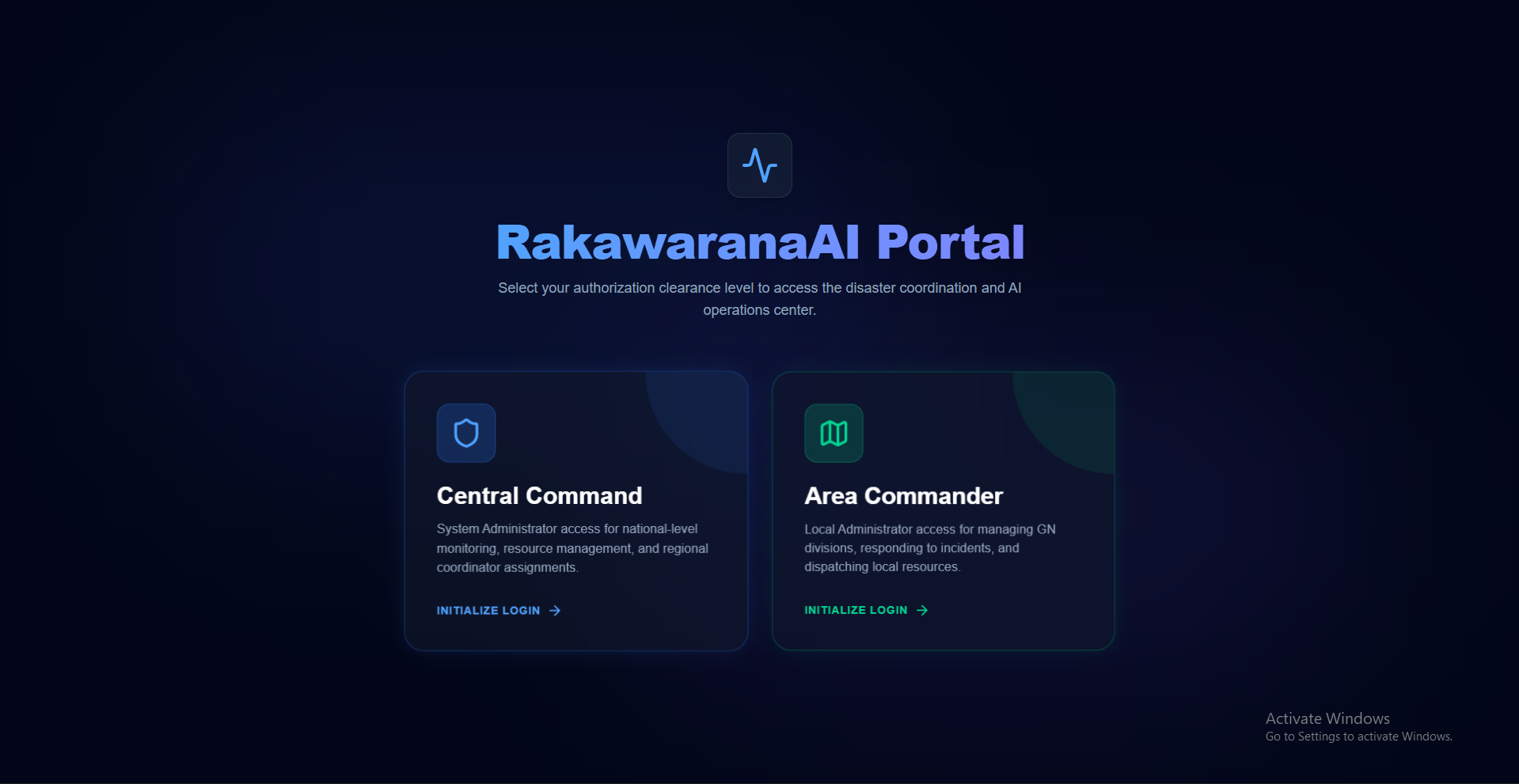
Central Command — Super Admin
The super admin can:
- Manage local admins
- Define geographical areas
- Monitor all reports
- Manage resources
- Upload official disaster guideline documents for AI-based response support
Area Commander — Local Admin
Each local admin has a dedicated dashboard to:
- Review reports from their assigned area
- Contact citizens
- Coordinate resources
- Track case progress
- Update case status on the ground
How we built it
Frontend
The frontend was built using React, Vite, and Tailwind CSS. We designed a responsive glassmorphic dark mode UI to make the platform modern, clean, and easy to use during high-stress emergency situations.
Backend
The backend was built with Python and FastAPI to handle report submissions, role-based access, authentication, AI processing, and API communication.
Artificial Intelligence
We implemented a RAG-based architecture using ChromaDB. Official disaster guideline PDFs can be uploaded, processed, chunked, and stored in the vector database.
When a citizen submits an incident, the system retrieves the most relevant disaster response context and uses Gemini AI to generate a structured response plan.
The AI output includes:
- Severity level
- Required resources
- Recommended actions
- Helper needs
- Incident summary
- Shareable emergency report
Deployment
The full-stack application is containerized using Docker and Docker Compose for easier setup and deployment.
Challenges we faced
Our biggest challenge was architectural. We initially started building RakawaranaAI as a simple AI emergency assistant. However, we quickly realized that a chatbot alone cannot handle real community coordination.
Because of that, we expanded the project into a full area-based disaster response platform with:
- Role-based access
- Super admin dashboard
- Local admin dashboard
- Area-based report routing
- Resource management
- AI-powered incident analysis
Another major challenge was making the AI output actionable. Instead of generating long paragraphs of general advice, we designed the AI response to return structured data such as severity levels, resources, actions, and summaries so they can be displayed clearly in the frontend.
What we learned
We learned how to combine LLMs, RAG, vector databases, and backend APIs into a practical real-world system.
We also learned that disaster response is not only about giving advice. It also requires local-level coordination, correct area routing, resource management, and clear communication between citizens, local admins, and volunteers.
What's next
We plan to improve RakawaranaAI with:
WhatsApp / SMS Integration
Citizens will be able to report emergencies through WhatsApp or SMS, and those reports will automatically appear in the RakawaranaAI dashboard.
Predictive AI Mapping
We plan to integrate map-based disaster visualization and predictive flood or landslide risk areas.
Live Volunteer App
A mobile companion app will allow ground volunteers and helpers to receive tasks directly from local admins.
Advanced Resource Allocation
Future versions will include real-time stock tracking, donor management, helper assignment, and automated shortage detection.

Log in or sign up for Devpost to join the conversation.