-
-
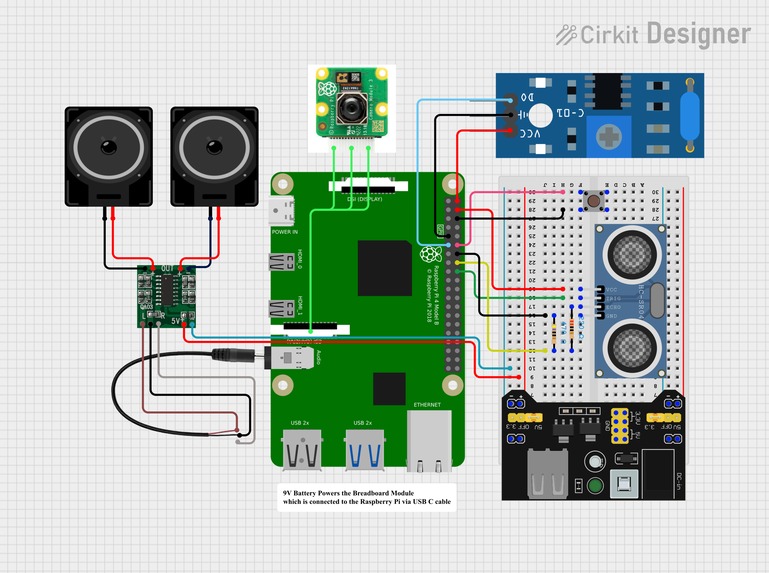
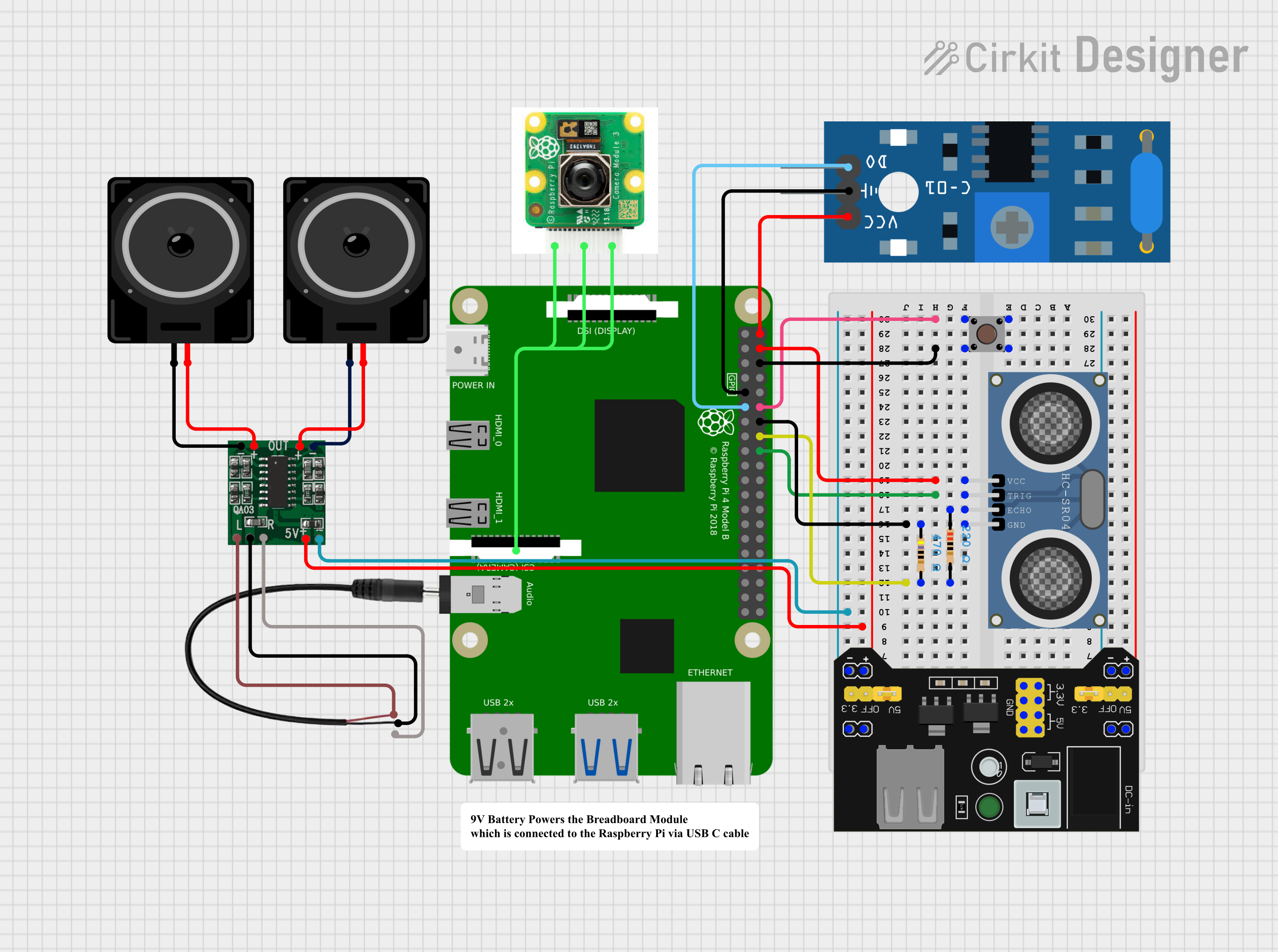
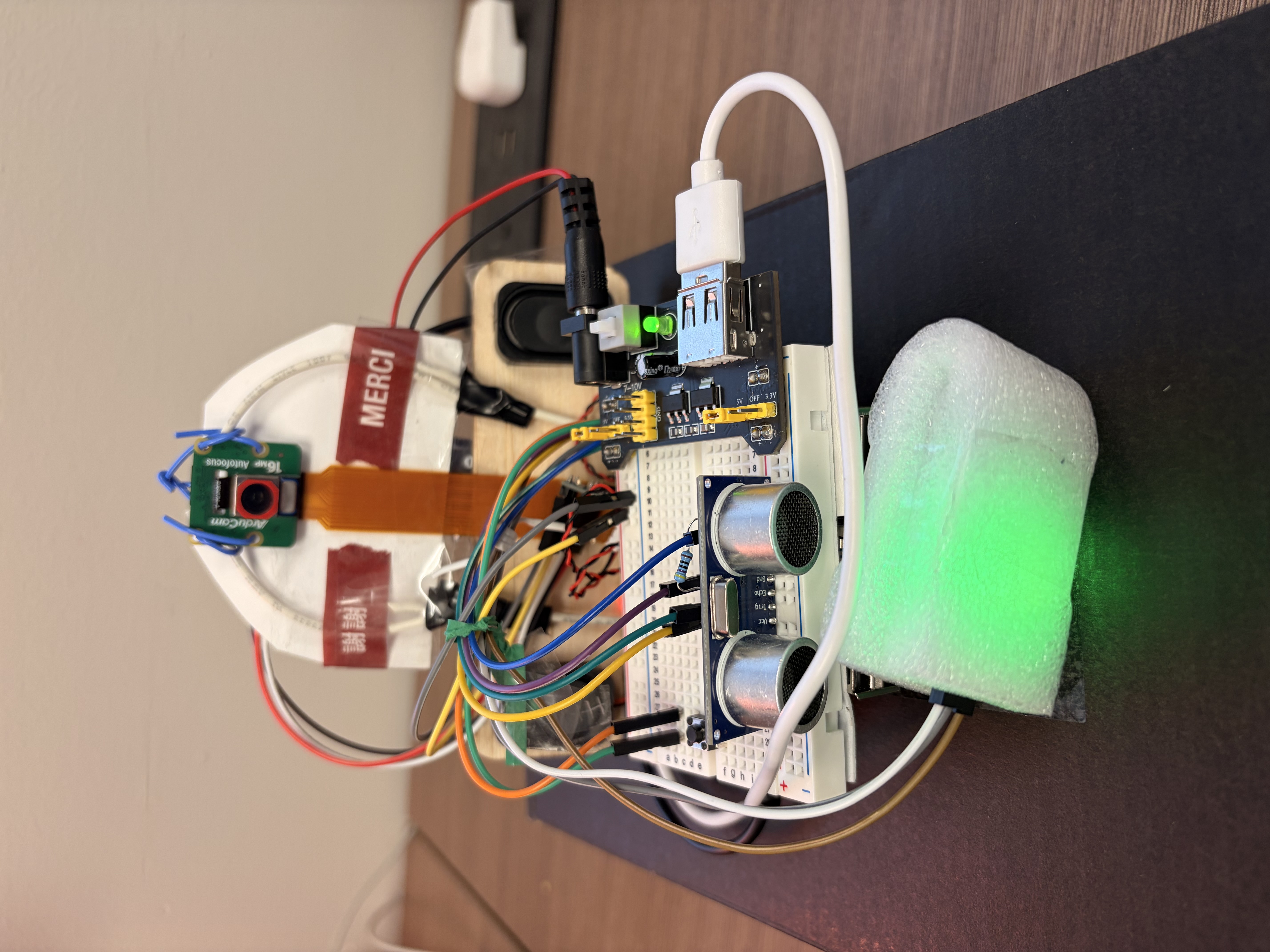
Raising Canes Circuit Diagram
-
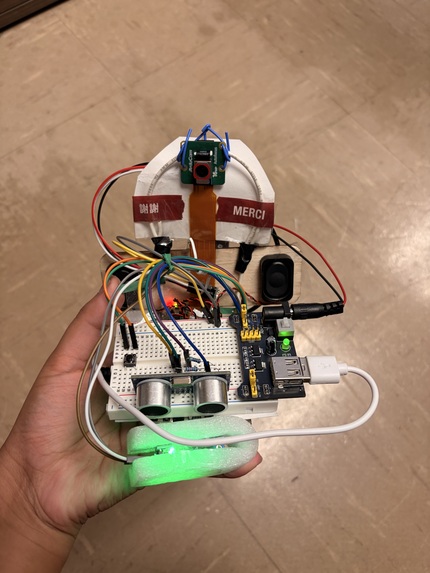
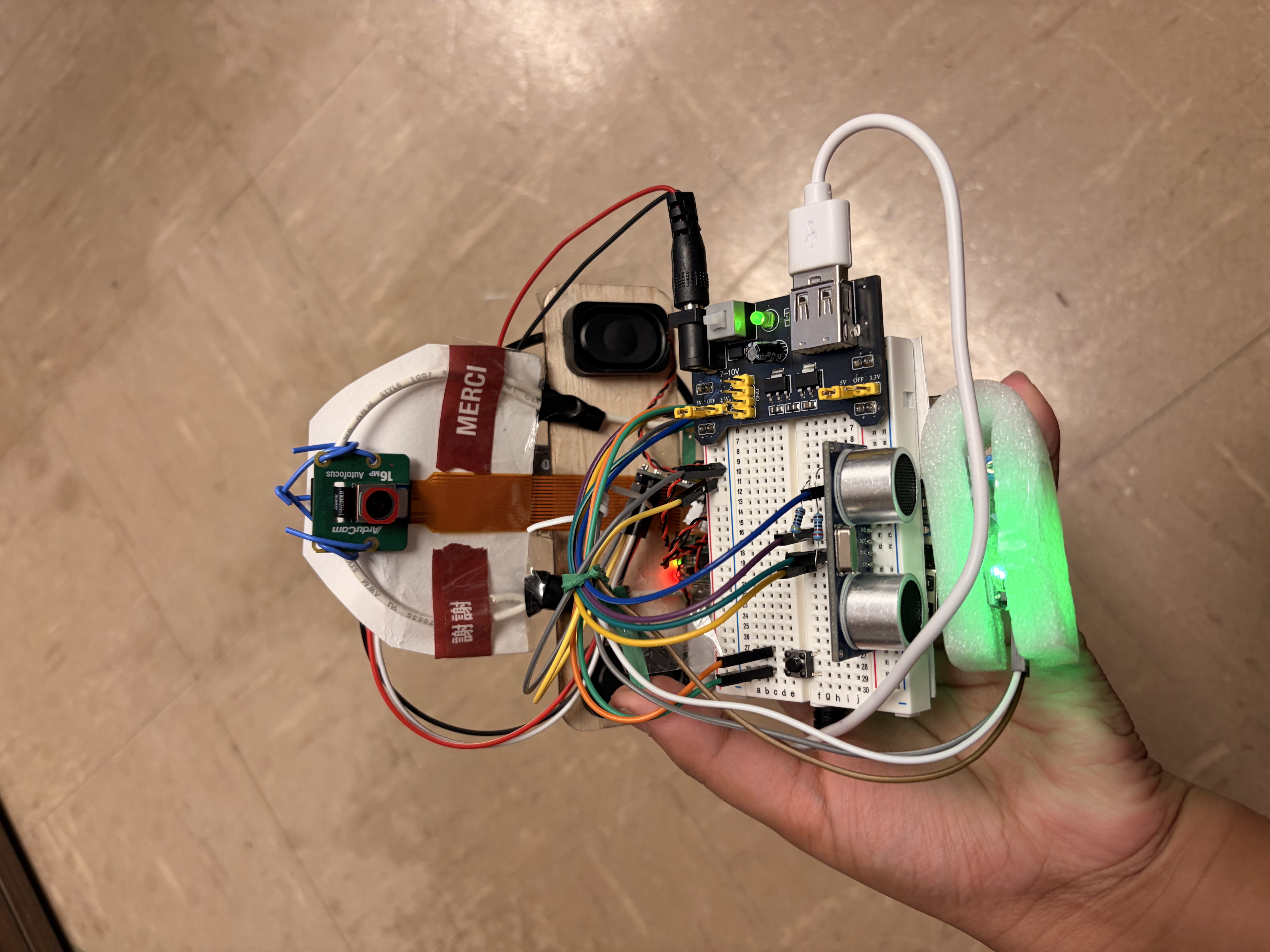
Raising Canes Handheld Size
-
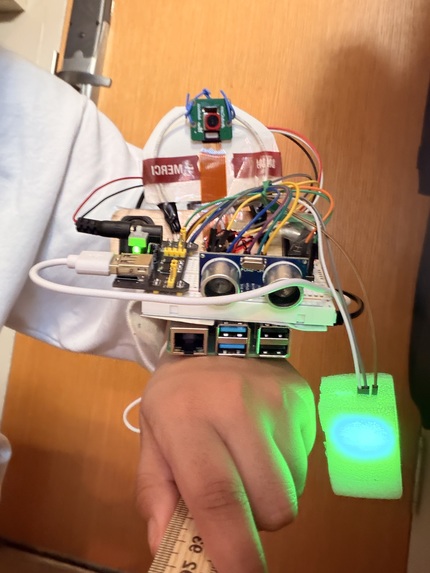
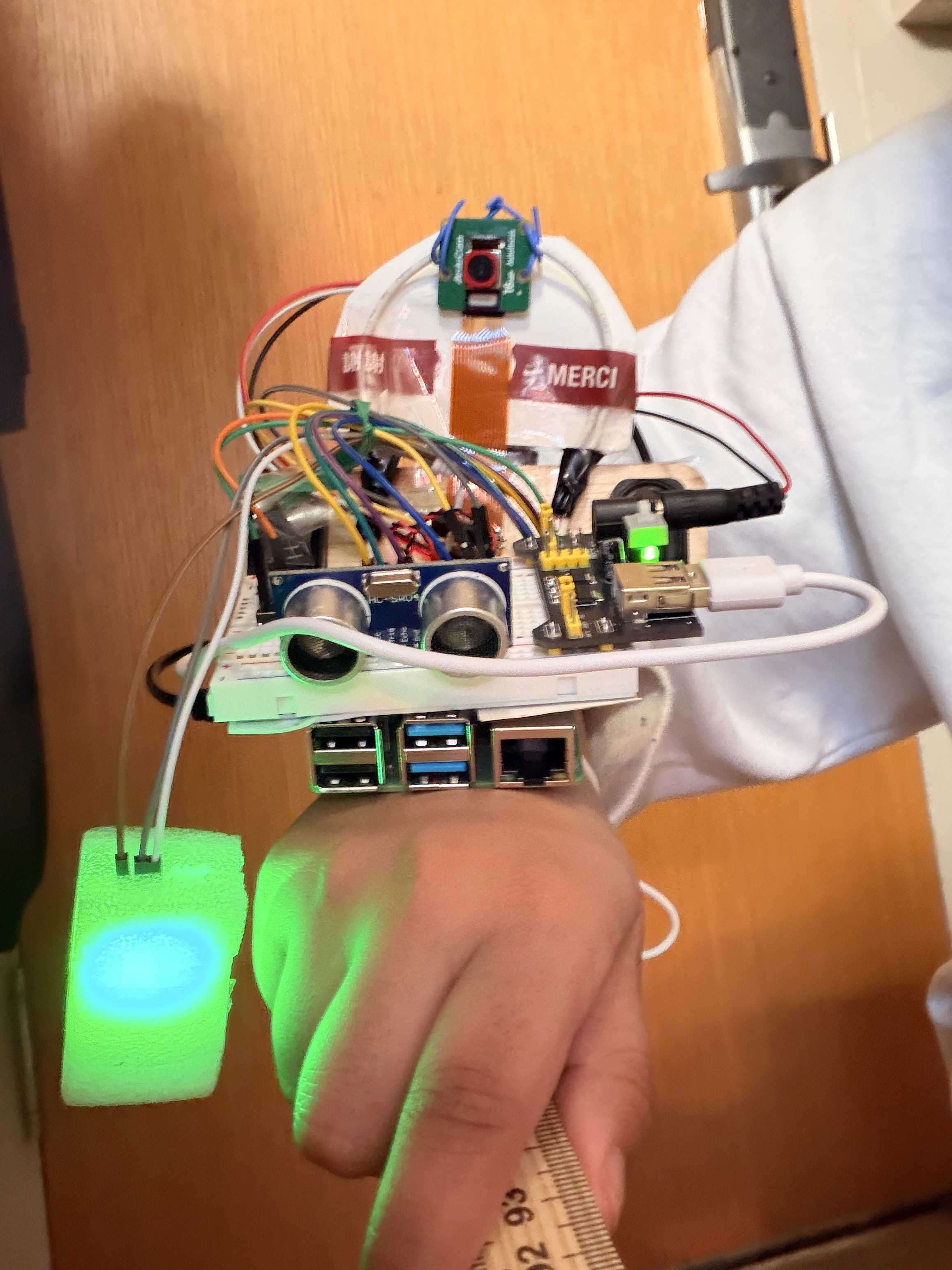
Raising Canes on Wrist
-
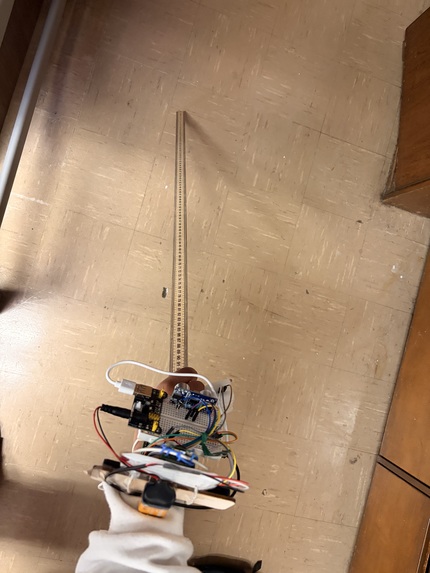
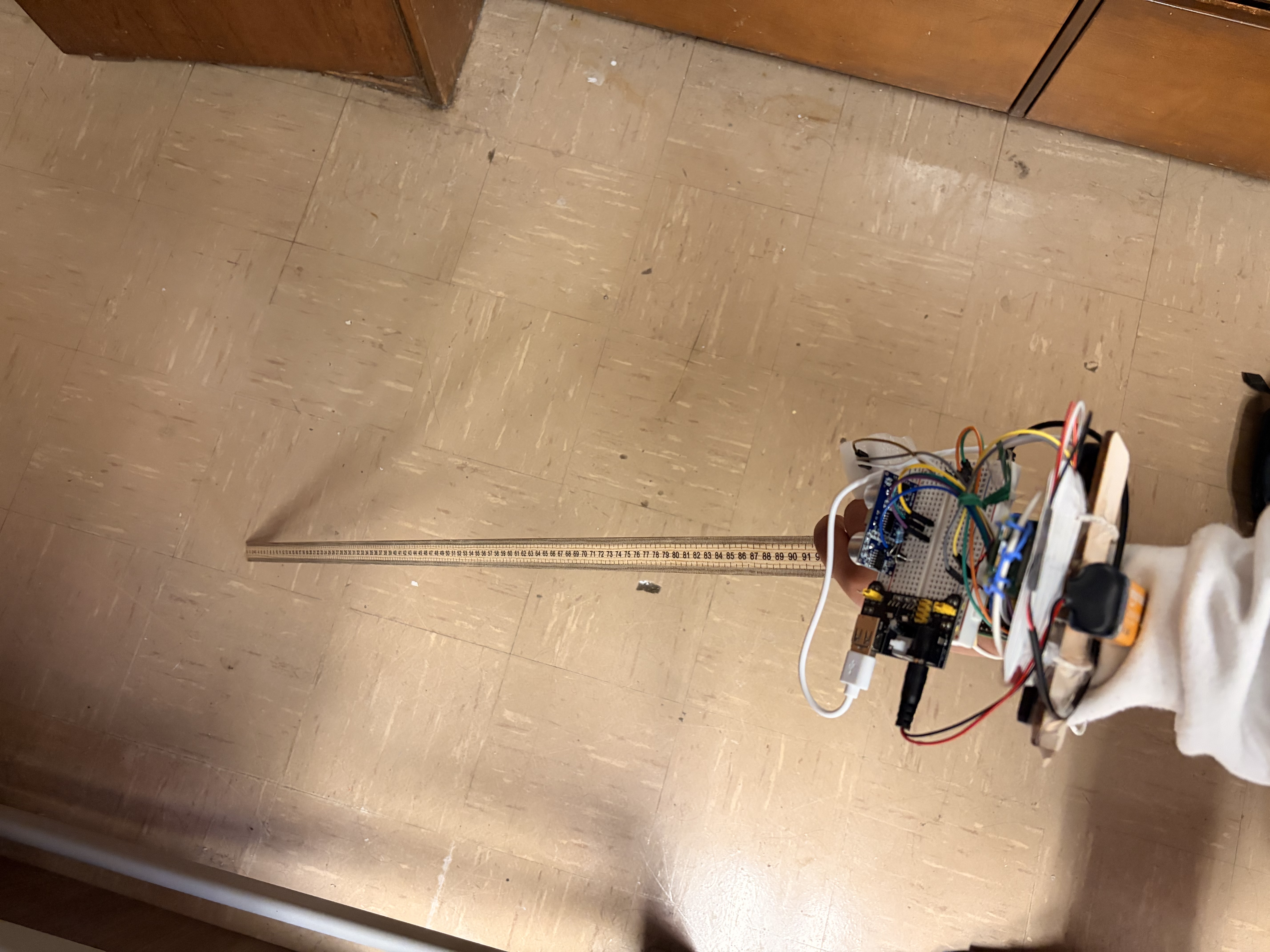
Raising Canes with Cane
-
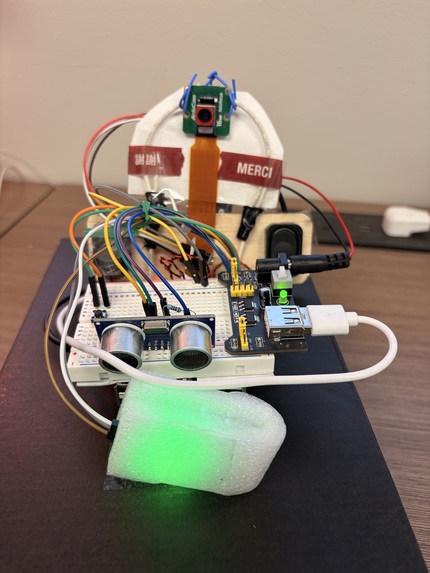
Raising Canes
-
Raising Canes Logo
Inspiration
In high school, we worked on volunteer projects with the visually impaired community. Most impactful to us was an organization called WalkFit, where sighted people are paired up with visually impaired people (VIPs, as the organization leader told us they prefer going by) and serve as sighted guides. To get the full experience, the organization leader had us step into a VIP's shoes for a little bit and navigate the park with a white cane while blindfolded. This exercise showed us the real difficulties for white cane users because to identify obstacles, they must rely on auditory cues, feel through the cane, or ask a sighted companion.
What it does
Reflecting on our experience, we decided to create a white cane assistive device. Raising Canes is wrist-mounted and senses when the user makes an intended strike with their cane at an object. A rapid, single-shot detection computer vision model, specifically YOLO, is utilized to identify the object. The user then hears through a speaker what the object is and how far away it is from them.
How we built it
Our device is controlled with a Raspberry Pi 4B, which is responsible for four key components. First, the camera, which we mounted so that it stands over the entire device. Then, a vibration sensor (SW 420), which is the crucial part that prompts the entire detection system. If a vibration is sensed for 0.75 seconds, it is registered as intended, and the ultrasonic proximity sensor (HC-SR04) measures the distance from the user to the object. Finally, a speaker system (2030 cavity) tells the user all of this information.
Challenges we ran into
In making this device, we certainly ran into some challenges. When first hooked up, the speaker made awful crackling sounds. We realized the Raspberry Pi supplied too little voltage, so we needed to compensate with a stable, external power source, like a 9V battery. Another challenge was programming the sensitivity of the vibration sensor since the potentiometer was too delicate, and the smallest turn would make it go from way too sensitive to not sensitive enough. By covering the sensor in foam, we were able to achieve a middle ground and get the right sensitivity. Finally, our final goal for the device was to make it as compact as possible, utilizing the CAD models we had for the camera mount and wrist mount, and to solder wiring onto protoboards. Due to the campus closing, we had limited time at think[box], so we had to make do with some DIY mounting using tape, wood, and wires, and had to keep the breadboard.
Accomplishments that we're proud of
We're proud that we made these four components work seamlessly with one another and of our quick thinking in circumventing the limitations of the campus closure. We definitely needed to think outside the box since this is a project we haven't seen done before, and we grew as engineers going through it.
What we learned
We expanded our knowledge of several subjects, such as circuitry, Python programming, and design. We also learned how to work more efficiently as a team by evaluating our strengths and challenging one another through discourse. Sometimes one could see what the other couldn't, and vice versa, so by learning and explaining, we both served as each other's teachers.
What's next for Raising Canes
Our next step would be to try out various object detection models to assess which model would be the best fit for our device. YOLO is best suited for real-time applications. However, these models can sometimes be less accurate than two-shot models. Experimenting with various models will help us make our device both fast and accurate.
Additionally, we hope to use a smaller Raspberry Pi, such as the Pi Zero or Pi Pico. While wearing the device, the breadboard and Raspberry Pi 4B weigh down on the user’s wrist, which can be uncomfortable for long-duration use. A smaller microprocessor and a soldered device will greatly reduce the size and weight of the device, improving comfort and user experience.
Lastly, after building a polished device, we hope to get in contact with the Cleveland Sight Center and other local visually impaired organizations to get feedback on our device.
Built With
- arducam
- hc-sr04
- opencv
- pam8403
- python
- raspberry-pi
- sw420
- yolo


Log in or sign up for Devpost to join the conversation.