Inspiration
For families struggling to make ends meet, financial difficulty can begin with a timing problem: rent is due today, but income arrives next week. Understanding the gap is only part of the challenge. Finding support and knowing what to say can feel overwhelming.
We created Raise to help people prepare, find support and grow. Our intended audience includes families under financial pressure, people with irregular incomes and people who need additional support managing money.
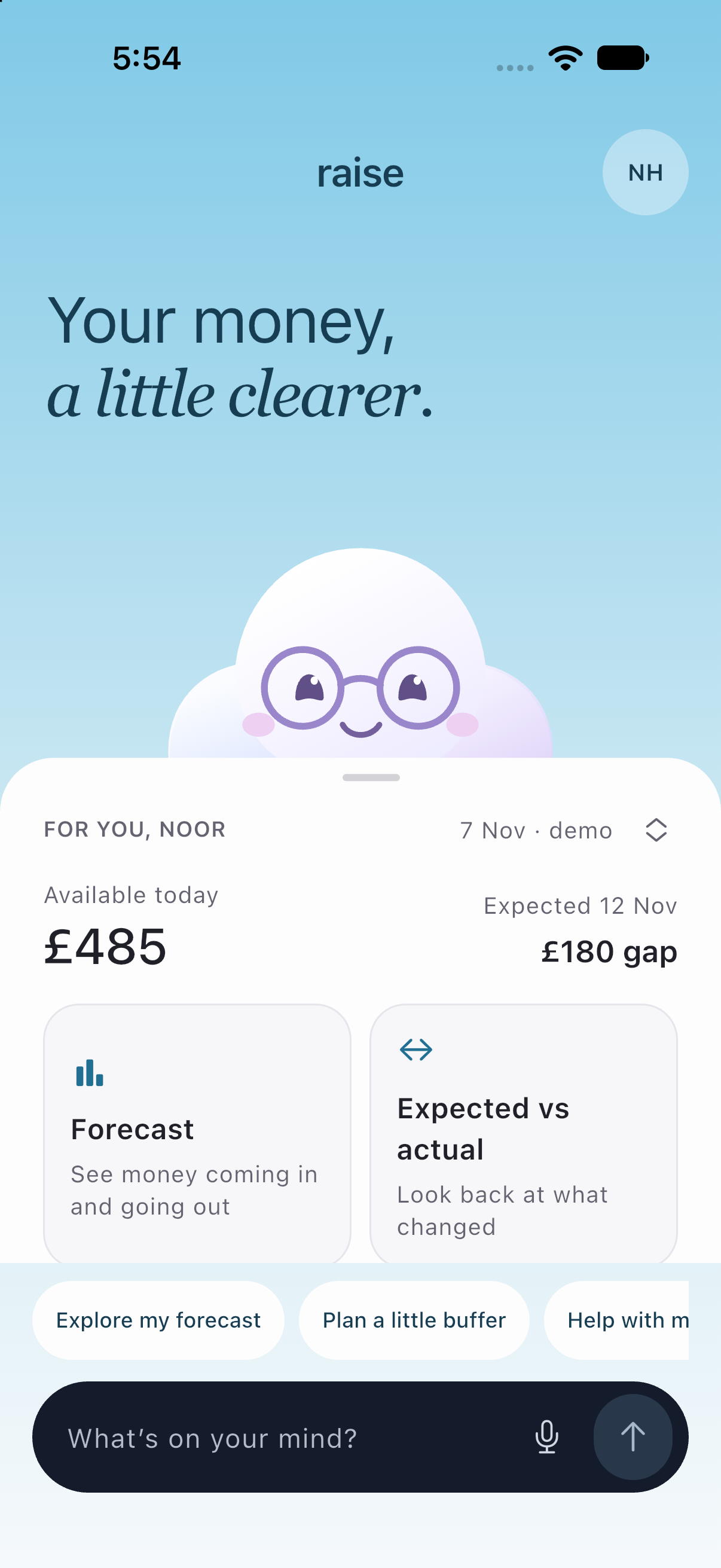
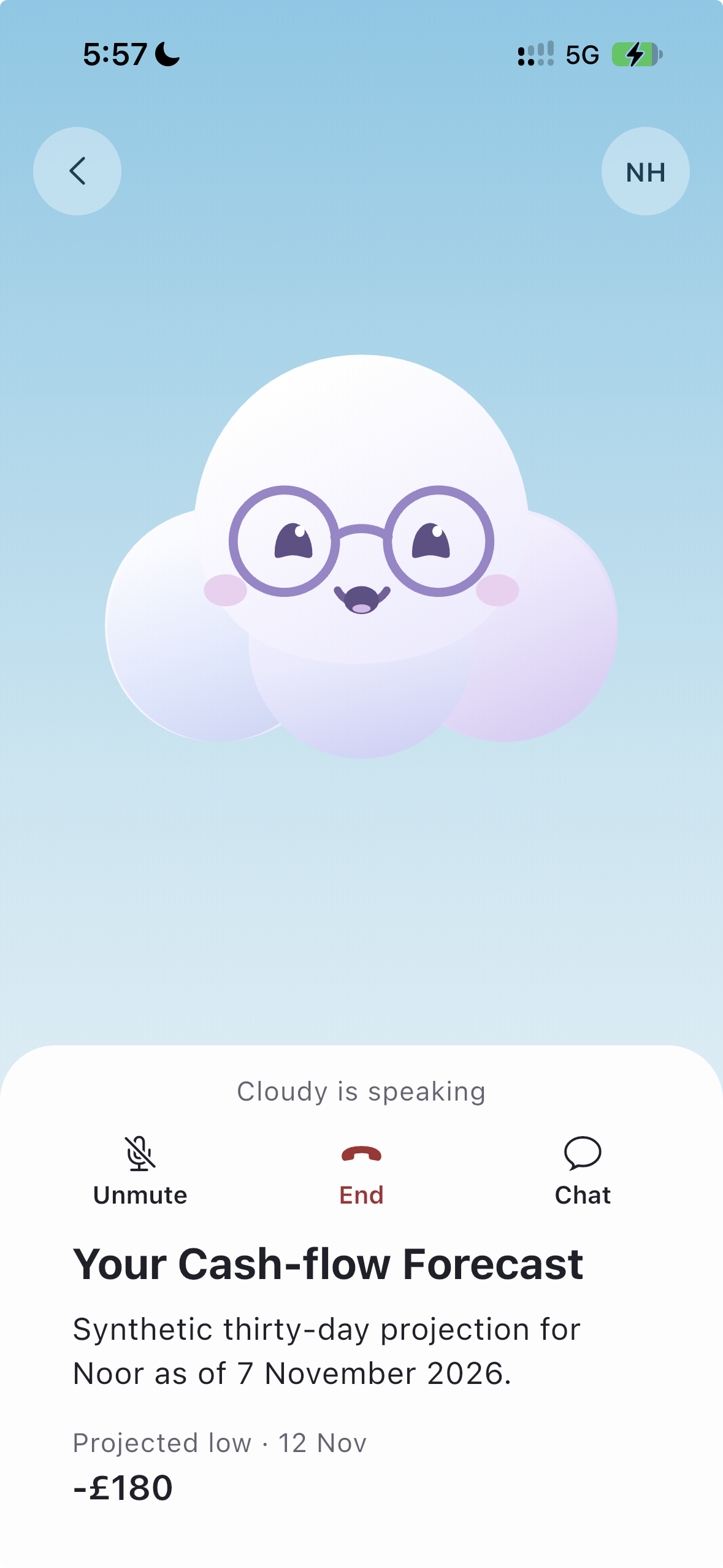
We wanted users to ask for help in their own words. That inspired Cloudy, our approachable AI companion with voice conversations, transcription and text chat. Voice offers another way to interact for partially sighted users and people who find reading or typing difficult.
What Raise does
Raise connects financial understanding with practical next steps:
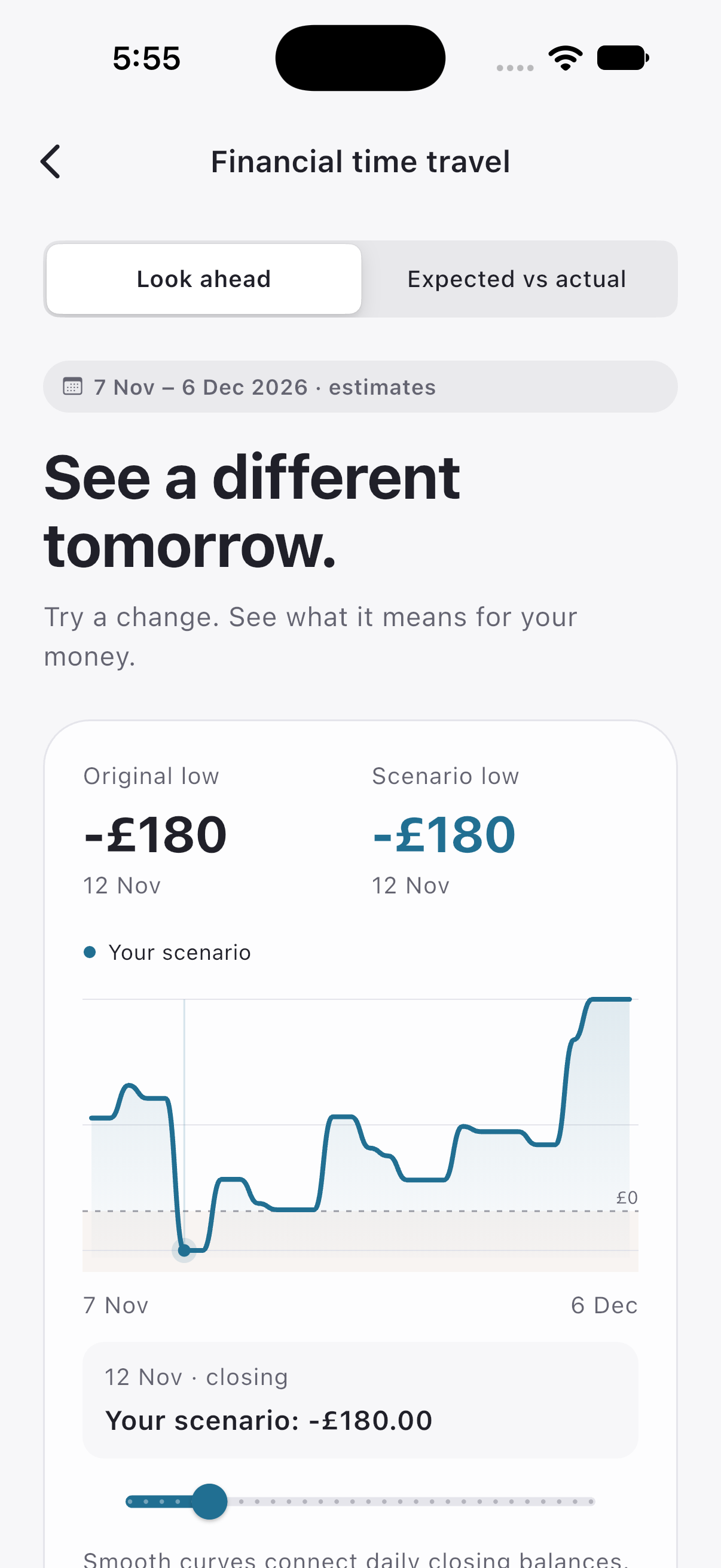
- Prepare: Forecast upcoming balances, spot potential shortfalls and explore changes to income or spending.
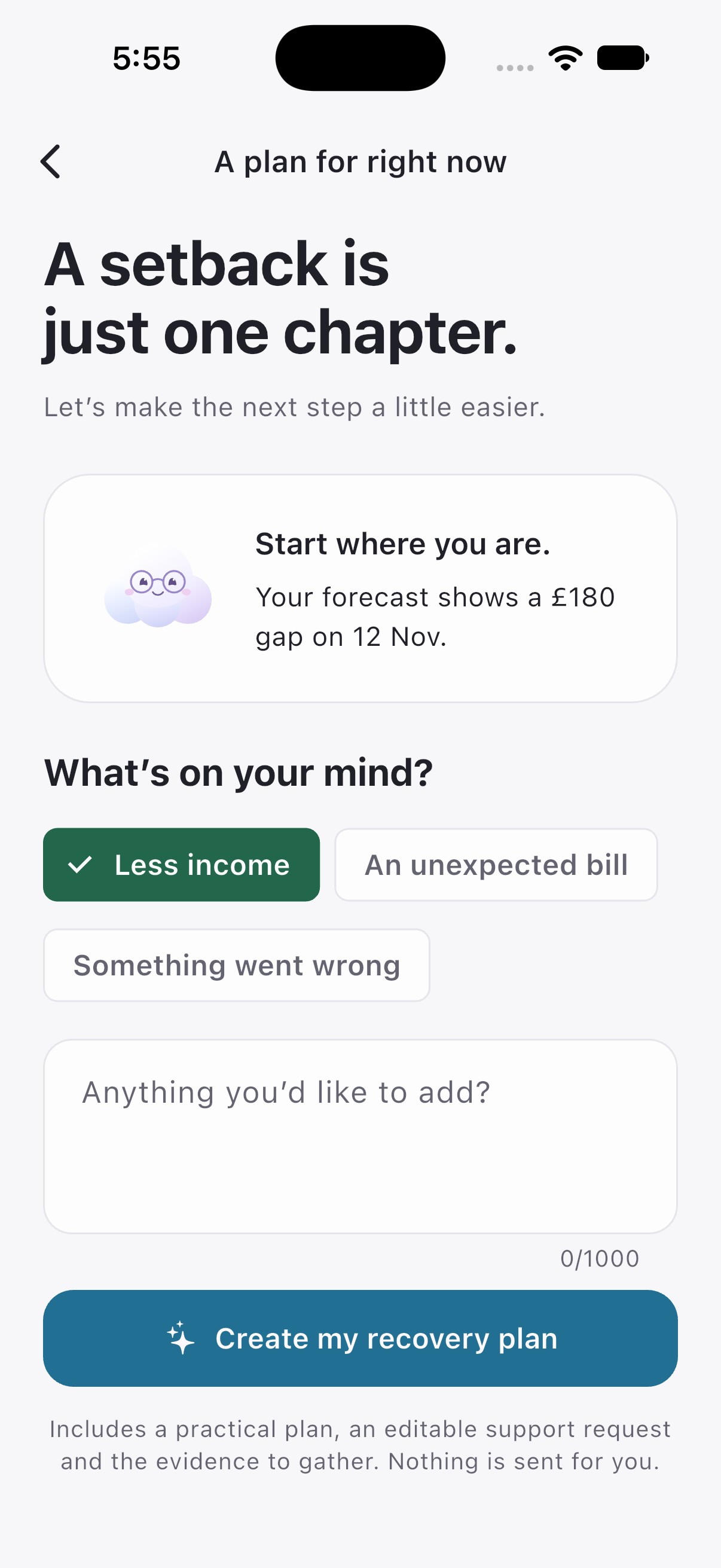
- Support: Ask Cloudy questions and create a personalised recovery plan with an editable support request and visible guidance sources.
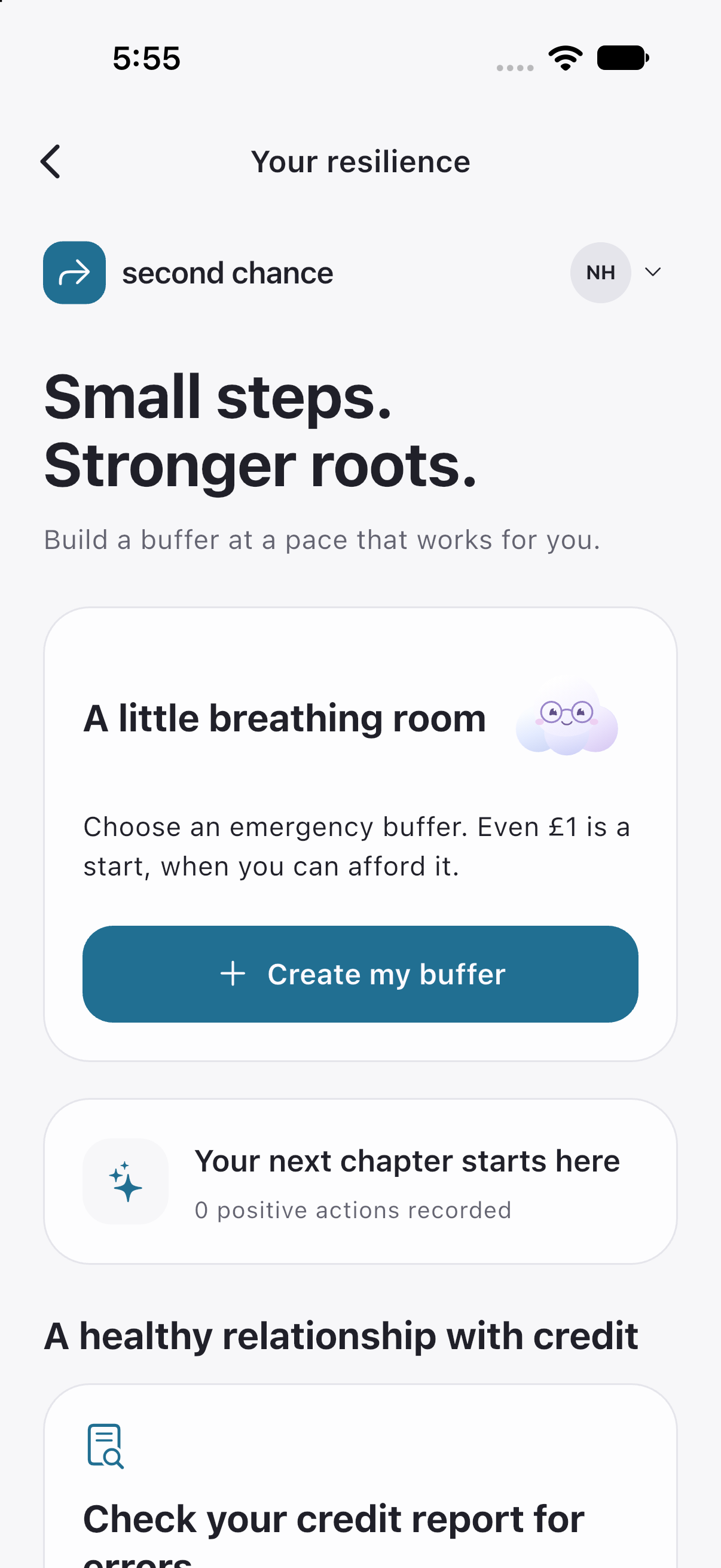
- Grow: Set emergency savings goals, record money already saved and track positive actions.
Our fictional customer Noor illustrates the journey. Her forecast shows a £180 shortfall on 12 November, before earnings arrive on 14 November. She can ask Cloudy why, explore a spending change and prepare a support request before the payment is due.
Cloudy can perform these actions directly within the conversation. Results appear in chat, including forecast updates, recovery plans, savings goals and historical balance comparisons.
How we built it
We built the app in Flutter, separating financial calculations, application state and interface components.
The forecasting engine calculates daily closing balances using integer pence, keeping money calculations consistent. Users can explore changes such as an unexpected expense or reduced weekly spending.
ElevenLabs powers Cloudy’s live voice and text conversations, including speech transcription. We provide Cloudy with the selected profile and calculated financial context. Four client tools connect the conversation to actual app functions: changing forecast assumptions, preparing recovery plans, creating savings goals and comparing historical balances.
A Node.js API validates recovery requests and connects to a real local n8n workflow. The workflow uses rules and curated guidance to personalise recovery steps and an editable support request.
We used Lottie for Cloudy’s animated listening and speaking states, and built a draggable financial overview. Goals, plans and edited drafts are saved locally, separately for each demo profile.
Challenges we faced
Turning conversation into reliable actions
Cloudy needed to do more than give a helpful-sounding answer. A request such as “What happens if I have a £150 repair bill?” had to update the actual forecast and return the calculated result.
We added validated action inputs, duplicate-call protection and confirmation before replacing existing goals or drafts. We also protected edits made while a recovery request was processing.
Making voice work on a real phone
Voice integration brought microphone permissions, connection handling and network issues. A phone DNS failure prevented access to ElevenLabs on one connection. Testing on mobile data with Tailscale enabled allowed us to verify spoken conversations and demonstrate forecast updates and support drafting on a physical iPhone.
Keeping the experience approachable
We needed to present financial detail without overwhelming users. We prioritised clear tasks, a visible voice-and-text composer, readable transcripts and a companion-led interface. Large-text layouts and reduced-motion behaviour are implemented, while broader accessibility testing remains future work.
What we learned
We learned that a forecast is most useful when it leads to an action someone understands. Showing a shortfall matters; explaining its timing and helping someone prepare a support request makes the experience more practical.
We also learned to give AI a clear role. Cloudy handles conversation and invokes app tools, while the financial engine performs calculations and the recovery workflow produces structured, traceable results.
Finally, offering voice is one step towards inclusion. Testing with partially sighted users and people with other accessibility needs will be essential to understanding how well the experience works for them.
What we are proud of
We built a connected journey from “Will I have enough?” to “What can I do next?”
The project’s validation records 90 passing offline Flutter tests, a live integration test covering all four conversational actions, and physical-phone confirmation of voice conversations, forecast changes and support drafting.
Most of all, we are proud that Rise combines preparation, support and small steps towards resilience in one approachable experience.
What’s next
The prototype uses synthetic financial data. It does not connect to bank accounts, transfer money or send support requests; users review and copy their drafts.
Our next steps are user research with families and irregular earners, accessibility testing with partially sighted users, stronger screen-reader support, secure authentication and hosted services. Future banking integrations would require appropriate consent and safeguards.
Our ambition is to help people approach money worries earlier, understand their options and take one manageable step forward.
Built With
- dart
- elevenlabs
- flutter
- javascript
- n8n
- node.js
- webrtc
- websockets
