-
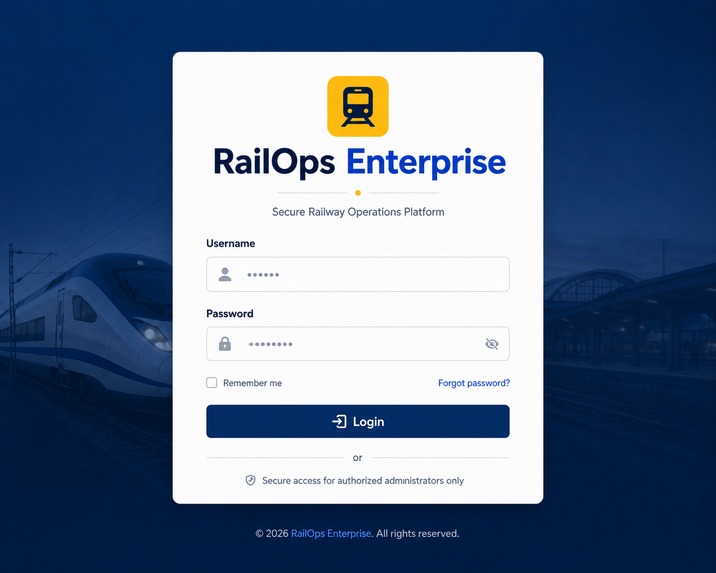
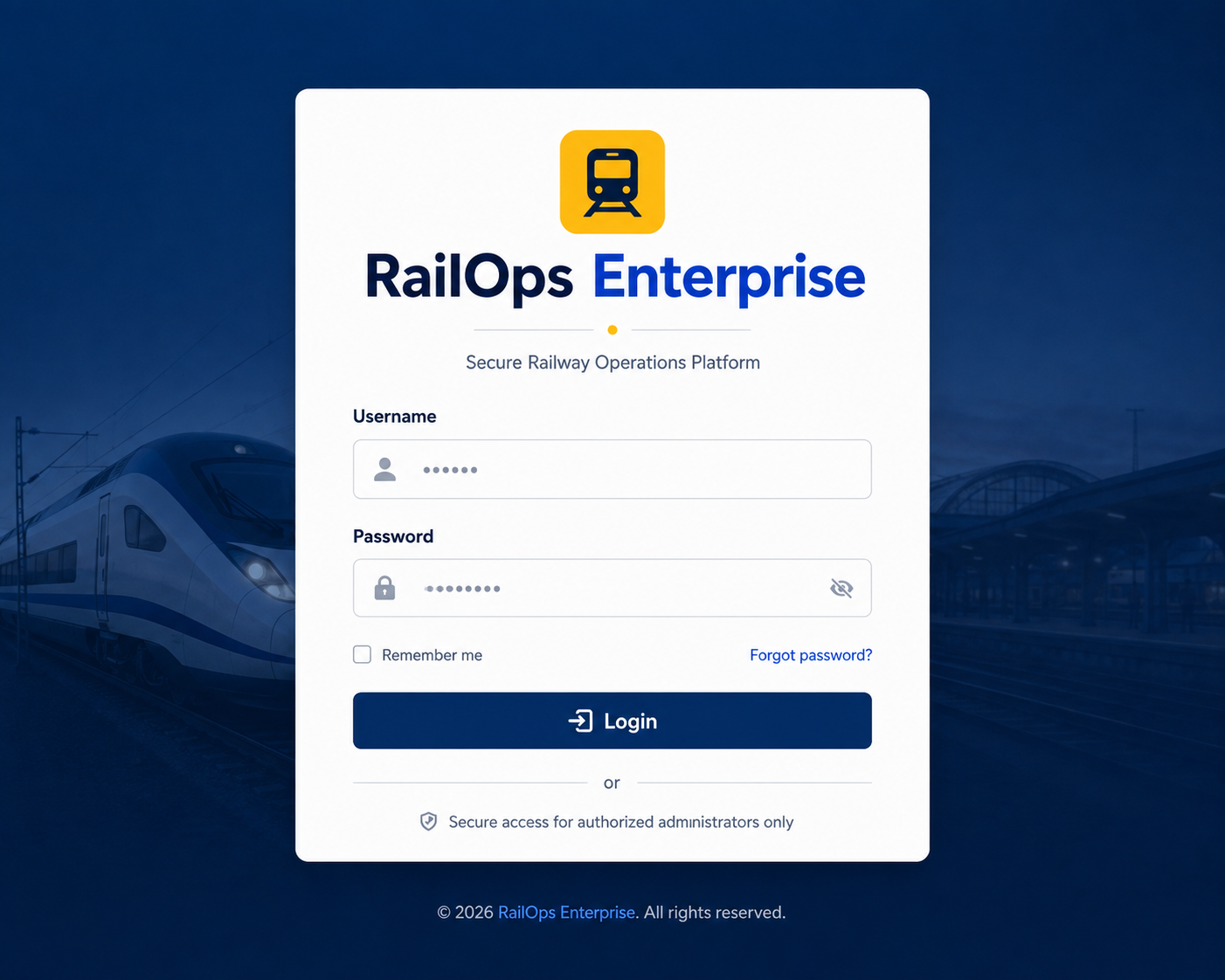
Login Page
-
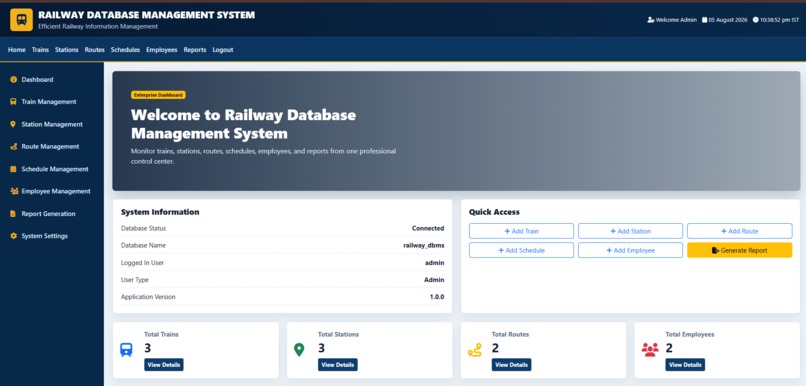
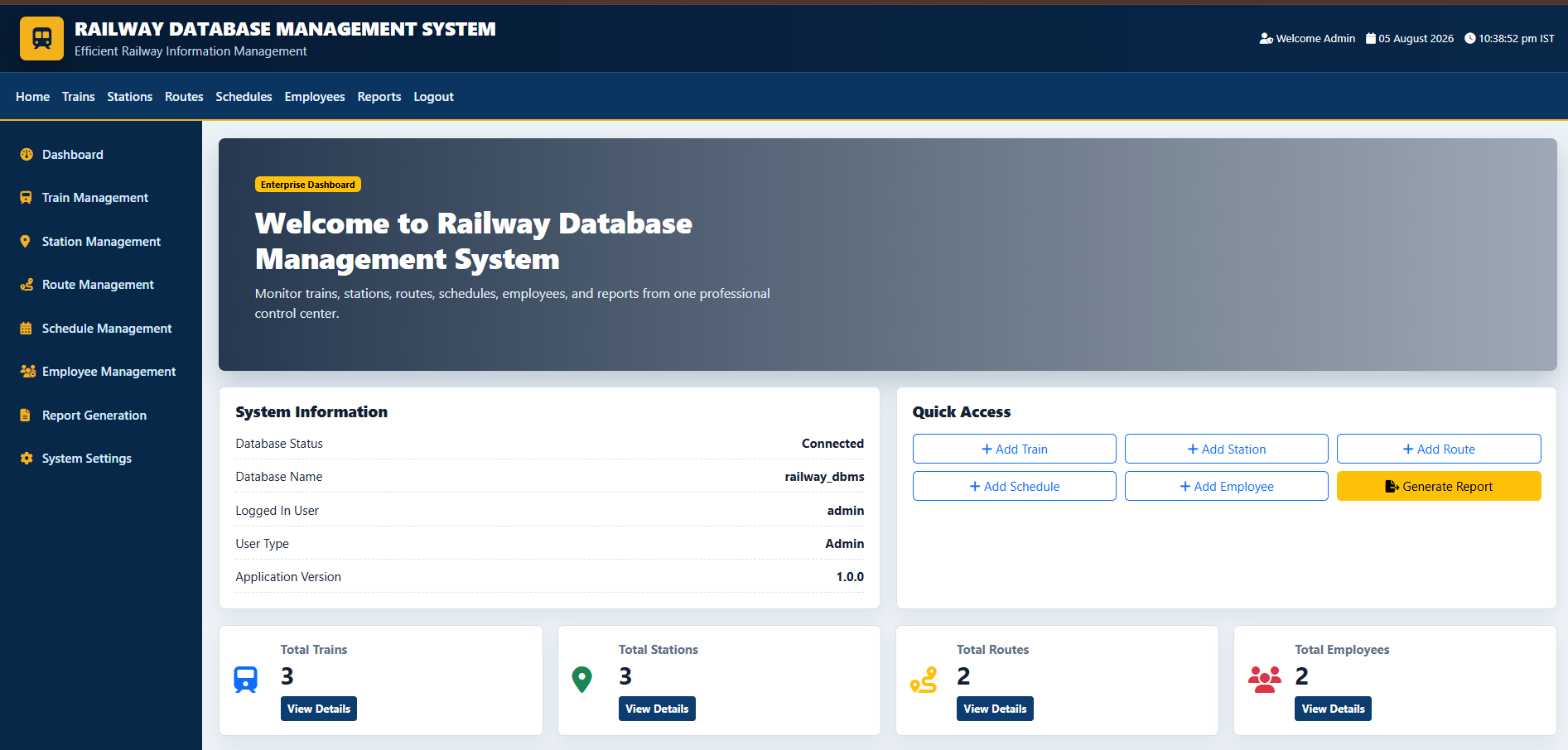
Dashboard Overview
-
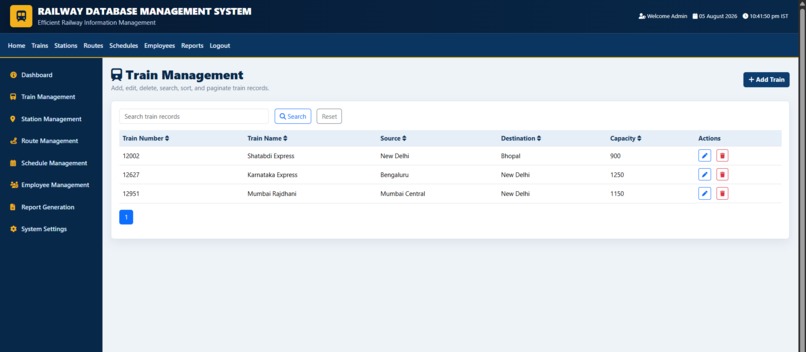
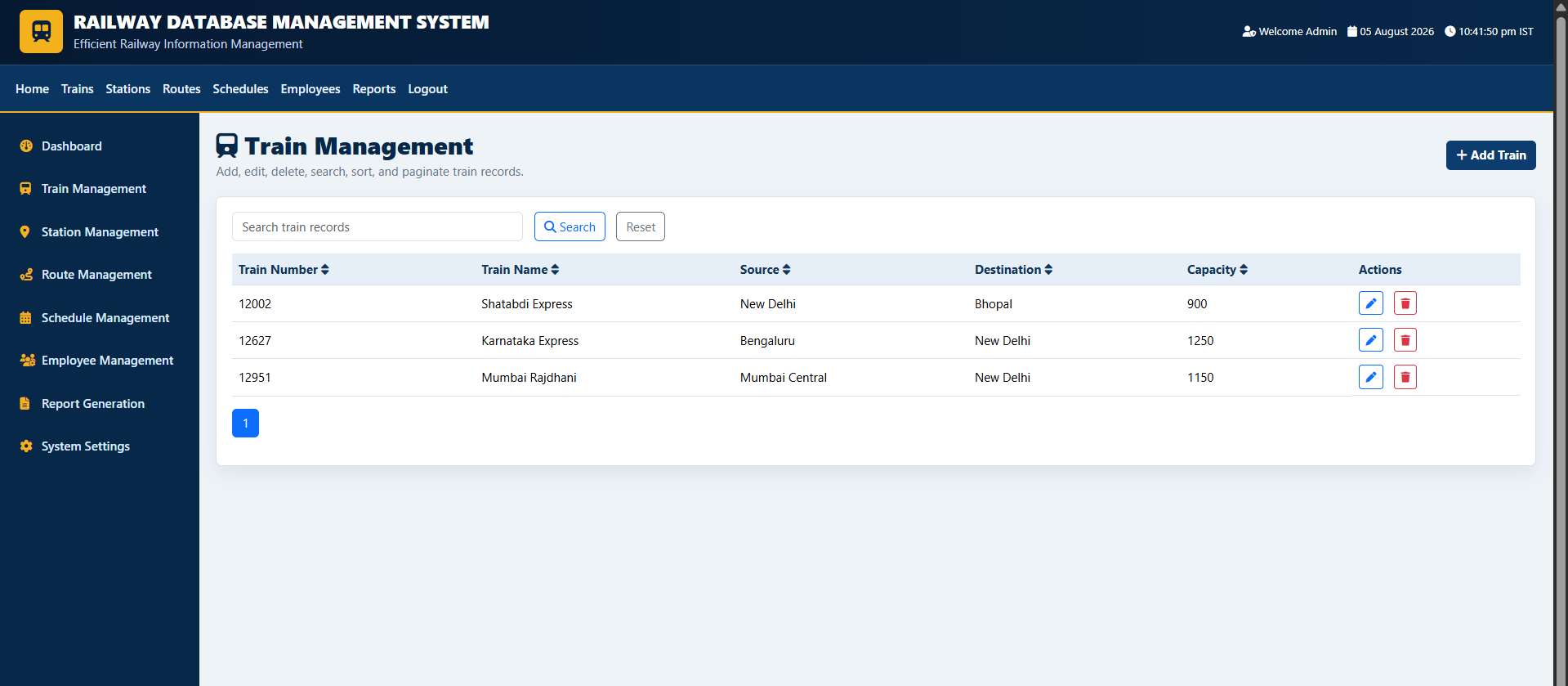
Train Management
-
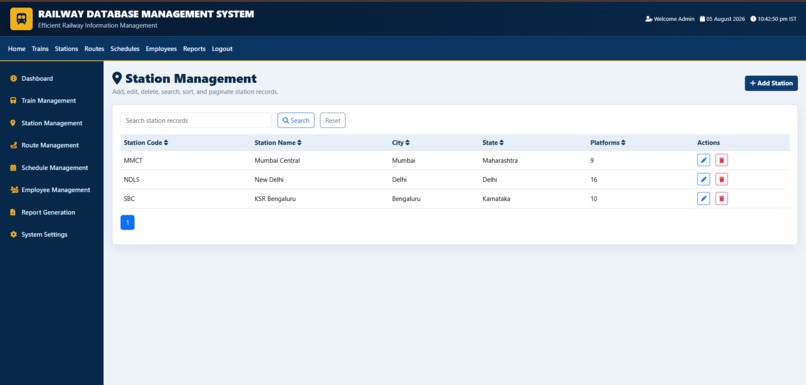
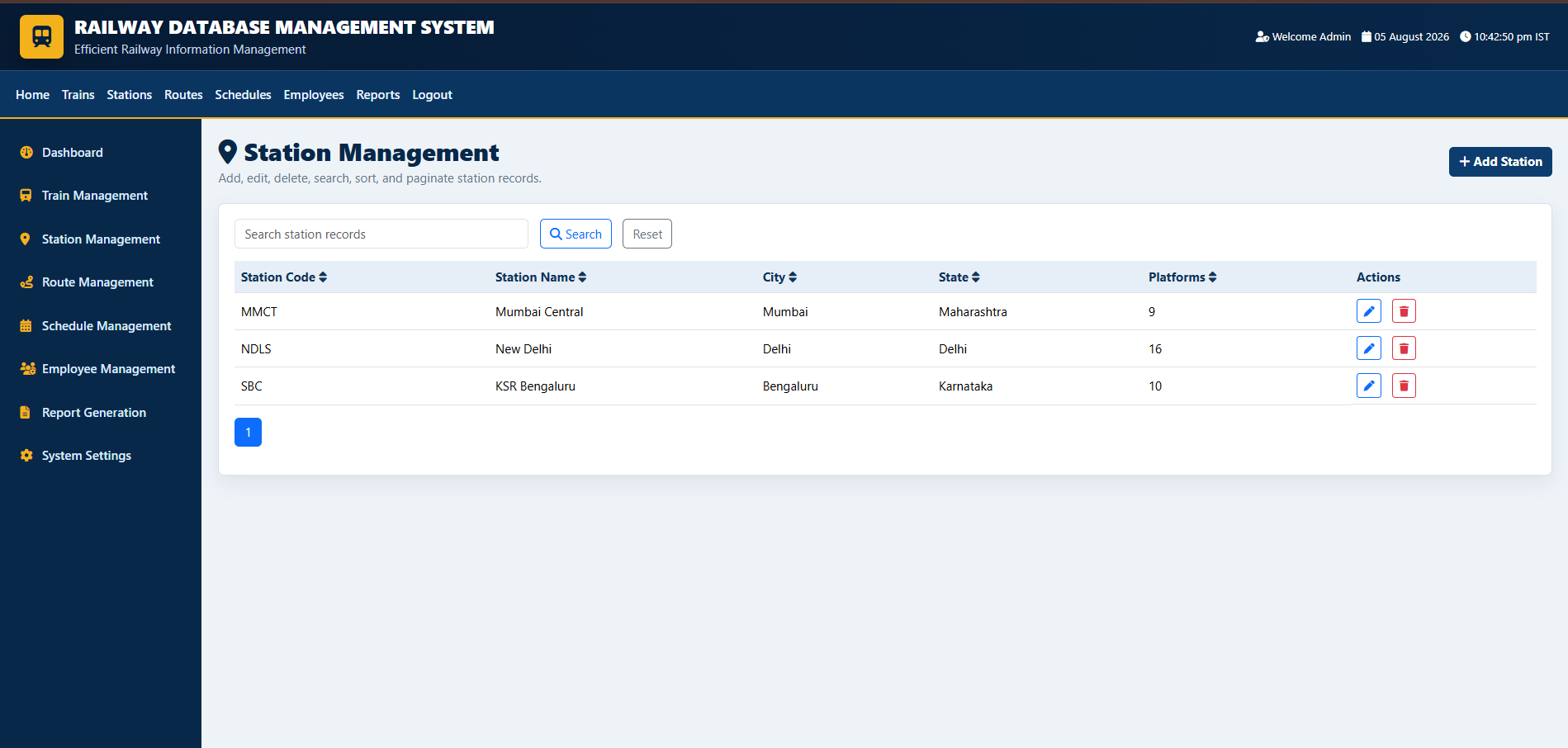
Station Management
-
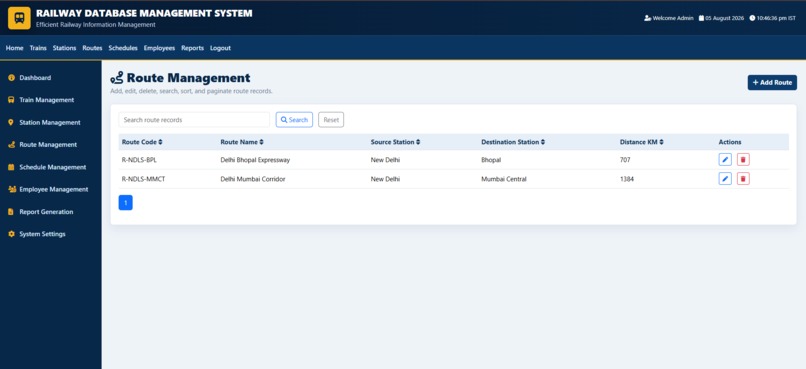
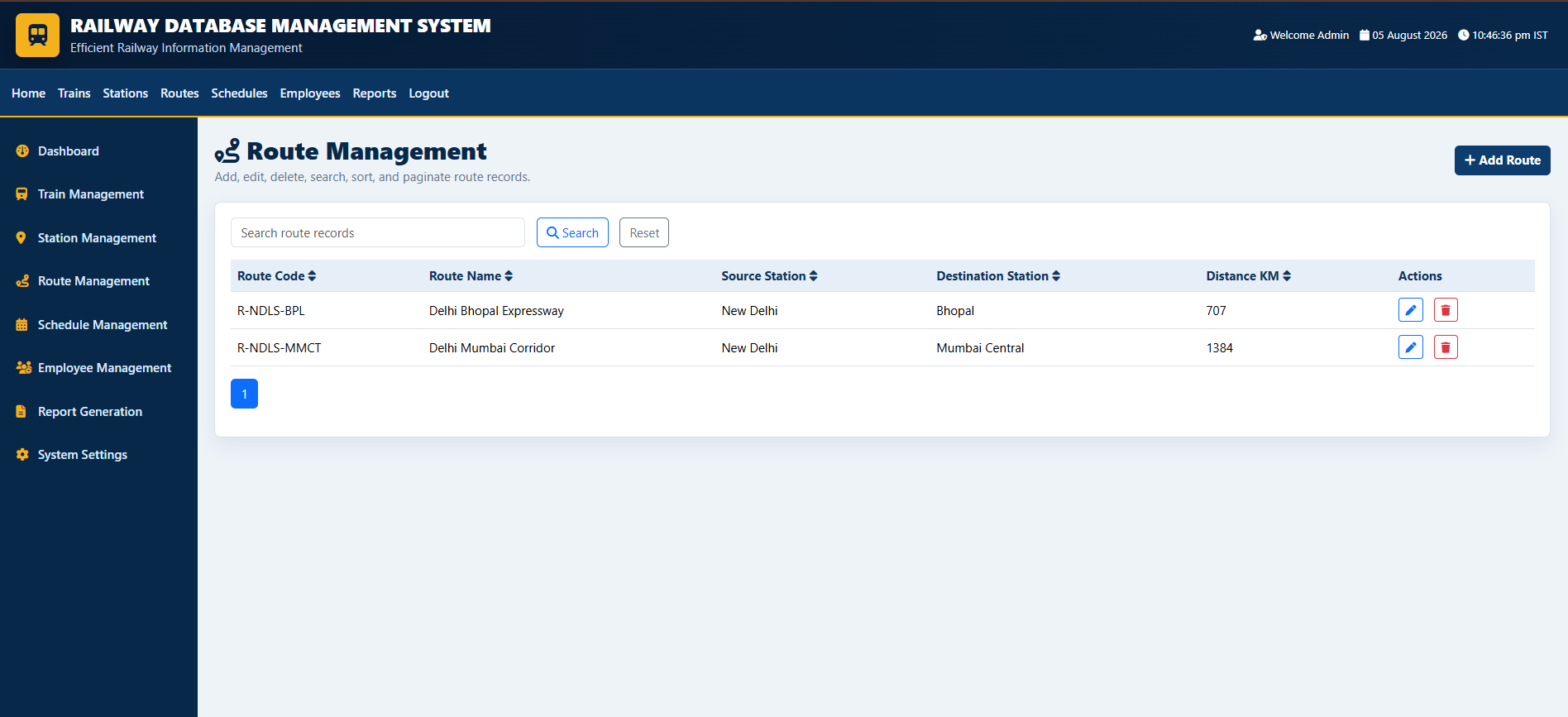
Route Management
-
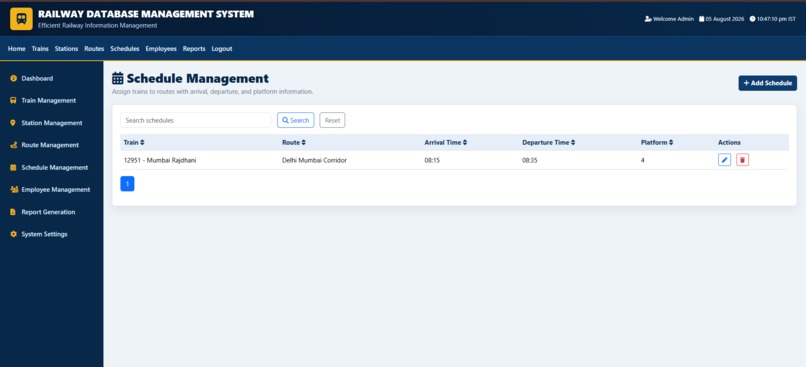
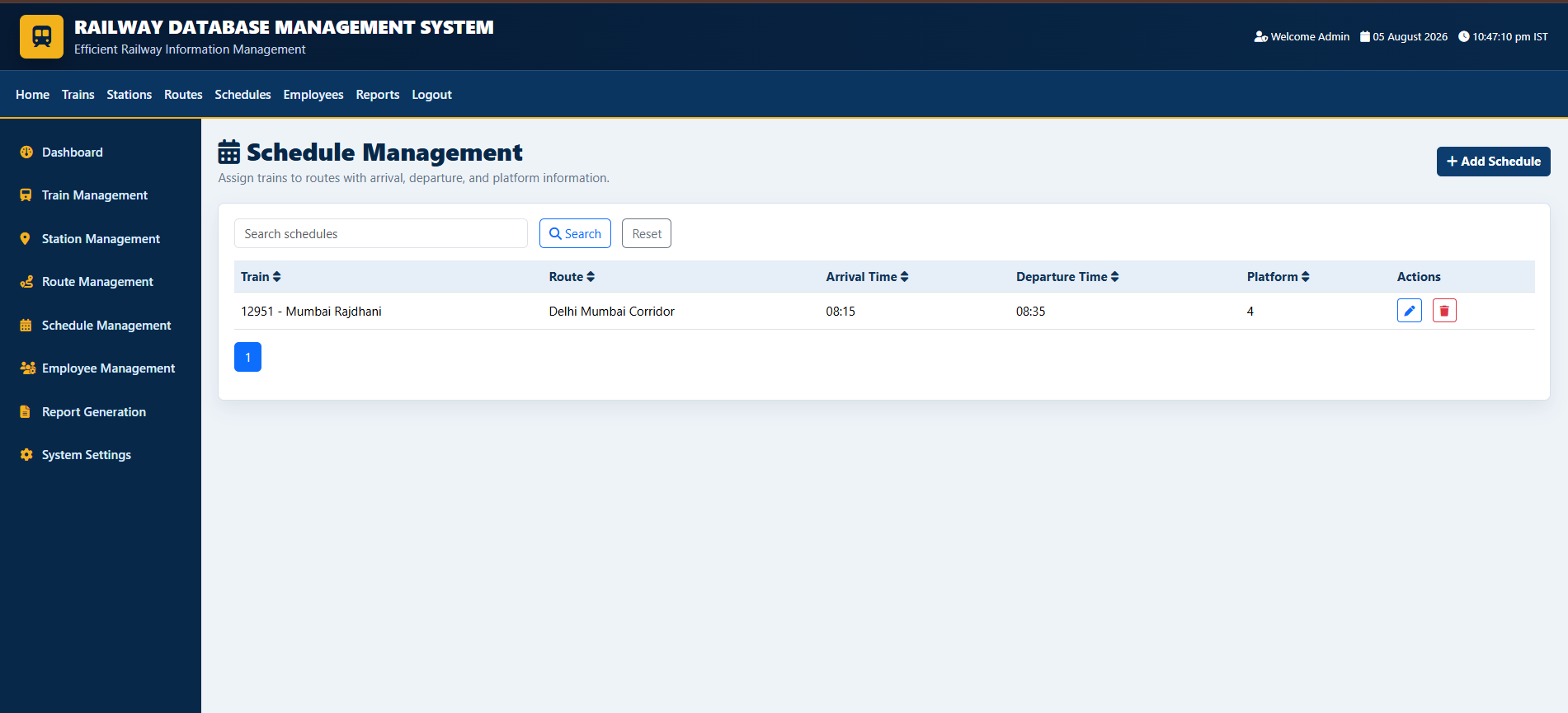
Schedule Management
-
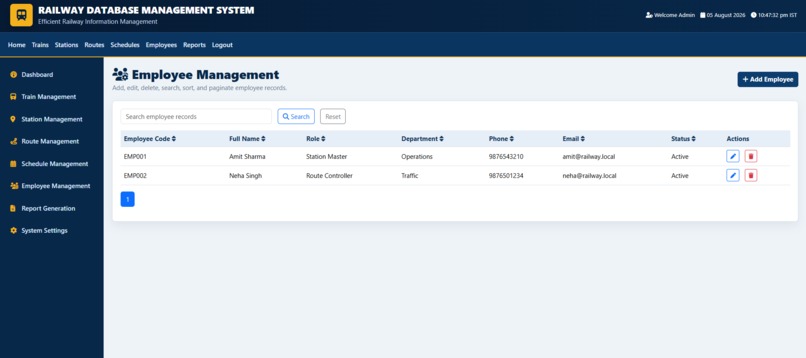
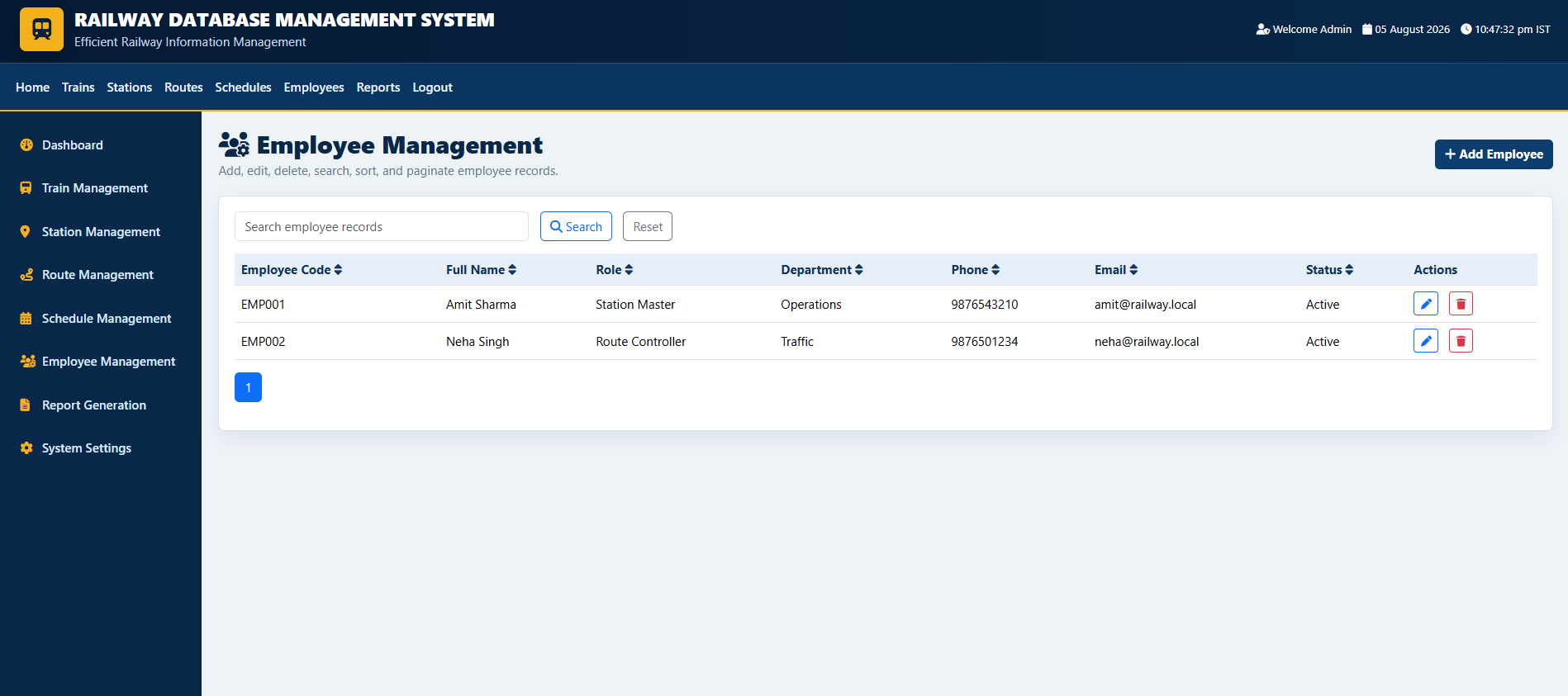
Employee Management
-
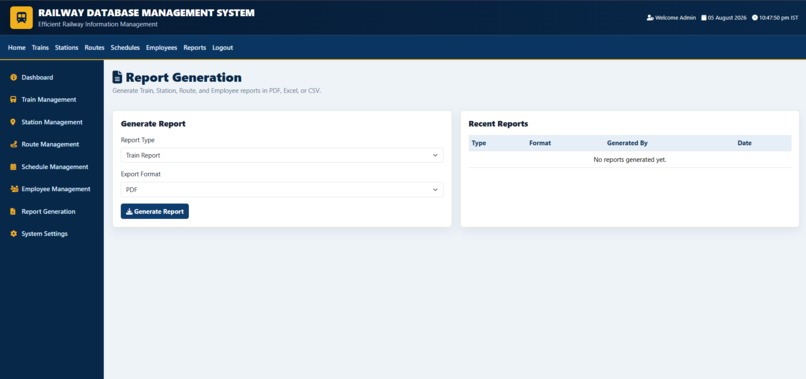
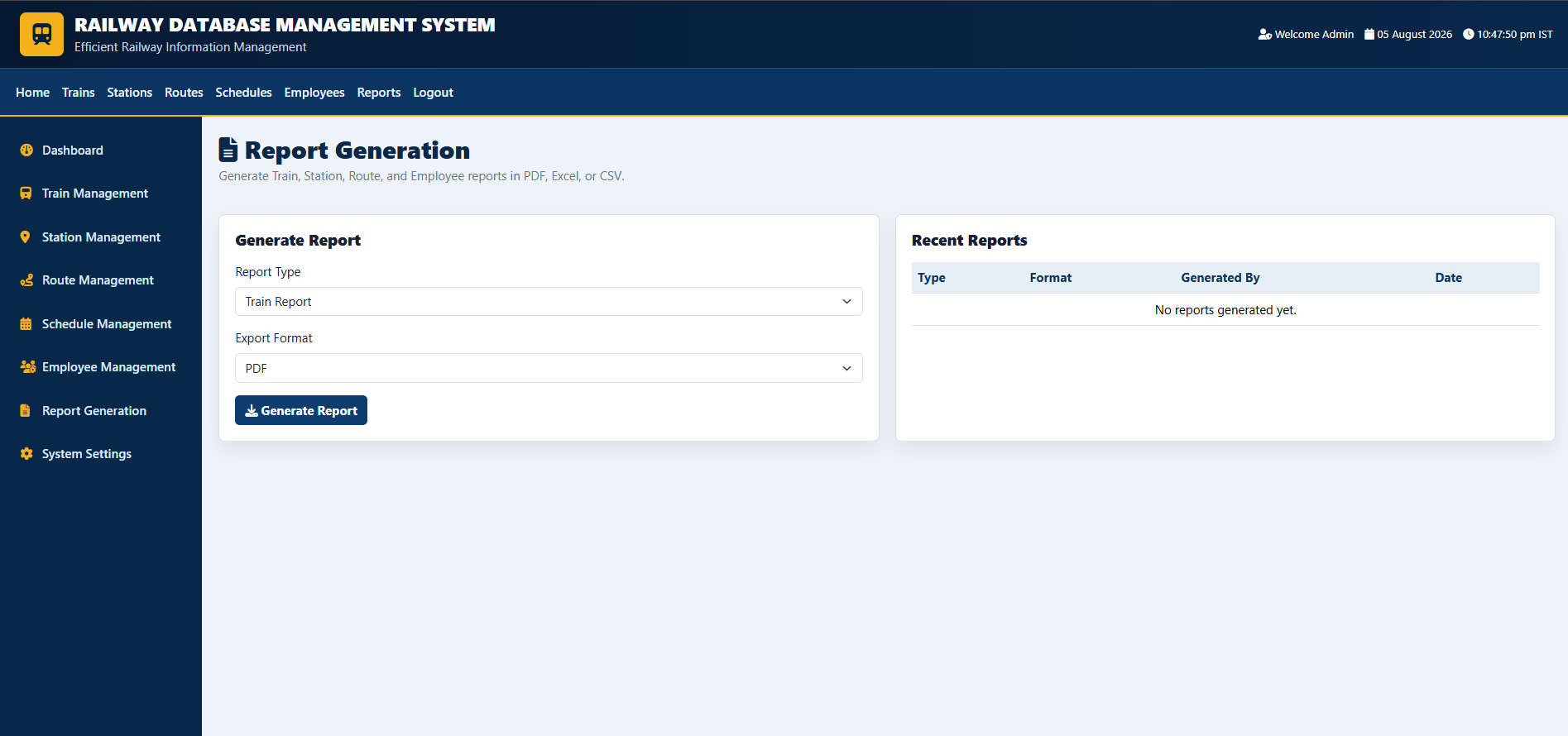
Report Generation
-
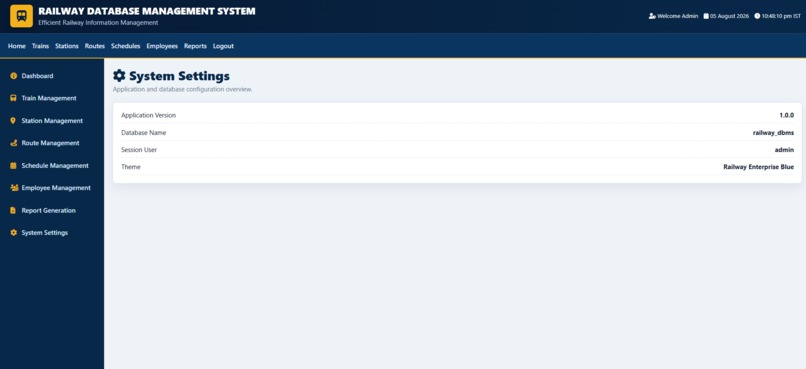
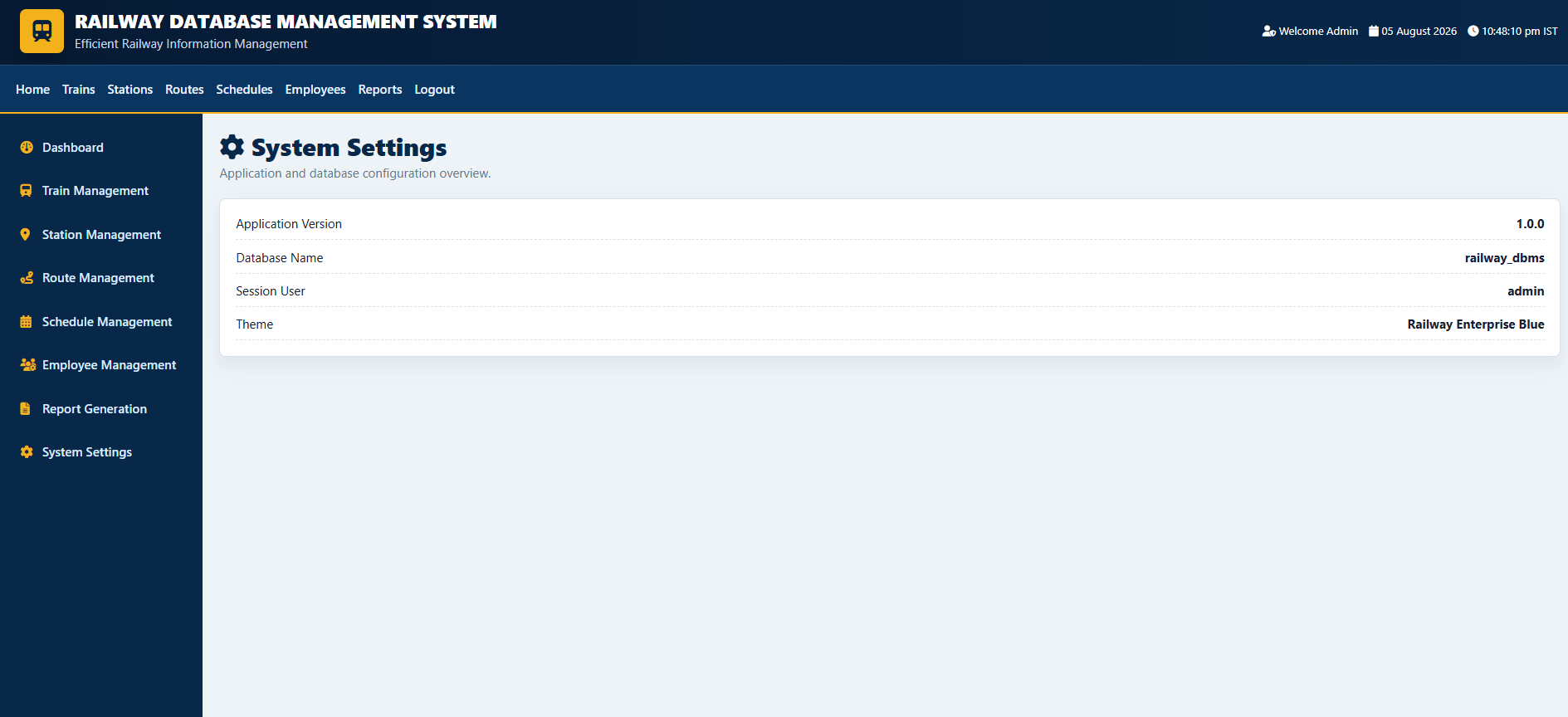
System Settings
Inspiration
Railway systems generate and manage large volumes of interconnected data every day, from trains and stations to schedules, routes, employees, and operational reports. Many administrative workflows still rely on scattered records or disconnected tools, making management inefficient and time-consuming. We built RailOps Enterprise to demonstrate how a centralized digital platform can simplify railway operations, improve data organization, and support more efficient decision-making.
What it does
RailOps Enterprise is a full-stack Railway Operations & Database Management System that centralizes railway administration in one secure web application. Administrators can manage trains, stations, routes, schedules, employees, and reports through an intuitive dashboard. The platform also provides secure authentication, real-time statistics, advanced search, CRUD operations, report generation, and export support for PDF, Excel, and CSV.
How we built it
The project was developed using Python Flask for the backend and MySQL as the primary database, with SQLite for local development. We used Flask-SQLAlchemy for database management, Bootstrap 5, HTML5, CSS3, and JavaScript for the responsive user interface, and Font Awesome for icons. Finally, the application was deployed on Vercel to provide a live demonstration.
Challenges we ran into
One of the biggest challenges was designing a well-structured relational database while maintaining relationships between trains, stations, routes, schedules, and employees. We also focused on implementing secure authentication, building reusable CRUD components, creating responsive dashboard layouts, and integrating reporting and export functionality without compromising performance or usability.
Accomplishments that we're proud of
We successfully built a complete full-stack railway management platform with an enterprise-style dashboard, secure login system, multiple management modules, reporting capabilities, and responsive design. Deploying the project online and creating a polished user experience that brings all railway operations into one centralized platform is our biggest achievement.
What we learned
This project strengthened our understanding of full-stack web development, database design, SQLAlchemy ORM, relational database modeling, authentication, responsive UI development, and deployment workflows. We also gained valuable experience in designing scalable applications that solve real-world administrative problems.
What's next for RailOps Enterprise
Our future roadmap includes AI-powered delay prediction, smart platform allocation, predictive maintenance analytics, real-time train tracking, role-based access control, notification services, passenger analytics dashboards, and a companion mobile application to further enhance railway operations.


Log in or sign up for Devpost to join the conversation.