-
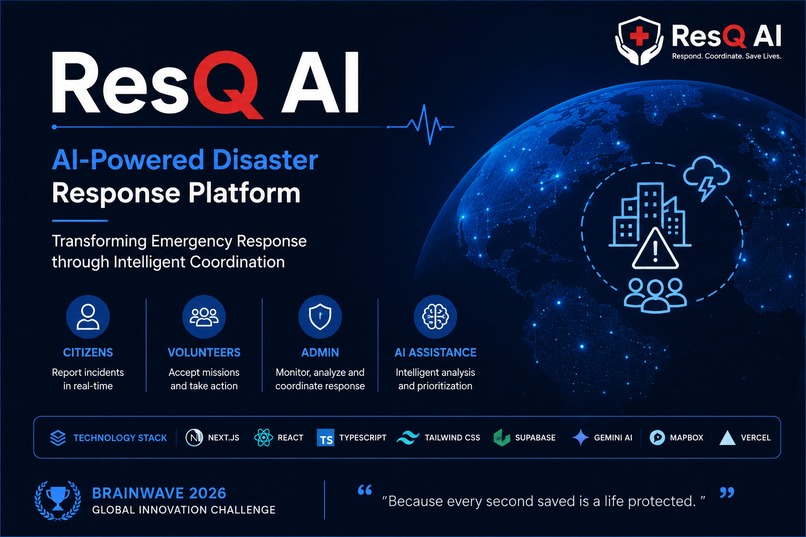
Introducing ResQ AI: AI-Powered Disaster Response Platform
-
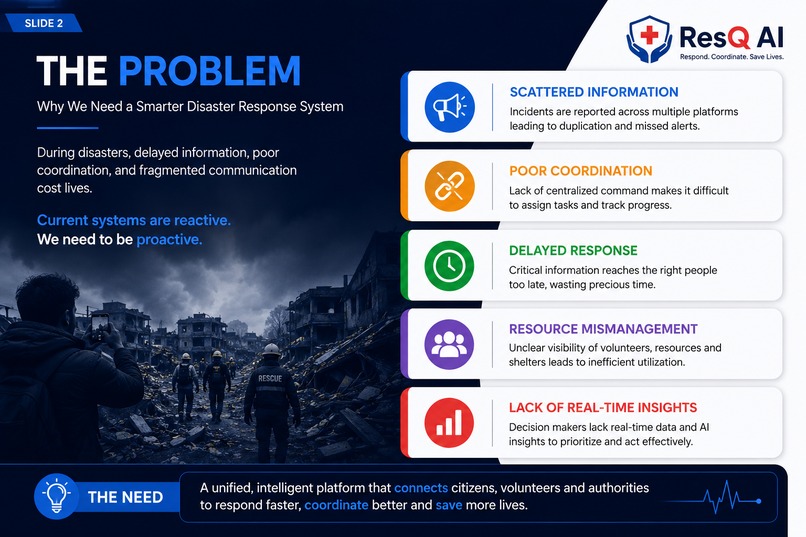
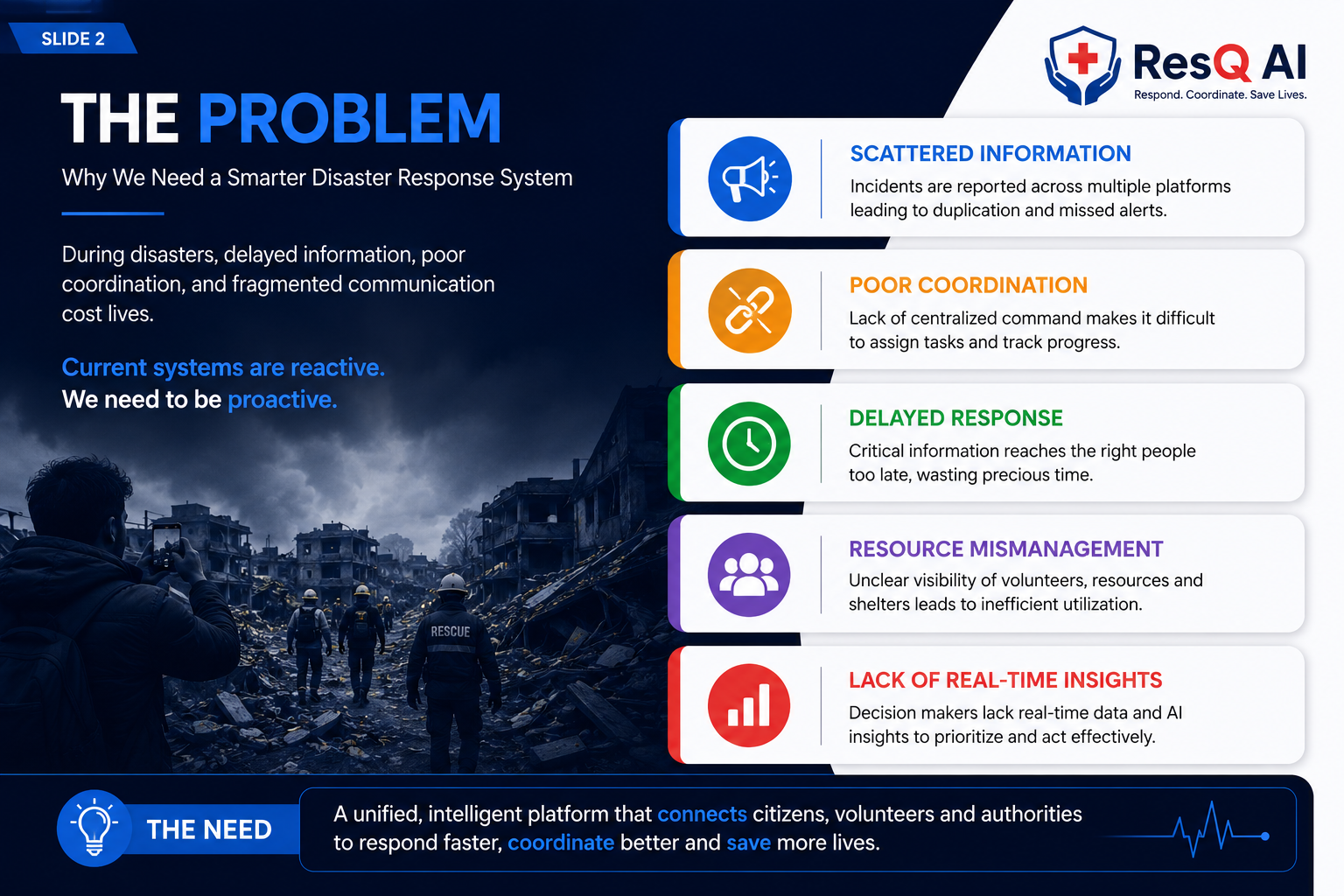
The Problem: Fragmented Emergency Communication
-
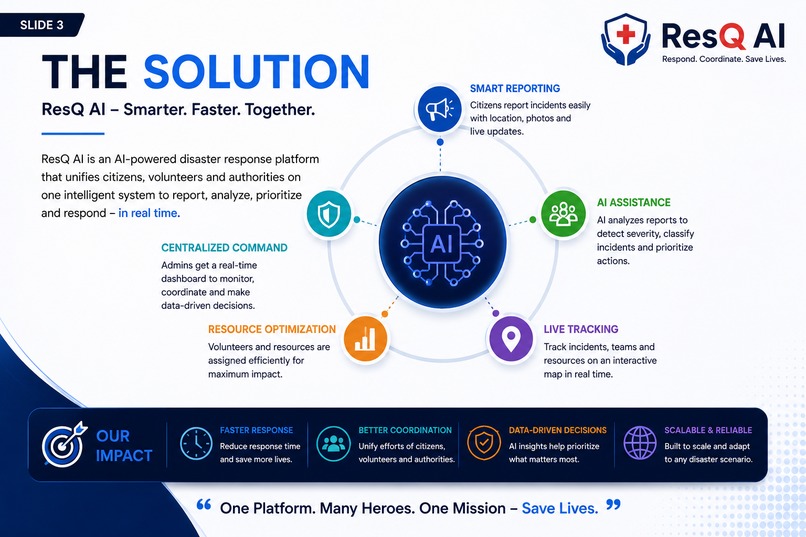
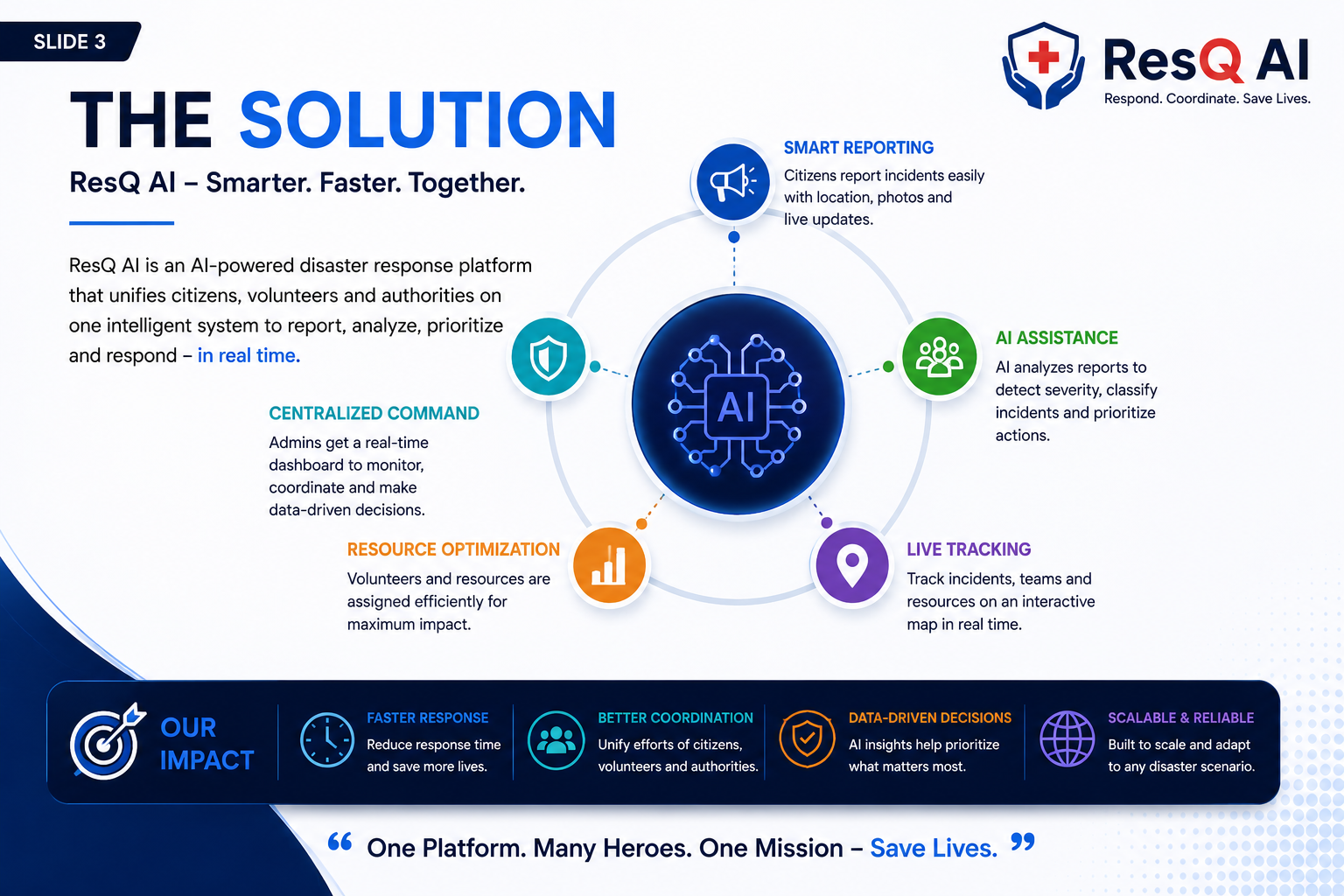
Our Solution: Intelligent Emergency Coordination
-
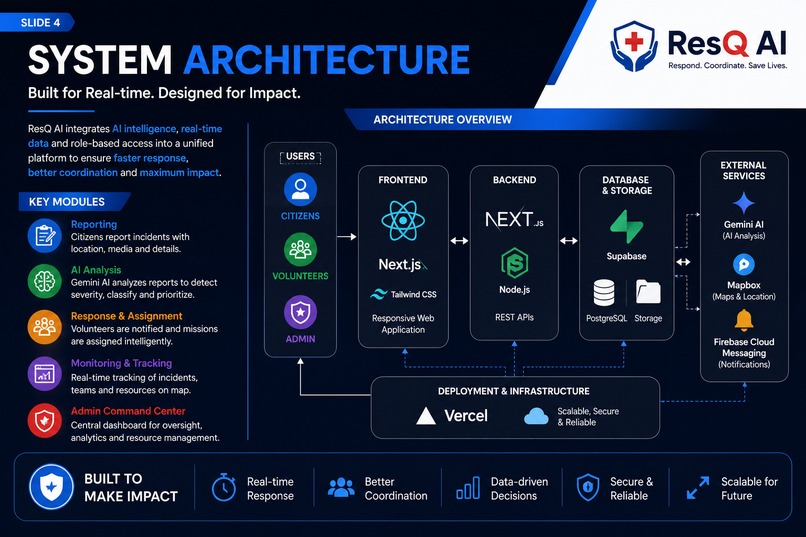
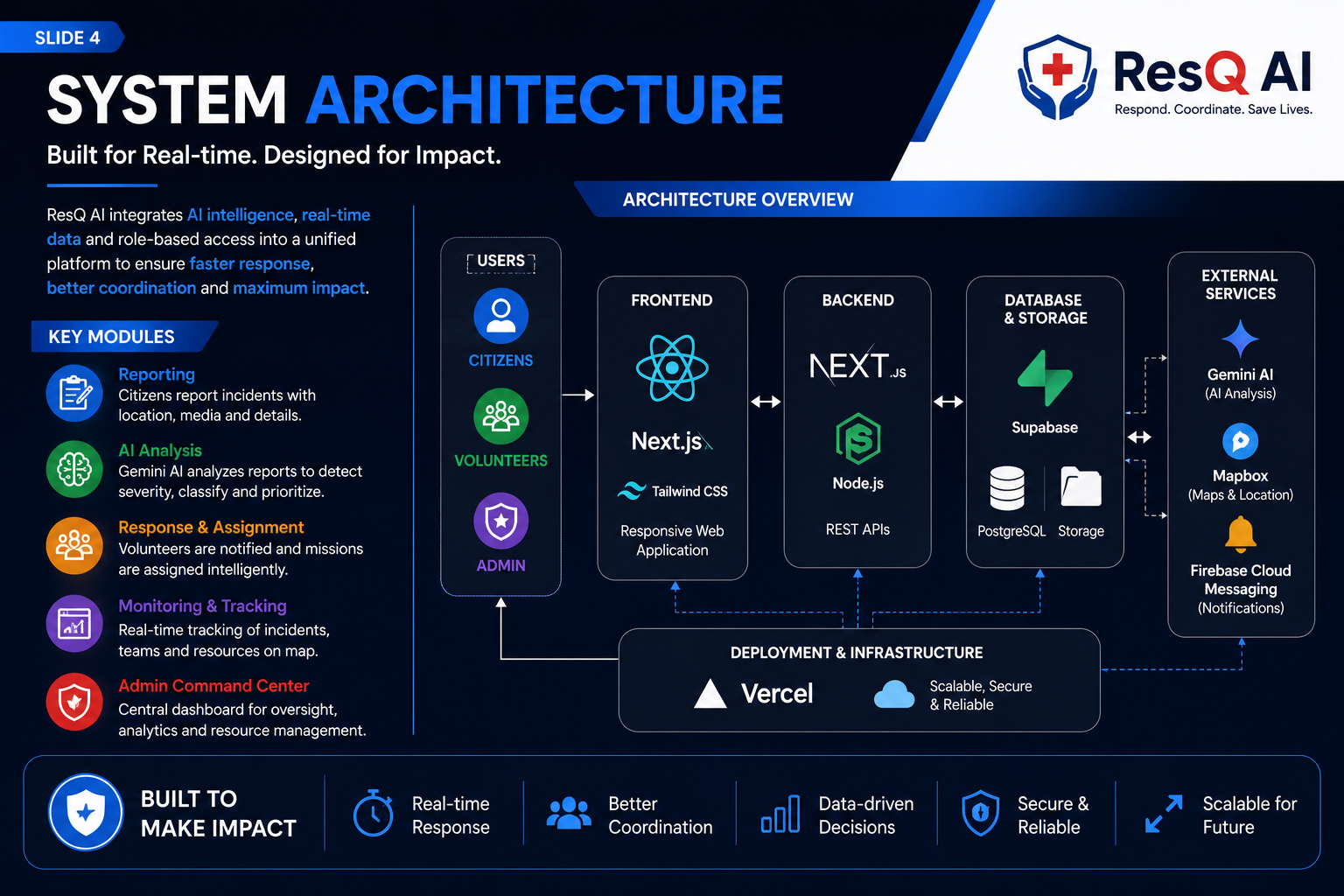
System Architecture of ResQ AI
-
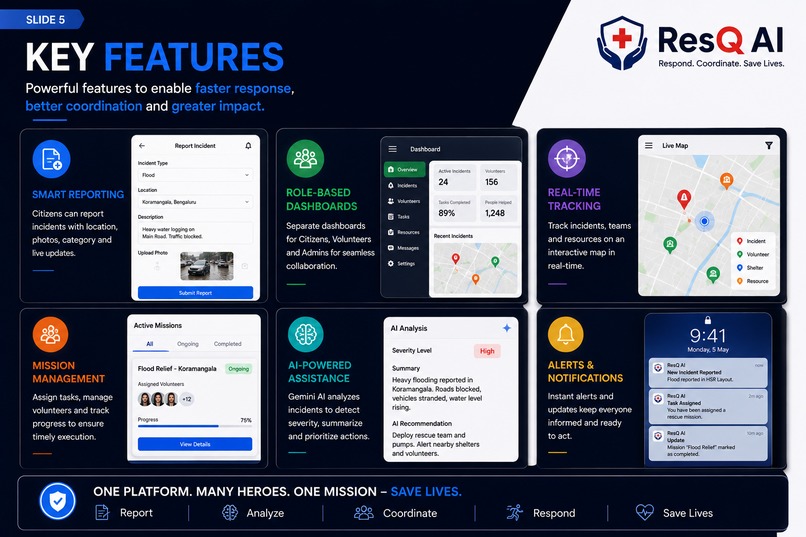
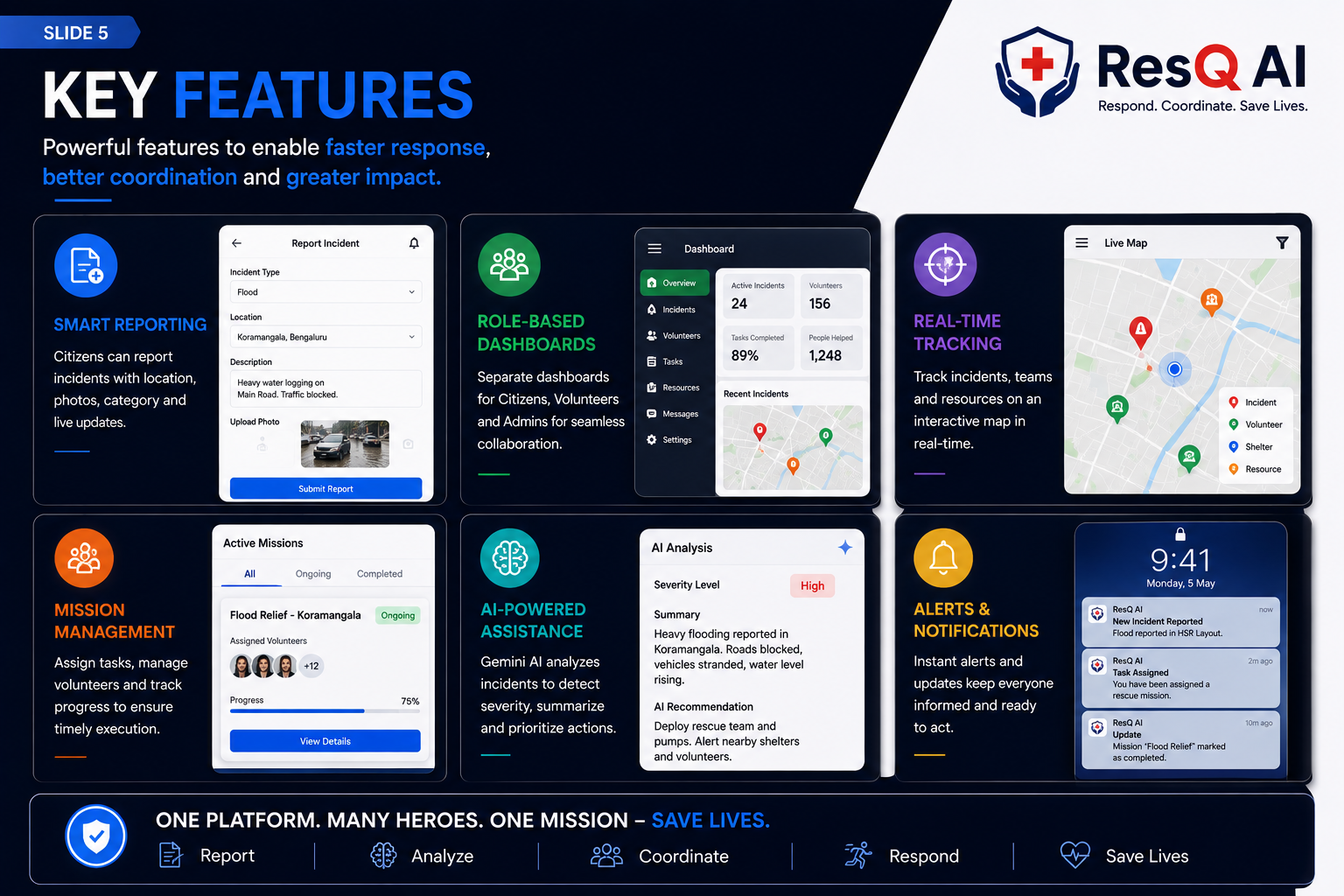
Key Features & Role-Based Dashboards
-
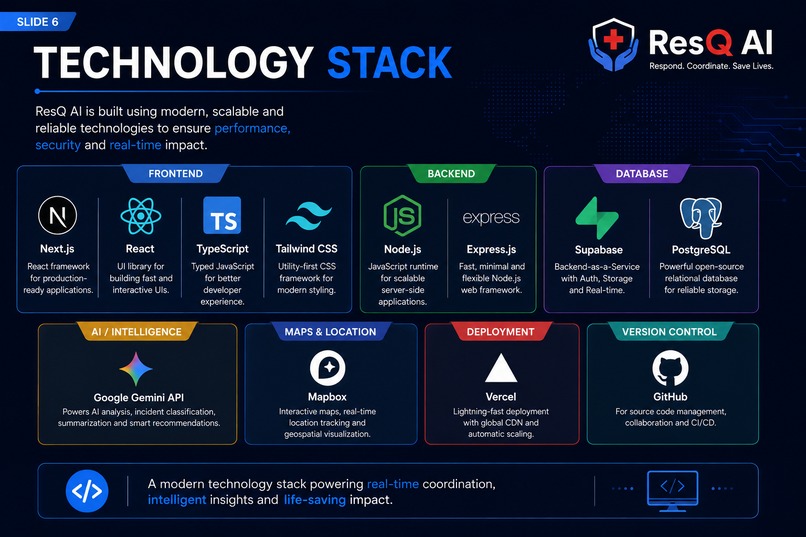
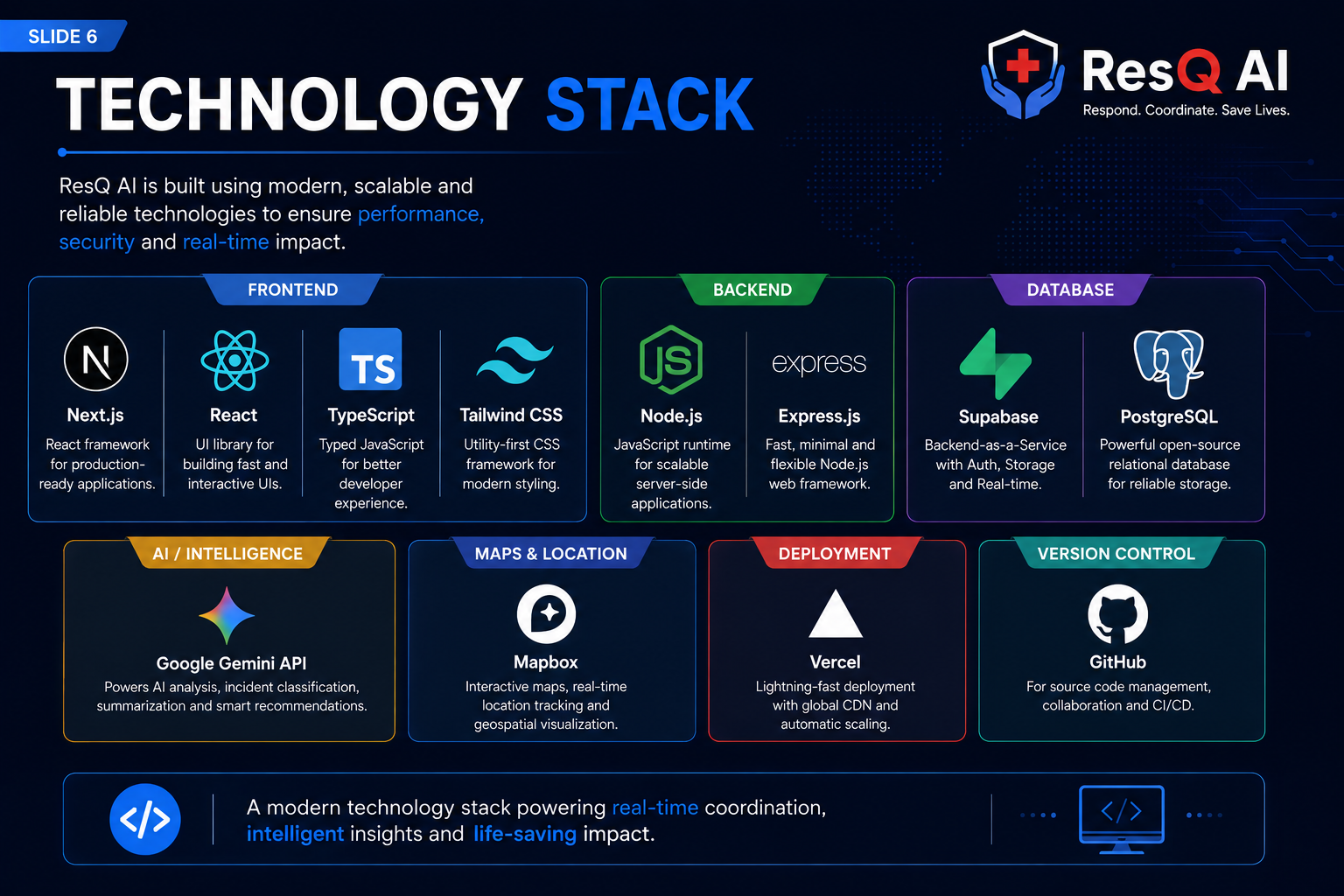
Technology Stack Behind ResQ AI
-
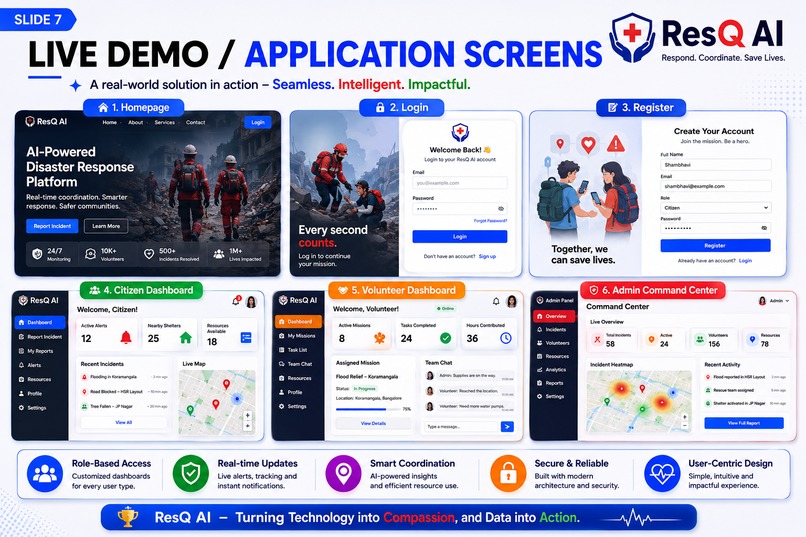
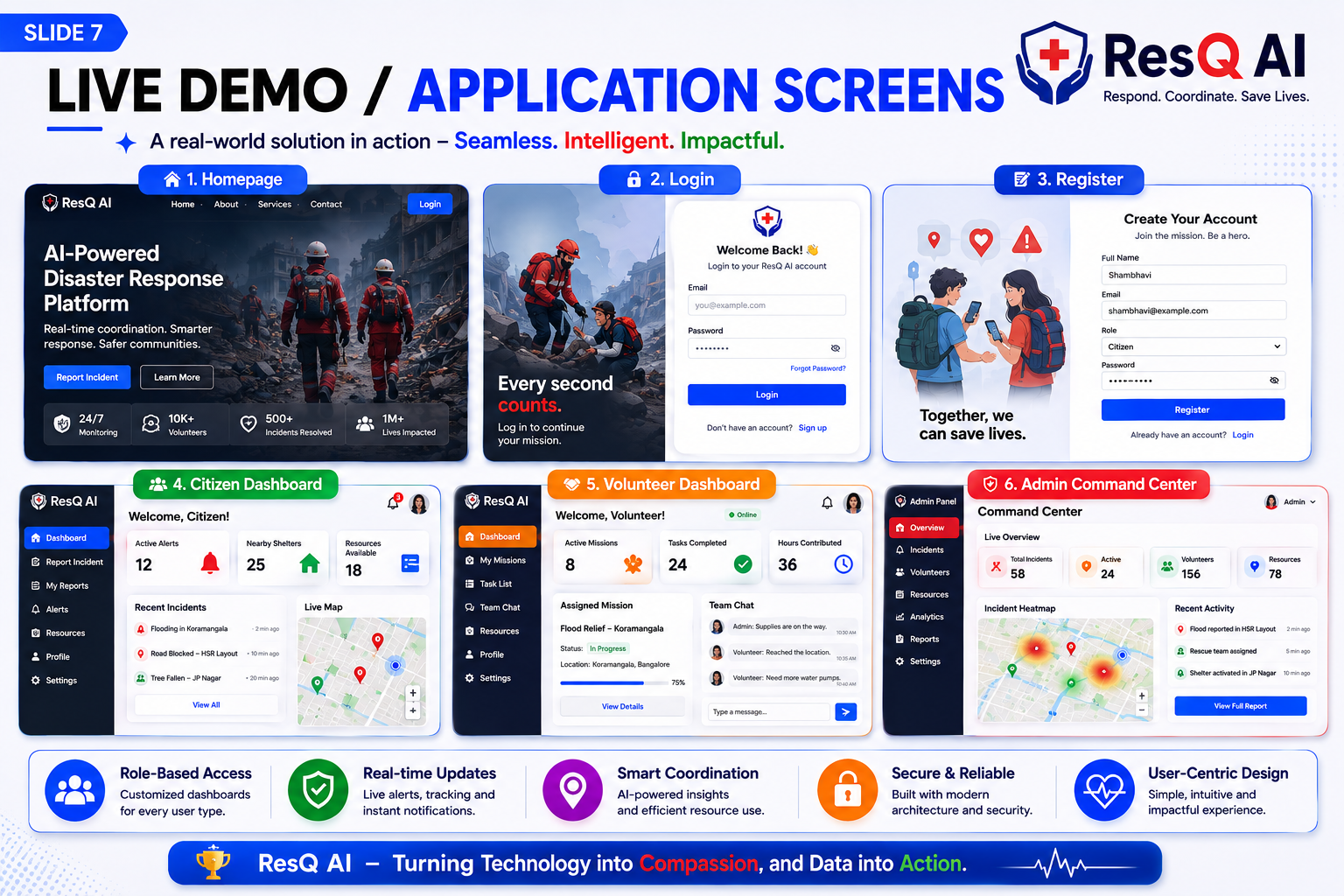
Live Demo: ResQ AI in Action
-
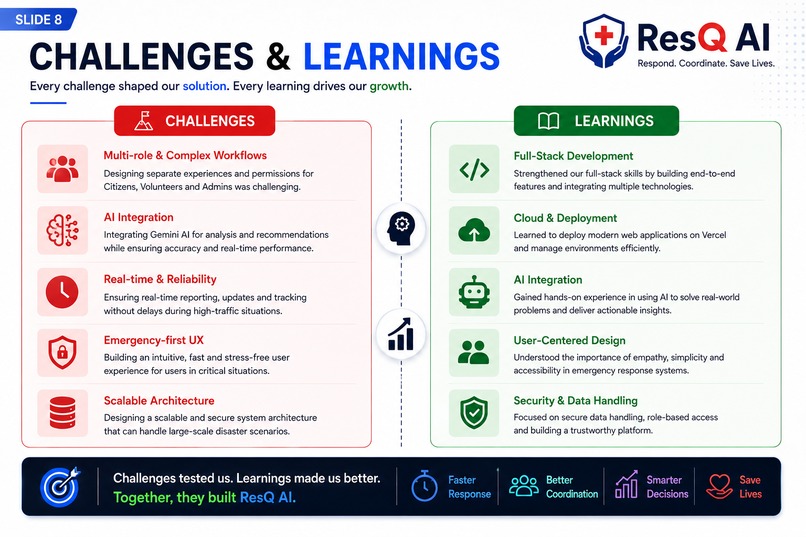
Challenges Faced & Key Learnings
-
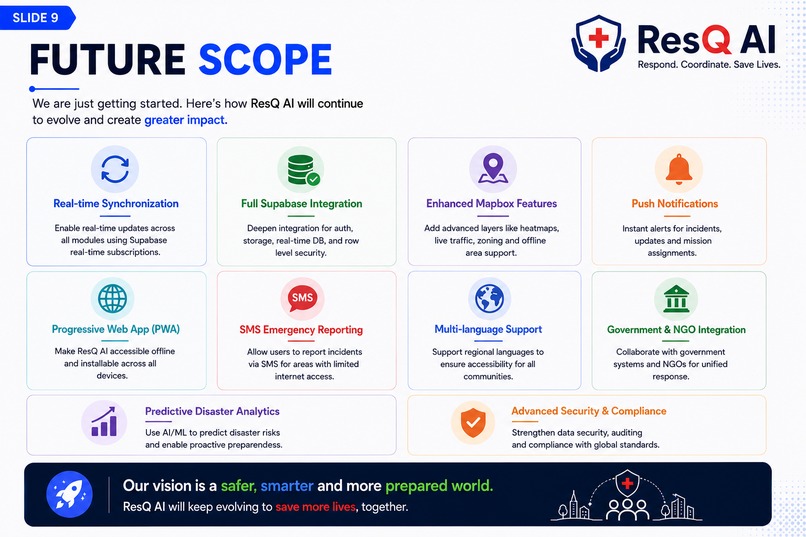
Future Scope & Development Roadmap
🚨 Inspiration
Every minute matters during a disaster, yet emergency communication is often fragmented across phone calls, messaging apps, and social media. This makes it difficult for emergency responders to understand situations quickly, prioritize incidents, and coordinate rescue efforts effectively.
We wanted to explore how Artificial Intelligence could help organize emergency information and support faster decision-making. Instead of disconnected systems, we envisioned a single platform where citizens, volunteers, and emergency coordinators could collaborate through an intelligent command center.
That vision became ResQ AI.
💡 What it does
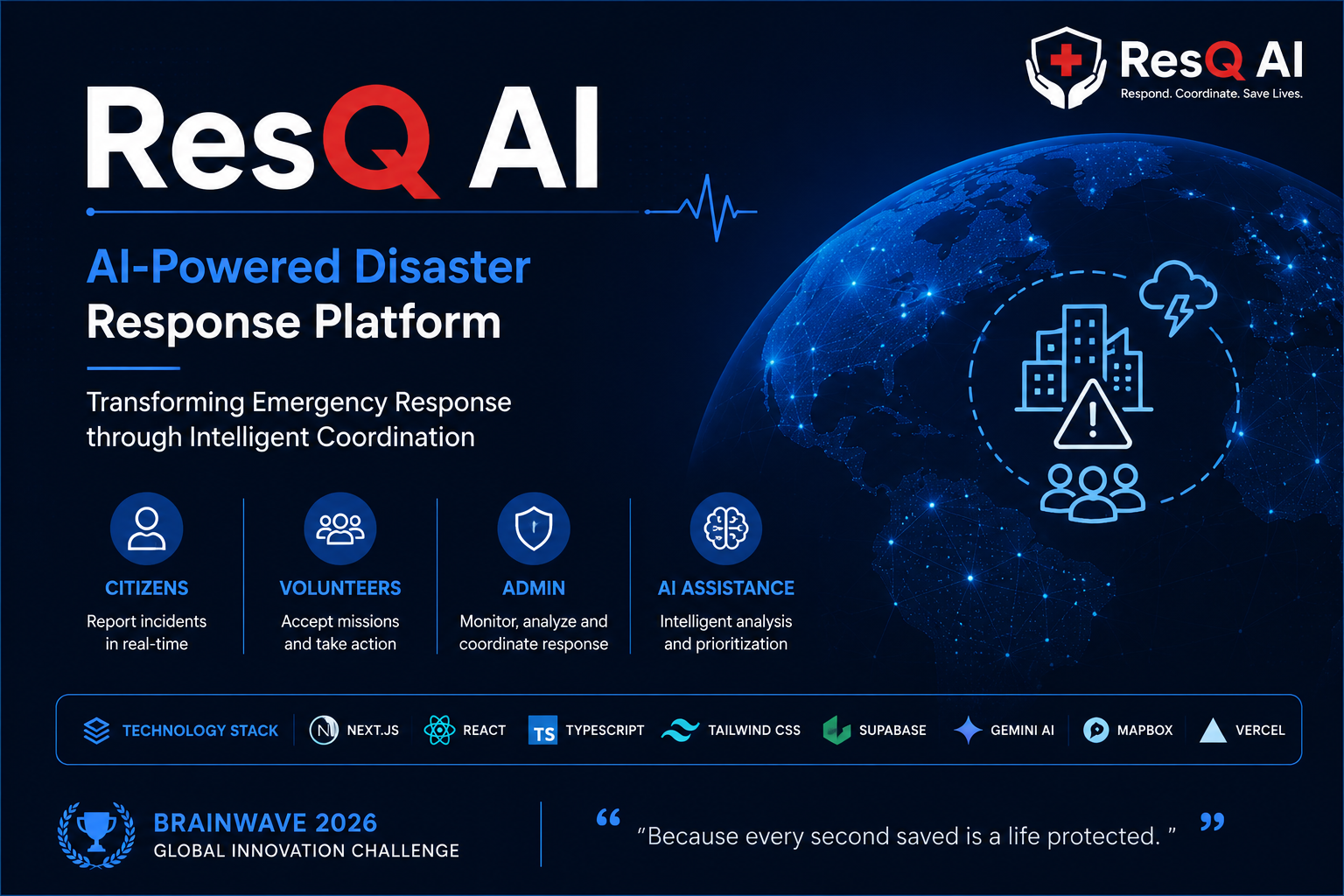
ResQ AI is an AI-powered disaster response platform designed to improve emergency coordination.
The platform provides dedicated experiences for three types of users:
🚨 Citizens
- Report emergency incidents
- Share descriptions, images, and locations
- Submit requests for assistance
🤝 Volunteers
- View active incidents
- Accept assignments
- Track rescue activities
🚑 Administrators
- Monitor incidents through a centralized dashboard
- View AI-assisted incident analysis
- Track volunteer activity
- Coordinate emergency response efforts
🤖 AI Assistance
The AI workflow is designed to:
- Generate incident summaries
- Estimate severity
- Prioritize incidents
- Recommend emergency resources
- Provide safety guidance
🛠️ How we built it
ResQ AI was built using a modern full-stack web architecture.
Frontend
- Next.js 15
- React
- TypeScript
- Tailwind CSS
- Framer Motion
Backend
- Node.js
- Express.js
Database & Backend Services
- Supabase
- PostgreSQL
Artificial Intelligence
- Google Gemini API
Maps
- Mapbox
Deployment
- Vercel
The project follows a modular architecture with dedicated interfaces for citizens, volunteers, and administrators, making it easier to expand into a production-ready platform.
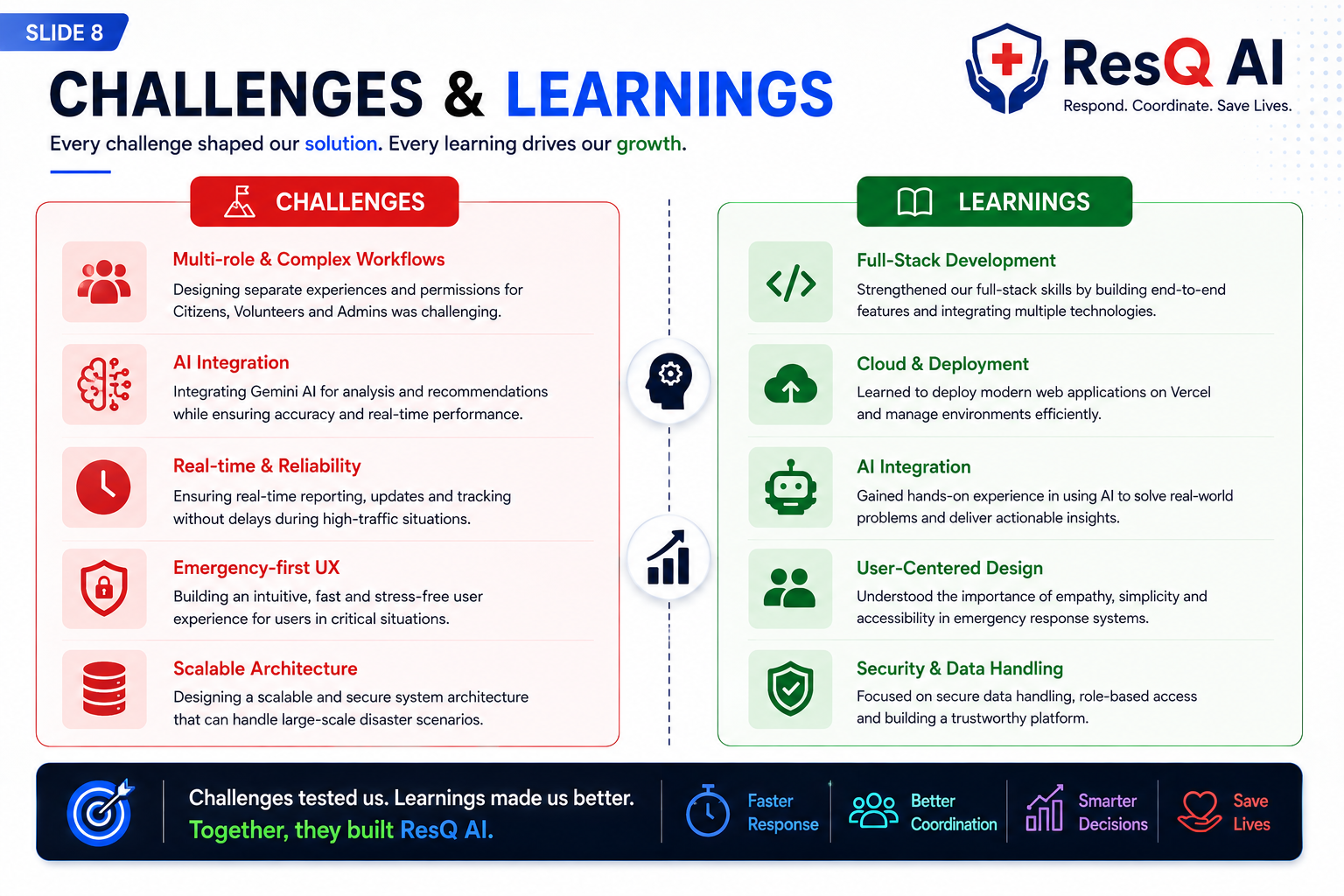
🚧 Challenges we ran into
Building an emergency response platform required balancing usability with functionality.
Some of the biggest challenges included:
- Designing an interface that remains intuitive during stressful situations.
- Creating workflows for multiple user roles.
- Structuring AI-assisted incident analysis into the reporting process.
- Designing a scalable architecture that can support future real-time collaboration.
Throughout development, every design decision came back to one question:
Would this genuinely help someone during a real emergency?
🏆 Accomplishments that we're proud of
We're proud to have built a polished MVP that demonstrates how AI can support emergency response workflows.
Some highlights include:
- A responsive, production-style user interface
- Dedicated dashboards for citizens, volunteers, and administrators
- AI-assisted incident analysis workflow
- Production deployment on Vercel
- A scalable foundation for future real-time collaboration
📚 What we learned
This project reinforced an important lesson:
Technology creates the greatest impact when it solves meaningful human problems.
While building ResQ AI, we strengthened our understanding of:
- Full-stack application development
- Modern React and Next.js architecture
- AI-assisted application design
- Cloud deployment
- User-centered interface design
- Scalable software architecture
We also learned that designing for emergency situations requires simplicity, clarity, and reliability just as much as technical innovation.
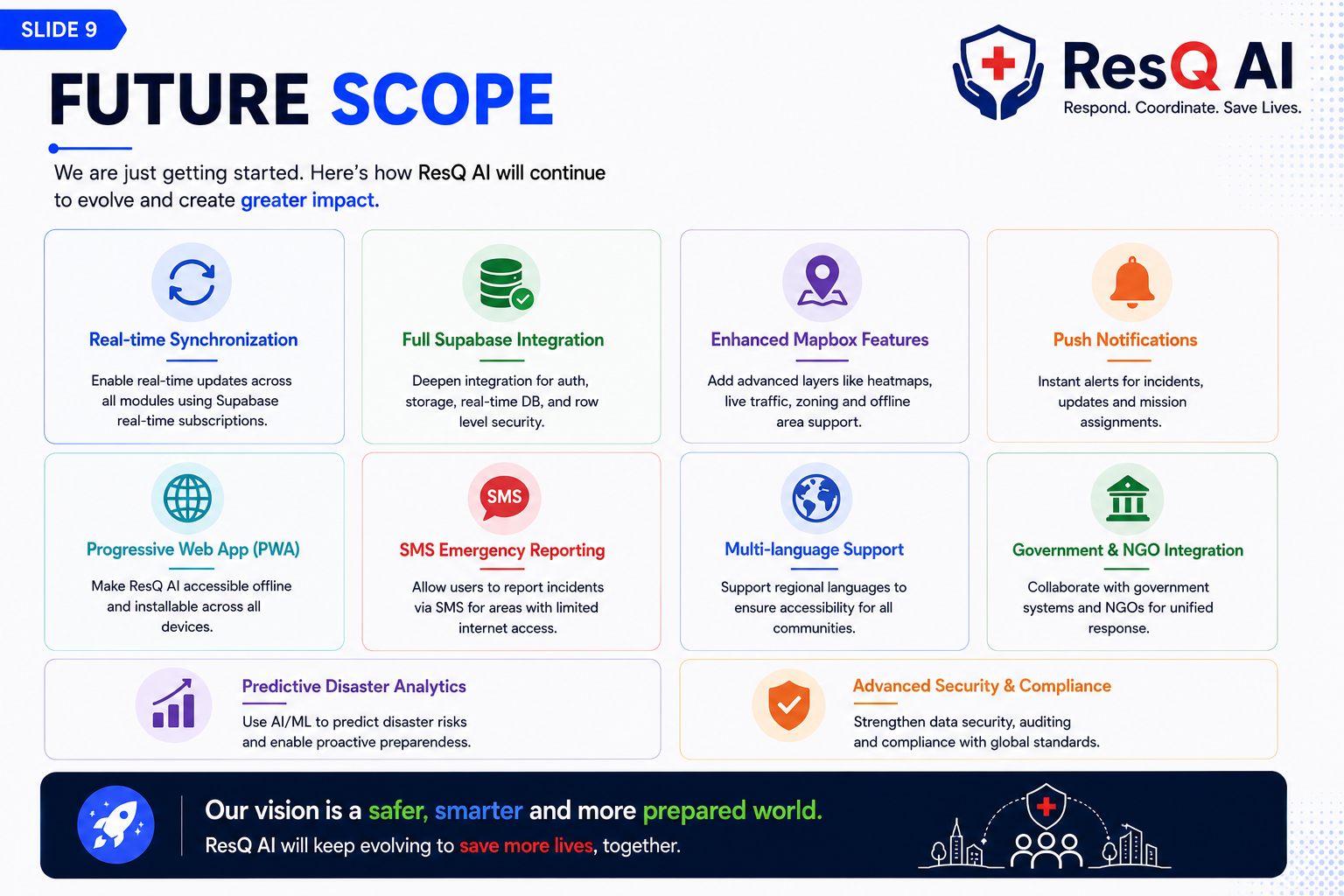
🚀 What's next for ResQ AI
This MVP is the foundation for a much larger vision.
Our roadmap includes:
- Real-time incident synchronization
- Interactive Mapbox visualization
- Enhanced Gemini-powered incident analysis
- Progressive Web App (PWA)
- Push notifications
- SMS emergency reporting
- Multi-language support
- Predictive disaster analytics
- Government and NGO integrations
Our long-term goal is to build an intelligent emergency response platform that helps communities prepare for, respond to, and recover from disasters more effectively.
Because every second saved is a life protected.
Built With
- auth
- cloudinary
- express.js
- gemini
- github
- mapbox
- next.js
- node.js
- postgresql
- react
- shadcn/ui
- supabase
- tailwind
- typescript
- vercel


Log in or sign up for Devpost to join the conversation.