-
-
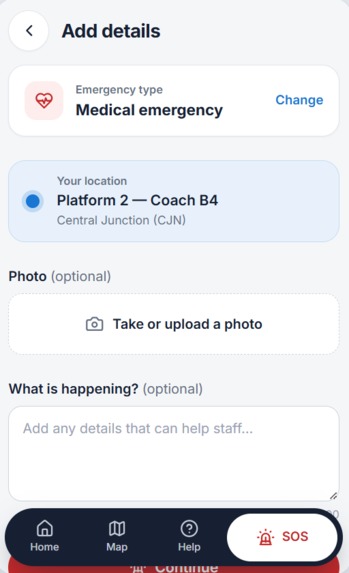
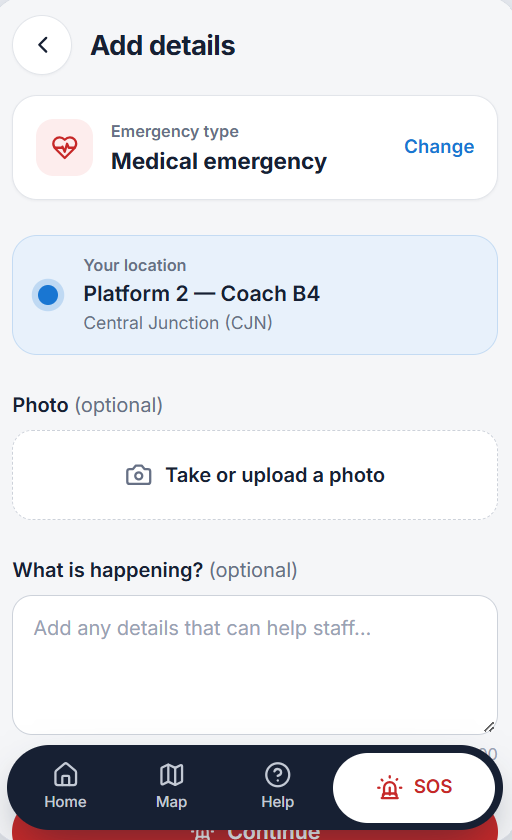
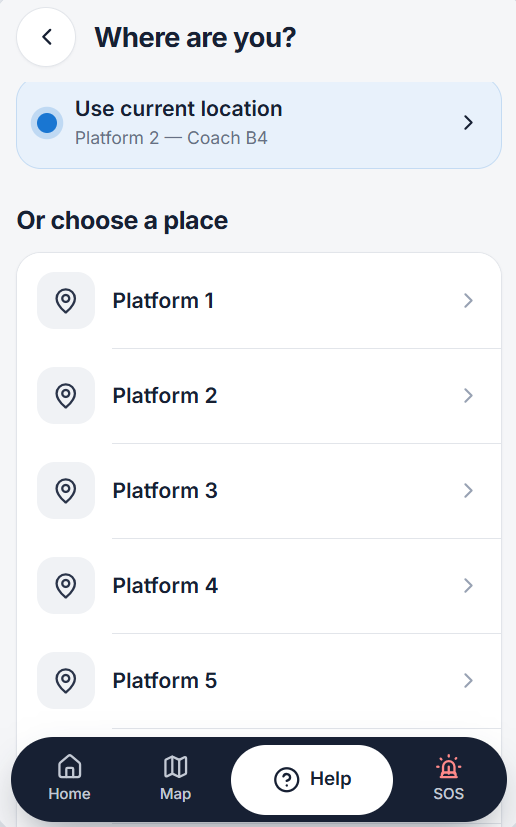
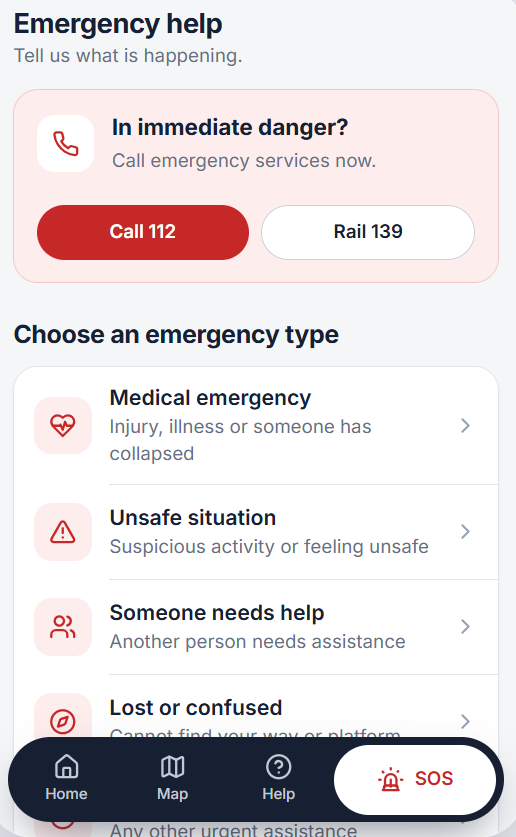
feature inside the emergency dashboard
-
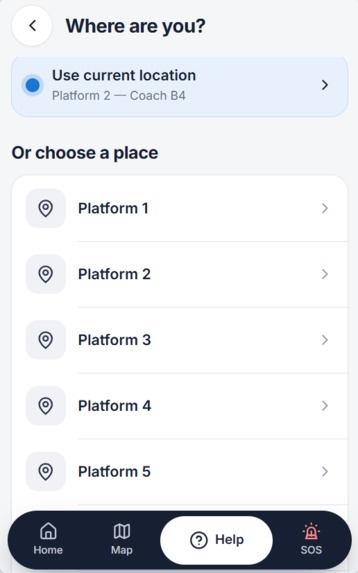
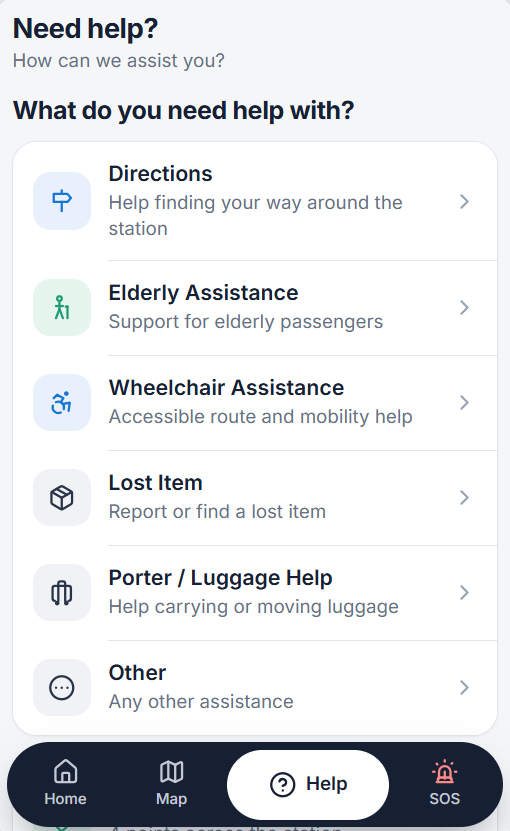
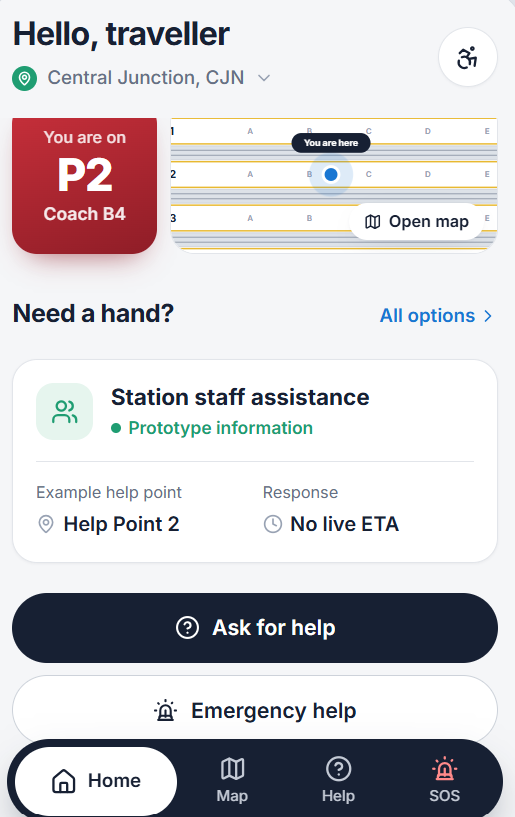
feature inside help dashboard
-
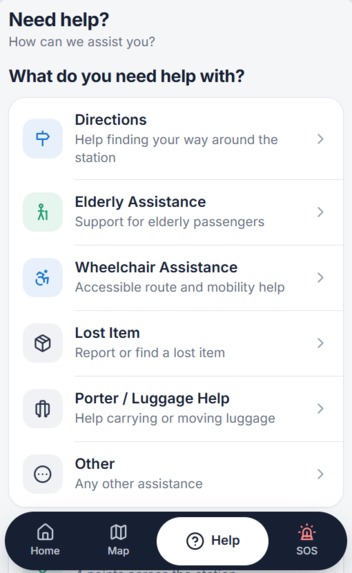
help dashboard for traveller
-
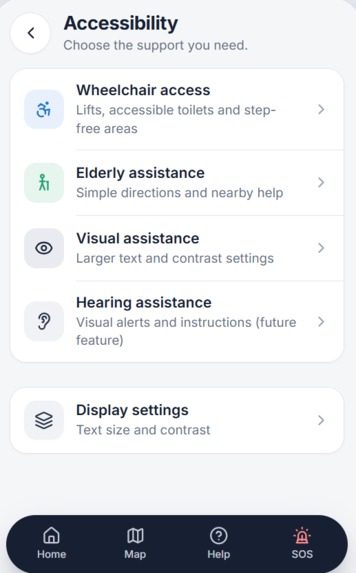
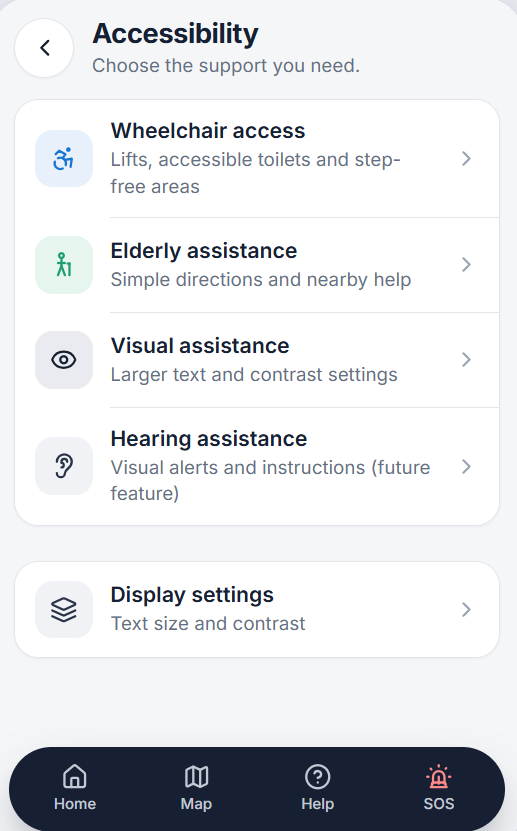
acessibility dashboard
-
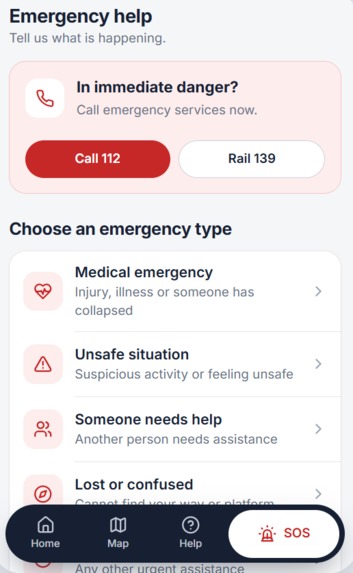
emergency dashboard
-
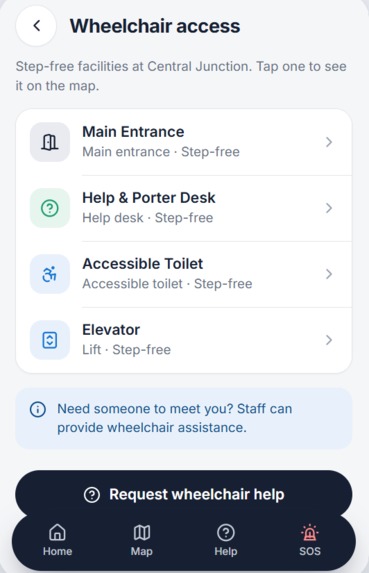
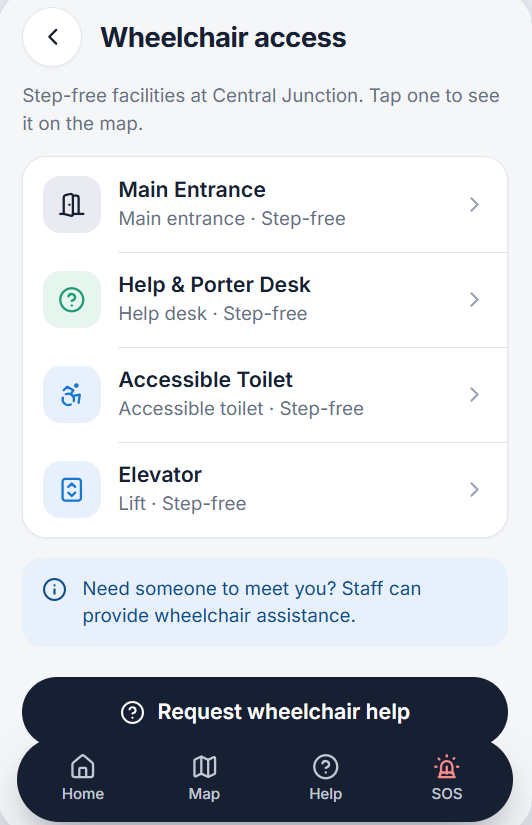
inside feature of accessibility
-
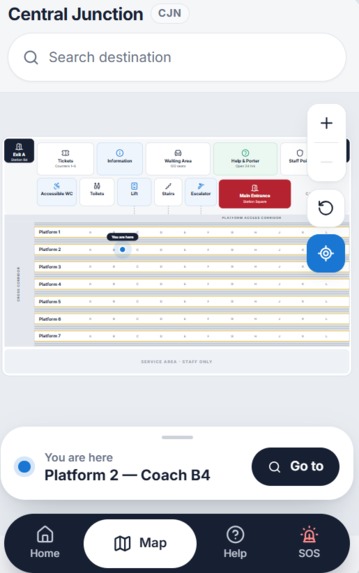
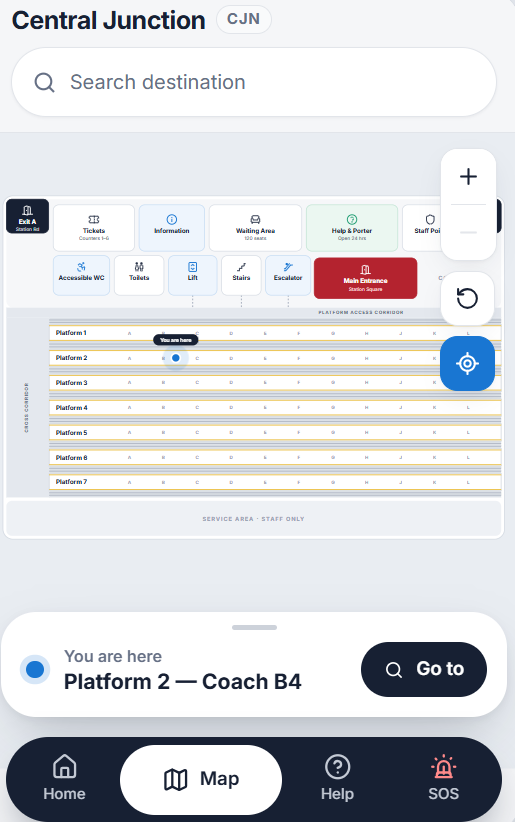
indoor map
-
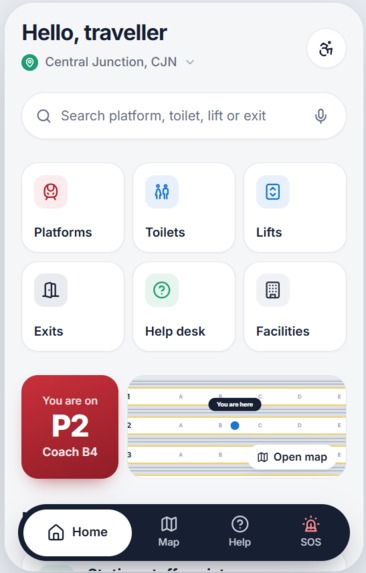
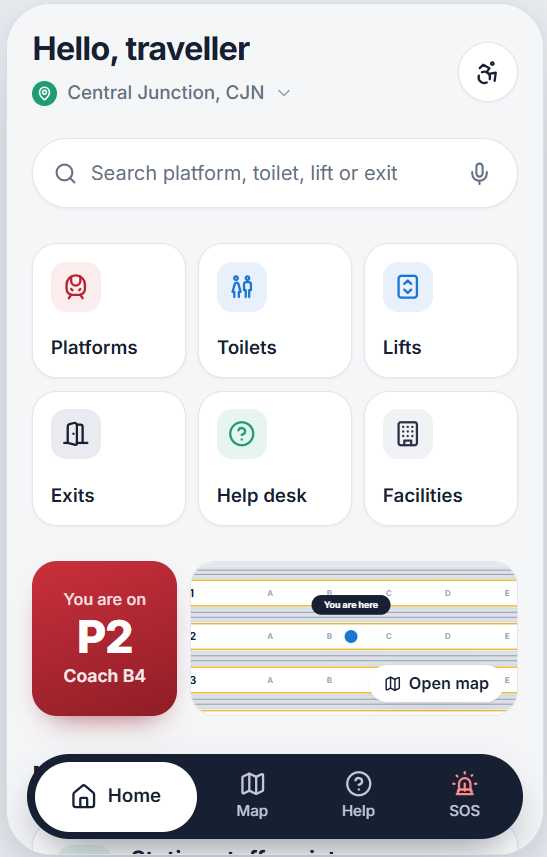
home page
-
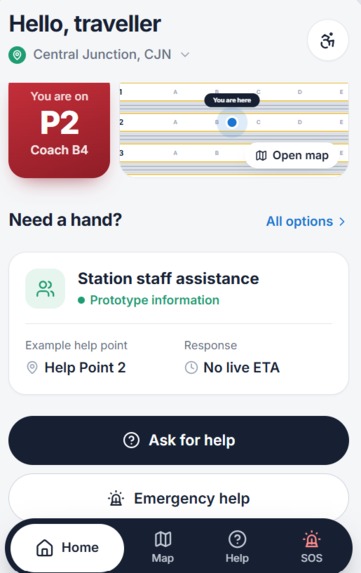
homepage with current location and indoor map and help button
-
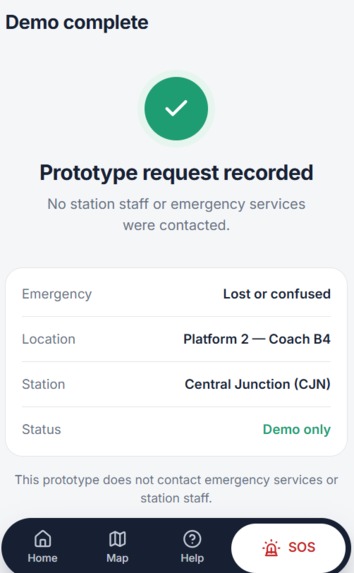
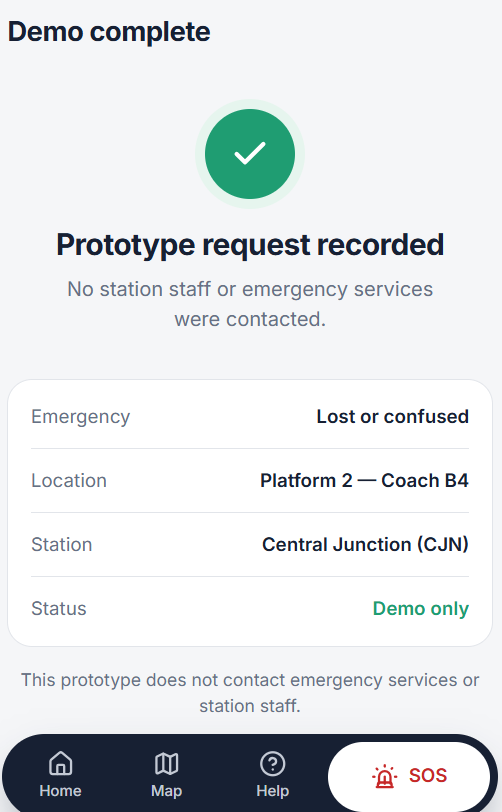
dashboard after submiting the sos message
RailAssist — Navigating the Station Made Simple
Inspiration
Railway stations can be confusing, especially for passengers visiting them for the first time. Finding the correct platform, exit, toilet, lift, or help desk can become difficult in a large and unfamiliar station. This can be even more challenging for elderly passengers and people with accessibility needs.
We wanted to create a simple solution that brings navigation, station information, accessibility features, and passenger assistance into one place. This inspired us to build RailAssist.
What It Does
RailAssist is a web-based station assistance application designed to help passengers navigate railway stations more easily.
Passengers can search for important destinations such as platforms, toilets, lifts, exits, and help desks. After selecting a destination, they can view its location on an indoor digital station map.
The application also provides accessibility options such as large text and high contrast. Passengers can request different types of assistance and access an SOS section for emergency support.
Our goal is to make the passenger journey simple:
Search → Find → Navigate → Get Help
How We Built It
We built RailAssist using React and Vite. JavaScript is used for application logic and interactions, while CSS is used for the interface and responsive design.
The indoor station map is created using SVG, with structured station data representing platforms and important facilities. This allows users to select a destination and view its location on the digital map.
We created reusable React components for different parts of the application and connected the search, map, accessibility, assistance, and SOS features into a single experience.
We also used AI-assisted development during implementation, debugging, and testing. AI helped us explore implementation approaches and solve development issues while we reviewed and adapted the solutions for our project.
Challenges We Faced
One of our main challenges was designing a station experience that would be simple enough for first-time passengers while still providing useful information.
Creating the indoor station map was another challenge because we needed to represent different facilities clearly and connect them with structured station data.
We also had to make the interface responsive and ensure that features such as destination search, accessibility, assistance, and SOS worked together consistently.
Accomplishments
We are proud that we created a working prototype covering the main passenger journey, from searching for a destination to viewing it on the station map and requesting assistance.
We also integrated dedicated accessibility and SOS sections so that the application considers passengers with different needs rather than focusing only on basic navigation.
What We Learned
This project helped us understand how to design a solution around a real-world problem instead of building separate features independently.
We improved our understanding of React components, state management, responsive UI design, SVG-based maps, structured data, and AI-assisted development.
Most importantly, we learned to look at the application from the passenger's point of view and consider how quickly and easily someone can find the information they need.
What's Next
RailAssist is currently a prototype. In the future, we would like to add real-time indoor positioning, automatic indoor routing, voice navigation, real-time staff assistance, emergency-service integration, multilingual support, and support for multiple railway stations.
Our vision is to make railway stations easier to understand, navigate, and access for every passenger.

Log in or sign up for Devpost to join the conversation.