Inspiration
What it does## Inspiration
Choosing paint colours is harder than it appears because colours cannot be judged in isolation.
Floors, cabinets, furniture, fabrics, lighting, undertones and surrounding finishes all affect how a paint colour will look in a real space.
After helping thousands of customers choose paint colours through Colour Land Paint in Burlington, Ontario, I saw the same challenge repeatedly: people needed a more visual and understandable way to see how colours relate.
I created rAIflow to combine practical colour-consultation experience with an interactive digital colour platform.
What rAIflow does
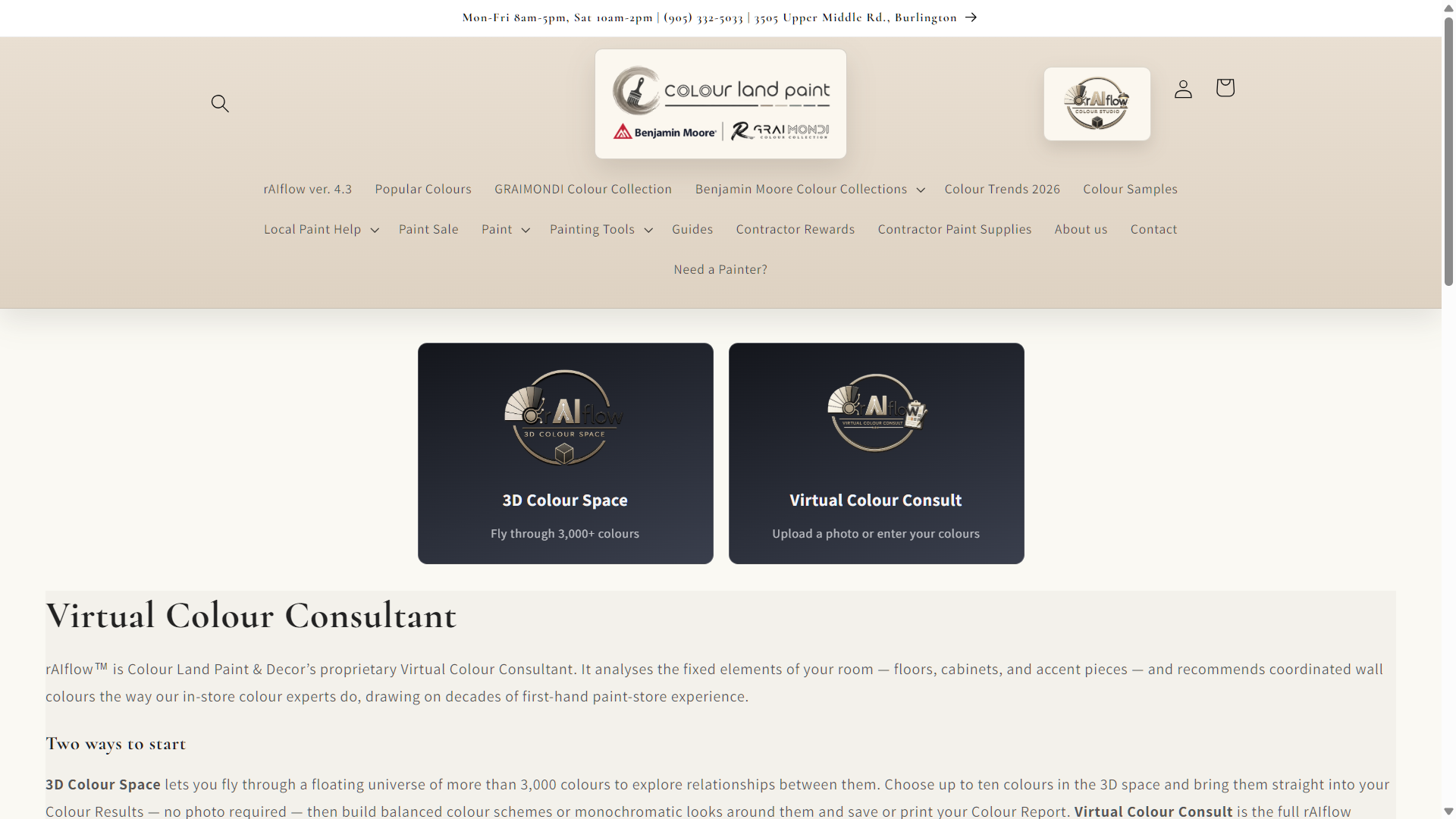
rAIflow is an AI-assisted colour consultation and colour intelligence platform.
Users can begin by:
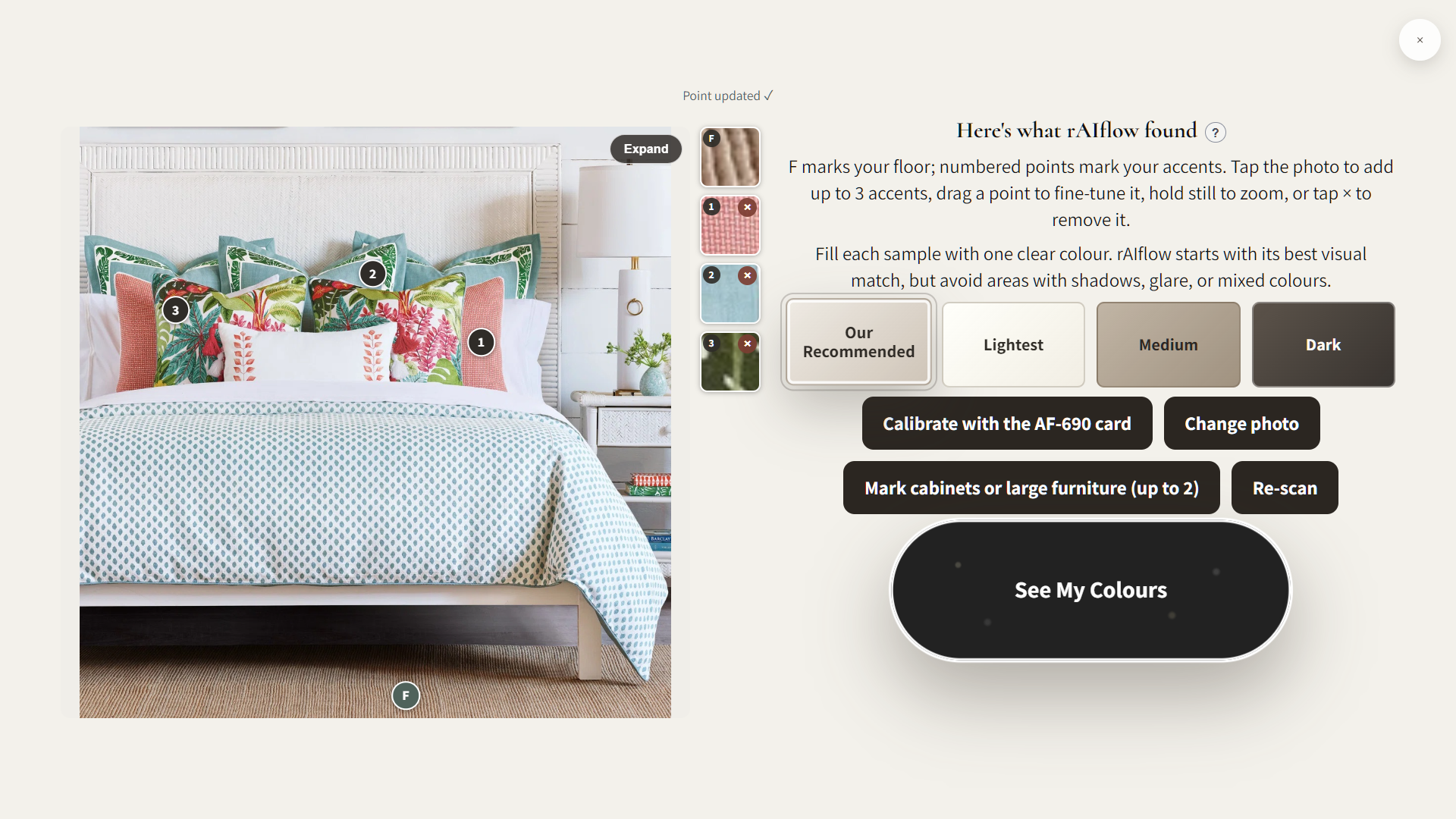
- Uploading or selecting a room photograph
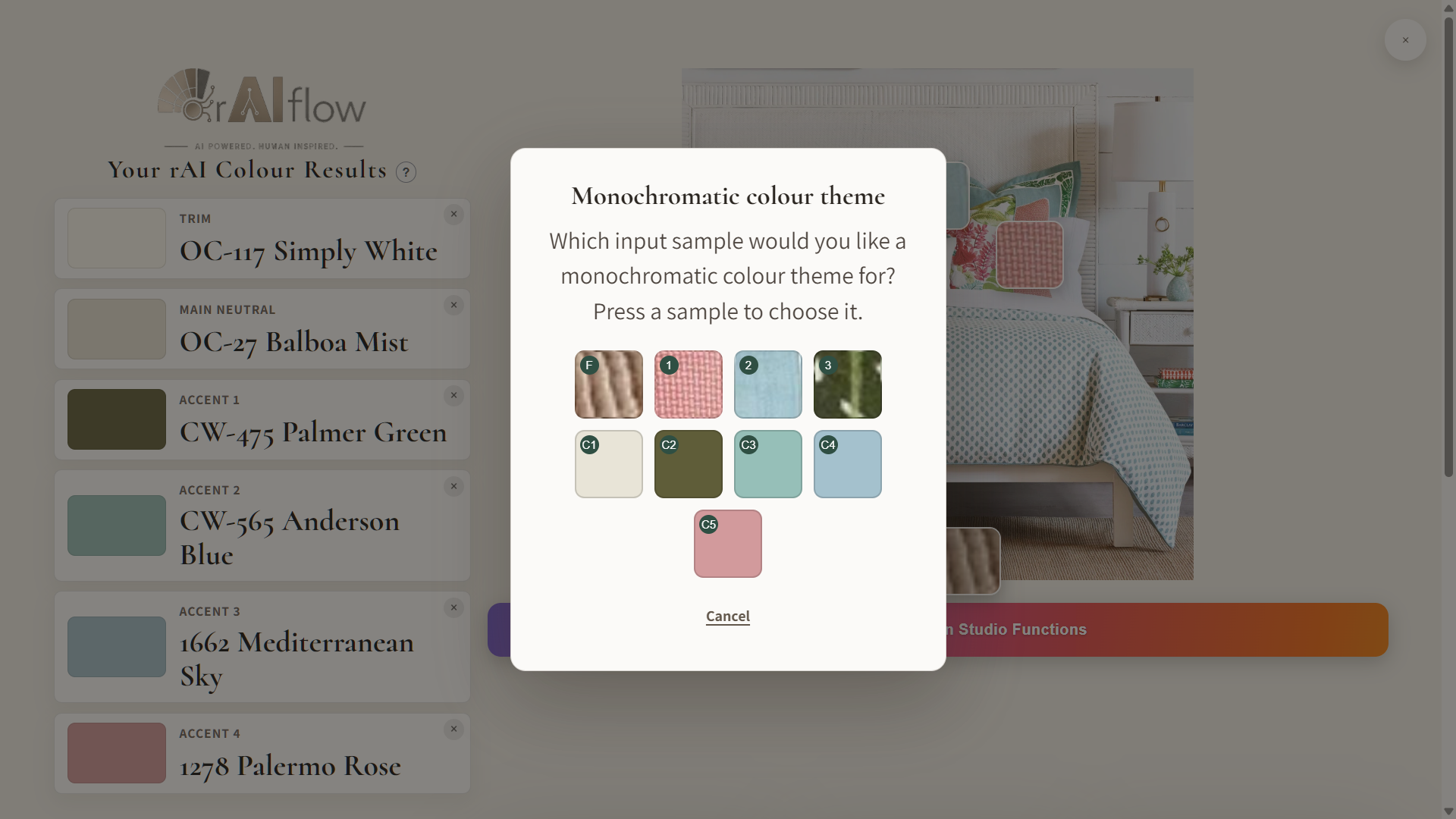
- Sampling important existing colours
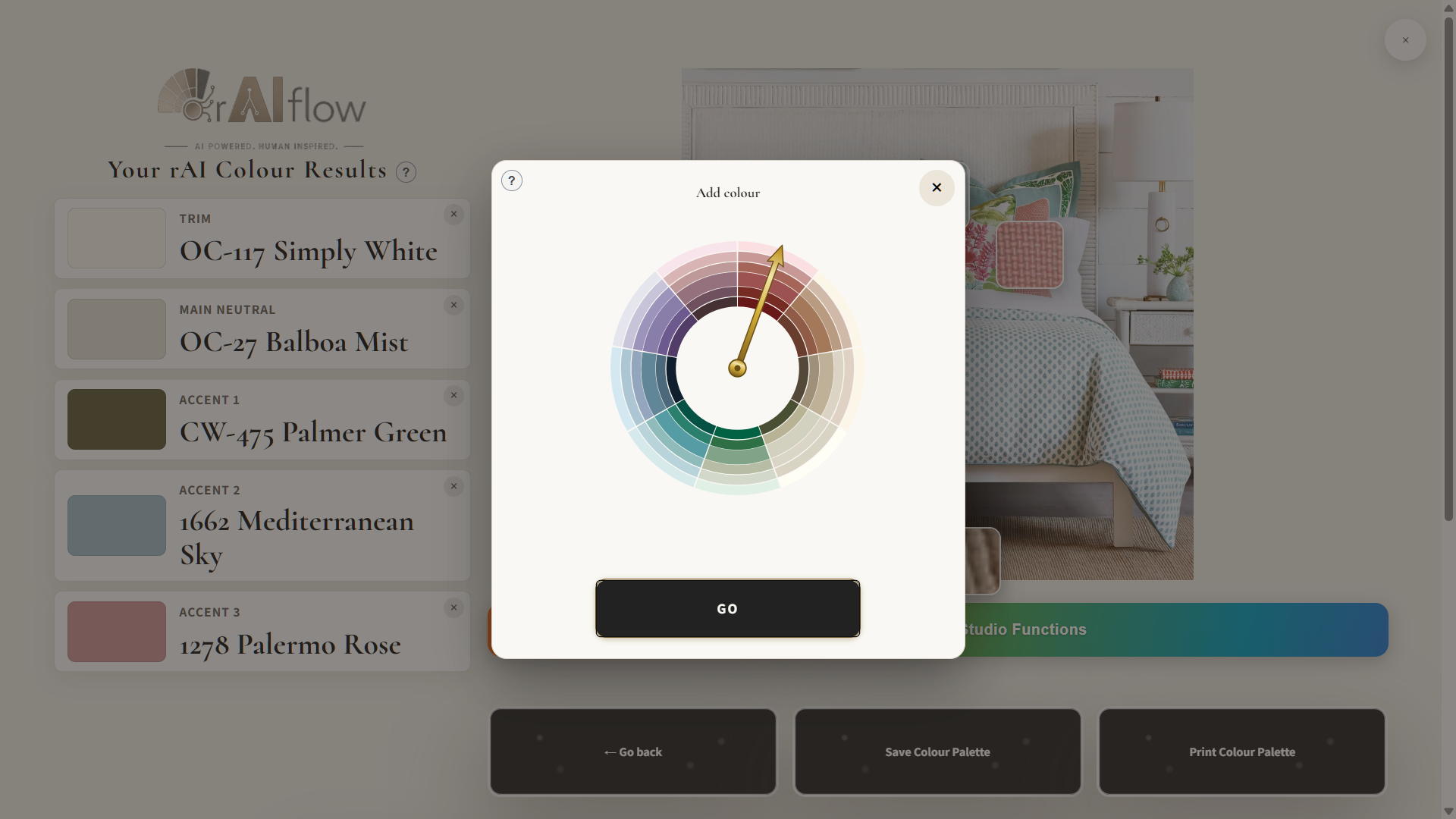
- Entering colours manually
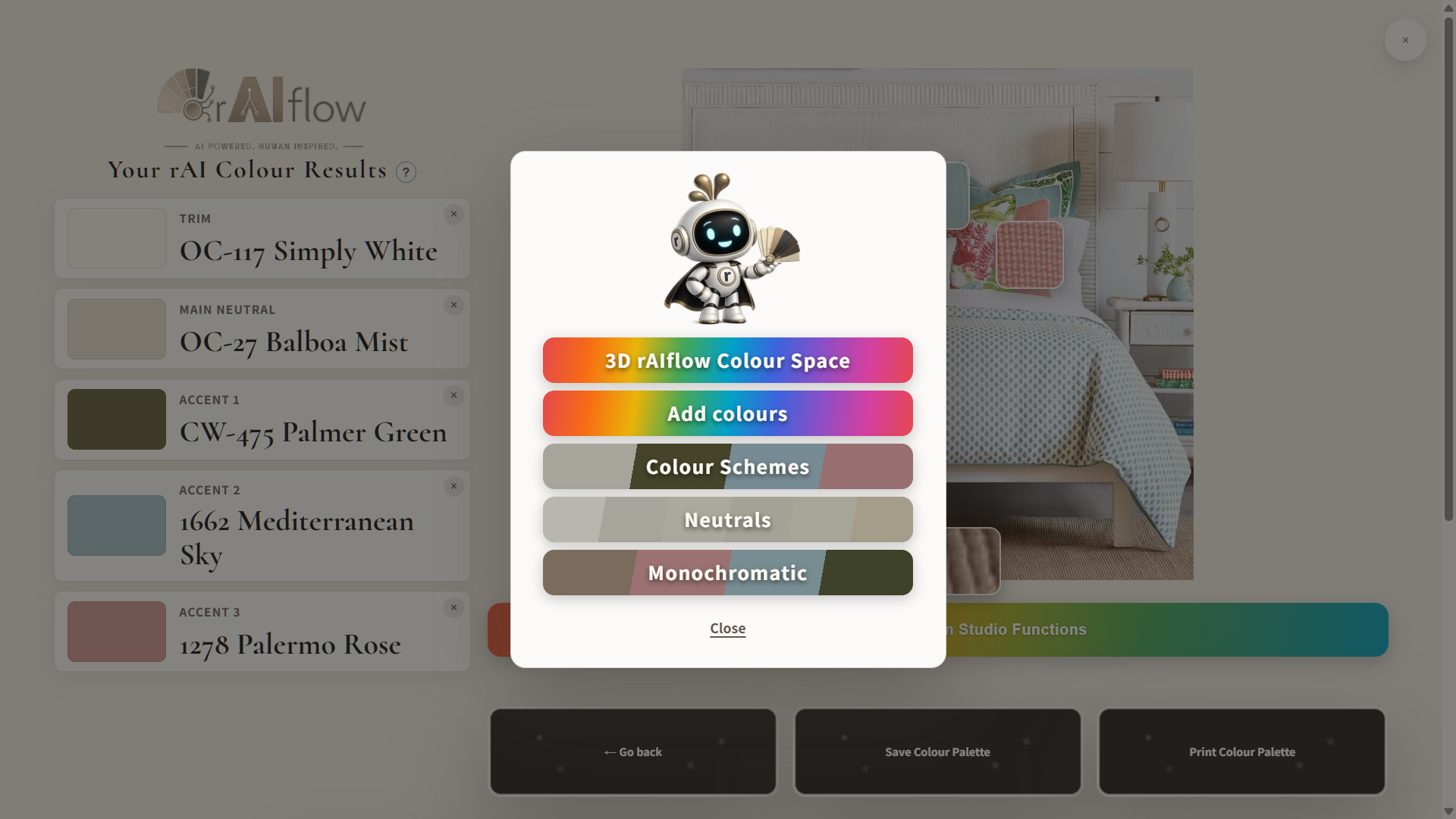
- Exploring colours directly in the 3D Colour Space
Important colours may include:
- Flooring
- Cabinets
- Furniture
- Trim
- Fabrics
- Accent pieces
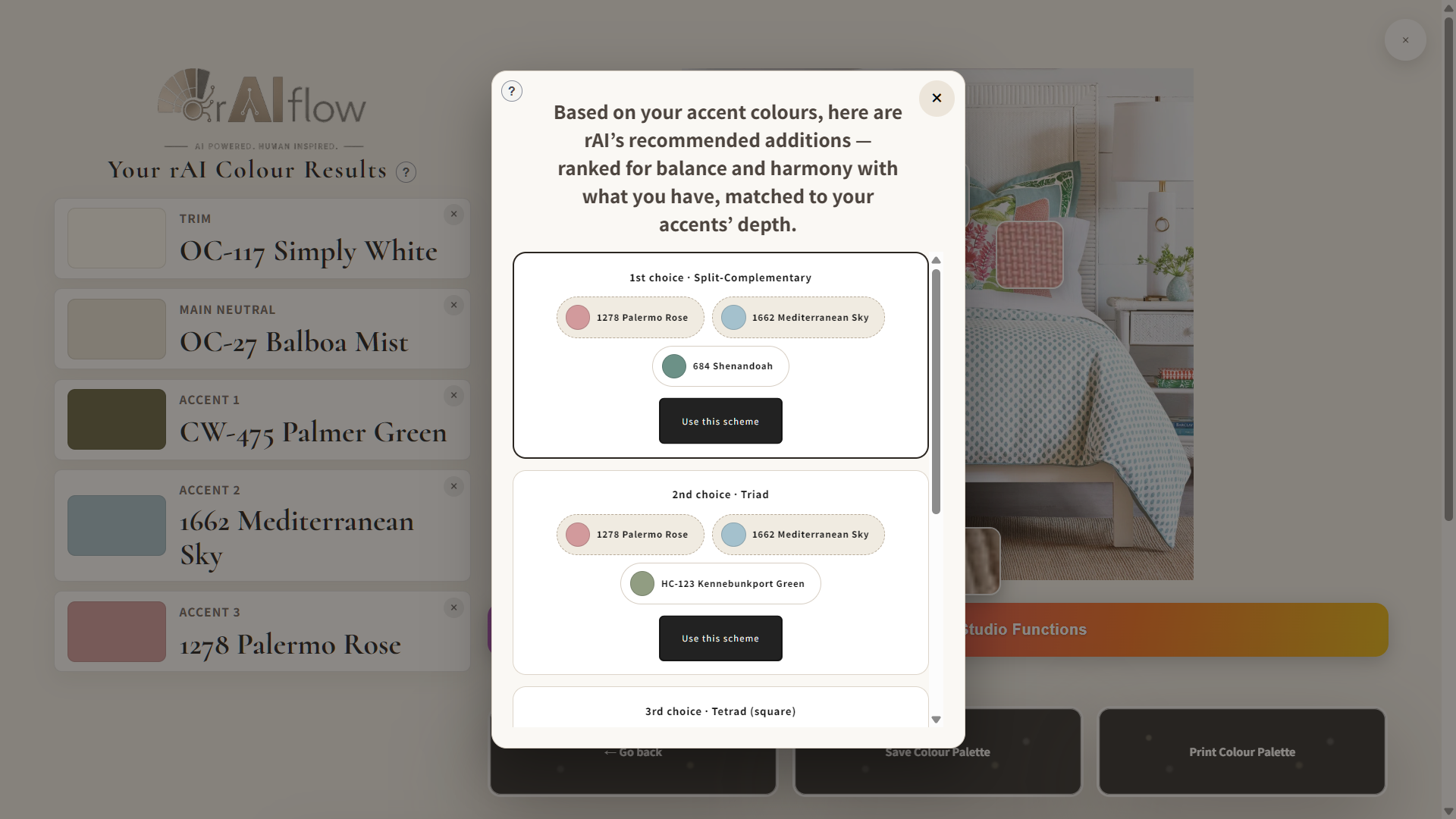
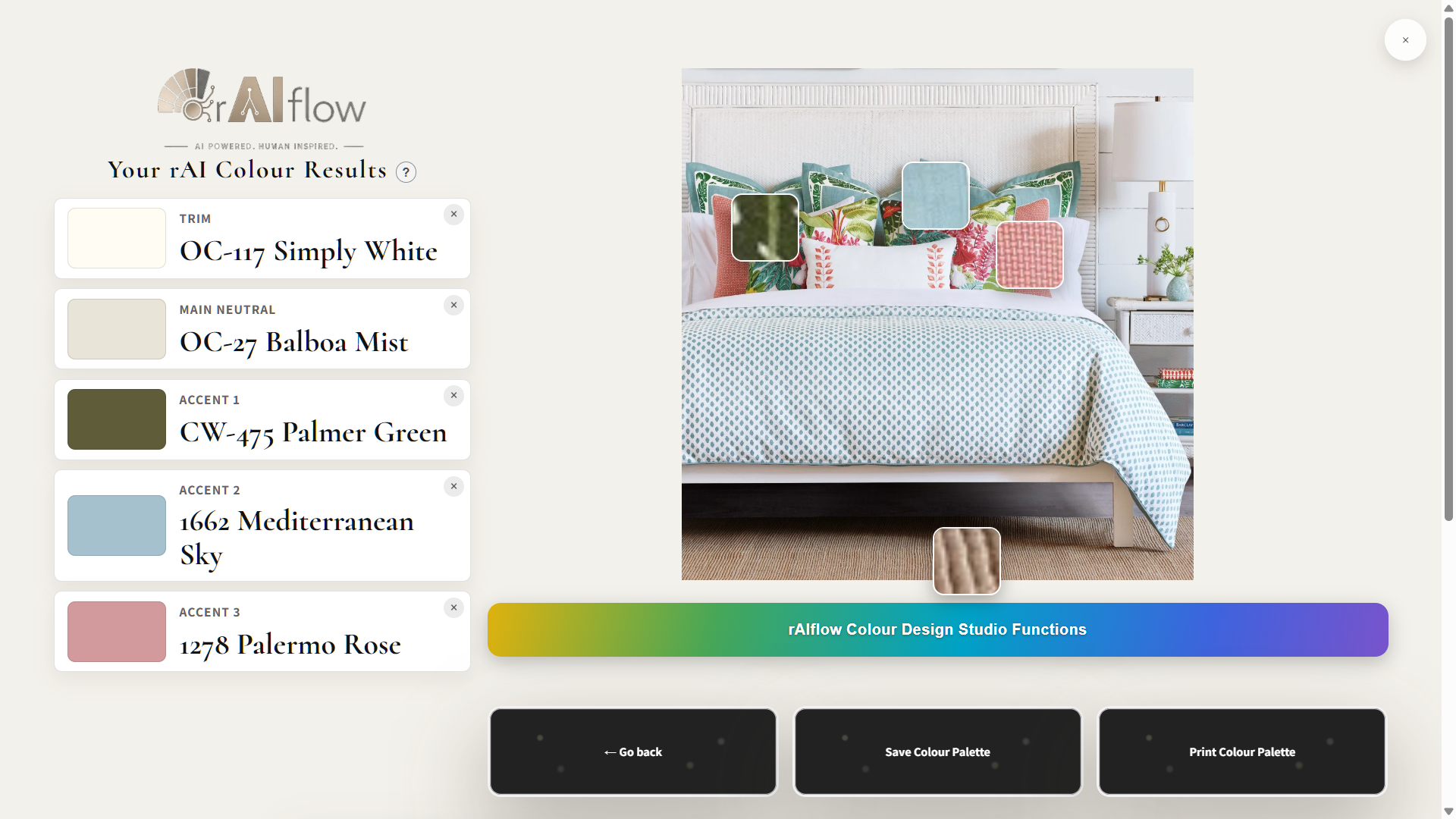
rAIflow analyzes these colour relationships using a proprietary colour intelligence engine and generates coordinated paint-colour starting points from:
- Benjamin Moore
- The Graimondi Colour Collection
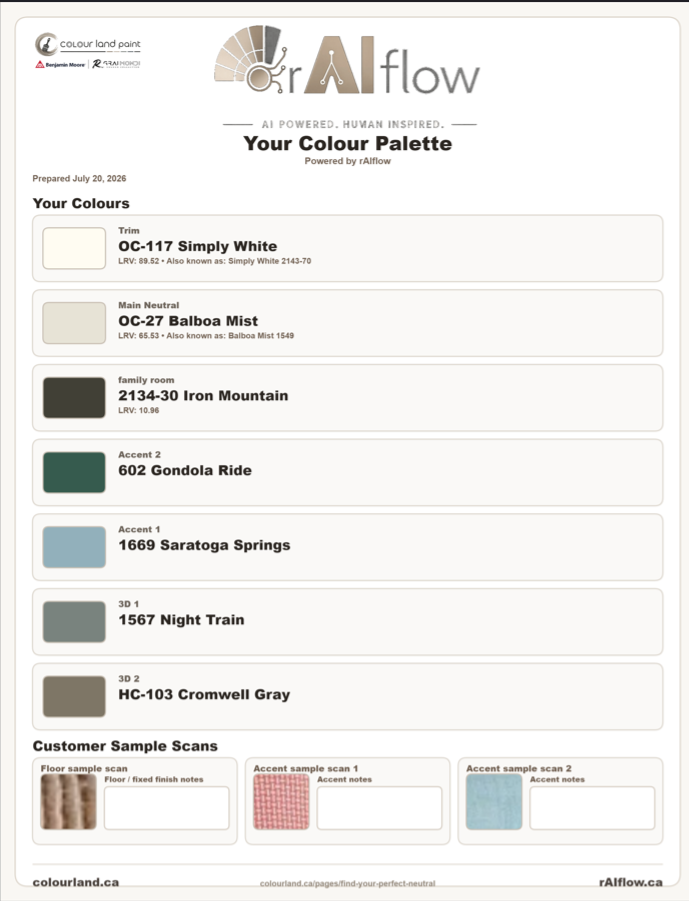
Each colour result can include:
- Colour name
- Colour number
- Light Reflectance Value
- Description
- Coordinating colour information
- Palette role
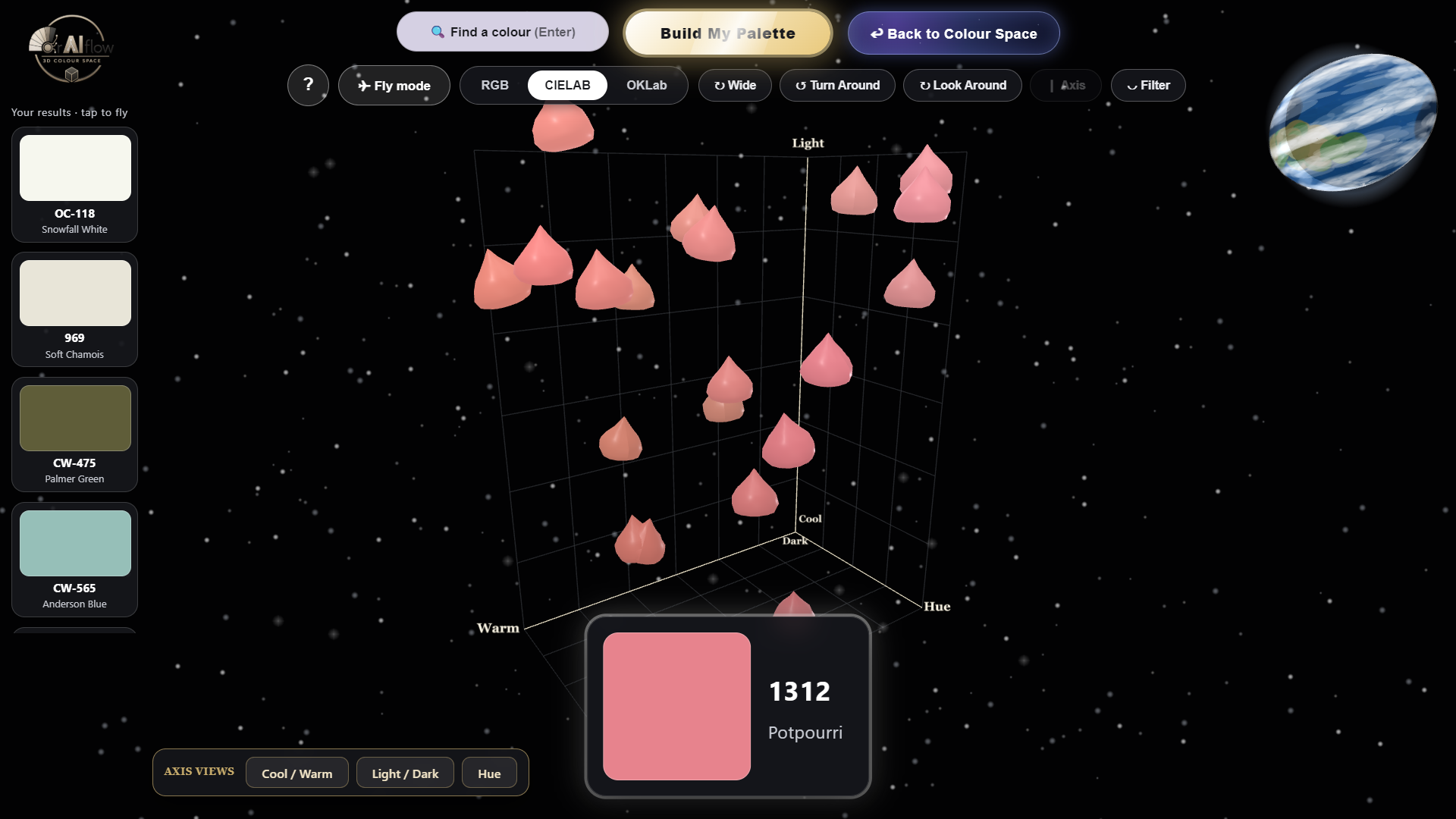
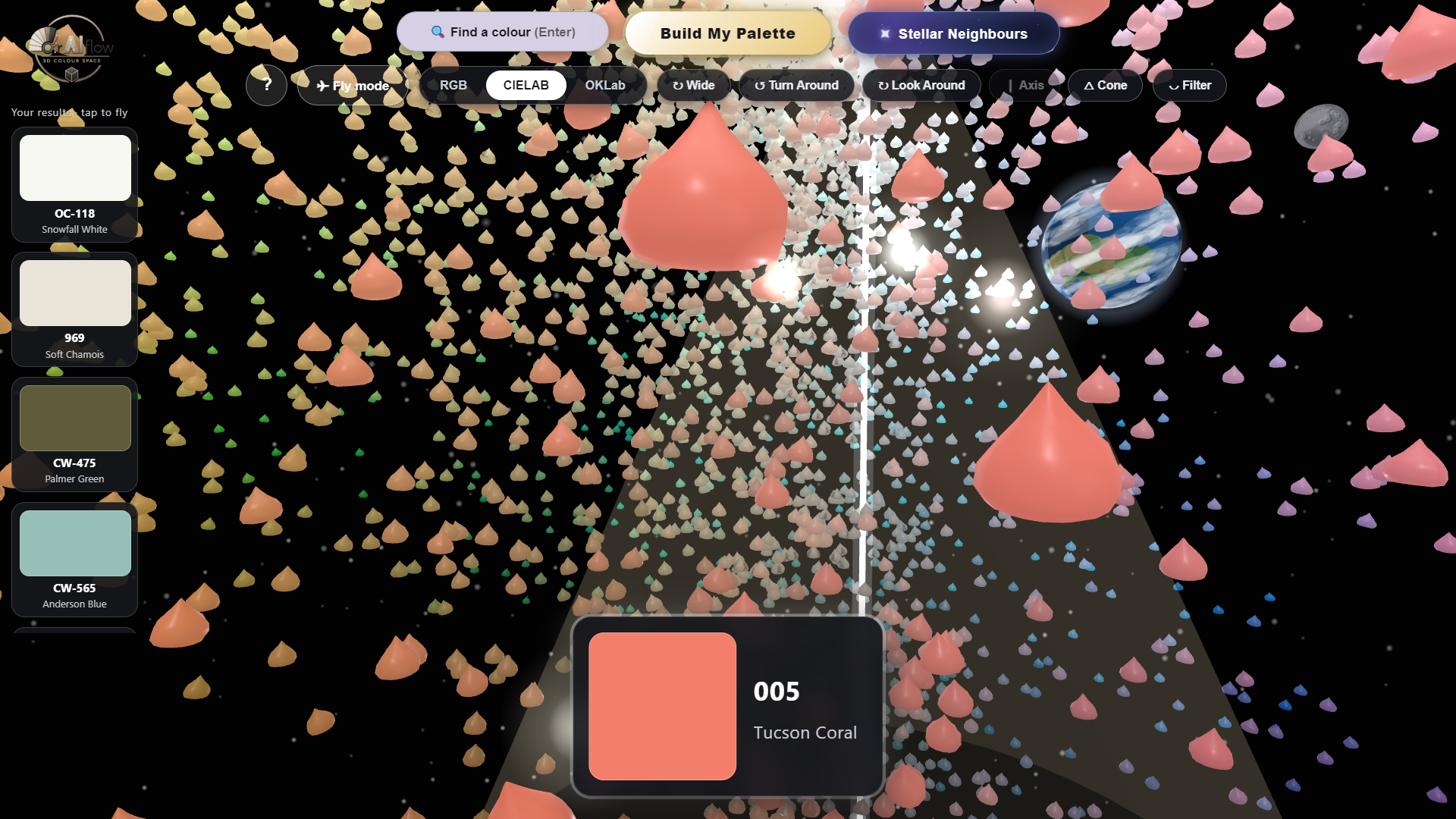
Users can then explore colours in the interactive rAIflow 3D Colour Space.
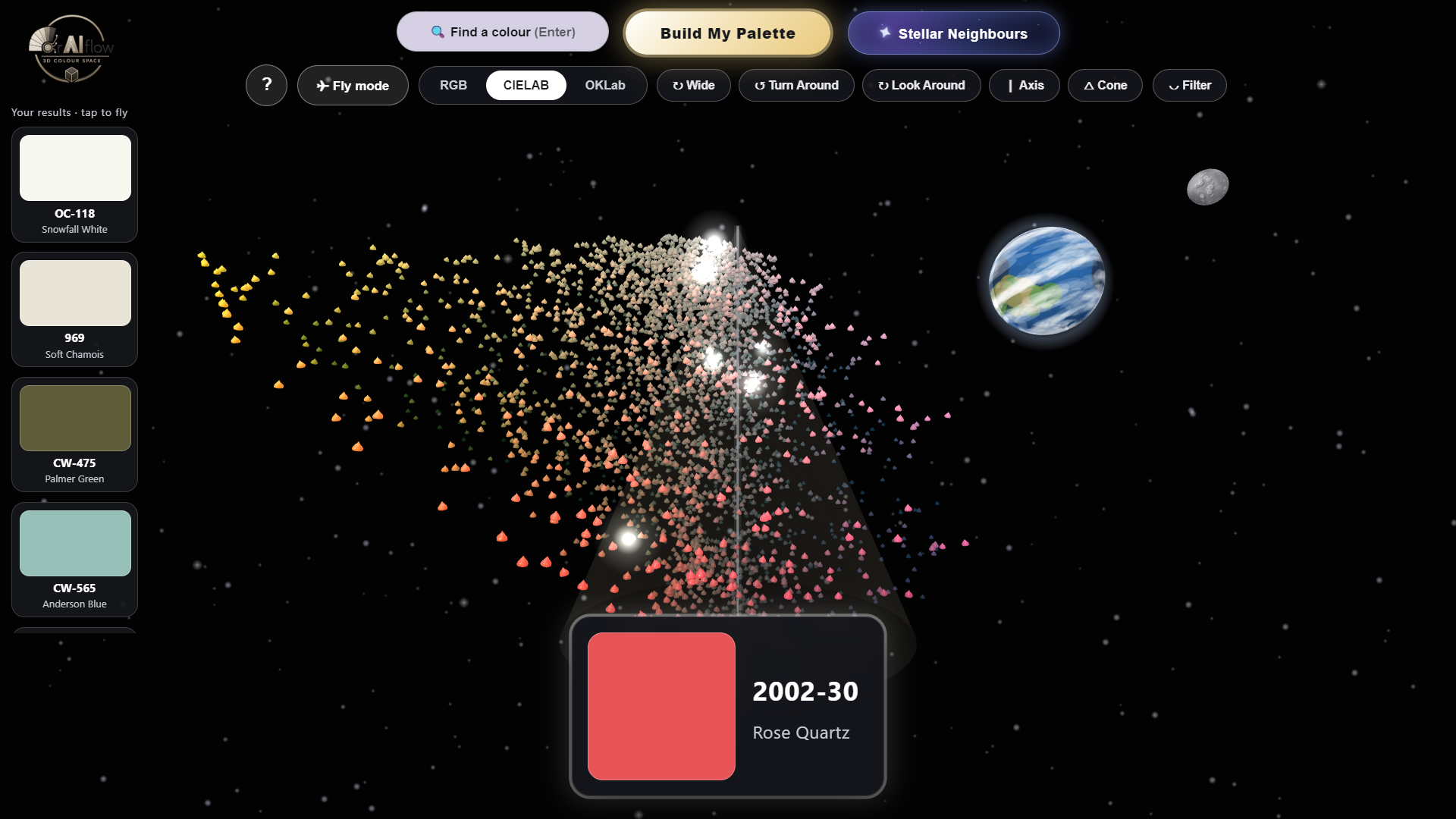
The 3D experience allows users to:
- Search for a colour by name or number
- Locate a target colour in three-dimensional space
- Examine nearby colours
- Compare warmer and cooler directions
- Compare lighter and darker directions
- Change colour-space layouts
- Enter Stellar Mode
- Add colours to a working palette
- Review, print and save a colour report
How I built it
rAIflow is delivered through a custom Shopify theme with JavaScript interfaces and server-side Cloudflare Worker services.
The Shopify frontend handles:
- Photo input
- Colour sampling
- Palette interaction
- Colour reports
- The interactive 3D environment
The Cloudflare Worker hosts the protected colour intelligence engine and structured catalogue data.
The server processes requests from the storefront and returns recommendation results without exposing the underlying recommendation matrices, weighting rules or proprietary colour relationships in the browser.
The production catalogue currently supports Benjamin Moore and Graimondi paint colours.
OpenAI Build Week contribution
Development of rAIflow began before OpenAI Build Week, near the end of May 2026.
During Build Week, I used ChatGPT with GPT-5.6 and Codex to substantially review, refine, test and document the existing project.
GPT-5.6 and Codex assisted with:
- Reviewing a large Shopify theme and Cloudflare Worker codebase
- Tracing interactions across multiple files
- Mapping the frontend-to-server architecture
- Refining the 3D Colour Space
- Improving Stellar Mode behaviour
- Correcting axis and label presentation
- Improving mobile pinch, zoom and touch controls
- Debugging colour-selection and add-colour interactions
- Preserving existing recommendation rules during interface changes
- Reviewing colour databases for missing or conflicting records
- Validating colour names, numbers, LRV values and descriptions
- Applying spectrophotometer-based colour-data corrections
- Creating testing procedures
- Documenting architecture and Build Week changes
Codex was particularly useful for navigating large files, comparing earlier and later versions, tracing connected functions and proposing targeted changes without replacing the proprietary engine.
Claude was also used during parts of Build Week for additional code review, debugging and implementation support.
GPT-5.6 is not being represented as the live customer-facing recommendation engine.
The production application continues to use rAIflow’s proprietary server-side colour intelligence engine. GPT-5.6 and Codex were used to accelerate development, review, debugging, validation, testing and documentation.
Challenges
One of the largest challenges was working with a mature and interconnected project.
A small interface change could affect:
- Desktop behaviour
- Mobile behaviour
- Colour calculations
- Palette results
- Reports
- 3D navigation
- Server-side requests
Another major challenge was colour-data reliability.
rAIflow uses thousands of colour records. Missing numbers, duplicate entries or conflicting HEX and LRV values can create misleading results or incorrect visual positions.
The colour data therefore had to be compared across multiple databases, theme files and recommendation matrices.
A third challenge was protecting intellectual property.
The platform needed to remain functional and testable without exposing the original recommendation matrices, weighting logic and colour relationships that give rAIflow its proprietary value.
What I learned
Build Week showed me how useful GPT-5.6 and Codex can be when working through a large, connected codebase.
They were especially valuable for:
- Finding related code across many files
- Comparing older and newer implementations
- Identifying unintended side effects
- Reviewing large datasets
- Converting product decisions into testing instructions
- Maintaining documentation while the project continued to evolve
I also learned that AI-assisted development still requires strong human decisions.
The tools could help trace, compare, test and implement, but I still needed to determine what the colour relationships meant, how customers should experience them and which proprietary logic needed to remain protected.
Accomplishments
I am proud that rAIflow is a working public product rather than only a concept or technical prototype.
It combines:
- First-hand paint-store expertise
- Original colour-recommendation logic
- Room-image sampling
- Real paint catalogues
- Detailed colour information
- Interactive 3D visualization
- Palette creation
- Reporting and consultation workflows
The 3D Colour Space and Stellar Mode provide a distinctive way to understand paint colours as connected relationships rather than isolated swatches.
What is next
The next stages for rAIflow include:
- Expanding support to additional paint collections
- Improving palette comparison and saved-palette management
- Adding more professional reporting tools
- Refining mobile navigation
- Supporting direct input from colour-scanning devices
- Continuing colour-data validation
- Improving structured, AI-readable colour relationships
- Developing additional designer, retailer and in-store consultation workflows
The long-term goal is to make rAIflow a trusted colour intelligence platform that connects digital exploration with physical paint samples, real product catalogues and professional colour guidance.

Log in or sign up for Devpost to join the conversation.