-
-
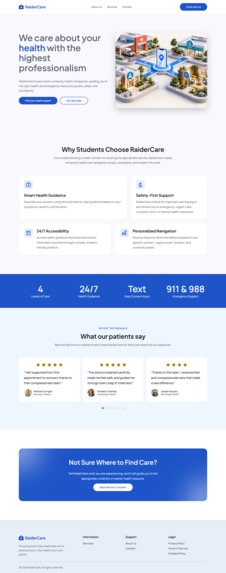
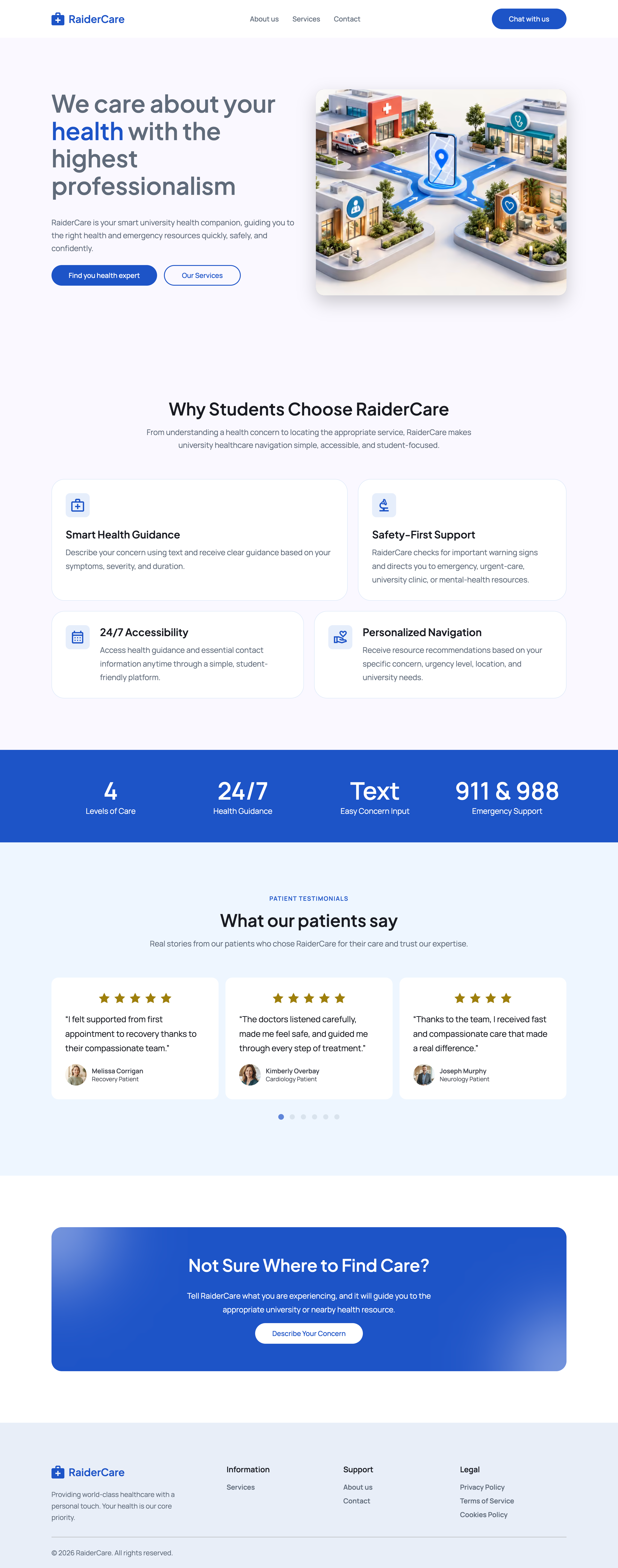
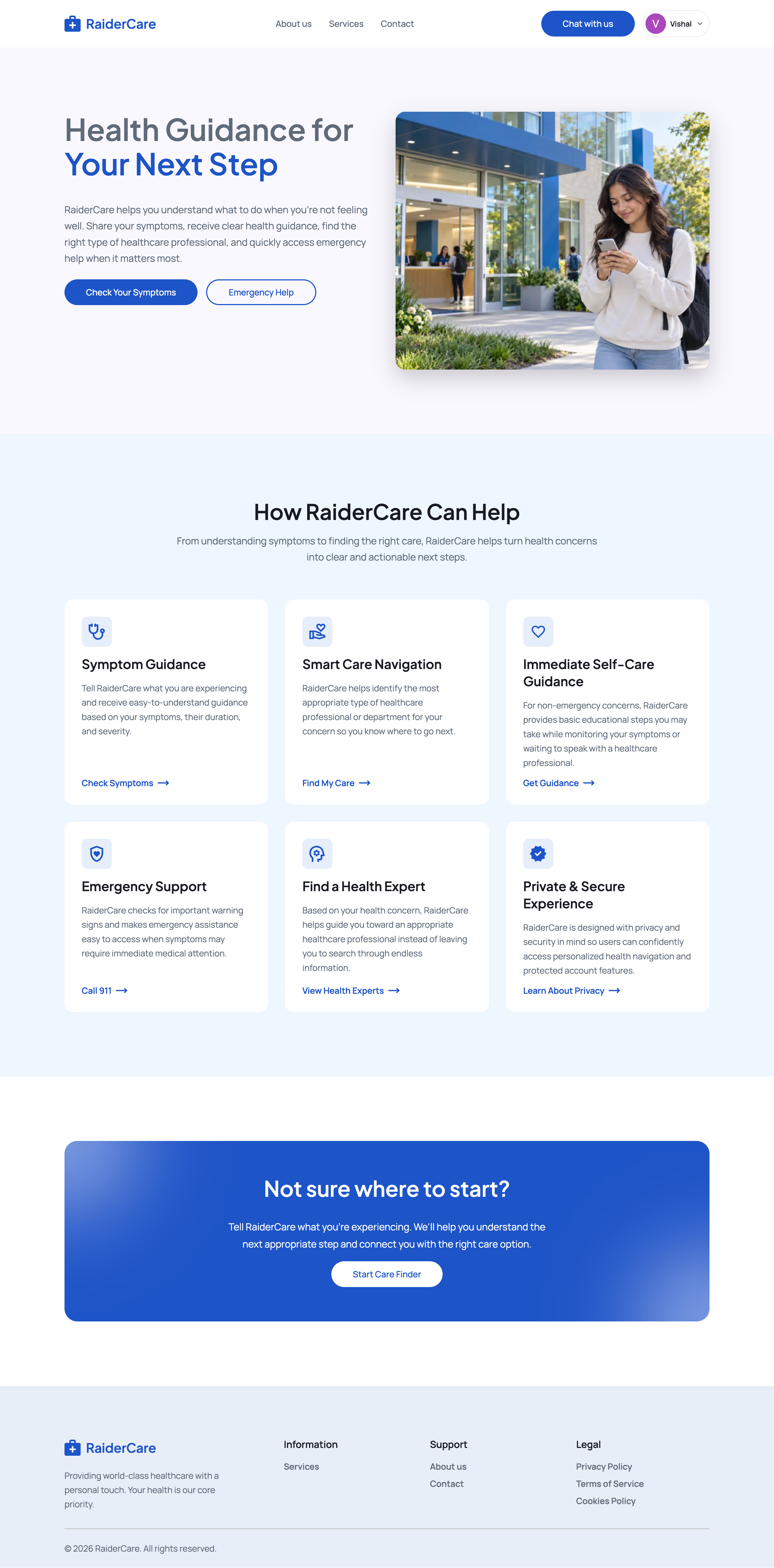
home page
-
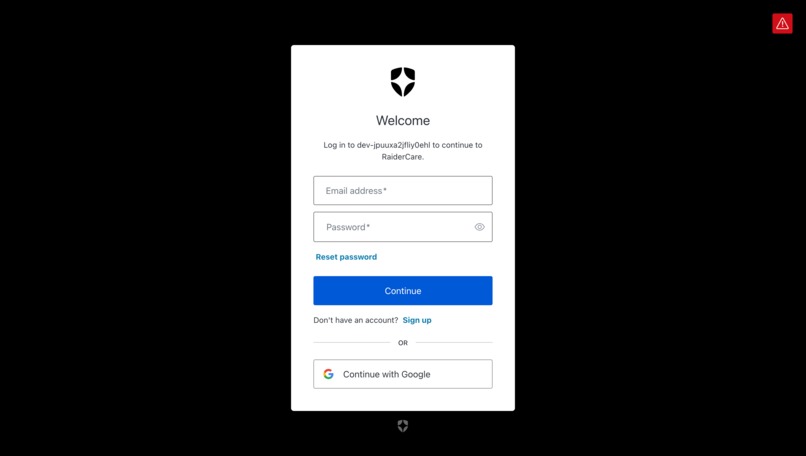
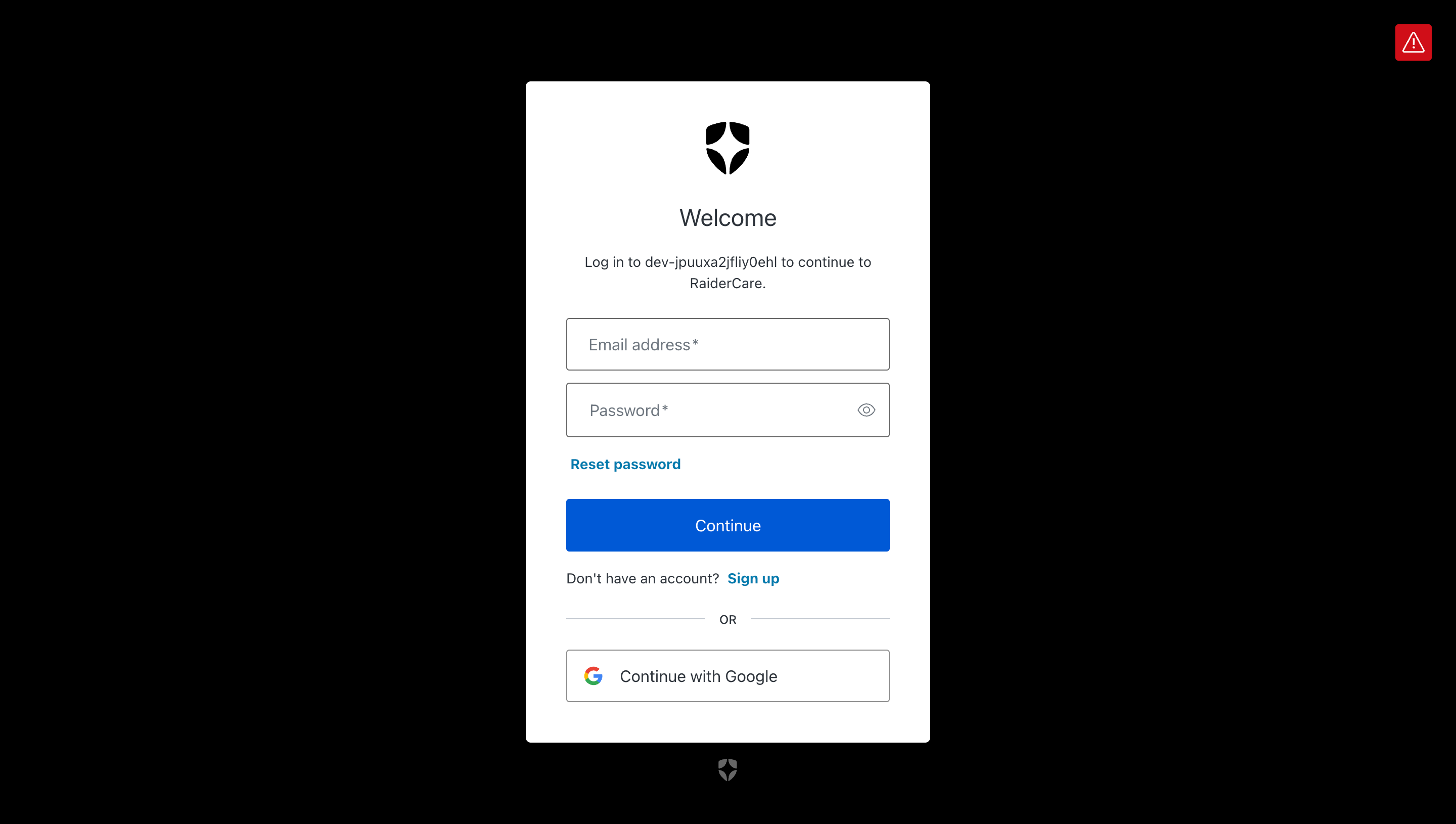
auth0
-
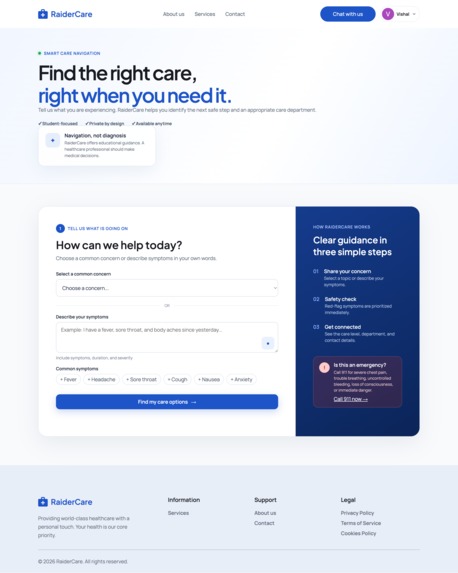
care provide demo 1
-
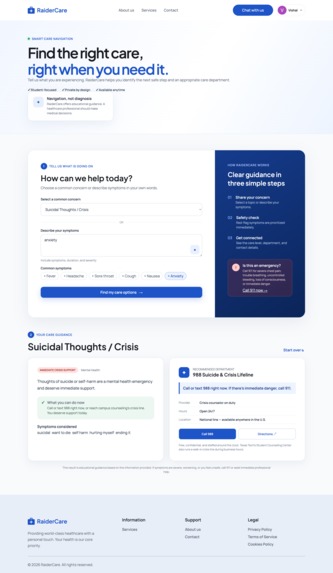
care provide demo 2
-
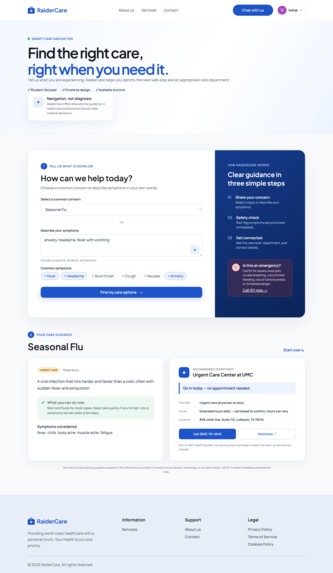
care provide demo 3
-
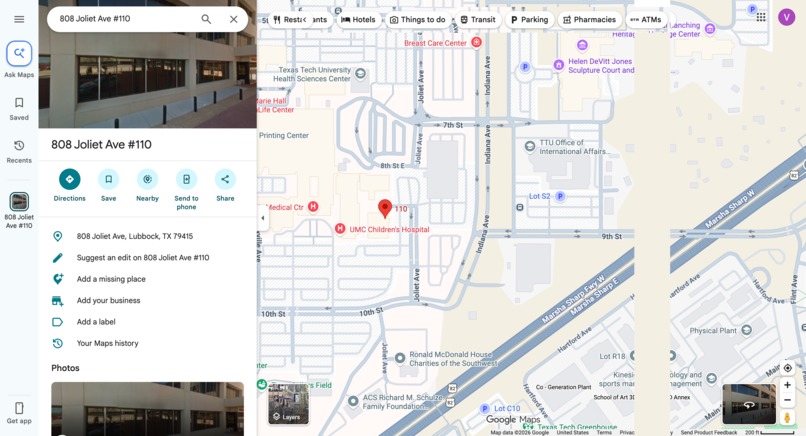
google map
-
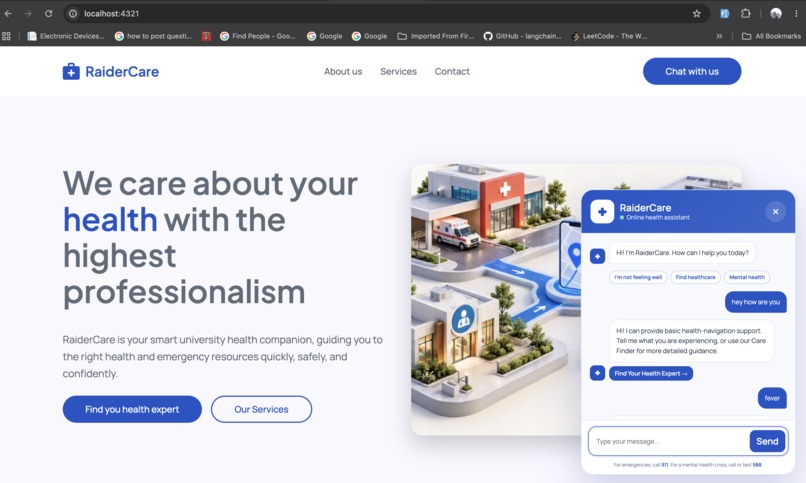
chat assistant
-
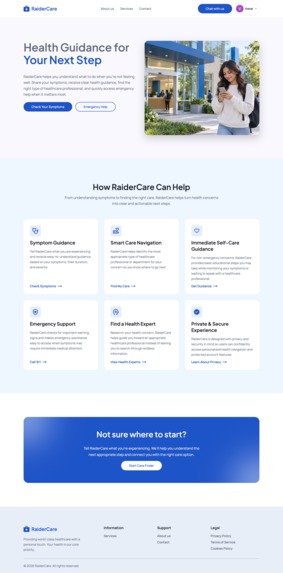
service page
-
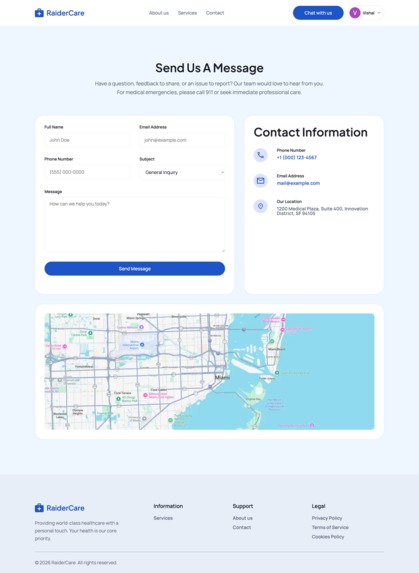
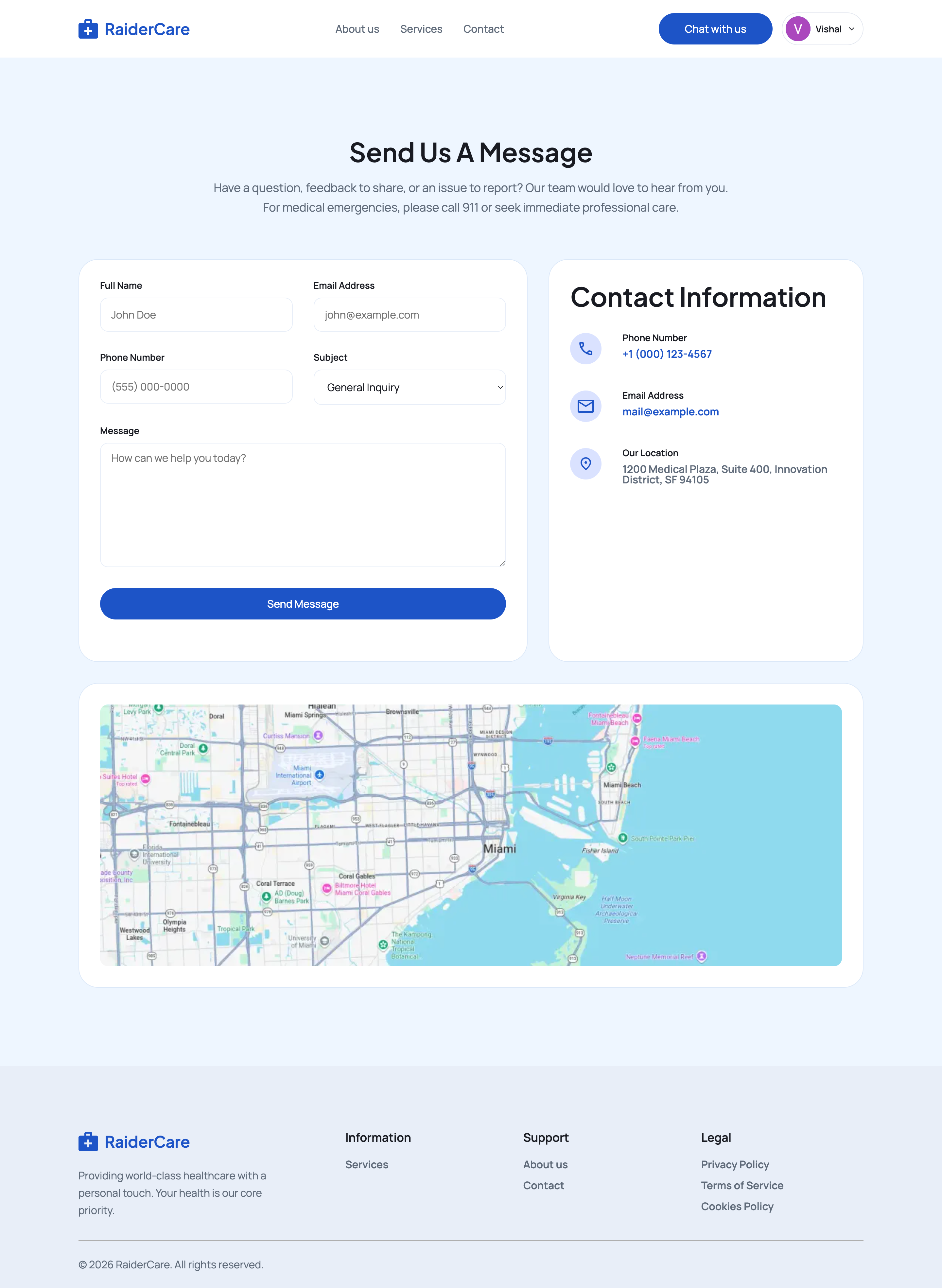
contact page
Project Story
Domain name
We only registered for domain name and just forward into our deployment link. Domain: raidercare.tech Note: Project is not fully deployed in domain, we need to fix authentication and gemini api, it only runs in localhost.
Inspiration
Imagine feeling unwell late at night and not knowing what to do next. Is it an emergency? Can it wait until morning? Should you visit an urgent care center, contact a university clinic, or speak with a counselor?
For many university students—especially those living away from home for the first time—even finding the right place to ask can feel overwhelming. We created RaiderCare to make that first step simpler, faster, and less stressful.
Our goal was not to build another AI doctor. We wanted to build a responsible health-navigation companion that helps students understand the seriousness of a concern and connect with an appropriate resource.
What RaiderCare Does
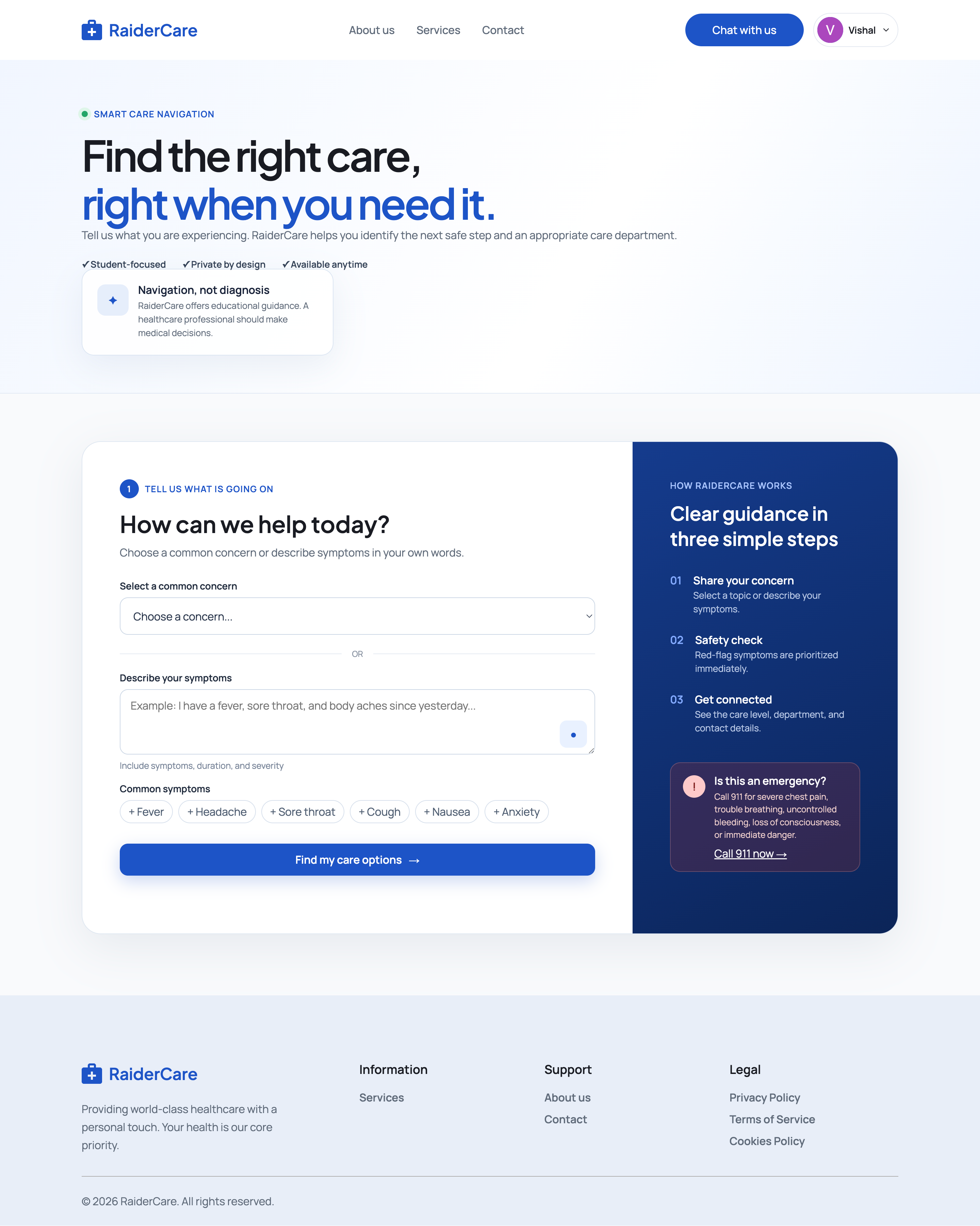
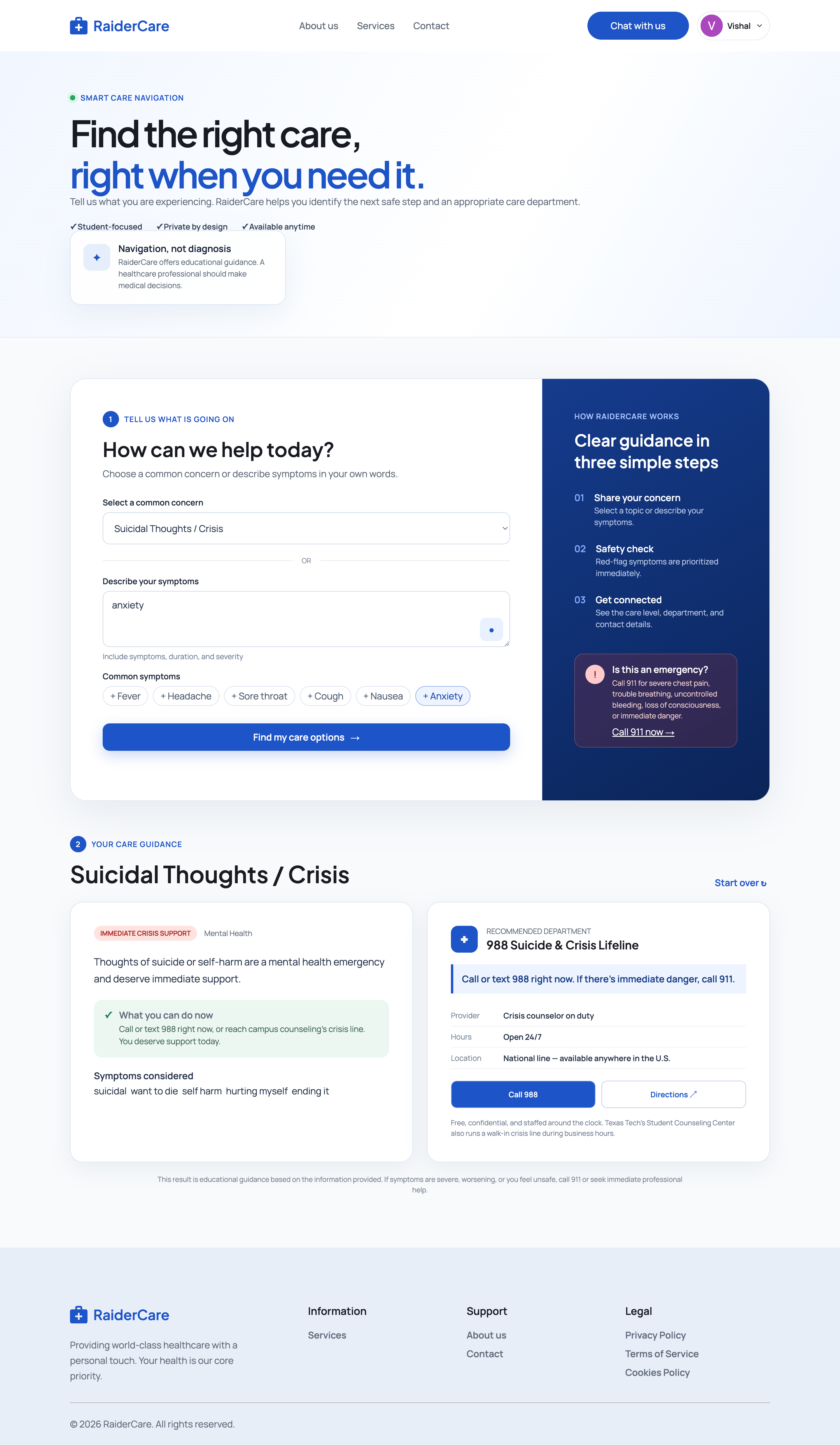
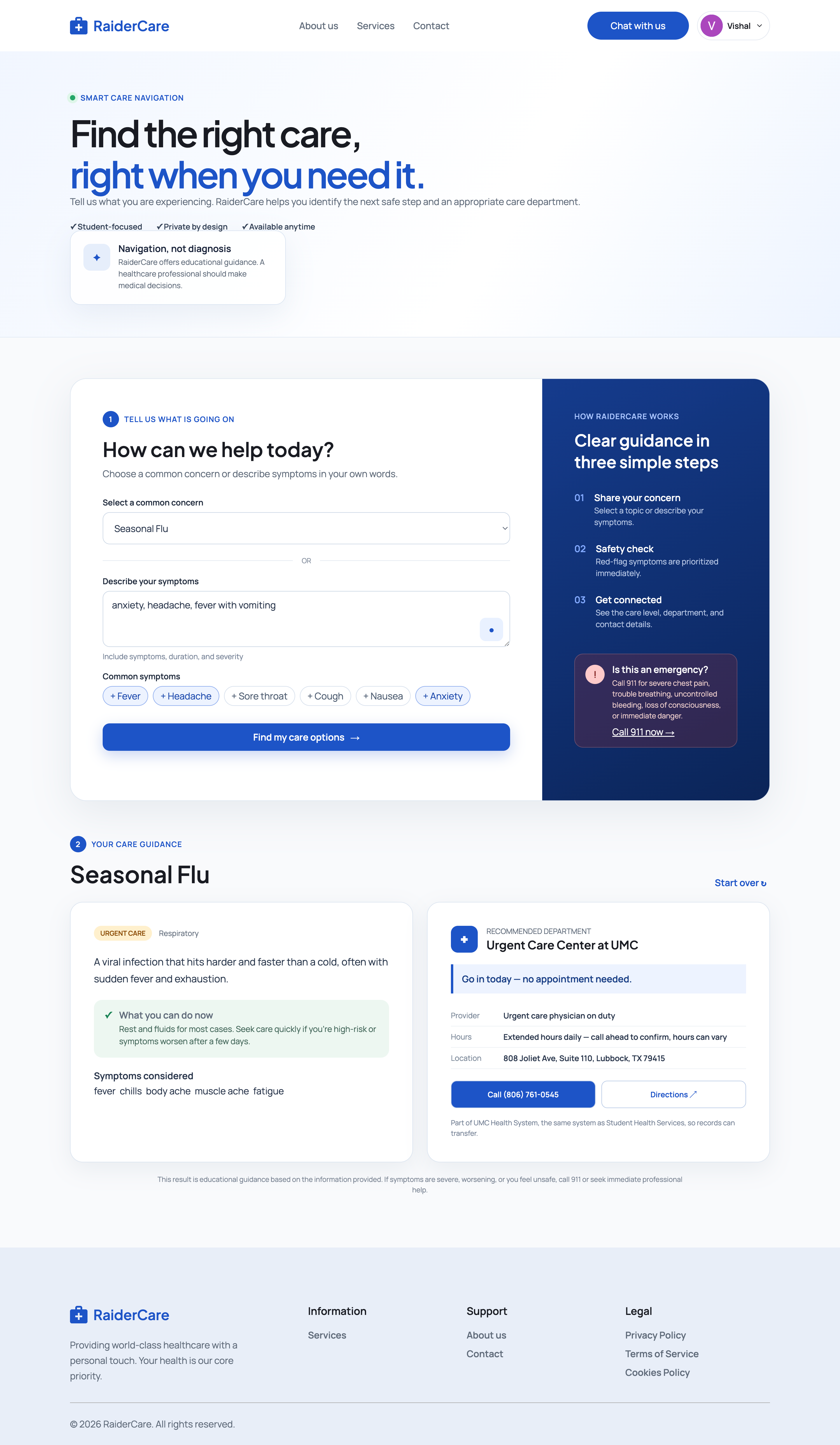
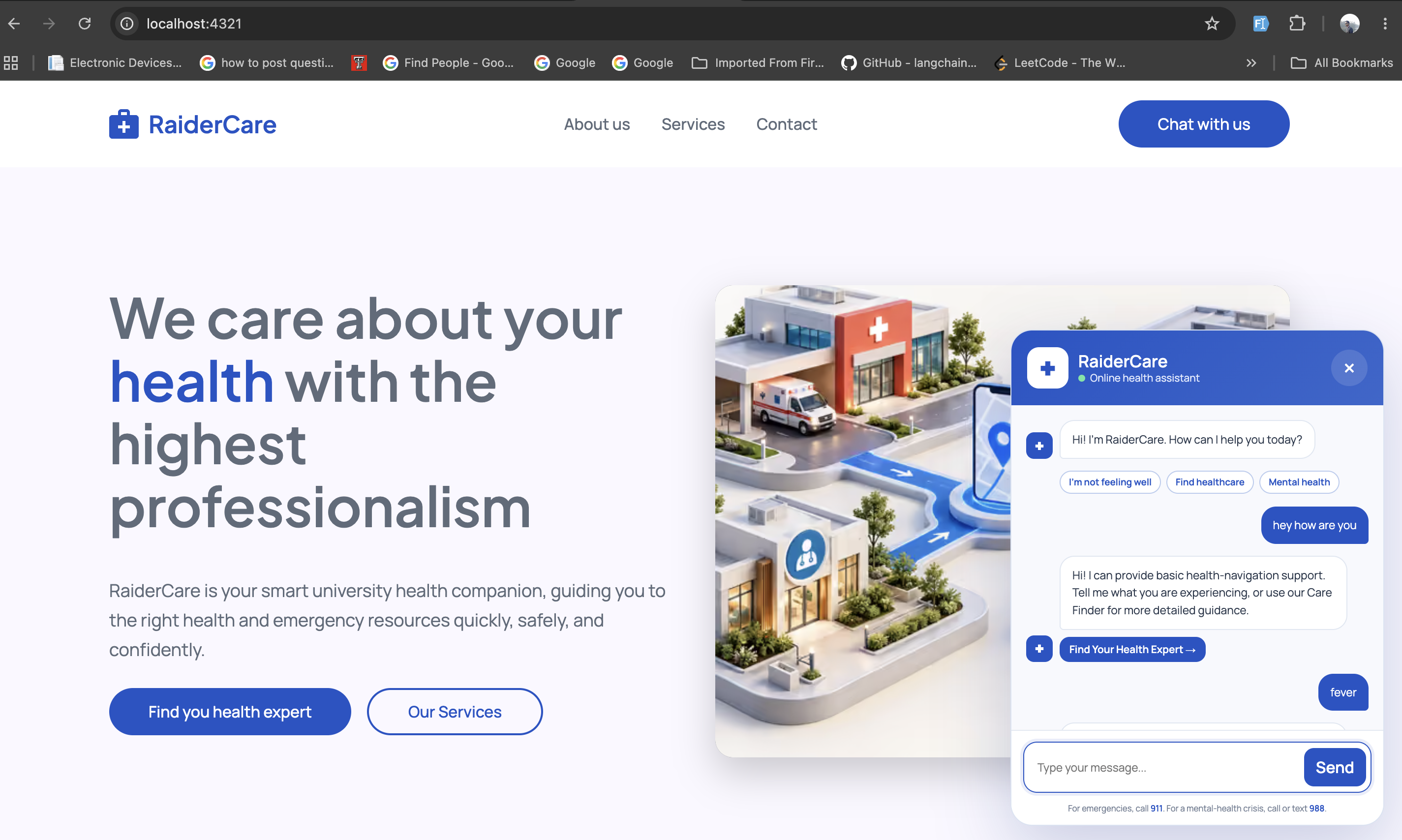
Students can describe their concerns using a guided form or have a simple conversation with our Gemini-powered assistant. RaiderCare considers details such as symptoms, duration, and severity before guiding the student toward one of four care levels:
- Emergency — Call 911 or locate an emergency department
- Urgent — Find an appropriate urgent-care resource
- Non-urgent — Contact a university clinic or healthcare professional
- Health Counseling — Access counseling or mental-health support
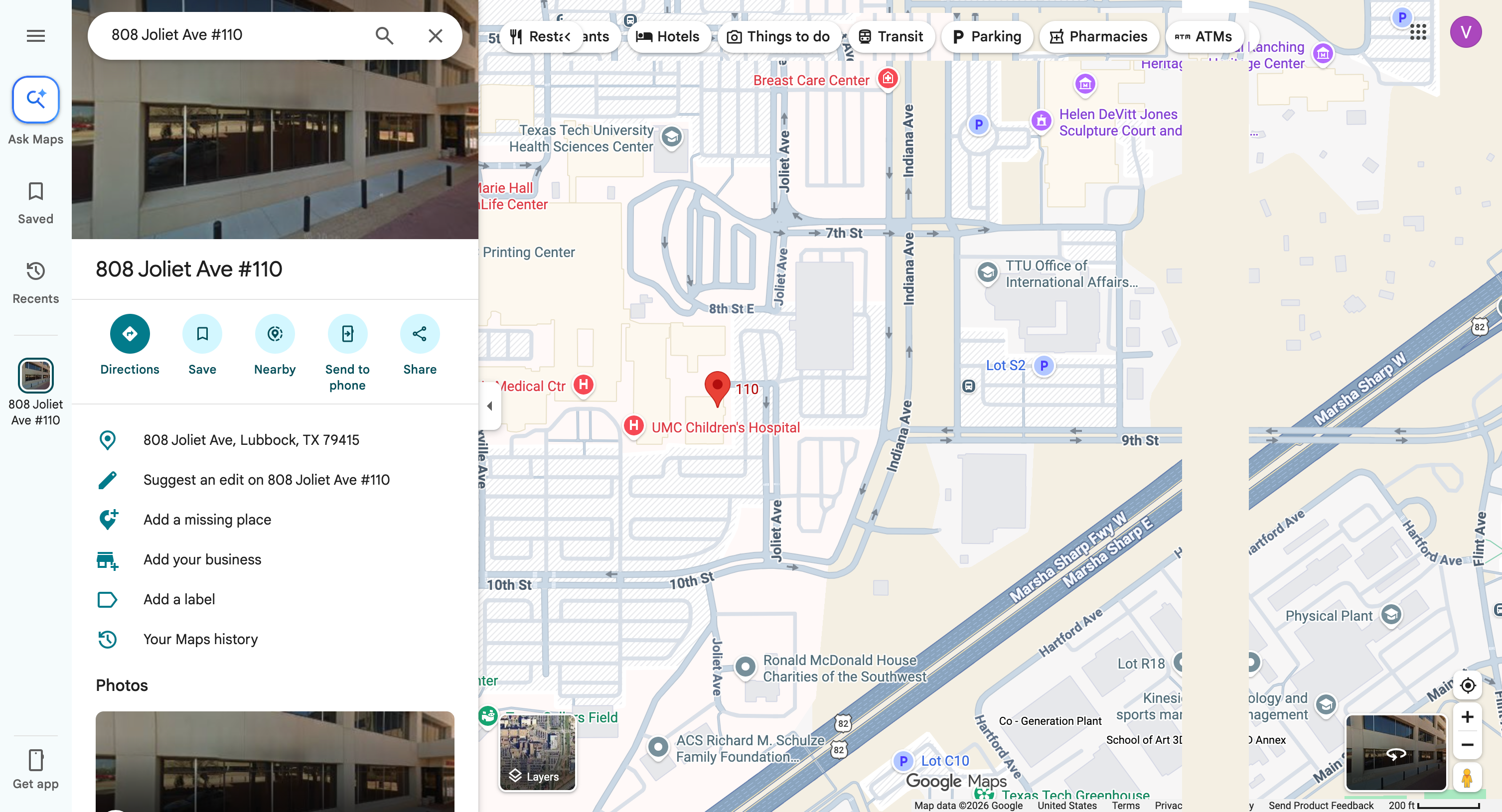
The platform presents the recommended department, healthcare provider, phone number, operating hours, location, and directions in one clear interface. For serious situations, such as possible cardiac symptoms or a mental-health crisis, RaiderCare prominently displays emergency resources, including 911 and the 988 Suicide & Crisis Lifeline.
How We Built It
We built RaiderCare using Astro, TypeScript, JavaScript, HTML, and CSS, creating a responsive experience that works across desktop and mobile devices.
We used structured health data and safety-focused rules to organize concerns into appropriate care levels. The Gemini API powers the conversational assistant, allowing students to explain their concerns naturally and receive short, supportive navigation guidance. Auth0 provides secure user authentication.
We intentionally combined AI with clear safety rules. Gemini makes the interaction more natural, while the safety-focused design ensures that critical resources remain visible and the application does not present itself as a diagnostic tool.
Challenges We Faced
The most important challenge was designing AI for a sensitive area like healthcare. We needed the assistant to be helpful without diagnosing conditions, prescribing medication, or creating false confidence.
We also faced several technical challenges:
- Designing clear emergency and crisis messages
- Matching concerns with suitable providers and departments
- Creating a polished, mobile-friendly experience within a hackathon timeline
- Protecting API credentials and removing exposed secrets from Git history
- Maintaining useful conversational context without making responses slow
These challenges pushed us to think beyond whether the application worked technically. We also had to consider whether its guidance was understandable, responsible, and safe.
What We Learned
RaiderCare taught us that meaningful AI products require more than a powerful model. They need thoughtful boundaries, reliable data, accessible design, and a clear understanding of the people they are intended to help.
We learned how to integrate Gemini into a real user experience, build structured health-navigation logic, implement authentication, manage API security, and design around urgent real-world situations.
Most importantly, we learned that AI can create value without replacing professionals. Sometimes its most useful role is helping someone understand the next safe step.
What’s Next
Our next step is to connect RaiderCare with verified, real-time healthcare information, including current operating hours, appointment availability, and location-aware recommendations. We also want to add voice interaction, multilingual support, improved accessibility, appointment booking, and stronger privacy protections.
RaiderCare began as a hackathon project, but its purpose extends beyond the event: helping students feel less confused, less alone, and more confident when seeking care.
RaiderCare does not replace a healthcare professional—it helps students find the right one when they need support most.""
Built With
- astro
- auth0
- css
- domain
- gemini
- html
- javascript
- react
- typescript
- vite


Log in or sign up for Devpost to join the conversation.