-
-
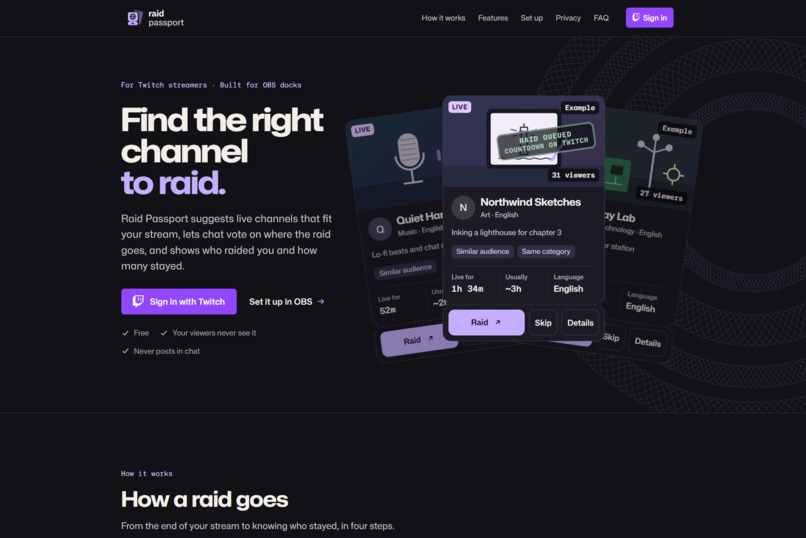
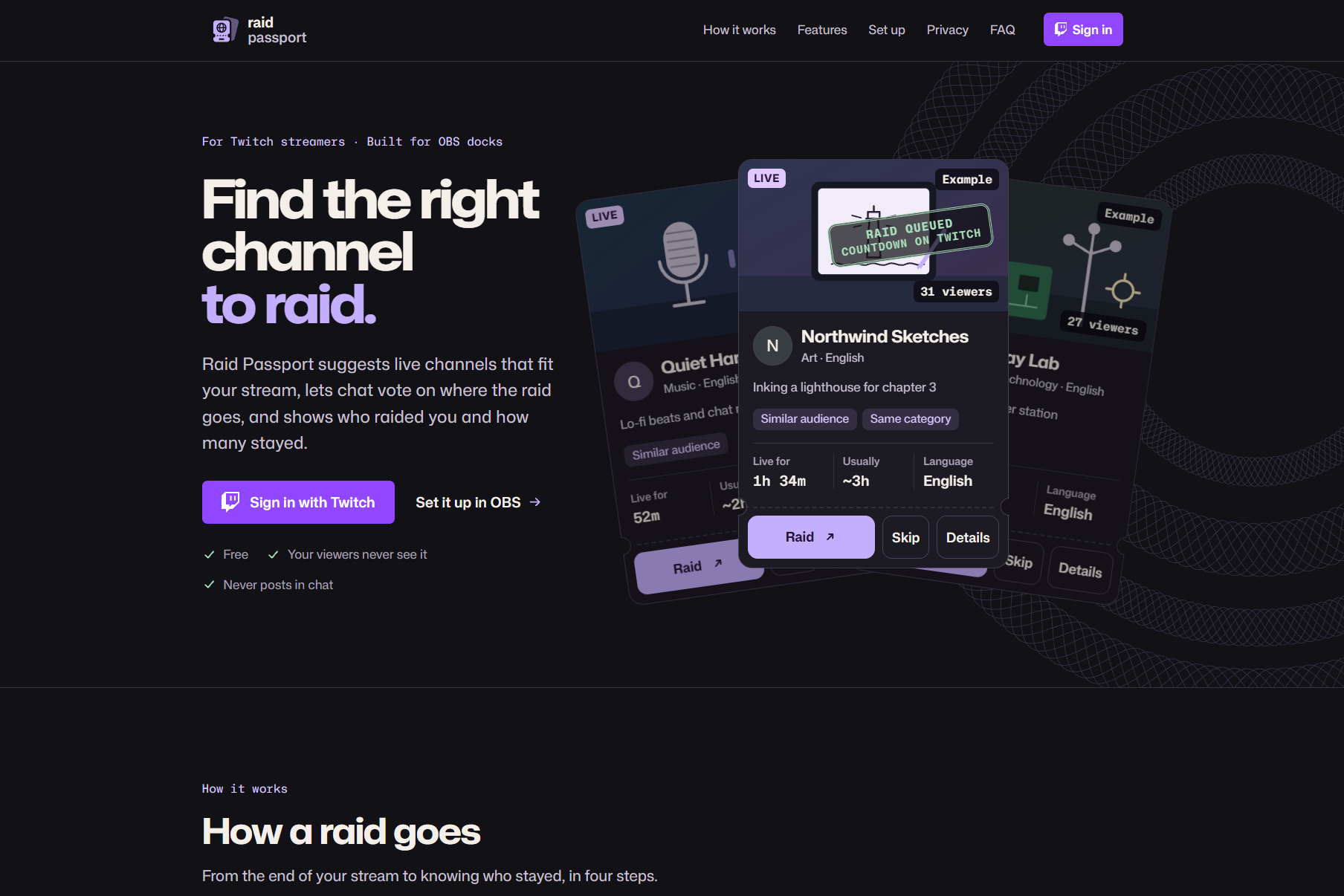
Raid Passport Landing (Dark)
-
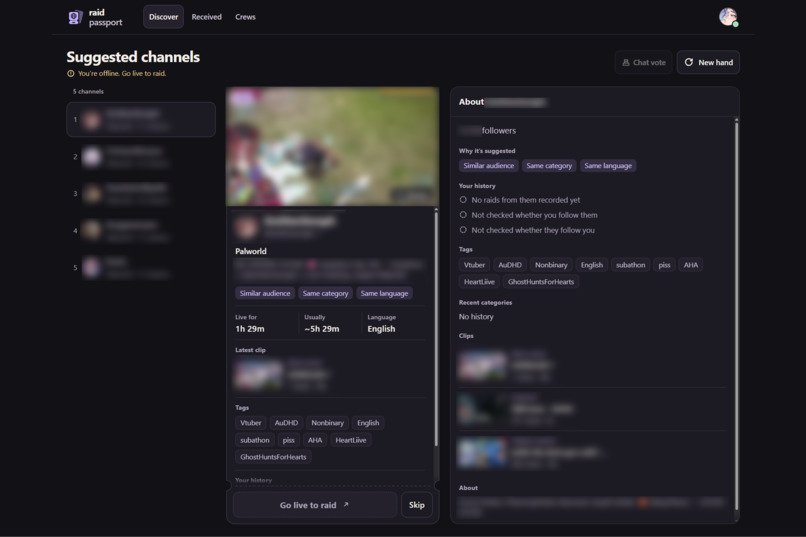
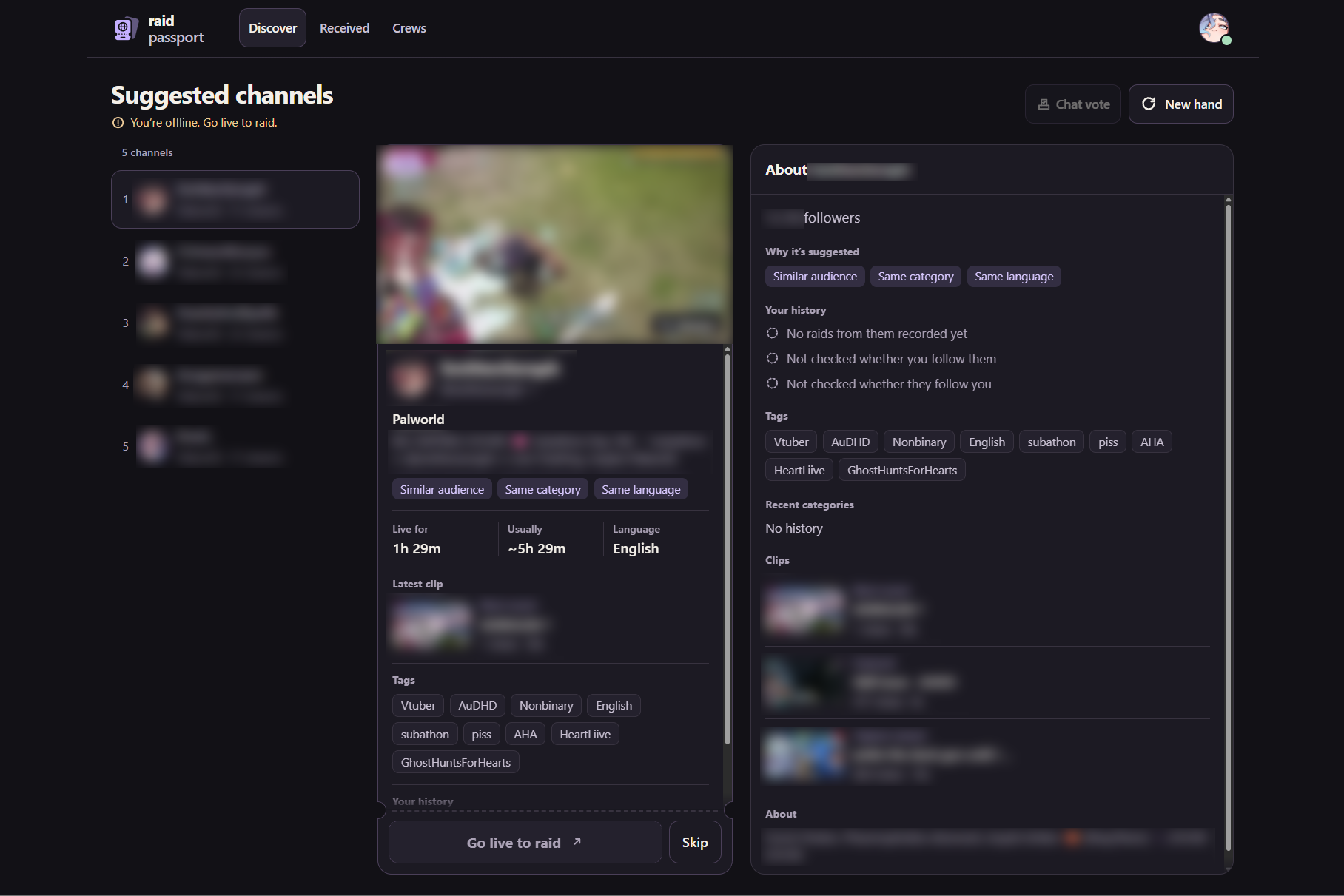
Raid Passport Browser View (Dark Mode)
-
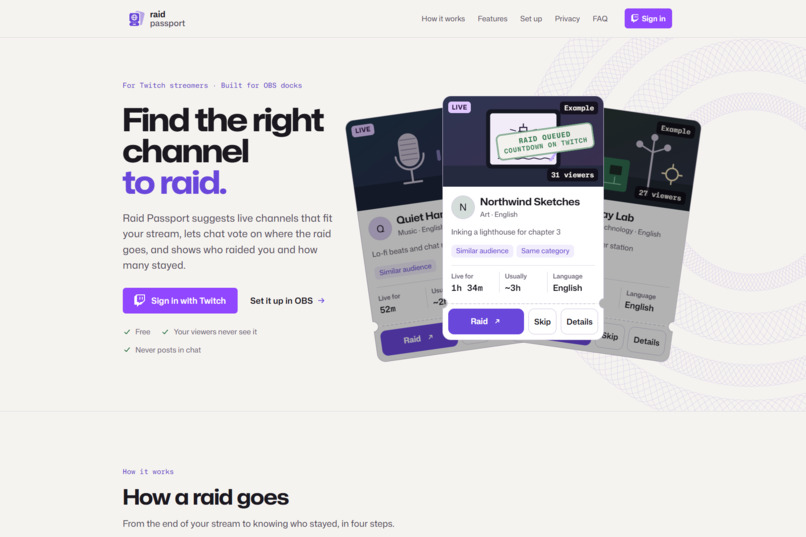
Raid Passport Landing (Light)
-
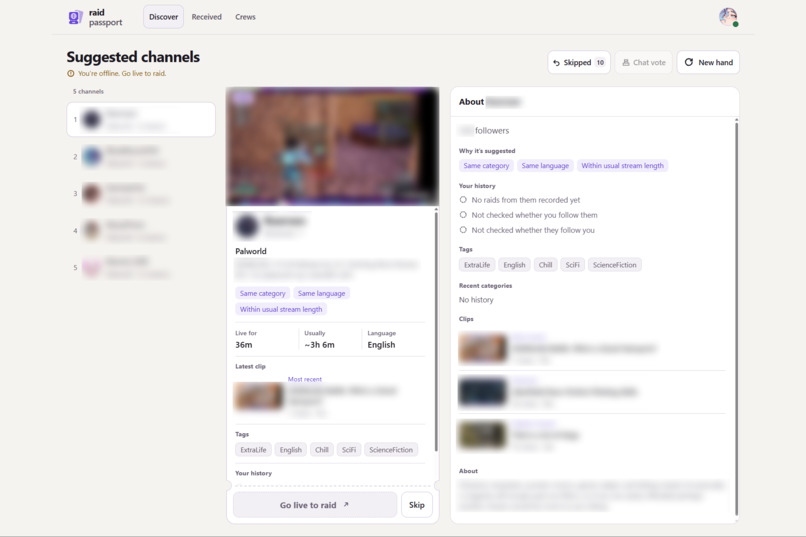
Raid Passport Browser View (Light Mode)
-
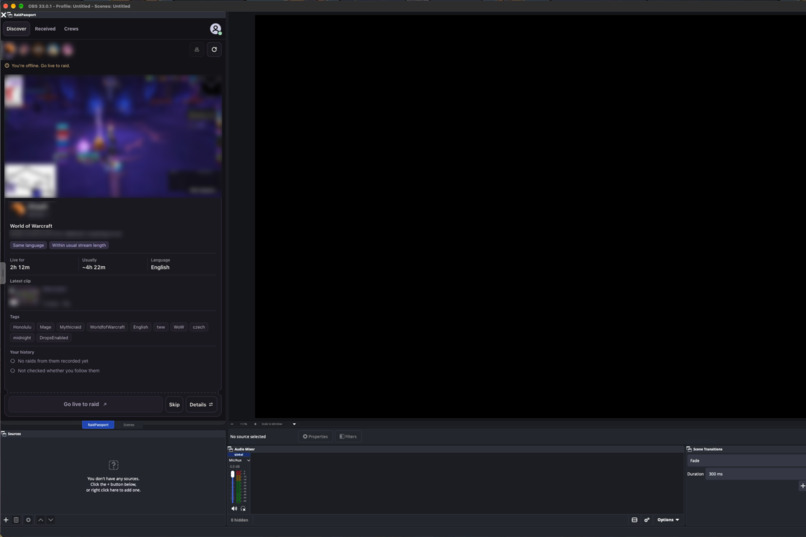
Raid Passport OBS Dock
-
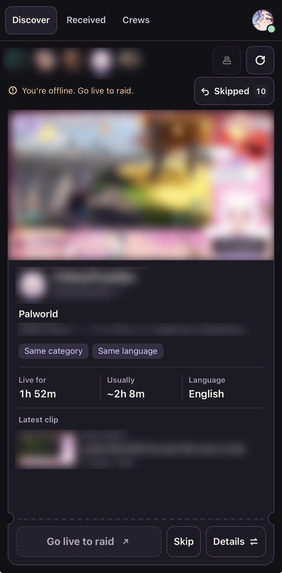
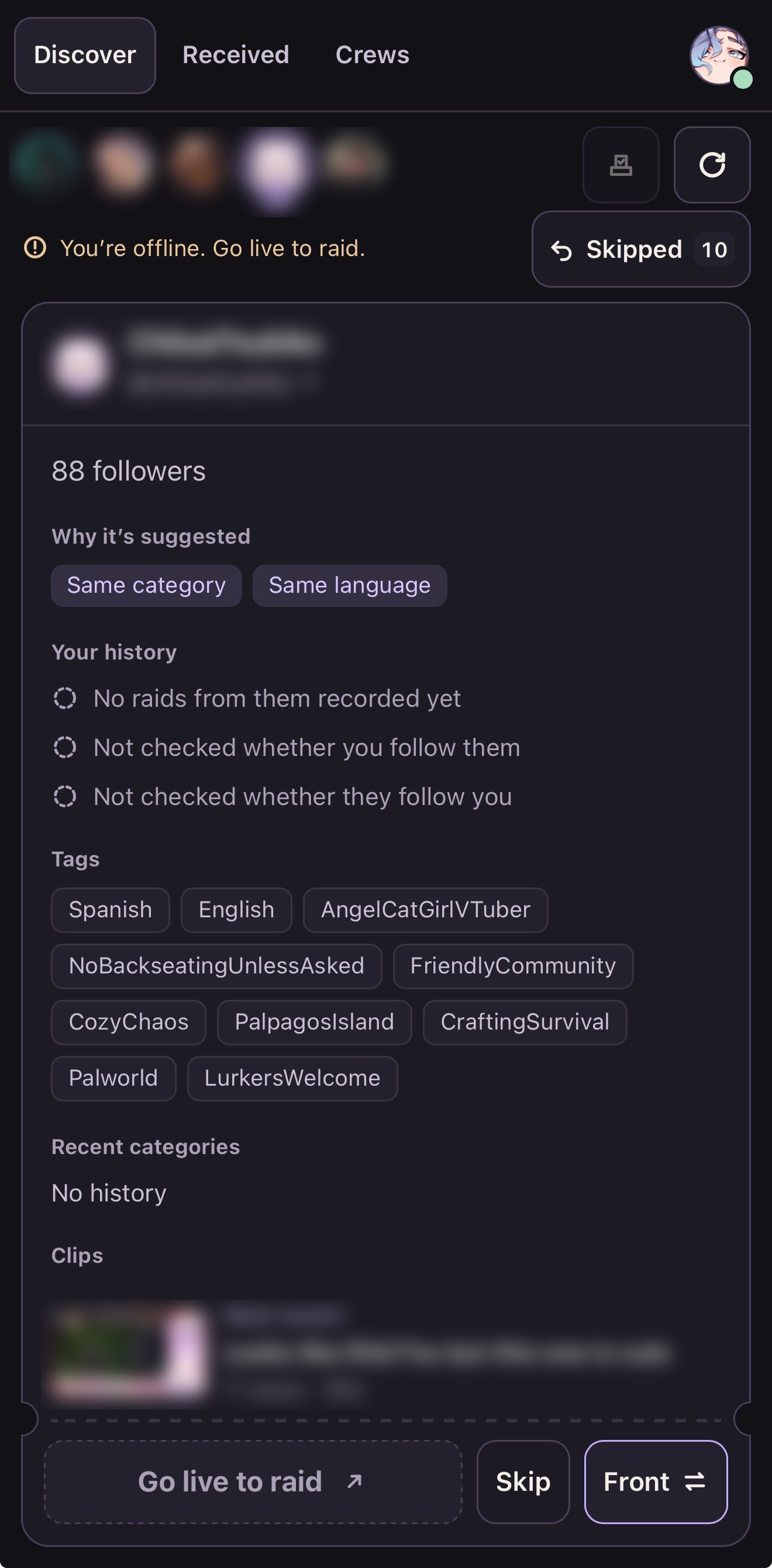
Raid Passport iOS Web App Raid Cards Front
-
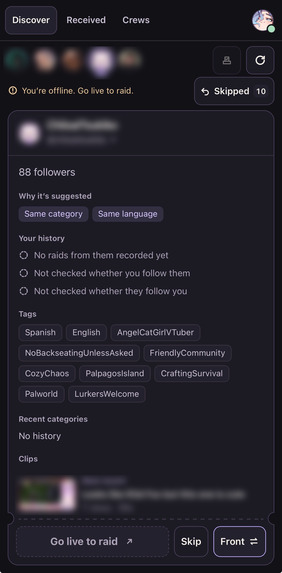
Raid Passport iOS Web App Raid Cards Back
-
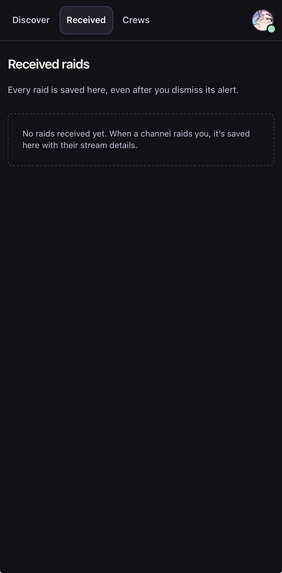
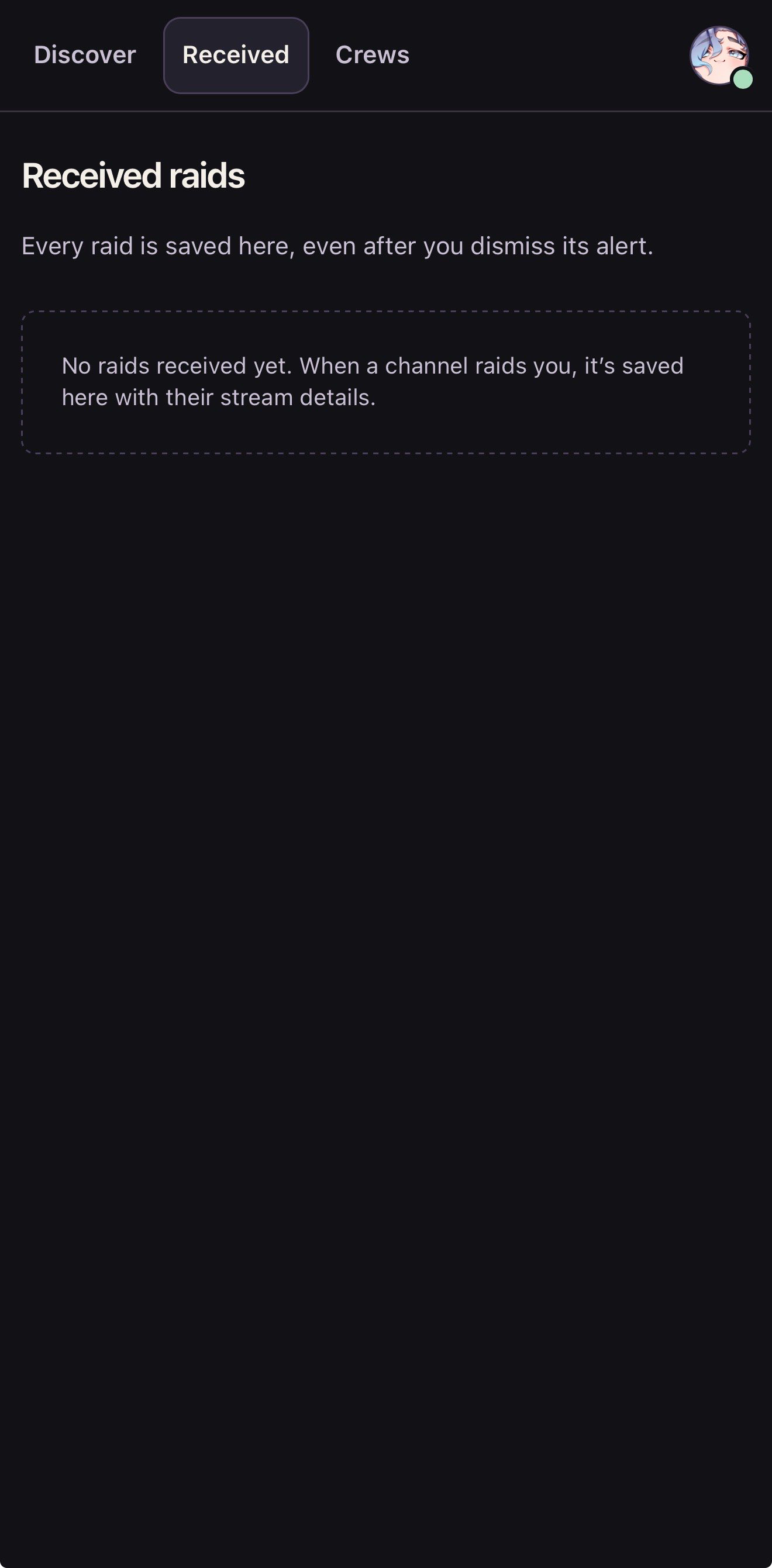
Raid Passport iOS Web App Raids Received
-
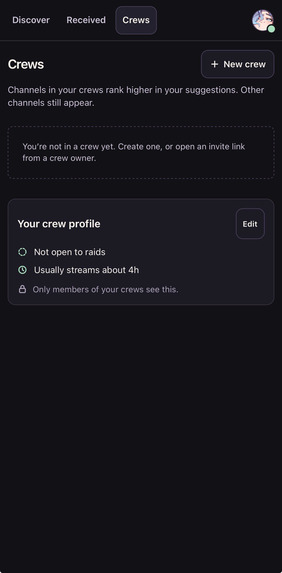
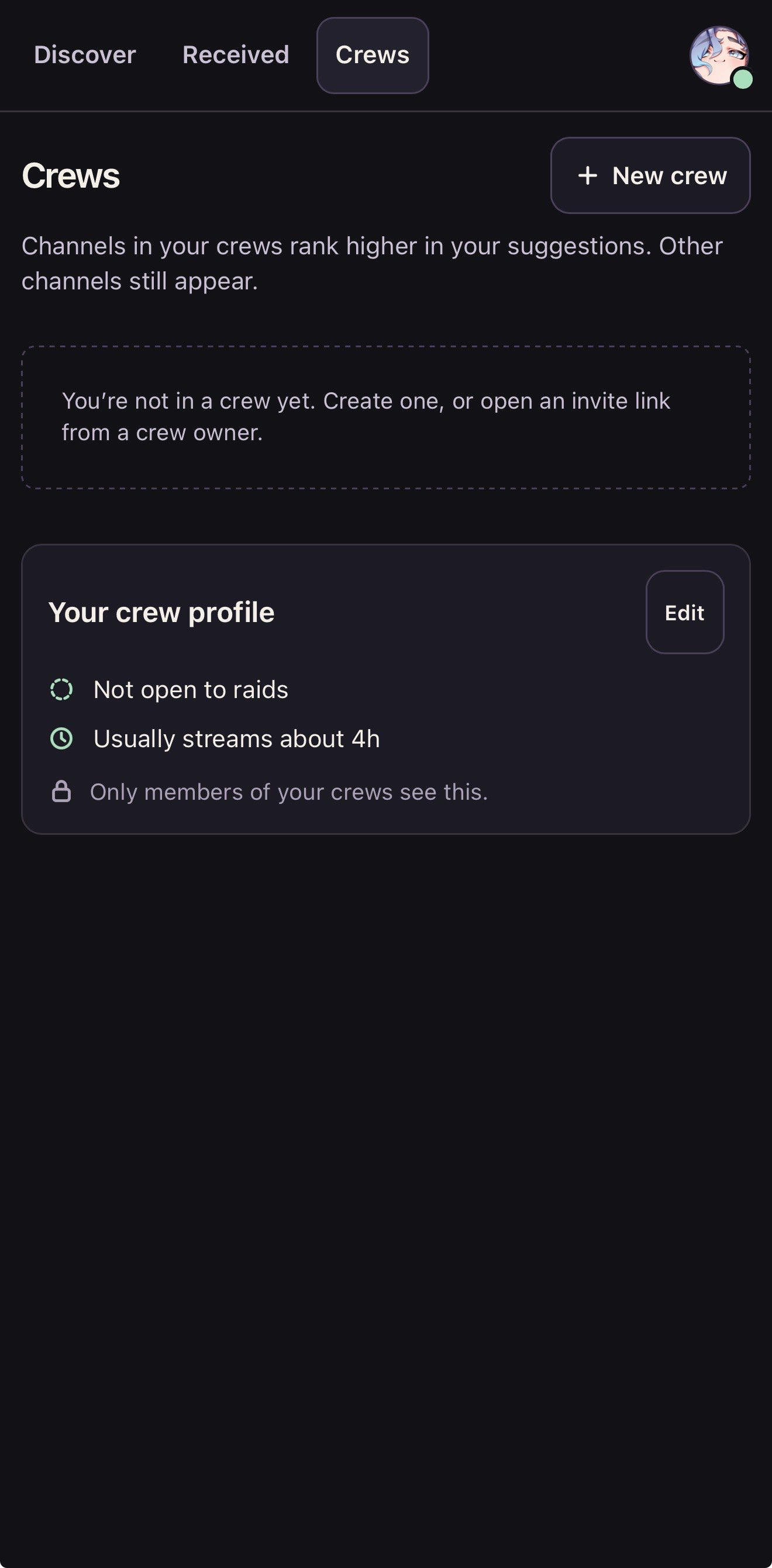
Raid Passport iOS Web App Crews
-
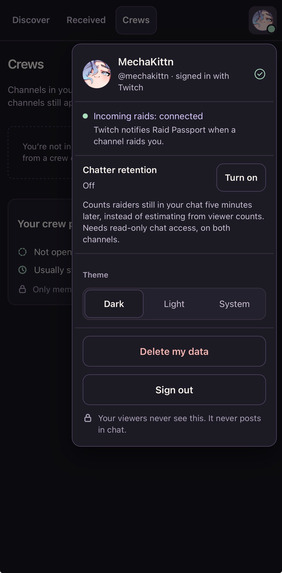
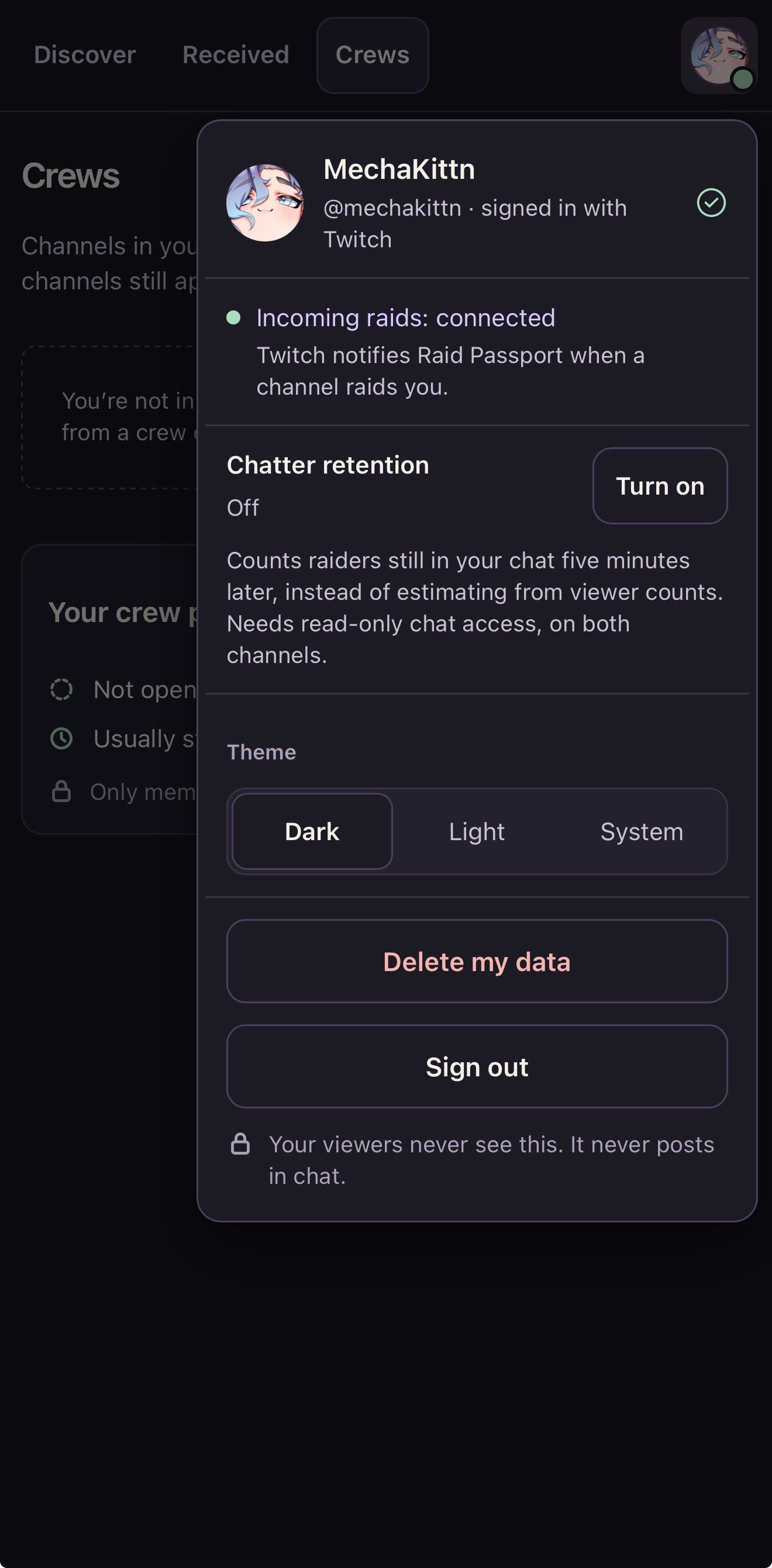
Raid Passport iOS Web App Profile
Inspiration
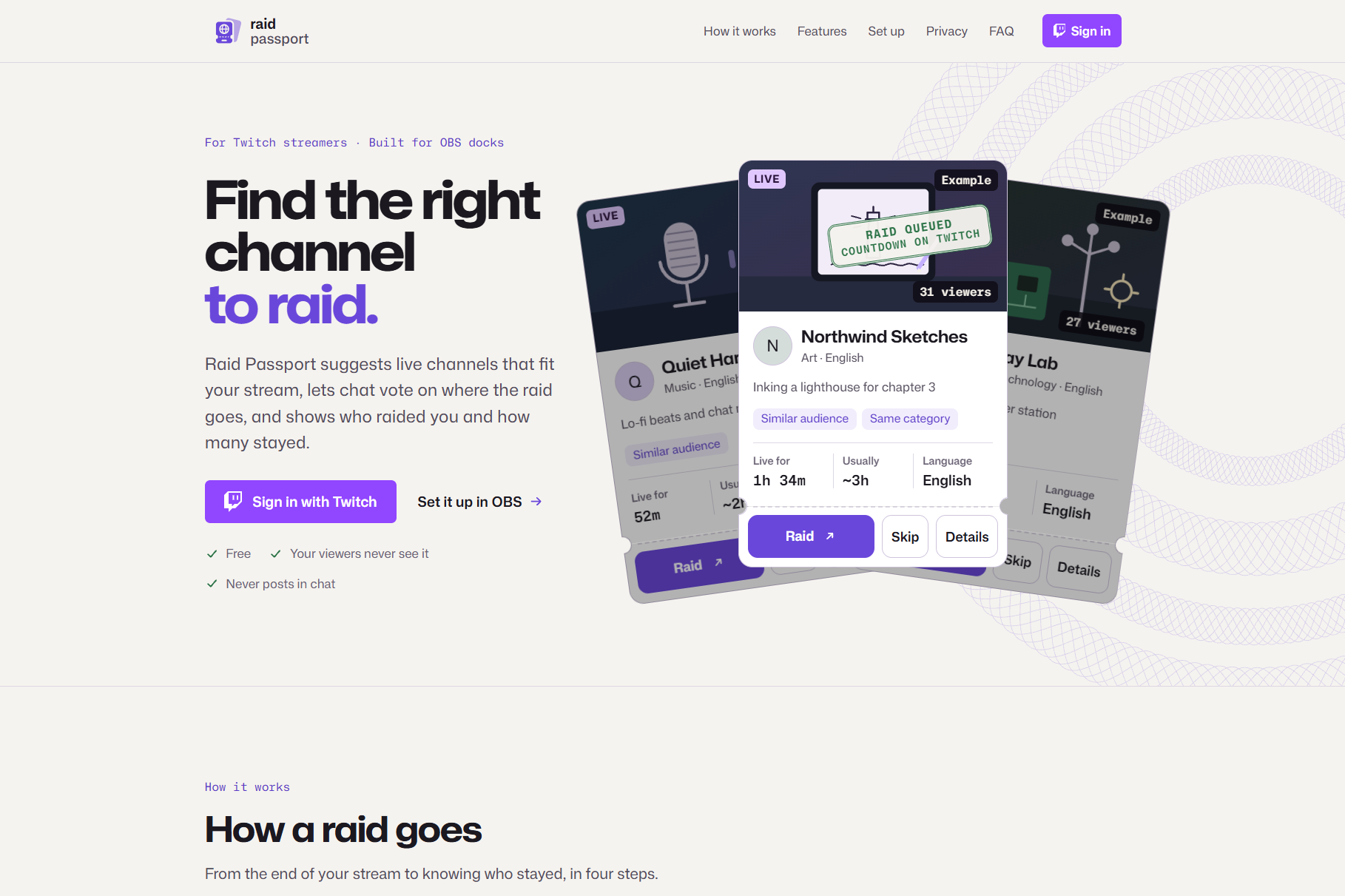
Raiding is one of the best things about Twitch, but choosing who to raid is guesswork. At the end of a stream you scroll Following or a random same-category list, with no idea who's about to end or who's your size. The streamer you raid only learns "12 raiders" and has to ask what you were playing. And nobody ever finds out how many raiders stayed. I wanted that choice to take seconds, with real context, inside the OBS window I already have open, and without putting anything on stream.
What it does
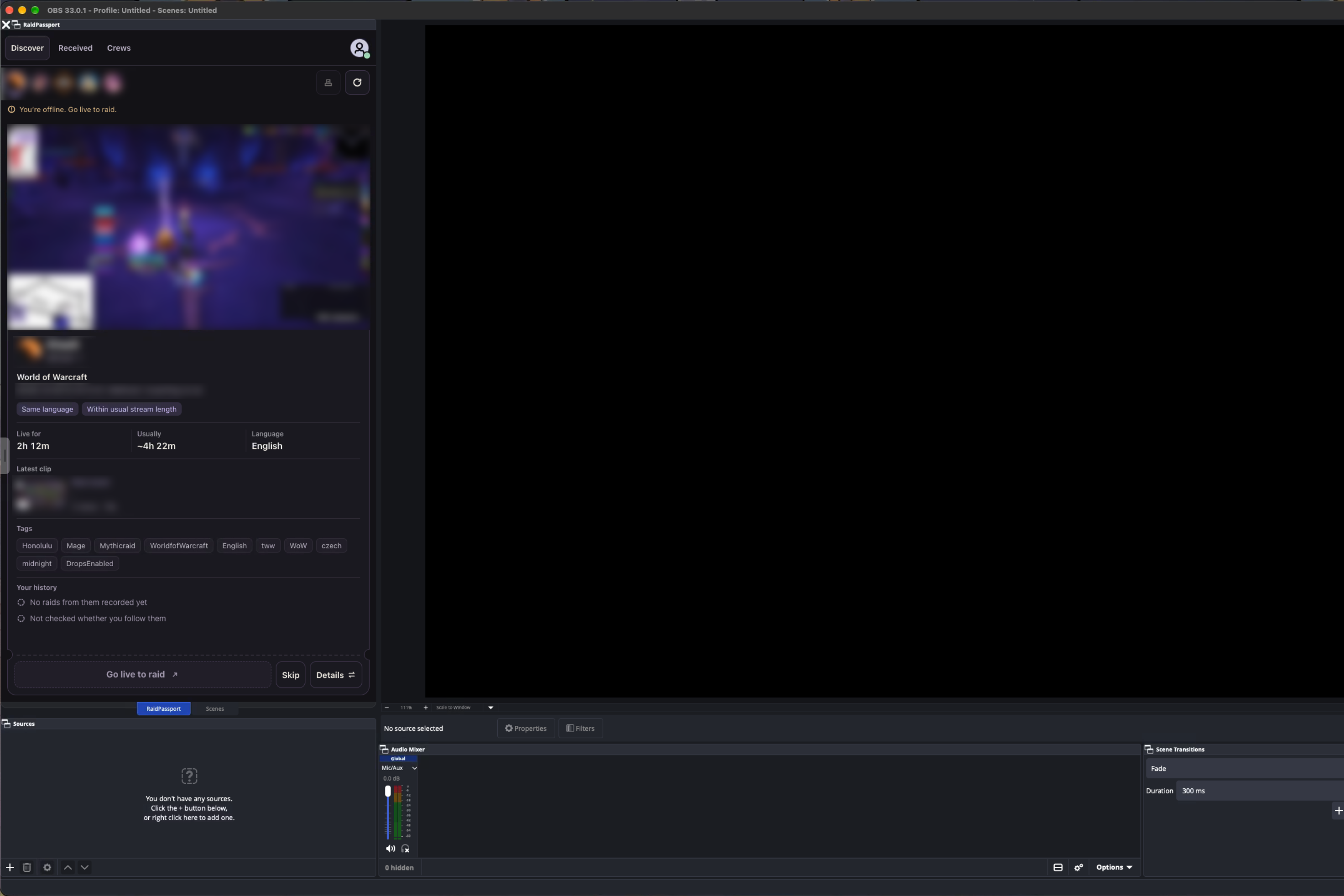
For the streamer, in an OBS dock or a browser tab:
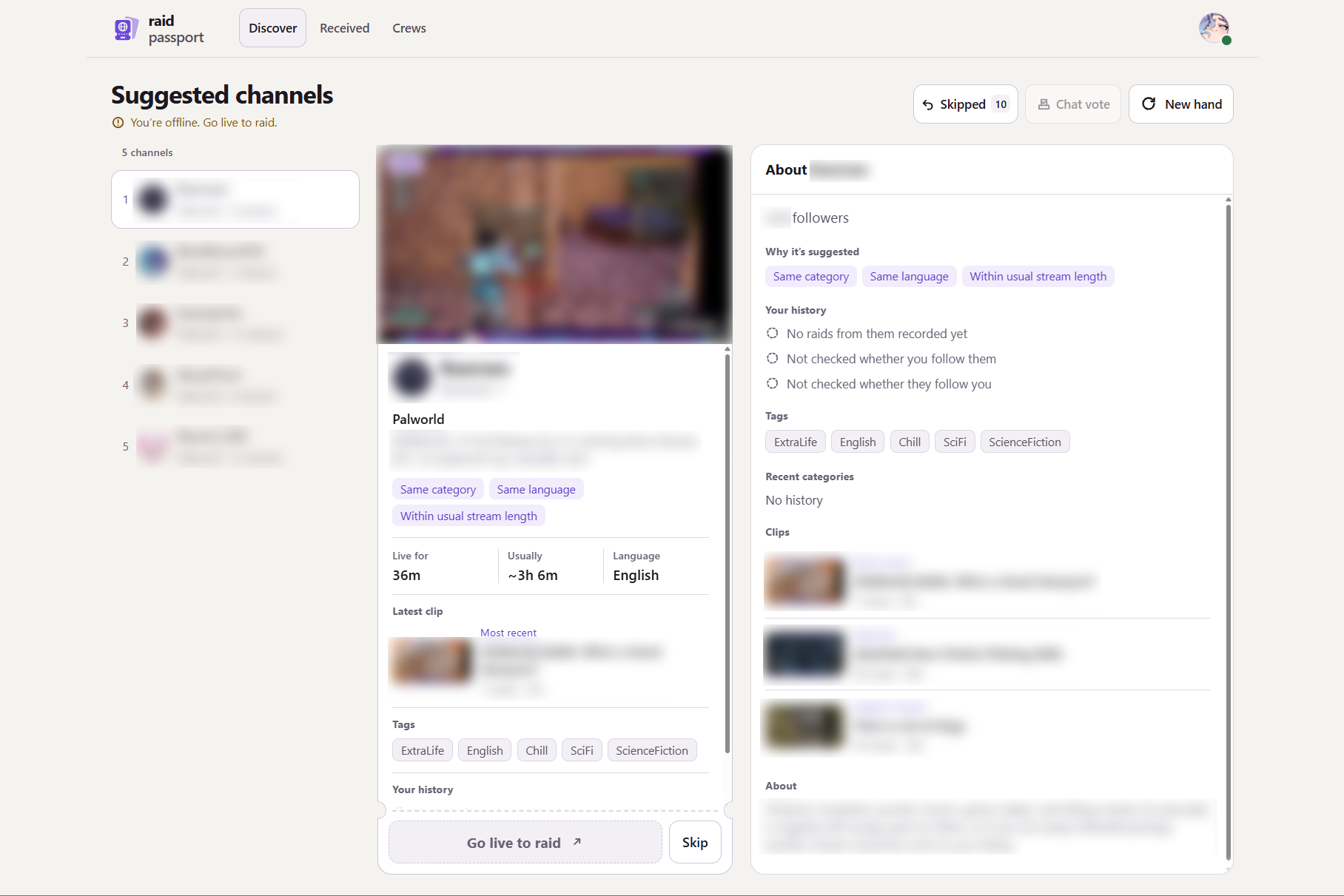
- A hand of up to five live channels, ranked for your stream: similar audience size, your language and category, and whether they're likely to keep streaming. Channels in your crews get a boost.
- Build the hand you want: skip what doesn't fit, and Draw fills only the empty spots.
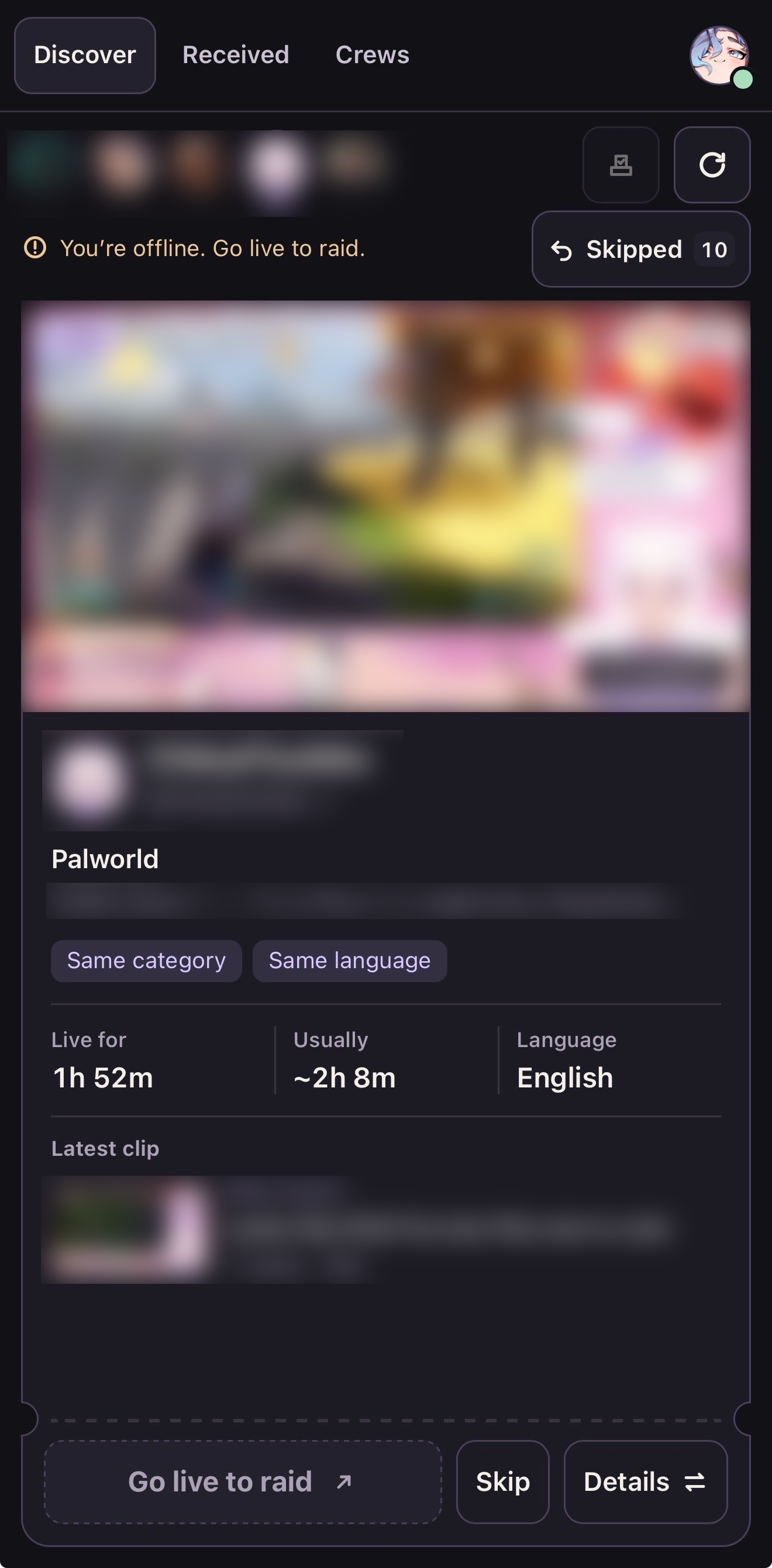
- Cards you read at a glance: live preview, category, title, uptime and usual length. Flip for tags, clips, bio and your history with that channel.
- Raid in one click. It starts a real Twitch raid with the usual countdown, so you can still Raid Now or Cancel.
- Chat vote: put your hand to a native Twitch poll. When it ends, the winner's card is picked, and you still press Raid yourself.
- When someone raids you: a quiet alert in the dock, and a saved card showing what they were streaming, so you can greet raiders properly.
- Five minutes later: how many stayed. Estimated from your viewer count, or counted from chat when both channels allow it, and always labelled approximate.
- On your phone: in Safari, Share > Add to Home Screen, and it opens like an app.
For chat: they get to pick where the raid goes, and they arrive at a host who knows what they were just watching. Nothing posts in chat, viewers never see the dock, and streamers can delete everything with one button.
How it was built
Node.js 24 with no framework and no runtime dependencies beyond Node's built-in SQLite. A plain HTML, CSS and JavaScript front end that works as an OBS Custom Browser Dock and on phones. Twitch OAuth with opt-in extra permissions; the Helix API for streams, users, channels, followers, clips, videos, raids, chatters and polls; EventSub webhooks for incoming raids and for disconnects, which erase that streamer's data. Tokens are encrypted, with CSRF protection, a strict content security policy and per-account request budgets. It runs on Fly.io at raidpassport.com.
How Codex built it
- Two Codex chats on GPT-6.1-Sol: a server chat and a UI chat. They coordinated through numbered docs in the repo: contracts, handoffs, runbooks and acceptance checklists.
- Tests from day one, in two browser engines: Twitch is mocked in every automated test, and none starts a real raid. UI checks run in Chromium and WebKit (Safari's engine).
- Who did what: I had the idea, wrote the project build documentation, set the rules (private to the streamer, nothing on stream, no fake data, honest numbers), made the calls and ran the live tests. Codex wrote all of the code, tests and deployment setup.
| Codex chats | 2 (plus 11 automatic review threads) |
| Commits | 85 |
| Lines added | about 17,300 (code, tests and docs) |
| Project tests | 239, all passing |
| Browser checks | 159 + 638 + 4,344 assertions, in Chromium and WebKit |
| First commit to live site | about 27 hours (Oct 29 to 31) |
Challenges crossed
- A Raid button that can't misfire. A network blip must never send two raids. Every click gets one request ID, and checking the status reuses it.
- Measuring "who stayed" honestly. Twitch doesn’t say who came with a raid, so the app compares viewer counts (an estimate, labelled as one) or samples chat when both streamers allow it, and shows “Not measured” instead of a fake zero.
- An iPhone-only bug. The ticket card's notches broke in Safari's engine when a card resized. Codex added WebKit to every test run, reproduced it and fixed it.
- Going live. Production sign-in failed until the Twitch callback address matched exactly, and an old raid-alert subscription still pointed at the development tunnel; a clean-up script with a dry run removed it.
Accomplishments that I'm proud of
- A full loop on the real Twitch API, live at raidpassport.com: suggest, vote, raid, receive, measure.
- A dock that reads in a glance during a stream, on desktop and iPhone.
- Privacy and safety that are tested: no raid sent twice, no viewer identities stored, and one-button deletion.
What I learned
- Twitch gives you the raid but not the people. Retention has to be estimated, and that's fine if you say so.
- Codex works best with written contracts: two chats with clear ownership moved fast without stepping on each other.
- Test in Safari's engine from the start: every iPhone browser uses it.
What's next for Raid Passport
- Opt-in viewer "passport stamps" for raiders who travel with a channel.
- A Stream Deck button for Raid and Chat vote.
- Raid trains across a crew.
Built With
- cloudflare
- css3
- docker
- fly.io
- gpt-6.1-sol
- html5
- javascript
- node.js
- obs-studio
- openai-codex
- playwright
- sqlite
- twitch
- twitch-eventsub
- twitch-oauth
