-
-
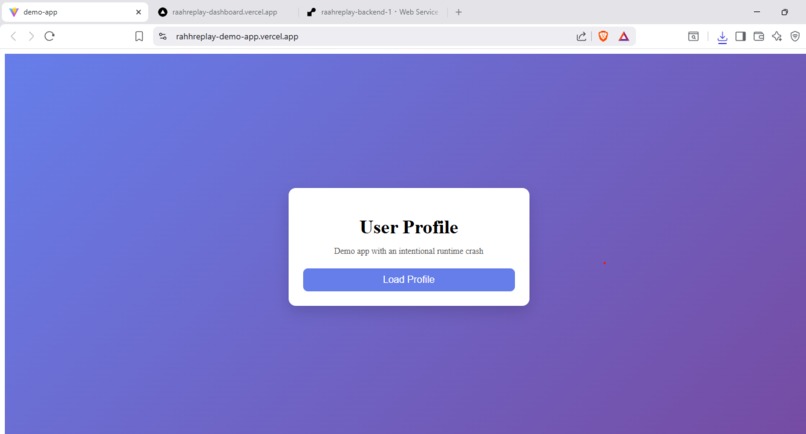
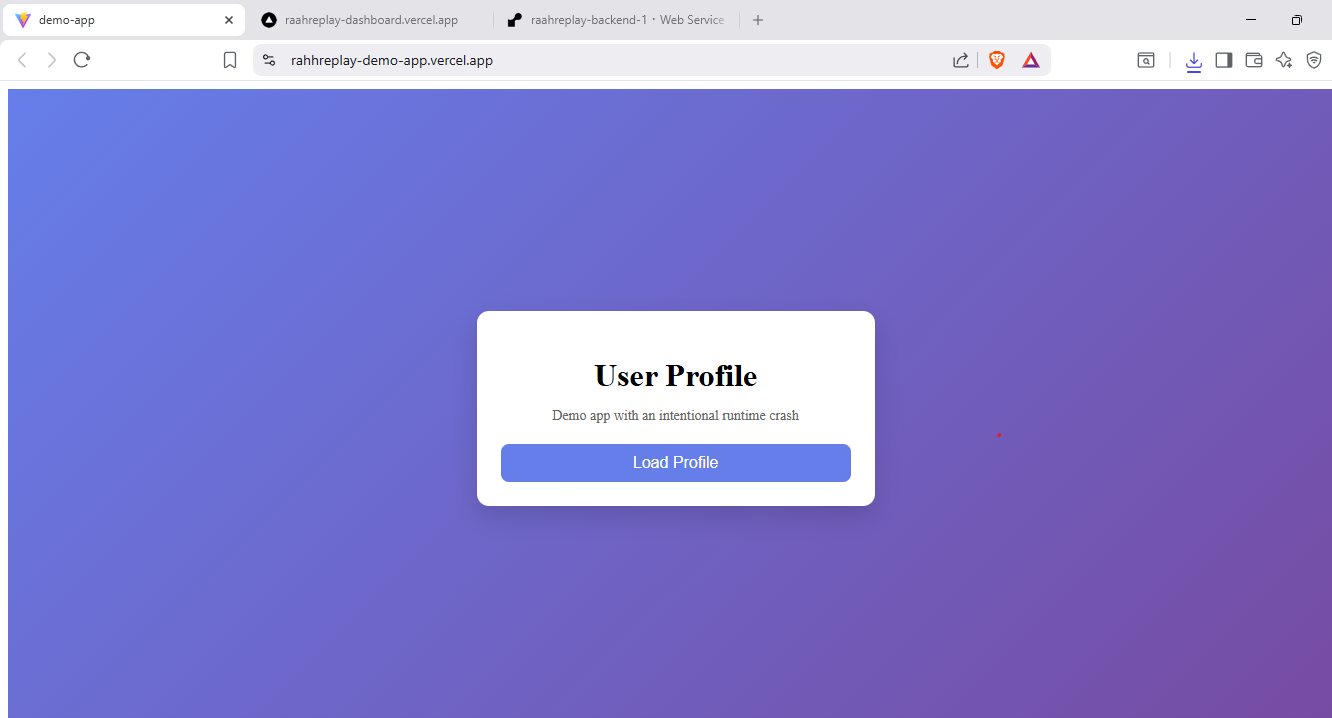
Demo App (Intentional Rutime Crash)
-
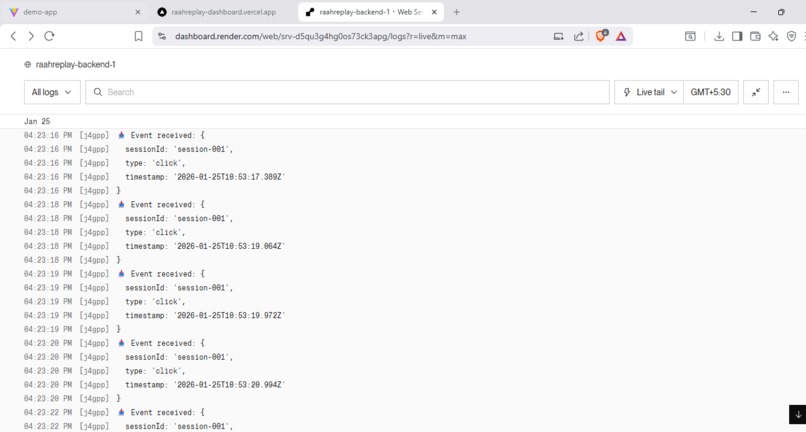
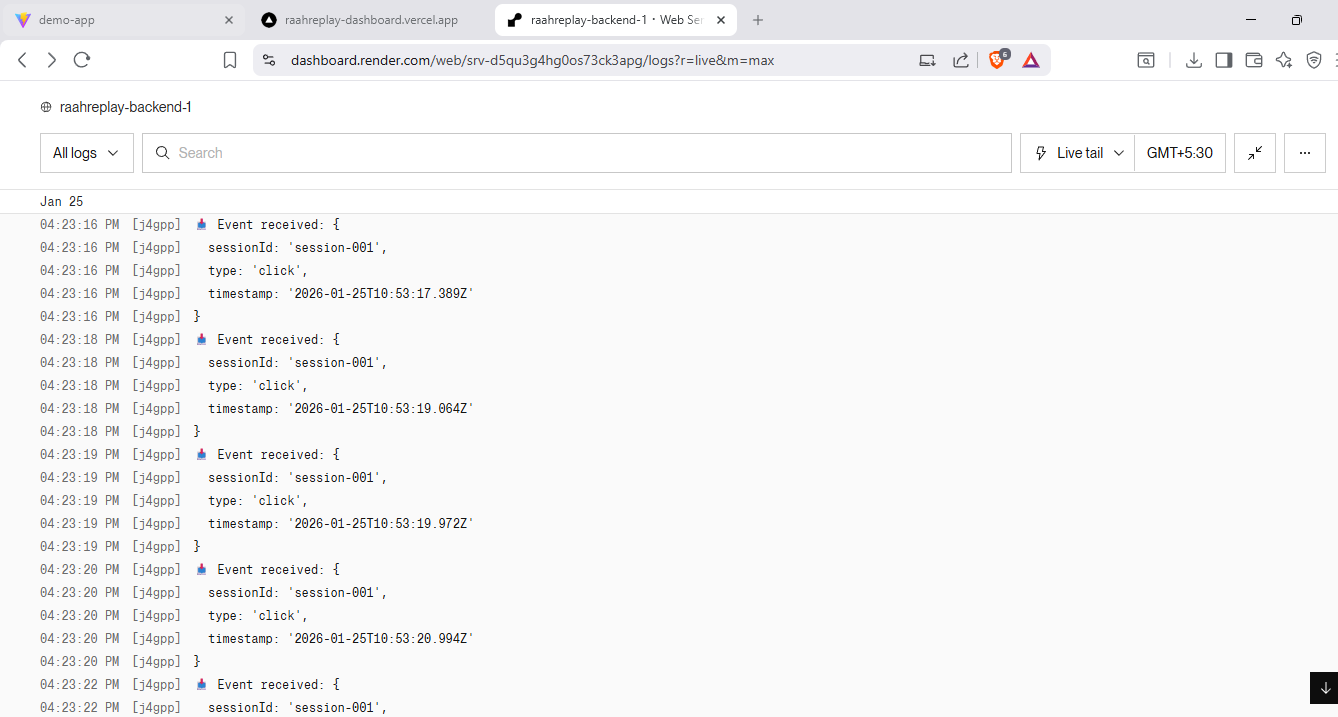
Server Backend Logs (Having Events and Crash Data)
-
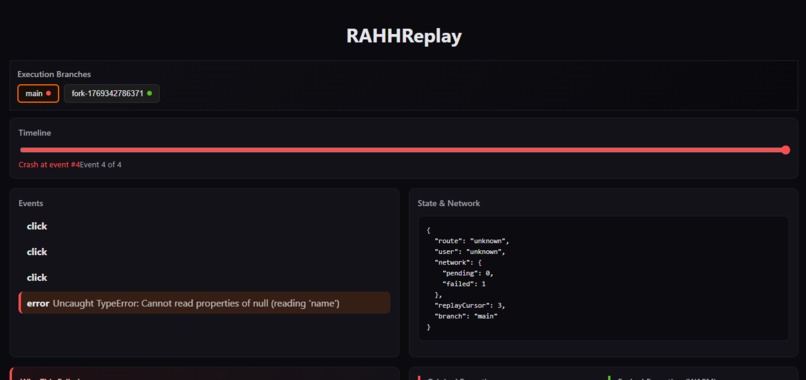
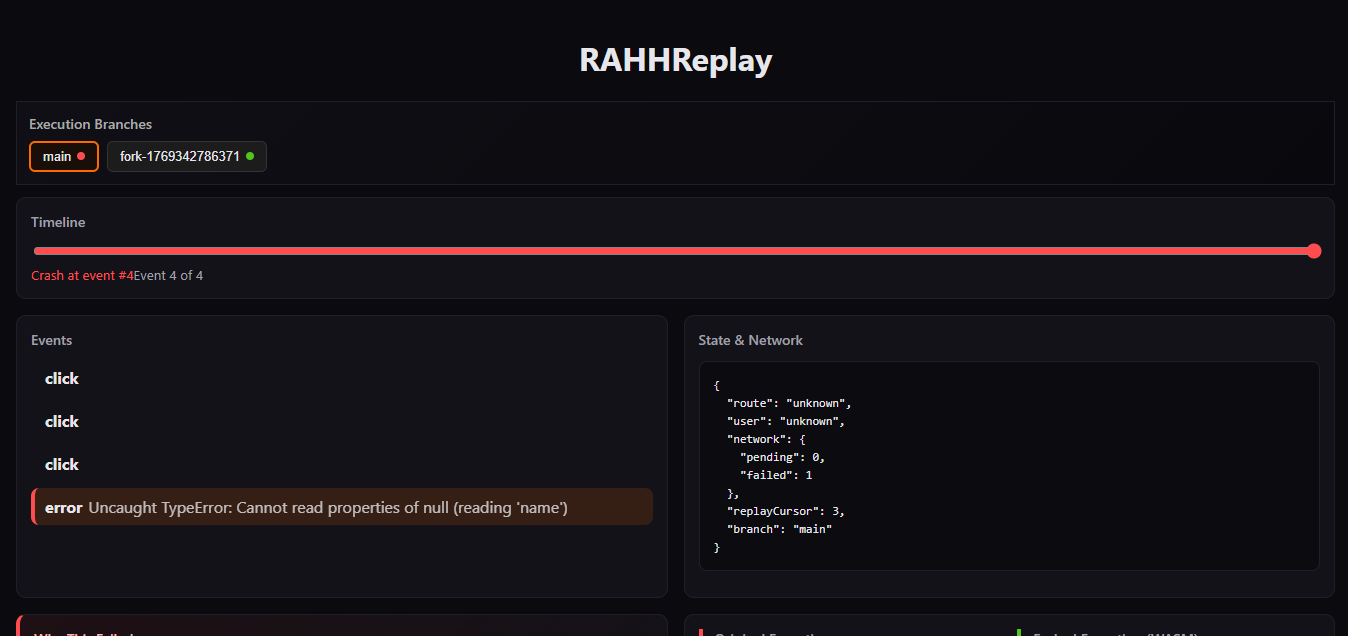
Dashboard 1
-
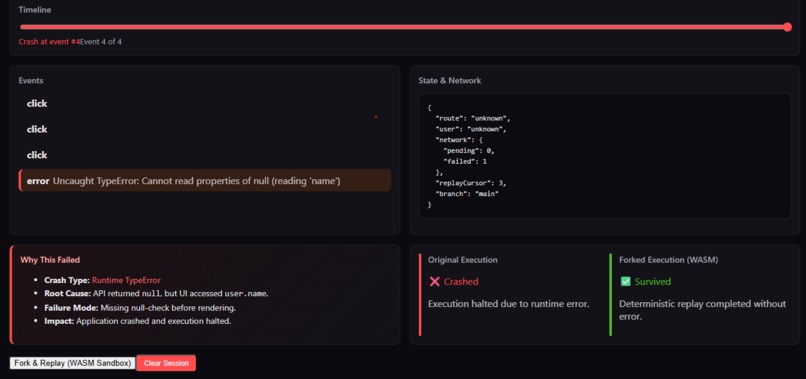
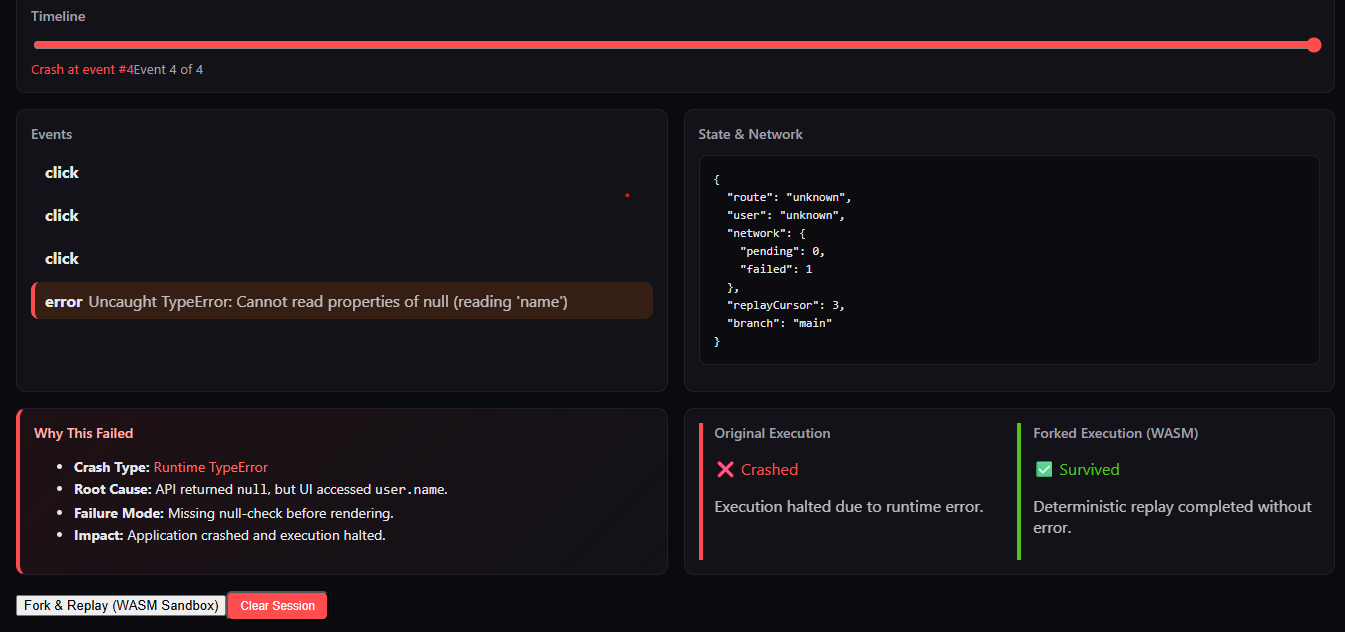
Dashboard 2
Inspiration
Modern applications fail in complex, non-deterministic ways.
Logs usually tell what happened, but almost never why it happened.
Once a production crash occurs, the original execution is gone forever — developers are left guessing based on partial logs and assumptions.
RAHHReplay was built to answer one core question:
What if developers could rewind time, inspect the exact failure, and safely try fixes without touching production?
What it does
RAHHReplay is an execution intelligence and deterministic replay engine that transforms crashes into explainable, replayable execution flows.
It:
- Captures real user events, runtime errors, and application state
- Builds a complete execution timeline
- Detects crashes and explains the root cause
- Allows developers to scrub through execution step-by-step
- Forks execution into a safe WebAssembly sandbox
- Replays logic deterministically to verify fixes without affecting production
The result is faster debugging, deeper insight, and safer experimentation.
How we built it
RAHHReplay is designed as a modular, production-grade system:
- A lightweight Debug SDK instruments applications and captures events
- A Node.js backend aggregates sessions and execution timelines
- A Rust-based WebAssembly engine handles deterministic replay
- A Next.js dashboard visualizes timelines, state, crashes, and forks
- Execution branches are compared in real time (crashed vs survived)
Every design decision focused on determinism, clarity, and developer experience.
Challenges we ran into
- Ensuring deterministic replay across different execution paths
- Designing a replay engine that is safe, isolated, and reproducible
- Handling incomplete or missing state without breaking analysis
- Building a UI that feels enterprise-grade, not like a student demo
- Coordinating real-time data flow across SDK, backend, WASM, and frontend
These challenges forced us to think like tool builders, not just app developers.
Accomplishments that we're proud of
- Built a real deterministic replay engine using WebAssembly
- Implemented a fork-and-compare execution model
- Created a “Why This Failed” root-cause analysis panel
- Designed a timeline-based debugging UI developers instantly understand
- Delivered a complete, working system — not a mock or slideshow
What we learned
- Determinism is the foundation of reliable debugging
- Observability is meaningless without context and replay
- WebAssembly is powerful for safe execution isolation
- Great developer tools require both deep engineering and strong UX
- Judges and developers value real systems, not surface-level demos
What's next for RAHHReplay — Deterministic Debugging & Replay Engine
Next, we plan to:
- Add network request replay and timing analysis
- Integrate with real production frameworks (React, Next.js, Node)
- Enable collaborative debugging across teams
- Add AI-assisted root-cause explanations
- Turn RAHHReplay into a plug-and-play developer debugging platform
Built With
- express.js
- javascript
- next.js
- react
- rust
- typescript
- wasm
- webassembly


Log in or sign up for Devpost to join the conversation.