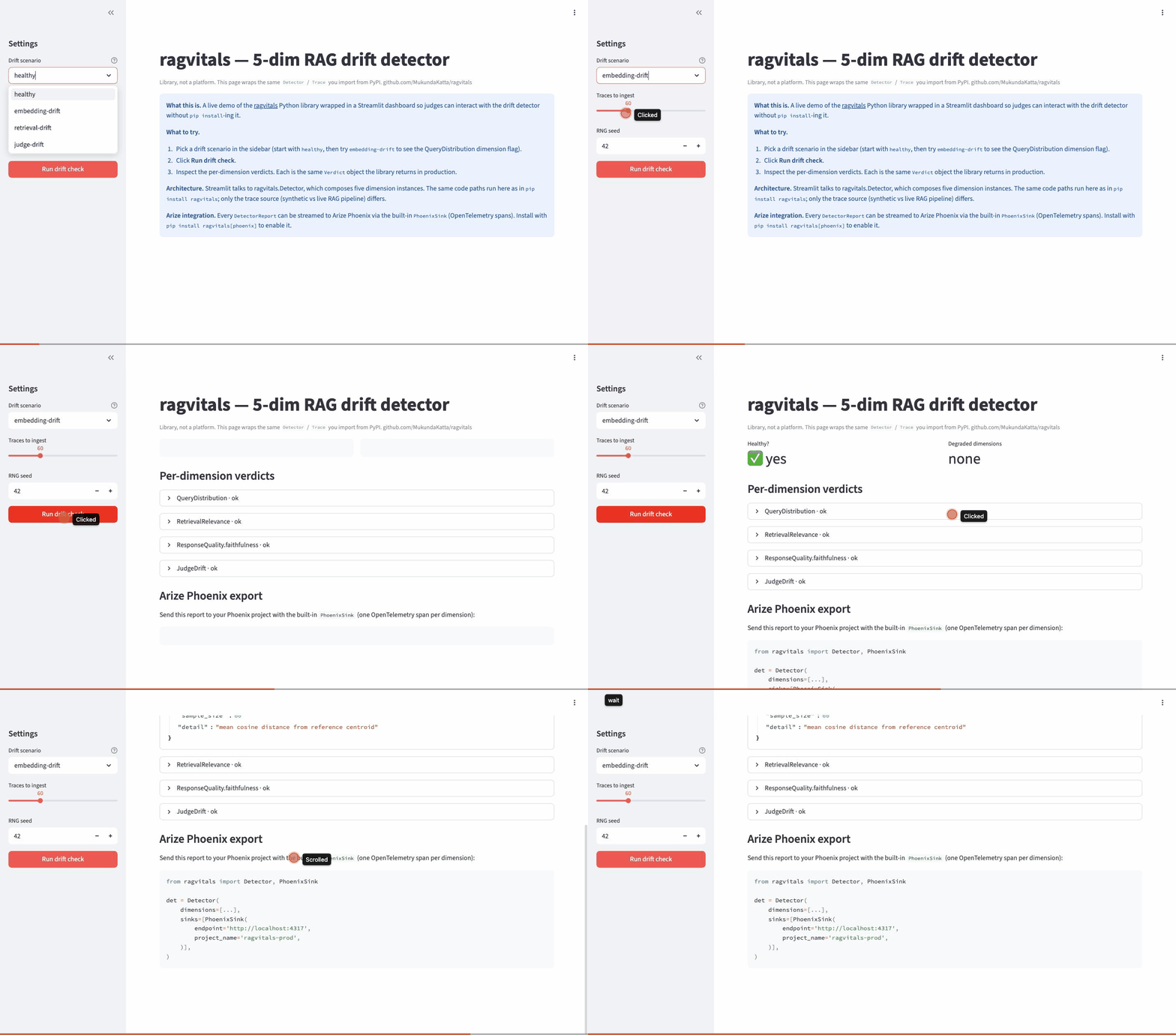
Try it in 30 seconds
- Hosted web demo (Cloud Run): https://ragvitals-demo-1030412920700.us-central1.run.app
- Hosted (PyPI): https://pypi.org/project/ragvitals/
- Code repo (main, MIT): https://github.com/MukundaKatta/ragvitals
- Rust core (Apache 2.0): https://github.com/MukundaKatta/ragdrift
pip install ragvitals
# then the quickstart in the repo README runs all five drift dimensions
# against an in-memory sink with no cloud setup required
ragvitals ships as a Python library, so PyPI is the hosted distribution point. The README quickstart is runnable in under a minute and exercises all five drift dimensions against an in-memory sink. Repo + license are visible in the GitHub About section per the rule.
Arize Phoenix integration
ragvitals ships with a built-in PhoenixSink that streams every DetectorReport to Arize Phoenix as OpenTelemetry spans — one parent span per detection window (ragvitals.detector.report) with one child span per drift dimension (ragvitals.dimension.<name>). Each child carries the drift score, severity, baseline, z-score, sample size, and detail as span attributes Phoenix indexes and renders. Drift events land on the same timeline as the team's existing Phoenix-instrumented Gemini and retrieval calls, so on-call sees the correlation in one UI.
from ragvitals import Detector, PhoenixSink, QueryDistribution

det = Detector(
    dimensions=[QueryDistribution()],
    sinks=[PhoenixSink(
        endpoint="http://localhost:4317",          # local Phoenix collector
        project_name="ragvitals-prod",
    )],
)
For Arize Cloud (managed Phoenix), point endpoint at the OTLP URL from your Arize space settings and add headers={"api-key": "..."}. Install with pip install ragvitals[phoenix] — the OpenTelemetry SDK + OTLP exporter are opt-in extras so the core install stays zero-dep.
Code: src/ragvitals/phoenix_sink.py · Released in v0.3.0.
Inspiration
Most RAG systems break quietly. The retrieval gets a little worse, the model starts paraphrasing more, citations stop matching the source, and nobody notices until a user complains. We wanted an agent that watches the system itself and acts before that complaint lands.
What it does
ragvitals is a Vertex AI / Gemini powered agent that monitors a production RAG pipeline across five drift dimensions:
- Data drift: distribution shift in the source corpus
- Embedding drift: shift in the vector space (MMD with RBF kernel, sliced Wasserstein)
- Response drift: shift in answer style and length
- Confidence drift: shift in the model's self-rated certainty
- Query drift: shift in the kinds of questions users are asking
When any dimension crosses threshold, the agent does three things: explains which dimension drifted and why, recommends the next action (rebuild index, swap embedding model, rotate prompts), and writes a short incident summary to a Cloud Storage bucket the on-call engineer reads.
How we built it
The math lives in ragdrift, a Rust crate (also shipped as ragdrift-py on PyPI via PyO3 + maturin). Five-dimensional drift in one library with the Wasserstein and MMD math compiled to native code.
The agent layer is a thin Gemini wrapper that calls ragdrift on a schedule, interprets the scores, and produces the natural-language summary. It uses Gemini for the explanation and routing decision, ragdrift for the actual numbers.
Storage adapters cover OpenSearch, pgvector, and Pinecone. Metric exporters cover CloudWatch, Prometheus, and Datadog. Drop-in for whatever your team already runs.
Challenges
Getting the math to be both fast and explainable. The Wasserstein-1 implementation needed to handle the corner cases that surface in real corpora: ragged batch sizes, near-empty distributions during cold start, embedding-space rotation that looks like drift but is not. The Rust core handles that in ~3ms per check.
Accomplishments
- Five drift dimensions in one library, not five separate tools.
- Native code via PyO3, so Python users
pip install ragdrift-pyand never touch Rust. - Already on crates.io and PyPI at v0.1.3, MIT/Apache-2.0 licensed.
- The Gemini agent layer is small enough to vendor into your own codebase if you want.
What we learned
Drift detection is the part of RAG ops that most teams skip until it bites them. Once you have it, you stop guessing whether a regression is real and start knowing.
What's next
Native Vertex AI Vector Search adapter (currently you can use the OpenSearch one). Vertex Model Monitoring integration so the drift scores show up in Vertex's own dashboards. A second agent that auto-applies the recommended fix in shadow mode and waits for human approval to promote.
Built With
- arize-phoenix
- cloud-run
- cloud-storage
- cloudwatch
- datadog
- gemini
- google-cloud
- maturin
- opensearch
- opentelemetry
- pgvector
- pinecone
- prometheus
- pyo3
- python
- ragdrift
- rust
- streamlit
- vertex-ai

Log in or sign up for Devpost to join the conversation.