Inspiration
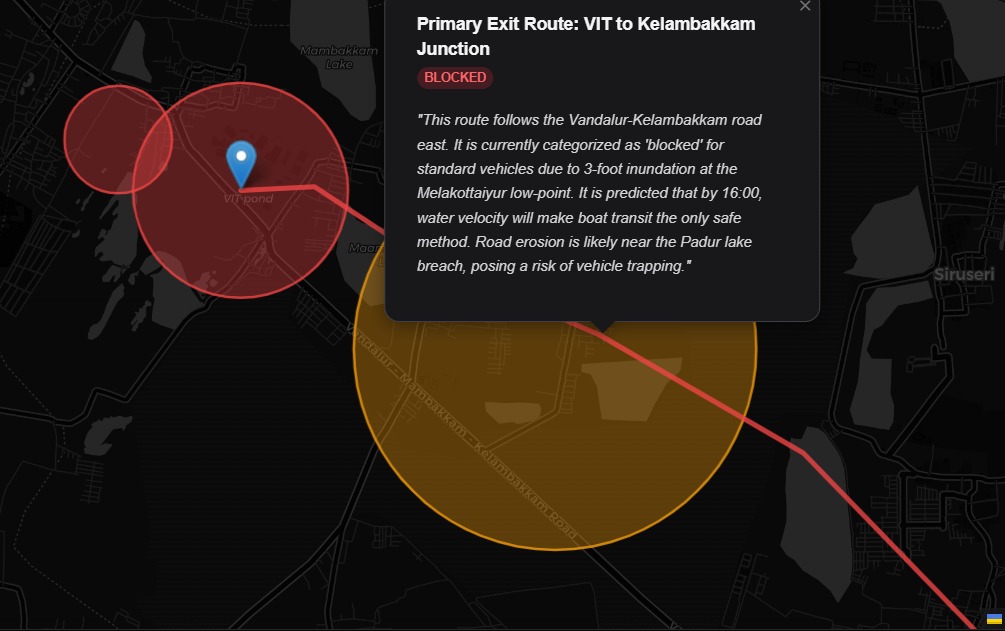
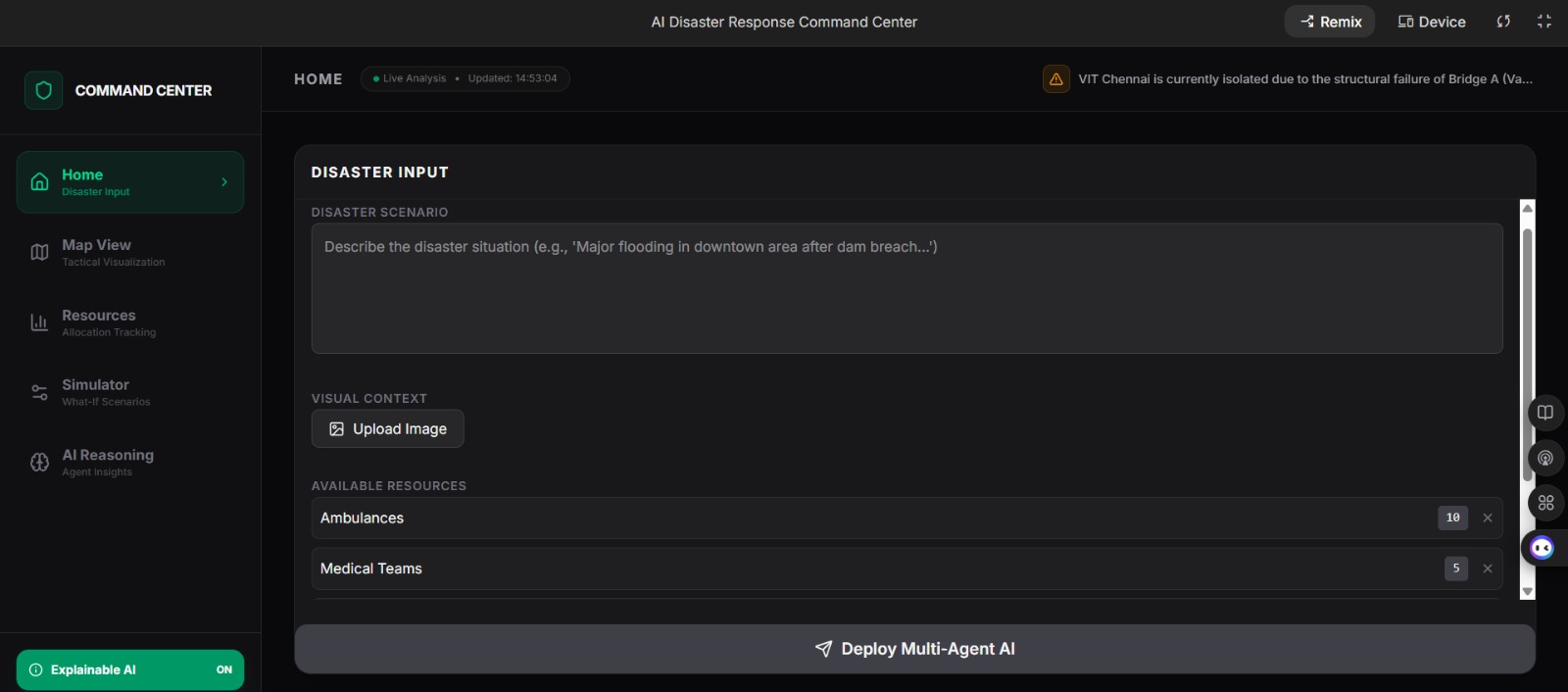
Disaster response is often slowed down by fragmented communication and delayed coordination between teams. We wanted to explore how AI could function as a centralized command system: analyzing reports instantly and generating structured, actionable plans. The idea was to simulate a digital disaster response center powered by intelligent agents working together in real time.
What it does
Our system analyzes disaster reports and automatically generates coordinated response strategies. It uses multiple AI agents, each responsible for a specific domain: medical, rescue, logistics, and risk assessment. It: -Evaluates severity of affected zones
-Prioritizes response actions
-Allocates resources efficiently
-Generates structured, role-based action plans
We use a weighted risk model to prioritize zones: $$Risk= w1(Severity)+ w2(Population) + w3(Resource Availability)$$ This allows dynamic and data-driven decision making.
How we built it
We built the backend using FastAPI and integrated the Gemini API (gemini-2.5-flash) to power our multi-agent system. The architecture includes: -A report analysis layer using Gemini
-A multi-agent orchestration service
-A task generation engine
-A risk calculation module
-A resource allocation optimizer
The system processes input → analyzes risk → assigns agent roles → outputs structured action plans.
Challenges we ran into
-Ensuring consistent structured outputs from AI
-Preventing overlap between different agent responsibilities
-Designing a realistic and balanced risk-scoring formula
-Managing API latency and response formatting
-Getting multiple AI agents to behave like a coordinated team required careful prompt engineering and testing.
Accomplishments that we're proud of
-Successfully built a working multi-agent disaster simulation
-Designed a dynamic risk scoring system
-Created structured, actionable response outputs
-Integrated AI into a realistic command-center workflow
What we learned
-How to design and orchestrate multi-agent AI systems
-Advanced prompt engineering for role-based outputs
-Backend integration of AI APIs
-Structuring real-world problems into modular AI components
What's next for RagMuffin
As a team, RagMuffin plans to continue refining and expanding this project beyond the hackathon. We aim to improve the risk modeling system, integrate real-time external data sources, and build a more interactive dashboard for visual disaster monitoring. Moving forward, we also want to explore scaling the system for larger datasets and more complex emergency simulations. This project has opened up exciting possibilities for us, and we’re motivated to keep building impactful AI-driven solutions together.
Built With
- express.js
- framer-motion
- gemini-api
- google-maps-javascript-api
- lucide-react
- lucide-react-backend:-node.js
- node.js
- react
- tailwind-css

Log in or sign up for Devpost to join the conversation.