Inspiration
We wanted to explore a way to notice nearby obstacles without needing to look at a screen or listen to audio alerts.
What it does
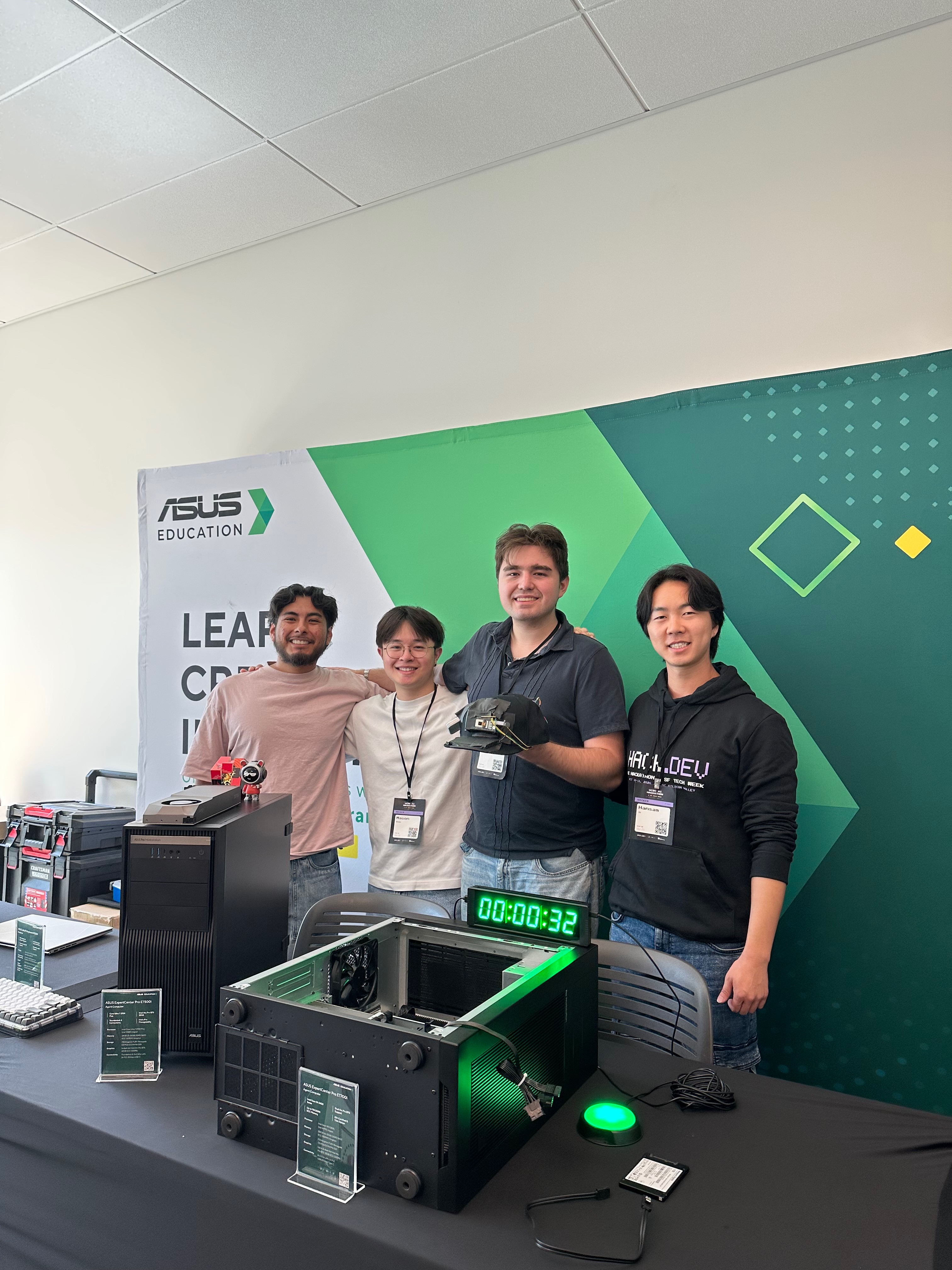
Our prototype processes camera images and locates people, chairs, tables, and boxes across five zones, from left to right. The goal is to map those zones to vibration motors in a baseball cap.
How we built it
An ESP32-S3 provides camera images over local Wi-Fi. An ASUS Ascent GX10 runs Nemotron through Ollama and converts each image into five detection values. We built the processing service in Python and a receiver module in Arduino C++.
Challenges we ran into
Camera timeouts and inference delays made keeping results current a challenge. We added checks to reject malformed responses and expire old detections.
Accomplishments we’re proud of
We got live camera images flowing into local AI inference and built a working endpoint for the results, with no cloud inference required.
What we learned Getting a model response is only one part of building a wearable. Camera delays, reliable communication, and useful feedback matter just as much.
Built With
- arduino-c++
- asus-ascent-gx10
- esp32-s3
- nemotron
- ollama
- python


Log in or sign up for Devpost to join the conversation.