-
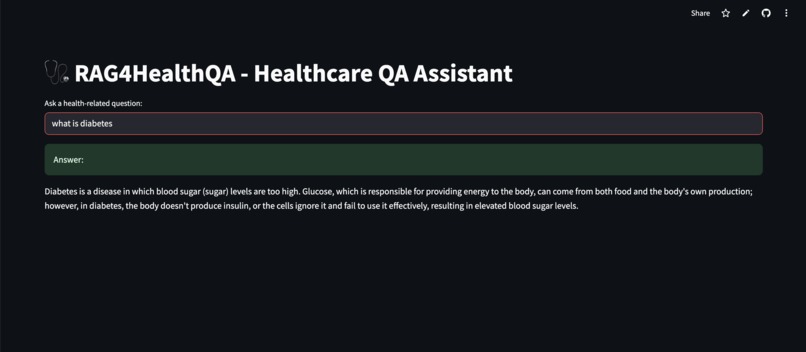
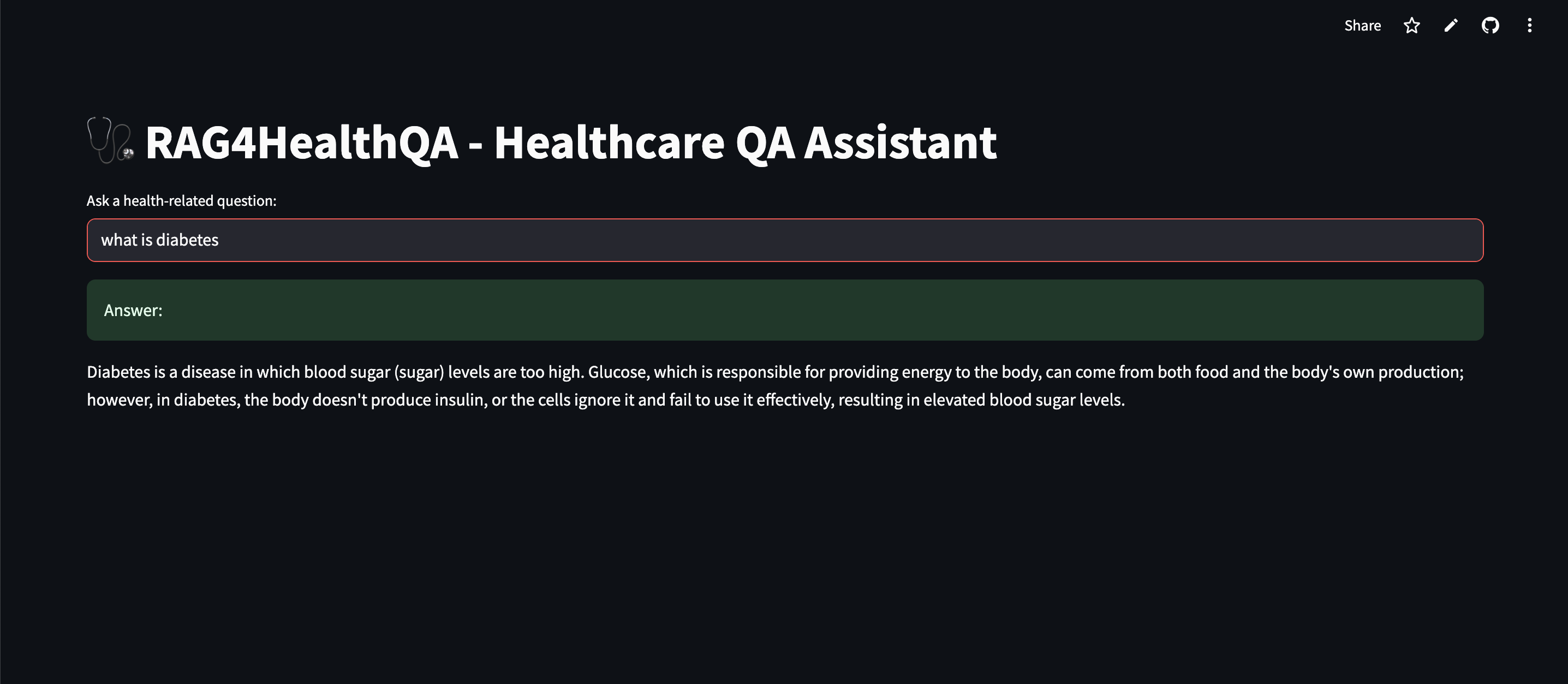
Result 1
-
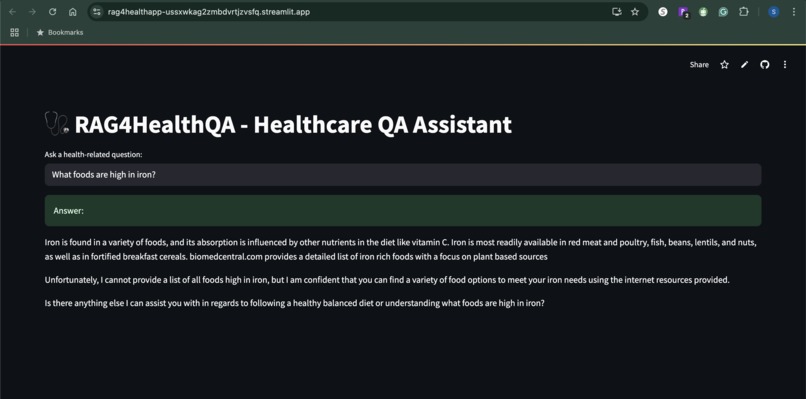
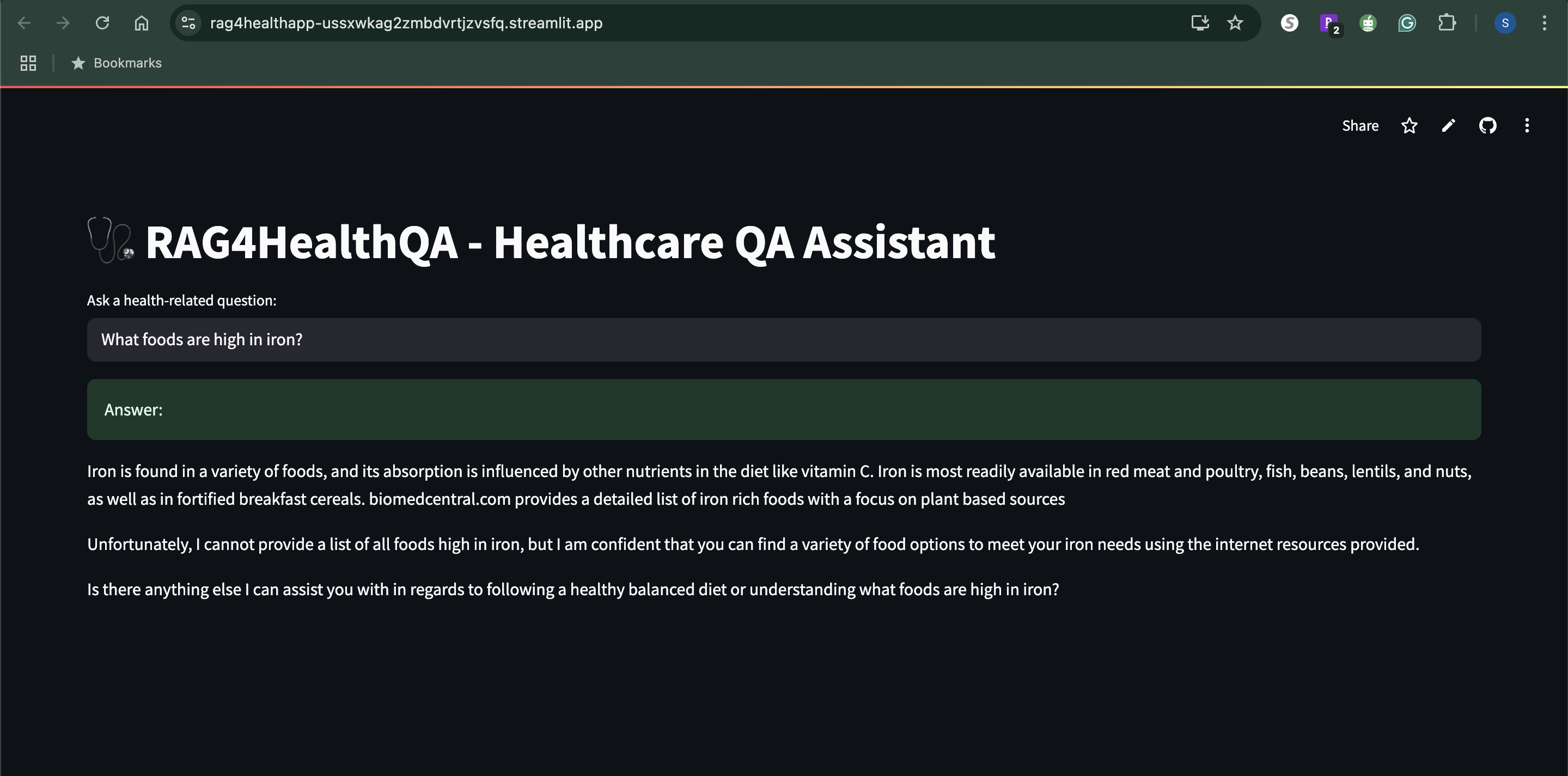
Result 2
-
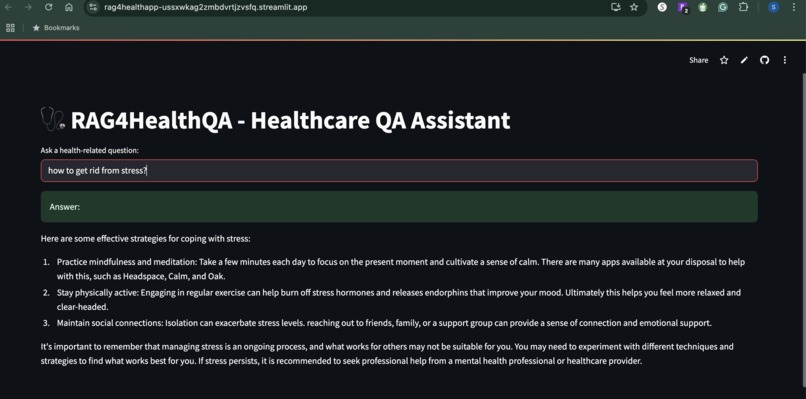
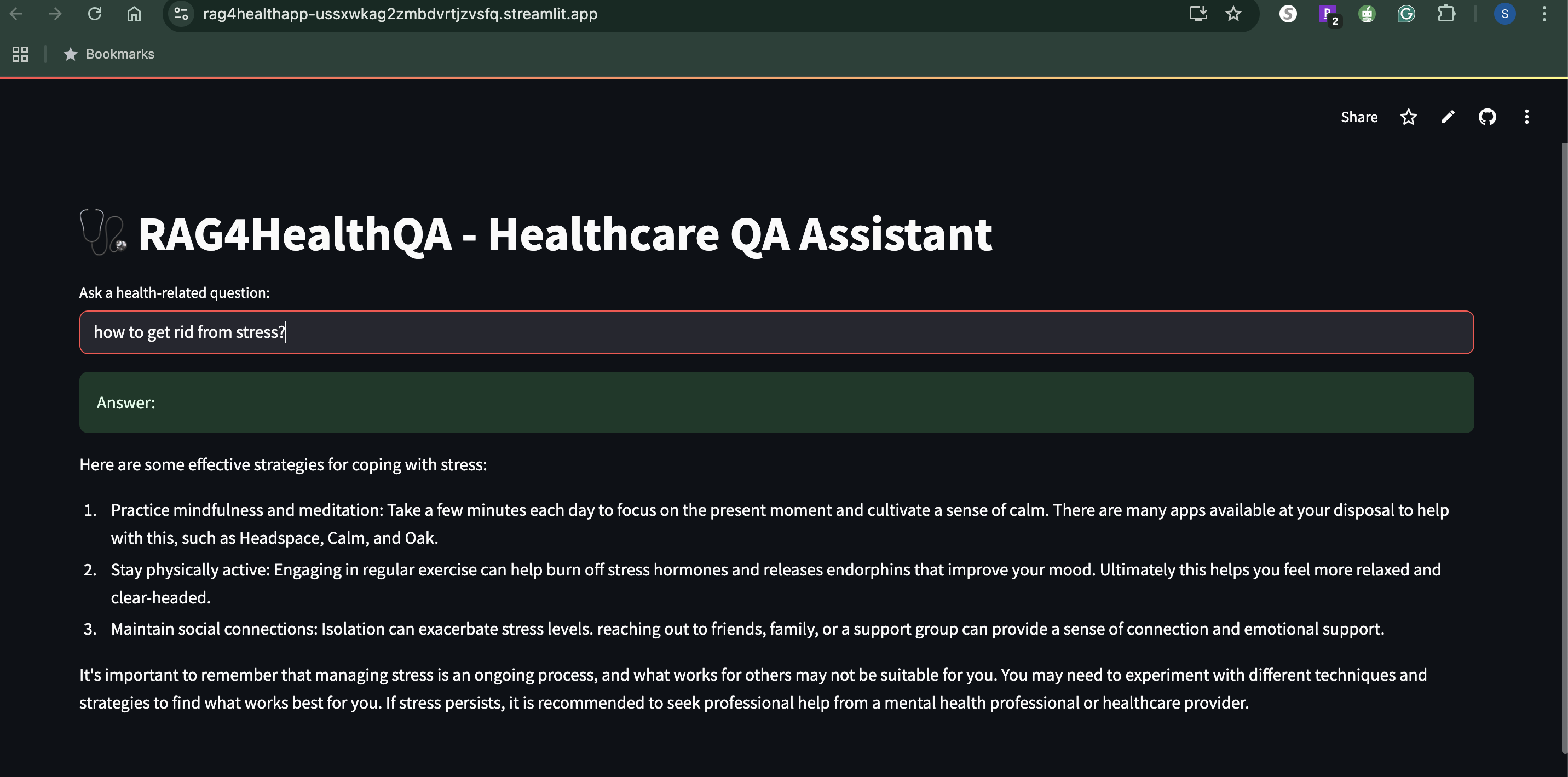
Result 3
-
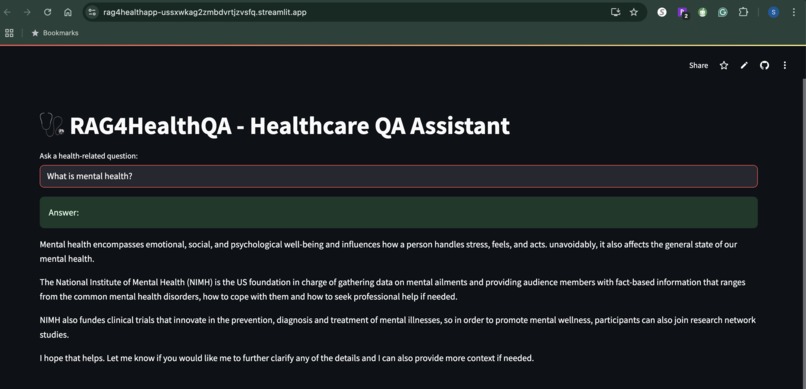
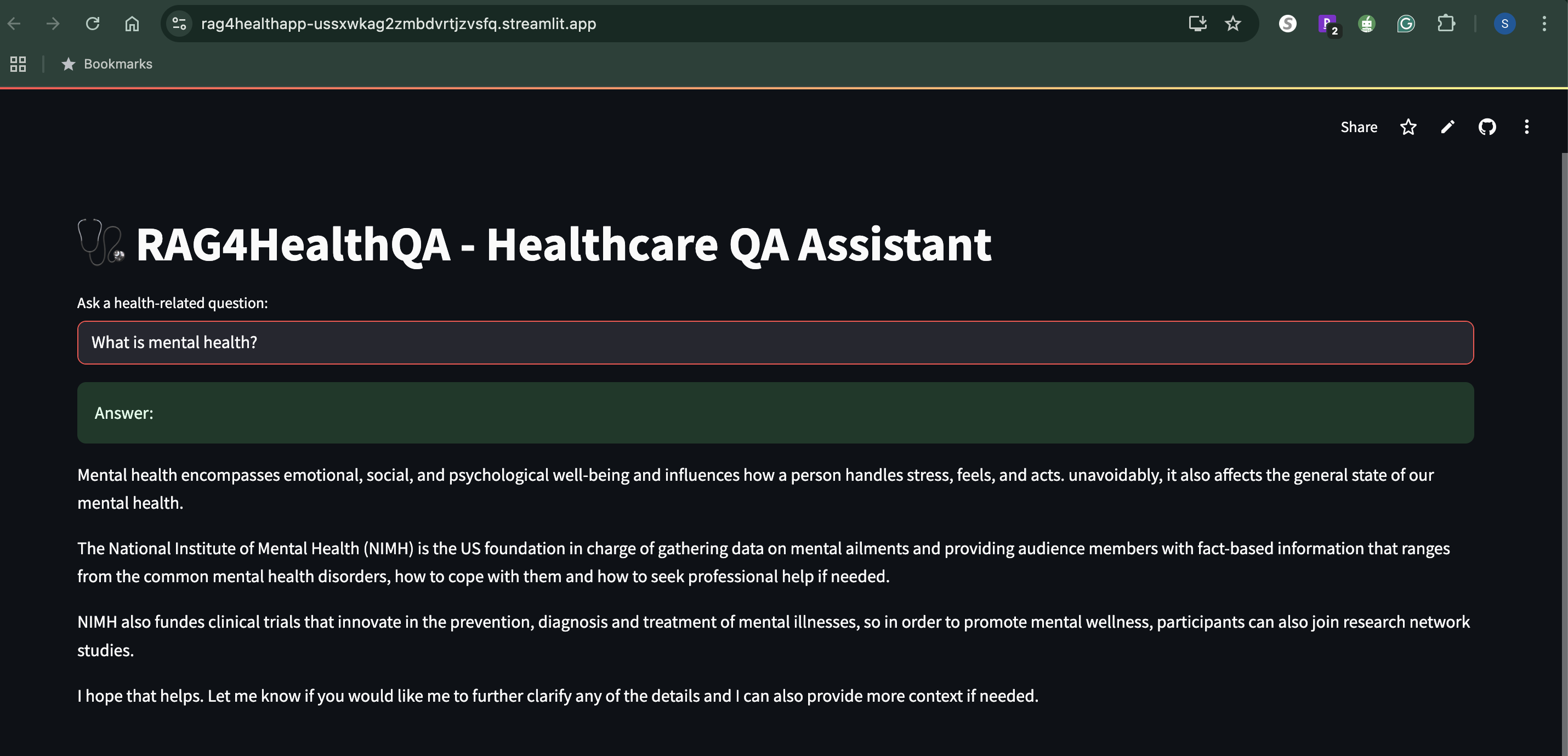
Result 4
🩺 About the Project – RAG4HealthQA
🎯 Inspiration
Healthcare information is everywhere, but it’s often dense, inconsistent, and difficult to understand. Many patients, especially those from non-medical backgrounds, struggle to find clear, trustworthy answers to basic health questions. Inspired by this challenge, we created RAG4HealthQA — an AI-powered assistant that delivers accessible and explainable healthcare knowledge, grounded in content from WHO, NIH, CDC, and other verified public sources.
Our mission: Empower patients and caregivers through AI that informs, not confuses.
💡 Example Questions from Our Knowledge Base
RAG4HealthQA can answer practical, everyday health questions such as:
- What are the symptoms of hypertension?
- How much water should adults drink daily?
- Is a vegetarian diet safe for athletes?
- How does Cognitive Behavioral Therapy (CBT) help with PTSD?
- What are the early signs of diabetes?
- What foods are high in iron?
- What is the DASH diet and who is it for?
- How do I manage anxiety without medication?
These examples reflect a mix of clinical, nutritional, and behavioral health topics, supporting public health literacy and preventive care education.
🛠️ How I Built It
- Frontend: Built using Streamlit to ensure a clean, intuitive UX accessible on both desktop and mobile.
- Backend Architecture: RAG pipeline built using LangChain, FAISS, and Cohere.
- Embeddings + Vector Store: Texts embedded into vector space for fast similarity search via FAISS.
- Data Sources: Public health documents in
.mdand.txtformat sourced from: - Modular Pipeline:
rag_pipeline.pyhandles retrieval, LLM completion, and response formatting.
📚 What I Learned
- How to implement domain-specific RAG systems that balance relevance with safety.
- The role of UX simplicity in making technical health data digestible.
- How to curate and chunk real medical content effectively for AI use.
- Adapting non-OpenAI LLMs like Cohere for regulated fields.
⚠️ Challenges I Faced
- Ensuring medical accuracy without overstepping into diagnostic claims.
- Avoiding hallucinations through better prompt engineering and strict document grounding.
- Handling file-based KB refreshes without breaking embeddings or app flow.
- Designing for non-technical users, including older adults and caregivers.
🌍 Why It Matters
RAG4HealthQA bridges the gap between AI innovation and public service. By combining transparency, usability, and trusted knowledge, it supports:
- Digital health equity
- AI safety and explainability
- Public health awareness
This project is part of a broader effort to demonstrate how AI can serve the national interest, aligning with goals under the EB2-NIW category for advanced technologists contributing to U.S. public welfare.


Log in or sign up for Devpost to join the conversation.