-
-
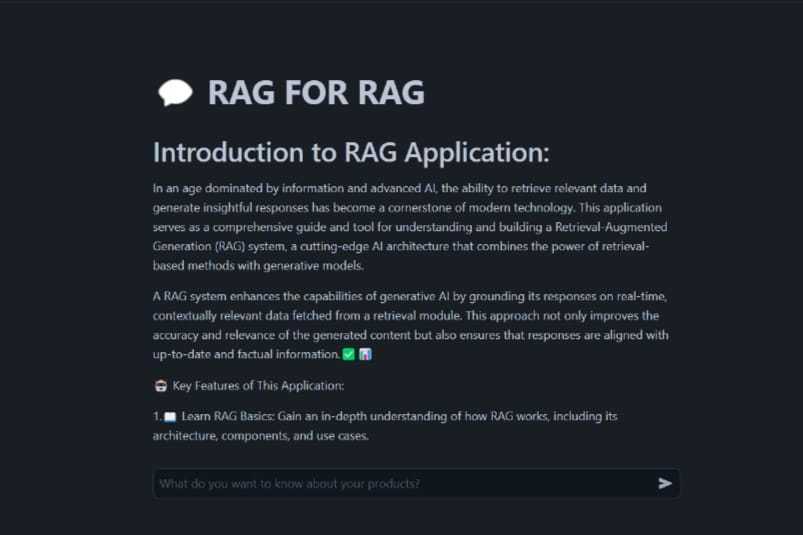
RAG for RAG
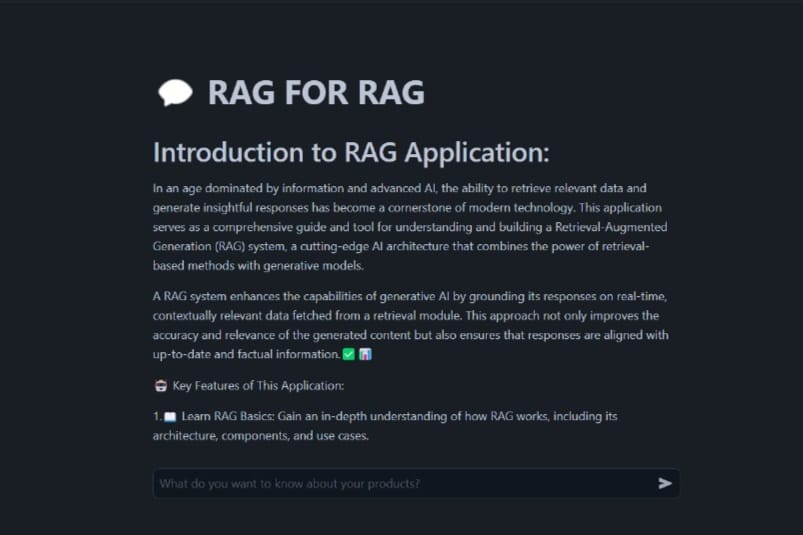
Inspiration
The inspiration for RAG for RAG stemmed from the growing need for more accurate, contextually relevant, and real-time responses in AI systems. With the rise of generative AI, the challenge of ensuring that responses are grounded in up-to-date, factual information became more pronounced. We envisioned a platform that would not only teach users about Retrieval-Augmented Generation (RAG) systems but also provide the tools to build their own RAG-based applications. This would empower developers and AI enthusiasts to create intelligent systems that deliver reliable and insightful content.
What it does
RAG for RAG is an educational and practical tool designed to help users understand and build Retrieval-Augmented Generation (RAG) systems. It provides resources for learning the fundamentals of RAG, building custom systems, and experiencing interactive demos. The application explains how RAG combines retrieval-based methods with generative models to produce accurate and context-aware responses. Users can explore RAG’s architecture, learn how to implement it, and access real-time demonstrations of RAG in action.
How we built it
We built RAG for RAG by integrating state-of-the-art AI technologies, including natural language processing, retrieval systems, and generative models. The core of the application is a real-time retrieval system that fetches data and pairs it with generative AI to create insightful, context-aware content. We focused on making the platform user-friendly and interactive by incorporating guided tutorials, step-by-step instructions, and live demos. Additionally, we provided comprehensive documentation to help users optimize their RAG systems and explore various use cases.
Challenges we ran into
One challenge was ensuring the integration of the retrieval and generative components worked seamlessly in real time, delivering accurate and contextually relevant results without latency. Another hurdle was curating and presenting complex information about RAG in an accessible and engaging way for users with varying levels of experience. Additionally, maintaining data accuracy in real-time while optimizing the system for performance posed a technical challenge. And one more issue not able to deploy project on Streamlit.
Accomplishments that we're proud of
We are proud of the platform's ability to simplify a complex technology like RAG and make it accessible to a wide audience. The interactive demos allow users to see RAG in action, making it easier to understand the technology. We are also proud of the step-by-step guides and comprehensive documentation, which empower users to build their own RAG systems. The combination of educational content and practical tools is a key accomplishment that sets RAG for RAG apart.
What we learned
We learned about rag how it works how its made and how it can be used. we also learned about snowflake mistral and streamlit. Throughout the development process, we gained a deeper understanding of how RAG systems function, balancing retrieval and generative capabilities, and ensuring real-time data accuracy. We also learned how to present complex technical concepts in a clear and engaging manner, enhancing the learning experience. Additionally, we discovered how to optimize performance while maintaining the system's ability to deliver accurate and relevant responses.
What's next for RAG for RAG: Get to know about RAG with RAG
RAG for RAG plans to expand customization options, add community features for sharing and learning, and increase interactive demos and use cases. Our goal is to make it the go-to platform for mastering RAG technology and building intelligent, context-aware AI systems.io
Built With
- mistral
- python
- snowflake
- streamlit

Log in or sign up for Devpost to join the conversation.