-
-
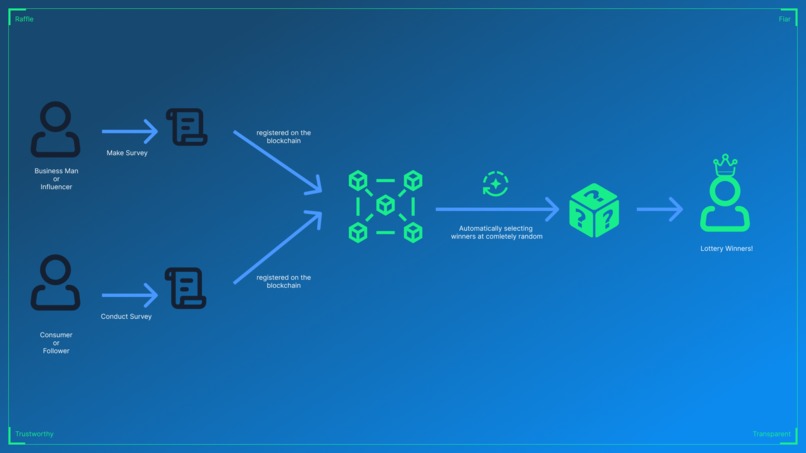
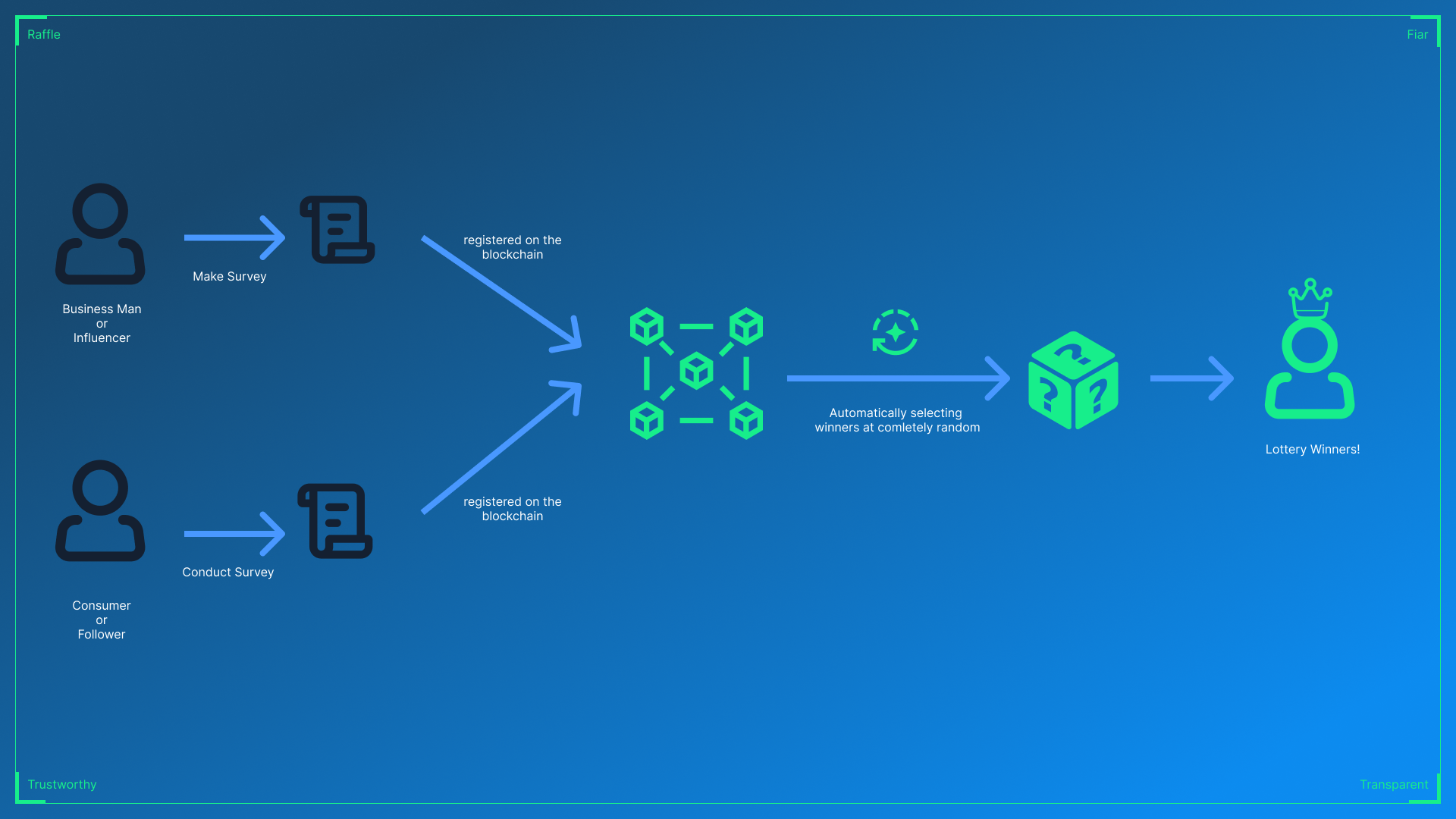
This is the Raffle service flow and operational mechanism
-
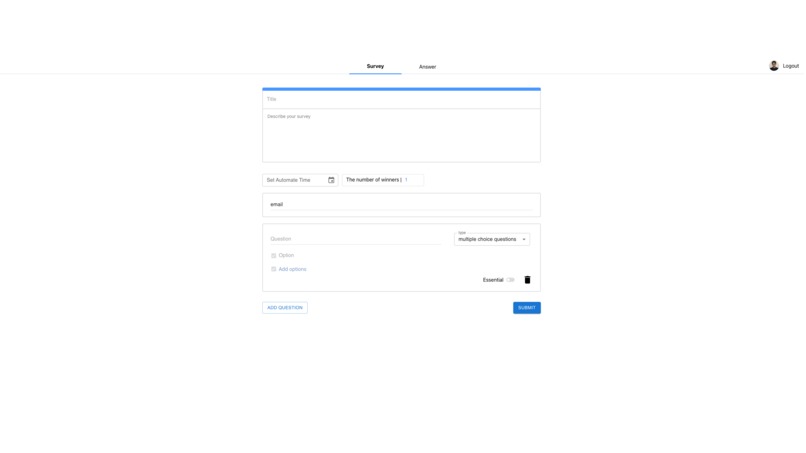
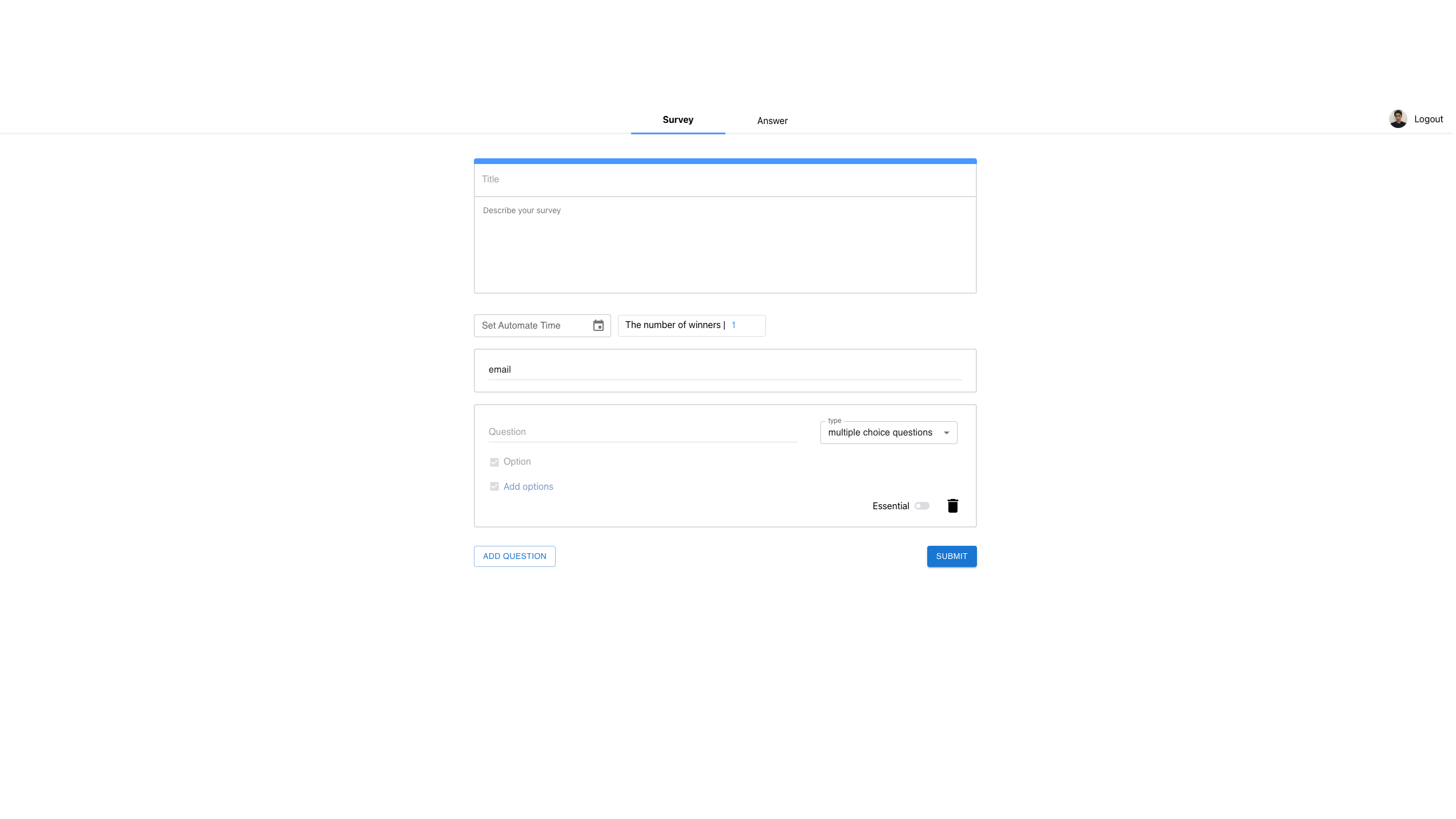
Influencer or company can make a survey. They can set the number of winners and the survey closing time.
-
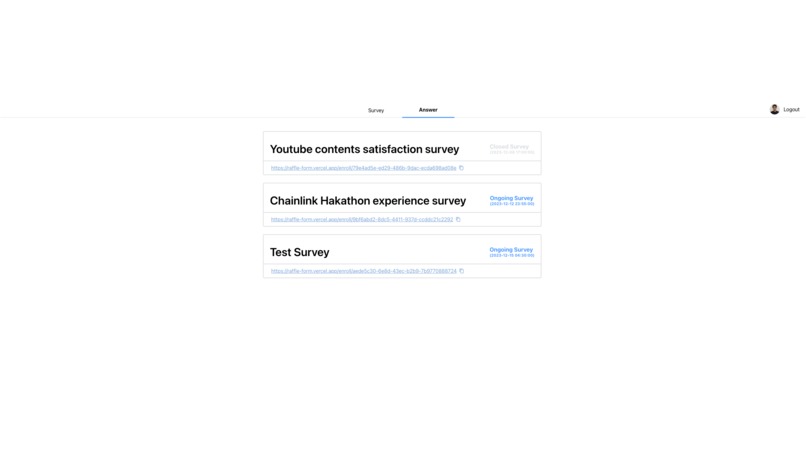
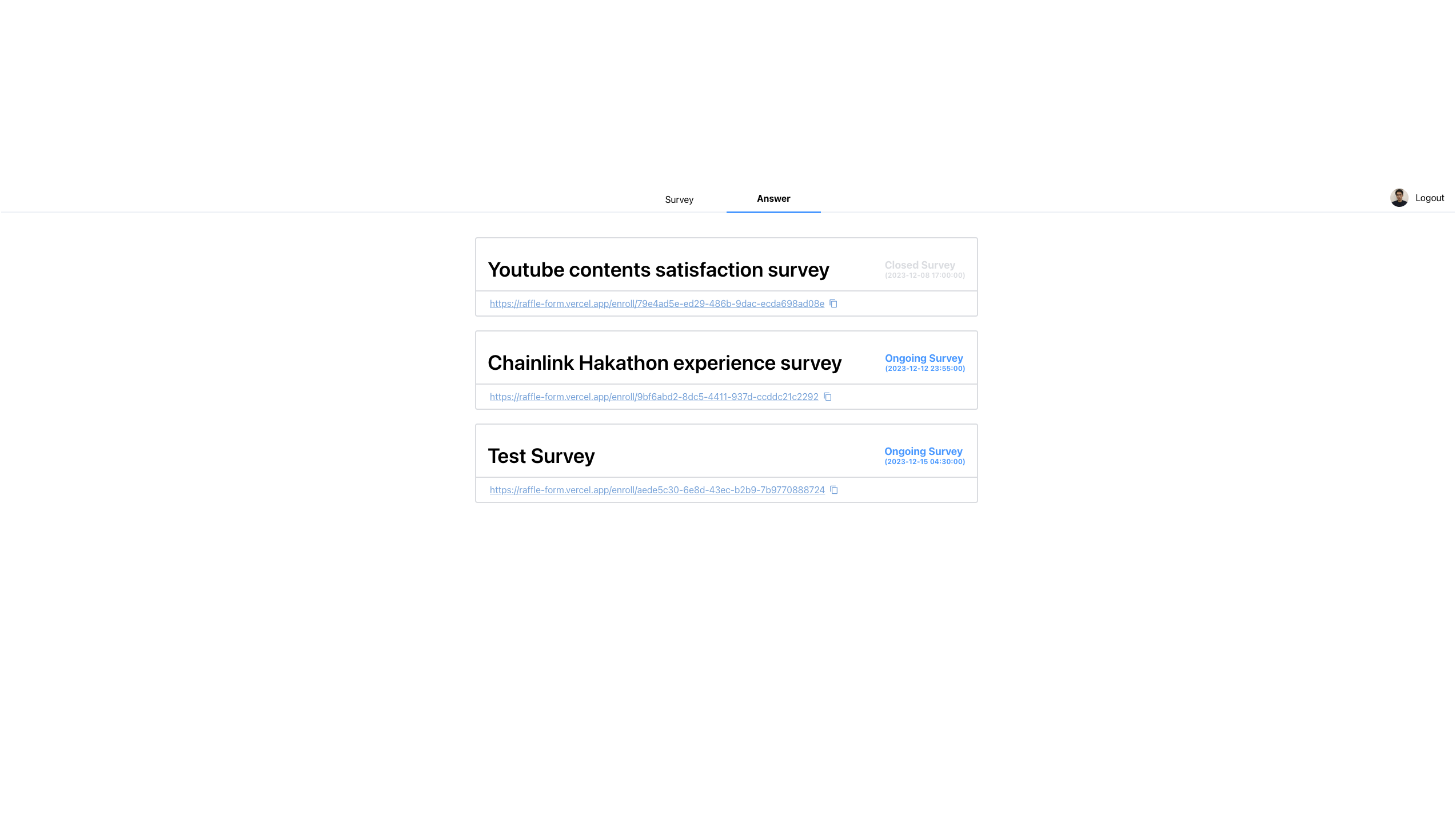
Influencer or company can view the history of surveys they've conducted
-
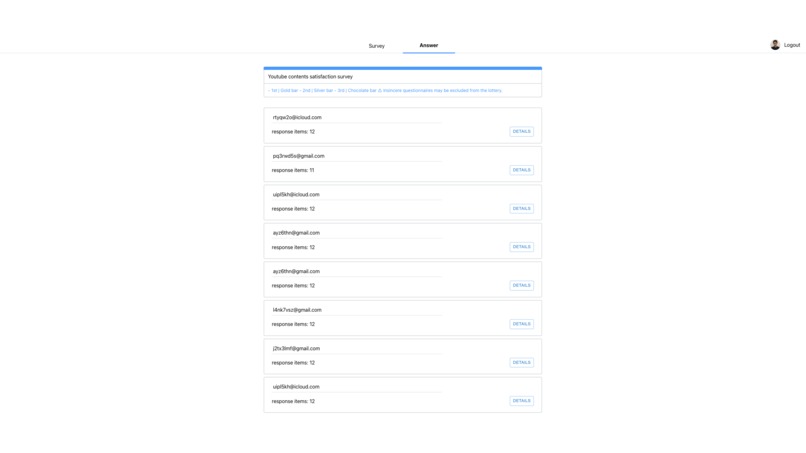
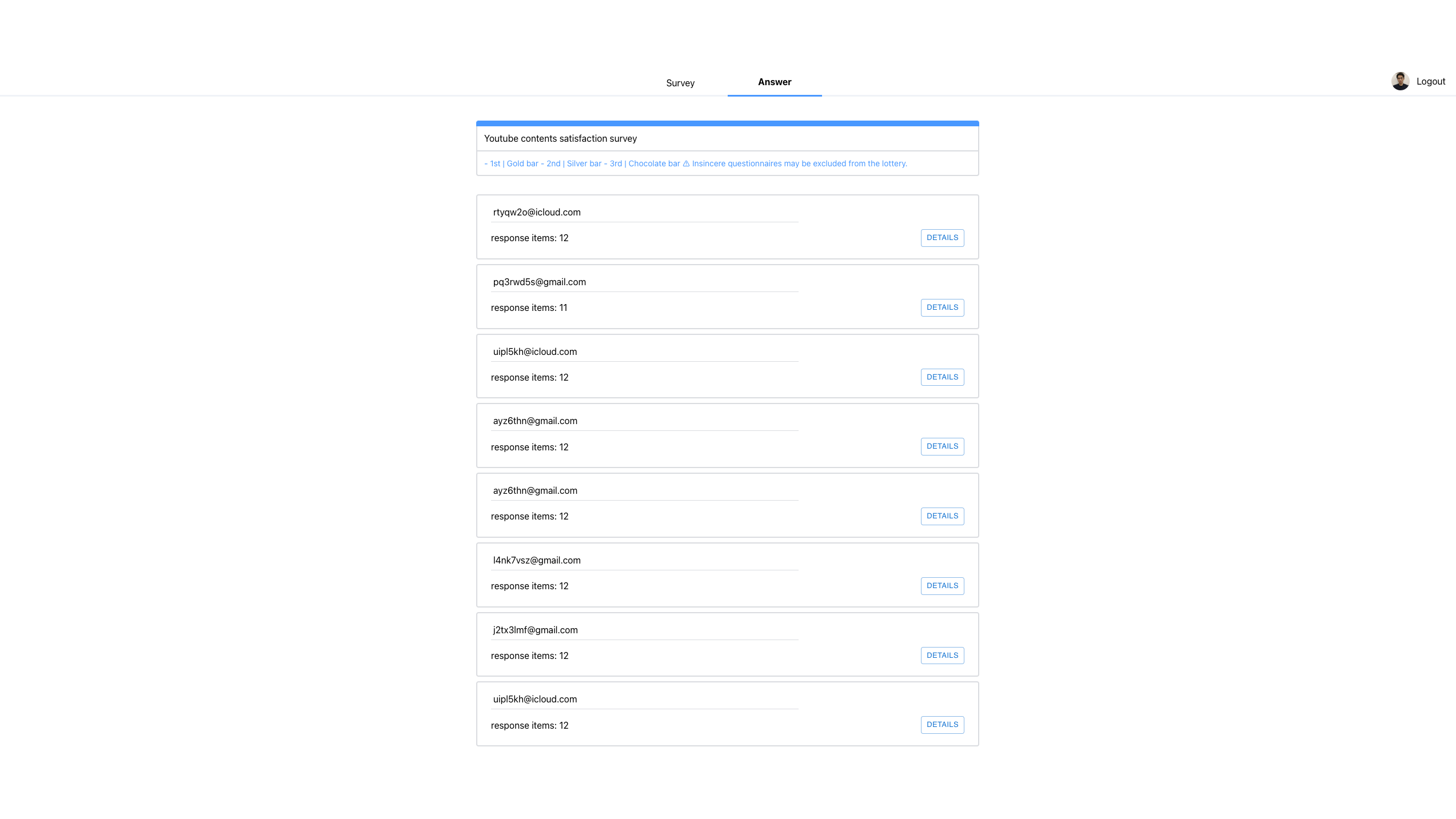
Survey participant list. When you click the 'DETAILS' button, you can view the participant's response history.
-
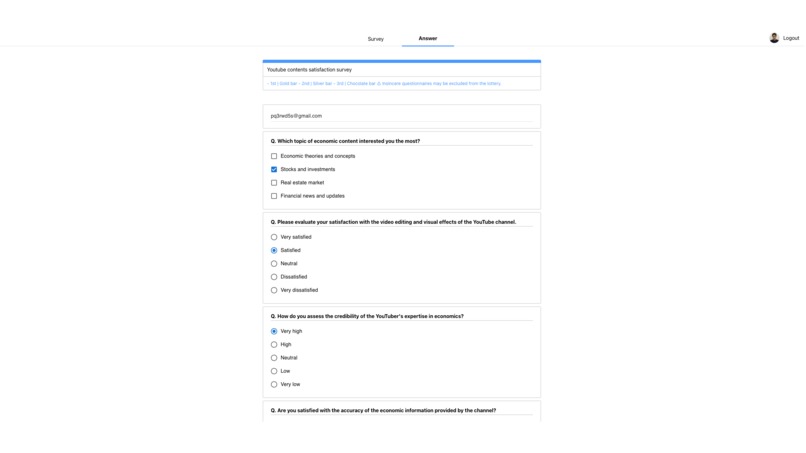
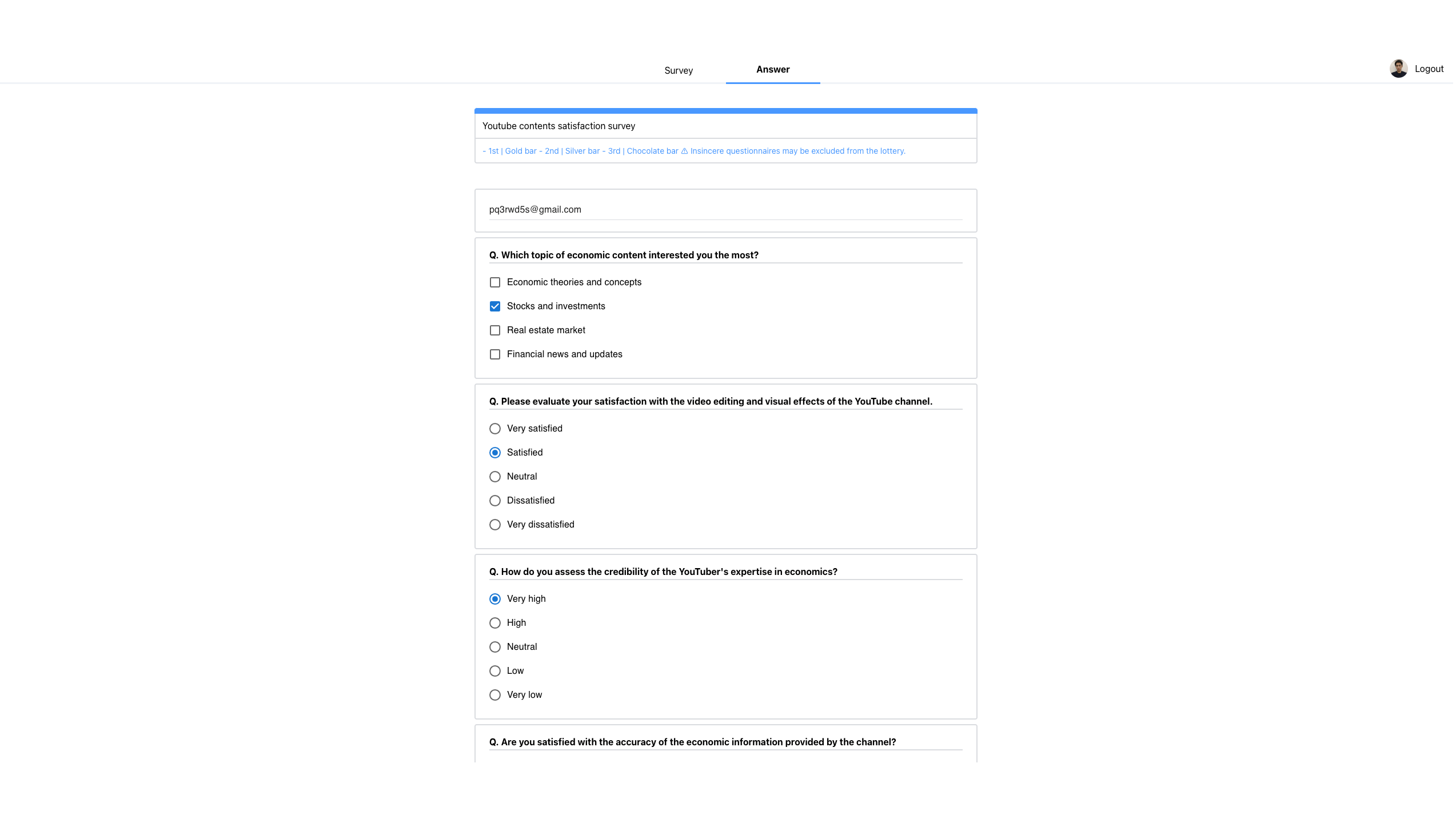
This is the participant's survey responses page.
-
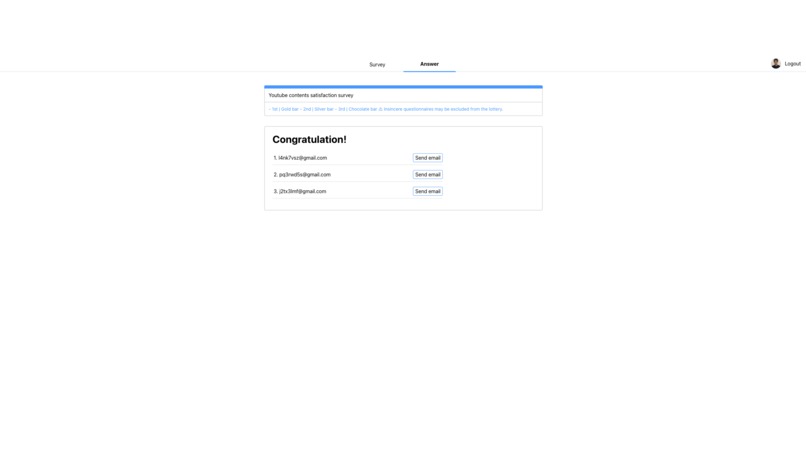
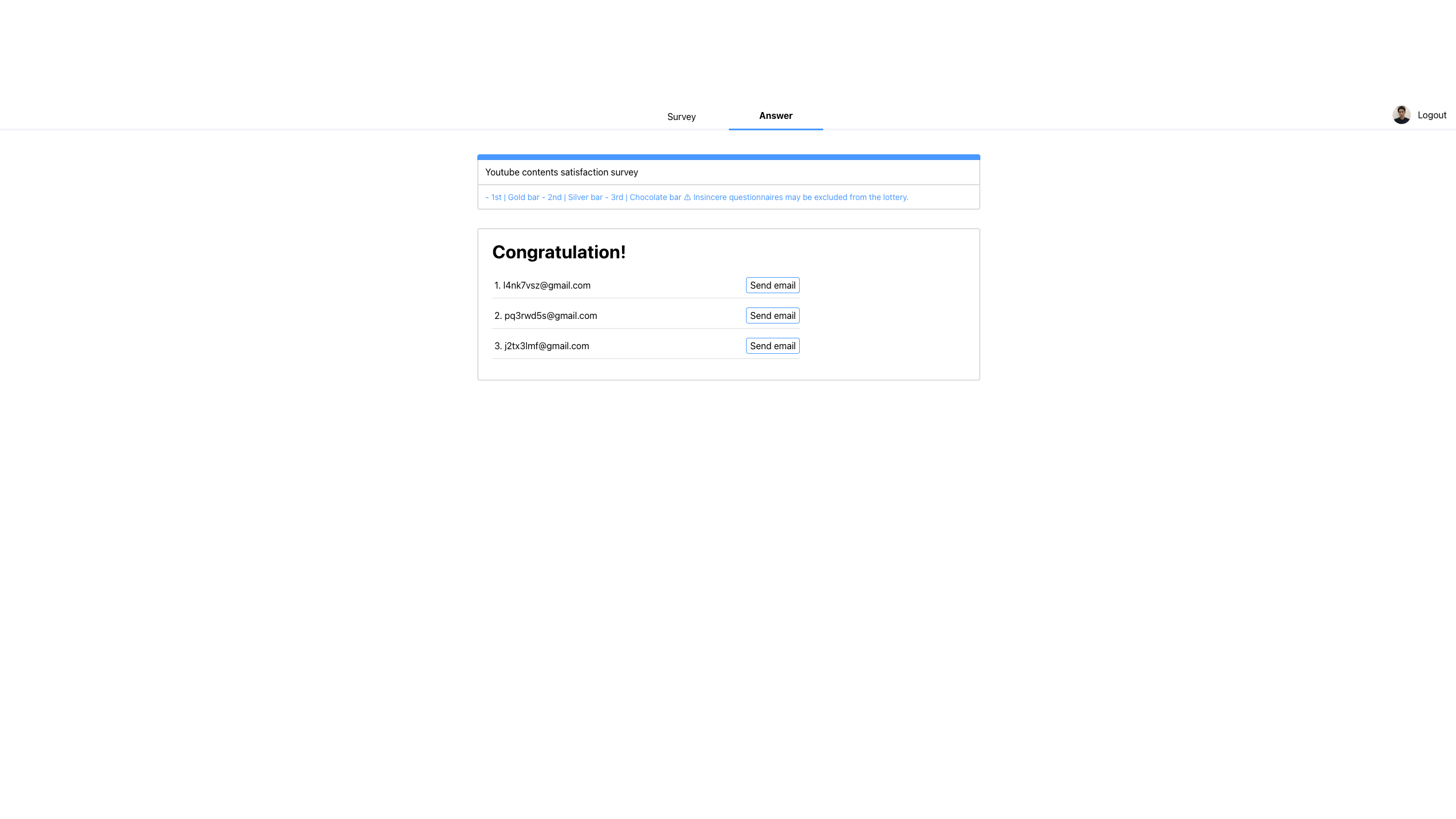
Lucky draw winners list. You can send a email to the winners.
Inspiration
In recent times, many businesses and influencers are conducting events that involve product giveaways for survey or comment participants. This is because it is convenient for fostering more proactive communication with consumers and encouraging participation in various activities.
While the raffle events stimulate active engagement from consumers, there is an issue of potential manipulation in both the process and outcomes, compromising fairness at any point. Participants may harbor doubts about the fairness of the events, and there have been numerous reported cases of fraud in Facebook events.
To address these issues, there is a recognized need for a transparent, trustworthy, and user-friendly raffle service.
What it does
Raffle is a service that transparently conducts drawings using Chainlink's VRF and Automation. When customers submit surveys, they are registered on the Ethereum network, and at a specific time, the drawing is automatically executed within the contract.
Raffle stores the created surveys on the blockchain (Ethereum Sepolia) and enhancing transparency by storing participant information alongside.
Raffle Leverages Chainlink's VRF strengthens reliability for random selections, and Automation ensures the drawing operates seamlessly without additional manual intervention, enhancing convenience and trust.
Moreover, Raffle enables survey participants to use web3 services without creating a separate wallet enhances universality and accessibility, alleviating users' concerns about fees.
How we built it
We rapidly constructed the interface using Material UI and React, deploying it through Vercel. The detailed aspects of the survey were managed via Firebase, while crucial information for transparency, such as survey IDs and participant lists for raffle times, was stored on the blockchain.
To eliminate the inconvenience of participant access due to wallet and fee-related transactions, I facilitated transactions through a single key.
Challenges we ran into
- How to determine what type of data should be stored on the blockchain?
- What is the UX for users who are not yet prepared for web3 projects (wallets, fees)?
Accomplishments that we're proud of
We take great pride in creating a service that leverages the features of blockchain, Chainlink's VRF, and Automation while ensuring convenient accessibility for those less familiar with Web3.
This accomplishment holds significant importance for us, as it reflects our commitment to providing a user-friendly experience, bridging the gap for individuals who may not be well-versed in the intricacies of Web3 technology.
We also consider it a meaningful achievement to have developed a service that not only promotes the adoption of blockchain and Web3 but also facilitates the attachment of a sustainable revenue model for business growth.
It reflects our dedication to creating a service that is conducive to both spreading blockchain and Web3 and achieving long-term profitability.
What we learned
- Utilizing Chainlink Automation
- Advanced Techniques for Leveraging the Chainlink VRF Service
- how to save data in blockchain
What's next for Raffle
- Temporary storage feature development
- Voting raffle feature development
- Participant survey status inquiry page development
- Statistical data visualization feature development
- UXUI improvement
- Edge case and Corner case improvement


Log in or sign up for Devpost to join the conversation.