-
-
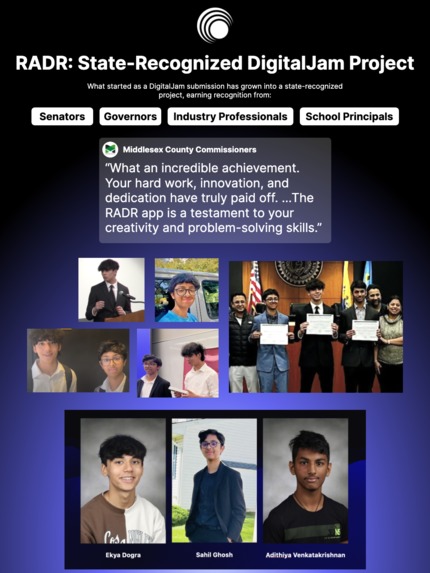
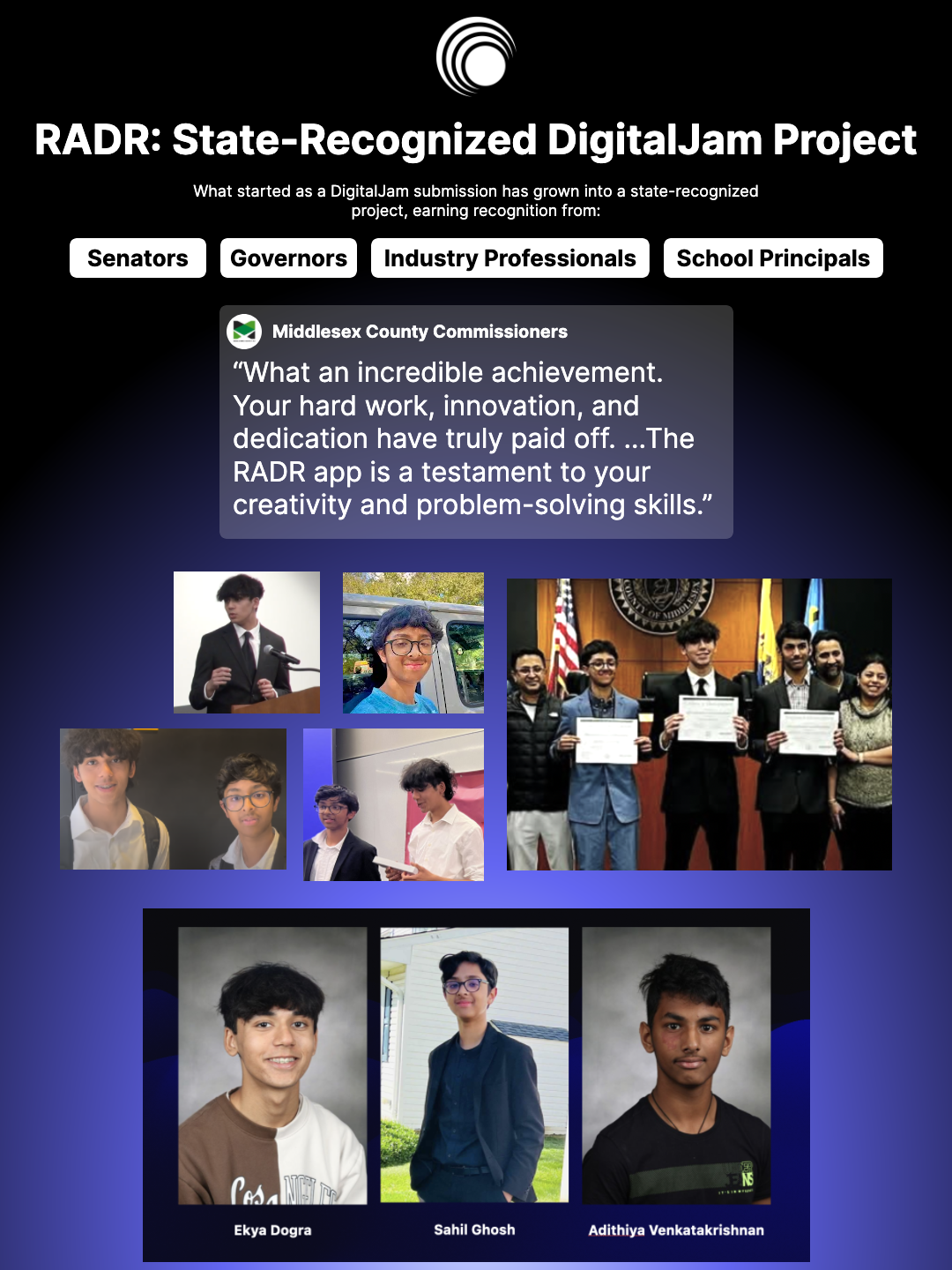
We've been recognized by New Jersey's leaders as the next leaders in public safety. RADR is a pivotal technology transforming security.
-
Our mission statement.
-
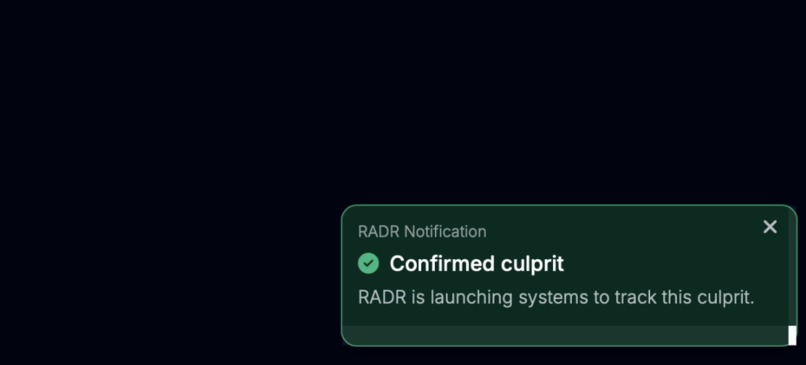
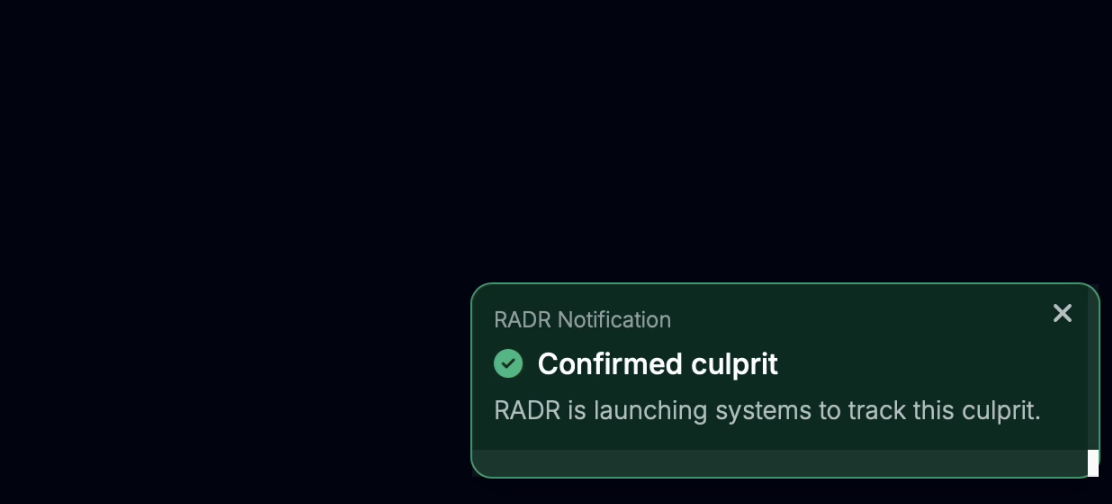
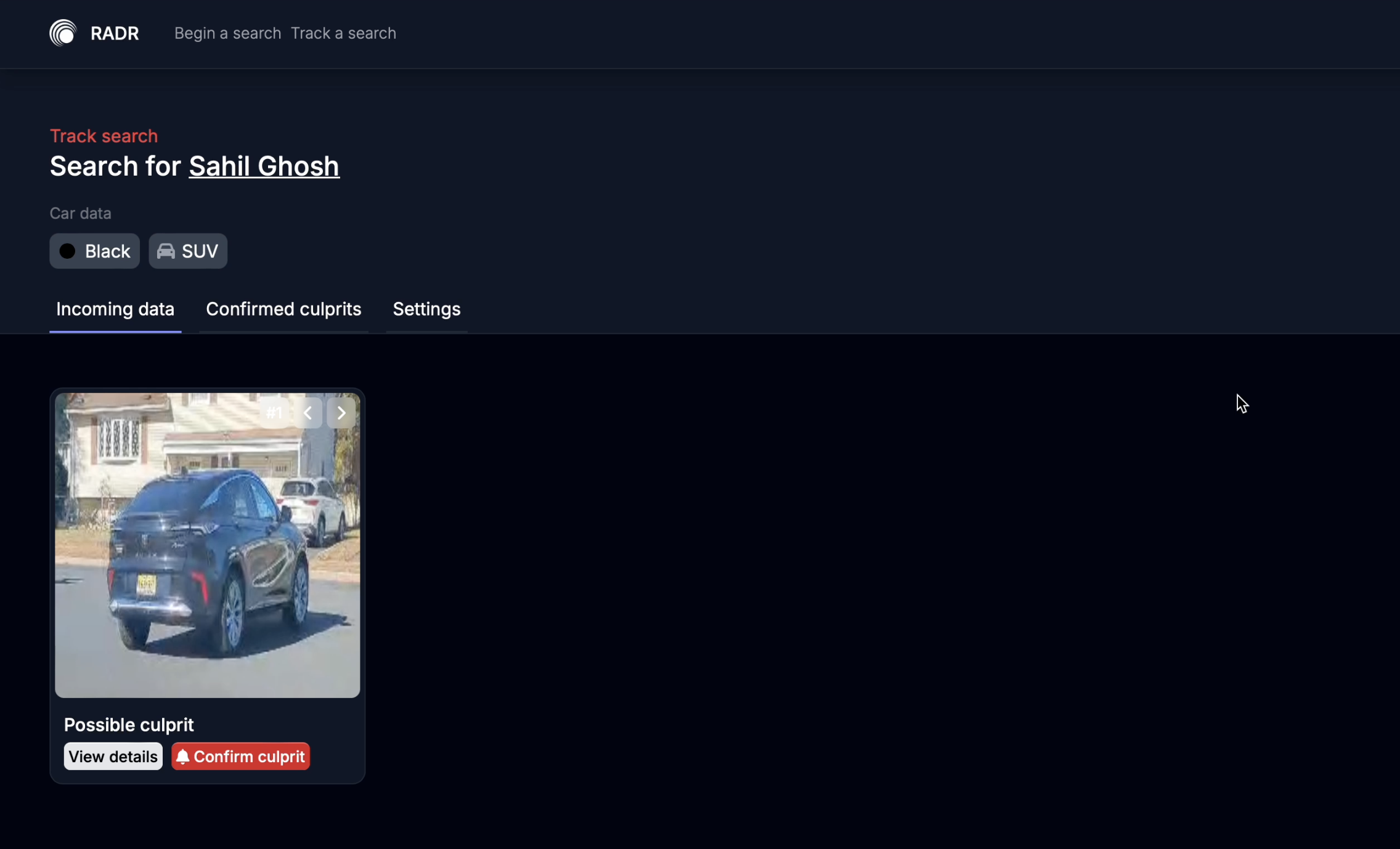
When a suspect is confirmed by law enforcement on the web portal, RADR will begin tracking for their appearances in dashcams.
-
Presenting RADR: Rapid Amber Detection Response. All rights reserved. (Logo attached)
-
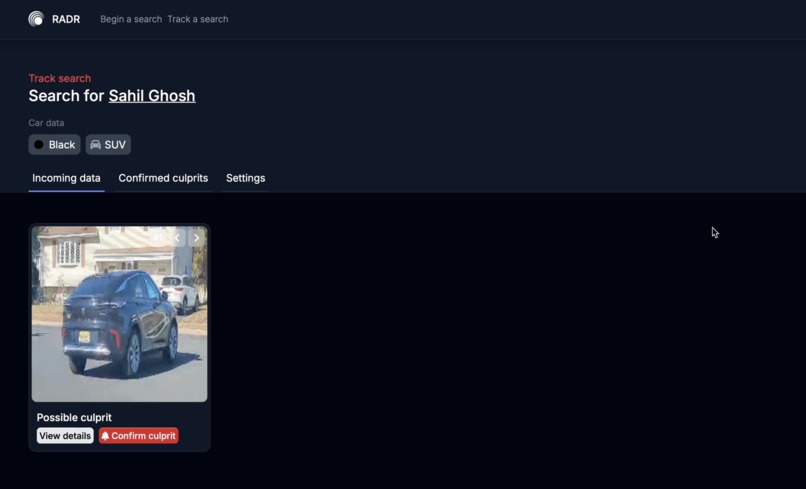
The suspect tracking page of the web portal, from where law enforcement can flag culprits.
-
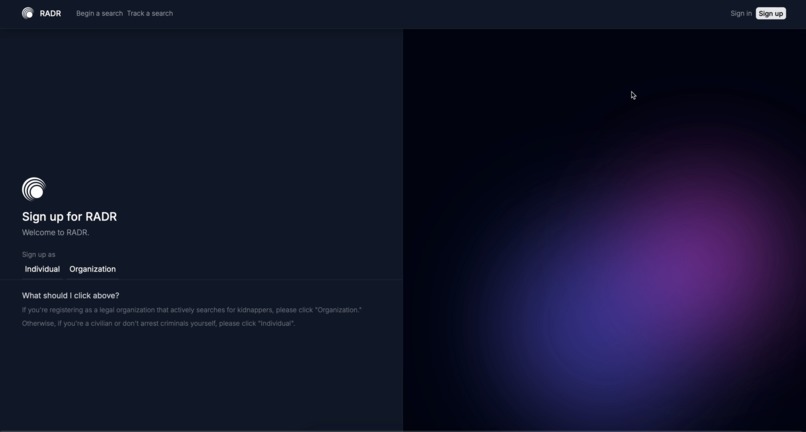
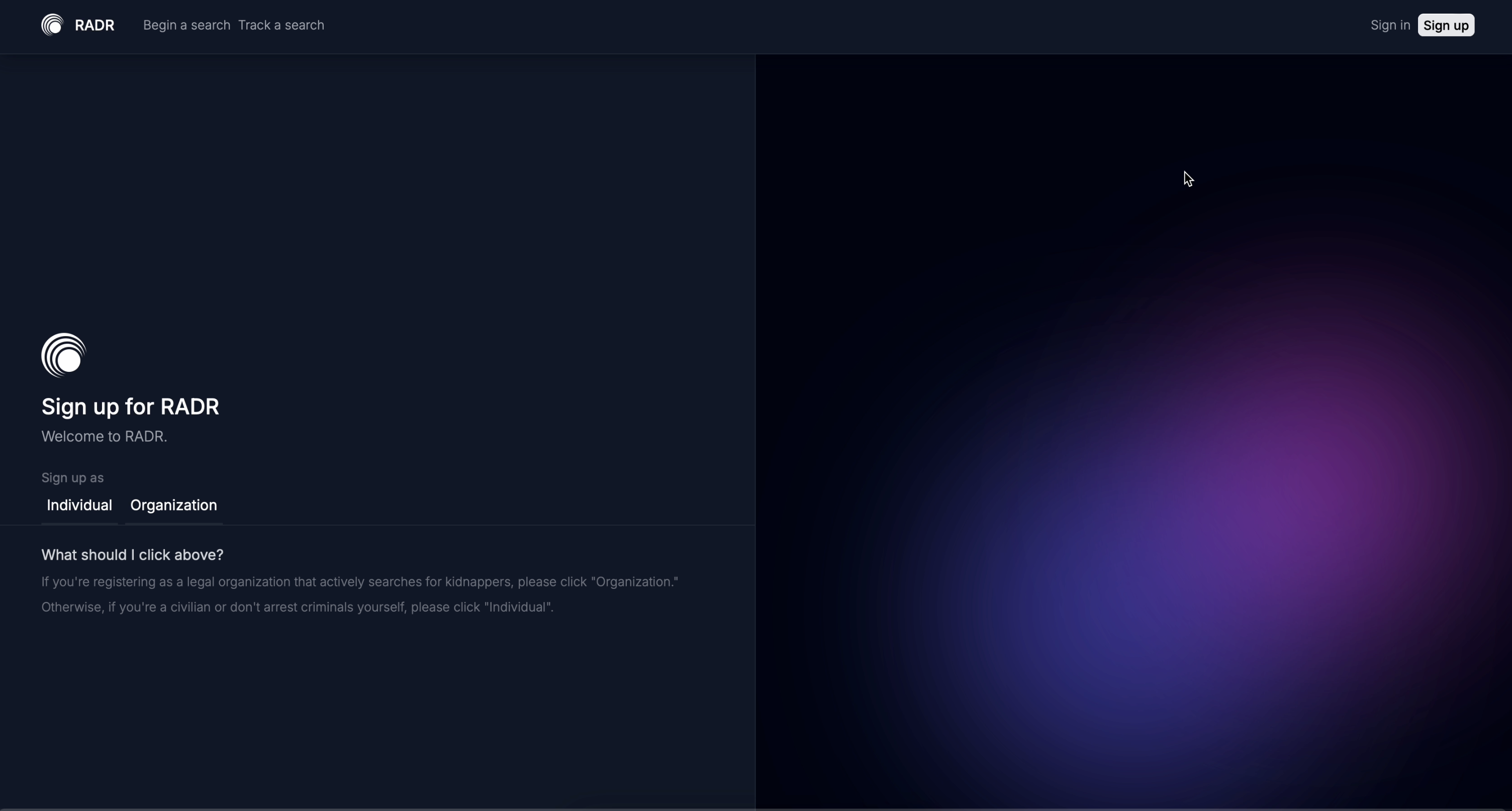
The sign-up page, which is dynamic to onboard both individuals & law enforcement.
-
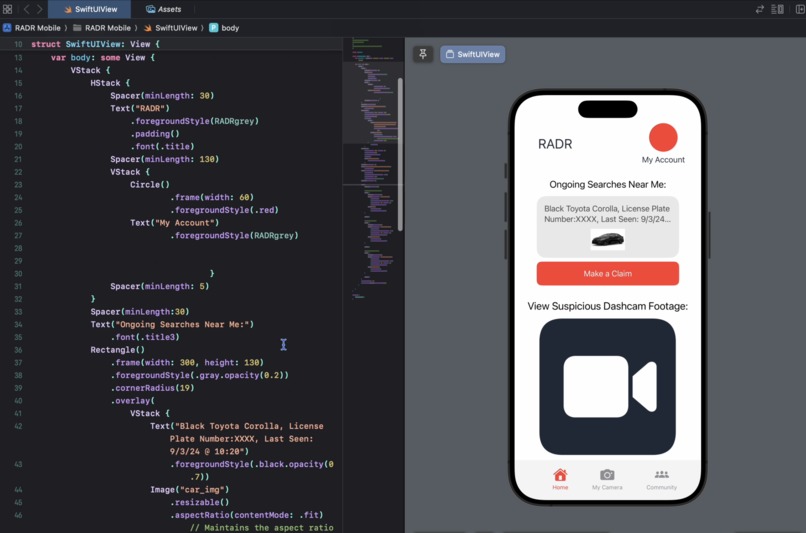
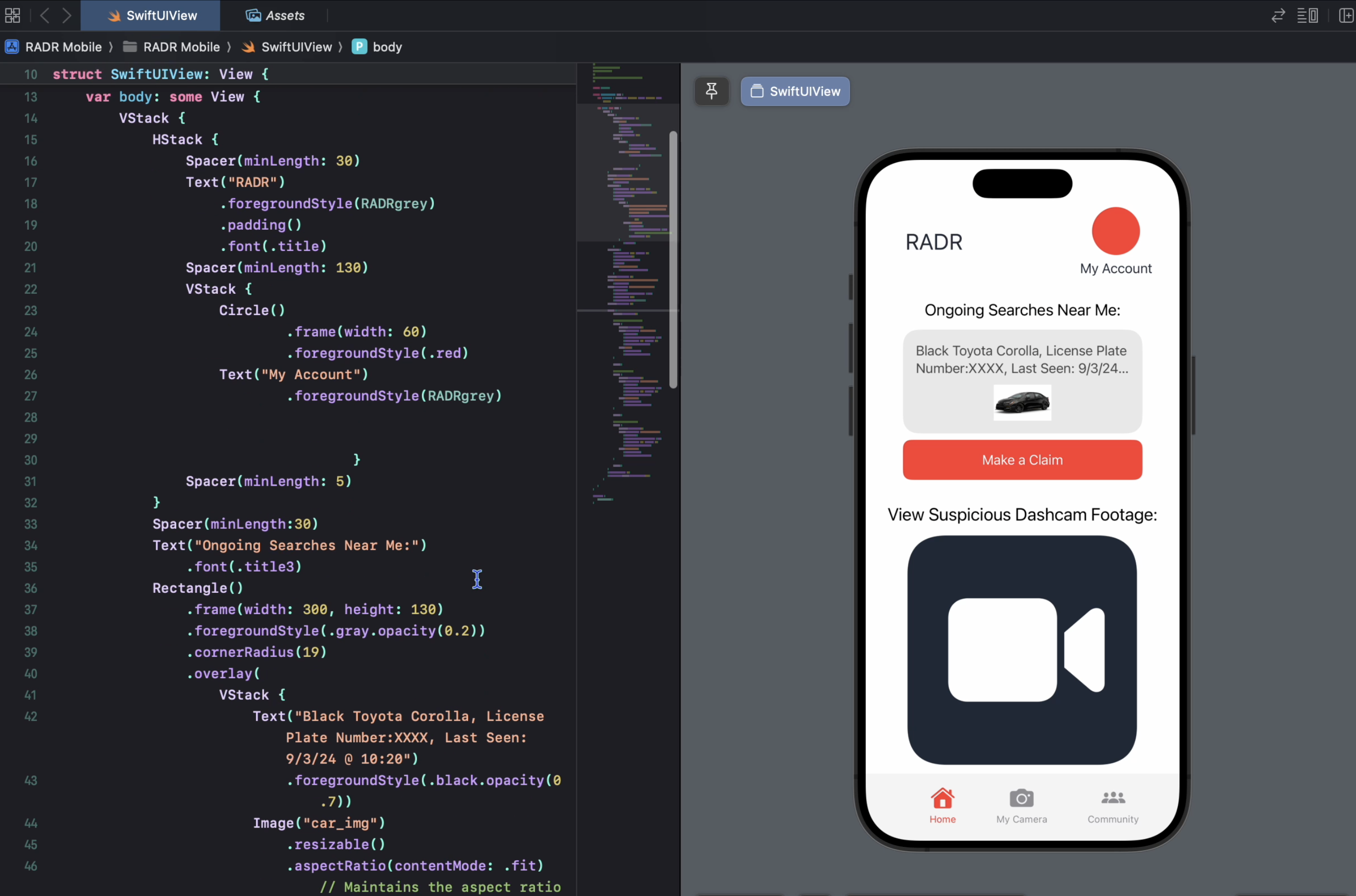
The upcoming RADR mobile app, enhancing rapid recovery & public transparency.
-
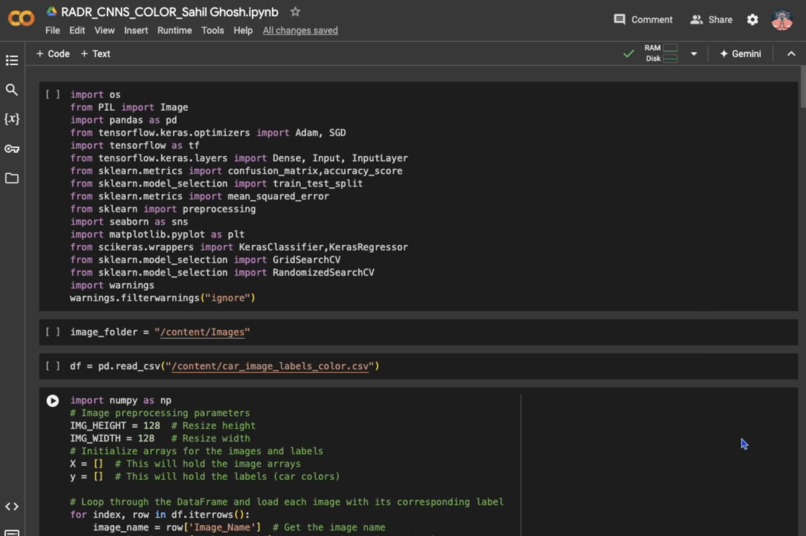
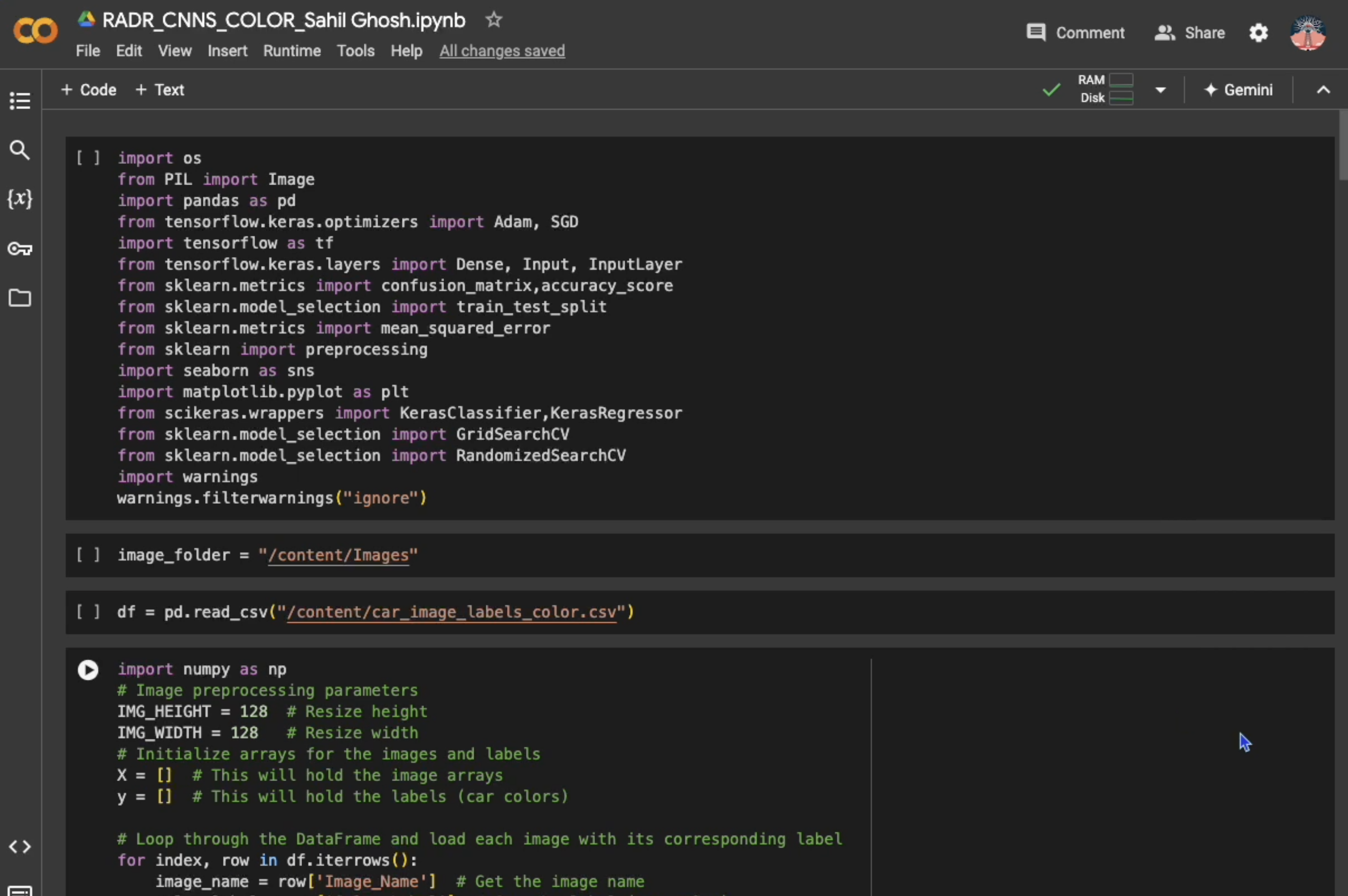
A snippet of our revolutionary AI technology that gained us recognition by our governors.
-
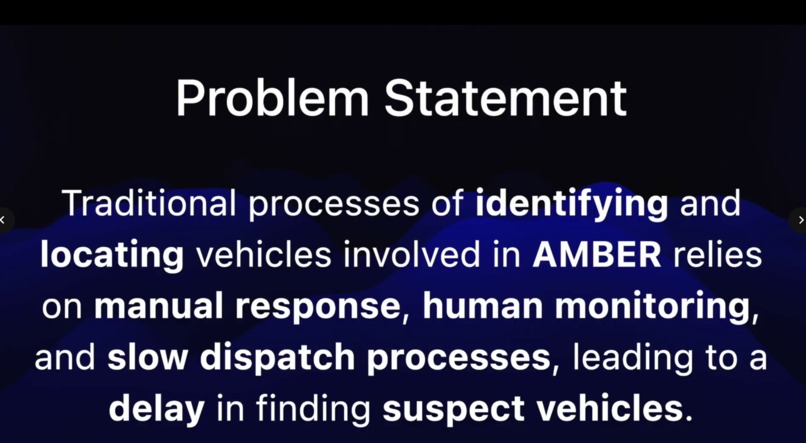
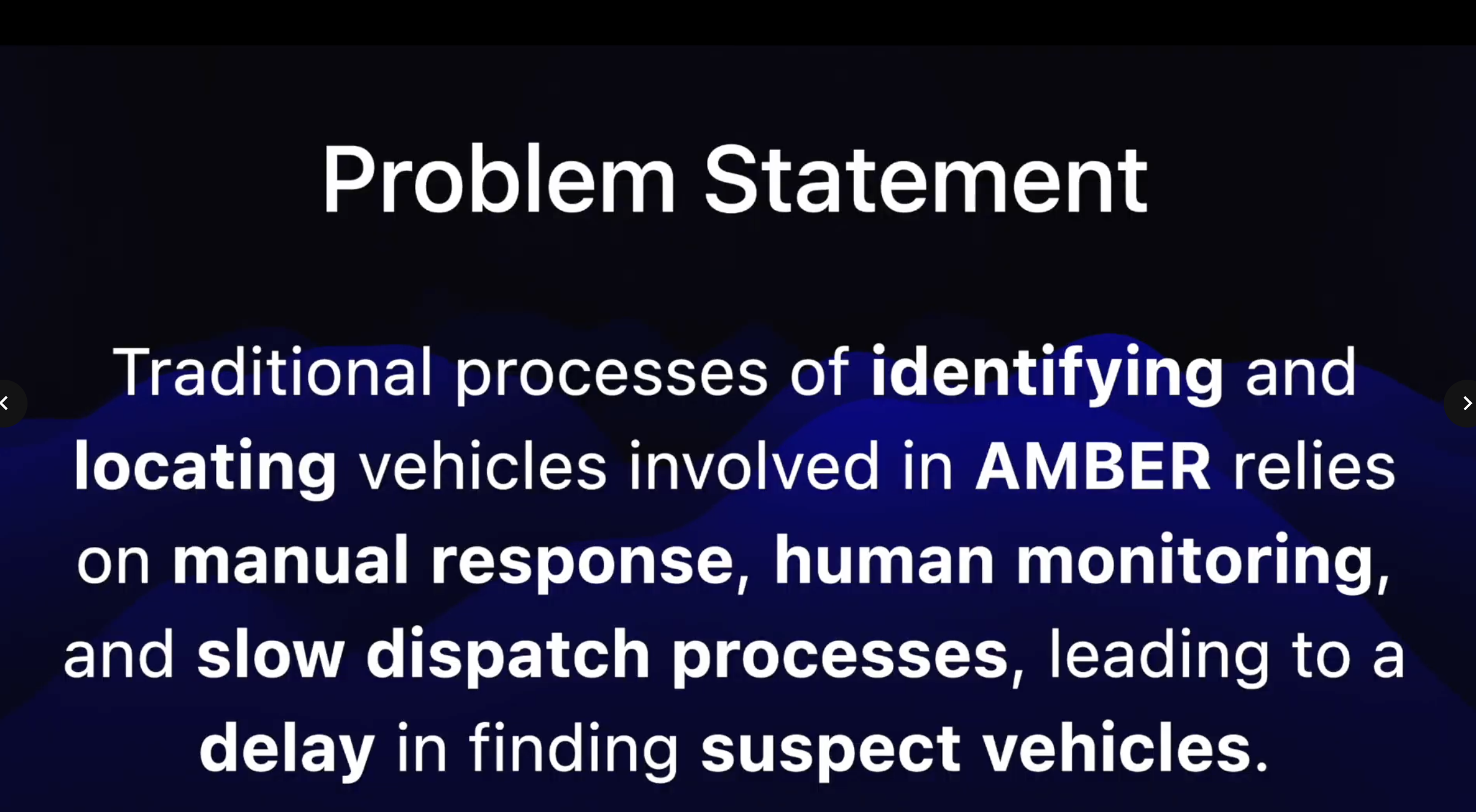
What's the problem RADR's trying to solve?
-

The team members that made RADR a reality. CEO: Ekya Dogra. COO: Sahil Ghosh. CTO: Adithiya Venkatakrishnan.

RADR: Revolutionizing AMBER Alerts with AI
Video link: https://vimeo.com/1070467699/66c7846d15?share=copy
Inspiration
When a child goes missing, every second matters. Yet, traditional AMBER Alerts rely on human observation, often leading to delays and missed opportunities. We asked ourselves: What if technology could enhance these alerts, turning every vehicle on the road into a pair of watchful eyes? That question sparked the idea for RADR—a system that leverages AI-powered dashcams to automatically detect and locate suspect vehicles in child abduction cases.
What It Does
RADR transforms ordinary dashcams into a real-time search network for AMBER Alerts. When an alert is issued, our AI scans for suspect vehicles based on license plates, make, model, and other unique identifiers. If a match is detected, RADR instantly notifies law enforcement with precise location data, drastically reducing response times and improving the chances of recovery.
How We Built It
We developed RADR using a combination of:
- Computer vision algorithms to analyze dashcam footage in real-time.
- Machine learning models trained to recognize vehicle features and match them to alert data.
- Secure cloud-based infrastructure to enable seamless data processing and instant law enforcement notifications.
- Privacy-first design, ensuring that data is encrypted and only activated during active AMBER Alerts.
Challenges We Ran Into
Building RADR came with its share of obstacles:
- Balancing speed and accuracy: AI models had to be both precise and efficient in identifying vehicles under varying conditions.
- Data privacy concerns: Ensuring compliance with regulations while maintaining effectiveness.
- Infrastructure limitations: Optimizing for real-time analysis without overwhelming cloud resources or user devices.
Accomplishments That We're Proud Of
- Successfully developing an AI model that detects and flags suspect vehicles in seconds.
- Creating a privacy-first system that works only when an AMBER Alert is active.
- Designing a scalable solution that can integrate with existing dashcams and law enforcement systems.
What We Learned
- AI can significantly enhance public safety when deployed responsibly.
- Collaboration with law enforcement is key to making RADR a practical, real-world solution.
- Privacy and security must be at the forefront of any surveillance-based technology to ensure public trust and ethical use.
What's Next for RADR
RADR’s potential goes beyond AMBER Alerts. Our next steps include:
- Expanding to general crime detection, using AI-powered Beacons in high-risk areas.
- Partnering with law enforcement agencies to integrate RADR into their response systems.
- Scaling our technology to more vehicles and devices, creating a smarter, safer network for public security.
RADR isn’t just an idea—it’s a movement to bring missing children home faster and make communities safer.
Built With
- ai
- ml
- objectdetection
- python
- pytorch
- redis
- scikit-learn
- supabase
- tensorflow


Log in or sign up for Devpost to join the conversation.