-
-
Welcome Screen
-
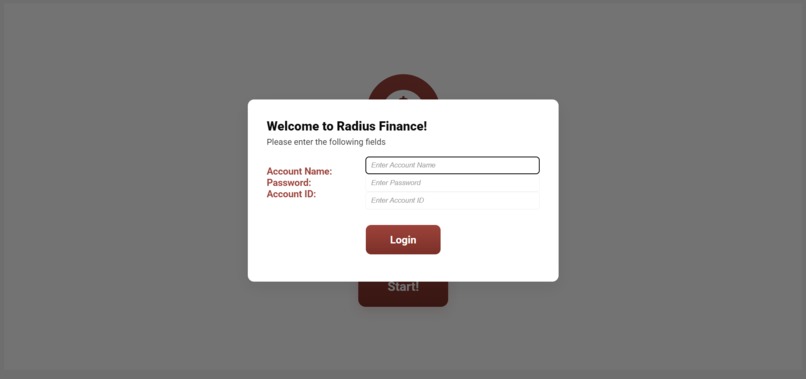
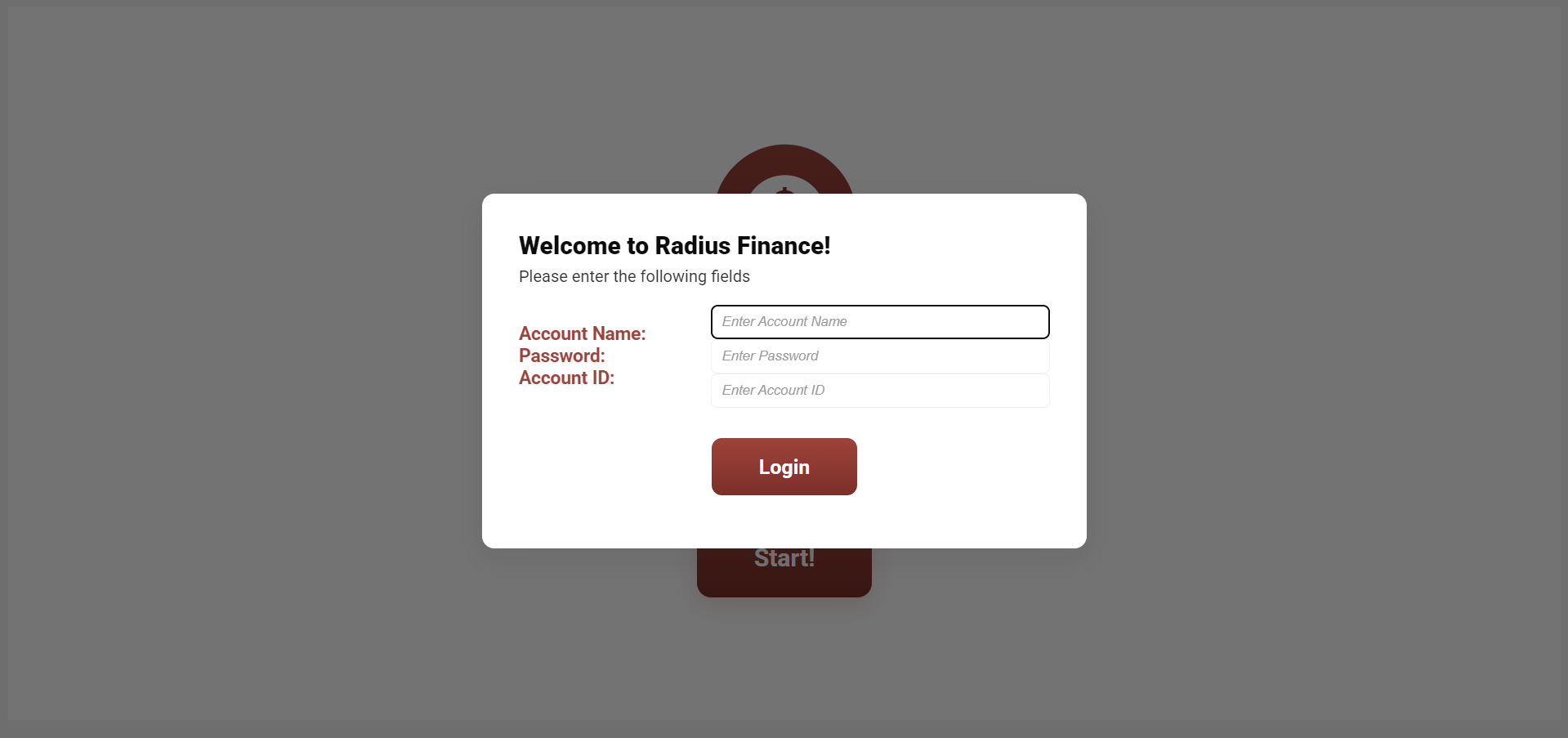
Login Screen
-
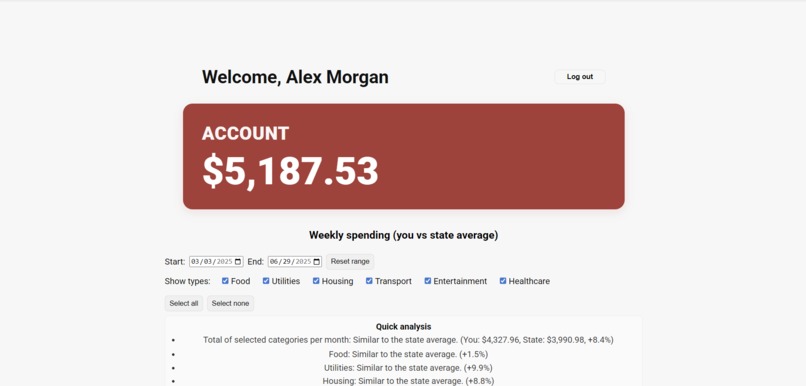
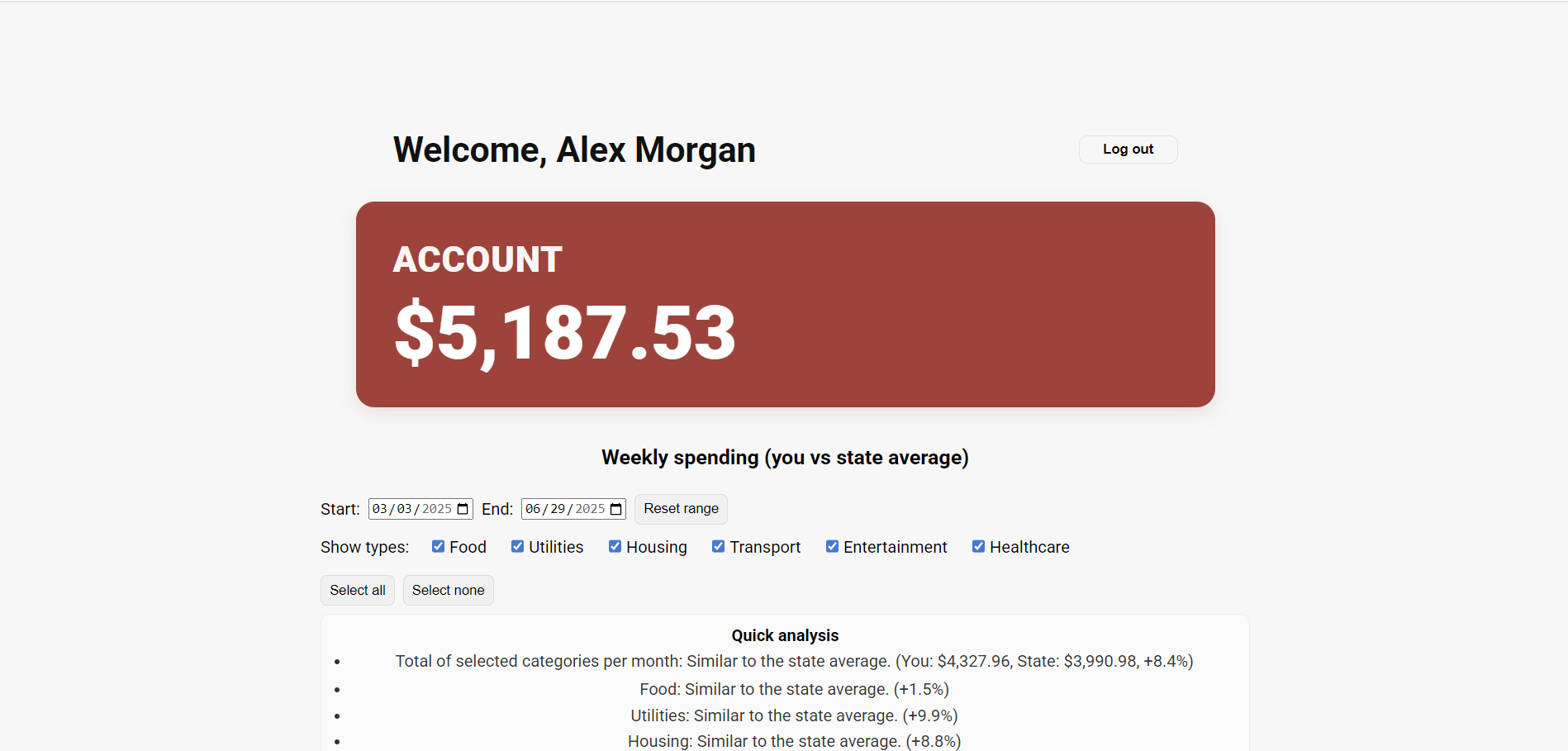
Dashboard
-
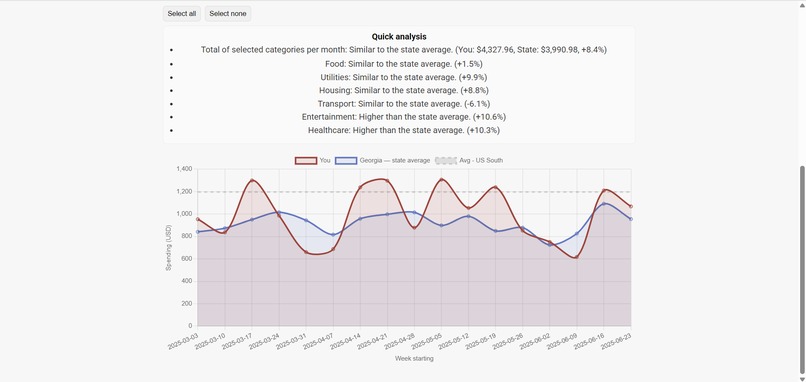
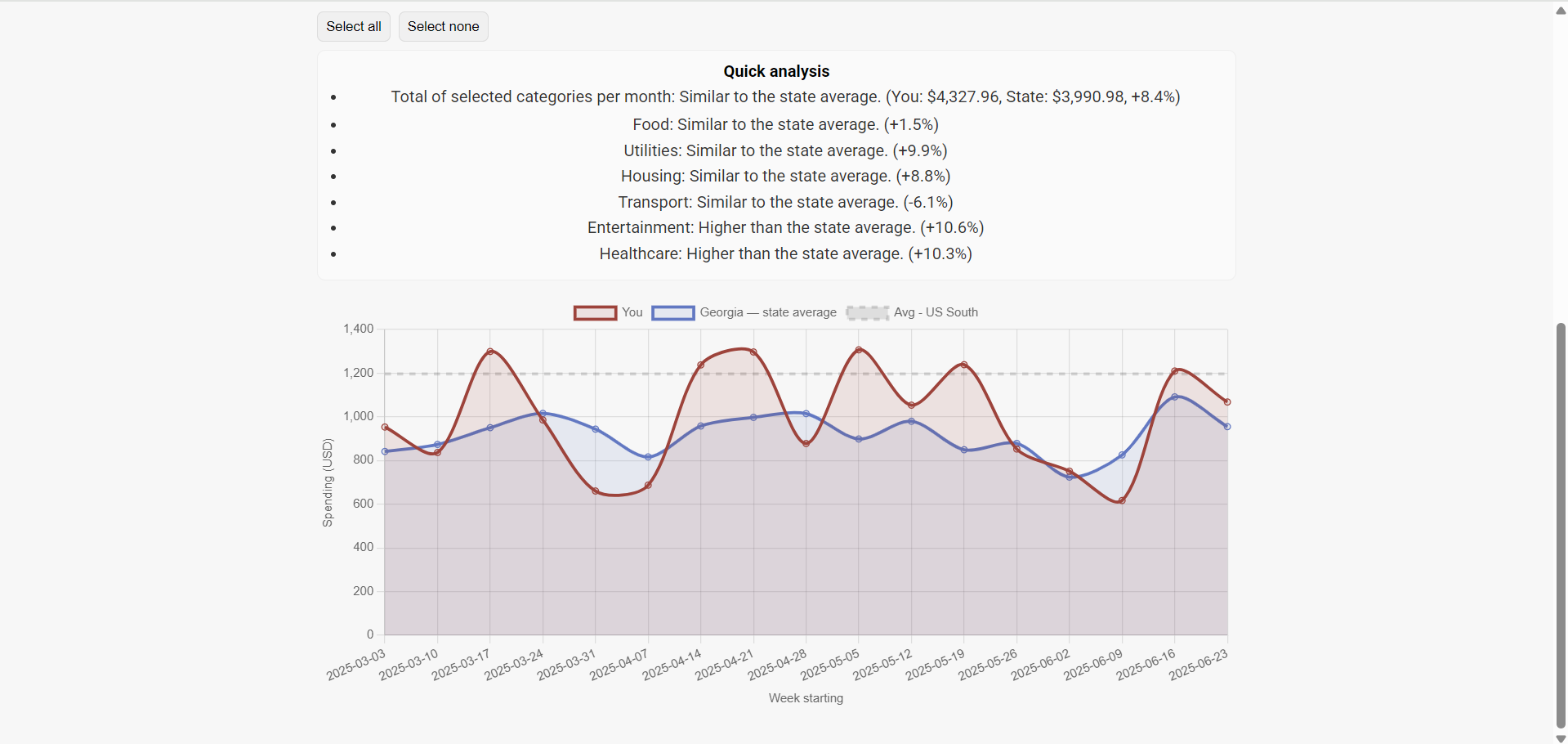
Graph Screen
Inspiration
As a team of first time beginners, we went through multiple discussions about what would be a good idea that could be something fun and useful. The discussions grew and grew until someone in the group suggested a banking app using statistics. The issue was, we could not do an actual banking app as none of us had the ability, funding, or people to run an app that handles money and wires it to larger banking companies. However, that idea still sparked something: what if we could help people spend money more wisely using the most powerful motivator of all - social pressure. That's where Radius Finance began.
What it does
Radius Finance gets data from the U.S. Bureau of Labor Statistics. Based on a user’s region, the app shows the average spending of people in their nearby region. By comparing personal spending with these averages, users feel motivated to stay within reasonable limits. Radius Finance also breaks down weekly spending by category, making it easier for users to see where their money goes.
How we built it
We decided to go with a basic web design. We used JavaScript for functionality, html for website structure, CSS for styling, and CSV files for local data storage. Since we lack the skill for running an actual server for a website, this setup allowed us to focus on learning and building rather than backend complexity.
Challenges we ran into
We encountered several challenges along the way. Initially, we wanted to use Capital One’s Nessie API but quickly realized it required far more setup and data population than we could manage. Instead, we decided we would use a mix of mock data and U.S. Bureau of Labor Statistics. We also faced issues in deciding what languages and framework to use for our project. We started with android studio, but wanted the functions of copilot AI, so we ended up using VSCode. A lot of time was spent simply deciding on tools and framework.
Accomplishments that we're proud of
We’re proud that we had fun throughout the hackathon. While this project might not be our best work, it was a worthwhile experience. We are proud we got hands-on experience with new tools like Figma, AI coding assistants, and gain more experience with web development.
What we learned
We learned a lot throughout all of HackGT12. We as a group learned a lot from the various work shops and tech talks that were offered during the event. Within our project, some members got to use git for the first time, while others got to see how to elevate an AI, such as Copilot and Gemini, to write code on a larger scale.
Whats next for Radius Finance
The next step is to connect Radius Finance to real APIs for live data. From there, we want to scale the project to reflect average spending statistics across all U.S. states. Future improvements could include customizable timeframes (daily, weekly, monthly) and new features to make tracking and planning expenses even more convenient.
Built With
- co-pilot
- css
- html
- javascript


Log in or sign up for Devpost to join the conversation.