Inspiration and what it does
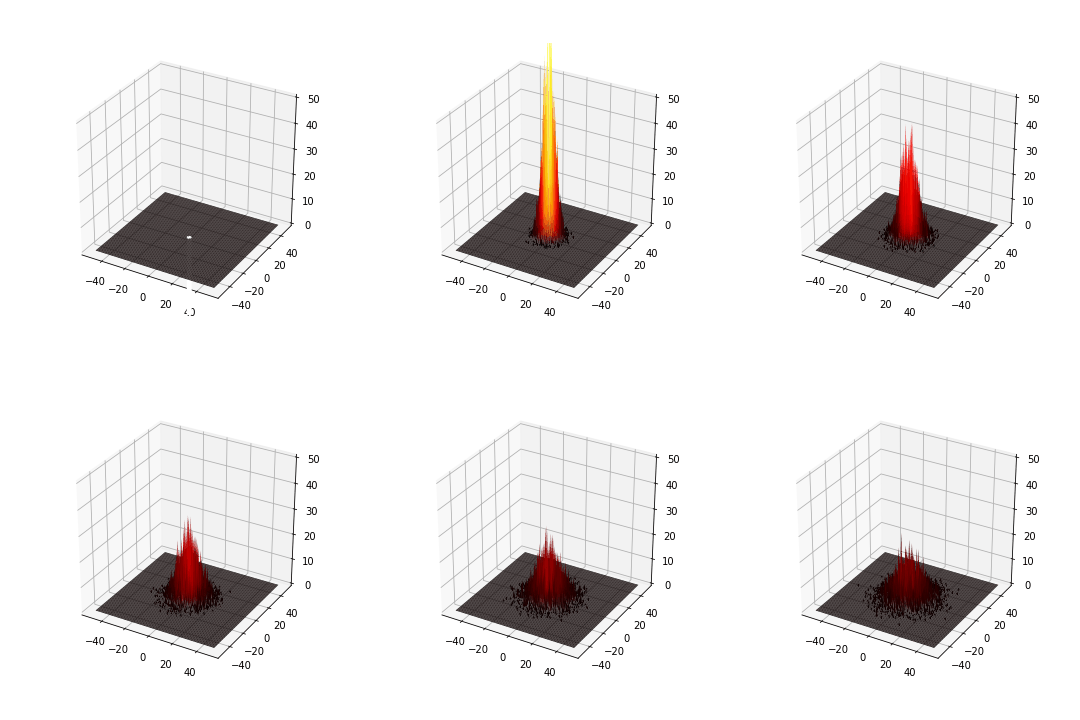
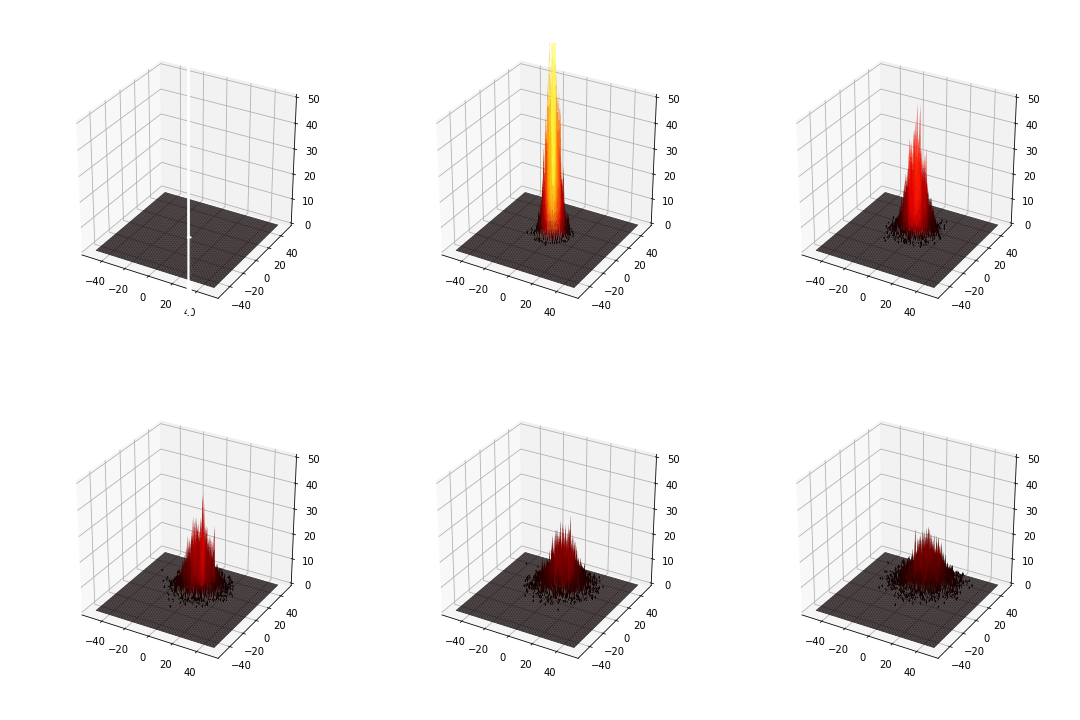
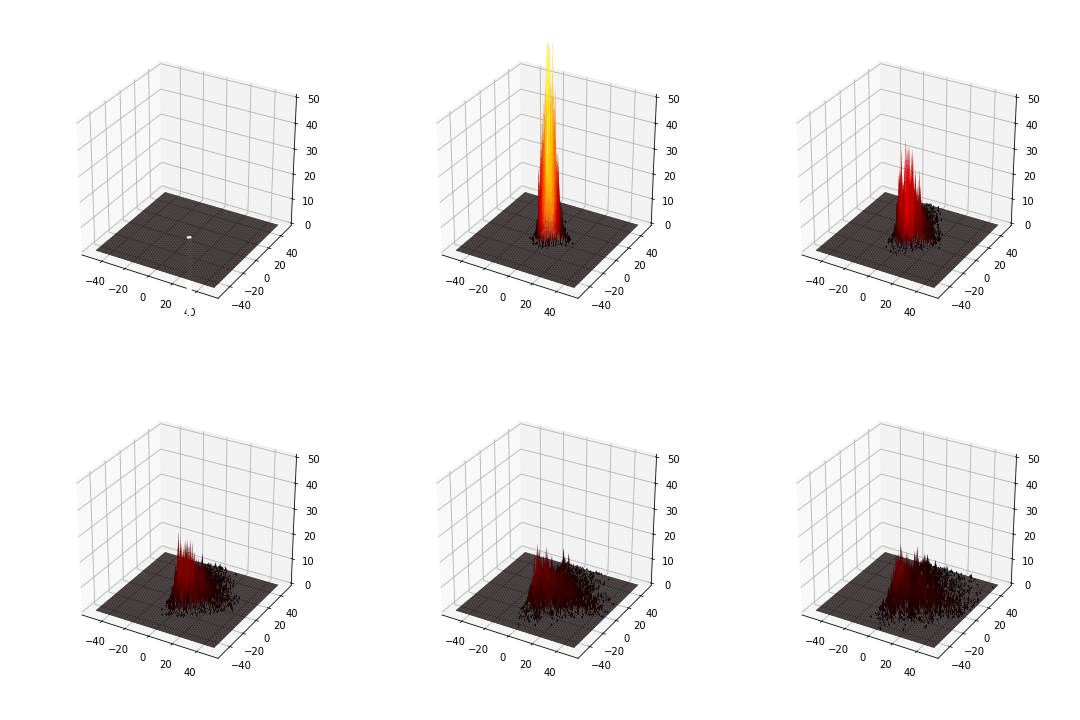
We wanted to understand why radioactive particles from the aftermath of a nuclear disaster impact the inhabitant of nearby areas for years after. Our case study was the Fukushima nuclear disaster. In 2011, Fukushima nuclear power plant, off the coast of eastern mainland Japan, had a prefecture after an earthquake and tidal wave in the area, resulting the nuclear waste that is there to the present day. Our simulation hopes to understand how different wind vector fields impact the propagation of the radioactive remnants of the disaster in space and in time.
How we built it
We used a PDE commonly used to describe the motion of radioactive particles, the advection-diffusion equation, and used a Taylor expansion to convert it into a directed random walk. We then simulated the random walk for many particles to see how the gaussian plume would spread and move in a 2D lattice. We added an exponentially decaying source of particles at the plant, used the diffusion coefficient of radioactive uranium and observed its motion under different wind fields.
Challenges we ran into and what we learned
We had some trouble finding a good set of parameters dx and dt that would accurately describe the Fukushima disaster and would also fit the requirements of our model (probabilities less than 1, computationally feasible etc.). We learned about 3D animating simulations and how PDEs can be linked to random walks.
What's next for Radioactive Decay in the Island Nation of Japan
We're really excited about this project and the directions it could take in the future. There is potential to include a number of other weather phenomenon the could impact the motion of the particles (ex. pressure gradients, rain, seasonal winds at the coast etc.) in hopes of better understanding how the radioactive cloud propagates.


Log in or sign up for Devpost to join the conversation.